”Deep fakes”: corruption of data has worrying implications for nuclear policy
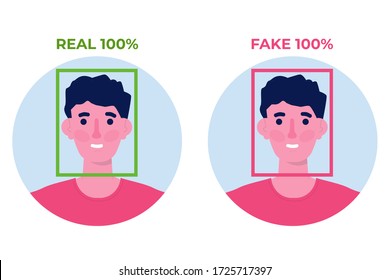
Deep fakes: The next digital weapon with worrying implications for nuclear policy Sylvia Mishra |New Tech Nuclear Officer, 3 Nov 21, The past decade has witnessed the unprecedented march of technology and the opportunities, dangers, and disruptions that accompany it. In the last 4-5 years, a synthetic media technology (that uses machine learning techniques and is created by generative adversarial networks – GANs) known as deep fakes, has revolutionised the ways that digital media can be altered. The ability of state and non-state actors to generate, forge, and manipulate media has created clickbait headlines and fake news, ‘terrorised women’ by substituting faces to create fake porn, and abetted the spread of misinformation and disinformation. An opinion piece in the Washington Post has called this worrying trend of mass-scale manipulation the “democratisation of forgery”.
One of the disquieting ramifications of this emerging and disruptive technology (EDT) is the challenge it poses to nuclear weapons decision-making, in particular its impact on decision-makers and wider society, Nuclear Command, Control, and Communications (NC3), nuclear doctrine, posturing and signalling.
Implications for nuclear weapons decision-making
In the 21st century, nuclear weapons decision-making is markedly different from that of the Cold War era. As great power competition has come back into sharper focus, countries are expanding and upgrading their nuclear arsenals and moving towards incorporating EDTs for warfighting. On the one hand, the political divide between nuclear haves and have-nots is widening and, on the other, the pursuit of EDTs by non-nuclear states is reducing the technology gap between nuclear and non-nuclear states. Simultaneously, arms control is waning. These developments are taking place at a time when trust among states and decision-makers is fast eroding, and generational divides among decision-makers are increasing. For example, senior decision-makers may find themselves lacking knowledge about new EDTs and technical know-how, while younger decision-makers might lack the understanding of nuclear policy-making compressed timelines.
The ability of deep fakes to undermine the confidence in information analysis and outputs provided by digital security platforms can erode trust among states and, in turn, complicate nuclear weapons decision-making, making it difficult for decision-makers to make distinctions between correct and spurious information. Deep fakes expert and computer science professor at Dartmouth University, Hany Farid stated, “The things that keep me up at night these days are the ability to create a fake video and audio of a world leader saying ”I’ve launched nuclear weapons”. He adds that the technology to do this exists today
As we witness rapid advancements of deep fake technology, nuclear weapons policy decision-makers are likely to be faced with questions like “will deep fakes undermine understanding about enemy intent and misdirect about an adversary capability?” Furthermore, deep fakes may cause algorithms that offer information on situational awareness to misclassify based on altered inputs. Such scenarios may cause a breakdown in automated NC3 architecture bearing serious consequences.
With the corruption and poisoning of data, can adversaries take undue advantage and engage in nuclear brinkmanship? Can non-state actors create misperception and escalation by generating fake videos of a leader suggesting that they have deployed nuclear weapons against an adversary? Even if such fake videos can be quickly detected, it is highly likely that once these videos go online they will sow the seeds of widespread uncertainty.
During crises, the general population might find it difficult to tell factual from spurious information, exacerbating the situation. …………..
In a report titled ‘Weapons of Mass Distortion’, King’s College London’s Marina Favaro classifies deep fake as a ‘weapon of mass distortion’, arguing that it is capable of reducing situational awareness of a country and could erode Nuclear Command, Control, and Communications (NC3)………………. https://www.europeanleadershipnetwork.org/commentary/deep-fakes-the-next-digital-weapon-with-worrying-implications-for-nuclear-policy/
No comments yet.
1 This Month


Tell the Ukrainian Government to Drop Prosecution of Peace Activist Yurii Sheliazhenko

Petition to revoke the licensing of the Near Surface Nuclear Disposal Facility (NSDF) at Chalk River. https://www.ourcommons.ca/petitions/en/Petition/Details?Petition=e-7247


of the week – STOP SMALL MODULAR REACTORS IN CANADA
To see nuclear-related stories in greater depth and intensity – go to https://nuclearinformation.wordpress.com
-
Archives
- March 2026 (185)
- February 2026 (268)
- January 2026 (308)
- December 2025 (358)
- November 2025 (359)
- October 2025 (376)
- September 2025 (258)
- August 2025 (319)
- July 2025 (230)
- June 2025 (348)
- May 2025 (261)
- April 2025 (305)
-
Categories
- 1
- 1 NUCLEAR ISSUES
- business and costs
- climate change
- culture and arts
- ENERGY
- environment
- health
- history
- indigenous issues
- Legal
- marketing of nuclear
- media
- opposition to nuclear
- PERSONAL STORIES
- politics
- politics international
- Religion and ethics
- safety
- secrets,lies and civil liberties
- spinbuster
- technology
- Uranium
- wastes
- weapons and war
- Women
- 2 WORLD
- ACTION
- AFRICA
- Atrocities
- AUSTRALIA
- Christina's notes
- Christina's themes
- culture and arts
- Events
- Fuk 2022
- Fuk 2023
- Fukushima 2017
- Fukushima 2018
- fukushima 2019
- Fukushima 2020
- Fukushima 2021
- general
- global warming
- Humour (God we need it)
- Nuclear
- RARE EARTHS
- Reference
- resources – print
- Resources -audiovicual
- Weekly Newsletter
- World
- World Nuclear
- YouTube
-
RSS
Entries RSS
Comments RSS
 nuclear-news
Leave a comment