Nuclear news – week to 12 October
Keeping up with the pandemic – it’s all still happening.
The nuclear submarines and AUKUS have continued in the news, and re likely to keep going – problems about who’ll supply them, about their HEU fuel, about obsolescence, about anxieties in South East Asia, about revving up tensions between USA and China.
However, as this week develops, the news focus is shifting to the coming Cop26 climate conference. The nuclear lobby is now salivating about the possibility of it having a role in this international.summit
Pandora Papers reveal world’s Tax Avoidance B-Team. Where’s the A-Team? https://www.youtube.com/watch?v=W4kN2MeJg6c
The CIA Plot to Kidnap or Kill Julian Assange in London is a Story that is Being Mistakenly Ignored. Deathly Silence: Journalists Who Mocked Assange Have Nothing to Say About CIA Plans to Kill Him.
Chris Busby on the truth about black rain, radiation and cancer. Nuclear Radiation – Incompatible with Life. Low dose radiation and cancer – the Linear No Threshold model holds good.
Saving Us: A Climate Scientist’s Case for Hope and Healing in a Divided World. Developing countries demand action on climate from the polluting rich countries
The stagnating landscape of the nuclear industry -no chance of competing with renewables.
Why Greta Thunberg’s speech was the best – blah none
What is Cop26 and why does it matter? The complete guide
Who’s who at Cop26: the leaders who hold the world’s future in their hands
Will all submarines, even nuclear ones, be obsolete and ‘visible’ by 2040? Nuclear submarine deal needlessly raises tensions.
Organised crime highly active in the nuclear industry.
UKRAINE. Birth defects in the Chernobyl region (from the archives).
GERMANY. Mushrooms in Germany are still contaminated by Chernobyl radiation.
FINLAND. Finland lobbied EU to declare nuclear power sustainable after unpublished cabinet decision. Finland’s Greens turn a lovely shade of nuclear yellow, as they back nuclear power as ”sustainable”.
JAPAN. Security lapses at Kashiwazaki-Kariwa nuclear power plant in Niigata . A-bomb survivor Setsuko Thurlow hopes Japan’s new PM can lead nuclear disarmament debate. Japanese Prime Minister Fumio Kishida praises Treaty on the Prohibition of Nuclear Weapons. Nuke disaster radiation continues to threaten traditional ways of life in northeast Japan. Industry minister vows to promote scrapping of Fukushima plant as top priority.
CHINA. Why China sent a record number of fighter jets and nuclear-capable bombers into Taiwan’s defence zone. China demands answers on US nuclear submarine accident in South China Sea.
INDIA. Tamil Nadu Assembly Speaker, activists oppose spent nuclear fuel storage facility in Kudankulam.
UK.
- October 27 – Julian Assange’s extradition appeal hearing.
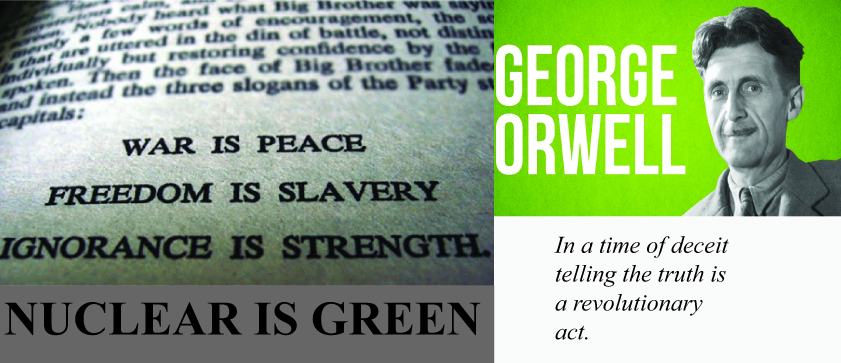
- Boris Johnson promoting nuclear power as clean, green, renewable.
- Extinction Rebellion climate activists vow to cause disruption at Glasgow COP26.
- First George Monbiot Award for Nukiller Greenwash to Springfields Nuclear Fuel Manufacturing Plant in Cumbria – On Anniversary of the Windscale Fire.
- Allerdale GDF Working Group’s map of area considered for UK’s nuclear waste dump includes areas already declared unsuitable.
- UK government to generate a colossal public sector loss in building more nuclear power station at Sizewell C. Questions over water supply for the new £20billion nuclear plant for Sizewell.
- Rolls Royce wants to supply data centres with their massive energy needs, by small nuclear reactors.
- Legal challenge launched to stop waste from nuclear plant construction being dumped in the Bristol Channel. A particular threat to health: Why it is vital to stop the dumping of mud from Hinkley Point C in the Severn Estuary.
- Delay and huge cost in refuelling UK nuclear submarine.
- Scottish police alerted to ‘suspicious activity’ of Taliban ally near nuclear weapons base, .
USA.
- Nuclear Regulatory Commission backs Linear No-Threshold model for radiation safety.
- Call the U.S. Defense Budget what it is – the War Budget. Despite pre-election promises, Biden administration is continuing Trump’s costly nuclear weapons modernisation. The “No Militarization of Space Act” has been introduced in the U.S. Congress. Advocate for a safer world challenges Midland to not give up and to act now. US Reveals Nuclear Bomb Numbers After Trump Blackout.
- Michael Flynn, Trump’s first National Security Advisor hid $200k in payments for Middle East nuclear power plan before joining White House .
- Rep. Burgess Owens and Rep. Chris Stewart sponsor a Bill to ensure compensation for health effects of nuclear bomb testing.
- Nuclear executive to go to prison for fraud.
- Nuclear security helicopter scours Boston Marathon route for radiation.
- Nuclear power is not a good option for Kentucky. Radioactive waste is still a problem .
- US nuclear attack submarine hits object in South China Sea, injuring crew.
- US navy engineer charged with trying so sell nuclear submarine secrets.
SOUTH AFRICA. We must question why small modular reactors and the rebirth of nuclear energy are all the rage.
FRANCE. 2022 French Presidential candidates divided over nuclear energy. The French are mainly for nuclear power, but not so keen on new nuclear stations.
NORWAY. Norway led the way in 25 years of clean-up of Russia’s dead nuclear submarine radioactive trash.
NORTH KOREA. Time to find more realistic options than complete, verifiable, and irreversible dismantling of the North Korean nuclear program .
RUSSIA. Russia aims to lift old dead nuclear submarines from the bottom of the Barents and Kara Seas by 2030. Russia’s perilous job in raising sunken nuclear submarines. Russia withdraws offer to freeze nuclear warhead production. Terrorists trying to get secrets on production of nuclear weapons
MIDDLE EAST. The risks of a catastrophic spent nuclear fuel fire near the Persian Gulf..
PACIFIC ISLANDS. CNMI House slams Japan’s plan to dump nuclear waste into Pacific.
SWEDEN. Swedish insurance group Länsförsäkringar cuts off investment to nuclear weapons.
CHILE. Chile ratifies UN Nuclear weapons ban treaty .
IRAN. US calls for ‘imminent’ return to nuclear talks with Iran. Preventing an accidental nuclear crisis in Iran and beyond.
ISRAEL. Israel May Accept Iran As Nuclear Power According To Secret Talks.
PAKISTAN. Pakistani nuclear weapons scientist Abdul Qadeer Khan dies aged 85. How A.Q. Khan brought the atomic bomb to Pakistan and beyond.
NEW ZEALAND. Jacinda Ardern warned twice Rocket Lab’s launches could break Nuclear Free Law.
AUSTRALIA. Australians for Assange call for help – save our failing democracy, as USA continues, by despicable means, their case against him. Can the Australian government ignore this powerful letter exposing the foolish decision to ”go nuclear” with submarines and AUKUS?
Radioactive risks of nuclear submarines

The radioactive waste from reactors poses a difficult and expensive problem to manage health and environmental hazards for geological time periods. The governments involved in this proposal have been silent about disposal of the high and intermediate level waste that would be generated. Despite many flawed and failed attempts at interim storage, Australia has no current plan for disposal of the much smaller amount of its existing intermediate level radioactive waste.
Proposed US/UK nuclear-powered submarines for Australia jeopardise health while escalating an arms race no one can win
Joint statement by International Physicians for the Prevention of Nuclear War and its affiliates in Australia, UK and USA: Medical Association for Prevention of War (Australia); Medact (UK); Physicians for Social Responsibility (USA) 10 Oct 21, ”……. Radioactive risk
Nuclear reactors on ships and submarines have been involved in numerous accidents. The risks of accident or attack causing release of radioactive material combined with the targeting by adversaries of such vessels including while they are in port, are why many cities around the world sensibly oppose visits of such vessels to their harbours. Such incidents could cause chaos and panic, the need to evacuate large areas of cities for years, and expose tens or hundreds of thousands of people to harmful radioactive fallout.
Australia’s lack of nuclear scientific, engineering, management and regulatory capacity and experience will inevitably mean that more is likely to go wrong building and operating nuclear submarines. If something does go wrong with one of its nuclear submarines, the likelihood of it being quickly and effectively managed is reduced and the risks of radioactive release in a port city or into the marine or coastal environment is increased.
A total of 8 nuclear-powered submarines have sunk because of accidents at sea between 1963 and 2003 – two because of fires, two by weapon explosions, two by flooding, and one each from storm damage and unknown reasons. These contribute substantially to the already widespread radioactive pollution resulting from naval reactors. The most recently reported fatal accident was a fire in a Russian nuclear submarine in 2019, which killed 14 people.
The radioactive waste from reactors poses a difficult and expensive problem to manage health and environmental hazards for geological time periods. The governments involved in this proposal have been silent about disposal of the high and intermediate level waste that would be generated. Despite many flawed and failed attempts at interim storage, Australia has no current plan for disposal of the much smaller amount of its existing intermediate level radioactive waste. …. https://beyondnuclearinternational.org/2021/10/10/nuclear-submarine-deal-needlessly-raises-tensions/
Nuclear Regulatory Commission backs Linear No-Threshold model for radiation safety

NRC backs Linear No-Threshold model for radiation safety, THE HINDUK. S. ParthasarathyOCTOBER 09, 2021
This decision of U.S. Nuclear Regulatory Commission was awaited by specialists
Now it is official. The U.S. Nuclear Regulatory Commission (NRC) decisively upheld the Linear No-Threshold model to prescribe radiation safety standards, ending the protracted controversy on the topic. Radiation protection specialists worldwide were eagerly awaiting the NRC’s decision.
Over six years ago, during February 2015, Dr. Carol S. Marcus, Mr. Mark L. Miller, Certified Health Physicist, and Dr. Mohan Doss, and others, through three……….(subscribers only) https://www.thehindu.com/sci-tech/science/nrc-backs-linear-no-threshold-model-for-radiation-safety/article36918797.ece
Low dose radiation and cancer – the Linear No Threshold model holds good

The public, legislators, and journalists are often at a loss to deal with the charges and counter charges that surface in the debate over low-level radiation exposures. It does not help to listen to industry leaders, nuclear activists, or individual researchers, who, one after another, propound their competing images of the underlying truth.
It is now reasonably clear that protracted exposure does not protect against radiation-induced cancer. Rather, it is the cumulative radiation exposure from all sources that must be examined.
There is no longer a convenient excuse to avoid using the LNT to estimate consequences from real or projected releases of radioactive materials, even when the dose of concern is below 0.1 Sv.

The scientific jigsaw puzzle: Fitting the pieces of the low-level radiation debate http://bos.sagepub.com/content/68/3/13.full Bulletin of the Atomic Scientists, May/June 2012, Jan Beyea “…..One of the biggest paradoxes in the low-level radiation debate is that an individual risk can be a minor concern, while the societal risk—the total delayed cancers in an exposed population—can be of major concern…..
Deconstructing the debate The debate over radiation risks has many tentacles that extend into the fields of biology, epidemiology, medicine, sociology, and political science. The biggest tentacle penetrates directly into the political sphere, wrapping itself around arguments on energy policy and the consequences of radioactive releases like those at Chernobyl and the Fukushima Daiichi Nuclear Power Station….
Continue readingWe must question why small modular reactors and the rebirth of nuclear energy are all the rage

These considerations should lead us to make saner and more realistic choices for our children and our children’s children
Roland Ngam • 11 October 2021, We must question why small modular reactors and the rebirth of nuclear energy are all the rage, Daily Maverick,
Small modular nuclear reactors are being widely punted as the energy source of the future. But if we are looking only at costs, solar and wind are way cheaper than small modular reactors and battery technology is way better today than it was only three years ago.
Small modular reactors (SMRs) seem to be all the rage these days. Dismiss them at your peril. I am no conspiracy theorist, but everyone is talking about them just as energy prices are spiking in Europe, the UK is struggling to supply its filling stations with fuel, the green parties want to cancel Nord Stream 2 and China is rationing electricity after recent widespread outages in 22 states.
Could it be that some of these crises — and ergo, energy panic — are artificially made in order to give fossils one last hurrah in the limelight? Nuclear energy is renewable [Ed. this is not true] , but I mean, you need fossils and a lot of capital investment to make them! Also, are those who are betting on SMRs as the technology of the future right to place their hopes in this sector rather than in greener alternatives?………………
America has been subsidising research in SMRs for more than a decade now. They paid $226-million in research grants for the light-water SMR built by Nuscale Power for Energy Northwest. The US Congress has already passed a nuclear production tax credit (PTC) act to subsidise energy from the plant for the next 10 years and the Department of Energy further approved $1.355-billion to fund the Carbon Free Power Project (CFPP), which involves investing massively in SMRs.
China already has a bunch of floating SMR powerships and started construction on a 125 MWe land-based pressurised water reactor (PWR) in Hainan province in June 2021. The project was officially launched by the Ministry of Ecology and Environment (which is another point I will get back to in a moment, i.e. that countries are pushing nuclear hard as the green solution of the future).
In the United Kingdom, SMRs are a key part of the decarbonisation strategy. Last year, Prime Minister Boris Johnson announced a £525-million investment in SMR development and Business Secretary Kwasi Kwarteng is about to approve a contract for Rolls-Royce to build a fleet of them in order to assure energy self-sufficiency, which has become a hotly debated topic after Brexit and now amidst the fuel shortages that have hit the nation.
Not to be outdone, French President Emmanuel Macron wants to make SMRs a cornerstone of his 2022 re-election campaign. It is believed that France will spend €50-million from the Euro Recovery Plan on SMR research. Industry players in the nuclear space have already announced plans for the construction of a university of nuclear research. About 30 research centres have also received funds from the France Relance plan for nuclear research. Although France is a world leader in nuclear technology, they have been caught napping by Russia, the US and China which are already way ahead of them in SMR technology.
So the race is on to scale up production of affordable commercial land-based SMRs which could potentially fill up the manufacturing companies’ order books.
Now, back to why nuclear technology is enjoying a comeback — well, it never went away, but it is enjoying a renaissance of sorts among the ever-more confident G20 leaders — because, as Maud Bregeon puts it in Nucléaire: un patrimoine industriel et écologique, even the IPCC and the UN say that “all low-carbon technologies are needed to meet our climate goals, including nuclear.
…….. is the world right to focus on SMRs as the future? If we are looking only at costs, solar and wind are way cheaper than SMRs and battery technology is way better today than it was only three years ago.
According to the International Energy Agency and the OECD Nuclear Energy Agency, the kilowatt-hour price for SMR is almost certainly always going to be higher than what bigger power plants can offer. It is for this reason that many question why South Africa’s Energy Minister is still determined to commit to new nuclear capacity in line with the integrated resource plan (IRP). That allocation could be shifted to a cheaper energy source.
Three billion dollars is a massive drop from the $10-billion that is the going rate for a big nuclear plant. However, even at $3-billion in start-up for a small plant, the average African country simply cannot afford this type of technology. By comparison, they can get going on a modular solar plant with only a few thousand dollars.
Then there is the toll that continued investment in nuclear has on the environment. In an essay titled An Obituary for Small Modular Reactors, Friends of the Earth Australia argues that “about half of the SMRs under construction (Russia’s floating power plant, Russia’s RITM-200 icebreaker ships, and China’s ACPR50S demonstration reactor) are designed to facilitate access to fossil fuel resources in the Arctic, the South China Sea and elsewhere”.
Drought-hit Namibia, which has about 5% of the world’s uranium resources has seen an increase in investments in the uranium sector. Russia (
Helpless activists in Namibia have also been trying to draw the world’s attention to the unusually high numbers of former uranium mine workers who have been dying of cancer, without much success. As investments in uranium pick up, and as some environmental activists make the case for nuclear as green technology, it is important to remember the toll that it is taking on people and ecological systems in the Global South.
These considerations should lead us to make saner and more realistic choices for our children and our children’s children. https://www.dailymaverick.co.za/opinionista/2021-10-11-we-must-question-why-small-modular-reactors-and-the-rebirth-of-nuclear-energy-are-all-the-rage/
.
Why Cop26 matters, and who will be attending
What is Cop26 and why does it matter? The complete guide
Everything you need to know about the Glasgow conference seeking to forge a global response to the climate emergency
Who’s who at Cop26: the leaders who hold the world’s future in their hands
Will China even come? Can the UK hosts outflank Brazil? A look at who will – and who may not – be at Glasgow climate summit
Finland’s Greens turn a lovely shade of nuclear yellow, as they back nuclear power as ”sustainable”
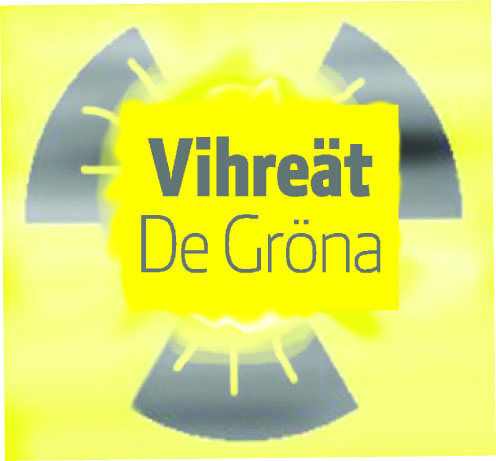
—Finland lobbies nuclear energy as a sustainable source https://www.euractiv.com/section/politics/short_news/finland-lobbies-nuclear-energy-as-a-sustainable-source/ By Pekka Vanttinen | EURACTIV.com, 11 Oct 2021
Following a previously secret decision, the Finnish government will lobby the European Union to declare nuclear power as a sustainable energy source.
Wind and solar have been approved as sustainable by the EU, but decisions on gas and nuclear have so far not been made. Even if plants are emission-free, nuclear is currently considered only a low-carbon energy source due to emissions caused by mining and transport.
Finland has four nuclear plants, and the fifth is nearing completion after years of postponements because of technical complexities. The future of nuclear energy remains important for the country. Its industry is highly energy-intensive, and Finland has a target of being carbon neutral by 2035. Currently, 30% of Finland’s energy is produced by nuclear energy.
As reported by the Finnish Broadcasting Company (YLE), the government’s alignment to lobby nuclear as a sustainable source marks a near U-turn within the Green Party sitting in the current five-party cabinet. Traditionally the party has been fiercely anti-nuclear and has resigned from previous governments over the issue. Its views have become more pragmatic, and the Greens now claim to have a technology-neutral attitude when it comes to fighting climate change.
Preventing an accidental nuclear crisis in Iran and beyond
Preventing an accidental nuclear crisis in Iran and beyond, Bulletin, By Samuel M. Hickey | October 11, 2021 There has been no sign as to when nuclear talks with Iran may recommence. But after weeks of consultations, Iran and the International Atomic Energy Agency (IAEA) have reached a deal on “the way and the timing” for UN nuclear inspectors to service cameras installed at Iran’s nuclear facilities. This patchwork agreement has kept alive the possibility of recovering a complete picture of Iran’s nuclear program and of reviving the Iran nuclear deal since Iran cut inspector access in February. It is also the first real sign of cooperative engagement by Iran since President Ebrahim Raisi came to power in August.
The Iran nuclear deal, also known as the Joint Comprehensive Plan of Action, is the latest experiment in how much UN nuclear inspector access states will tolerate. However, it is under exceptional stress from those who believe military coercion is more effective than systems of denial in stemming proliferation. Days after the least competitive presidential election in the Islamic Republic’s history, a drone attack at a centrifuge production facility on June 23 damaged the IAEA’s monitoring and surveillance equipment. While the Israeli government did not comment on the attack, the Iran Centrifuge Technology Company, located in the city of Karaj, was reportedly “on a list of targets that Israel presented to the Trump administration early last year.” Now, Iran has allowed the IAEA to service cameras in every location but the Karaj site.
Acts of sabotage are diametrically opposed to the global nuclear verification regime because states need to believe that punishment will cease if they comply with the agreed-to framework. Further, failure to revive the nuclear deal could remove the possibility of applying the verification tools gained to other proliferation challenges like North Korea or the next nuclear threshold state. The loss of these techniques would undermine efforts to improve the global nonproliferation regime. As the United States’ experiences in leaving Afghanistan make clear, accurate intelligence is critical to making informed decisions and avoiding a crisis. The wrong assumptions can have dire consequences.
Verification evolution: Iraq and the old gold standard. The current nuclear verification protocols are the strongest in history and prioritize the non-diversion of nuclear materials over sovereign jurisdiction; however, many of these legal instruments were born out of crisis and remain voluntary, not mandatory……………………..
Specifically, the Iran nuclear deal caps the quantity and level of enrichment of uranium as well as the number and sophistication of the centrifuges that are operating and limits heavy water production. It also provides continuous monitoring of centrifuges and centrifuge rotor tubes, continuous access to Natanz, the monitoring of the production or acquisition of any uranium ore concentrate and enhanced managed access, meaning the IAEA can inspect a suspected violation.
The deal also instilled two key principles that should be universalized. First, a civilian nuclear program should be commensurate to its energy or related needs. Second, the IAEA has the right to monitor a ban on “weaponization” activities, which are activities related to developing or procuring equipment for developing nuclear weapons. …………
These measures, at least until the deal expires, will provide a high degree of confidence that weapons-related activity is not occurring. They could also be promoted as a model for other countries wanting to give confidence in the peaceful nature of their own nuclear facilities………
If the politics of the Iranian nuclear program are too challenging, then the new verification tools will not be useful to solve a real crisis if one crops up in Iran or elsewhere. The great arms control theorist and developer of game theory Thomas Schelling opened his book Arms and Influence with the reflection: “One of the lamentable principles of human productivity is that it is easier to destroy than to create.” Let’s hope the groundbreaking verification and monitoring tools of the Iran nuclear deal are not a casualty of human initiative. https://thebulletin.org/2021/10/preventing-an-accidental-nuclear-crisis-in-iran-and-beyond/
The French are mainly for nuclear power, but not so keen on new nuclear stations
The French mainly for nuclear but against new power plants. According to
the Institute for Radiation Protection and Nuclear Safety, 53% of French
people consider that this energy has been a good thing for France, but they
are 45% to oppose the construction of new plants.
Le Monde 10th Oct 2021
A particular threat to health: Why it is vital to stop the dumping of mud from Hinkley Point C in the Severn Estuary.
Richard Bramhall: A particular threat to health: Why it is vital to stop
the dumping of mud from Hinkley Point C in the Severn Estuary. In 2018 the
French state-owned company Électricité de France (EDF) dug more than
100,000 tonnes of radioactively contaminated mud from the bed of the Severn
near Hinkley Point. Ignoring widespread protests they dumped it back into
the water less than two miles from Cardiff. This was to allow construction
of huge inlets and outlets for water to cool the reactors in the new
nuclear power station – Hinkley Point C – which EDF is building in
Somerset.
EDF held an old licence for the 2018 dump but it expired before
they could shift their target volume of nearly a million tonnes. They
applied to renew the dumping at Cardiff but, because of strong opposition
in Wales and more protective Welsh environment law, they switched to a site
at Portishead near Bristol.
This August the Marine Management Organisation
granted a licence for the Portishead operation and dumping immediately
began again. Campaigners on both sides of the estuary have now applied for
a Judicial Review. The legal challenge identifies many scientific and
regulatory issues.
This article concerns only one:- the health impact of
radioactive particles in the mud. Every nuclear power station in the world
vents dust particles. They are licensed to do this. Filters trap fragments
bigger than about 5 microns (thousandths of a millimetre) but thousands of
billions of smaller particles are released, as data published by the UN
show. Particles this size are inhalable and are biologically very mobile.
The greatest proportion are made of uranium.
Nation Cymru 10th Oct 2021
First George Monbiot Award for Nukiller Greenwash to Springfields Nuclear Fuel Manufacturing Plant in Cumbria – On Anniversary of the Windscale Fire — RADIATION FREE LAKELAND

PRESS RELEASE Springfields Nuclear Fuel Manufacturing Plant Wins the first George Monbiot Nukiller Greenwash award. To mark the anniversary of the 1957 Windscale [ Sellafield ] fire in Cumbria, the Close Capenhurst Campaign and Radiation Free Lakeland have awarded the first George Monbiot Award to the Springfields Nuclear Fuel Manufacturing plant in Lancashire. George Monbiot […]
First George Monbiot Award for Nukiller Greenwash to Springfields Nuclear Fuel Manufacturing Plant in Cumbria – On Anniversary of the Windscale Fire — RADIATION FREE LAKELAND
Questions over water supply for the new £20billion nuclear plant for Sizewell, UK
A regional water supplier is scrambling to work out how to provide enough
water if Sizewell C is approved, after the Environment Agency proposed a
large cut to the amount it can take from the River Waveney. EDF, the
company behind plans for the new £20billion nuclear plant, insisted today
it had a “clear and deliverable” strategy for its water supply.
Ipswich Star 7th Oct 2021
https://www.ipswichstar.co.uk/news/business/sizewell-c-questions-over-water-supply-8392154
1 This Month

of the week – Shut Down Drone Warfare!


Tell the Ukrainian Government to Drop Prosecution of Peace Activist Yurii Sheliazhenko

Petition to revoke the licensing of the Near Surface Nuclear Disposal Facility (NSDF) at Chalk River. https://www.ourcommons.ca/petitions/en/Petition/Details?Petition=e-7247
To see nuclear-related stories in greater depth and intensity – go to https://nuclearinformation.wordpress.com
-
Archives
- April 2026 (103)
- March 2026 (251)
- February 2026 (268)
- January 2026 (308)
- December 2025 (358)
- November 2025 (359)
- October 2025 (376)
- September 2025 (257)
- August 2025 (319)
- July 2025 (230)
- June 2025 (348)
- May 2025 (261)
-
Categories
- 1
- 1 NUCLEAR ISSUES
- business and costs
- climate change
- culture and arts
- ENERGY
- environment
- health
- history
- indigenous issues
- Legal
- marketing of nuclear
- media
- opposition to nuclear
- PERSONAL STORIES
- politics
- politics international
- Religion and ethics
- safety
- secrets,lies and civil liberties
- spinbuster
- technology
- Uranium
- wastes
- weapons and war
- Women
- 2 WORLD
- ACTION
- AFRICA
- Atrocities
- AUSTRALIA
- Christina's notes
- Christina's themes
- culture and arts
- Events
- Fuk 2022
- Fuk 2023
- Fukushima 2017
- Fukushima 2018
- fukushima 2019
- Fukushima 2020
- Fukushima 2021
- general
- global warming
- Humour (God we need it)
- Nuclear
- RARE EARTHS
- Reference
- resources – print
- Resources -audiovicual
- Weekly Newsletter
- World
- World Nuclear
- YouTube
-
RSS
Entries RSS
Comments RSS
 nuclear-news