North Korea returns to its missile diplomacy
Pushing the nuclear envelope’: North Korea’s missile diplomacy Guardian,
Analysis: Fear and uncertainty of the Obama years could return as Kim Jong-un revives nuclear ambitions Reuters. Justin McCurry in Tokyo, Wed 22 Sep 2021
North Korea’s recent missile launches signal that the regime has reverted to familiar tactics to attract the attention of the US. Although the rest of the world will take little comfort from this return to “normality”, after a six-month pause Pyongyang last weekend launched what it claimed were new long-range cruise missiles capable of hitting Japan, followed hours later by the test launch of two ballistic missiles into the sea, apparently from a train.
Then came the clearest sign since its last nuclear test in 2017 that the North is not about to abandon its project to build a viable deterrent, with satellite images showing it was expanding a uranium enrichment plant at its main Yongbyon nuclear complex……….. (registered readers only) https://www.theguardian.com/world/2021/sep/22/pushing-the-nuclear-envelope-north-koreas-missile-diplomacy
Interaction of Nuclear Waste With the Environment More Complicated Than Previously Thought

Interaction of Nuclear Waste With the Environment May Be More Complicated Than Previously Thought, https://www.technologynetworks.com/applied-sciences/news/interaction-of-nuclear-waste-with-the-environment-may-be-more-complicated-than-previously-thought-353879, September 22 2021
| Original story from the Lawrence Livermore National Laboratory Lawrence Livermore National Laboratory (LLNL) scientists and collaborators have proposed a new mechanism by which nuclear waste could spread in the environment.
The new findings, which involve researchers at Penn State and Harvard Medical School, have implications for nuclear waste management and environmental chemistry. The research is published in the Journal of the American Chemical Society.
“This study relates to the fate of nuclear materials in nature, and we stumbled upon a previously unknown mechanism by which certain radioactive elements could spread in the environment,” said LLNL scientist and lead author Gauthier Deblonde. “We show that there are molecules in nature that were not considered before, notably proteins like ‘lanmodulin’ that could have a strong impact on radioelements that are problematic for nuclear waste management, such as americium, curium, etc.”
Past and present nuclear activities (e.g., for energy, research or weapon tests) have increased the urgency to understand the behavior of radioactive materials in the environment. Nuclear wastes containing actinides (e.g. plutonium, americium, curium and neptunium) are particularly problematic, as they remain radioactive and toxic for thousands of years.
However, very little is known about the chemical form of these elements in the environment, forcing scientists and engineers to use models to predict their long-term behavior and migration patterns. Thus far, these models have only considered interactions with small natural compounds, mineral phases and colloids, and the impact of more complex compounds like proteins has been largely ignored. The new study demonstrates that a type of protein that is abundant in nature vastly outcompetes molecules that scientists previously considered as the most problematic in terms of actinide migration in the environment.
“The recent discovery that some bacteria specifically use rare-earth elements has opened new areas of biochemistry with important technological applications and potential implications for actinide geochemistry, because of chemical similarities between the rare-earths and actinides,” said Joseph Cotruvo Jr., Penn State assistant professor and co-corresponding author on the paper.
The protein called lanmodulin is a small and abundant protein in many rare-earth-utilizing bacteria. It was discovered by the Penn State members of the team in 2018. While the Penn State and LLNL team has studied in detail how this remarkable protein works and how it can be applied to extract rare-earths, the protein’s relevance to radioactive contaminants in the environment was previously unexplored.
“Our results suggest that lanmodulin, and similar compounds, play a more important role in the chemistry of actinides in the environment than we could have imagined,” said LLNL scientist Annie Kersting. “Our study also points to the important role that selective biological molecules can play in the differential migration patterns of synthetic radioisotopes in the environment.”
“The study also shows for the first time that lanmodulin prefers the actinide elements over any other metals, including the rare-earth elements, an interesting property than could be used for novel separation processes,” said LLNL scientist Mavrik Zavarin.
Rare-earth element biochemistry is a very recent field that Penn State and LLNL have helped to pioneer, and the new work is the first to explore how the environmental chemistry of actinides may be linked to nature’s use of rare-earth elements. Lanmodulin’s higher affinity for actinides might even mean that rare-earth-utilizing organisms that are ubiquitous in nature may preferentially incorporate certain actinides into their biochemistry, according to Deblonde.
Reference
Deblonde GJ-P, Mattocks JA, Wang H, et al. Characterization of Americium and Curium Complexes with the Protein Lanmodulin: A Potential Macromolecular Mechanism for Actinide Mobility in the Environment. J Am Chem Soc. Published online September 20, 2021. doi:10.1021/jacs.1c07103
Vatican concerned over deal for Australian nuclear-powered subs
Vatican’s Cardinal Parolin concerned over deal for Australian nuclear-powered subs, Sep 22, 2021 by Catholic News Service ROME — Plans by the United States and Great Britain to give Australia the technology needed for nuclear-powered submarines go counter to global disarmament efforts, said Cardinal Pietro Parolin, Vatican secretary of state…….
“One cannot but be concerned” by the announcement made in mid-September by U.S. President Joe Biden, British Prime Minister Boris Johnson and Australian Prime Minister Scott Morrison, the cardinal said.
Parolin, Cardinal Jean-Claude Hollerich of Luxembourg, president of the Commission of Bishops’ Conferences of the European Union and Cardinal Peter Turkson, president of the Dicastery for Promoting Integral Human Development, were speaking Sept. 22 at a conference on “Christian Values and the Future of Europe” sponsored by the European People’s Party………….. https://www.ncronline.org/news/politics/vaticans-cardinal-parolin-concerned-over-deal-australian-nuclear-powered-subs
Iran clearly wants to return to nuclear talks
‘Very clear intent’ by Iran to return to nuclear talks, Ireland says, By Michelle Nichols UNITED NATIONS, Sept 22 (Reuters) – Iran’s foreign minister expressed a “very clear intent” to return to nuclear talks in Vienna, Ireland’s foreign minister said on Wednesday after meeting with his Iranian counterpart on the sidelines of the United Nations General Assembly.
“That may not happen for a number of weeks, as the new Iranian government finalizes their approach towards those negotiations. But certainly, he expressed a very clear intent to return to those negotiations,” Simon Coveney, Ireland’s foreign minister, told reporters.
Ireland is currently a member of the U.N. Security Council and coordinates the 15-member body’s work on a 2015 Iran nuclear deal between Tehran, Britain, China, France, Germany and Russia………
In a video statement, Raisi told the annual gathering of world leaders at the United Nations on Tuesday that Tehran wants to resume nuclear talks with world powers that would lead to removal of U.S. sanctions. https://www.reuters.com/world/europe/iran-minister-expressed-very-clear-intent-return-nuclear-talks-ireland-2021-09-22/
U.S. Militarism’s Toxic Impact on Climate Policy
Biden told the UN General Assembly that “…as we close this period of relentless war, we’re opening a new era of relentless diplomacy.” But his exclusive new military alliance with the U.K. and Australia, and his request for a further increase in military spending to escalate a dangerous arms race with China that the United States started in the first place, reveal just how far Biden has to go to live up to his own rhetoric, on diplomacy as well as on climate change
U.S. Militarism’s Toxic Impact on Climate Policy, Medea Benjamin and Nicolas J. S. Davies LA Progressive 22 Sept 21, President Biden addressed the UN General Assembly on September 21 with a warning that the climate crisis is fast approaching a “point of no return,” and a promise that the United States would rally the world to action. “We will lead not just with the example of our power but, God willing, with the power of our example,” he said.
But the U.S. is not a leader when it comes to saving our planet. Yahoo News recently published a report titled “Why the U.S. Lags Behind Europe on Climate Goals by 10 or 15 years.” The article was a rare acknowledgment in the U.S. corporate media that the United States has not only failed to lead the world on the climate crisis, but has actually been the main culprit blocking timely collective action to head off a global existential crisis.
The anniversary of September 11th and the U.S. defeat in Afghanistan should be ringing alarm bells inside the head of every American, warning us that we have allowed our government to spend trillions of dollars waging war, chasing shadows, selling arms and fueling conflict all over the world, while ignoring real existential dangers to our civilization and all of humanity.
The world’s youth are dismayed by their parents’ failures to tackle the climate crisis. A new survey of 10,000 people between the ages of 16 and 25 in ten countries around the world found that many of them think humanity is doomed and that they have no future.
Three quarters of the young people surveyed said they are afraid of what the future will bring, and 40% say the crisis makes them hesitant to have children. They are also frightened, confused and angered by the failure of governments to respond to the crisis. As the BBC reported, “They feel betrayed, ignored and abandoned by politicians and adults.”
Young people in the U.S. have even more reason to feel betrayed than their European counterparts. America lags far behind Europe on renewable energy. European countries started fulfilling their climate commitments under the Kyoto Protocol in the 1990s and now get 40% of their electricity from renewable sources, while renewables provide only 20% of electric power in America. ………..
the enormous amount of money the U.S. spends on militarism. Since 2001, the United States has allocated $15 trillion (in FY2022 dollars) to its military budget, outspending its 20 closest military competitors combined. The U.S. spends far more of its GDP (the total value of goods produced and services) on the military than any of the other 29 Nato countries—3.7% in 2020 compared to 1.77%. And while the U.S. has been putting intense pressure on NATO countries to spend at least 2% of their GDP on their militaries, only ten of them have done so. Unlike in the U.S., the military establishment in Europe has to contend with significant opposition from liberal politicians and a more educated and mobilized public. ………
On climate change, the infrastructure bill includes only $10 billion per year for conversion to green energy, an important but small step that will not reverse our current course toward a catastrophic future. Investments in a Green New Deal must be bookended by corresponding reductions in the military budget if we are to correct our government’s perverted and destructive priorities in any lasting way. This means standing up to the weapons industry and military contractors, which the Biden administration has so far failed to do.
The reality of America’s 20-year arms race with itself makes complete nonsense of the administration’s claims that the recent arms build-up by China now requires the U.S. to spend even more. China spends only a third of what the U.S. spends, and what is driving China’s increased military spending is its need to defend itself against the ever-growing U.S. war machine that has been “pivoting” to the waters, skies and islands surrounding its shores since the Obama administration.
Biden told the UN General Assembly that “…as we close this period of relentless war, we’re opening a new era of relentless diplomacy.” But his exclusive new military alliance with the U.K. and Australia, and his request for a further increase in military spending to escalate a dangerous arms race with China that the United States started in the first place, reveal just how far Biden has to go to live up to his own rhetoric, on diplomacy as well as on climate change
The United States must go to the UN Climate Summit in Glasgow in November ready to sign on to the kind of radical steps that the UN and less developed countries are calling for. It must make a real commitment to leaving fossil fuels in the ground; quickly convert to a net-zero renewable energy economy; and help developing countries to do the same. As UN Secretary General Antonio Guterres says, the summit in Glasgow “must be the turning point” in the climate crisis.
That will require the United States to seriously reduce the military budget and commit to peaceful, practical diplomacy with China and Russia. Genuinely moving on from our self-inflicted military failures and the militarism that led to them would free up the U.S. to enact programs that address the real existential crisis our planet faces – a crisis against which warships, bombs and missiles are worse than useless. https://www.laprogressive.com/toxic-impact-on-climate-policy/
Going nuclear: the secret submarine deal to challenge China, PODCAST
Going nuclear: the secret submarine deal to challenge China, PODCAST Guardian, 22 Sept 21, It came out of the blue – but the new military pact between Australia, the UK and the US could transform international relations for a generation. The Guardian’s defence and security editor, Dan Sabbagh, explains the Aukus deal that has enraged Beijing.
When Boris Johnson, Joe Biden and Scott Morrison announced a new deal that would provide Australia with the technology to run silent nuclear submarines as part of its navy, one phrase kept coming up: “stability in the Indo-Pacific”. The word the leaders of the UK, the US and Australia did not use may be more important: China. By striking the Aukus deal, an unprecedented agreement on defence cooperation between the three countries, the governments have moved to counter what they view as Beijing’s aggression – and prompted questions about whether the move is an ominous sign of a new ‘cold war’ mentality………it has raised a series of questions about whether it signals a shift in international alliances: what happens if China invades Taiwan? What are the knock-on consequences of adding to the club of countries with nuclear-powered submarines? And will any of it make those who live in the Aukus countries – or their neighbours – any safer?
In this episode, Michael Safi is joined by the Guardian’s defence and security editor, Dan Sabbagh, to unpack the ramifications of the deal and ask what it means for the UK and Australia to be tied to American foreign policy for decades to come. https://www.theguardian.com/news/audio/2021/sep/21/going-nuclear-the-secret-submarine-deal-to-challenge-china
Guest post: 5 reasons to talk about adaptation — The Earthbound Report

By Dr. Morgan Phillips – Co-Director, The Glacier Trust Many in the environmental and climate movement remain reluctant to talk about climate change adaptation. This is slowly changing, but if you are still sceptical, it pays to remember that the adaptation story is not, and does not have to be, in opposition to the mitigation […]
Guest post: 5 reasons to talk about adaptation — The Earthbound Report
September 22 Energy News — geoharvey

Opinion: ¶ “Honest Australian Government Ads And The Great Australian Coverup” • Here is a series of ads created to show the truth about the Australian government’s approach to climate change. Don’t watch them if you are easily offended. They are intelligent and honest, but full of Aussie bawdy humor and satire. Each ad is […]
September 22 Energy News — geoharvey
Proposed US/UK nuclear-powered submarines for Australia: jeopardising health and fueling an arms race — IPPNW peace and health blog
Summary of joint statement by IPPNW and its affiliates in Australia, UK and US Health professionals in Australia, the UK and the US have expressed their deep concerns at Australia’s proposed acquisition of nuclear-powered submarines with UK and US assistance, stating that the plan will jeopardise global health and security. Their concerns are set out […]
Proposed US/UK nuclear-powered submarines for Australia: jeopardising health and fueling an arms race — IPPNW peace and health blog
Australia’s nuclear submarines will be obsolete before they are ever in use
Why will they be obsolete?

Because of the rapid advances in artificial intelligence (AI), detection systems and signal processing, combined with swarming autonomous unmanned systems – by 2040 these present USA and UK models will probably be too easily detectable, and so, effectively useless.
Why does Australia want nuclear submarines?

Other reasons – helping the USA by buying these very costly submarines which are not particularly useful for monitoring our coastline, but good for long distance. Helping Scott Morrison to look important on the world stage.
This week – nuclear submarines overwhelm the news
Well, Australia’s top marketing specialist, Scott Morrison, this week excelled himself, marketing his favourite product, himself for re-election in Australia’s coming khaki Liberal Coalition campaign. World-wide fame – to play with the big toys of the big boys, even if President Biden couldn’t remember his name. I did find the coverage of nuclear submarines and AUKUS quite overwhelming – hence this too-long news summary.
AUSTRALIA
TODAY’S NUCLEAR SUBMARINE NEWSUS nuclear submarines: a dangerous nonsense. One white elephant submarine deal replaced with a worse one. French ambassador says Scott Morrison gave no warning on the nuclear submarine deal. Maritime Union of Australia calls for government spending on health, not nuclear submarines. Transparency needed so nuclear-powered subs don’t turn into nuclear power subsidies What is Scott Morrison doing in New York? Nothing on climate, it seems.
NUCLEAR SUBMARINE AND AUKUS NEWS OVER PAST FEW DAYS
What does the nuclear submarines announcement mean for Australia?
Politics. Scott Morrison’s AUKUS deal designed to win election, not make Australia safe. We need a full and transparent Inquiry in the nuclear submarine deal. Nuclear good, batteries bad: Morrison’s subs deal is thin edge of wedge . Nuclear submarines may never eventuate; it’s just Scott Morrison’s giant new election ploy. Nuclear submarine deal – the start of Morrison’s election campaign. Minerals Council quick to see nuclear submarines as step to nuclear Australia. #ScottyFromMarketing’s propaganda triumph -nuclear submarines – https://www.youtube.com/watch?v=PuP4jOc4ibo
Opposition to submarines and AUKUS. Australia’s anti-nuclear movement ready for a big battle. Greens pick anti-nuclear candidate to challenge Treasurer Josh Fraudenberg. Australian Greens blast nuclear submarine deal. Nuclear powered submarines for Australia. Nuclear by stealth? Senator Rex Patrick calls for Inquiry before Australia moves to buy USA nuclear submarines. anger grows over Australia’s submarine deal . Australia’s nuclear-powered submarine deal is fuelling anger in the country. Concerns grow over nuclear submarine plan. Too slow, too expensive: Why nuclear power makes no sense for Australia
Safety. Nuclear-powered submarines a ‘terrible decision’ which will make Australia ‘less safe – Australian Greens. Doubts about the nuclear submarines, do they make Australia less safe? Hugh White wonders. Australia’s new nuclear submarines will have dangerous Highly Enriched Uranium, not the Low Enriched Uranium of the French ones. The AUKUS deal and nuclear submarine plan ties Australia in to any American engagement against China.
Cost Big questions remain about Australia’s nuclear submarines, but it’s a massive financial gain for nuclear corporations. How much will Australia’s nuclear submarines cost the taxpayer? Australia to lease nuclear submarines from USA, UK?.A nuclear explosionof taxpayers’ money in the new nuclear submarine plan.
(Earlier) Morrison to tear up the submarine deal with France. Too late to pull out of Australia’s botched super-expensive submarines purchase?
On a lighter note $90 Billion Nuclear Powered Subs To Bring Australia Out Of Lockdown In Time For Christmas.
Napandee radioactive waste dump plan – a nuclear waste of money.
Ballarat Council considers supporting the U.N. Treaty on the Prohibition of Nuclear Weapons.
Review of book: Long Half-life – The Nuclear Industry in Australia
INTERNATIONAL
New Australia, Britain, and U.S. military alliance—AUKUS— a serious escalation of the new Cold War on China. Nuclear-powered submarines have ‘long history of accidents.
New research shows drastic climate effects of even a ”limited” nuclear war.
Nuclear submarines and their disadvantages,
A bit of good news – Animal Doctor: Good news from Europe for farmed animals.
ANTARCTICA. Scientists still don’t know how far melting in Antarctica will go – or the sea level rise it will unleash.
JAPAN. TEPCO not informing the Regulation Agency for 2 years about the 25 damaged filters at Fukushima Daiichi NPP. Tepco technicians ignored Fukushima filters leaking radioactive water. Lethal radiation levels detected in Fukushima nuke plant reactor lid. New radiation scrubber begins cleaning water at Fukushima plant.
FRANCE. France angry about nuclear submarine cancelleation – recalls ambassadors to Australia, Aukus: France pulls out of UK defence talks amid row. USA. questionable rush to start Flamanville nuclear reactor despite its defects . Nuclear submarine deal planned for 18 months – French ambassador says this is treasonous
CHINA. China fears that the nuclear-powered submarines could be armed with nuclear weapons at short notice.
INDIA. Is AUKUS pact a signal to India to go for nuclear attack submarines? Aukus fallout: for years, US told India it couldn’t share nuclear submarine technology. ‘And now this.
USA.
Tragically, Biden continues same nuclear weapons ”modernization” budget as Trump’s . China still way behind USA in nuclear weaponry: time for diplomacy and negotiations on arms control. Top U.S. general feared that Trump might start a nuclear war. . Generals Should Not Have to Break the Rules to Prevent Nuclear War. Don’t Let Presidents Start Nuclear Wars on Their Own. Nuclear Modernization Casts Budget Shadow Over Air Force Plans.USA developing space-based electromagnetic warfare. U.S. generals planning for a space war they see as all but inevitable. Latest on America’s plutonium ”pits” costly fiasco Illinois nuclear stations kept alive as Senate approves Bill to subsidise Exelon. Illinois approves $700 million in subsidies to Exelon, prevents nuclear plant closures. Turkey Point nuclear station vulnerable to hurricanes, sea level rise, as climate change continues.Bipartisan House group asks Biden to stop Canada’s Great Lakes nuclear storage plans. NRC issues license to store’spent nuclear fuel‘ in Andrews . Texas to fight on against dumping of spent nuclear fuel in Andrews County. New Mexico backs Texas in opposing nuclear fuel storage. Samuel Lawrence Foundation loses court case to keep spent fuel pools as safety backup at San Onofre nuclear station. Push for nuclear power in Pueblo unlikely to succeed: renewables win favour.
UKRAINE. Chernobyl nuclear zone is becoming more radioactive: they don’t know why..
CANADA. Nuclear power: Why molten salt reactors are problematic and Canada investing in them is a waste. Responses to Candidate Questionnaire: Radioactive Waste in the Ottawa Valley.
UK.
- AUKUS military agreement – bad timing ahead of Glascow Climate Summit.
- UK’s nuclear industry decline is a permanent process.
- Climate change, sea level rise – real and present danger to UK’s Bradwell and Sizewell nuclear sites
- Earthquakes Stopped Fracking – So Why the Monstrous Silence On “Likely” Induced Seismicity Five Miles From Sellafield? Exactly Who is Protecting Who?
- Time to rethink Hinkley C nuclear plan – EDF’s biased research minimises harm to fish Protests against nuclear storage plans that could kill the tourist industry.
- The Cold War near disasters at RAF Lakenheath could have left Suffolk as a nuclear wasteland.
- A site once earmarked for nuclear power will now assemble wind turbines.
- Rolls-Royce’s grandiose plan to mine the moon and Mars.
MALAYSIA. Malaysia and Indonesia warn Australia’s Indo-Pacific pact could trigger nuclear arms race.
IRAN. The new AUKUS pact may have paved the way for Iran to move to a nuclear weapon. Iran appoints harsh critic of the nuclear deal to the Foreign Ministry. Iranian Guards Physically Harassed Female U.N. Nuclear Inspectors, Diplomats Say .
NORTH KOREA. North Korea says Australia’s submarine deal could trigger ‘nuclear arms race. N.Korea tests first ‘strategic’ cruise missile with possible nuclear capability . North Korea, nuclear proliferation and why the ‘madman theory’ is wrong about Kim Jong-ung.
RUSSIA. Russia urges IAEA monitoring, ‘transparency’ on US-Australia nuclear sub pact, Nuclear ballistic missile submarine meltdown, 1961. Russia developing more floating nuclear power plants.
ITALY. Italy launches national debate on nuclear waste disposal.
SPAIN. Nuclear power companies threaten to shut down plants if Spanish government takes action on soaring bills.
ISRAEL. Nuclear reactor worker wins NIS one million cancer compensation. Mossad assassinated Iran’s top nuclear scientist using an artificial-Intelligence-powered, remote-controlled machine gun.
CZECH REPUBLIC.. Czech government will subsidise nuclear power.
POLAND. Poland’s nuclear folly
US nuclear submarines: a dangerous nonsense for Australia and the region

A third reason concerns the continued use of military might as the way to address conflicts. Bellicose, top-down exercise of power demonstrates a fascination with violence and a corresponding illiteracy about non-violence
. You have to ask whether men in suits, in politics, corporations and in association with media acolytes, ever learn.
US nuclear submarines: a dangerous nonsense https://www.greenleft.org.au/content/us-nuclear-submarines-dangerous-nonsense, Stuart Rees,September 20, 2021Issue 1320Australia Unless you think that force of arms gives security and that revival of alliances with far away governments makes sense, the decision to own and operate United States nuclear submarines should be judged a dangerous nonsense.
There are four reasons for making this claim.
Foreign policy in search of an enemy — in this case China — looks like a guarantee of conflict if not war. Polarisation with little room for dialogue only benefits the arms industry, United States corporations and those in the US, Britain, Australia and China who think a taste for militarism and masculinity will show the benefits of violence. Capacity to learn from the devastation of the past is once again shoved aside.
A second reason concerns Australia’s geography: as though days of empire must not be forgotten, a country located in South East Asia and the Pacific chooses an alliance with elderly friends in Washington and London underscores my submarine despair.
Such a decision reeks of cultural disdain for diverse countries. Even if dialogue with China seems currently blocked, it should make diplomatic sense to communicate about security by being at coffee tables and in tea houses in Malaysia, Vietnam, Indonesia, Cambodia and the Philippines, as well as Pacific Island nations.
Such communication would be about Millennium goals, COVID-19 vaccinations and the future of planet Earth. Alliances with those countries about those issues would make sense.
A third reason concerns the continued use of military might as the way to address conflicts. Bellicose, top-down exercise of power demonstrates a fascination with violence and a corresponding illiteracy about non-violence. You have to ask whether men in suits, in politics, corporations and in association with media acolytes, ever learn.
At a time when surveys of young people record their fear of the future and their despair that powerful, inaccessible men refuse to hear them, they are offered a massive bill for nuclear operating submarines.
Indifference to contracts and derision about trust is a fourth and final reason for disdain about the nuclear submarine alliance.
Whatever the merits of building even one submarine, at least there were years of agreement with French companies to undertake that ship building task. I understand there are up to 60 Australian naval personnel in Cherbourg, France, who have been taken by surprise at US President Joe Biden, British Prime Minister Boris Johnson and Prime Minister Scott Morrison’s announcement.
Who cares? Trust is of no consequence. Contracts can be torn up. Promises were never meant to be kept. Besides, in Morrison’s case, an election looms and boasting about national security by having US submarines gives a potential war-like platform for winning.
There are and there will be no winners.
Can anyone forget the very recent US betrayal and refusal to consult friends and allies in Afghanistan? To distract from that debacle, just pretend that Washington will provide strength and trust in submarines. This is a dangerous nonsense.
[Stuart Rees OAM is Professor Emeritus, University of Sydney, recipient of the Jerusalem (Al Quds) Peace Prize and author of Cruelty or Humanity. He is also the founding Director of the Sydney Peace Foundation. This article was first published at The New Bush Telegraph.]
One white elephant submarine deal replaced with a worse one

Australia’s submarine policy has previously eschewed nuclear propulsion. Now, as a dowry for receiving such largesse, Canberra is offering up Australia as a confirmed US asset in policing the Indo-Pacific. US Navy commanders will be smacking their lips at maintaining attack vessels in Australia as part of the arrangement……
Nuclear white elephants: Australia’s new submarine deal, Green Left, Binoy KampmarkSeptember 16, 2021Issue 1319Australia Few areas of public expenditure are more costly and mindlessly wasteful than submarines. Australia’s effort is particularly impressive.
Pick a real winner by signing a contract for a yet-to-be-designed attack class submarine, supposedly “necessary” in an “increasingly dangerous” region. Ensure the submarine design is based on a nuclear model, but remove that attribute and charge at least twice as much for a less capable weapon. Make sure the order is for 12 of these yet-to-be-designed-and-built systems. And make sure that they are only ready sometime in the 2030s (by which time they risk being obsolete).
The dubious honour for this contract, initially costing $50 billion, went to the French submarine company DCNS (now called Naval Group), which nudged out German and Japanese contenders with pre-existing designs………
The French military establishment praised it as the “contract of the century”. Le Parisien’s editorial lauded the prospect of thousands of jobs. French Defence Minister Jean-Yves Le Drian proclaimed a “50-year marriage” had begun……..
On September 15, the Canberra press gallery was awash with rumours that a divorce was being proposed.
The following day, Prime Minister Scott Morrison announced a security ménage à trois with the United States and Britain, with Australia as the subordinate partner. The glue that will hold this union together is a common suspicion: China.
Replacing the Attack Class submarine will be a nuclear-powered alternative with Anglo-American blessing, based on the US Virginia class or British Astute class.
The joint statement announcing the creation of AUKUS said the three countries were “guided” by “enduring ideals and shared commitment to the international rules-based order”. They resolved “to deepen diplomatic, security, and defence cooperation in the Indo-Pacific region, including by working with partners, to meet the challenges of the twenty-first century.”
AUKUS, they said, would be a new “enhanced trilateral security partnership” to further such goals.
The agreement is nothing less than an announcement to the region that the Anglophone bloc intends to police, oversee and, if necessary, punish…….
The first initiative is a “shared” ambition “to support Australia in acquiring nuclear-powered submarines for the Royal Australian Navy”. US and British expertise will be drawn on to “bring an Australian capability into service at the earliest achievable date” from the submarine programs of both countries…..
Australia’s submarine policy has previously eschewed nuclear propulsion. Now, as a dowry for receiving such largesse, Canberra is offering up Australia as a confirmed US asset in policing the Indo-Pacific. US Navy commanders will be smacking their lips at maintaining attack vessels in Australia as part of the arrangement……
The enduring problem of Australia being able to build these submarines will have US lawmakers pushing for their construction on home soil, a situation that could mirror the Naval Group contract headaches. Australia also lacks a shipyard able to build or maintain such vessels.
In helping create AUKUS, Canberra has exchanged one white elephant of the sea for another. It has also significantly increased the prospects for a potential nuclear conflict in the Indo-Pacific region. The warmongers will be ecstatic.
[Dr Binoy Kampmark lectures at RMIT University, Melbourne. Email bkampmark@gmail.com.] https://www.greenleft.org.au/content/nuclear-white-elephants-australias-new-submarine-deal
Chernobyl nuclear zone is becoming more radioactive: they don’t know why.
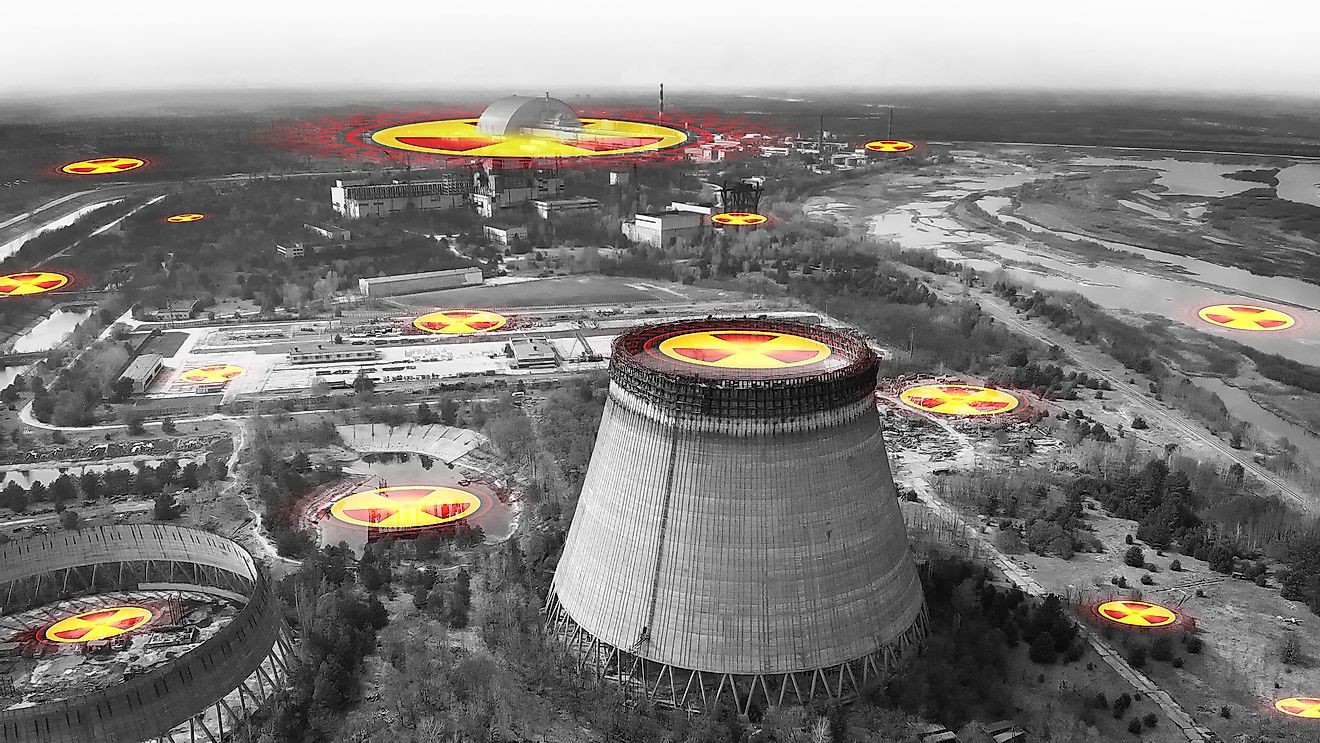
Chernobyl’s Blown Up Reactor 4 Just Woke Up. Scientists don’t understand why. https://historyofyesterday.com/chernobyls-blown-up-reactor-4-just-woke-up-74bedd5fc92d—
Andrei Tapalaga
The nuclear disaster that occurred in 1986 will forever be remembered, but the world will soon have a reminder of the event as the zone for some reason (yet unexplained by scientists)is becoming more radioactive. For those who may not be aware of the incident here is an article to get you up to speed.
“Chernobyl will never be a problem”
Underneath reactor 4 there is still nuclear fuel that is active and which will take around 20,000 years for it to deplete. The uranium is too radioactive for anyone to live in the city and since the incident, the European Union had created a shield around the reactor which should not allow for the radioactive rays to come out.Chernobyl officials presumed any criticality risk would fade when the massive New Safe Confinement (NSC) was slid over the Shelter in November 2016.”
“The €1.5 billion structure was meant to seal off the Shelter so it could be stabilized and eventually dismantled.”
However, many other parts around Chernobyl have also been affected due to prolonged exposure, some more than others, and many of them have not been contained as they were not presenting any major radioactive activity until now. Neil Hyatt, a nuclear chemist from the University of Sheffield had mentioned that there is a possibility for the uranium fuel to reignite on its own.
Hyatt also offered a simple explanation on how this is possible, just like charcoal can reignite in a barbeque, so can nuclear materials that have once been ignited. He as well as a handful of nuclear chemists have mentioned previously the possibility of the uranium from Chernobyl to reignite, but the scientists from Ukraine that are responsible for managing the nuclear activity within the vicinity never really listened, until now.
Scientists from Ukraine have placed many sensors around reactor 4 that constantly monitor the level of radioactivity. Recently those sensors have detected a constant increase in the level of radioactivity. It seems that this radioactivity is coming from an unreachable chamber from underneath reactor 4 that has been blocked since the night of the explosion on the 26th of April, 1986.
What could be causing this?
The experts from Ukraine don’t really understand why this is happening although they do have a hypothesis. Water is used to start the fission process within nuclear materials, this makes the nuclear material release energy that within a nuclear reactor can be maintained under control, but in this instance, the experts are afraid they will not be able to control it.
Another hypothesis is that since reactor 4 has been completely shielded, no water from the rain was able to reach the nuclear fuel. The water from rain may have been what kept the nuclear material under control. With no water, the nuclear fuel may be at risk of overheating, leading to another nuclear disaster.
There may be another reason for this constant increase in radioactivity, what has been mentioned above are only hypotheses, maybe something totally different is occurring under reactor 4 or within the nuclear material left inside. This is something that definitely should ring some alarm bells in order to prepare for the worst sort of situation and hopefully the world’s smartest in the field of nuclear chemistry can come together to identify the problem and come up with a potential solution.
Sources:…………
Tragically, Biden continues same nuclear weapons ”modernization” budget as Trump’s
Biden’s Nuclear Weapons Commitments: Dangerous Continuities Tragically, despite widespread high hopes for change, in the existential realm of potentially omnicidal nuclear war preparations, the Biden administration has signaled more continuity than change.
Common Dreams, JOSEPH GERSONSeptember 18, 2021 ”…………………………….. The sad and dangerous truth is that the nuclear weapons budget President Biden submitted to Congress differs little from Trump’s nuclear weapons “modernization” commitments. Despite Biden’s election year and earlier statements that the “sole use” of nuclear weapons that he could imagine was in response to a nuclear attack against the United States, the budget he submitted to Congress includes funding to replace the country’s entire arsenal of first-strike—use them or lose them—ground based ICBMs. So too the budget Congress will be voting on includes funding to produce 80 plutonium pits (the fissile core of a nuclear warhead) per year—each one of which with the destructive capability to devastate cities as large as Shanghai, Karachi and Moscow. Biden and his Pentagon also expect to win funding for the extremely destabilizing “more usable” tactical (roughly Hiroshima sized) B-61-12 bound for Europe, the nuclear air-launched cruise Long Range Standoff Weapon, and new warheads for submarine launched missiles, all designed to hold China hostage to a U.S. first-strike attack.
What is driving China’s anticipated increase in the size of its nuclear arsenal and fears that it might abandon its no first use doctrine? The answer is those standoff cruise missiles and U.S. missile defenses that are being deployed along China’s periphery that Chinese officials and analysts fear could make first-strike nuclear war fighting attractive to U.S. leaders.
Days prior to the Congressional budget debate and on the eve of the launching of the Biden administration’s Nuclear Posture Review, the Defense Intelligence Agency stoked elite panic with the release of photographs which convincingly demonstrate that Beijing has initiated construction of 250 missile silos for Chinese land-based strategic intercontinental nuclear missiles.
Yet,former lead U.S. arms control negotiator and Deputy NATO Secretary General Rose Gottemoeller warns that the silo holes being dug in northern China are a simply a “great distraction”. As an arms controller, he is committed to nuclear deterrence and strategic stability and unwilling to press for what Noam Chomsky calls the “obvious solution” to the existential threat posed by nuclear weapons: “getting rid of them.” She is willing to concede that China’s nuclear buildup is designed to reinforce its “second strike deterrence posture”, which is threatened by U.S. nuclear and missile defense forces. Rather than panicking and wasting limited U.S. resources, she urges policymakers to remember that even if China quadruples the size of its nuclear arsenal by placing an ICBM armed with multiple warheads in each of those silos, it will still have fewer nuclear weapons than the United States or Russia. She urges lawmakers to focus on economic and technological competition and not to be panicked into funding the Pentagon’s wish list of Strangelovian nuclear weapons former lead U.S. arms control negotiator and Deputy NATO Secretary General Rose Gottemoeller warns that the silo holes being dug in northern China are a simply a “great distraction”. As an arms controller, he is committed to nuclear deterrence and strategic stability and unwilling to press for what Noam Chomsky calls the “obvious solution” to the existential threat posed by nuclear weapons: “getting rid of them.” She is willing to concede that China’s nuclear buildup is designed to reinforce its “second strike deterrence posture”, which is threatened by U.S. nuclear and missile defense forces. Rather than panicking and wasting limited U.S. resources, she urges policymakers to remember that even if China quadruples the size of its nuclear arsenal by placing an ICBM armed with multiple warheads in each of those silos, it will still have fewer nuclear weapons than the United States or Russia. She urges lawmakers to focus on economic and technological competition and not to be panicked into funding the Pentagon’s wish list of Strangelovian nuclear weapons former lead U.S. arms control negotiator and Deputy NATO Secretary General Rose Gottemoeller warns that the silo holes being dug in northern China are a simply a “great distraction”. As an arms controller, he is committed to nuclear deterrence and strategic stability and unwilling to press for what Noam Chomsky calls the “obvious solution” to the existential threat posed by nuclear weapons: “getting rid of them.” She is willing to concede that China’s nuclear buildup is designed to reinforce its “second strike deterrence posture”, which is threatened by U.S. nuclear and missile defense forces. Rather than panicking and wasting limited U.S. resources, she urges policymakers to remember that even if China quadruples the size of its nuclear arsenal by placing an ICBM armed with multiple warheads in each of those silos, it will still have fewer nuclear weapons than the United States or Russia. She urges lawmakers to focus on economic and technological competition and not to be panicked into funding the Pentagon’s wish list of Strangelovian nuclear weapons.
At the policy making level there are four theaters of political struggle: 1) Congress and its debates over Biden’s $634 ten-year nuclear weapons funding proposal and No First Use legislation; 2) the Biden administration’s Nuclear Posture Review; 3) January’s Nuclear Nonproliferation Treaty (NPT) Review Conference at the U.N., and 4) the March 2022 governmental First Meeting of States Parties of the Treaty on Prohibition of Nuclear Weapons (TPNW) in Geneva.
The Congressional Progressive Caucus has called out the Biden administration for failing to propose a nuclear weapons spending that “does not reflect your longstanding efforts to reduce our reliance on nuclear weapons.” They oppose funding for new submarine launched nuclear warheads, to maintain the B83 gravity bombs with an explosive yield of up to 100 times the Hiroshima A-bomb, and for the Long-Range Standoff Weapon described above. And, while not calling for the total elimination of first-strike land-based ICBMs, they oppose funding for the creation of a new generation of these omnicidal weapons. They also urge that the Biden Nuclear Posture Review, which will be conducted with little public or Congressional input by the Pentagon and senior administration “national security” officials, mandate reduction of the nation’s reliance on nuclear weapons.
Internationally, pressure for nuclear weapons abolition will manifest itself at the NPT Review Conference and TPNW First Meeting early in the new year. With the world’s nuclear powers upgrading, and in many cases expanding, their nuclear arsenals, there is little hope that progress will be made to fulfill the nuclear powers’ Article VI Treaty commitment to engaging in good faith negotiations for the complete elimination of their nuclear arsenals. And, with the Biden administration’s embrace of Israel’s new right-wing (and racist) government, it is unlikely that it will voice support for or take action to implement Washington’s earlier NPT commitment to co-convene an international conference for the creation of a Middle East Nuclear and WMD-Free Zone.
Dim as prospects are for a successful NPT Review, it remains important for activists and international civil society to press as hard as we can for the full implementation of this seminally important treaty. Silence, being consent, would leave the nuclear powers with an open field. https://www.commondreams.org/views/2021/09/18/bidens-nuclear-weapons-commitments-dangerous-continuities
-
Archives
- February 2026 (228)
- January 2026 (308)
- December 2025 (358)
- November 2025 (359)
- October 2025 (376)
- September 2025 (258)
- August 2025 (319)
- July 2025 (230)
- June 2025 (348)
- May 2025 (261)
- April 2025 (305)
- March 2025 (319)
-
Categories
- 1
- 1 NUCLEAR ISSUES
- business and costs
- climate change
- culture and arts
- ENERGY
- environment
- health
- history
- indigenous issues
- Legal
- marketing of nuclear
- media
- opposition to nuclear
- PERSONAL STORIES
- politics
- politics international
- Religion and ethics
- safety
- secrets,lies and civil liberties
- spinbuster
- technology
- Uranium
- wastes
- weapons and war
- Women
- 2 WORLD
- ACTION
- AFRICA
- Atrocities
- AUSTRALIA
- Christina's notes
- Christina's themes
- culture and arts
- Events
- Fuk 2022
- Fuk 2023
- Fukushima 2017
- Fukushima 2018
- fukushima 2019
- Fukushima 2020
- Fukushima 2021
- general
- global warming
- Humour (God we need it)
- Nuclear
- RARE EARTHS
- Reference
- resources – print
- Resources -audiovicual
- Weekly Newsletter
- World
- World Nuclear
- YouTube
-
RSS
Entries RSS
Comments RSS
 nuclear-news