Tokyo Olympics part of propaganda strategy to downplay Fukushima nuclear disaster, as Olympics have been previously used to downplay Hiroshima bombing.

Billions watching the games are imbibing the idea that, protests notwithstanding, Covid, Fukushima, the atomic bombings, and rising nuclear dangers today pose no impediment to normalcy
Olympics row: Tokyo dubbed ‘nuclear games’ as Fukushima disaster overshadows sport https://www.express.co.uk/news/uk/1471101/olympics-tokyo-fukushima-nuclear-disaster-tsunami-2011-yoshihide-suga-shinzo-abe
JAPAN has been accused of recklessly using the Tokyo Olympics as part of a propaganda strategy aimed at downplaying the seriousness of 2011’s Fukushima nuclear disaster.
By CIARAN MCGRATH , Aug 2, 2021 And Alyn Ware has questioned the wisdom of holding some events in the city, given the fact that the clean-up operation at the plant continues more than a decade later. Mr Ware, the co-founder of the Global Campaign for Peace Education, will outline his concerns at a webinar this afternoon to mark the release of a new online documentary, Nuclear Games, which suggests nuclear issues are consistently downplayed by governments including Japan’s.
Prior to this, he penned a piece for The Nation in which he claimed the Olympics had become inextricably intertwined with what he termed the country’s “nuclear politics”.
Mr Ware cited the ongoing controversy surrounding the decision to stage the games in the city in the first place, given the spread of Covid cases in the Olympics Village, suggesting misgivings had been largely ignored.
He said: “But the tone-deafness of these Olympics goes back further – to the Fukushima nuclear disaster.
“In 2019, then-Prime Minister Shinzo Abe dubbed the Tokyo Olympics the ‘Recovery Games’, meant ‘to showcase the affected regions of the tsunami’ and the nuclear meltdown of 2011, which continues to pose threats today.

That’s why some Olympic events are being held in Fukushima’s Azuma Stadium, and why Olympic torch runners have been routed through Fukushima prefecture, hitting what the official Olympic website calls ‘places of interest’ near the Fukushima Daiichi nuclear plant.
It started at J-Village, a former logistics hub for crews working to remediate the stricken reactors, now a sports complex, where Greenpeace detected a radiation hot spot in late 2019.
“It passed through Okuma and Futaba, where the plant is located, and other nearby towns long abandoned after the disaster.”
Mr Ware added: “This is intended to project an image of recovery and normalcy to the world.
“But it’s government propaganda, deaf to citizens’ concerns, and blind to ongoing threats. Fukushima Daiichi continues to leak radioactivity. New radiation hot spots and other impacts are being discovered all the time.”
Such an approach had been used before, in the 1964 Tokyo Olympics, Mr Ware pointed out
He explained: “Yoshinori Sakai, born in Hiroshima on the day the atomic bomb was dropped, lit the Olympic flame.
“A scant year and a half after the Cuban missile crisis, this gesture soft-pedalled the dangers of nuclear technology, nuclear weapons, and the burgeoning arms race.”

Mr Ware argued: “Billions watching the games are imbibing the idea that, protests notwithstanding, Covid, Fukushima, the atomic bombings, and rising nuclear dangers today pose no impediment to normalcy.
“This should be countered with factual context and truth-telling.”
Nuclear Games uses manga and interactive content to offer viewers a crash course in issues including the Cuban Missile Crisis, the Chernobyl disaster and North Korea’s nuclear program.
Mr Ware stressed: “We urgently need remedial education on nuclear issues.
“Most millennials believe nuclear war will occur within the next decade, yet they also rank nuclear weapons as the least important of 12 global issues.
“They’re both justifiably anxious and badly misinformed.”
Achieving what he called “basic nuclear literacy” was more crucial now than ever, Mr Ware argued.
He said: “Nuclear dangers are more acute than in 1964, the risk of nuclear war is growing, and the arms control regime is failing.
“This year, the Bulletin of the Atomic Scientists moved its Doomsday Clock ahead to 100 seconds before midnight – closer to the zero hour than during the Cuban missile crisis.
“Nuclear weapons states are turning away from arms control and embarking on a second Cold War–style arms race.”
Referring to recent alarming revelations, he said: “As China builds missile silos and Russia builds new types of nuclear weapons, the United Kingdom and Pakistan are expanding their nuclear arsenals, the United States is spending billions to ‘modernise’ its arsenal, and other nuclear powers are following suit.”
Mr Ware concluded: “US Senators Ed Markey and Jeff Merkley and their colleagues on the Nuclear Arms Control Working group recently called on Biden to guide the Nuclear Posture Review towards a pledge of no first use and the elimination of new types of nuclear weapons.
“But such things can hardly compete with a two-week Olympic media blitz that normalises nuclear disasters and shrugs at rising nuclear dangers, which illustrates why we need a new drive for mass nuclear literacy.
“With arms control in retreat, an informed citizenry could be our last, best line of defence.”
The impact of climate change on nuclear reactors should be a key part of COP26 Climate Summit

the UK’s coastal nuclear power stations are vulnerable to sea-level rise, storm surges and flooding of reactor and spent fuel stores – and soon
In other words, action to address the impact of climate change on nuclear energy should be a key part of the United Nation’s Cop26 climate summit.
Climate change: Why nuclear power isn’t part of the solution to this global crisis – Dr Paul Dorfman https://www.scotsman.com/news/opinion/columnists/climate-change-why-nuclear-power-isnt-part-of-the-solution-to-this-global-crisis-dr-paul-dorfman-3328894
Over the past few weeks, the intensity and scale of the floods from slow-moving storms have broken records, and climate models are running hot.By Paul Dorfman
Monday, 2nd August 2021 This has prompted some to champion nuclear power as a source of lower-carbon electricity. But this newfound USP needs to be considered within the bigger picture because UK coastal nuclear power stations will be one of the first, and most significant, casualties to ramping climate impact. Put simply, nuclear is quite literally on the front-line of climate change – and not in a good way.
This has prompted some to champion nuclear power as a source of lower-carbon electricity. But this newfound USP needs to be considered within the bigger picture because UK coastal nuclear power stations will be one of the first, and most significant, casualties to ramping climate impact. Put simply, nuclear is quite literally on the front-line of climate change – and not in a good way.
All recent scientific data points to ramping sea-levels, faster, harder, more destructive storms and storm surges – inevitably bringing into question the operational safety, security and viability of UK coastal nuclear infrastructure.
Not normally given to exaggeration, the Institute of Mechanical Engineers says we may have to ‘up sticks’, relocate or abandon nuclear sites. This will cost. Trying to defend coastal nuclear means significantly increased expense for nuclear operation, waste management, and the 100-year-plus programme to decontaminate the UK’s 17 old nuclear reactors.
For nuclear to be practical, reactors have to be built economically, efficiently and on time. But practical experience says otherwise. EDF’s flagship EPR reactor is vastly over-cost and over-time at the two sites where it’s being built, at Olkiluoto in Finland and Flamanville in France.
Problems include poor concrete, bad welding and a faulty reactor pressure vessel – the main safety component. Things were supposed to have gone better in China, until last month’s nuclear fuel debacle demonstrated their inadequate safety oversight.
As for nuclear fusion, for the last 60 years proponents have said the technology will be ready in 20 years’ time – so perhaps this is an experiment to prove that time doesn’t exist in modern nuclear physics.
The reality is nuclear is a high-risk option. And this plays out in real time. Worldwide, nuclear is in stark decline and renewables are rising. The obvious explanation is the ramping costs of the former and the plummeting costs of the latter. So, not all lower carbon options are equal, benign or effective – and there are choices to be made.
Happily, big finance is at a tipping point as key global debt and equity investors pour record capital into renewables. With wind and solar power capacity growing at a record rate, the International Energy Agency predicts that renewables will supply 90 per cent of global electric power by 2050.
In Europe, renewables overtook fossil fuels to become the EU’s main source of electricity for the first time in 2020. Perhaps because it’s 50 per cent cheaper to generate electricity from renewables compared with fossil fuel-powered plants, the EU will increase renewables share in the total energy mix to 40 per cent by 2030.
OK, running an integrated renewable energy system will mean not just more wind and solar, but also a power network that ensures a balance of supply and demand at all times.
So it’s reassuring that power supply in nuclear-free Germany, the strongest economy in Europe, is one of the most reliable in the world, with government and grid operators confident that it will stay this way. In its last session before the summer recess, the German parliament brought forward the deadline for achieving climate neutrality by five years to 2045.
Here in Scotland, BP plans to invest £10 billion to make Aberdeen a global hub for offshore wind. Meanwhile Shell and Scottish Power are developing the world’s first large-scale floating offshore windfarms in the north-east of Scotland. And a very recent report by Imperial University says a massive expansion of offshore wind to 108 gigawatt will drive new power in the UK.
There are no resounding new revelations about the vulnerability of nuclear power to natural disasters, human or engineering faults, accidental or deliberate harm. Accidents are, by nature, accidental, and we’ve learned the cost of ignoring this common-sense axiom.
The fact is, the UK’s coastal nuclear power stations are vulnerable to sea-level rise, storm surges and flooding of reactor and spent fuel stores – and soon. This means that nuclear flood risk based on ‘all case scenarios’ must be published and regularly updated as climate science evolves, including costings and a range of contingency plans for the swift onset of climate-driven severe weather.
In other words, action to address the impact of climate change on nuclear energy should be a key part of the United Nation’s Cop26 climate summit.
It’s time to think constructively. We need to secure clean, safe, affordable, sustainable, low-carbon energy to power industry, transport, homes and businesses.
Our energy transition will involve the expansion of renewable energy in all sectors, rapid growth and modernisation of the electricity grid, energy conservation and efficiency, rapidly evolving storage technology, market innovations from supply to service provision, and transport restructure.
Nuclear sucks funds and vital political attention from this imperative zero-carbon investment. It displaces renewables on the grid and diverts essential research. The ramping costs of new nuclear compromises better, flexible, safe, productive, cost-effective and affordable technologies – and comes at a time when the development of renewable, sustainable and affordable low-carbon energy is a growing economic sector with a huge potential for jobs.
In bidding a long goodbye to fossil fuels, we’re also saying farewell to nuclear, that quintessentially mid-20th century technology – and not before time. Nuclear just can’t compete with the technological, economic, safety and security advantages of the renewable evolution.
Nuclear is an out-dated technology – a tired non-starter in the 21st century. We can do better.
Dr Paul Dorfman, of the UCL Energy Institute, University College London, is founder and chair of the Nuclear Consulting Group
Britain joins the craze for war in space – reviving the evil ”Skynet”?
British military launches its own Space Command with official opening Space War by Ed Adamczyk
Washington DC (UPI) Jul 30, 2021 Britain established its Space Command on Friday in a ceremonial opening, with responsibilities split between three specific groups to form a joint space command, Britain’s Ministry of Defense announced on Friday.
The British military budget includes $1.95 billion, over 10 years, for space capabilities, part of a defense budget increase of $33.34 billion in the next four years.
Officially called the “U.K. Space Command,” the new agency will immediately take command and control of the country’s Space Operations Center, its SKYNET military communications center and the ballistic early warning radar station at RAF Flyingdales in northeastern England………..
”As our adversaries advance their space capabilities, it is vital we invest in space to ensure we maintain a battle-winning advantage across this fast-evolving operational domain,” Defense Minister for Procurement Jeremy Quin said in the ministry’s statement…..
The United States launched its Space Force as a separate military branch in 2019, charging it with a broad mission to organize, train and equip space forces to protect U.S. and allied interests in space.
On July 13, of this year, Germany opened its own space command center at the Center for Air Operations in Uedem, near the Dutch border. https://www.spacewar.com/reports/British_military_launches_its_own_Space_Command_with_official_opening_999.html
Bitcoin’s electricity use is boundless. No wonder that Elon Musk etc now want nuclear power to fuel it.
Here’s what a modern massive Bitcoin mining operation in upstate New York looks like:

How Bitcoin is Heating This Lake and Warming the Planet more https://earthjustice.org/blog/2021-june/bitcoin-dirty-power?utm_source=facebook&utm_medium=social&utm_term=page&fbclid=IwAR30Z3V5q_FlRtyr1NnIZCQ6tU34tMs1AQUp8rgFRVGNTYaNoXl7I6Au8dg
Bitcoin is bringing dirty power plants out of retirement. Earthjustice is fighting this new trend in order to put an end to fossil fuels once and for all.By Ben Arnoldy | June 1, 2021 Seneca Lake in upstate New York is drawing attention to Bitcoin’s impact on the environment. A nearby Bitcoin mining plant is heating the lake waters — and the climate.
Bitcoin, the first and most famous cryptocurrency, is now burning through as much energy and pumping out as much greenhouse gas as entire nations.
Current estimates put the currency’s electricity usage on par with countries like the Netherlands. This is, shall we say, not helpful at a time when humanity is racing to switch to clean energy before we cook the planet.
In fact, Bitcoin’s energy demands are so high that the people who get rich from producing it want to pull dirty power plants out of retirement to power their operations. Earthjustice is urging regulators not to let that happen.
Bitcoins aren’t physical coins, so you might be asking why does a virtual currency require much energy?
The appeal of Bitcoin for some people is it allows them to trust no person, bank, or government. Bitcoin is entirely decentralized. But there needs to be some system to prevent fraudsters from making copies of the coins and trying to spend them twice.
To solve this, the system incentivizes many people rather than one trusted entity to devote computing power to validating transactions. The system is competitive, awarding new Bitcoins only to one “miner” who completes the validating and other tasks first, leading to an arms race of ever faster and more powerful computer rigs. While other cryptocurrencies use much less energy, Bitcoin’s particular solution to security without trust, it turns out, is extremely energy-intensive.
That monster requires a lot of energy to run the machines and to keep them from overheating. The cooling system for this rig uses cold water from Seneca Lake and discharges it back at temperatures reportedly as high as 98 degrees — with a permit to go even higher — harming trout and promoting algal blooms. For years, Bitcoin miners have sleuthed for places to set up shop where power is cheap and the climate cool, such as China’s Inner Mongolia or the hydro-abundant Pacific Northwest.
But the mining operation pictured above went next level. They own their own damn power plant:
Investors bought this plant in 2014. It was a fixer-upper. Mothballed power plants lying around for sale tend to be dirty fossil fuel plants.
The Greenidge Generation station in New York had been built in the 1930s as a coal-fired power plant. By 2011, there was not enough demand for its costly, dirty power and it was shut down. After not operating for several years, the new owners switched its fuel to dirty gas and re-started its operations, using the plant’s old pollution permits.
The plant struggled to find demand for its electricity, and the operators turned their attention instead to mining Bitcoin. Pollution started to skyrocket. In just one year, emissions of greenhouse gases increased ten-fold. The plant currently uses 19 MW of power, enough to power 14,500 homes if it weren’t mining Bitcoin. And it has plans to go to 55 MW and the capacity to go to 106 MW. At full capacity, the plant would blow past its current pollution permit — but that permit is up for renewal.
Earthjustice and the Sierra Club have sent a letter to regulators urging them not to allow the company, Greenidge Generation LLC, to expand the air permit and to take notice of the emerging trend of cryptocurrency miners taking over power plants and operating them 24 hours a day, 7 days a week, 365 days a year. At least one other plant in the region is planning to get in on the game, and there are nearly 30 plants in upstate New York alone with the potential to convert to full-time Bitcoin mining. A coal plant in Montana is also ramping back up for cryptocurrency mining.
“The aim of the letter to the New York Department of Conservation is to say this is not some random or isolated thing. Cryptocurrency is real and increasingly important, and dirty power plants are coming back from the dead,” says Earthjustice attorney Mandy DeRoche. “Greenidge just gave other retired, retiring, or peaking plants a roadmap of how to do it, how to recruit investors, how to go public on NASDAQ.”
Earthjustice has spent years fighting in public utility commissions around the country to ensure old, dirty power plants get pushed into retirement — and if replacement power is needed, steer clear of dirty gas in favor of clean energy. Our goal is to hasten the day when everything is powered with 100% clean energy.
New York state has a new climate law, and DeRoche says the commitments made in that law won’t be met if dirty power plants get resurrected and operate 24/7. That should spur legislators and regulators to clarify the regulatory gray zone that miners have exploited here with power generation that’s not sent to the grid.
There are many ways to tackle this issue, and we are exploring them,” says DeRoche. “One solution may be to require renewable generation for cryptocurrency mining, with an excess renewable generation requirement on top, so that the mining is not preventing renewables from going directly into the grid. We need that clean power on the grid as fast as possible to mitigate the unequal and most harmful impacts of climate change.”
The climate crisis is accelerating, and we have less than a decade to dramatically cut our carbon emissions if we hope to preserve a livable planet. Tell your members of Congress it’s time to build a sustainable and just future with the American Jobs Plan.
U.S. Nuclear Regulatory Commission to give OK for spent nuclear fuel storage in Texas
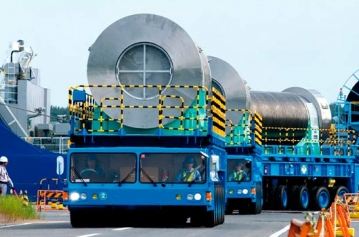
U.S. NRC staff gives environmental OK to proposed $2.3B spent fuel storage site in Texas Power Engineering 2 Aug 21, The U.S. Nuclear Regulatory Commission staff is recommending granting a proposed license for a planned spent nuclear fuel interim storage facility in west Texas.
The NRC issued its final environmental impact statement on the application by Interim Storage Partners LLC, which is a joint venture of Waste Control Specialists LLC and Orano CIS. If granted, the owners would construct a facility to store from 5,000 (in the beginning) to 44,000 short tons of spent commercial nuclear fuel and a small quantity of spent mixed oxide fuel for about 40 years.
U.S. Department of Energy statistics indicate that the U.S. commercial nuclear power industry generates about 2,000 metric tons of used uranium fuel per year. Once spent and removed from the reactor, used fuel roads are currently stored at close to 75 sites in 34 states, according to the DOE.
The proposed interim site would be in Andrews County, Texas less than a mile from the New Mexico border. The owners would build and operate the project within a 14,000-acre parcel of land accessible by rail and road……..
The original plan is to store 5,000 short tons with subsequent expansion eventually bringing the total to close to 44,000 tons, equal to about 20 years of operation by the entire U.S. nuclear power generation fleet, according to reports………. https://www.power-eng.com/nuclear/waste-management-decommissioning/u-s-nuclear-regulators-give-environmental-ok-to-proposed-2-3b-spent-fuel-storage-site-in-texas/
Terrifying “Drop In” of Heat Generating Nuclear Waste — RADIATION FREE LAKELAND

Lakes Against Nuclear Dump in Whitehaven On Friday 30th July, Lakes Against Nuclear Dump, a Radiation Free Lakeland campaign, went along to the nuclear waste “drop in” at Whitehaven. We went to show resistance to the to the latest and even more ruthless Governmental push for “Delivery of a Geological Disposal Facility”.
Terrifying “Drop In” of Heat Generating Nuclear Waste — RADIATION FREE LAKELAND
Dressed up in nuclear waste barrels outside the “Cumbria Traders Day”
at St Nicholas Gardens, were people from all walks of life including local
Market Traders who know that a scientifically premature deep nuclear dump
in Cumbria’s faulted geology is the last thing that a vibrant healthy
economy needs. Tourism and agriculture bring far more money into Cumbria
than the false economic largesse of the nuclear industry (funded with
taxpayers money) – but the nuclear industry and governmental plan for a
GDF has the capacity to annihilate both major industries in Cumbria and
beyond.
Radiation Free Lakeland 2nd Aug 2021
August 2 Energy News — geoharvey

Opinion: ¶ “Finding Answers To The World’s Drinking Water Crisis” • We are facing a water crisis. Climate change, overpopulation, and global conflict are just some of the factors devastating the water supply in many areas around the world. It means that two billion people – one-quarter of the human population – are without access […]
August 2 Energy News — geoharvey
The week in nuclear news
This week s news – Olympic ecstasy – all those lovely medals. It’s hard to get past that, – for example, to find out how many of the 220 or more coronavirus positive people associated with the Games, are actually athletes. It is not polite to discuss the costs of the Games, – money that could have gone into tackling Tokyo’s heath problems, as Tokyo’s state of emergency hits 4,000 new Covid-19 cases daily.I’m sorry, but I can’t get enthused about an event designed as the ”recovery” from the Fukushima nuclear catastrophe. It’s so in line with that other timely myth, that it was OK, in 1945, to obliterate two whole cities of children, women and men, in each case, with just one diabolical new bomb. (Attached is a video, 5 years old, but still valid https://www.youtube.com/watch?v=-07xiaBl2vk)World coronavirus– case numbers keep growing. Climate change: Critical measures of global heating reaching tipping point. Climate Change Is Driving Deadly Weather Disasters From Arizona To Mumbai
Remember Hiroshima and Nagasaki – no excuses for having nuclear weapons !
Degrowth: the necessary climate solution no-one is talking about. – terrific, thought provoking article
Small nuclear reactors, a dangerous experiment, and distraction from real climate action – David Suzuki.
If man cannot overcome his desire to kill, we are doomed.
JAPAN. A-bomb survivor activist, 89, calls Japan’s failure to back nuclear ban ‘disgraceful‘. International Symposium for Peace 2021: The Road to Nuclear Weapons Abolition- online international conference – held from Hiroshima.
UK.
UK debate should not be about excluding China from nuclear build, but about whether nuclear build is even necessary. All logic says that UK’s Hinkley Point C nuclear power project should be abandoned now.
Britain’s secret shortlist of areas earmarked for the dumping of nuclear waste. English and Welsh concerns – call on Marine management leaders to postpone the dumping of Hinkley radioactive mud in te British Channel. Over 1.5k people sign petition against nuclear waste storage in Lincolnshire, UK.
USA.
- Vogtle nuclear power project – more costs revealed, and even more likely to come. Vogtle nuclear power project’s costs – $27 Billion and rising!
- Exelon moves to shutdown 2 nuclear power stations in Illinois, amidst subsidy negotiations.
- U.S. Nuclear Regulatory Commission doing a ‘special investigation’ at Davis-Besse nuclear station.
- Renewables overtook coal and nuclear power generation in the U.S last year .
CHINA. Taishan nuclear reactor shut down for repairs to damage. Over a month after radioactive leak, China decides to shut down Taishan nuclear reactor ”for maintenance”.
IRAN. U.S. Weighing New Sanctions on Iran as Nuclear Deal Hangs in Balance.
ALGERIA. Algeria: deep resentment of French colonialism and the effects of nuclear bombing -still very real today.
AUSTRALIA. Higher cancer and stillbirth rates in Aboriginal people living near the Ranger uranium mine.
Remember Hiroshima and Nagasaki – no excuses for having nuclear weapons !
On Friday, ‘Say no to nuclear weapons’ https://www.theday.com/article/20210801/OP03/210809975 August 01. 2021
Frida Berrigan It was a long time ago, but it is still important. On August 6, 1945, the United States dropped a new bomb on the Japanese city of Hiroshima. It was morning, children were walking to school and adults were headed to work. When the bomb dropped, tens of thousands of people were turned to ash in an instant; human beings became shadows on the wall.
A few days later, on August 9, the U.S. dropped another nuclear bomb on Nagasaki
The two bombs killed as many as 210,000 people instantly, destroyed most of the city centers and poisoned countless people with radiation. In the last seven decades, nine countries have come to possess these powerful, nation-destroying weapons. The Soviet Union, which engaged in a decades long Cold War and nuclear arms race with the United States, was joined in the nuclear club by China, France, the United Kingdom, Israel, Pakistan, India and North Korea.
But most of the firepower is in the possession of the U.S. and Russia, the former super-power rivals.
In January 2021, the world celebrated the entry into force of the Treaty on the Prohibition of Nuclear Weapons. Under international law, it is now illegal to possess, use, or threaten to use nuclear weapons. This is a huge step towards abolition — but the United States, Russia and the other nuclear weapons states stand outside the international consensus that nuclear weapons are an existential and unconscionable threat to the future.
Nuclear weapons have cost the United States more than $5.5 trillion since 1945, according to the Brookings Institution. Over the next decade, it is projected that the United States will spend another $634 billion on nuclear weapons research and development. So, while our government has not detonated another weapon in war since 1945, that choice to spend so much money on building and perfecting nuclear superiority means that so many key priorities — from environmental protection to infrastructure restoration — have been underfunded or not funded at all.
People living and working in poor communities say: the bomb goes off every day in my neighborhood.

Here in New London, General Dynamics/Electric Boat is making massive profits designing and building nuclear-powered and armed submarines. The new Columbia-class submarine is another boon to the company, which is the sixth largest U.S. military contractor. CEO Phebe Novakovic personally earned almost $19 million in 2020.
Meanwhile, the median income in New London is less than $36,000 a year. But it isn’t just about money, it’s about what these weapons are capable of: massive destruction and the grim future that will result from spending so much on weaponry and not nearly enough to solve the big problems that face us and future generations.
Each of the 12 new Columbia Class submarines are designed to be armed with up to 16 Trident D-5 submarine-launched ballistic missiles, or SLBMs, which have a range of 4,500 miles. Those D-5s can each carry as many as 14 W-76-1 thermonuclear warheads. Each one of those warheads is six times more powerful than the atomic bomb that the U.S. military detonated at Hiroshima all those years ago.
Multiply 12 times 16 times 14 times 6 and the potential carnage is almost unfathomable.
The best way to understand the Columbia class submarine, then, is as a $100 billion-plus initiative that aims to deliver 16,128 Hiroshimas.
On this 76th anniversary of the Hiroshima bombing, we must say no to nuclear weapons. We call for abolition. We say yes to a better future. Nuclear weapons do not make us secure. A better future must include affordable health care, housing, education, a universal basic income, a functional and modern infrastructure, and sustainable solutions to the climate crisis.
Frida Berrigan is a New London resident and a member of the Connecticut Committee for the Prohibition of Nuclear Weapons. It is organizing a public witness on Friday, Aug. 6 from 3 p.m. to 5 p.m. at the intersection of Howard and Bank streets. Demonstrators will call on General Dynamics to honor the victims of seven decades of nuclearism by converting its operations to the long overdue work of repairing infrastructure and addressing the climate crisis. For more information, email joanne@warresisters.org.
Degrowth: the necessary climate solution no-one is talking about

The Necessary Climate Solution No-one is Talking About https://www.tasmaniantimes.com/2021/08/degrowth-necessary-climate-solution-no-one-is-talking-about/ Erin Remblance 1 Aug 21,
For all the talk of renewable energy, electric vehicles and plant-based diets, there’s a gaping hole in the way we’re trying to solve accelerating climate change.
We will not stay below 2°C of warming while pursuing economic growth – yet barely anyone talks about it.
Since the end of World War II Gross Domestic Product (GDP) growth has been the metric of human prosperity in Western nations – the idea being that if the productivity of the economy increases so will the wellbeing of the people within that economy. And for a while that was the case – but since the 1970’s increases in GDP have, on average, failed to translate into increases in wellbeing and happiness.
It is not surprising. Research has shown that once a certain GDP threshold, or level of wellbeing, has been met people gain little from consuming more ‘stuff’ – a necessary requirement for continuous GDP growth.
Robert F Kennedy eloquently summed up the inadequacy of GDP as a metric of wellbeing at a speech he gave in 1968:t]
The gross national product does not allow for the health of our children, the quality of their education or the joy of their play. It does not include the beauty of our poetry or the strength of our marriages, the intelligence of our public debate or the integrity of our public officials.
It measures neither our wit nor our courage, neither our wisdom nor our learning, neither our compassion nor our devotion to our country, it measures everything in short, except that which makes life worthwhile.

What’s more, GDP has never been, and can’t be, decoupled from material footprint, including energy[i]. This means we cannot roll out renewable energy fast enough to meet the objectives of the Paris Agreement – to keep warming below 2°C – if we continue growing our economy.
Three percent growth every year for the rest of this decade is 30% growth by 2030. Achieving a 75% reduction on 2005 greenhouse gas (GHG) emissions by 2030 is a Herculean effort already, let alone if the economy is 30% bigger by that time. And surely, given the urgency with which we must decarbonise, reducing energy demand must be a part of the mix, even if it means reducing GDP?
There are nearly 8 billion people in the world today – but they haven’t all contributed equally to the climate crisis. Between 1990 and 2015 the world’s wealthiest 1% were responsible for double the greenhouse gas (GHG) emissions of the poorest 50%. Over that same period, the wealthiest 10% of the world’s population were responsible for 52% of the world’s GHG emissions, while the poorest 50% were responsible for only 7% of the world’s GHG emissions.
Degrowing our economy to fit back within the planetary boundaries will also allow people living below satisfactory standards of human wellbeing to improve their living conditions. Data from 2016 showed that 940 million people still didn’t have access to electricity, and 3 billion people didn’t have access to clean fuels for cooking. These people don’t even own a washing machine, let alone a car and they certainly aren’t flying anywhere. Degrowth is not only necessary to solve the climate crisis, it’s the only way to address widening inequality across the globe.
For all the talk of renewable energy, electric vehicles and plant-based diets, there’s a gaping hole in the way we’re trying to solve accelerating climate change.
We will not stay below 2°C of warming while pursuing economic growth – yet barely anyone talks about it.
Since the end of World War II Gross Domestic Product (GDP) growth has been the metric of human prosperity in Western nations – the idea being that if the productivity of the economy increases so will the wellbeing of the people within that economy. And for a while that was the case – but since the 1970’s increases in GDP have, on average, failed to translate into increases in wellbeing and happiness.
It is not surprising. Research has shown that once a certain GDP threshold, or level of wellbeing, has been met people gain little from consuming more ‘stuff’ – a necessary requirement for continuous GDP growth.
Robert F Kennedy eloquently summed up the inadequacy of GDP as a metric of wellbeing at a speech he gave in 1968:t]he gross national product does not allow for the health of our children, the quality of their education or the joy of their play. It does not include the beauty of our poetry or the strength of our marriages, the intelligence of our public debate or the integrity of our public officials.
It measures neither our wit nor our courage, neither our wisdom nor our learning, neither our compassion nor our devotion to our country, it measures everything in short, except that which makes life worthwhile.
What’s more, GDP has never been, and can’t be, decoupled from material footprint, including energy[i]. This means we cannot roll out renewable energy fast enough to meet the objectives of the Paris Agreement – to keep warming below 2°C – if we continue growing our economy.
Three percent growth every year for the rest of this decade is 30% growth by 2030. Achieving a 75% reduction on 2005 greenhouse gas (GHG) emissions by 2030 is a Herculean effort already, let alone if the economy is 30% bigger by that time. And surely, given the urgency with which we must decarbonise, reducing energy demand must be a part of the mix, even if it means reducing GDP?
There are nearly 8 billion people in the world today – but they haven’t all contributed equally to the climate crisis. Between 1990 and 2015 the world’s wealthiest 1% were responsible for double the greenhouse gas (GHG) emissions of the poorest 50%. Over that same period, the wealthiest 10% of the world’s population were responsible for 52% of the world’s GHG emissions, while the poorest 50% were responsible for only 7% of the world’s GHG emissions.
Degrowing our economy to fit back within the planetary boundaries will also allow people living below satisfactory standards of human wellbeing to improve their living conditions. Data from 2016 showed that 940 million people still didn’t have access to electricity, and 3 billion people didn’t have access to clean fuels for cooking. These people don’t even own a washing machine, let alone a car and they certainly aren’t flying anywhere. Degrowth is not only necessary to solve the climate crisis, it’s the only way to address widening inequality across the globe.
What could life in a degrowth economy look like? It would involve shorter working weeks and less commuting, giving us more time to do things we enjoy. Less individual ownership and more sharing. Less debt and more services provided by the government. A focus on community and connection rather than individualism and perpetually trying to find happiness through our next purchase, holiday or experience.In a degrowth economy environmentally destructive and resource intensive industries would be scaled back, and more people would be working in jobs that benefited one another and the planet, putting more meaning and purpose into our lives.
We would value different things in a degrowth economy and define success differently. A degrowth economy does not need to mean a degrowth lifestyle, indeed we could be richer for it.

It’s probably tempting to define a ‘degrowth’ economy as socialism, but it’s a false binary that an economic system is either capitalism or socialism. All economies are a mix of both, often with other bits of ‘isms’ thrown in for good measure. Let’s use our imaginations and contemplate what life could look like if we focused on the things that really matter, and not simply the amount of growth in our economy.

In the end, the economy is a man-made construct. It can be changed. The laws of nature, however, cannot. It would be tragic to look back and think we gave it all up because we weren’t brave enough to challenge the insane notion of endless growth on a finite planet with the urgency it deserves.
[i] Chart page 102, Less is More, Jason Hickel Global GDP & Material Footprint.
Erin Remblance is a mother-of-three who works in carbon reduction, is a climate activist and is studying wellbeing economies.
A hard rain did fall — Hiroshima victims beyond “official” zone will now be compensated

Hiroshima victims beyond “official” zone will now be compensated
A hard rain did fall — Beyond Nuclear International A hard rain did fall, Black rain” victims finally win in court https://beyondnuclearinternational.org/2021/08/01/a-hard-rain-did-fall/ By Linda Pentz Gunter
Just weeks before the 2021 commemoration of the August 6, 1945 US atomic bombing of the city of Hiroshima, a Japanese court ruled that victims of the radioactive “black rain” who were living beyond the officially recognized contamination zone at the time, should be included in the group considered bomb “survivors” or “Hibakusha” and receive the same benefits.
A Hiroshima high court acknowledged in its July 14, 2021 ruling that many more people suffered as a result of exposure to “black rain” than have hitherto been recognized as victims.
“Black rain” was described in a CNN story as a “mixture of fallout particles from the explosion, carbon residue from citywide fires, and other dangerous elements. The black rain fell on peoples’ skin and clothing, was breathed in, contaminated food and water, and caused widespread radiation poisoning.”
When the verdict was first released last month, it appeared that the Japanese government, under Prime Minister Yoshihide Suga, might appeal the decision. Instead, Suga declared his government, the defendants in the case, would not appeal it and even suggested that relief might be extended to other affected people beyond the plaintiffs. According to the Asahi Shimbun, this may even include those exposed to radiation as a result of the 2011 Fukushima nuclear disaster on the Japan coast.
The court ruling was important because it recognized and acknowledged not only the heaths effects of the radioactive “black rain” atomic bomb fallout, but also the internal exposure to radiation through the ingestion of contaminated water and food experienced by the 84 plaintiffs in the case.
The ruling of course comes very late in the day as many Hibakusha are already deceased. Indeed, one of the plaintiffs, 79-year-old Seiji Takato, told CNN he was worried that if there was no verdict soon, “we would all die if this (case were) prolonged”.
The plaintiffs will now receive the same benefits as residents of the state-designated black rain zone. According to the Kyodo News, these will include “free health checkups and atomic bomb survivors’ certificates entitling them to medical benefits in the event that they develop 11 specific illnesses caused by radiation.”
The United States, the country which dropped the two atomic bombs — on Hiroshima on August 6, 1945 and then on Nagasaki three days later — has taken neither responsibility for the devastating health consequences, nor offered an apology or compensation.
Indeed, President Truman, in office when the bombings were authorized, told the Japanese, chillingly, that their sacrifice and suffering were “urgent and necessary.” President Clinton declared that the US “owes no apology to Japan”. He, like other US presidents before and since, clung to the disputable notion that the atomic bombings saved at least one million American lives, an argument ably dispatched by Ward Wilson on these pages in 2018.
To date, Barack Obama is the only sitting US president to have visited Hiroshima, when he traveled there in 2016, but he too failed to apologize for the atrocity. There have been plenty of lively debates on this question: Would an apology open up old wounds, focus too much on the past and be an admission of wrongdoing? Would it also open the door to a floodgate of demands for monetary compensation? Or is an official apology an essential atonement, albeit merely symbolic at this late stage? Could an apology lead in turn to meaningful international engagement on global peace?
Slowly, the Hibakusha have been gaining recognition. One of its most famous and outspoken members, Setsuko Thurlow, accepted the Nobel Peace Prize awarded the International Campaign to Abolish Nuclear Weapons (ICAN) alongside its executive director, Beatrice Fihn, in 2017.
The award came on the heels of the instrumental role the Hibakusha played in persuading the UN to create the Treaty on the Prohibition of Nuclear Weapons, now ratified by 55 countries and counting, five more than the number that ensured it became law this past January. None of the nuclear weapons states, nor Japan, has signed or ratified the treaty.
At the end of the day, the lesson here is the mantra adopted by the nuclear researchers, whistleblowers and watchdogs at Fairewinds Energy Education: “Radiation knows no borders.”
As Fairewinds wrote in the context of the “black rain” verdict: “Radioactive microscopic particles generated from mining uranium ore, reprocessing atomic fuel, bomb tests, and disastrous meltdowns travel well beyond the arbitrary boundaries and demarcation lines that governments establish to limit their liability and to maintain control over others.”
These warnings serve as a compelling reason to neither test nor use atomic weapons and also as a powerful admonition against the continued use of “civil” nuclear power.
Small nuclear reactors, a dangerous experiment, and distraction from real climate action – David Suzuki

Renewables cost less than nuclear, come with fewer health, environmental and weapons-proliferation risks and have been successfully deployed worldwide.
Given rapid advances in energy, grid and storage technologies, along with the absolute urgency of the climate crisis, pursuing nuclear at the expense of renewables is costly, dangerous and unnecessary.
Is smaller better when it comes to nuclear? Pique, By: David Suzuki 1 Aug 21, Nuclear power hasn’t been in the news much since the 2011 Fukushima meltdown in Japan. Thanks to a push by industry and governments, you might soon hear more about how nuclear reactors are now safer and better.
Specifically, the conversation has shifted to “small modular nuclear reactors” or SMNRs, which generate less than 300 megawatts of electricity, compared to up to 1,600 MWe for large reactors.
Some of the 100 or so designs being considered include integral pressurized water reactors, molten salt reactors, high-temperature gas reactors, liquid metal cooled reactors and solid state or heat pipe reactors. To date, the industry is stuck at the prototype stage for all models and none is truly modular in the sense of being manufactured several at a time—an impediment considering the speed at which global heating is worsening.
The benefits touted by industry have convinced many countries, including Canada, to gamble huge sums on nuclear, despite the poor odds. The Small Modular Reactor Action Plan hypes it as the possible “future of Canada’s nuclear industry, with the potential to provide non-emitting energy for a wide range of applications, from grid-scale electricity generation to use in heavy industry and remote communities.” ………
given the seriousness of the climate emergency and the various options for transforming our energy systems to combat it, is nuclear—regardless of size or shape—the way to go? We must rapidly reduce emissions now, and we have readily available technologies to do so.
New nuclear doesn’t make practical or economic sense for now. Building reactors will remain expensive and time-consuming. Studies estimate electricity from small nuclear can cost from four to 10 times that of wind and solar, whose costs continue to drop. SMNRs will require substantial government subsidies.
Even when nuclear has to compete against renewables prepackaged with storage, the latter wins out.
One recent study of 123 countries over 25 years published in Nature Energy found that renewables are much better at reducing greenhouse gas emissions than nuclear—whose benefits in this area are negligible—and that combining nuclear and renewables creates a systemic tension that makes it harder to develop renewables to their potential.
Like all nuclear reactors, SMNRs produce radioactive waste and contribute to increased nuclear weapons proliferation risk—and Canada still has no effective strategy for waste. Nuclear power also requires enormous amounts of water.
Corporate interests often favour large, easily monopolized utilities, arguing that only major fossil fuel, nuclear or hydro power facilities can provide large-scale “baseload” power. But many experts argue the “baseload myth” is baseless—that a flexible system using renewables combined with investments in energy efficiency and a smart grid that helps smooth out demand peaks is far more efficient and cost-effective, especially as energy storage technologies improve.
Even for remote populations, energy systems that empower communities, households, businesses and organizations to generate and store their own energy with solar panels or wind installations and batteries, for example, and technologies like heat-exchange systems for buildings, would be better than nuclear.
Renewables cost less than nuclear, come with fewer health, environmental and weapons-proliferation risks and have been successfully deployed worldwide. Given rapid advances in energy, grid and storage technologies, along with the absolute urgency of the climate crisis, pursuing nuclear at the expense of renewables is costly, dangerous and unnecessary.
David Suzuki is a scientist, broadcaster, author and co-founder of the David Suzuki Foundation. Written with contributions from David Suzuki Foundation Senior Writer and Editor Ian Hanington. https://www.piquenewsmagazine.com/opinion/opinion-is-smaller-better-when-it-comes-to-nuclear-4175458
Higher cancer and stillbirth rates in Aboriginal people living near Australia’s Ranger uranium mine
Aboriginal people near the Ranger uranium mine suffered more stillbirths and cancer. We don’t know why, The Conversation, Rosalie Schultz, Adjunct Senior Lecturer, College of Medicine and Public Health Centre for Remote Health, Flinders University, August 2, 2021 This article mentions stillbirth deaths in Aboriginal communities.
The Ranger uranium mine, surrounded by Kakadu National Park in the Northern Territory, operated for 40 years until it closed in 2021. During this time, Aboriginal people in the region experienced stillbirth rates double those of Aboriginal people elsewhere in the Top End, and cancer rates almost 50% higher.
But a NT government investigation couldn’t explain why. And as I write today in the Medical Journal of Australia, we’re still no wiser.
We owe it to Aboriginal people living near mines to understand and overcome what’s making them sick. We need to do this in partnership with Aboriginal community-controlled health organisations. This may require research that goes beyond a biomedical focus to consider the web of socio-cultural and political factors contributing to Aboriginal well-being and sickness.
Investigating the health impacts
Uranium was mined at Ranger from 1981 until 2012. Processing of stockpiled ore continued until 2021. This is despite community opposition when the mine was proposed and during its operation.
Over the life of the mine, there have been more than 200 documented incidents. Diesel and acid spills have contaminated creeks and drinking water.
The Gundjeihmi Aboriginal Corporation represents the Mirarr people of the region. For decades it has expressed grave concerns about continuing incidents and the lack of an effective government response.
When Ranger’s operators proposed expanding the mine in 2014, opponents pointed to suggestions of higher rates of stillbirth and cancer among Aboriginal people living nearby.
The NT health department then set up an investigation. Investigators began by identifying all Aboriginal people who had spent more than half their lives near the mine between 1991 and 2014. These people were compared with all other Aboriginal people in the Top End.
The investigators considered the worst-case scenario would be if Aboriginal people were exposed to radiation from the mine contaminating bush food, water or air, and this exposure increased stillbirth and cancer rates.
Investigators also looked at smoking tobacco, drinking alcohol and poor diet as possible contributing causes.
Here’s what they found
Investigators found the rate of stillbirth was 2.17 times higher among Aboriginal women near the mine. Radiation can lead to stillbirth by causing congenital malformations, and some other risk factors for stillbirth appeared more common amongst women near the mine. However the investigation found neither radiation nor other risk factors explained the higher rate of stillbirth.
The rate of cancer overall was 1.48 times higher among Aboriginal people near the mine than elsewhere in the Top End. No rates of single cancers were significantly higher…………. https://theconversation.com/aboriginal-people-near-the-ranger-uranium-mine-suffered-more-stillbirths-and-cancer-we-dont-know-why-164862
International Symposium for Peace 2021: The Road to Nuclear Weapons Abolition- online international conference – held from Hiroshima
The Treaty on the Prohibition of Nuclear Weapons (TPNW) that took effect in January was the central theme of an international conference held online from Hiroshima on July 31. Issues discussed included how the treaty would contribute toward nuclear disarmament as well as the role Japan should play within the pact that it has not yet ratified.
The International Symposium for Peace 2021: The Road to Nuclear Weapons Abolition was sponsored by the
Hiroshima city government, the Hiroshima Peace Culture Foundation and The Asahi Shimbun. The theme for this year’s event was “A new world illuminated by ‘treaty of hope.’”
Asahi Shimbun 31st July 2021
https://www.asahi.com/ajw/articles/14408019
Over a month after radioactive leak, China decides to shut down Taishan nuclear reactor ”for maintenance”
China has shut down a nuclear reactor for “maintenance” because of what it said was minor fuel damage, after an increase in radiation levels prompted warnings from its French designers of an “imminent radiological threat”.
The authorities switched off the new-generation European Pressurised Reactor (EPR) at Taishan in Guangdong province today, more than a month after saying minor fuel rod damage had led to the “common
phenomenon” of a build-up of radioactive gases that were no cause for concern.
“After lengthy conversations between French and Chinese technical personnel, Taishan Nuclear Power Plant decided to shut down Unit 1 for maintenance,” China General Nuclear Power Group (CGN) said. It added that it was putting safety first and wanted to be “conservative in decision making”.
Times 30th July 2021
1 This Month
26 April – Chernobyl: Inside the Meltdown airs on National Geographic on Sunday 26th April from 4pm

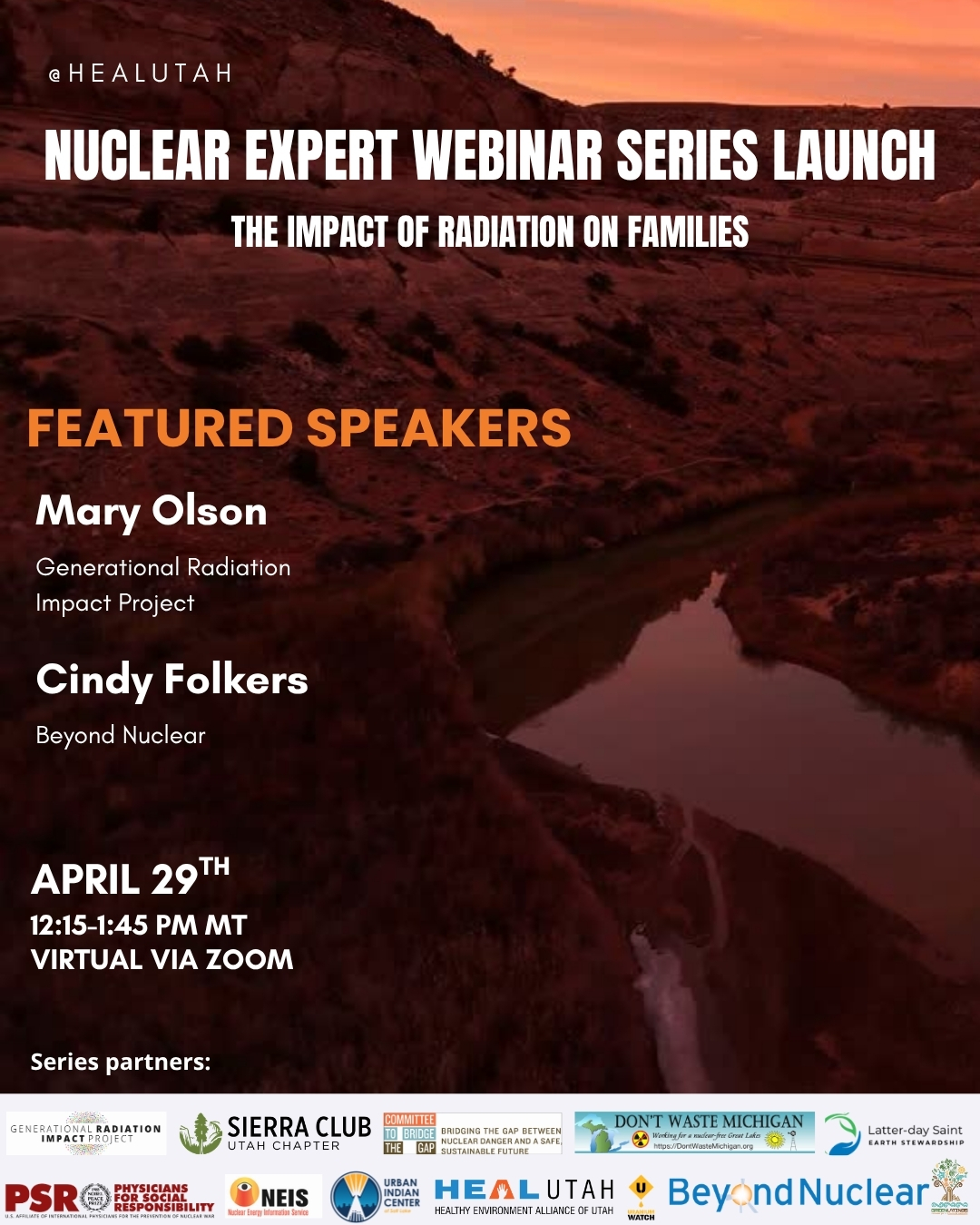
29 April – Nuclear Expert Webinar #1 – Radiation Impacts on Families with Mary Olson and Cindy Folkers
- 12:15 PM MT – 1:45 PM MT
- Location: Virtual – REGISTER TODAY

4 May -West Suburban Peace Coalition to discuss Iran war at May Educational Forum
Monday, May 4, 7:00 – 8:00 PM Central Standard Time
Title: : How Trump’s Narrative Tries to Shape the Reality of the War on Iran.
Contact Walt Zlotow, zlotow@hotmail.com 630 442 3045 for further information
14 May – online event From Bombs to Data Centres: the Face of Nuclear Colonialism

Pine Ridge Uranium is the real threat, not Tehran- Tell Burgum: Stop the Extraction.
Chernobyl: The Lost Tapes – A good documentary on Chernobyl on SBS available On Demand for the next 3 weeks– https://www.sbs.com.au/ondemand/tv-program/chernobyl-the-lost-tapes/2352741955560
To see nuclear-related stories in greater depth and intensity – go to https://nuclearinformation.wordpress.com
-
Archives
- April 2026 (327)
- March 2026 (251)
- February 2026 (268)
- January 2026 (308)
- December 2025 (358)
- November 2025 (359)
- October 2025 (376)
- September 2025 (257)
- August 2025 (319)
- July 2025 (230)
- June 2025 (348)
- May 2025 (261)
-
Categories
- 1
- 1 NUCLEAR ISSUES
- business and costs
- climate change
- culture and arts
- ENERGY
- environment
- health
- history
- indigenous issues
- Legal
- marketing of nuclear
- media
- opposition to nuclear
- PERSONAL STORIES
- politics
- politics international
- Religion and ethics
- safety
- secrets,lies and civil liberties
- spinbuster
- technology
- Uranium
- wastes
- weapons and war
- Women
- 2 WORLD
- ACTION
- AFRICA
- Atrocities
- AUSTRALIA
- Christina's notes
- Christina's themes
- culture and arts
- Events
- Fuk 2022
- Fuk 2023
- Fukushima 2017
- Fukushima 2018
- fukushima 2019
- Fukushima 2020
- Fukushima 2021
- general
- global warming
- Humour (God we need it)
- Nuclear
- RARE EARTHS
- Reference
- resources – print
- Resources -audiovicual
- Weekly Newsletter
- World
- World Nuclear
- YouTube
-
RSS
Entries RSS
Comments RSS
 nuclear-news