Belgium’s mayors show solidarity with nuclear vtims, support the UN nuclear weapons ban Treaty

Belgian ‘Mayors for Peace’ stand up for nuclear disarmament, The green and white flag will fly over more than 100 cities in Belgium with mayors appealing for world peace
Today, the ‘Mayors for Peace’ flag is flying over more than 100 cities in Belgium. The flag represents the mayors’ dedication towards nuclear disarmament and a show of solidarity with the victims in a collective bid for world peace.
Exactly 76 years ago, The USA dropped the “Little Boy” atomic bomb on Hiroshima and three days later – the “Fat Man” bomb over Nagasaki. More than 200,000 Japanese civilians died in these attacks.
Cities – showing solidarity with the victims
The City of Ypres has been involved in the ‘Mayors for Peace’ network for over 15 years and as the leading city for Belgium in this initiative, it called on all the country’s mayors to reflect on past horrors.
More than 100 Belgian cities and municipalities have replied that they will raise the flag on 6 August at 8.15 AM and lower it on 9 August at 11.02 AM, exactly when the two bombs hit the Japanese cities, causing instant devastation.
The Mayor of Kortrijk, Philippe De Coene, will raise the green and white colours in front of the town hall for the first time this year. He called for urgent work on global nuclear disarmament as there are currently 15,000 a-bombs in the world and they are, on average, 30 times more powerful than the ones dropped over Japan. Considering these numbers, he believes that the threat of nuclear war is more present than ever.
At the same time, Leuven signed the ICAN Cities Appeal, a global appeal by cities and municipalities in support of the UN Nuclear Prohibition Treaty, which entered into force on 22 January this year. Belgium has yet to sign or ratify the treaty.
The Leuven Peace Movement will also commemorate Hiroshima and Nagasaki, and together with Pax Christi Vlaanderen put together a month-long programme in August. There will be an exhibition called ‘No more hibakusha! A future without nuclear weapons’ in St. Michael’s Church with works of art by Japanese artists and students.
Furthermore, visitors of Leuven will be able to participate in the audio-guided walk – ‘Leuven, before the bombs fall’ until November. The route goes to various places in the city with stories about nuclear weapons told by well-known Leuven residents. City officials expressed their desire to make residents think about a nuclear-weapons-free future.
While State and Federal governments hurry to subsidise nuclear power plants, Exelon is closing Illinois nuclear stations anyway
State, federal efforts too late to save Exelon’s Illinois nuclear plants, CEO Crane says, Utility Dive Aug. 6, 2021 Iulia Gheorghiu
Dive Brief:
- Exelon Generation has two Illinois nuclear plants slated for shutdown and decommissioning this fall, despite recent federal proposals for both a tax credit and a fund for existing nuclear plants, and rising power prices in the state………….
Dive Insight:
Federal momentum is picking up on creating incentives for existing nuclear generation to stay online: The House and Senate introduced a $15/MWh production tax credit (PTC) for existing nuclear power plants, and the infrastructure bill now in the Senate would set aside $6 billion under the Department of Energy to support nuclear plants facing economic risks of shutdown…………
Exelon executives emphasized that the federal incentives, including the PTC, are only proposals at this point…….
[W]e need to make decisions based on laws that have actually been enacted, and nothing has yet come to fruition in D.C. as of yet,” Kathleen Barron, Exelon’s executive vice president of government, regulatory affairs and public policy, said during the quarterly call……………… https://www.utilitydive.com/news/state-federal-efforts-too-late-to-save-exelons-illinois-nuclear-plants-c/604579/
Activist priest believes that ”the days of nuclear weapons are numbered”
‘
Jesuit Steve Kelly has done jail time for protesting nuclear weapons. He’s willing to do it again. America Magazine, Kevin ClarkeAugust 06, 2021 ”……………..Father Kelly considers the effort to rid the world of nuclear weapons very much of this time and this place. “This is the same kind of thing that took place in the previous century when we did away with slavery,” he says. “Anyone [then] would have told you, ‘Wow, no, slavery is here to stay. It’s an economic reality that has been around for thousands of years. You’re not going to undo this.’”
He believes that nuclear weapons will one day soon be similarly recognized as “God’s nightmare.” There has, in fact, been much recent progress on ridding the world of nuclear weapons.
Through a number of treaties over decades that have eliminated entire classes of nuclear weapons, the United States and Russia (and its predecessor Soviet Union) made huge reductions in the number of nuclear weapons in their arsenals. From a Cold War high of more than 70,000 nuclear warheads, that mutual global arsenal has been reduced to about 14,000 weapons. The United States alone reduced its arsenal by 87 percent, from 32,000 warheads in 1967 to about 4,000 operational and reserve weapons today.
Last year, the United Nations ratified an abolition treaty that outlaws nuclear weapons as a moral and existential affront. The abolition movement has failed, so far, to persuade any of the nine members of the nuclear weapons club to completely abandon their programs, but Father Kelly remains optimistic about Plowshares’ odds in this countercultural fight.
He notes the movement of the church under Pope Francis away from what had been a qualified acceptance of nuclear deterrence to an absolute rejection of the moral acceptability of any possession of nuclear weapons. “We knew that the church was very much opposed to nuclear weapons,” he says, “but to be able to have something that official, that coordinated, to be able to speak with one voice is just a tremendous help.”
Father Kelly says he maintains tremendous hope that “people will pick up this mission” when and if he finally concludes his activism for peace.
“That’s what it’s going to take, I think. The politicians will follow the people,” he says.
“Maybe I might not see it in my lifetime, but I think the days [of nuclear weapons] are numbered.” https://www.americamagazine.org/politics-society/2021/08/06/kings-bay-plowshares-nuclear-weapons-jesuit-steve-kelly-240988
The nuclear industry is dying. Bitcoin to the rescue?

Some lawmakers have called for greater regulation of cryptocurrency, citing the enormous amount of resources required to produce it. “There are computers all over the world right now spitting out random numbers around the clock, in a competition to try to solve a useless puzzle and win the bitcoin reward,” Sen. Elizabeth Warren (D., Mass.) said in June, calling for a crackdown on “environmentally wasteful cryptocurrencies.”
Zero-carbon [?] bitcoin? The owner of a Pennsylvania nuclear plant thinks it could strike gold
Talen Energy plans to build a $400 million bitcoin mine at its Pa. nuclear plant. “I think this is a great opportunity to prolong the life of a lot of nuclear plants.”
Could bitcoin mining be the salvation of the embattled nuclear energy industry in America?
The owners of several nuclear power plants, including two in Pennsylvania, have formed ventures with cryptocurrency companies to provide the electricity needed to run computer centers that “mine” bitcoin. Since nuclear energy does not emit greenhouse gases, [ except that the whole nuclear fuel chain DOES] the project’s investors say, the zero-carbon [ a lie] bitcoin would address climate concerns that have tarnished the energy-intensive cryptocurrency industry.
Talen Energy, the owner of the Susquehanna Steam Electric Station near Berwick, Pa., announced this week that it has signed a deal with TeraWulf Inc., an Easton, Md. cryptocurrency mining firm, to build a giant bitcoin factory next to its twin reactors in northern Pennsylvania. The first phase of the venture, dubbed Nautilus Cryptomine, could cost up to $400 million.
Talen’s project could eventually use up to 300 megawatts — or 12% of Susquehanna’s 2,500 MW capacity. It’s the second bitcoin-mining venture in the last month that involves owners of Pennsylvania nuclear facilities.
Last month Energy Harbor Corp., the former power-generation subsidiary of First Energy Corp., announced it signed a five-year agreement to provide zero-carbon [nuclear is NOT zero-carbon] electricity to a new bitcoin mining center operated by Standard Power in Coshocton, Ohio. Energy Harbor owns two nuclear units in Ohio and the twin-unit Beaver Valley Power Station in Western Pennsylvania.
A nuclear fission start-up, Oklo, also announced last month it signed a 20-year deal with a bitcoin miner to supply it with power, though the company has not yet built a power plant.
In recent years, commercial nuclear operators have struggled to compete in competitive electricity markets against natural gas plants and upstart renewable sources such as wind and solar. Unfavorable market conditions have hastened the retirements of several single-unit reactors, such as Three Mile Island Unit 1 in Pennsylvania. Lawmakers in New Jersey, New York and Illinois have enacted nuclear bailouts, paid by electricity customers, to stave off early retirement for other plants.
The cryptocurrency deals would provide nuclear generators with reliable outlets for their power, and bitcoin miners with predictable sources of power at cheap prices, along with a zero-carbon [nuclear is NOT zero-carbon] cachet…….
The nuclear industry views the crypto craze not as a crutch but as a launching pad for expansion. “U.S. nuclear power plants are ready and able to supply miners with abundant, reliable carbon-free [ but nuclear is NOT carbon-free] power while also providing new business pathways for the nuclear developers and utilities, increasing their operating profits, and potentially accelerating the deployment of the next generation of reactors,” John Kotek, senior vice president of policy development and government affairs at Nuclear Energy Institute, said……
Energy and cryptocurrency experts say several trends are shifting the market in favor of U.S. nuclear power producers.
In May, Chinese regulators announced new measures to limit bitcoin mining in several regions that failed to meet Beijing’s energy-use targets. Bitcoin production levels have fallen since then, forcing bitcoin producers to relocate to places with low operating costs and cool climates to reduce the costs of cooling the bitcoin data centers. The state of Washington, which has lots of inexpensive hydroelectric power, has undergone a huge boom in bitcoin mining.
How mining is done
Bitcoin is a peer-to-peer virtual currency, operating without a central authority, and which can be exchanged for traditional currency such as the U.S. dollar. It is the most successful of hundreds of attempts to create virtual money through the use of cryptography, the science of making and breaking codes — hence, they are called cryptocurrency.
Bitcoin mining is built around blockchain technology, and it involves generating a string of code that decrypts a collection of previously executed bitcoin transactions. Successful decryption is rewarded with a new bitcoin. The supply of bitcoins is limited to 21 million — nearly 90% have already been mined. So the remaining bitcoins become increasingly scarce and more difficult to extract
Data centers operated by bitcoin miners randomly generate code strings, called “hashes,” to solve the puzzle and earn new coins. Worldwide, miners on the bitcoin network generate more than 100 quintillion hashes per second — that’s 100,000,000,000,000,000,000 guesses per second, according to Blockchain.com. The first phase of the Nautilus project in Pennsylvania would generate five quintillion hashes per second.

Such guesswork requires muscular [doncha love that word ”muscular” when they mean ”huge”] computing power, robust internet connections, and lots of electricity. Smaller bitcoin miners have teamed up in consortiums to pool their computing power. Bigger players have built huge data centers devoted exclusively to producing lines of random code.
“Mining cryptocurrency is an international, profitable, and energy-intensive business,” ScottMadden a management consulting firm, said in a paper it published last year. Bitcoin mining consumes an estimated 0.5% of the electricity produced worldwide or about as much as the country of Greece.
Some lawmakers have called for greater regulation of cryptocurrency, citing the enormous amount of resources required to produce it. “There are computers all over the world right now spitting out random numbers around the clock, in a competition to try to solve a useless puzzle and win the bitcoin reward,” Sen. Elizabeth Warren (D., Mass.) said in June, calling for a crackdown on “environmentally wasteful cryptocurrencies.”
………. Unlike other crypto projects in which the power generator is an arms-length electricity supplier, the Nautilus Cryptomine is a 50-50 venture between Talen and TeraWulf. The project would be directly connected to the Susquehanna plant — “behind the meter,” in industry parlance — and would avoid any transmission costs from the grid…….
The cryptomine would be located inside a 200,000-square-foot building — about four football fields. The mining operation would be built on a data center campus that Talen is developing next to the Susquehanna plant……..
“As you look across the United States, and you look at kind of the challenges that are facing nuclear plants, I think this is a great opportunity to prolong the life of a lot of plants,” said Dustin Wertheimer, vice president and divisional chief financial officer of Talen Energy https://www.inquirer.com/business/cryptocurrency-bitcoin-pennsylvania-nuclear-power-talen-susquehanna-20210806.html
Problems continue for Iran nuclear talks as new Iran President takes office
Hopes of revived Iran nuclear talks dim amid delays as new hardline president takes office, By Natasha Bertrand and Nicole Gaouette, CNN, August 6, 2021 Washington (CNN)Biden administration officials are becoming increasingly pessimistic about reviving the Iran nuclear deal as the country’s new hardline president takes office and its nuclear program continues to accelerate, national security and intelligence officials familiar with the negotiations told CNN.
The deal’s original signatories known as the P5+1 — the US, UK, France, China, Russia and Germany — had hoped to begin their seventh round of negotiations by now. Some officials have expressed disappointment that the talks have been so delayed since the last round ended on June 20, especially as Iran’s nuclear advances risk making the current deal irrelevant.Now that President Ebrahim Raisi is officially in power after his inauguration Thursday, officials are hoping meetings will begin again in the next few weeks, but it’s still not clear if and when that will happen.
While Raisi is considered a hardliner, he has said that in principle he does not oppose the nuclear deal, known as the Joint Comprehensive Plan of Action or JCPOA, and American officials have said they don’t expect him to walk away from the talks………
Failure to return to the deal would be a blow to President Joe Biden’s foreign policy agenda.His officials, meanwhile, have fumed privately that they inherited major roadblocks to re-entering the deal from the previous administration and are now thinking through contingency plans.After President Donald Trump pulled out of the deal in 2018 and imposed a maximum pressure campaign on Iran with stiff new sanctions, Iran began developing and testing centrifuges that have shortened the time it would take to produce enough material for a bomb……..There is speculation among the P5 + 1 partners that the delay could be a tactical move by Iran. Increasingly, however, they also believe there is a real debate going on within the Iranian system on how to proceed with negotiations. https://edition.cnn.com/2021/08/06/politics/iran-nuclear-talks-pessimism-delay-raisi/index.html
The UK’s Nuclear Escalation Flagrantly Violates International Law
The UK’s Nuclear Escalation Flagrantly Violates International Law,
We’re Reporting it to the UN – Kate Hudson, CND.
Labour Outlook 5th Aug 2021
The UK’s Nuclear Escalation Flagrantly Violates International Law, We’re Reporting it to the UN – Kate Hudson, CND
British Navy secrecy over nuclear submarine crashes
– The Royal Navy has refused to say whether anyone was disciplined following
an incident in which a nuclear submarine nearly crashed into a ferry
carrying 282 people off the Scottish coast. The navy also won’t say
whether it carried out an independent review to reduce the risks of future
collisions. This was recommended by government investigators concerned
about the near-miss and two other nuclear submarine crashes. Campaigners
accuse the navy of using the excuse of national security “to cover up
dangerous incompetence”. The Scottish National Party (SNP) condemns the
secrecy as “absolutely untenable”.
The Ferret 5th Aug 2021
Exclusive – Live events from Hiroshima and Nagasaki — limitless life

This Friday, August 6th and next Monday August 9th will mark the 76th anniversary of the bombings of Hiroshima and Nagasaki, and together with our partner Peace Boat we would like to invite you to a series of unique live streams from Japan, on ICAN’s instagram. Follow @nuclearban on instagram to get notified when we […]
Exclusive – Live events from Hiroshima and Nagasaki — limitless life
Hiroshima Nagasaki – the story they want us to forget

Bruce Gagnon 6 August 2021, The world’s first nuclear explosion occurred on July 16, 1945, when a plutonium implosion device was tested at a site located 210 miles south of Los Alamos, New Mexico, on the barren plains of the Alamogordo Bombing Range, known as the Jornada del Muerto (day of the dead).
US President Harry Truman ordered the first atomic bomb to be dropped on Hiroshima, Japan on August 6, 1945. Days later (August 9) Washington dropped a second bomb on Nagasaki.
Official figures of those killed by the atomic bombs is well over 150,000 from the two cities. More than 100,000 were injured with most likely dying. Then over the years many thousands have died from the initial radiation poisoning.
Trip to Hiroshima & Nagasaki
On a trip to Japan for memorial events at Hiroshima and Nagasaki in 1984 I met many Hibakusha (survivors of the US bombing attacks in 1945). One told the story that after the bomb was dropped the US military would not initially allow medical personnel to come tend the injured. Instead US radiological teams came in to study the effects of the bombing on the people. Arms and legs were cut off and taken back to the US. Photos were taken. Skin samples and blood were taken. The Japanese people were lab rats for the Americans to study.
When I returned home to Orlando, Florida where I was working for the Florida Coalition for Peace & Justice I decided that I had to share this story with the larger community. The Orlando Sentinel newspaper had a regular column called ‘My Word’ so I sent in a piece about what the Hibakusha told me. The paper refused to print it saying that I could not prove what I had written.
We’ve been dealing with this same kind of censorship ever since.
A soldier’s story
In 1997, while still working for the Florida Coalition, we were organizing a campaign to stop NASA’s launch of 72 pounds of deadly plutonium-238 to be used for on-board heat and power on a deep state mission called Cassini. Prior to the launch we were holding a rally at Cape Canaveral (now called Cape Canaveral Space Force Station) and before we began an older man walked up to me and asked to speak. I asked him what he wanted to say.
He said that when the first a-bomb was exploded at Alamogordo in 1945 he was just a new recruit in the Army. He was a paratrooper. His unit was put on a transport plane and dropped into the mushroom cloud. The troopers were then medically tested and put on a train for a long trip around the country. While on the train every now and then it would stop and the GI’s would be medically tested again.
He said it wasn’t until years later he learned that located at each stop was a Department of Energy (DoE) nuclear lab that helped work on the bomb program. The GI’s were tested for time, space, longitude, latitude and other key variables. This man told me he was dying of cancer. His daughter had cancer. He was the only member of his unit that chuted into the toxic bomb cloud still alive.
Needless to say I invited him to speak and listened closely as he warned us never to trust NASA safety claims when they launch nuclear devices into space.
This is a history Washington wants us to forget
I recently heard Vladimir Putin say that some number of young people in Japan these days think it was Russia that dropped the atomic bombs on Hiroshima and Nagasaki.
This mis-education is being done to turn the Japanese people into an uncritical US ally as the US-NATO make their aggressive military moves on China and Russia.
We can’t let the world ever forget the true story of August 6 & 9, 1945.
What kind of nation would do these terrible things?
Never forget!
Renounce the use and further development of nuclear weapons

‘Renounce the use and further development of nuclear weapons, https://www.recorder.com/my-turn-larkin-NuclearWeapons-41709258
By ANDREW LARKIN 8/4/2021 I am a child of the nuclear age.
My father was a radiologist. He witnessed the aftermath of the bombing of Nagasaki. He wrote the first paper that appeared in the American literature about the effects of the bomb. He documented the injuries to the bone marrow and to the skin. He noted that the thermal injuries to the skin felt warm, but radiation injuries to the skin felt cold.
My father was left with the 1,000-yard stare characteristic of people who have been exposed to trauma, as were so many other members of the Greatest Generation, the victors of World War II. They were advised to go home and keep secrets; they were to be silent. Those with severe moral and physical injuries filled the beds of the VA across the nation for decades.
Then the above-ground testing ended, and children could once again play outdoors. However, the radiation lingers in the earth; the half-life of strontium 90 is 30 years. Today, 60 years later, there remains one-quarter of the original amount.
We have been destroying both ourselves as well as the environment with the development of our nuclear arsenal. There has been injuries where radioactive ore has been mined, such as the Sioux Indian Reservation in the Dakotas. The processing and enrichment of the ore has lead to superfund sites in Hanford, Washington.
The consequences of radiation exposure, including cancer, vascular disease, and birth defects, persist long after the exposure is over. Untold numbers have suffered and died. This destruction is occurring in a state of peace.
As with global warming, this is not a problem of the future. The nuclear disaster is already happening now. The consequences of nuclear weapons use in war today would be cataclysmic.
Most people here agree that Trump should not have had his finger on the button. I do not believe that anyone should be able to push the button.
Some argue for nuclear deterrence. They believe that they have the knowledge to use these weapons wisely. The word hubris comes to mind.
For love of the world and its continuation I believe we must renounce the use and further development of nuclear weapons before we destroy ourselves.
Please Remember ‘Hiroshima – Nagasaki Never Again’ Kendal and Lancaster — RADIATION FREE LAKELAND

Many thanks to South Lakeland and Lancaster CND Hiroshima Commemoration, 7.30 pm Friday 6 August 2021 (Kendal) Please gather at the peace pole in Abbott Hall Park at 7.30 pm. The only essential thing to bring is yourself, but, if possible, please also consider bringing a relevant reading / song /poem or similar to share, […]
Please Remember ‘Hiroshima – Nagasaki Never Again’ Kendal and Lancaster — RADIATION FREE LAKELAND
Mainstream media ignores how Israel continues sabotaging the Iran nuclear deal
Mainstream media ignores how Israel continues sabotaging the Iran nuclear deal https://mondoweiss.net/2021/08/mainstream-media-ignores-how-israel-continues-sabotaging-the-iran-nuclear-deal/Once again, the danger of conflict between Israel and Iran is rising. Once again, the mainstream U.S. media is either ignoring or distorting the news.BY JAMES NORTHAUGUST 4, 2021 Once again, the danger of conflict between Israel and Iran is rising. Once again, the mainstream U.S. media is either ignoring or distorting the news.
A drone attacked an Israeli-linked oil tanker in the Arabian Sea last week, and after a few days the U.S., Britain and Israel all accused Iran. The Washington Post report briefly noted that the drone strike is the latest in “tit-for-tat attacks” by both Israel and Iran, but stopped there. The Post nowhere mentioned that Israel is credibly charged with sponsoring attacks inside Iran, including assassinating Iranian scientists. At least the Post carried a report: the New York Times so far has ignored the latest escalation.
U.S. Secretary of State Antony Blinken promised a “collective response” to the allegedly Iranian drone attack, but the new Israeli prime minister Naftali Bennett warned that Israel could act against Iran on its own.
You have to turn to Fred Kaplan in Slate to find out what’s really going on here. Kaplan, who is not known as a foreign policy dove, accurately points out that the escalation must be considered against the backdrop of the negotiations to restore the Iran nuclear deal, which have reportedly stalled. He starts by noting that in the past two years “Israel has launched at least 10 attacks on Iranian vessels,” a statistic missing in the Post and Times. Even more vitally, Kaplan explains that Israel stokes the tension to try and sabotage the deal. He says that once Biden took office, then-prime minister Benjamin Netanyahu “stepped up attacks on Iran — knowing that Iran would strike back, which would make a new nuclear deal still more unpalatable politically.”
Kaplan connects the dots:
On April 6, hours before U.S., Iranian and European diplomats assembled in Vienna to reopen talks on the nuclear deal, an elite commando unit of the Israeli Navy attacked an Iranian military vessel.
Netanyahu is gone, for now, but Kaplan argues that Bennett must maintain the same hardline, anti-nuclear deal policy: “Israel’s fragile new government is in no position to take daring moves toward engaging with Iran.”
Contrast Kaplan’s insights about the Iran deal with a July 31 New York Times report on the same subject. The Times article does warn that the negotiations have stalled. But somehow the paper does not mention Israel one single solitary time.
Group of USA Republicans and Democrats united in $trillion Bill to subsidise the nuclear and carbon capture industries

Bipartisan $1 trillion Senate infrastructure bill focuses on nuclear, carbon capture, transmission, Utility Dive Aug. 3, 2021
Bipartisan $1 trillion Senate infrastructure bill focuses on nuclear, carbon capture, transmission, Utility Dive Aug. 3, 2021
Catherine Morehouse A bipartisan group of senators on Sunday unveiled its nearly $1 trillion infrastructure bill, formalized into text following a 67-32 consensus to advance the legislation. The vote to advance the bill included the support of 17 Republicans.
The approximately 2,700-page bill would invest billions of dollars in transmission and grid infrastructure, new advanced nuclear plants as well as current nuclear facilities, electric vehicle infrastructure, carbon capture and other clean energy resources.
Ten senators led negotiations on the bill over the weekend, and it remains to be seen whether the legislation has enough support on either side of the aisle to make it to President Joe Biden’s desk. The bill will likely face several rounds of amendments, according to multiple reports…………………
Nuclear, carbon capture a focus
The Senate bill targets two clean [whaa aa t?] energy technologies that currently aren’t an economically viable investment for most utilities: carbon capture and storage and nuclear power. It focuses less on renewables,…..
On nuclear power, the legislative package targets aging power plants as well as yet-to-be-built small modular reactors. It sets aside $6 billion for the Department of Energy to spend on nuclear facilities that are under threat of being shut down due to economic factors. It also sets aside $6 billion in funding for microreactors, small modular reactors and advanced nuclear reactors.
The nuclear industry has struggled economically for decades, and proponents of the fuel believe policy should focus on saving existing plants and financing newer, smaller facilities.
The chair of the Nuclear Regulatory Commission earlier this year predicted that without congressional assistance, the nuclear industry would go under trying to compete with cheaper resources like wind, solar and natural gas. Three nuclear plants owned by Exelon in Illinois failed to clear the PJM capacity auction in June, following the utility’s announcement earlier that year that the plants might face retirement without economic assistance from the state. Only one nuclear unit has been put into service in the last 30 years, and two units are under construction in Georgia, but the Georgia Vogtle project has run over budget and been delayed for years.
The Senate package is “a welcome step forward,” said John Kotek, senior vice president of policy development and public affairs at the Nuclear Energy Institute, but “additional action must be taken” to retain the existing fleet of nuclear power plants, including through a production tax credit…………. https://www.utilitydive.com/news/bipartisan-1t-senate-proposal-focused-on-nuclear-carbon-capture-transmis/604348/
The UK and Ireland Nuclear Free Local Authorities (NFLA)and other organisations dismayed at approval for dumping Hinkley radioactive mud into coastal waters
The UK and Ireland Nuclear Free Local Authorities (NFLA) and the
campaigning group Geiger Bay express their deep dismay on the decision over
the weekend by the Marine Management Organisation (MMO) to allow EDF Energy
to dredge mud and sediment from the cleared Hinkley Point C site into a
coastal site close to the North Somerset town of Portishead. (1)
That this controversial decision was issued unusually over a weekend in the middle of
the holiday season, and from initial reading, appears to be a rushed
response after previous delay, adds to that dismay. The NFLA and other
groups raised significant concerns in our submission to the MMO urging them
not to approve this application. Our concerns, like that of local councils
and a wide range of environmental and community groups, appear to have been
simply ignored. Campaigning groups and other environmental groups are now
seeking legal advice on the decision document.
NFLA 3rd Aug 2021
Framatome’s sub-standard nuclear fuel is threatening the survival of France’s nuclear company EDF
It is not only in China, in the world’s first operational EPR nuclearreactor, that the fuel produced by EDF’s subsidiary, Framatome, is a problem. In France, in the Ardennes, an unprecedented incident on the nuclear fleet has just occurred in a reactor and potentially concerns ten reactors, to varying degrees of severity.
This nuclear fuel that poisons the life of EDF
by Martin Leers, Le Journal de l’energie 2nd Aug 2021
Metal guards that enclose the reactor fuel, called cladding, deteriorate too quickly. A problem far from trivial: fuel cladding plays a key role in the safety of nuclear reactors. This “accelerated” corrosion appeared between 2020 and 2021 in one of the two reactors at the Chooz power plant. A fault which currently forces EDF to extend its shutdown since March 2021 and has therefore already cost it more than a hundred million euros.
But the stakes for EDF are much more important than a shutdown of a reactor. The “M5” alloy sheaths, which wear out prematurely in Chooz reactor n ° 2, are fitted to all EPR reactors in France, Finland and China, as well as dozens of other reactors in France and abroad.
Is there a link between this incident in France and that of the leaking ducts of the first EPR reactor in service in the world in Taishan (China)?
Why do these latest generation sheaths wear out prematurely?
A burning question for EDF, which is trying to convince the Nuclear Safety Authority (ASN) and the Institute for Radiation Protection and Nuclear Safety (IRSN) to reuse cladding with questionable reliability in reactors.
How did the problem come to be at the Chooz nuclear power plant?
When the Chooz reactor n ° 2 was shut down in February 2021 to reload the fuel, particles were discovered on the fuel assemblies and in the water of the primary circuit [1] . “Numerous white migrant bodies of a few millimeters were either collected by the anti-debris devices or remained on the assemblies”, explained EDF in an internal letter to ASN, dated July 7, 2021. An abnormal phenomenon . These particles are zirconium oxide which originates from the surface of the fuel cladding. [2] Their presence indicates that the sheaths are degrading. “The consequence of an abnormally high corrosion rate”, clarified EDF in the letter to ASN.
These particles are very friable and cannot cause a loss of tightness in the nuclear fuel, explained Karine Herviou, deputy director general of IRSN, to the Journal de l’énergie .
The fuel claddings are tubes more than 4 meters long and less than 1 centimeter in diameter, very thin (0.6 mm thick) in which the uranium pellets are stacked. These sheaths, commonly called rods, are brought together in assemblies, each made up of 264 sheaths. The core of Chooz nuclear reactor No. 2 contains 205 assemblies. In Chooz reactor n ° 2, the abnormal wear is only in the upper part of certain assemblies.
What consequences for the safety of the nuclear reactor could have the accelerated wear of the fuel rods?
The cladding plays an important role for reactor safety: they form the first barrier between nuclear fuel, containing very dangerous radioactive substances, and the environment. They must prevent radioactivity from spreading in the water circulating in the nuclear core. However, “damage to the surface of certain fuel cladding calls into question the demonstration of the integrity of the fuel in service”, considers ASN. This means that this incident calls into question the parameters which guarantee, in the eyes of ASN, the safety of the reactor in normal operation and during accident scenarios.
“Accelerated corrosion is likely to weaken the cladding and increase the risk of loss of integrity of the rods concerned during accidental transients and therefore lead to rupture of the first barrier”, explains EDF in the internal letter to ASN from July 7, 2021. But EDF does not consider this scenario plausible.
What are the causes of abnormal wear of the fuel rods?
EDF estimated on July 7 that “at this stage of the investigations, no single cause appears at the origin of the phenomenon of accelerated corrosion (…) which rather finds its explanation in a combination of several unfavorable factors”. But the M5 alloy from which the sheaths are made “seems to be the trigger,” notes EDF.
The iron content of the sheaths singled out
It is the low iron content of the cladding alloy which is partly responsible for their degradation. Two production batches for low iron content sheaths have been identified by EDF. The most damaged sheaths come from these lots, which EDF calls “hyper sensitive castings”. But until the February 2021 incident on Chooz reactor no.2, slight variations in iron in the cladding alloy were not considered to be a factor in the degradation of the fuel rods. The variable iron content of fuel cladding does not appear to have been perceived as a problem in France by the fuel assembly manufacturer, Framatome, or by the operator EDF, or by ASN and IRSN.
The sheaths which deteriorate are “in conformity” with the specifications
“The iron content of these batches is within the standards”, explains IRSN. “The products supplied by Framatome comply” with the specifications, “iron was not considered as a characteristic parameter for the behavior of the rods in the core. », Adds ASN.
Following the incident, EDF informed ASN that the iron content will be increased in the cladding which will be used in reactor No. 2 at Chooz from “cycle 20”. Not the next time the reactor is reloaded, but the next.
A “multifactorial” phenomenon
The iron content of pencils is not the only culprit. EDF puts forward other causes to explain the degradation of the fuel cladding. The temperature is higher at the top of the nuclear core in the most powerful reactors, those of 1450 MW, than in the less powerful reactors, those of 1300 MW. It is in this area that the cladding deteriorated in two 1,450 MWe reactors in France. What would happen if low iron cladding was introduced into EPR reactors, even more powerful than the 1450 MW reactors?
Another unfavorable element: the positioning of the fuel assemblies in the reactor vessel. “The corrosion rate depends on the place of an assembly in the reactor core during the first cycle”, particularly in the four most powerful reactors in the French fleet, explains EDF in an internal document. [3]
An unprecedented incident in France but not abroad
If this wear had never been observed in France, it had already occurred on three nuclear reactors in Brazil and Germany, two of which used the same M5 alloy. [4] As at the Chooz power station, the most worn cladding was the one with the lowest iron content. “The phenomenon of accelerated corrosion observed at the end of cycle 18 of Chooz B2 is comparable to other events in Konvoi reactors abroad”, notes EDF in the internal letter to ASN. Therefore, why was this incident not anticipated in France when the nuclear operators and institutions say they maintain a permanent dialogue on safety at the global level?
The nuclear safety experts from the German GRS institute have not been able to fully identify the causes of the corrosion of the cladding on German reactors, adds Karine Herviou of IRSN.
M5 alloy sheaths are fitted to all EPR reactors in France, Finland and China, as well as dozens of other reactors.
Designed to be more corrosion resistant than previous alloys and to improve nuclear fuel efficiency, the M5, manufactured by Framatome, is widely used in nuclear power worldwide.
“A large majority of reactors in France use assemblies with M5 cladding,” explains Karine Herviou of IRSN. Framatome claims its M5 sheaths are used in 96 nuclear reactors around the world, in a 2018 brochure .
The same cladding is used in the EPR reactors at Flamanville (Manche), Olkiluoto in Finland and Taishan in China. M5 alloy sheaths had many leakage problems in the 2000s, says a 2008 IRSN report:
“Between 2001 and 2008, around thirty fuel assembly leaks with M5 alloy cladding were detected. To date, EDF has identified three types of faults causing leaks in fuel rods with M5 alloy cladding. »Defects now corrected……………
10 nuclear reactors in France affected by the cladding defect discovered at the Chooz power plant
For the moment, ten nuclear reactors in France are directly or indirectly affected by the defect in the cladding discovered on the reactor n ° 2 at Chooz.
“To date, seven 1,300 MWe reactors and three 1,450 MWe reactors have at least one rod with a low iron content, in the core or in the management reserve,” ASN told the Journal de l’énergie .
But the inventory of potentially defective rods is still in progress, “even if it should not change”, added ASN. In addition to the two production batches for low iron content sheaths, EDF identified other batches of concern and informed ASN of them in an internal letter. How many ? Mystery.
“An inventory of the iron content of each of the rods of each of the assemblies present in the reactor or in reserve is being drawn up”, specifies ASN…………..
Is EDF’s priority to save fuel even if it means playing stunts with nuclear safety?
EDF is therefore forced to adapt the operation of the two reactors to the defective ducts with “compensatory” measures. EDF proposes that Chooz reactor no. 2 only operate at 92% of its power during its next cycle. For Chooz reactor n ° 1, the operator proposes to reduce load monitoring. [6] “Depending on the elements, EDF could be required, on reactors 1 of Chooz, 1 and 2 of Civaux and 3 of Cattenom to take compensatory measures (either to limit maneuverability or to operate at a drop in power)” , announces the operator in the internal letter of July 7, 2021 to ASN.
Measures that would have a financial impact. The aim, explains ASN, is “not to allow a reactor operating mode where this corrosion acceleration is possible”.
IRSN must deliver its opinion on EDF’s proposals in a few weeks, then ASN will decide.
Why does EDF not give up using potentially defective cladding in reactors? Is it about saving fuel even if it means doing acrobatics with nuclear safety?
Neither EDF nor Framatome answered questions from the Journal de l’énergie . https://journaldelenergie.com/nucleaire/combustible-nucleaire-empoisonne-edf/
1 This Month
26 April – Chernobyl: Inside the Meltdown airs on National Geographic on Sunday 26th April from 4pm

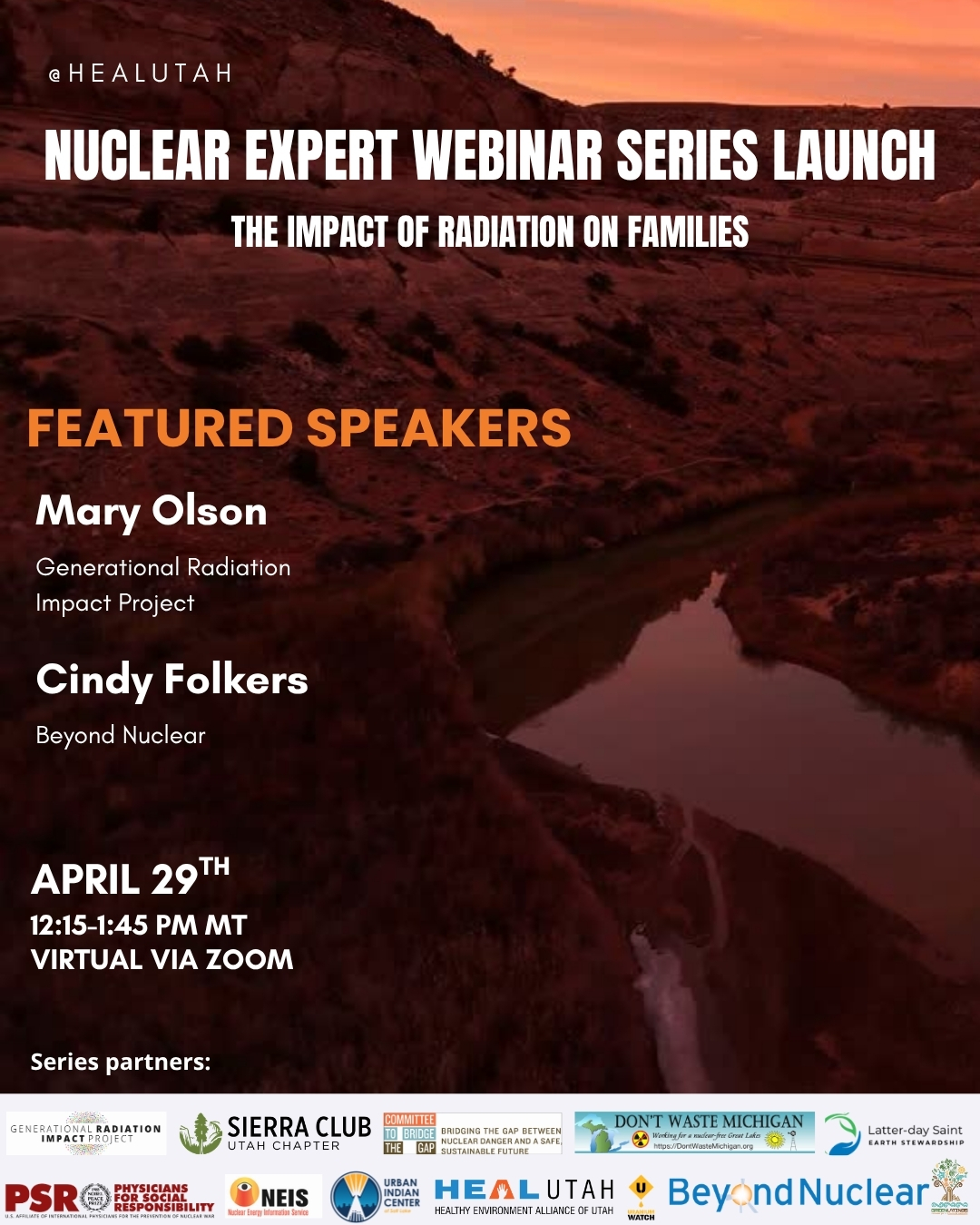
29 April – Nuclear Expert Webinar #1 – Radiation Impacts on Families with Mary Olson and Cindy Folkers
- 12:15 PM MT – 1:45 PM MT
- Location: Virtual – REGISTER TODAY

4 May -West Suburban Peace Coalition to discuss Iran war at May Educational Forum
Monday, May 4, 7:00 – 8:00 PM Central Standard Time
Title: : How Trump’s Narrative Tries to Shape the Reality of the War on Iran.
Contact Walt Zlotow, zlotow@hotmail.com 630 442 3045 for further information
14 May – online event From Bombs to Data Centres: the Face of Nuclear Colonialism
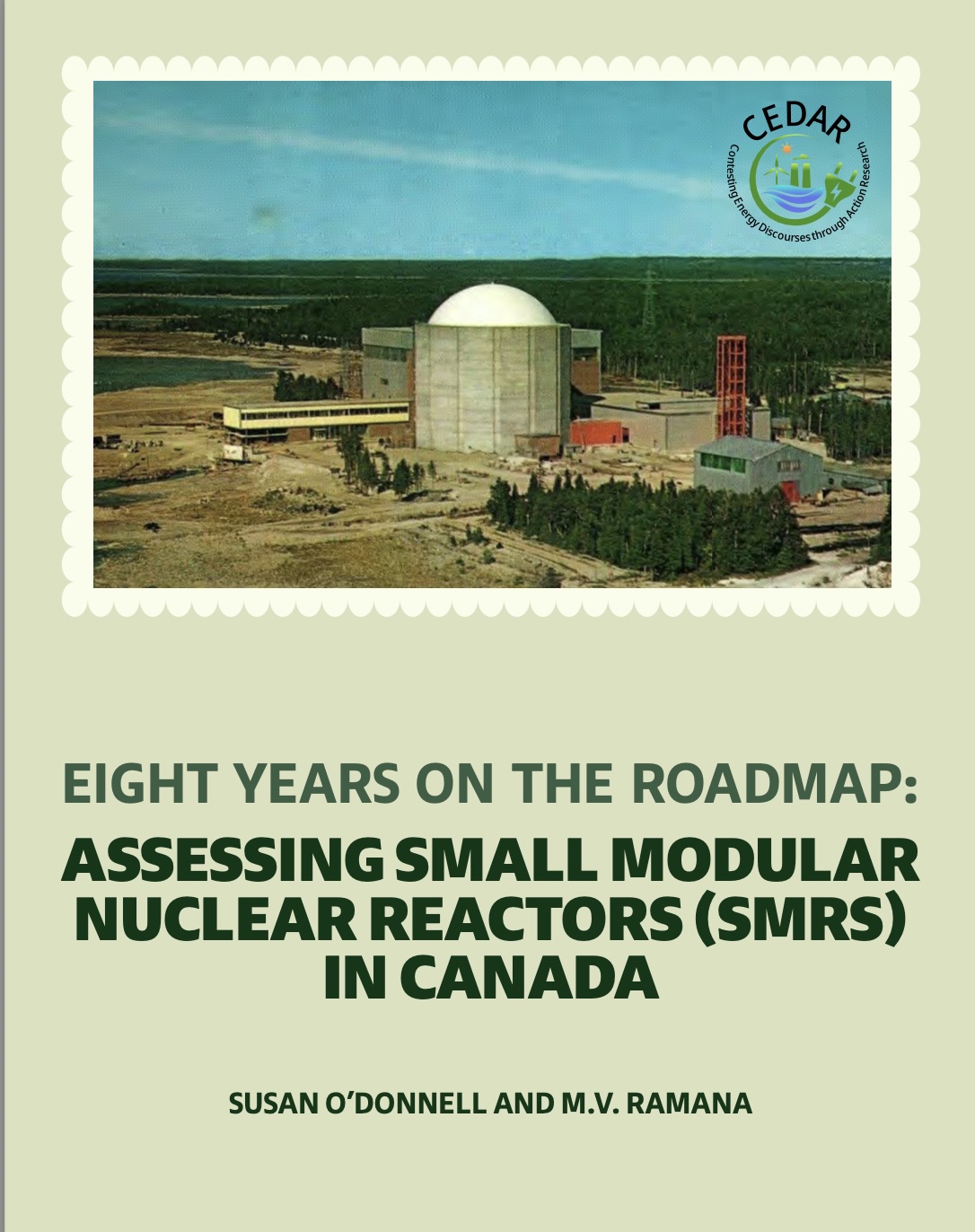

Pine Ridge Uranium is the real threat, not Tehran- Tell Burgum: Stop the Extraction.
Chernobyl: The Lost Tapes – A good documentary on Chernobyl on SBS available On Demand for the next 3 weeks– https://www.sbs.com.au/ondemand/tv-program/chernobyl-the-lost-tapes/2352741955560
To see nuclear-related stories in greater depth and intensity – go to https://nuclearinformation.wordpress.com
-
Archives
- April 2026 (288)
- March 2026 (251)
- February 2026 (268)
- January 2026 (308)
- December 2025 (358)
- November 2025 (359)
- October 2025 (376)
- September 2025 (257)
- August 2025 (319)
- July 2025 (230)
- June 2025 (348)
- May 2025 (261)
-
Categories
- 1
- 1 NUCLEAR ISSUES
- business and costs
- climate change
- culture and arts
- ENERGY
- environment
- health
- history
- indigenous issues
- Legal
- marketing of nuclear
- media
- opposition to nuclear
- PERSONAL STORIES
- politics
- politics international
- Religion and ethics
- safety
- secrets,lies and civil liberties
- spinbuster
- technology
- Uranium
- wastes
- weapons and war
- Women
- 2 WORLD
- ACTION
- AFRICA
- Atrocities
- AUSTRALIA
- Christina's notes
- Christina's themes
- culture and arts
- Events
- Fuk 2022
- Fuk 2023
- Fukushima 2017
- Fukushima 2018
- fukushima 2019
- Fukushima 2020
- Fukushima 2021
- general
- global warming
- Humour (God we need it)
- Nuclear
- RARE EARTHS
- Reference
- resources – print
- Resources -audiovicual
- Weekly Newsletter
- World
- World Nuclear
- YouTube
-
RSS
Entries RSS
Comments RSS
 nuclear-news