Tough when even a pro nuclear voice has to deplore the corruption in the nuclear industry
FirstEnergy Scandal Could Do Irreparable Harm To Nuclear Power. Forbes , 16 June 21,
Ohio’s Republican-dominated state legislature stood firm against its former speaker of the house: Rep. Larry Householder, who was indicted last July along with others for allegedly taking bribes to protect the state’s nuclear power industry. Two of the accused have already pled guilty. The beneficiary of the $1 billion state bailout, FirstEnergy FE-1.6% Corp., is reportedly in talks with prosecutors.
Unfortunately for the nuclear industry, this event cannot be viewed in isolation: it will have a rippling effect that will no doubt jar an industry that is perpetually trying to regain its balance. Once the case fully comes to light, the fallout from it could be much worse than any preceding event — a reference to Three Mile Island and the San Onofre Nuclear Station in Southern California,
“FirstEnergy also admits it paid $250,000 to Generation Now in March of 2017″ when the alleged scheme began, says the Energy and Policy Institute. Altogether, the utility admits to paying $56.6 million. “Longstreth and Generation Now were both indicted alongside Householder last year, and have since pleaded guilty to participating in a racketeering conspiracy.”
Prosecutors allege that “Company A” is at the heart of the matter — an entity that everyone knows: FirstEnergy. It is now alleged to have taken monies from its regulated transmission and distribution units in multiple states and to have given it to this shadowy group called Generation Now. ………
At issue is an Ohio law calling for a $1.3 billion rescue package — a measure that essentially taxes every electricity consumer and then directs that money to bail out FirstEnergy’s nuclear operations. The $60 million alleged bribes also helped beat back a voter initiative that would have thrown out that law.
The Damage Done
FirstEnergy, realizing this event has soiled its reputation, fired some key executives — ranging from the ethics officer to the chief executive officer, Charles Jones. Prosecutors alleged that Jones and Householder had 84 phone contacts between 2017 and 2019. While both men deny wrongdoing, FirstEnergy’s annual financial filings said that it was discussing a “deferred prosecution” — an agreement in which prosecutors grant amnesty if certain requirements are met. For starters, the utility would have to pay back customers for the monies it took from them and then misappropriated.
“This is likely the largest bribery, money laundering scheme ever perpetrated against the people of the state of Ohio,” said then-U.S. Attorney David DeVillers, at the time of the indictments. “This was bribery, plain and simple. This was a quid pro quo. This was pay to play.” The prosecution alleges that the payments were tantamount to “bags of cash” that went unregulated and unreported. …..
”Advanced” nuclear reactor designs – the latest version of nuclear wishful thinking

Clean Technica 16th June 2021, Some nuclear energy developers are now promoting what they call “advanced” reactor designs as a solution. Unlike light-water reactors, these non-light-water designs rely on materials other than water for cooling, including liquid sodium, helium and molten salt. Some developerscontend these reactors, which are still in the concept stage, will solve all the problems that plague light-water reactors and be ready for prime time by the end of the decade. The siren song of a cheap, safe and secure nuclear reactor in the offing has attracted the attention of Biden administration officials and some key members of Congress, who are looking for any and all ways to curb carbon emissions. But are so-called advanced reactors merely the latest version of nuclear wishful thinking? A comprehensive Union of Concerned Scientists (UCS) analysis of non-light-water reactor concepts in development suggests they are. Published in mid-March, the 140-page report found that these designs are no better — and in some respects significantly worse — than the light-water reactors in operation today. The report, “Advanced” Isn’t Always Better, assesses the pros and cons of three main types of non-light-water reactors: sodium-cooled fast reactors, high-temperature gas-cooled reactors and molten salt–fueled reactors. It rates each type on three broad criteria: safety; nuclear proliferation and terrorism risks; and sustainability, which refers to how efficiently they use uranium and how much long-lived nuclear waste they generate. https://cleantechnica.com/2021/06/16/when-it-comes-to-nuclear-power-advanced-isnt-always-better/ |
For the first time, drones autonomously attacked humans
For the First Time, Drones Autonomously Attacked Humans. This Is a Turning Point. Drone experts have long dreaded this moment.
Popular Mechanics, BY KYLE MIZOKAMIJUN 1, 2021
- Libyan forces reportedly used Kargu-2 drones to autonomously seek out and attack human targets.
- This is the first recorded case of using a self-hunting drone against people.
- Drone experts say this extremely dangerous development could be dangerous to people far beyond the traditional battlefield.
The world’s first recorded case of an autonomous drone attacking humans took place in March 2020, according to a United Nations (UN) security report detailing the ongoing Second Libyan Civil War. Libyan forces used the Turkish-made drones to “hunt down” and jam retreating enemy forces, preventing them from using their own drones.
The field report (via New Scientist) describes how the Haftar Affiliated Forces (HAF), loyal to Libyan Field Marshal Khalifa Haftar, came under attack by drones from the rival Government of National Accord (GNA) forces. After a successful drive against HAF forces, the GNA launched drone attacks to press its advantage. From the report:
Logistics convoys and retreating HAF were subsequently hunted down and remotely engaged by the unmanned combat aerial vehicles or the lethal autonomous weapons systems such as the STM Kargu-2 (above) and other loitering munitions. The lethal autonomous weapons systems were programmed to attack targets without requiring data connectivity between the operator and the munition: in effect, a true “fire, forget and find” capability.
The report says Turkey supplied the drones to Libyan forces, which is a violation of a UN arms embargo slapped on combatants in the conflict.
…….. Drone experts have been dreading this moment while advocating for a ban on autonomous attack drones. https://www.popularmechanics.com/military/weapons/a36559508/drones-autonomously-attacked-humans-libya-united-nations-report/
Collaboration between Russia and Europe finally cleans up the most dangerous nuclear ship in the Arctic.
After 27 Years, Lepse No Longer Poses a Nuclear Threat to the Arctic, High North News, PETER B. DANILOV 17 June 21, Last week, the Russian service ship Serebryanka delivered the last spent-fuel bundles from the Lepse floating maintenance base to an Atomflot storage site in Murmansk, completing the final stage of securing the nuclear waste……. To ensure the dismantling of the Lepse floating maintenance base, it was necessary to specially develop new technologies and equipment and make innovative decisions,” said FSUE Atomflot Director General Mustafa Kashka.
In July 2020, the Lepse floating maintenance base’s main batch of spent nuclear fuel was unloaded at the Nerpa shipyard. A total of 620 spent-fuel bundles were extracted and unloaded.
Lepse was regarded as the most dangerous nuclear vessel in the north and the Norwegian environmental NGO Bellona began the work of securing the spent nuclear fuel onboard the vessel in 1994.
……….. The project to dismantle and dispose of the Lepse Floating Maintenance Base is multilaterally implemented.
In 1996, the project was included in the EU’s TACIS program (Technical Assistance to the Commonwealth of Independent States), which involved the allocation of funds for the inspection of the state of spent nuclear fuel.
Since 2008, the project has been carried out in the framework of a Grant Agreement between the European Bank for Reconstruction and Development (EBRD), Rosatom, and JSC NFC Logistics Centre (the project’s customer and coordinator).
The EBRD has provided 54 million euros from the Northern Dimension Environmental Partnership Fund (NDEP). https://www.highnorthnews.com/en/after-27-years-lepse-no-longer-poses-nuclear-threat-arctic
U.S. wants nuclear deal done before Iran’s new president takes power
U.S. wants nuclear deal done before Iran’s new president takes power, Dave Lawler Axios, 17 June 21, The Biden administration wants to finalize a deal with Iran to return to the 2015 nuclear deal in the six weeks remaining before a new Iranian president is inaugurated, a U.S. official tells Axios.
Key quote: The official said it would be “concerning” if talks dragged on into early August, when Iran’s transition is due to take place. “If we don’t have a deal before a new government is formed, I think that would raise serious questions about how achievable it’s going to be,” the official said.
Driving the news: Conservative judiciary chief Ebrahim Raisi, a close ally to Supreme Leader Ali Khamenei, is the clear favorite to win Friday’s presidential election in Iran. No prominent members of the reformist camp were permitted to run, meaning the more moderate President Hassan Rouhani will almost certainly hand power to a hardliner.
- Analysts and some diplomats involved in the negotiations have long said it would be easier to reach a deal with the outgoing administration than with a newly inaugurated government, particularly one led by Raisi.
- Six rounds of talks have been held so far in Vienna, with the U.S. not in the room but negotiating indirectly through EU intermediaries.
State of play: Iran’s top negotiator, Abbas Araghchi, said this week that while a deal wouldn’t be possible in the current round of talks, Iran had no interest in “wasting time” and the elections wouldn’t be a factor………….https://www.axios.com/us-iran-nuclear-deal-talks-raisi-inauguration-ed00555e-db84-4d26-9e2b-1ad8b21f9fc5.html
Julian Assange: Separating Fact from Fiction — Rise Up Times

Join Julian Assange’s father, and brother John and Gabriel Shipton, along with panelists Fidel Narvaez (former Ecuadorian consul at the embassy in London), John Kiriakou (CIA torture whistleblower) and Ray McGovern (former CIA analyst/presidential briefer) as they separate fact from fiction about Julian Assange on Sunday, June 13th. Editor’s Note: John and Gabriel Shipton will […]
Julian Assange: Separating Fact from Fiction — Rise Up Times
Earth is now trapping an ‘unprecedented’ amount of heat, NASA says
Climate and Environment New research shows that the amount of heat the planet traps has roughly doubled since 2005, contributing to more rapidly warming oceans, air and land The International Space Station orbits over the Atlantic Ocean southwest of South Africa. (NASA) By Tik Root June 16, 2021 at 3:00 p.m. CDT 893 The amount […]
Earth is now trapping an ‘unprecedented’ amount of heat, NASA says — limitless life
June 18 Energy News — geoharvey

Opinion: ¶ “Can The US Survive California’s Drought?” • The drought facing the Western US is bad. Really bad. It is a national and international crisis. California produces more than a third of the vegetables and two-thirds of the fruits and nuts sold in the US, so the drought is affecting more than California and […]
June 18 Energy News — geoharvey
What Has Happened/Is Happening at Taishan, China’s EDF Run Nuclear Plant? — RADIATION FREE LAKELAND
Below is a press release from the Nuclear Free Local Authorities who have asked the UKs Nuclear Regulatory body to investigate …our own experience with the Office for Nuclear Regulation is that they err on the side of the industry – maybe this time they will err on the side of finding out the truth […]
What Has Happened/Is Happening at Taishan, China’s EDF Run Nuclear Plant? — RADIATION FREE LAKELAND
What actually happened at Taishan?
What actually happened at Taishan? https://www.rnanews.eu/what-actually-happened-at-taishan-nfla-call-on-nuclear-regulator-to-carefully-investigate-possible-r-140634.html?fbclid=IwAR2W5hoUwNH-6fgYOgVv6LIbM4wVWPGA1cLA4i8_XAC0PPIpz4odlGmSTcI NFLA call on nuclear regulator to carefully investigate possible radioactive leak and its implications for Hinkley C & Sizewell C | NFLA, 16 June 21,
The UK & Ireland Nuclear Free Local Authorities (NFLA) is concerned to read many contradictory reports over what has been called a ‘radioactive leak’ by some and ‘performance issues’ by others at the Taishan nuclear plant some 100kms from Hong Kong in the Guangdong region of China. NFLA has written to the UK nuclear regulatory, the Office for Nuclear Regulation (ONR), to ask it to investigate this matter with real urgency in terms of the implications for similar reactors being considered for the UK.
The Taishan plants developed in China use the same EPR (European Pressurised Reactors) technology being planned for the Hinkley Point C plant in Somerset and currently being considered in a public inquiry at Sizewell C in Suffolk.
Taishan is a prestige EPR project built after China signed a nuclear electricity generation agreement with ÉDF. Construction started in 2009, and the two units started generating electricity in 2018 and 2019, respectively. It is 70% owned by CGN, and 30% by Framatome, a subsidiary of EDF.
This incident came to light following an investigation by CNN, and it appears to have been going on for some considerable time.
According to the CNN investigation, in late May, one of the EPR reactors started venting radioactive gases – it is not known precisely why or when. The CNN article mentions possible fuel failures, and this is a possibility. It appears the Chinese nuclear regulator and the Chinese Government reacted by proposing to increase the safety limits for residents downwind in order to keep the reactor operating, and they told Framatome of this intention. Framatome objected to such an action and said China should instead shut down the reactor to find out what had gone wrong. The response from Chinese authorities was negative to this suggestion. As a result, Framatome (unusually) submitted an operational safety assistance request to the US Government on June 3rd, formally asking for a ‘legal waiver’ that would allow them to address an urgent nuclear safety matter. This was sent to the US Department of Energy (DOE), warning their officials that the nuclear reactor was leaking fission gas.
On June 8th, EDF asked the US DOE for an expedited review of their request, according to a memo obtained by CNN. “The situation is an imminent radiological threat to the site and to the public and Framatome urgently requests permission to transfer technical data and assistance as may be necessary to return the plant to normal operation” read the memo. Framatome reached out to the US government for assistance, the document indicates, because the Chinese government agency was continuing to increase its limits on the amount of radioactive gas that could safely be released from the facility without shutting it down, according to the documents reviewed by CNN.
Since this report came out, EDF and the Chinese authorities have tried to downplay that any serious incident took place, suggesting these matters were merely “performance issues” within safely levels. It should be noted though that an extraordinary board meeting has been requested by Framatome with its Chinese partners to discuss the matter. (2)
NFLA believe some kind of safety incident could well have taken place at the Taishan reactor, and sincerely hopes that it has not been anything approaching a major nuclear incident. The reaction of the Chinese nuclear regulator is of real concern to us, as is the large level of confusion that has clearly taken place over this incident.
NFLA has written to the UK Chief Nuclear Inspector asking for the Office of Nuclear Regulation to investigate this incident as part of the nuclear regulators’ Multinational Design Evaluation Programme, which includes a working group on the EPR that focuses on reviewing lessons learnt from commissioning, construction and early phase operations. Any concern that comes from this incident needs to be learnt quickly given the development of a similar reactor at Hinkley Point and a proposed reactor at Sizewell. For NFLA, this incident only goes to confirm its concern that the EPR reactor is highly complex and difficult to build, and safety issues could well remain within it.
NFLA Steering Committee Chair Councillor David Blackburn said:
“The murky details of what has actually happened to one of the Taishan Chinese EPR reactors in this incident is indicative of the lack of transparency that remains in the global nuclear industry. It also shows the real communication problems that can occur between in this case the French and Chinese nuclear companies and regulators. I hope this has not been a serious incident, but the detail initially provided to CNN suggests something has gone wrong and needs to be carefully considered in terms of its impact on this new nuclear reactor. It confirms to NFLA that there remain so many inherent issues in new nuclear that it would be far better to pursue instead safer, cheaper, more easily realisable and radioactive waste-free renewable energy alternatives.”
Ends – for more information please contact Sean Morris, NFLA Secretary, on 07771 930196.
French nuclear company and Chinese government once again have a problem with their much vaunted EPR nuclear reactor design
Nuclear reactor problem a new headache for designer and China. Bangkok Post, 16 June 21, PARIS – The emergence of problems in a new-generation nuclear reactor in China threatens to undermine efforts by its French designer to sell it elsewhere, and could hurt Beijing’s nuclear industry, analysts said.
French energy giant EDF and the Chinese government have sought to ease concerns about a gas build-up at the Taishan Nuclear Power Plant after a CNN report of a potential leak at the site.
The Chinese foreign ministry said Tuesday that radiation levels remained normal at the site in southern Guangdong province and there were no safety concerns.
But it is the latest snag to hit EDF’s much-vaunted EPR reactor.
The Taishan power station became in 2018 the first site worldwide to use the pressurised water design, which has been subject to years of delays in similar projects in Britain, France and Finland.
A second EPR reactor was launched at Taishan a year later. The facility is partly owned by EDF along with state-owned China General Nuclear Power Group, the majority stakeholder and operator of the plant.
EDF said the plant’s number one reactor experienced a build-up of gases in part of the cooling system following the deterioration of the coating on some uranium fuel rods.
The French company was first informed about the problem with the fuel rods in October, but only learned about the gas build-up on Saturday, according to EDF.
The problem and the silence of Chinese authorities triggered criticism of EDF, whose EPR reactor is supposed to be safer, last longer and produce more electricity than previous versions.
– EDF seeks contracts –
It seems that both the Chinese nuclear regulators and the French nuclear corporations may have acted in bad faith,” said Paul Dorfman, a researcher at the University College London’s Energy Institute.
“If so, this new EPR debacle should have important consequences for any further plans for new EPR builds in France, the UK, and internationally,” he added…….
The Taishan incident comes as EDF, which is currently struggling to finish the Flamanville EPR in France after more than a dozen years of work, is hoping to win new contracts.
France, which must eventually decide whether to renew its park of ageing nuclear reactors, is holding off on making a decision until Flamanville comes online, which is now expected in late-2022 at best………. https://www.bangkokpost.com/world/2133307/nuclear-reactor-problem-a-new-headache-for-designer-and-china
The real welfare cheats are weapons makers.
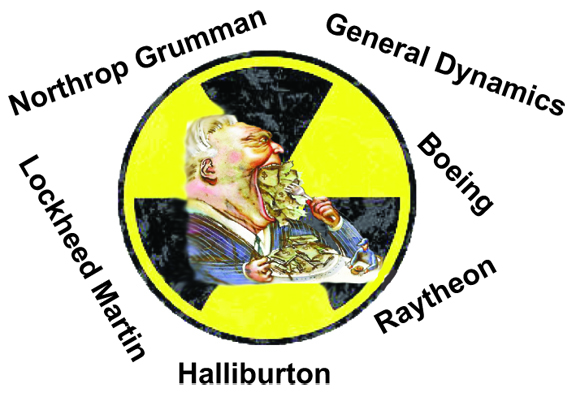
We’re squabbling over Social Security, while the government lavishes infinitely more money on the arms industry. The Nation, By Rebecca Gordon 16 June 21, ”……………………………..President Joe Biden remains super-glued to the same old post–World War II agreement between the two major parties: They can differ vastly on domestic policies, but they remain united when it comes to projecting US military power around the world and to the government spending that sustains it. In other words, the US “national security” budget is still the third rail of politics in this country…………………………….

WELFARE FOR WEAPONS MAKERS
Of course, there’s a second high-voltage, untouchable rail in American politics and that’s funding for the military and weapons manufacturers. It takes a brave politician indeed to suggest even the most minor of reductions in Pentagon spending, which has for years been the single largest item of discretionary spending in the federal budget.
It’s notoriously difficult to identify how much money the government actually spends annually on the military. President Trump’s last Pentagon budget, for the fiscal year ending on September 30, offered about $740 billion to the armed services (not including outlays for veteran services and pensions). Or maybe it was only $705.4 billion. Or perhaps, including Department of Energy outlays involving nuclear weapons, $753.5 billion. (And none of those figures even faintly reflected full national security spending, which is certainly well over a trillion dollars annually.)
Most estimates put President Biden’s 2022 military budget at $753 billion—about the same as Trump’s for the previous year. As former Senator Everett Dirksen is once supposed to have said, “A billion here, a billion there, and pretty soon you’re talking real money.”
Indeed, we’re talking real money and real entitlements here that can’t be touched in Washington without risking political electrocution. Unlike actual citizens, US arms manufacturers seem entitled to ever-increasing government subsidies—welfare for weapons, if you like. Beyond the billions spent to directly fund the development and purchase of various weapons systems, every time the government permits arms sales to other countries, it’s expanding the coffers of companies like Lockheed-Martin, Northrup-Grumman, Boeing, and Raytheon Technologies. The real beneficiaries of Donald Trump’s so-called Abraham Accords between Israel and the majority Muslim states of Morocco, the United Arab Emirates, Bahrain, and Sudan were the US companies that sell the weaponry that sweetened those deals for Israel’s new friends.
When Americans talk about undeserved entitlements, they’re usually thinking about welfare for families, not welfare for arms manufacturers. But military entitlements make the annual federal appropriation of $16.5 billion for Temporary Aid to Needy Families (TANF) look puny by comparison. In fact, during Republican and Democratic administrations alike, the yearly federal outlay for TANF hasn’t changed since it was established through the 1996 Personal Responsibility and Work Opportunity Reconciliation Act, known in the Clinton era as “welfare reform.” Inflation has, however, eroded its value by about 40 percent in the intervening years.
And what do Americans get for those billions no one dares to question? National security, right?
But how is it that the country that spends more on “defense” than the next seven, or possibly 10, countries combined is so insecure that every year’s Pentagon budget must exceed the last one? Why is it that, despite those billions for military entitlements, our critical infrastructure, including hospitals, gas pipelines, and subways (not to mention Cape Cod steamships), lies exposed to hackers?
And if, thanks to that “defense” budget, we’re so secure, why is it that, in my wealthy home city of San Francisco, residents now stand patiently in lines many blocks long to receive boxes of groceries? Why is “national security” more important than food security, or health security, or housing security? Or, to put it another way, which would you rather be entitled to: food, housing, education, and health care, or your personal share of a shiny new hypersonic missile?
But wait! Maybe defense spending contributes to our economic security by creating, as Donald Trump boasted in promoting his arms deals with Saudi Arabia, “jobs, jobs, jobs.” It’s true that spending on weaponry does, in fact, create jobs, just not nearly as many as investing taxpayer dollars in a variety of far less lethal endeavors would. As Brown University’s Costs of War project reports:
And if, thanks to that “defense” budget, we’re so secure, why is it that, in my wealthy home city of San Francisco, residents now stand patiently in lines many blocks long to receive boxes of groceries? Why is “national security” more important than food security, or health security, or housing security? Or, to put it another way, which would you rather be entitled to: food, housing, education, and health care, or your personal share of a shiny new hypersonic missile?
Rebecca GordonRebecca Gordon, a TomDispatch regular, teaches in the philosophy department at the University of San Francisco. She is the author of American Nuremberg: The U.S. Officials Who Should Stand Trial for Post-9/11 War Crimes (Hot Books, April 2016). Her previous books include Mainstreaming Torture: Ethical Approaches in the Post-9/11 United States and Letters from Nicaragua.
https://www.thenation.com/article/economy/the-real-welfare-cheats-are-war-profiteers/
The Pentagon’s Project, Pele Military micro-reactors – creates more problems than it solves.

Military micro-reactors: Waging yesterday’s wars while losing the future’s https://www.defensenews.com/opinion/commentary/2021/06/15/military-micro-reactors-waging-yesterdays-wars-while-losing-the-futures/By: Bryan Clarkand Henry Sokolski With its withdrawal from Afghanistan and decision to end programs that typified America’s conflicts of past two decades, the Biden administration’s Pentagon is planning for long-term competitions against China and Russia. But for the Pentagon’s mobile micro-reactor effort, Project Pele, it’s still 2007.
Designed to supply energy to remote troops, Pele is geared for fighting the last war, which lacked high-end threats and during which vulnerable fuel convoys were a significant source of American casualties.
The Pentagon is asking Congress to spend $60 million next year on Pele. Congress should hit the brakes. Not only is Pele rooted in anachronistic military scenarios, but against Chinese, Russian, North Korean or Iranian militaries, it would be a prime target for precise missiles and drones as well as a source of friction with nuclear-skeptic U.S. allies expected to host the reactors.
With its withdrawal from Afghanistan and decision to end programs that typified America’s conflicts of past two decades, the Biden administration’s Pentagon is planning for long-term competitions against China and Russia. But for the Pentagon’s mobile micro-reactor effort, Project Pele, it’s still 2007.
Designed to supply energy to remote troops, Pele is geared for fighting the last war, which lacked high-end threats and during which vulnerable fuel convoys were a significant source of American casualties.
The Pentagon is asking Congress to spend $60 million next year on Pele. Congress should hit the brakes. Not only is Pele rooted in anachronistic military scenarios, but against Chinese, Russian, North Korean or Iranian militaries, it would be a prime target for precise missiles and drones as well as a source of friction with nuclear-skeptic U.S. allies expected to host the reactors.
To address the threat of attack, Pele’s fuel is intended to be inherently stable and resistant to meltdown.
Perhaps, but a large attack could bury the fuel in debris, preventing it from dissipating heat and causing it to exceed its design temperature. And even if the fuel remains intact, it is radioactive and would create a contamination risk once released from the reactor by an attack.
Count on our allies being unwilling to host Pele reactors that opponents are sure to strike. Unlike Iraq and Afghanistan, where the governments were beholden to the United States and guided-weapons threats were nonexistent, U.S. troops facing China would have to operate on Japanese, Australian or Philippine soil — nations that harbor strong anti-nuclear sentiments. U.S. governments in Guam or the Northern Mariana islands may have less choice in the matter, but residents there will hardly welcome new radioactive targets for Chinese missiles.
U.S. forces could reduce the threat to mobile reactors by taking them off the front lines. However, this reduces their value in solving logistical problems. More important, moving Pele away from the front will place it closer to civilian populations worried about Pele’s everyday radiological footprint. Consider instead of platoons of diesel mechanics and convoys of fuel, the Army needs squads of nuclear power plant operators and pallets of testing supplies and water treatment equipment. The return trip will also be full. Every glove, paper towel and sample bottle would likely be considered low-level waste and require specialized disposal, possibly back in the United States.
Bottom line: Pele creates more military challenges than it solves.
Mobile reactors might make sense for powering remote settlements and polar or moon stations, which is why NASA and the Energy Department are backing the project. But Pele is the wrong answer for tomorrow’s power-hungry military sensors, electric combat vehicles and directed-energy weapons. To supply these systems, the Pentagon should take a broader approach. Instead of advancing a comfortable solution from the past, the Defense Department should drive energy innovation through competition, such as the prize challenges that the Defense Advanced Research Projects Agency successfully used to advance new robotics and semiconductor designs.
New energy technologies are available. Solar and wind generation are being advanced and fielded today by commercial industry. Developments in batteries, capacitors and flywheels are already revolutionizing energy storage. A combination of these and other as-yet unidentified technologies could address the U.S. military’s expeditionary energy needs and be more feasible to deploy than Pele. Congress should reallocate Pele’s proposed budget to fund competitions to surface and exploit these new approaches rather than picking a winner today that is likely to lose tomorrow.
Bryan Clark, a retired U.S. Navy nuclear submarine officer, is currently a senior fellow at the Hudson Institute and the director of its Center for Defense Concepts and Technology. Henry Sokolski is the executive director at the Nonproliferation Policy Education Center. He served in the U.S. Defense Department’s Office of Net Assessment and as the department’s deputy for nonproliferation policy under then-Defense Secretary Dick Cheney
NATO readies for a collective response to attacks in space

NATO says attack in space could trigger mutual defense clause Defense News By: Lorne Cook, The Associated Press 16 June 21BRUSSELS — NATO leaders on Monday expanded the use of their all for one, one for all, mutual defense clause to include a collective response to attacks in space.
Article 5 of NATO’s founding treaty states that an attack on any one of the 30 allies will be considered an attack on them all. Until now, it’s only applied to more traditional military attacks on land, sea, or in the air, and more recently in cyberspace.
In a summit statement, the leaders said they “consider that attacks to, from, or within space” could be a challenge to NATO that threatens “national and Euro-Atlantic prosperity, security, and stability, and could be as harmful to modern societies as a conventional attack.”
“Such attacks could lead to the invocation of Article 5. A decision as to when such attacks would lead to the invocation of Article 5 would be taken by the North Atlantic Council on a case-by-case basis,” they said.
Around 2,000 satellites orbit the earth, over half operated by NATO countries, ensuring everything from mobile phone and banking services to weather forecasts. Military commanders rely on some of them to navigate, communicate, share intelligence and detect missile launches.
In December 2019, NATO leaders declared space to be the alliance’s “fifth domain” of operations, after land, sea, air and cyberspace. Many member countries are concerned about what they say is increasingly aggressive behavior in space by China and Russia.
Around 80 countries have satellites, and private companies are moving in, too. In the 1980s, just a fraction of NATO’s communications was via satellite. Today, it’s at least 40%. During the Cold War, NATO had more than 20 stations, but new technologies mean the world’s biggest security organization can double its coverage with a fifth of that number.
NATO’s collective defense clause has only been activated once, when the members rallied behind the United States following the Sept. 11, 2001, attacks…………..
Biden said Monday that Article 5 is “a sacred obligation” among allies. “I just want all of Europe to know that the United States is there,” he said. “The United States is there.” https://www.defensenews.com/smr/nato-priorities/2021/06/14/nato-says-attack-in-space-could-trigger-mutual-defense-clause/
Climate and weather hazards to France’s nuclear reactors in summer 2021
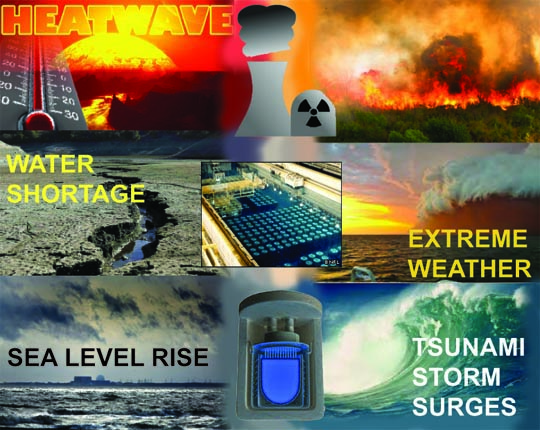
Weather conditions can have a significant impact on the production of
French nuclear power plants: over the past six years, heat waves and
droughts have caused nearly 360 shutdowns or reductions in production on
the French nuclear fleet, causing up to 6.2GW unavailability.
Since itscreation in 2019, Callendar has acquired expertise in the short-term
forecasting of these downtimes and the modeling of the long-term effects of
climate change on nuclear production. For the first time, we are proposing
an assessment of the risk of unavailability due to medium-term
meteorological causes for the summer of 2021.
Callendar (accessed) 15th June 2021
http://callendar.climint.com/fr/disponibilite-nucleaire-canicule-secheresse-ete-2021/
-
Archives
- February 2026 (228)
- January 2026 (308)
- December 2025 (358)
- November 2025 (359)
- October 2025 (376)
- September 2025 (258)
- August 2025 (319)
- July 2025 (230)
- June 2025 (348)
- May 2025 (261)
- April 2025 (305)
- March 2025 (319)
-
Categories
- 1
- 1 NUCLEAR ISSUES
- business and costs
- climate change
- culture and arts
- ENERGY
- environment
- health
- history
- indigenous issues
- Legal
- marketing of nuclear
- media
- opposition to nuclear
- PERSONAL STORIES
- politics
- politics international
- Religion and ethics
- safety
- secrets,lies and civil liberties
- spinbuster
- technology
- Uranium
- wastes
- weapons and war
- Women
- 2 WORLD
- ACTION
- AFRICA
- Atrocities
- AUSTRALIA
- Christina's notes
- Christina's themes
- culture and arts
- Events
- Fuk 2022
- Fuk 2023
- Fukushima 2017
- Fukushima 2018
- fukushima 2019
- Fukushima 2020
- Fukushima 2021
- general
- global warming
- Humour (God we need it)
- Nuclear
- RARE EARTHS
- Reference
- resources – print
- Resources -audiovicual
- Weekly Newsletter
- World
- World Nuclear
- YouTube
-
RSS
Entries RSS
Comments RSS
 nuclear-news