Illinois nuclear power stations’future hangs in the balance, awaiting decision on taxpayer subsidies.
Fate of Illinois nuclear plants in balance after PJM auction fail and stalled subsidy plan. Utility Dive June 7, 2021 By Scott Voorhis
Dive Brief:
- Exelon Corp. reports that three of its nuclear plants in Illinois failed to clear the PJM Interconnection’s capacity auction last week.
- Exelon, in a filing with the U.S. Securities and Exchange Commission, revealed that its Bryon, Dresden and Quad Cities nuclear plants in Illinois all failed to sell their power at the PJM auction, losing out to other power plants and energy resources. Bryon and Dresden are currently slated to be retired this fall, with Quad Cities remaining open thanks to previously awarded subsidies from the state of Illinois.
The fate of Illinois’ nuclear power sector, meanwhile, remains in the balance, as an impasse drags on in the state legislature over an energy bill that would provide hundreds of millions of dollars in subsidies to the sector………….. https://www.utilitydive.com/news/fate-of-illinois-nuclear-plants-in-balance-after-pjm-auction-fail-and-stall/601324/
‘Koeberg Nuclear Plant is like an old car that simply can’t be kept on the road’

Cape Talk, 7 June 2021, by Barbara Friedman Refilwe Moloto speaks to Hilton Trollip, a research fellow in energy at UCT’s Global Risk Governance Programme.
- Koeberg GM suspended but energy expert says the nuclear power station is past its sell-by date
- Researcher Hilton Trollip is skeptical about refurbishing Koeberg
- All coal-firing and nuclear plants need to end and move over to renewable sources, says Trollip
On Friday the general manager of Koeberg Nuclear Power Station was replaced by Eskom’s Chief Nuclear Officer. Velaphi Ntuli has been suspended for operational reasons.
RELATED: Eskom suspends Koeberg Power Station GM for ‘performance-related issues’
One of those being that one of Eskom’s biggest generating units with a capacity of 900MW, Koeberg Unit 1 has been on an outage since January 2021.
Just how concerned should we be as we head into winter, and at the same time, try to revive our economy?
We don’t know what’s happening inside Koeberg because we have no information on that, but what we do know is that Eskom is sitting with a power station fleet that is 30, 40, and 50 years old.
Hilton Trollip, Research Fellow – Global Risk Governance Programme UCT
Koeberg was built in 1985 and reaches the end of its design life in 2024, he notes.
It’s like a 20 or 30-year-old car. There comes a stage when it simply can’t be kept on the road, or to keep it on the road is too expensive or you are going to have regular breakdowns.
…………….Should the Koeberg Nuclear Power Station be given a longer lease on life?
There are plans to refurbish it, but I am skeptical about the wisdom of that. I am an engineer and everybody knows, things wear out, including power stations. Hilton Trollip, Research Fellow – Global Risk Governance Programme UCT
He says the government as a whole has not taken on board the fact that this energy era has to come to an end and be replaced with renawables……….. https://www.capetalk.co.za/articles/418543/koeberg-nuclear-plant-is-like-an-old-car-that-simply-can-t-be-kept-on-the-road
Nuclear Notebook: How many nuclear weapons does Russia have in 2021?
Nuclear Notebook: How many nuclear weapons does Russia have in 2021? Bulletin of the Atomic Scientists . By Hans M. Kristensen, Matt Korda, March 15, 2021, Russia is in the middle of a decades-long modernization of its strategic and nonstrategic nuclear forces to replace Soviet-era weapons with newer systems. In December 2020, President Vladimir Putin reported that modern weapons and equipment now make up 86 percent of Russia’s nuclear triad (Russian Federation 2020a), compared to the previous year’s 82 percent (Russian Federation 2019a). He additionally noted that he expects that number to rise to 88.3 percent in 2021. As in previous years, Putin’s remarks emphasized the need for Russia’s nuclear forces to keep pace with Russia’s competitors: It is absolutely unacceptable to stand idle. The pace of change in all areas that are critical for the Armed Forces is unusually fast today. It is not even Formula 1 fast—it is supersonic fast. You stop for one second and you start falling behind immediately” (Russian Federation 2020a).
Putin also noted his disappointment with the “deterioration” of the US-Russia arms control regime, and declared that the United States withdrew from the Anti-Ballistic Missile Treaty, the Intermediate-Range Nuclear Forces Treaty, and the Open Skies Treaty under “contrived pretexts.” He also addressed the “uncertainty” around New START: “We have repeatedly stated our readiness to extend the treaty but there has been no response” (Russian Federation 2020a).
As of early 2021, we estimate that Russia has a stockpile of nearly 4,500 nuclear warheads assigned for use by long-range strategic launchers and shorter-range tactical nuclear forces……………….
Russia has significantly reduced the number of warheads deployed on its ballistic missiles to meet the New START limit of no more than 1,550 deployed strategic warheads. Russia achieved the required reduction by the February 5, 2018 deadline, when it declared 1,444 strategic warheads attributed to 527 launchers (Russian Federation Foreign Affairs Ministry 2018). The most recent data, declared on September 1, 2020, listed Russia with 1,447 deployed warheads attributed to 510 strategic launchers………….
Russia has significantly reduced the number of warheads deployed on its ballistic missiles to meet the New START limit of no more than 1,550 deployed strategic warheads. Russia achieved the required reduction by the February 5, 2018 deadline, when it declared 1,444 strategic warheads attributed to 527 launchers (Russian Federation Foreign Affairs Ministry 2018). The most recent data, declared on September 1, 2020, listed Russia with 1,447 deployed warheads attributed to 510 strategic launchers…………
Overall, Russia’s nuclear modernization effort will present the international arms control community with new challenges. Unless a new arms reduction agreement is reached in the future to replace New START, the shrinking of Russia’s strategic nuclear arsenal that has characterized the past two decades will likely come to an end, …………………………………………. https://thebulletin.org/premium/2021-03/nuclear-notebook-russian-nuclear-weapons-2021/?utm_source=Newsletter&utm_medium=Email&utm_campaign=MondayNewsletter03152021&utm_content=Notebook_Russia_03152021
UK spent more than £8000 every minute on nuclear weapons in 2020,

UK spent more than £8000 every minute on nuclear weapons in 2020, report says, The National , By Kirsteen Paterson @kapaterson 7 June 21, THE UK spent more than £8300 a minute on nuclear weapons last year, a new report claims.
The International Campaign to Abolish Nuclear Weapons (Ican) estimates £4.38 billion was splurged on the defence systems in 2020, making the UK the fourth biggest spender behind the US, China and Russia.
The UK has around 200 nuclear weapons and is committed to replacing the ageing Trident submarine system, which is housed at HM Naval Base Clyde, near Scotland’s biggest population centre. However, it does not publish detailed accounts of its spending on this area.
In a report released today, analysis by Ican suggests that is equivalent to $11,769 per minute. The estimate is based on reports from the National Audit Office, the Ministry of Defence and more.
Janet Fenton, Ican’s Scottish liaison and the vice chair of Scottish CND, told The National: “Scotland has been forced to act as an involuntary host to the UK’s nuclear weapons, while the UK is one of the least transparent nuclear armed states about its expenditure and the technical difficulties it faces in upgrading and replacing its nuclear weapons system.
“All this is regardless of the complete democratic deficit in a Scotland that has just elected a parliament with a majority that supports independence and returned an even bigger number of parliamentarians who are committed to supporting the Treaty on the Prohibition of Nuclear Weapons than the number who support independence.”………………..
The Scottish Greens are vocal opponents of nuclear weapons. The party’s external affairs spokesperson Ross Greer MSP, who represents the West Scotland region, said: “Nuclear weapons are an abomination. The day the world is free of these weapons of mass slaughter can’t come soon enough. Not only do nuclear weapons present a real and immediate danger, this report shows that they put us at greater risk by diverting vast sums of public money which could otherwise be spent on what really keeps us safe, such as high quality health and care services during a pandemic.
“Spending such vast sums on these evil weapons can never be justified but for the UK Government to prioritise this expenditure at a time when it is slashing international aid budgets just sums up the mentality of this heartless Tory administration.” https://www.thenational.scot/news/19353768.uk-spent-8000-every-minute-nuclear-weapons-2020-report-says/
‘EU aware of nuclear material proliferation incident in India’
‘EU aware of nuclear material proliferation incident in India:’ Geo News, Peter Stano, Khalid Hameed Farooqi, 7 June 21,
The European Union is aware of the nuclear material proliferation incident in India, Peter Stano, the lead spokesperson for the External Affairs of the European Union has said during an interview with Geo News.
“All we can say at the moment is that the EU is aware of the information and understands that the Indian authorities are investigating,” he said when asked whether nuclear proliferation could pose a serious threat to international peace and security.
When asked whether the EU had taken notice of these incidents and raised them with India, and what are the assurances which the EU has received to stop the proliferation of nuclear materials, Stano said that at the moment, investigations are underway.
The South Asian region, in particular, and the world, in general, is concerned about international peace and security as the current incidents in India indicate the presence of a nuclear black market there.
It should be noted that India has been able to acquire large reserves of nuclear material under the auspices of the Nuclear Suppliers Group (NSG) — a multilateral export control regime and a group of nuclear supplier countries that seek to prevent nuclear proliferation.
According to an Indian newspaper report, two persons have been arrested in India on charges of illegal possession of seven kilogrammes of natural uranium.
This is not the first case of its kind in the country, as last week, a similar incident was reported which raises the question of Indian nuclear plants’ security being compromised.
Similarly, the continuation of these events is also an indication of the presence of nuclear and radioactive substances in India.
Indian police arrest seven suspects for attempt to sell uranium in Jharkhand
On June 4, Indian police in the state of Jharkhand arrested seven people for having “mineral uranium” in their possession and for their plans to sell it in the black market………….. https://www.geo.tv/latest/353967-eu-is-aware-of-nuclear-material-proliferation-incident-in-india-peter-stano
Russia beefs up its sub-critical non-nuclear experiments at its top secret far remote Novaya Zemlya site.
12th Directorate beefs up support facilities at nuclear test site, Russian Defence Ministry’s 12th Directorate talks public about ongoing subcritical experiments with nuclear warheads material at Novaya Zemlya. Barents Observer, By Thomas Nilsen June 07, 2021
The Defence Ministry’s own TV channel Zvezda on Sunday broadcasted a nearly 40 minutes long unique documentary about one of Russia’s top-secret military units, the Central Test Site at Novaya Zemlya.
Established in the mid-1950s, a total of 132 nuclear weapon tests are carried out at the archipelago in the period until October 24th 1990. Much less is told about the activities after President Mikhael Gorbachev the year after announced a unilateral nuclear test moratorium.
“Non-nuclear experiments are being carried out to confirm the reliability of the existing nuclear ammunition,” said the head of the Defence Ministry’s 12th Main Directorate, Major General Igor Kolesnikov, from his office in Moscow.
Non-nuclear experiments do not mean that weapons-grade material is not included. Simply, it means experiments are carried out but with no nuclear yield.
For example, such a test could include a small portion of plutonium, enough to explode, but not enough to reach a critical mass and therefore not create a self-sustaining chain reaction, or a nuclear bang. The effects of a full-size bang are then validated in advanced computer simulations.
Subcritical tests are done for two main purposes, determine the status of ageing plutonium warheads or aimed at developing new warheads.
“I must say that the United States is doing the same, they are also conducting similar experiments in Nevada,” Kolesnikov said in the interview with TV Zvezda.
Sub-critical tests are allowed under the Comprehensive Test Ban Treaty (CTBT). However, carrying out such tests in tunnels deep into the mountains in the far remote Novaya Zemlya have caused speculations that real, although very small, nuclear explosions could happen without the global network of monitoring stations would be able to detect it.
The Major General, though, said only non-nuclear explosive experiments take place at Novaya Zemlya…………… https://thebarentsobserver.com/en/nuclear-safety/2021/06/12th-directorate-beefs-support-facilities-nuclear-test-site
Israel’s 1981 bombing of Iraq nuclear reactor may have fuelled Saddam’s nuclear ambitions
ILeaked documents reveal secret French plans to stop Baghdad from getting nuclear weaponsBorzou DaragahiInternational Correspondent@borzou Four decades ago, a squadron of Israeli fighter jets on a secret mission snuck over Saudi Arabian airspace and swooped in to destroy an Iraqi nuclear reactor site that was being built by French and Italian engineers just outside Baghdad. It was a surprise attack lauded by Israel’s defenders and cited as an example of effective derring-do, showing how raw military power could serve as a tool of arms control.
But a trove of previously secret United States documents release…….. https://www.independent.co.uk/news/world/israel-iraq-nuclear-osirak-military-b1861255.html
USA’s Greenpeace Climate Campaign – opposes nuclear power – ”just because nuclear pollution is invisible doesn’t mean it’s clean,”
In an article (7/6/21) enthusing about nuclear as the cure for climate, Voice of America still has to admit that top environmenta organisation Greenpeace USA Climate Campaign does not swallow the nuclear-for-climate hoax.
”in response to a query from VOA about the group’s contemporary stance, it did send a statement.
“The climate crisis demands solutions that are fast, equitable and affordable. Nuclear energy is none of these. Nuclear energy is both expensive and dangerous, and just because nuclear pollution is invisible doesn’t mean it’s clean,” according to Greenpeace USA Climate Campaign Manager Anusha Narayanan. “We have the renewable energy technology needed to meet the demands of the climate crisis. Instead of pouring money into new nukes, the Biden administration should focus on phasing out fossil fuels and investing in the transition to a renewable energy economy.”
Austria and other European countries concerned about safety aspects of Hungary’s nuclear power plant expansion.
Hungary’s nuclear power plant expansion unnerves Austria, euobserver, By ESZTER ZALAN 7 June 21, BRUSSELS,
Austria’s Federal Environmental Agency has raised concerns over Hungary’s planned Russian-built Paks II nuclear power station, saying it lies on an active seismological fault line.
The report adds to existing concerns over safety issues surrounding the expansion of the Paks nuclear plant, a project pushed by the government of prime minister Viktor Orbán.
The potential occurrence of a permanent surface displacement on the site cannot be reliably excluded by scientific evidences. The Paks II site should therefore be deemed unsuitable,” the report, published last month, said.
The report also raises concerns over the authorisation-process for the site, saying the study compiled by the company behind the project, Paks II Ltd., which underpins the site-licensing, “omits relevant data”.
The report also notes that Hungarian legislation requires that “permanent surface replacement” needs to be “reliably excluded by scientific evidences” before a site can be deemed suitable.
The report stated that the Hungarian Atomic Energy Agency (HAEA) granted the site licence for the Paks nuclear plant II in 2017 in spite of the “potential conflict” with Hungarian regulations and the safety issues…………….
MEPs concern
The safety issue was also raised recently by a group of six Green MEPs, in a question to the EU Commission.
They say that “significant discrepancy has emerged from the location approval process for the Paks II nuclear plant between the results obtained by baseline studies on the earthquake risk of the site and the official application submitted by the MVM II company for site approval by the Hungarian nuclear supervisory authority”……….
”This nuclear power plant should never have been approved for many reasons. There is proof now that the site of Paks is at high risk of earthquakes. This applies not only to the new expansion, but also to the four existing power units. Any further expansion must be stopped immediately. The EU Commission must not be blinded by Orbán’s charade and must act immediately,” said Austrian Green MEP Thomas Waitz………. https://euobserver.com/climate/152035
Nuclear news – week ending 7 June
Coronavirus – India records 100,636 new cases, tally hits 28,909,975
Climate crisis to shrink G7 economies twice as much as Covid-19, says research.
Chernobyl Guards Have Befriended Abandoned Dogs, Feeding Them and Bringing Medical Care, I00-Year-Old Galápagos Giant Tortoise Found on Fernandina Island is Indeed Member of ‘Extinct’ Species, (but this is a ”good news – bad news’‘ story)
On the nuclear scene, while not a lot is actually happening, in nuclear weapons countries, the determined nuclear weapons push continues, most politicians seem to have been well and truly bought by the industry.
With an eye to the November Climate Summit meeting in Glascow, the nuclear lobby revs up its push for small nuclear reactors, or indeed, any, nuclear reactors as the climate cure.
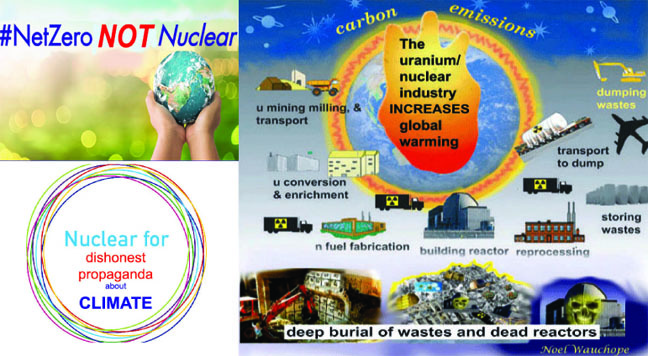
- The nuclear lobby’s desperate push to be included in COP26. Nuclear lobby spins its frenzied propaganda – with flimsy arguments for new nuclear power. Only renewables — and not nuclear power — can deliver truly low-carbon energy.
‘‘Fallout: The Hitoshima Cover-up and the Reporter Who Revealed It to the World”Ice sheets melting, ocean currents, and the risk of climate tipping points.
The Rio de Janeiro International Uranium Film Festival 2021 has awarded two film-makers on nuclear disarmament issues. - JAPAN. Fukushima waste water dumped in Pacific Ocean – a critical environmental issue threatening marine pollution.
- USA.
- Biden Dangerously Accelerating the New Cold War with China. Pentagon’s creepy shift from nuclear deterrence to the use of nuclear weapons. President Biden’s budget backs new nuclear weapons, contradicting his policy while campaigning. Progressive Democrats slam Joe Biden’s about-face on nuclear weapons spending.
- Exelon and NRG share prices fall as U.S. nuclear power firms to be hit by plunge in grid payments.
- The transition to clean energy is held back by subsidies to the nuclear industry.
- Elevated cancer deaths in Monroe may be result of nuclear plant.
- Production of new plutonium triggers at Savannah River Site to mean more radioactive trash for South Carolina
- Assange’s Father on US Tour, includes Minneapolis/St. Paul.
- UK.
- Launch of bigger Stop Sizewell C campaign in UK.
- Lakes Against Nuclear Dump (LAND) call to Boris Johnson for a moratorium on the push for ”Delivery of a Geological Disposal Facility”.
- Critique No 1 of BBC documentary Building Britain’s Biggest Nuclear Power Station. Critique No 2 of BBC documentary Building Britain’s Biggest Nuclear Power Station. Critique No 3 [a boys-with-toys view] -BBC documentary Building Britain’s Biggest Nuclear Power Station.
- Old nuclear grinding to a halt in Britain.
- Secret papers reveal the British spying on Scottish anti-nuclear activists, who were labelled as ”terrorists”.
- PACIFIC ISLANDS. Pacific Islands forum wants answers on the effects of Japan’s Fukushima waste water to be dumped into the Pacific Ocean
- .CHINA. China warns of ‘nuclear showdown’ with the United States. China again urges Japan to revoke decision to dump nuclear wastewater
- GERMANY. Germany’s search for a nuclear waste solution.
- CANADA, Debunking myths about the Chalk River Mound nuclear waste plan
- .FRANCE. France’s government criminalises anti nuclear activists.
- BELARUS. European Commission worried that Belarus will start the Astravets nuclear power plant without the recommended EU safety guidelines.
- AUSTRALIA. Australia’s nuclear waste policy shambles. Australia’s Climate Change Authority now taken over by the nuclear lobby, and influenced by ”secret society” of nuclear promoters.
Only renewables — and not nuclear power — can deliver truly low-carbon energy

Two’s a crowd https://beyondnuclearinternational.org/2021/06/06/twos-a-crowd/
June 6, 2021 by beyondnuclearinternationa
Nuclear and renewables don’t mix
Two’s a crowd — Beyond Nuclear International Only renewables — and not nuclear power — can deliver truly low-carbon energy
Note: The third in the new Beyond Nuclear series of Talking Points, features the work of Benjamin Sovacool, Andy Stirling and colleagues, comparing the efficacy of carbon reductions using nuclear power or renewable energy. As this article reflects, they concluded that renewable energy is not only the better choice but that a ‘do everything’ strategy that includes nuclear power tends to cancel out renewable energy.
By Neil Vowles
If countries want to lower emissions as substantially, rapidly and cost-effectively as possible, they should prioritize support for renewables, rather than nuclear power.
That’s the finding of a new analysis of 123 countries over 25 years by the University of Sussex Business School and the ISM International School of Management which reveals that nuclear energy programs around the world tend not to deliver sufficient carbon emission reductions and so should not be considered an effective low carbon energy source.
Researchers found that unlike renewables, countries around the world with larger scale national nuclear attachments do not tend to show significantly lower carbon emissions — and in poorer countries nuclear programs actually tend to associate with relatively higher emissions.
Published in Nature Energy, the study reveals that nuclear and renewable energy programs do not tend to co-exist well together in national low-carbon energy systems but instead crowd each other out and limit effectiveness.
Published in Nature Energy, the study reveals that nuclear and renewable energy programs do not tend to co-exist well together in national low-carbon energy systems but instead crowd each other out and limit effectiveness.
These include the configuration of electricity transmission and distribution systems where a grid structure optimized for larger scale centralized power production such as conventional nuclear, will make it more challenging, time-consuming and costly to introduce small-scale distributed renewable power.
Similarly, finance markets, regulatory institutions and employment practices structured around large-scale, base-load, long-lead time construction projects for centralized thermal generating plants are not well designed to also facilitate a multiplicity of much smaller short-term distributed initiatives.
Andy Stirling, Professor of Science and Technology Policy at the University of Sussex Business School, said: “This paper exposes the irrationality of arguing for nuclear investment based on a ‘do everything’ argument. Our findings show not only that nuclear investments around the world tend on balance to be less effective than renewable investments at carbon emissions mitigation, but that tensions between these two strategies can further erode the effectiveness of averting climate disruption.”
The study found that in countries with a high GDP per capita, nuclear electricity production does associate with a small drop in CO2 emissions. But in comparative terms, this drop is smaller than that associated with investments in renewable energy.
And in countries with a low GDP per capita, nuclear electricity production clearly associates with CO2 emissions that tend to be higher.
Patrick Schmid, from the ISM International School of Management München, said: “While it is important to acknowledge the correlative nature of our data analysis, it is astonishing how clear and consistent the results are across different time frames and country sets. In certain large country samples the relationship between renewable electricity and CO2-emissions is up to seven times stronger than the corresponding relationship for nuclear.”
The above press release was released at the time of the report’s publication in Nature Energy on October 5, 2020. For more information, read and download Beyond Nuclear Talking Points #3: Does nuclear power effectively reduce carbon emissions?
70% of Americans Say Arms Sales Make Us Less Safe. We’re the World’s Top Dealer. By William D. Hartung — Rise Up Times

“One area where President Biden could readily begin to fulfill his campaign pledge to reduce the harm to civilians from U.S. arms sales would be firearms exports.”
70% of Americans Say Arms Sales Make Us Less Safe. We’re the World’s Top Dealer. By William D. Hartung — Rise Up Times
Fukushima waste water dumped in Pacific Ocean – a critical environmental issue threatening marine pollution

Is Japan’s Nuclear Wastewater Dumping Reckless? THE ASEAN POST, Anna Malindog-Uy6 June 2021
it is important to speak about one of the most critical environmental issues that might cause marine pollution in the Pacific Ocean and beyond soon.
It can be recalled that a few months back, Japan alarmingly announced that it will release around 1.25 million tons of contaminated water or wastewater from the destroyed Fukushima nuclear power plant into the sea. These 1.25 million tons of wastewater can fill up around 500 Olympic-sized swimming pools.
What’s pretty disquieting is the fact that, thus far, there has never been any precedent in the world or actual practice of discharging such a huge volume of wastewater into the sea. Even the International Atomic Energy Agency (IAEA), though not opposed to Japan’s decision, has no relevant experience in this regard.
Accordingly, it will be hard to assess the long-term effects of such dumping of radioactive waste into the sea. Likewise, according to some reports, no independent testing of the water will be allowed as previously promised. ………
Perplexing
But one perplexing thing about all this is the fact that the United States (US) seems to be in agreement with this decision. In a tweet, US Secretary of State, Antony Blinken said “We thank Japan for its transparent efforts in its decision to dispose of the treated water.” This is a bit idiosyncratic and out of the ordinary given that the US continues to ban the import of farm and seafood products from the Fukushima region just like some other countries, precisely because of fears that these marine and agricultural products are contaminated with radioactive materials.,……….
Protests
Nevertheless, countries in East Asia like South Korea, China, and even Taiwan are protesting against Japan’s unilateral decision to dump radioactive waste into the Pacific Ocean. This is because it will be hazardous to marine ecosystems and resources, and will affect the fishing industries of these countries. ……….
Roque, an expert on international law said that “I can only repeat the principles of International Environmental Law that I hope all countries will comply with. The first principle is we are one ecosystem. The second principle is that we are interconnected and the third principle is that the polluter must pay.”……….
it’s not only neighbouring countries that have expressed their opposition and resistance to the plan of dumping wastewater into the sea. Even the Japanese people themselves are opposed to it.
For instance, the local fisherfolks of Fukushima have publicly announced their opposition to the plan saying, “…the said plan will undo the years of work rebuilding their industry’s reputation since the plant was destroyed and ruined by the huge tsunami in March 2011.”
In a Yahoo Japan survey, 41.5 percent of the 31,035 respondents disagreed with the government’s plan.
Conclusion
The unilateral plan of the Japanese government to dump wastewater in the Pacific Ocean needs to be reconsidered and studied further. Japan should at least show the necessary courtesy to consult and discuss its decision with its immediate neighbours like South Korea, China, Taiwan, and even beyond East Asia given the seriousness of the matter.
It should be noted that the bodies of water in Asia are very much connected and pollutants originating from the Fukushima water will no doubt reach other nearby areas, affecting local marine and the coastal environments and people’s health. Thus, as a responsible member of the community of nations, Japan should think twice before proceeding with its plan and prudently consult with countries that will directly be affected by such a decision.
However, Japan being a privileged country may not heed the call of its neighbours probably because it has the backing of the US. But if something goes wrong with the said plan, developing countries like the Philippines will surely be adversely affected and left on their own to suffer the negative consequences. ……
It is also quite shocking that the international media and even the mainstream media in the Philippines is downplaying this issue which is of great importance.
Another baffling issue is why has the IAEA sanctioned Japan’s decision when not much study has been done yet on the effects of dumping such a huge volume of radioactive wastewater into the sea. ……..https://theaseanpost.com/article/japans-nuclear-wastewater-dumping-reckless
Assange’s Father on US Tour, includes Minneapolis/St. Paul — Rise Up Times

“Assange’s family members will meet with activists, press, and policymakers to raise awareness of the importance of protecting whistleblowers and journalists, and to advocate for the release of Julian Assange, whom the United Nations has declared “arbitrarily detained” since 2010.”
Assange’s Father on US Tour, includes Minneapolis/St. Paul — Rise Up Times
Production of new plutonium triggers at Savannah River Site to mean more radioactive trash for South Carolina?
Advocates fear tons of nuclear waste from new Savannah River Site project, Charleston City Paper 5th June 2021 A plan to restart a defunct South Carolina nuclear facility with a new mission has safety advocates worried about tons of new nuclear waste in an area of the state with a checkered radioactivity record.
“The essential problem with the work at the Savannah River Site (SRS) is there have been a number of newfangled ideas to either downgrade or reuse plutonium or other nuclear byproducts,” said Tonya Bonitatibus, executive director of Savannah Riverkeeper, a nonprofit advocacy group. “Often, that just means we bring in more waste that is indefinitely stored in South Carolina and often not used even for the purpose it was brought in for.”
The new U.S. Department of Energy (DOE) budget includes a request for $603 million toward the production of plutonium pits, a key component in nuclear warheads, at SRS. Nearly all pits currently in the U.S. stockpile were
produced from 1978 to 1989 because the U.S. had only one active site for decades to produce new pits. The recent funding request marks a 37% increase from 2020, which moves the department closer to its goal of restoring pit production and producing 50 pits per year by 2030.
Under the project plan, SRS would repurpose its unfinished Mixed Oxide (MOX) Fuel Fabrication Facility as a proposed Savannah River Plutonium Processing Facility (SRPPF).
-
Archives
- February 2026 (228)
- January 2026 (308)
- December 2025 (358)
- November 2025 (359)
- October 2025 (376)
- September 2025 (258)
- August 2025 (319)
- July 2025 (230)
- June 2025 (348)
- May 2025 (261)
- April 2025 (305)
- March 2025 (319)
-
Categories
- 1
- 1 NUCLEAR ISSUES
- business and costs
- climate change
- culture and arts
- ENERGY
- environment
- health
- history
- indigenous issues
- Legal
- marketing of nuclear
- media
- opposition to nuclear
- PERSONAL STORIES
- politics
- politics international
- Religion and ethics
- safety
- secrets,lies and civil liberties
- spinbuster
- technology
- Uranium
- wastes
- weapons and war
- Women
- 2 WORLD
- ACTION
- AFRICA
- Atrocities
- AUSTRALIA
- Christina's notes
- Christina's themes
- culture and arts
- Events
- Fuk 2022
- Fuk 2023
- Fukushima 2017
- Fukushima 2018
- fukushima 2019
- Fukushima 2020
- Fukushima 2021
- general
- global warming
- Humour (God we need it)
- Nuclear
- RARE EARTHS
- Reference
- resources – print
- Resources -audiovicual
- Weekly Newsletter
- World
- World Nuclear
- YouTube
-
RSS
Entries RSS
Comments RSS
 nuclear-news