We don’t need nuclear power to tackle climate change .

(I had great difficulty trying to get this excellent article. Below are just a few extracts from it – C.M. )
I’ve always kept an open mind about nuclear power, but after four decades working on this issue, I’m still waiting for someone to prove me wrong. Jonathon Porritt, Greenpeace, 1 June 2021
I’ve been ‘anti-nuclear’ since 1974, and my basic position hasn’t changed much during that time. Not because I decided back then that nuclear power was an inherently ‘wicked’ technology that must be avoided at all costs. I’ve simply concluded that it’s the wrong technology at the wrong time for sorting out all the challenges that we face. I can genuinely claim that I’ve been waiting more than 45 years for someone to prove me wrong.
…….. the alternatives to nuclear power have performed better than almost anyone expected.
……. there is no longer any doubt about the viability of the renewables alternative. In 2020, Stanford University issued a collection of 56 peer-reviewed journal articles, from 18 independent research groups, supporting the idea that all the energy required for electricity, transport, heating and cooling, and all industrial purposes, can be supplied reliably with 100% (or near 100%) renewable energy. The solutions involve transitioning ASAP to 100% renewable wind – water – solar (WWS), energy efficiency and energy storage
The transition is already happening. To date, 11 countries have reached or exceeded 100% renewable electricity. And a further 12 countries are intent on reaching that threshold by 2030. In the UK, the Association for Renewable Energy and Clean Technology says we can reach 100% renewable electricity by 2032. Last year, we crossed the 40% threshold.“The only impediment to change is political. At the current 15% to 20% growth rates for solar and wind, fossil fuels will be pushed out of the electricity sector by the mid-2030s, and out of total energy supply by 2050. Poor countries will be greatest beneficiaries. They have the largest ratio of solar and wind potential to energy demand, and stand to unlock huge domestic benefits.”
Nuclear plays no part in any of these projections, whether we’re talking big reactors or small reactors, fission or fusion. The simple truth is this: we should see nuclear as another 20th century technology, with an ever-diminishing role through into the 21st century.
The work of Andy Stirling and Phil Johnston at Sussex University has shown the strength of these connections, demonstrating how the UK’s military industrial base would become unaffordable in the absence of a nuclear energy programme.
Nuclear energy – The solution to climate change?
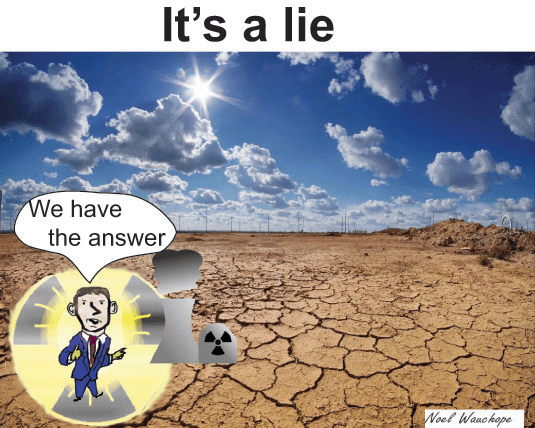
Nuclear energy – The solution to climate change?
Science Direct, NikolausMuellnerNikolausArnoldKlausGuflerWolfgangKrompWolfgangRennebergWolfgangLiebertI Institute of Safety- and Risk Sciences, University of Natural Resources and Life Sciences, Vienna, Austria
Received 24 August 2020, Revised 7 April 2021, Accepted 4 May 2021, Available online 16 May 2021.
Abstract
With increased awareness of climate change in recent years nuclear energy has received renewed attention. Positions that attribute nuclear energy an important role in climate change mitigation emerge.
We estimate an upper bound of the CO2 saving potential of various nuclear energy growth scenarios, starting from our projection of nuclear generating capacity based on current national energy plans to scenarios that introduce nuclear energy as substantial instrument for climate protection. We then look at needed uranium resources.
The most important result of the present work is that the contribution of nuclear power to mitigate climate change is, and will be, very limited. At present nuclear power avoids annually 2–3% of total global GHG emissions. Looking at announced plans for new nuclear builds and lifetime extensions this value would decrease even further until 2040. Furthermore, a substantial expansion of nuclear power will not be possible because of technical obstacles and limited resources. Limited uranium-235 supply inhibits substantial expansion scenarios with the current nuclear technology. New nuclear technologies, making use of uranium-238, will not be available in time. Even if such expansion scenarios were possible, their climate change mitigation potential would not be sufficient as single action.
1. Introduction……………
1.2. CO2 emissions from nuclear power plants
The direct CO2 emissions from nuclear power plants during operation are low. However, looking at indirect emissions as well and considering the whole life cycle of nuclear power (uranium mining, milling, conversion, enrichment, fuel fabrication, construction and dismantling of the nuclear power plant, spent fuel processing and storage), nuclear power is certainly not emission-free…………..
6. Conclusions and policy implications
Anthropogenic climate change requires a rapid shift towards a CO2 neutral economy, if the global average temperature increase is to be kept below 2∘C, or, preferably, below 1.5∘C compared to pre-industrial levels. By 2050 the economy should be CO2 neutral, therefore climate change mitigation measures are needed in the near term to medium term future. Such a shift would strongly influence the energy (and electricity) supply system, which is currently based to a larger part on fossil fuels.
The most important result of the present work is that the contribution of nuclear power to mitigate climate change is, and will be, very limited. According to current planning nuclear power would avoid at most4 annually 2–3% of total global GHG emissions in the years 2020–2040. Moreover, nuclear power cannot be expanded to be the main source of future electricity generation. Expansion scenarios require an increase in uranium mining, which is met by two limitations: uranium production could hardly keep up during the expansion phase, and the overall amount of available uranium is limited. Such scenarios would leave new nuclear power plants without fuel during their planned life time. Fast breeder reactors promise a solution to the problem of limited uranium-235 resources, but will not be available for commercial deployment before 2040–2050. And given the considerable research effort and research times up to now, it is even doubtful if a commercially deployable fast breeder reactor will be available then. But even assuming such a scenario were feasile, even % of projected global GHG emissions from other sectors in 2040 and would still require drastic actions to reduce all emissions to zero. However, current nuclear reactors, no matter how safe they may be, always carry a residual risk for severe, catastrophic accidents (Sehgal, 2012) and large releases of radioactive materials (Seibert et al., 2012). New reactors attempt to reduce the residual risk, but even with the future technologies currently envisaged a nuclear catastrophe cannot be fully excluded. The main contribution to current nuclear electricity generation stems from reactors built 1970–1990, which were designed 1960–1980. New reactor technologies promise that the risk for severe accidents is reduced by a factor of ten. However, according to current plans, the major part of future nuclear generating capacity stems from lifetime extensions of existing plants and only a limited part will come from new builds (in 2040 ~30% new builds, ~70% current operating reactors life time extended and/or in long term operation according to ISR-projection).
Given the modest contribution of nuclear power to climate change mitigation another option is feasible, which is the phase-out of nuclear power. This finding is in agreement with substantial evidence of a comprehensive global energy study of the International Institute of Applied System Analysis (IIASA, 2012). In this study a normative approach was adopted, a scenario that by 2050 society is on a climate pathway to fulfilling the 2∘C target while still providing access to modern energy services to all humans. Starting from the goal of a sustainable, CO2 neutral economy, IIASA (2012) calculates back and investigates which energy pathways lead to such a future. One of the important results of the analysis shows that none of the evaluated boundary conditions make it necessary to use nuclear power. Even high energy demand assumptions without substantial change in the transport system allow other energy sources to substitute nuclear energy.
The current contribution of nuclear energy to climate change mitigation is small and, according to current planning, will stay at this level in the near-to mid term future. Nuclear expansion strategies are not feasible due to resource limitations. New nuclear technologies without those limitations will not be ready in the critical time frame 2020 to 2050 due to the long research, licensing, planning and construction times of the nuclear industry. Current plans would keep the nuclear capacity roughly at its current level mainly by life time extensions of existing reactors. But given the limited contribution to climate mitigation, complete phase out is a feasible option as well. Society must decide, given the drawbacks of the use of nuclear energy (risk of catastrophic accidents, proliferation, radioactive waste), whether the nuclear option should be pursued, or whether other climate change mitigation technologies should substitute the nuclear contribution……..https://www.sciencedirect.com/science/article/pii/S0301421521002330?via%3Dihub
Great powers’competition – the war industry’s best tactic

”……………..Pretexts keep the military budget elevated, sustain the war industry’s profits, and incite a violent foreign policy. Manufactured fear is essential. After pumping the “War on Terror” for trillions of dollars — and with veterans and the U.S. public growing skeptical of such interventions — the war industry has returned to targeting Russia and China through “great power competition.
A PEOPLE’S GUIDE TO THE WAR INDUSTRY -5: PORTFOLIO OF CONFLICTS, By Christian Sorensen by Rise Up Times · Great Power Competition , 9 June 21,
”……………..Pretexts keep the military budget elevated, sustain the war industry’s profits, and incite a violent foreign policy. Manufactured fear is essential. After pumping the “War on Terror” for trillions of dollars — and with veterans and the U.S. public growing skeptical of such interventions — the war industry has returned to targeting Russia and China through “great power competition.
Facing off against Russia and China is more comfortable territory for war corporations. In the calculus of corporate suites, the big-ticket items inherent to competition with another major industrial nation are where the real money can be made. A war on terror was lucrative for a decade or two, and it will continue, but it is not enough to justify excessive spending on cyber, submarines, satellites, hypersonic propulsion, anti-ballistic missiles, nuclear weaponry, artificial intelligence/machine learning, and aircraft carriers.
Competition against Moscow and Beijing also continues the militarization of U.S. society, channeling anger (which might otherwise manifest itself as class awareness and/or physical protest against Washington’s corruption) into outrage against a stereotypical enemy that resides overseas — just as the War on Terror did.
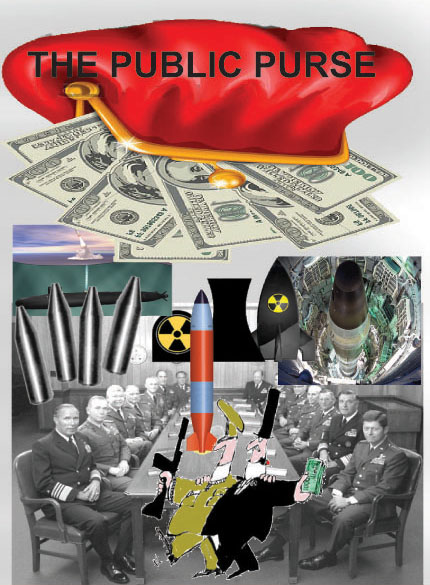
Great power competition is fully entrenched in the Pentagon, as made clear by the 2018 National Defense Strategy, developed in 2017 by military and corporate personnel. It emphasized, “inter-state strategic competition, not terrorism, is now the primary concern in U.S. national security.”
Etching the National Defense Strategy into stone, the then chairman of the Joint Chiefs of Staff, General Joseph Dunford declared in November 2018, that great power competition was here to stay, demanding a shift in Pentagon funding priorities and weapons development. Dunford was speaking at the Halifax International Security Forum, sponsored by corporations (e.g. Boeing, CAE, United Technologies) and NATO, among other powerful groups, including energy and IT firms.
Four months later, the war industry pressure group NDIA presented General Dunford with its most prestigious award. Dunford soon retired and joined the board of Lockheed Martin.
Great power competition has enabled a high volume of war industry goods and services and U.S. military personnel to deploy to Germany, the Czech Republic, Poland and eastern Europe, particularly in the Baltic States and Romania, as well as other clients surrounding China, particularly South Korea, Japan, Taiwan and Guam. Large engineering and project management firms build and sustain the associated infrastructure.
Meanwhile, Beijing’s construction is framed as a threat. “I mean, this is insane. Look at all that crazy construction,” remarked a U.S. naval officer observing Chinese military construction projects in the South China Sea. Though a useful bogeyman, Beijing’s construction in the South China Sea does not hold a candle to what Washington has built up overseas.
Great power competition fills peaceful voids. At the Sea Air Space Forum of 2019 (sponsored by CACI, Lockheed Martin, Northrop Grumman, and shipbuilder Huntington Ingalls), MIC officials cited the “threat” of great power competitors in order to justify expansion of U.S. military power into the Arctic.
They ignored the real threat: The U.S. Armed Forces’ rampant carbon-based military activity contributes to anthropogenic climate change, which melts Arctic ice, which opens up northern sea lanes, into which the Pentagon projects its polluting arsenal, which puts more carbon in the atmosphere.
Great power competition’s consequences are terrifying: increased militarization of an already militarized U.S. economy and public life; greater likelihood of wars big and small; more pollution (notably toxic particulates, carbon emissions, and radiological contamination) in an era of climate catastrophe and mass extinction; nuclear weapons on a hair trigger; narrowing of permissible speech and assembly; and relentless corporatization of the U.S. Armed Forces, the world’s mightiest organization.
The pretext known as great power competition is off to an impressive start, financially, bureaucratically, and industrially. It is incumbent upon the workers of the world to stop it. ”https://riseuptimes.org/2021/06/09/a-peoples-guide-to-the-war-industry-5-portfolio-of-conflicts/
France’s problem with nuclear wastes is becoming critical

Le Monde 7th June 2021, Storage of nuclear waste: the Nuclear Safety Authority urges France to take decisions. ASN estimates that in the absence of a management choice in the next five years, no management system would be operational in the next twenty years.
Le Monde 7th June 2021, Storage of nuclear waste: the Nuclear Safety Authority urges France to take decisions. ASN estimates that in the absence of a management choice in the next five years, no management system would be operational in the next twenty years.
The Nuclear Safety Authority (ASN) called on the authorities to quickly take decisions on nuclear waste management. “Decisions will be necessary, in the short term, so that safe management channels are available for all types of radioactive waste in the fifteen to twenty years to come”, she underlined, Monday, June 7, in an opinion.
Nuclear energy is not a solution to climate change
Important new study – Nuclear energy is not a solution to climate change , Gordon Edwards, 9 June 21
the contribution of nuclear power to world electricity usage has declined from 17% (25 years ago) to 10% (today), and is expected to continue to decline for the next couple of decades at least. But electricity is only one slice of the energy pie. Nuclear power currently contributes about 2% to global energy use including all modes.
So let’s see — some 440 nuclear reactors produce 2% of global energy usage. If none of those stop working, and we add 440 more reactors of equivalent size in the next two decades – that’s 22 large reactors per year, every year, starting now, a clearly impossible scenario – then we could theoretically supply 4% of the world’s energy needs by 2040, assuming energy demand doesn’t grow at all in the meantime
But that is dreaming in technicolor. Most of the operating reactors are very old and will be retiring at a rate much faster than new ones can in fact be built. New reactor construction projects have run way behind schedule with massive cost over-runs, and very few “takers”. Forecasts say the nuclear contribution will be going down, not up.
It is also a fact that the least costly and quickest options for reducing greenhouse gas emissions are (1) improved energy efficiency and (2) off-the-shelf renewables. And statistics show that these are by far the fastest growing energy options worldwide. Renewable energy costs are still going down while nuclear costs are not.
The point is, investing in nuclear is not solving the climate crisis. The money, time, and political will expended in promoting nuclear would be better spent on subsidizing energy savings through efficiency improvements and installing renewable sources of energy. Climate science tell us that we have no time to waste. Common sense dictates that we start with the surest, safest, fastest, and most affordable options first. By preferentially promoting and subsidizing unproven, slow and costly new nuclear projects, Canada is defying common sense and abdicating its responsibility to the electorate, to parliament, and to the planet. At the very least, we need transparency, openness, and peer review of many absurdly optimistic claims – some of them blatantly untrue – being made by the nuclear salesmen, who are tapping into public finances while being shielded from public accountability.
U.S. Navy to cancel development of super expensive nuclear missile
Navy eyes canceling nuclear missile
By BRYAN BENDER , 06/09/2021 NIXING A NUKE? Politico, Acting Navy Secretary Thomas Harker has issued a memo directing the service to cancel development of a nuclear-armed cruise missile in fiscal 2023, a potential signal that the Biden administration could dial back some nuclear modernization programs, Aerospace Daily scooped on Tuesday.
The June 4 memo, also obtained by POLITICO, is part of preparations to craft a five-year spending plan. The memo declares that the Navy may have to choose either a new fighter jet, destroyer or submarine and delay two of them.
“The Navy cannot afford to simultaneously develop the next generation of air, surface, and subsurface platforms and must prioritize these programs balancing the cost of developing next-generation capabilities against maintaining current capabilities,” Harker wrote.
It “makes clear that budgets aren’t expected to increase enough in the coming years to undertake all of the modernization efforts envisioned by the Navy,” as our colleague Paul McLeary writes for Pros………. https://www.politico.com/newsletters/morning-defense/2021/06/09/navy-eyes-canceling-nuclear-missile-795839
Explosion forced Indian Navy to return nuclear submarine to Russia?
Explosion forced Indian Navy to return nuclear submarine to Russia?
Explosion forced Indian Navy to return nuclear submarine to Russia? The INS Chakra was inducted into the Indian Navy in 2012 on a ten-year lease The Week, Web Desk June 09, 2021 On June 4, Twitter was abuzz after photographs from Singapore showed the Indian Navy’s nuclear-powered submarine INS Chakra transiting through the Malacca Straits.
Later in the day, reports emerged that the warship was on its way back to Russia. India agreed to lease the INS Chakra from Russia nearly two decades ago and inducted it into the Indian Navy in 2012 on a ten-year lease. The Non Proliferation Treaty (NPT) bans the sale of nuclear-powered vessels, but is silent on leasing of such ships. This was the second Indian Navy submarine to have the name Chakra.
The ‘early’ return of the INS Chakra had triggered a buzz as she was the only nuclear-powered attack submarine in the Indian Navy. Attack submarines are meant primarily to destroy enemy surface ships and submarines. The Chakra was from a Russian class of submarines that NATO codenamed the Akula (shark in Russian). Before being handed over to the Indian Navy, the Chakra was known as the Nerpa in Russian service….
On Wednesday, Russian state news agency TASS reported the early return of the INS Chakra was necessitated due to an explosion on board the vessel in the spring of 2020, which damaged both its hulls. The Chakra, like many other Russian-designed submarines of its era, is a ‘double-hulled’ submarine, with a pressure inner hull and a lighter outer hull to allow for more buoyancy and capacity to absorb damage in the event of being hit by a torpedo or mine.
The Russian language website of TASS quoted a source in the Russian “military-industrial complex” as saying, “The explosion of a high-pressure air cylinder on the Chakra submarine… occurred in the spring of 2020.” The report claimed the high-pressure air cylinder was located between the two hulls. In addition to damage to the hulls, the explosion also damaged “electronic weapons and hydro-acoustic equipment”.
Previous accidents………. https://www.theweek.in/news/india/2021/06/09/explosion-forced-indian-navy-to-return-nuclear-submarine-to-russia.html
Nuclear wastes, illegality, public opposition, high costs, not discussed in media enthusiasm for nuclear power
Nuclear energy’s complications https://www.irishtimes.com/opinion/letters/nuclear-energy-s-complications-1.4587543 KEVIN HARGADEN, Jesuit Centre for Faith and Justice, Wed, Jun 9, 2021, Sir, – In the last six months or so, there have been many letters published on these pages advocating from various directions for the development of nuclear fission power plants in Ireland. The fact that such developments generate epoch-lasting waste which we have no way of processing or securing is not discussed. The fact that such developments would require importing an expensive non-renewable resource is not discussed. The fact that such developments would be opposed in any region where they are proposed is not discussed. The fact that such developments would be illegal has been discussed, but only to suggest that we can get around that by deleting the offending lines from our democratically passed acts. And the fact that such developments would cut against the global trend, which has seen the amount of electricity produced from nuclear sources more than halve since the 1990s is not discussed.
Discussions proposing nuclear power as an environmentally friendly option repeat this pattern of meandering around unspeakable complications. Few of us have a grasp of the engineering feats that may unfold within small reactors, but we do have a sense of what the words Fukushima and Chernobyl have come to mean. – Is mise,
Russia’s Approach to Nuclear Power in Outer Space
Russia’s Approach to Nuclear Power in Outer Space
Jamestown Foundation, Eurasia Daily Monitor Volume: 18 Issue: 92 By: Pavel Luzinune 9, 2021
Russia has been conducting research and development (R&D) on using nuclear power in outer space for years. On May 22, Alexander Bloshenko, executive director for advanced programs and science of Roscosmos, announced that the first mission of the nuclear-powered spacecraft, also known as the transport and energy module (TEM), is scheduled for 2030 (TASS, May 22). A week before this announcement, there was a deliberate leak from the Keldysh Center, a Roscosmos subsidiary entity, that this nuclear-powered spacecraft might be used for military purposes along with civil ones (RIA Novosti, May 13). These verbal interventions almost coincided with the hearings in the US Congress on the NASA budget request that proposes $585 million for nuclear thermal propulsion technology in FY2022 and ongoing American efforts in this field (SpaceNews, May 19; Physics Today, May 28). That means the Russian program on space nuclear power systems has not only technological but also geopolitical goals.
The current Russian program has a Soviet background. The USSR launched 33 military reconnaissance and targeting spacecraft with nuclear reactors into low-Earth orbit from 1969 to 1988. Most of them used thermoelectric nuclear power plants “Buk,” and the last two spacecraft used more advanced thermal electron emission NPPs “Topaz” with 4.5–5.5 kW of electric power. The Soviet Union also developed the prototypes of nuclear rocket engines, but the project was closed in 1986. In the early 1990s, a Russian-American project aimed to develop the “Topaz” reactors further, but was canceled by 1995. In 2000–2007, Russia tried to cooperate with China in this field (Kukharkin, 2012).
Despite long-term economic decline, Moscow has also tried to continue its independent efforts in space nuclear power systems since 1998, and during the presidency of Dmitry Medvedev, these efforts were proclaimed among the Kremlin’s key priorities (Pravo.gov.ru, February 2, 1998; RG.ru, November 13, 2009).
The program’s budget of 17 billion rubles for the period 2010–2018 was divided between Roscosmos (9.8 billion rubles) and Rosatom (7.2 billion rubles), totaling $560 million according to the exchange rates of 2010 (RG.ru, October 3, 2012). However, the actual spending was smaller. In 2010, only 500 million rubles ($16.5 million) were assigned for the purpose (Roscosmos, February 10, 2010). During the following decade, the total spending has reached almost 10 billion rubles or $213 million according to open data on federal budget funds and procurements released by Roscosmos and Rosatom (Vesti.ru, January 19, 2011; Interfax, October 12, 2020; Zakupki.gov.ru, 2013–2021). The current results of these efforts are less than initially planned………..
In comparison with NASA that tries to design a 10 kW space nuclear reactor with a Stirling engine intended to increase efficiency, the thermal electron emission remains the central paradigm of Russia’s R&Ds and the idea of using engines or turbines together with space nuclear reactors still remains theoretical (NASA, May 2, 2018; Issledovaniya Naukograda, July–September 2017). It is doubtful that Russia will develop the space nuclear power system with 1 MW of electric power and ion thrusters with more power in the foreseeable future. Still, Moscow definitely will try to convert existing results into some advance in outer space and foreign policy.
Along with a significant deficiency in other dimensions of Russia’s space activity and the country’s overall economic weakness, these problems prompt the Kremlin to look for an ace up its sleeve. While there is still a long way to go to develop nuclear reactors for space exploration missions, Russian industry and authorities are seeking to apply nuclear power for military satellites (KB Arsenal, September 1, 2020). Such spacecraft may be used for radar reconnaissance and electronic warfare (jamming) and be deployed to low, medium or geosynchronous orbits. However, there have not been any flight tests or technological demonstrations of such a satellite yet. This means Moscow will not be ready to deploy these satellites any time soon……… https://jamestown.org/program/russias-approach-to-nuclear-power-in-outer-space/
Australia is in denial over one-way relationship with U.S.

Australia is in denial over one-way relationship with U.S. https://independentaustralia.net/politics/politics-display/australia-is-in-denial-over-one-way-relationship-with-us,15171#.YMBaWGL2H14.twitter By Bruce Haigh | 9 June 2021, Tensions with China resulting in economic sanctions are the result of Australia’s blind allegiance to the USA that began decades ago, writes Bruce Haigh.
AFTER THE AMERICAN defeat by the Japanese in the Philippines, it needed a base from which to regroup, resupply and take the fight back through the Pacific. Australia was a bread bowl, training camp and aircraft carrier. Its north was intersected with airfields used by American bombers and fighters in attacks against Japanese bases and shipping on and around Papua New Guinea, the Solomons and other nearby Islands.
Australia was fearful of attack by the Japanese after their rapid advance through south Asia and the Pacific. The Americans arrived as the Japanese were advancing over PNG toward Port Moresby. The Australian Army had been conducting a successful fighting retreat in order to shorten their supply line, extend that of the Japanese and organise a major offensive. Douglas MacArthur, the arrogant American general in command, sacked a number of Australian generals and ordered the retreat to stop.
Instead of being angry with MacArthur, the average Australian thought he was a hero. The myth was born that America had saved Australia, whereas America came to Australia purely for self-interest. Australians were impressed with American largesse and technology. Many bought into the American “dream”. This was the point at which America could do no wrong. The ANZUS Treaty came into being at the time of the Cold War and hostilities in Korea. America was seen by Australians as the protector against Russian and Chinese expansionism.
Australia was also seduced by American consumerism, Hollywood, Nashville and Detroit. A common language facilitated the absorption of American culture. Military, academic and business exchanges grew. However, it was largely a one-way street, although that went mostly unnoticed in Australia given the sycophantic nature of the relationship. Australians were in awe of American power and wealth.
They undertook no foreign policy initiatives without first checking with the Americans. The exception being the recognition of China by the Whitlam Government in 1972, which many junior diplomats welcomed with pride and pleasure. Australia bought into the American line on the civil war in Viet Nam, much to its subsequent but unacknowledged regret. That did not stop the “provincial” Prime Minister, John Howard, from buying into the wars in Iraq and Afghanistan as a favour to the equally limited George Bush.
Australia bought military hardware from the Americans, under pressure, to increase U.S. force structure in the region. We bought the F-111 which took forever to iron out the cracks (pun intended), the single screw FFGs, the next to useless Abrams tanks, the F35 flying lemon and to boost the alliance, Australia has ordered 12 submarines from the French which it does not need.
America has a highly sophisticated spy base, Pine Gap, in the Northern Territory, but from which Australia is excluded from sharing sensitive information. They have access to Tindal Airbase from which B52s, in theory, could bomb submarine pens in Sanya and they have established a military base in Darwin for 10,000 American marines.

None of this offers any advantage for Australia, although the Americans have convinced the conservative governing establishment that it does. They believe that no matter what, Australian interests are best served by remaining in lockstep with American interests. The Australian Government lacks emotional intelligence and courage. They are “provincial” politicians who know and understand very little of the wider world. To illustrate the point, the Government does not believe in climate change, at least insofar as believing in the efficacy of fossil fuels.
As products of the Howard-era Prime Ministers, Tony Abbott, Malcolm Turnbull and, most recently, Scott Morrison have all demonstrated blind faith in the American alliance. They have placed a great deal of trust in the word of Americans. Morrison has possibly been the most naive and gullible. He took Trump at his word — a big mistake. Trump fired up Morrison over China and convinced him that not only did the COVID-19 virus originate in Wuhan, but he should unilaterally make a demand that an international investigation take place. Morrison took Australia way out in front with an unsustainable and undiplomatic demand — the U.S. and Trump stood in the background and grinned.
Australia refused to back down and apologise, so China imposed sanctions on a range of Australian imports in order to obtain a change of attitude on the part of Australia. The loss of income has not been felt because of unprecedented levels of borrowing by Australia to meet the economic challenges of COVID-19. And Australia has allowed itself to be lulled into a false sense of security by words of reassurance from U.S. Secretary of State Antony Blinken, who guaranteed that America had Australia’s back.
It does not and it never did. America acts purely in self-interest. Australia, because of its long love affair with the U.S. and its inferiority complex, is in denial. Australia seems blind to the fact that the U.S. has stepped in to supply China with many of the goods denied through trade sanctions.
China does not seem to understand the extent of the incompetence and naivety of the Australian leadership. Thinking people and intellectuals in Australia are appalled at Morrison and his Government. However, tough Chinese sanctions and harsh words have only given Morrison the domestic ammunition he needs to bolster his claims that China is aggressively expansionist and seeks to dominate the region. Bruce Haigh is a political commentator and retired diplomat.
Euphoria about nuclear costs, especially about decommissioning – Institute for Energy Economics and Financial Analysis (IEEFA) warns Indonesia.

IEEFA: Nuclear power euphoria in Indonesia is all smoke and mirrors with no current technical, financial or market viability,
Renewables should be the focus of Indonesia’s net-zero pledge. (IEEFA Indonesia): In growing energy markets like Indonesia, decision makers are facing a barrage of pro-nuclear media coverage as the nuclear industry floods the market with panels and webinars focused on the potential of nuclear power.
A new report from the Institute for Energy Economics and Financial Analysis (IEEFA) highlights that while nuclear is promising as a baseload substitute for coal power, it currently has no technical, financial, or market viability in the Indonesian context. Author of IEEFA’s report Elrika Hamdi says that Indonesian nuclear power supporters often promise that nuclear will be an affordable, safe and sustainable solution for the problem of over-reliance on fossil fuel.
Yet, 70 years after the first nuclear power developments were announced, the technology is quickly losing market share as global power markets pivot toward more cost-competitive renewables and storage solutions.
“Despite the steady erosion of nuclear power’s competitive potential, key Southeast Asian energy ministries continue to be lobbied by nuclear advocates. Many of these lobbyists are international backers of new small modular reactor (SMR) technologies, who are actively engaging with governments and utilities around the region,” says Hamdi.

As old generation large-scale nuclear units face decommissioning, there is little consensus about how long it will take for newer small-scale nuclear technologies to be economically viable or how long-standing safety and waste disposal risks will be addressed.
“Determining the suitability of nuclear for the Indonesian power market will be a challenging task that will require honest and deep engagement by senior policymakers to ensure there is a high degree of accountability as Indonesians need to know the real cost of having nuclear in the power system as well as how the government will handle the problem of nuclear waste.”
Hamdi says that the short-list of nuclear power issues includes technology reliability, safety and safeguards, the geographic conditions of Southeast Asia, the prospects for decommissioning, waste treatment and permanent disposal, fuel availability, affordability, and the risk of persistent cost overruns and frequently overlooked shut-down costs.
Research has shown that an estimated 97% (175 out of 180 projects examined) of nuclear power projects exceed their initial budgets. The average cost overrun for a nuclear power plant was US$1.3 billion per project with construction delays adding 64% more time than initially projected.
Nuclear waste disposal costs also complicate the cost estimation process—typically raising project costs as political risk factors crystallize. The inability of leading nuclear nations to find safe and affordable solutions for permanent high-level nuclear waste disposal leaves expensive back-end cost issues on the table.
The economics of nuclear power in Indonesia is also blurred by the fact that under existing regulations, nuclear accident liabilities for nuclear owners/operators are capped at a maximum of IDR 4 trillion (US$276 million) for power plants with a capacity of more than 2000MWe. It is cut in half as the capacity decreases. This means smaller nuclear reactors would be liable for only a fraction of potential accident costs.
“These open-ended cost issues make it hard to evaluate claims about the market viability of nuclear power in Indonesia’s cost-sensitive market. This is particularly true when most established nuclear nations are pivoting away from commitments to new nuclear power facilities as more flexible renewable plus storage options reshape power sector economics,” says Hamdi.
“If a decision is reached to move ahead with pilot stage nuclear projects, policymakers and the government will need to do a lot of policy work including the technical evaluation, the regulatory preparation and the financial support, including preparation of the currently non-existent third-party liability insurance framework.
“This will place a serious burden on a government already taxed by the response to the COVID-19 pandemic and efforts to revitalize the financially constrained PT Perusahaan Listrik Negara (PLN), Indonesia’s national power company.”
PLN also recently pledged to become carbon neutral by 2060. However, the plan released shows nuclear only entering the energy mix in 2040. This demonstrates that PLN is realistic about the technical, financial, and market challenges that need to be overcome if nuclear power is to successfully integrate into Indonesia’s future energy mix.
Hamdi says that until these issues have been acknowledged and fully addressed, the safe path for Indonesia, for now, would be to pause and set realistic goals for its power development strategy.
This includes taking advantage of Indonesia’s abundance of renewable energy resources and market viability.
“Currently only 2.5% of Indonesia’s 400GW renewable energy potential has been utilized. That means that new technology options such as nuclear must compete with the deflationary cost curve in evidence with increasingly low-cost and low-risk renewable power solutions.
“New innovations to support grid flexibility such as demand response and storage are providing a cost-effective alternative to baseload-heavy planning disciplines. This trend raises questions about how small-scale nuclear reactors will fit into a more diverse power market where more cost-competitive renewable options could under-cut untested technologies that are years away from realizing economies of scale.
“The smaller, easily dispatchable, and walk-away safe promise of the new Gen-IV SMR technology offer is promising, IF and when the technology reaches commercial stage. But until such technology is proven to be technically and financially feasible, Indonesia’s safest option is to pause and set a more realistic net-zero scenario with resources and technologies that are already readily available with less cost, less risk, and less future liabilities.”
Read the report: Tackling Indonesia’s Nuclear Power Euphoria
“IT’S VERY PROFITABLE to prepare for omnicide,”
NOT EVEN COVID-19 COULD SLOW DOWN NUCLEAR SPENDING https://theintercept.com/2021/06/07/nuclear-weapons-spending-pandemic-ican/
A new report finds that nine countries collectively spent $72 billion in 2020 on nukes., Jon Schwarz,
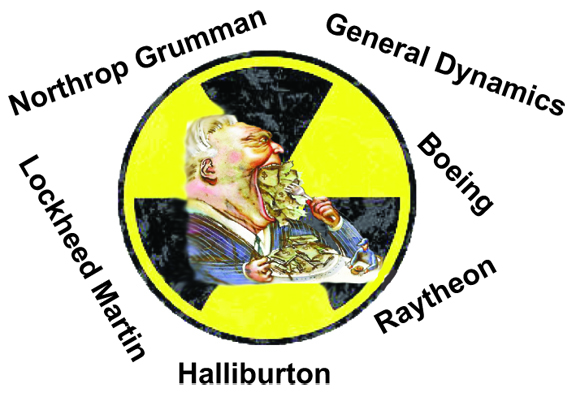
June 7 2021, “IT’S VERY PROFITABLE to prepare for omnicide,” Daniel Ellsberg, famed whistleblower and anti-nuclear weapons activist, said in a recent interview. “Northrop Grumman and Boeing and Lockheed and General Dynamics make a lot of money out of preparing for such a war. The congressmen get campaign contributions, they get votes in their district and almost every state for preparing for that.”
But don’t just take it from Ellsberg. At an investor conference in 2019, a managing director from the investment bank Cowen Inc. queried Raytheon’s CEO on this subject. “We’re about to exit the INF [Intermediate-Range Nuclear Forces Treaty] with Russia,” said the Cowen executive. Did this mean, he asked, whether “we will really get a defense budget that will really benefit Raytheon?” Raytheon’s CEO happily responded that he was “pretty optimistic” about where things were headed.
There are currently nine countries that possess nuclear weapons: the United States, China, Russia, the United Kingdom, France, India, Pakistan, Israel, and North Korea. ICAN calculated that they collectively spent $72.6 billion in 2020 on nukes. (picture below – a little out of date – 2019 )
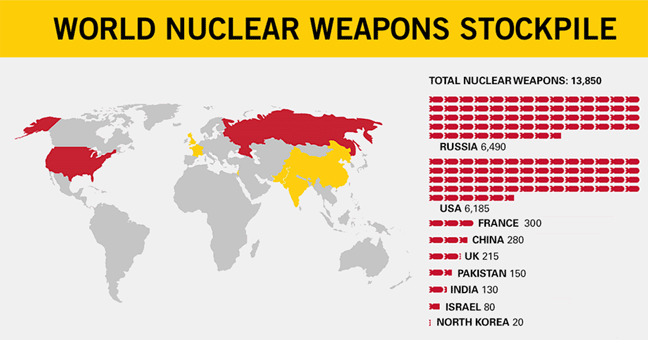
The U.S. was responsible for just over half of this doomsday payout, at $37.4 billion. According to the Congressional Budget Office, U.S. nuclear spending is anticipated to soon increase sharply due to plans for technological upgrades, rising to $41.2 billion next year and totaling $634 billion during the 10 years from 2021-2030.
China came in second in 2020 at an estimated $10.1 billion. Russia was third at $8 billion. Notably, in a year when the world economy was flattened by the coronavirus pandemic, nuclear spending continued on an upward trajectory without a hiccup.
Despite these hefty numbers, they’re probably an underestimate. “There’s always more [nuclear spending] out there … even more still lurking in the shadows,” said Susi Snyder, co-author of the report and managing director of the project Don’t Bank on the Bomb. Snyder points out that “governments, especially U.S., U.K., [and] France are always demanding ‘transparency’ … yet they do not hold themselves to the standards they demand of others.”
A great deal of U.S. nuclear spending consists of profitable contracts with private corporations.
The four companies Ellsberg said were raking in cash “preparing for war” indeed received the most money in 2020:
- Northrop Grumman — $13.7 billion
- General Dynamics — $10.8 billion
- Lockheed Martin — $2.1 billion
- Boeing — $105 million

These enormous contracts create obvious incentives for these companies to lobby for more government expenditures on Armageddon, and they assiduously do so. Indeed, lobbying unquestionably is the most profitable investment these companies make. According to ICAN’s report, for every $1 they spent on lobbying, they received $239 in nuclear weapon contracts.
The specifics are notable here. Northrop reported $13.3 million in lobbying expenses in 2020. Last year it was formally awarded the enormous initial contract to develop a new intercontinental ballistic missile system called the “Ground Based Strategic Deterrent.” It will inevitably receive the contract for the entire program, estimated to be worth $85 billion over its life. In discussion on the GBSD, the Air Force’s assistant secretary for acquisition stated that he didn’t see the pandemic affecting nuclear spending.

There is also much more to lobbying than that which goes by the name. In the 2006 documentary “Why We Fight,” journalist Gwynne Dyer explained that President Dwight Eisenhower considered the military-industrial complex actually to have three components: the military, defense corporations, and Congress. But now, Dyer said, there’s a fourth: think tanks, which generally push their funders’ policies under a thin veneer of scholarship.
According to the report, companies profiting from nuclear weapons contributed $5-10 million to think tanks in 2020. Northrop alone spent at least $2 million funding nine of them, including the Atlantic Council, the Brookings Institution, the Center for a New American Security, and the Center for Strategic and International Studies.
However, ICAN did not produce the report for passive consumption or as an inducement to despair. Instead, it is part of a sophisticated strategy to eventually make nuclear weapons as taboo worldwide as chemical and biological weapons are now.
ICAN was a key force behind the Treaty on the Prohibition of Nuclear Weapons, which was adopted in 2017 at the United Nations. It makes illegal any activities related to nuclear weapons and has been signed by 86 countries and ratified by 54. It entered into force this past January.
None of the nuclear powers are signatories. Yet they need not be for the treaty to create a noose around those countries and their companies that should tighten over time. For instance, Airbus produces missiles for France’s nuclear weapons arsenal. But it is headquartered in the Netherlands, so if that country ratified the TPNW, it could no longer do so.
This financial threat has now attracted the attention of the stockholders of these nuclear corporations. Snyder notes that a 2020 Northrop shareholders resolution stated that the company “has at least $68.3 billion in outstanding nuclear weapons contracts, which are now illegal under international law,” and it received 22 percent support. A similar Lockheed resolution got over 30 percent support. The KBC Group, the 15th-largest bank in Europe, has announced that it will not fund any nuclear weapon-related activity because of the TPNW.
Success here will obviously require a long-term campaign and increased activism across the world. But the trajectory is headed in the right direction. “The days of spending with impunity on WMD,” believes Snyder, “are numbered.”
USA still has ban on major foodstuffs from Fukushima region. Why did Philippines lift their ban?
Silence on Japan’s dumping nuclear wastes and historical revisionism risks world environment, Manila Times,
Kim Chui, June 8, 2021
JAPANESE Prime Minister Yoshihide Suga’s recent announcement of Japan’s unilateral decision to dump 1.2 million tons of nuclear waste into the Pacific Ocean should be of real concern to everyone. US Secretary of State Antony Blinken tweeted that the US supported Japan’s announcement, but the US Food and Drug Administration (FDA) extended its import ban on major foodstuff from the Fukushima region that has been in effect since 2011.
More worrisome is Foreign Secretary Teodoro Locsin Jr.’s announcement in January 2020 during the visit of Japan Foreign Minister Motegi Toshimitsu, that the Philippines had lifted all import bans of food products from Japan without reporting whether any proper scientific tests had been done. Were there safeguards established to protect Filipino consumers, or were we made to be the dumping ground of rejects again just to extend goodwill to a “friend?” Is the Philippine FDA more capable of testing radioactive foodstuff than the US FDA?……………. https://www.manilatimes.net/2021/06/08/opinion/letters-to-the-editor/silence-on-japans-dumping-nuclear-wastes-and-historical-revisionism-risks-world-environment/1802316
Lawsuit aims to stop the dismantlement of San Onofre nuclear plant (closed in 2012)
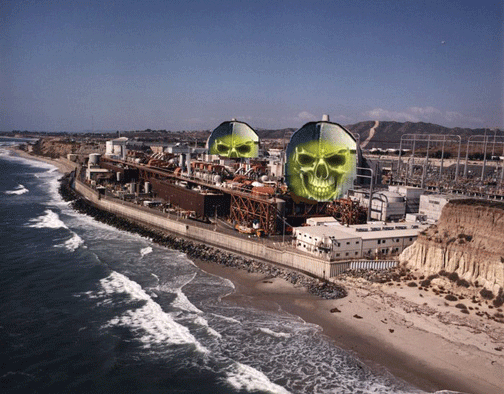
Hearing set for lawsuit aimed at stopping dismantlement of San Onofre nuclear plant, LA Times ROB NIKOLEWSKI SAN DIEGO UNION-TRIBUNE, JUNE 4, 2021 SAN DIEGO —
A June 16 court date has been set to hear a lawsuit filed by an advocacy group against the California Coastal Commission, seeking to stop dismantlement work at the San Onofre Nuclear Generating Station.
Los Angeles County Superior Court Judge Mitchell L. Beckloff will consider the petition by the Samuel Lawrence Foundation that argues the commission should not have granted a permit to Southern California Edison, the majority owner of the plant, to take down buildings and other infrastructure at the now-closed generating station, known as SONGS.
“The public interest is at risk, based on [the commission’s] decision,” said Chelsi Sparti, associate director of the Samuel Lawrence Foundation, based in Del Mar. “The waste is located right next to the ocean, [and] the economy, transportation, the environmental and natural resources that we have are at risk from the long-term storage of stranded radioactive waste.”…………
In October 2019, the commission on a 9-0 vote approved a permit for Edison to begin demolition work at the plant, which has not produced electricity since 2012. Dismantlement began in early 2020 and is expected to take about eight years to complete.
Before granting the permit, the commission required Edison to agree to a number of provisions, including establishing an enhanced inspection and maintenance program for the 123 stainless steel canisters filled with nuclear waste that sit in a pair of dry storage facilities at the north end of the plant.
The permit lasts 20 years and includes a condition that allows the commission by 2035 to revisit whether the dry storage site should be moved to another location in case of rising sea levels, earthquake risk, canister damage or other possible scenarios.
One of the major contentions in the lawsuit deals with what to do with a pair of wet storage pools at SONGS. Before going into canisters, the highly radioactive fuel rods were placed into pools 40 feet deep in order to cool………..
Some 3.55 million pounds of used-up nuclear fuel, or waste, remain at SONGS because the federal government has not opened a facility to deposit all the waste that has accumulated at commercial nuclear power plants across the country. About 80,000 metric tons has piled up at 121 sites in 35 states……………. https://www.latimes.com/california/story/2021-06-04/hearing-set-for-lawsuit-aimed-at-stopping-dismantlement-at-san-onofre-nuclear-plant
Militarization of the Arctic, Dangerous US NATO Expansion in Norway,
 | |||
GNspace4peaceIn recent years, the US and NATO have been militarizing the Arctic through Norway as a means to confront Russia. This militarization is increasing tensions between nuclear-armed nations. As the Arctic melts away, these powerful nations are competing for dominance in the region as new routes are established, building new military bases, constructing new radars, and less efforts are placed in diplomacy. Thank you to Bård Wormdal, author of The Satellite War.Learn more: http://www.space4peace.org/articles/t…
The Satellite War: https://amzn.to/2RVytEZ Global Network: Website:
-
Archives
- February 2026 (228)
- January 2026 (308)
- December 2025 (358)
- November 2025 (359)
- October 2025 (376)
- September 2025 (258)
- August 2025 (319)
- July 2025 (230)
- June 2025 (348)
- May 2025 (261)
- April 2025 (305)
- March 2025 (319)
-
Categories
- 1
- 1 NUCLEAR ISSUES
- business and costs
- climate change
- culture and arts
- ENERGY
- environment
- health
- history
- indigenous issues
- Legal
- marketing of nuclear
- media
- opposition to nuclear
- PERSONAL STORIES
- politics
- politics international
- Religion and ethics
- safety
- secrets,lies and civil liberties
- spinbuster
- technology
- Uranium
- wastes
- weapons and war
- Women
- 2 WORLD
- ACTION
- AFRICA
- Atrocities
- AUSTRALIA
- Christina's notes
- Christina's themes
- culture and arts
- Events
- Fuk 2022
- Fuk 2023
- Fukushima 2017
- Fukushima 2018
- fukushima 2019
- Fukushima 2020
- Fukushima 2021
- general
- global warming
- Humour (God we need it)
- Nuclear
- RARE EARTHS
- Reference
- resources – print
- Resources -audiovicual
- Weekly Newsletter
- World
- World Nuclear
- YouTube
-
RSS
Entries RSS
Comments RSS
 nuclear-news