Research into radiocesium in forests after the Fukushima disaster: Concerns and some hope
Dynamics of radiocesium in forests after the Fukushima disaster: Concerns and some hope
Scientists compile available data and analyses on the flow of radionuclides to gain a more holistic understanding, FORESTRY AND FOREST PRODUCTS RESEARCH INSTITUTE, 5 Feb 21, HTTPS://WWW.EUREKALERT.ORG/PUB_RELEASES/2021-02/FAFP-DOR020221.PHP
Research News After the Chernobyl disaster of 1986, the 2011 Fukushima Daiichi nuclear power plant (FDNPP) disaster was the second worst nuclear incident in history. Its consequences were tremendous for the Japanese people and now, almost a decade later, they can still be felt both there and in the rest of the world. One of the main consequences of the event is the release of large amounts of cesium-137 (137Cs)–a radioactive “isotope” of cesium–into the atmosphere, which spread farther away from the power plant through wind and rainfall.
Considering the massive threat posed by 137Cs to the health of both humans and ecosystems, it is essential to understand how it has distributed and how much of it still lingers. This is why the International Atomic Energy Agency (IAEA) has recently published a technical document on this specific issue. The fifth chapter of this “Technical Document (TECDOC),” titled “Forest ecosystems,” contains an extensive review and analysis of existing data on 137Cs levels in Fukushima prefecture’s forests following the FDNPP disaster.
The chapter is based on an extensive study led by Assoc. Prof. Shoji Hashimoto from the Forestry and Forestry Products Research Institute, Japan, alongside Dr. Hiroaki Kato from the University of Tsukuba, Japan, Kazuya Nishina from the National Institute of Environmental Studies, Japan, Keiko Tagami from the National Institutes for Quantum and Radiological Science and Technology, Japan, George Shaw from the University of Nottingham, UK, and Yves Thiry from the National Agency for Radioactive Waste Management (ANDRA), France, and several other experts in Japan and Europe.
The main objective of the researchers was to gain a better understanding of the dynamics of 137Cs flow in forests. The process is far from straightforward, as there are multiple elements and variables to consider. First, a portion of 137Cs-containing rainfall is intercepted by trees, some of which is absorbed, and the rest eventually washes down onto the forest floor. There, a fraction of the radiocesium absorbs into forest litter and the remainder flows into the various soil and mineral layers below. Finally, trees, other plants, and mushrooms incorporate 137Cs through their roots and mycelia, respectively, ultimately making it both into edible products harvested from Fukushima and wild animals.
Considering the complexity of 137Cs flux dynamics, a huge number of field surveys and gatherings of varied data had to be conducted, as well as subsequent theoretical and statistical analyses. Fortunately, the response from the government and academia was considerably faster and more thorough after the FDNPP disaster than in the Chernobyl disaster, as Hashimoto explains: “After the Chernobyl accidents, studies were very limited due to the scarce information provided by the Soviet Union. In contrast, the timely studies in Fukushima have allowed us to capture the early phases of 137Cs flow dynamics; this allowed us to provide the first wholistic understanding of this process in forests in Fukushima.”
Understanding how long radionuclides like 137Cs can remain in ecosystems and how far they can spread is essential to implement policies to protect people from radiation in Fukushima-sourced food and wood. In addition, the article also explores the effectiveness of using potassium-containing fertilizers to prevent the uptake of 137Cs in plants. “The compilation of data, parameters, and analyses we present in our chapter will be helpful for forest remediation both in Japan and the rest of the world,” remarks Hashimoto.
When preventive measures fail, the only remaining option is trying to fix the damage done–in the case of radiation control, this is only possible with a comprehensive understanding of the interplay of factors involved.
In this manner, this new chapter will hopefully lead to both timely research and more effective solutions should a nuclear disaster happen again.
UK’s Infrastructure Planning Inspectorate recommends against development of Wyfa nuclear project
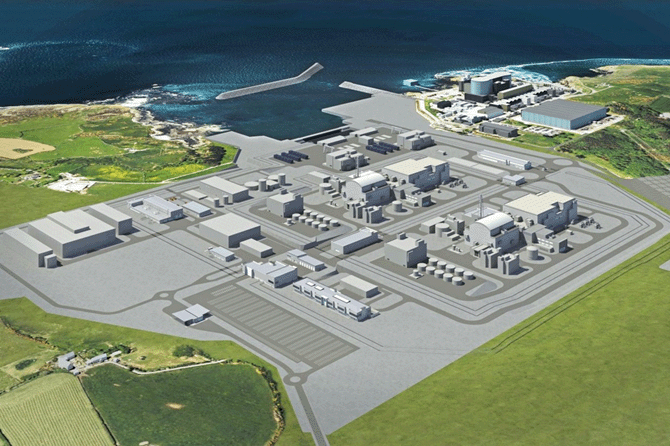 Planning Inspectorate 4th Feb 2021, Following the recent withdrawal of the application, and in the interests of openness and transparency, we have taken the decision to publish the
Examining Authority’s Recommendation Report. In the light of the ExA’s
findings and conclusions, the ExA under s105 of the PA2008 recommends the
Secretary of State for Business, Environment and Industrial Strategy does
not grant the Wylfa Newydd Project Development Consent Order.
Cuba signs up to another nuclear disarmament treaty
|
Cuba reaffirms its commitment to nuclear disarmament, https://www.plenglish.com/index.php?o=rn&id=64148&SEO=cuba-reaffirms-its-commitment-to-nuclear-disarmament Havana, Feb 4 (Prensa Latina) Cuba reaffirmed its commitment to nuclear disarmament by signing on Thursday the Comprehensive Nuclear Test Ban Treaty (CTBT).
According to the Cuban Foreign Ministry’s website, the country’s ratification expresses its support for the complete and effective prohibition of all explosive tests, other sophisticated methods and subcritical trials.
With the action, Cuba also confirms its condemnation of the rise in expenditures to enhance such experiments, while calling for the closure of the facilities used for such purposes and their associated infrastructure.
Cuba is a State Party to the Treaty on the Prohibition of Nuclear Weapons, the Treaty on the Non-Proliferation of Nuclear Weapons, and the Chemical and Biological Weapons Conventions.
The CTBT, once in force, will contribute along with those deals to the efforts for the total, transparent and irreversible eradication of those artifacts, the source referred. Cuba belongs to the first densely populated zone in the world to be declared a Nuclear-Weapon-Free Zone. In addition, Cuba reaffirms the validity of the Proclamation of Latin America and the Caribbean as a Zone of Peace, adopted at the 2nd Summit of Heads of State and Government of the Community of Latin American and Caribbean States, held in Havana in 2014. |
|
Two Ohio state Republican Senators aim to remove subsidies to nuclear power plants
State Senators Jerry Cirino of Kirtland and Michael Rulli of Salem have introduced Senate Bill 44. Cirino says it does not repeal or replace House Bill 6. It just removes the subsidy provision, which he says will lower electric bills.
“We are eliminating, in the bill, $130 million plus per year that if HB6 was left intact, would be going to the nuclear facilities,” Cirino said. “So we’re taking that away and they’re on their own to figure out how to operate better and what they can do with the federal government.”
PJM Interconnection is a Regional Transmission Organization that coordinates the movement of wholesale electricity across 13 states including District of Columbia and Ohio.
They are offering pricing support to energy operators, but Cirino says it would be difficult for PJM to provide this support to operators accepting these subsidies.
Cirino says he supports nuclear power and says the plants will remain open with federal support that can help them continue to operate without the subsidy.
The Senate Energy Committee will have hearings about Senate Bill 44 beginning next week.
Read the bill as proposed:…………https://www.wksu.org/government-politics/2021-02-05/senate-bill-introduced-to-remove-power-plant-subsidies
ICAN urges all countries to sign the Nuclear Weapons Ban Treaty
 Nuclear Weapons control urged https://www.hometownsource.com/union_times/free/nuclear-weapons-control-urged/article_36176f9c-672f-11eb-837b-2b2135bf9b99.html Helen Loing, Princeton , 5 Feb 21,
On January 22, 2021, the United Nations Treaty on the Prohibition of Nuclear Weapons (TPNW) became international law. More than 50 nations have already ratified this treaty, but the U.S. has not. It is my strong feeling that the new administration should make nuclear arms control and non-proliferation top priorities.
I would urge you to contact your congressional representative, Tom Emmer (202-225-2331) or Pete Stauber (202-225-6211), and our two senators, Amy Klobuchar (202-224-3244) and Tina Smith (202-224-5641), to sign the International Campaign to Abolish Nuclear weapons pledge (ICAN) to work for the ratification of the TPNW in the U.S.
The International Campaign to Abolish Nuclear weapons was the recipient of the 2017 Nobel Peace Prize and is urging all lawmakers, in all countries, to support it. I hope you will, too.
America’s new strategy for space nuclear power pays little consideration to safety aspects
 America’s New Strategy for Space Nuclear Power, By Zhanna Malekos Smith. Wednesday, February 3, 2021
Among the flurry of executive orders and proclamations signed during his final weeks in office, President Trump issued two directives that have received little fanfare—about space. One directive concerns enhancing the cybersecurity of GPS satellites. The other is perhaps more exciting: It focuses on exploring Mars and the moon.
Pandemic causes Britain’s Trident nuclear submarine replacement to be delayed by another year
Announcement raises new questions as to whether UK’s current ageing fleet can be relied on, Guardian, Dan Sabbagh Defence and security editor. Fri 5 Feb 2021
Official documents released at the end of last year quietly confirmed that the current phase of the Dreadnought programme had been put back to March 2022, although the update was not highlighted and it was only spotted by a pressure group.
An SNP member of the defence select committee has now called for it to hold an inquiry into the Trident replacement programme, complaining about a lack of transparency.
An annual update on nuclear replacement, released to MPs before Christmas, said that “recognising the high levels of uncertainty caused by the pandemic” and its impact on supply chains, “delivery phase 2 will continue until March 2022”.
It did not say that this amounted to a one-year delay to the sprawling programme. This was spotted by David Cullen, of the Nuclear Information Service, who recalled a promise made a year earlier to conclude the work in March 2021.
“Covid is going to be with us for a while, and nobody will be surprised if there are other delays to Dreadnought,” Cullen said, arguing that the relative secrecy suggested “this isn’t the behaviour of a department that is confident it can deliver on its promises”.
The Dreadnought programme, first approved by Labour in 2007, has been repeatedly delayed by governments since. The first submarine was initially due to come into service in 2024, then 2028, and now the “early 2030s”, the Ministry of Defence (MoD) says……….
Britain prefers to shroud its nuclear programme in secrecy, but there have been accidents in the past. In 1998 HMS Vanguard, carrying 96 nuclear warheads and 135 crew, plunged into a deep dive following a power failure between Cornwall and the south of Ireland. The crew only managed to regain control through a backup power system.
In February 2009, Vanguard collided with a French nuclear submarine, Le Triomphant, in a freak accident in the Atlantic. Details were initially hushed up, before it was leaked to a newspaper. Fortunately the accident happened at a relatively low speed. Ministers were told that at the time that nuclear safety had not been compromised.
Martin Docherty-Hughes, an SNP member of the defence select committee, said: “It is simply unacceptable that we need to parse UK government statements for half phrases and words which the MoD could be using to cover its own backside.” He said he would be writing to the chair of the committee to demand an inquiry…… https://www.theguardian.com/uk-news/2021/feb/04/trident-nuclear-submarine-replacement-delayed-by-year
Economics’ failure over destruction of nature presents ‘extreme risks’

Economics’ failure over destruction of nature presents ‘extreme risks’
New measures of success needed to avoid catastrophic breakdown, landmark review finds
Guardian 2nd Feb 2021. The world is being put at “extreme risk” by the failure of economics to take account of the rapid depletion of the natural world and needs to find new measures of success to avoid a catastrophic breakdown, a landmark review has concluded.
education were urgently needed, he said.
similar Treasury-sponsored review in 2006 by Nicholas Stern is credited with transforming economic understanding of the climate crisis.
change – provided opportunities for the international community to rethink an approach that has seen a 40% plunge in the stocks of natural capital per head between 1992 and 2014.
Unprecedented number of France’s nuclear reactors to go offline, and strikes continue.
From Feb. 6, six French reactors will have started 2021 maintenance, with five more to come this month, an unprecedented 11 reactors starting maintenance before March.
Reactors set for 10-year overhauls in 2021…………
S&P Global Platts Analytics assumes February output to average around 46 GW, a new record low for that month, before recovering above last year’s monthly averages………
wo strikes, an incident at Paluel and a return to milder and at times windy weather affected nuclear output in the second half of January.
Strikes continue
Another 24-hour strike was scheduled to start Feb. 9 at 2000 GMT, EDF said on its transparency website Feb. 4.
EDF workers are protesting against planned restructuring of the French state-owned utility, splitting nuclear and other operations.
Ongoing discussions with the European Commission about the details of the planned reform of the ARENH price mechanism have delayed a first presentation of those plans envisaged in January.
EDF currently has to sell 100 TWh of nuclear generation at Eur42/MWh to domestic suppliers.
The reform aims to lift prices as well as volumes………. https://www.spglobal.com/platts/en/market-insights/latest-news/electric-power/020521-french-nuclear-retreats-from-12-month-high-amid-early-start-to-2021-maintenance
Nuclear Care Partners is helping former Pantex workers
Nuclear Care Partners is helping former Pantex workers https://www.myhighplains.com/news/today-in-amarillo/nuclear-care-partners-is-helping-former-pantex-workers/ Feb 4, 2021
New Iran envoy shows Biden is serious about reviving nuclear deal
|
New Iran envoy shows Biden is serious about reviving nuclear deal
Robert Malley appointment marks abrupt break with Trump administration’s approach to Tehran, Ft.com, DAVID GARDNER – 4 Feb 21, In the 2008 US presidential election campaign, Barack Obama suddenly pushed out Robert Malley, a top adviser on the Middle East. Mr Malley’s supporters tried to face down a barrage of attacks by rightwing pro-Israel groups. But the Obama team capitulated after it became public that he had met with Hamas, the Palestinian Islamist movement that controls the Gaza Strip. No matter that such meetings were intrinsic to Mr Malley’s previous job with the International Crisis Group, an NGO devoted to preventing or defusing conflict. He was seen as a political liability. Fast forward to President Joe Biden, Mr Obama’s vice-president, who has just appointed Mr Malley as US special envoy for Iran. Once more, he was pilloried by the pro-Israel right, Gulf Arab officials and some Iranian-Americans, who claimed he is biased against Israel and “Iran’s ideal candidate for the position of American envoy”. This time a counter-barrage, from a foreign policy elite studded with unimpeachably pro-Israel figures, was ready to fire back. The smears against Mr Malley were swiftly countered. The attempt to sabotage the appointment by detonating a proxy war over the Biden team’s Iran policy failed.
…………. The Malley appointment, alongside Mr Biden’s selection of seasoned diplomats involved in the 2015 nuclear deal, such as Antony Blinken as secretary of state and William Burns as CIA director, is a strong statement of intent. It could hardly be more different to the outgoing US envoy for Iran, Elliott Abrams, one of a cohort of Trump aides who acted more as lawyers for Israel than mediators. https://www.ft.com/content/eae24633-844a-4bb5-b5a9-28deead96a
|
|
|
Cyberattack on nuclear unit in Brazil
Brazil’s Eletrobras says nuclear unit hit with cyberattack ,https://finance.yahoo.com/news/brazils-eletrobras-says-nuclear-unit-113223064., PAULO, Feb 4 (Reuters) – A nuclear power subsidiary of Brazil’s Eletrobras suffered a cyberattack but no operations were impacted, the state-controlled power holding company said in a filing late on Wednesday.
The network that was attacked by ransomware is not related to the operational systems of nuclear energy plants Angra 1 and Angra 2, said Centrais Eletricas Brasileiras, as Eletrobras is formally known.
Subsidiary Eletronuclear has suspended use of some of its administrative software to protect its data, the company said in the filing.
It said the incident is under investigation by government entities responsible for nuclear power security. (Reporting by Tatiana Bautzer; editing by Jason Neely)
Japan’s huge radioactive waste problem
 Japan Times 3rd Feb 2021, Two fishing villages in Hokkaido are vying to host the final storage
facility for half a century of Japanese nuclear waste, splitting
communities between those seeking investment to stop the towns from dying,
and those haunted by the 2011 Fukushima disaster, who are determined to
stop the project.
In the middle is a government that bet heavily on nuclear
energy to power its industrial ascent and now faces a massive and growing
pile of radioactive waste with nowhere to dispose of it. Since it first
began generating atomic energy in 1966, Japan has produced more than 19,000
tons of high-level nuclear waste that is sitting in temporary storage
around the country.
After searching fruitlessly for two decades for a
permanent site, the approaches from Suttsu, population 2,885, and Kamoenai,
population 810, may be signs of progress. The towns have focused a debate
that has bedeviled an industry some regard as a vital emissions-free energy
source and others revile as a dangerous liability. The accidents at
Chernobyl in 1986 and Fukushima in 2011 reinforced public skepticism about
both the safety of reactors and our ability to safely store their residue
for centuries. While new generations of fail-safe reactor designs may
eventually help assuage the first concern, the problem of the waste
remains.
https://www.japantimes.co.jp/news/2021/02/03/national/hokkaido-nuclear-villages/
America’s ”fleet” of dangerously embrittled nuclear reactors
|
Embrittlement in Nuclear Power Plants, https://www.counterpunch.org/2021/02/01/embrittlement-in-nuclear-power-plants/ BY KARL GROSSMAN – HARVEY WASSERMAN
– 1 Feb 2021
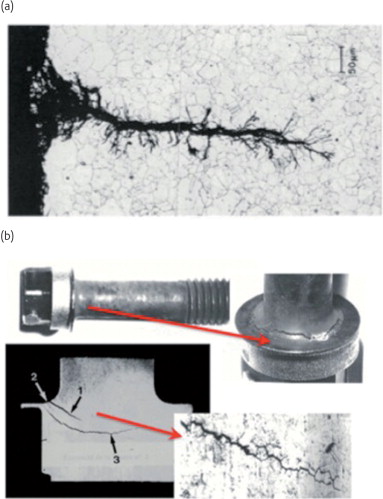
Of all the daunting tasks Joe Biden faces, especially vital is the inspection of dangerously embrittled atomic reactors still operating in the United States. A meltdown at any one of them would threaten the health and safety of millions of people while causing major impact to an already struggling economy. The COVID-19 pandemic would complicate and add to the disaster. A nuclear power plant catastrophe would severely threaten accomplishments Biden is hoping to achieve in his presidency. The problem of embrittlement is on the top of the list of nuclear power concerns. The “average age”—length of operation—of nuclear power plants in the U.S., the federal government’s Energy information Agency, reported in 2019 was 38 years. That’s why the operating licenses originally issued for the plants were limited to 40 years. Here’s how Arnold “Arnie” Gundersen, a nuclear engineer with more than 44 years of experience in the nuclear industry, who became a whistleblower and is now chief engineer at Fairewinds Associates, explains embrittlement: “When exposed to radiation, metal becomes embrittled and eventually can crack like glass. The longer the radiation exposure, the worse the embrittlement becomes.” A nuclear reactor is just like a pressure cooker and is a pot designed to hold the radioactive contents of the atomic chain reaction in the nuclear core,” continues Gundersen, whose experience includes being a licensed Critical Facility Reactor Operator. “And metals in reactors are exposed to radiation every day a plant operates” “If the reactor is embrittled and cracks,” says Gundersen, “it’s ‘game over’ as all the radiation can spew out into the atmosphere.Diablo Canyon [a twin-reactor facility in California] is the worst, the most embrittled nuclear power facility in the U.S., but there are plenty of others that also could crack. Starting with Diablo, every reactor in the U.S. should be checked to determine they are too embrittled to continue to safely operate.” Metals inside a nuclear power plant are bombarded with radiation, notes Gundersen. The steel used in reactor pressure vessels—which contain the super-hot nuclear cores—is not immune. Every U.S. reactor has an Emergency Core Cooling System and a Core Spray System to flood the super-hot core in the event of a loss-of-coolant accident. Embrittled metal would shatter when hit with that cold water. The ensuing explosion could then blow apart the containment structure—as happened at the Chernobyl and Fukushima nuclear power plants—morphing into a radioactive plume moving into the atmosphere and be carried by the winds, dropping deadly fall-out wherever it goes. This apocalyptic outcome was barely missed in Pennsylvania where, starting at 4 a.m. on March 28, 1979, fuel inside the Three Mile Island Unit Two nuclear power plant began to melt. Its Emergency Core Cooling System was activated. But only the year before—in 1978—did the plant receive a license to operate and begin operating. Had TMI, like so many of U.S. nuclear power plants now, been decades old and its metal pressure vessel embrittled and had shattered—a far greater disaster would have occurred. The entire northeastern U.S. could have been blanketed with deadly radioactivity The “fleet” of old, decrepit nuclear power plants in the U.S.—with embrittled metal components—must be inspected. And with embrittlement they must be shut down. Biden must jump into the situation—for the sake of American lives, for the sake of the nation’s future. Nuclear power in the U.S. is under the jurisdiction of the Nuclear Regulatory Commission, or NRC. That acronym NRC should really stand for Nuclear Rubberstamp Commission. Whatever the nuclear industry wants, the NRC says yes to. As the result of the series of globally infamous catastrophic nuclear power plant accidents—at Three Mile Island, Chernobyl and Fukushima—and the availability of safe, green, cost-effective, clean renewable energy, led by solar and wind, coupled with increasing energy efficiency, the nuclear industry is in its death throes. Only two nuclear power plants are being built now in the U.S., Vogtle 3 and 4 in Georgia. At nearly $30 billion for the pair, they’re hugely over budget—and their construction costs are still rising. In fact, virtually all operating atomic reactors are producing electricity at much higher base costs than solar and wind. The NRC is currently seeking to try to bail out the nuclear industry—to keep it going—by allowing nuclear power plants to operate for 100 years. In recent years it agreed to let nuclear power plants to run for 60 years and then it upped that to 80 years. On January 21 the Nuclear Rubberstamp Commission held a “public meeting” on its plan to now extend operating licenses for U.S. nuclear power plants and allow them to run for 100 years. Speaker after speaker protested this scheme. “It’s time to stop this whole nuke con job,” testified Erica Gray nuclear issues chair of the Virginia Sierra Club, at the meeting. There is “no solution” to dealing with nuclear waste, she said. It is “unethical to continue to make the most toxic waste known to mankind.” And renewable energy” with solar and wind “can power the world.” “Our position… is a resounding no,” declared Paul Gunter, director of the Reactor Oversight Project of the national organization Beyond Nuclear, for letting nuclear power plants run for 100 years. Speakers cited the greatly increased likelihood of accidents if nuclear plants were allowed to run for a century. Biden must step in and order the inspection for embrittlement of U.S. nuclear power plants. The “fleet” of old, decrepit nuclear power plants in the U.S.—with embrittled metal components—must be inspected. And with embrittlement and other likely age-induced problems, they must be shut down. Biden must act to prevent what would constitute nuclear suicide in the United States. On January 27, Biden announced a climate change agenda transitioning the U.S. towards renewable energy. But taking action against fossil fuel is not enough. Nuclear power plants are also engines of global warming. The “nuclear fuel chain” which includes uranium mining, milling and fuel enrichment is carbon intensive. Nuclear plants themselves emit Carbon-14, a radioactive form of carbon. Biden must take the lead. NOW! Harvey Wasserman wrote the books Solartopia! Our Green-Powered Earth and The Peoples Spiral of US History. He helped coin the phrase “No Nukes.” He co-convenes the Grassroots Emergency Election Protection Coalition at www.electionprotection2024.org Karl Grossman is the author of Cover Up: What You Are Not Supposed to Know About Nuclear Power and Power Crazy. He the host of the nationally-aired TV program Enviro Close-Up with Karl Grossman (www.envirovideo.com) |
|
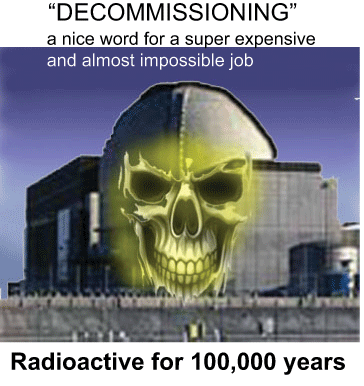
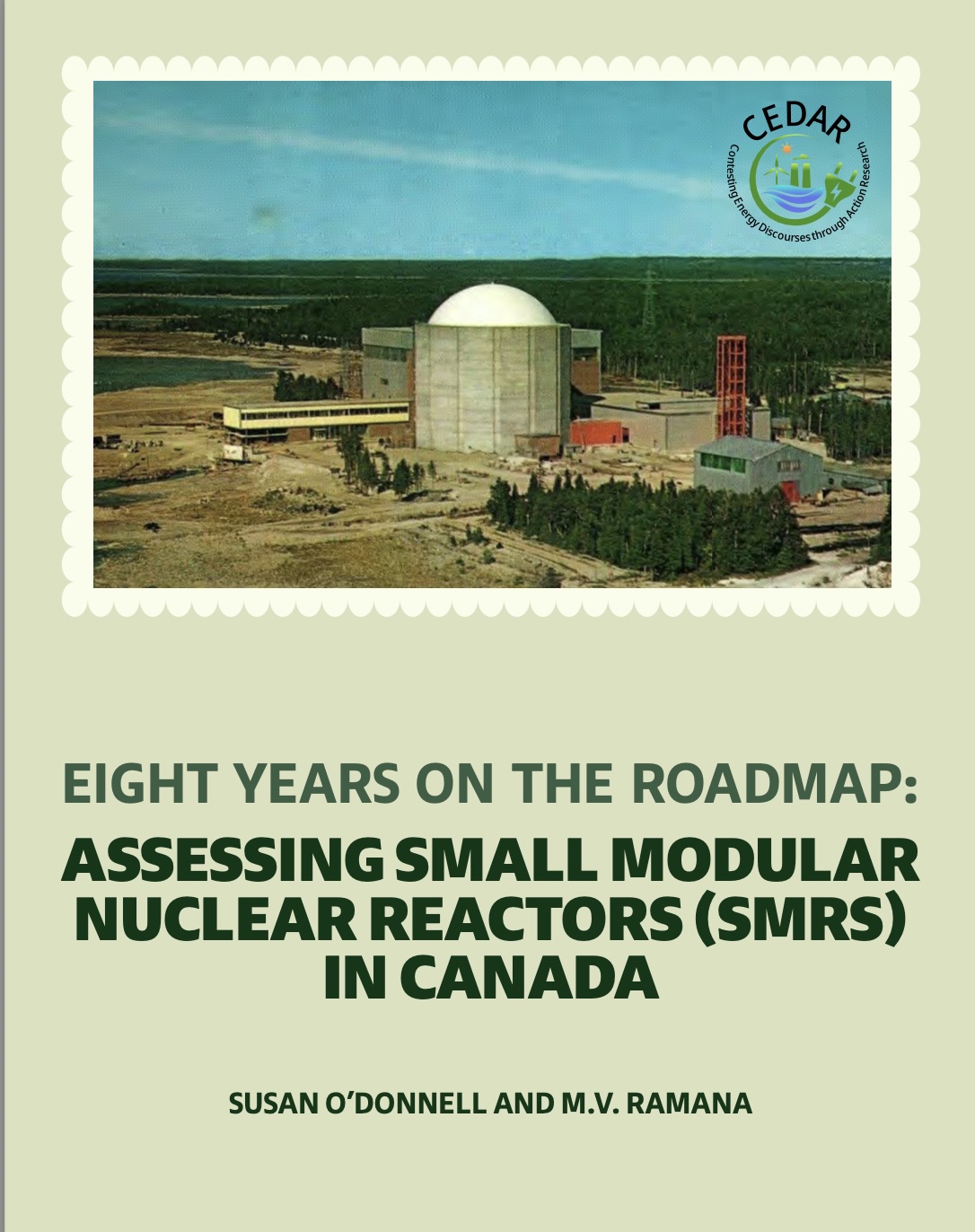
Unsafe plan for abandoning nuclear reactors onsite, and developing Small Nuclear Reactors
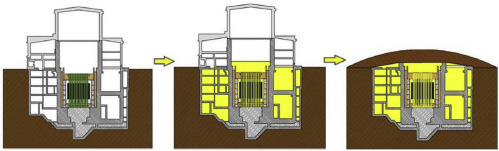
“IAEA guidance that entombment is not considered an acceptable strategy for planned decommissioning of existing [nuclear power plants] and future nuclear facilities.”
|
Groups oppose plans to abandon defunct nuclear reactors and radioactive waste, https://rabble.ca/columnists/2021/02/groups-oppose-plans-abandon-defunct-nuclear-reactors-and-radioactive-wasteThe Canadian Nuclear Safety Commission (CNSC) has just given a green light to the preferred industry solution for disposal of nuclear reactors — entomb and abandon them in place, also known as “in-situ decommissioning.” This paves the way for the introduction of a new generation of “small modular” nuclear reactors or SMRs. Over 100 Indigenous and civil society groups have signed a public statement opposing SMR funding, noting that the federal government currently has no detailed policy or strategy for what to do with radioactive waste. Many of these groups are also participating in a federal radioactive waste policy review launched in November 2020. The Assembly of First Nations passed resolution 62/2018 demanding that the nuclear industry abandon plans for SMRs and that the federal government cease funding them. It calls for free, prior and informed consent “to ensure that no storage or disposal of hazardous materials shall take place in First Nations lands and territories.”
An SMR emits no radiation before start-up (other than from uranium fuel) and could easily be transported at that stage. But during reactor operation, metal and concrete components absorb neutrons from the splitting of uranium atoms — and in the process, transform into radioactive waste. Removing an SMR after shut-down would be difficult and costly, and comes with the need to shield workers and the public from its radioactivity. Abandoning nuclear reactors on site has been in the works for some time. CNSC helped draft a 2014 nuclear industry standard with in-situ decommissioning as an option and then included it in a July 2019 draft regulatory document. However, when the International Atomic Energy Agency (IAEA) released a peer-reviewed report on Canada’s nuclear safety framework last February, it said in-situ decommissioning is “not consistent” with IAEA safety standards. The IAEA suggested that CNSC “consider revising its current and planned requirements in the area of decommissioning to align with the IAEA guidance that entombment is not considered an acceptable strategy for planned decommissioning of existing [nuclear power plants] and future nuclear facilities.” It also noted that CNSC is reviewing license applications for in-situ decommissioning of shut-down federal reactors in Ontario and Manitoba, and encouraged Canada “to request an international peer review of the proposed strategy” for legacy reactors. But CNSC continued to pursue this strategy. Clever language in a June 2020 document appeared to rule out on-site reactor disposal, but left the door open where removal is not “practicable”:
At public meeting last June, CNSC Commissioner Sandor Demeter asked: “why are future facilities in this sentence when in fact we should be designing them so that in-situ decommissioning is not the option?” Former CNSC staff member Karine Glenn replied that “leaving some small parts of a structure behind…especially if you are in a very, very remote area, may be something that could be considered.” Glenn is now with the industry-run Nuclear Waste Management Organization, tasked with leading the development of a radioactive waste management strategy for Canada. Commissioners decided to approve the regulatory document, but with added text to clarify where in-situ decommissioning would be acceptable. They asked for additional text on “legacy sites” and “research reactors,” stating that “[t]he Commission need not see this added text if it aligns with the oral submissions staff made in the public meeting.” But no new clarifying text was added to the final version of the document published on January 29, 2021. It enables abandonment of SMRs — by retaining the reference to future nuclear facilities — and of “research and demonstration facilities, locations or sites dating back to the birth of nuclear technologies in Canada for which decommissioning was not planned as part of the design.” The CNSC seems willing to ignore international safety standards — and a decision of its own commission — to accommodate nuclear industry proponents of SMRs and allow radioactive waste to be abandoned in place. Meanwhile, the federal government has assigned the nuclear industry itself — via the Nuclear Waste Management Organization — the task of developing a radioactive waste strategy for Canada. Barring public outcry, that strategy will be abandonment. Ole Hendrickson is a retired forest ecologist and a founding member of the Ottawa River Institute, a non-profit charitable organization based in the Ottawa Valley. |
|
1 This Month
23 April – WEBINAR – Why new nuclear reactors are the wrong tools for decarbonization Thursday, April 23 • 1 AM – 2 AM AEST


Pine Ridge Uranium is the real threat, not Tehran- Tell Burgum: Stop the Extraction.
Chernobyl: The Lost Tapes – A good documentary on Chernobyl on SBS available On Demand for the next 3 weeks– https://www.sbs.com.au/ondemand/tv-program/chernobyl-the-lost-tapes/2352741955560
To see nuclear-related stories in greater depth and intensity – go to https://nuclearinformation.wordpress.com
-
Archives
- April 2026 (275)
- March 2026 (251)
- February 2026 (268)
- January 2026 (308)
- December 2025 (358)
- November 2025 (359)
- October 2025 (376)
- September 2025 (257)
- August 2025 (319)
- July 2025 (230)
- June 2025 (348)
- May 2025 (261)
-
Categories
- 1
- 1 NUCLEAR ISSUES
- business and costs
- climate change
- culture and arts
- ENERGY
- environment
- health
- history
- indigenous issues
- Legal
- marketing of nuclear
- media
- opposition to nuclear
- PERSONAL STORIES
- politics
- politics international
- Religion and ethics
- safety
- secrets,lies and civil liberties
- spinbuster
- technology
- Uranium
- wastes
- weapons and war
- Women
- 2 WORLD
- ACTION
- AFRICA
- Atrocities
- AUSTRALIA
- Christina's notes
- Christina's themes
- culture and arts
- Events
- Fuk 2022
- Fuk 2023
- Fukushima 2017
- Fukushima 2018
- fukushima 2019
- Fukushima 2020
- Fukushima 2021
- general
- global warming
- Humour (God we need it)
- Nuclear
- RARE EARTHS
- Reference
- resources – print
- Resources -audiovicual
- Weekly Newsletter
- World
- World Nuclear
- YouTube
-
RSS
Entries RSS
Comments RSS
 nuclear-news