nuclear-news

The News That Matters about the Nuclear Industry Fukushima Chernobyl Mayak Three Mile Island Atomic Testing Radiation Isotope

  • Home
  • 1 This Month.
  • ACTION !
  • Disclaimer
  • Links
  • PAGES on NUCLEAR ISSUES

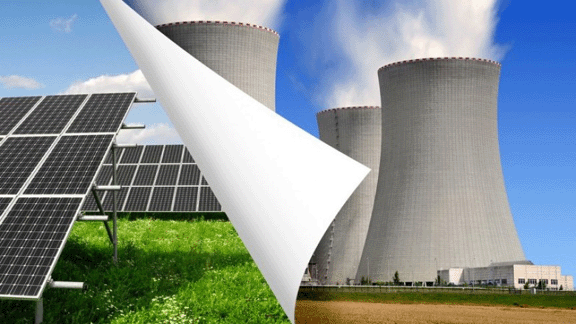
Nuclear power unaffordable in USA, Russia, India, France, even China, but NO SOLUTION TO WASTES

Germany: Nuclear phaseout or renaissance?  https://www.dw.com/en/germany-looking-for-final-repository-for-nuclear-waste-global-outlook/a-56449115– 5 Feb 21,

Germany’s nuclear phaseout will be completed by the end of 2022. Safe final repositories for nuclear waste still haven’t been found, but some countries are still building new reactors. Does nuclear have a future?

There are currently 413 nuclear reactors in operation in 32 countries around the globe. According to the annual World Nuclear Industry Status Report (WNISR), nuclear power accounted for about 10% of global electricity demand in 2019, the highest share being 17.5% in 1996.

Most reactors were built between 1968 and 1986, mainly in Europe, the United States, the former Soviet Union and Japan. The global average age of these reactors is 31 years.

US: Future of nuclear power uncertain

The US currently has 94 nuclear reactors — more than any other country in the world. In 2019, they met 20% of the country’s electricity demand. The US also has the oldest reactors in the world, with an average age of 40 years.

Most reactors went into operation by 1985; only one started up within the last 20 years. Construction of two new reactors began in 2013. These are expected to begin working in the next few years.

The future of nuclear power in the US is uncertain. Although there are concepts for a new generation of reactors, it is questionable whether they can one day generate electricity as cheaply as the renewable energy sector.

There is no final repository for highly radioactive waste in the US. It is stored on site at the power plants.

Russia wants to export nuclear power

Russia currently operates 38 nuclear reactors. In 2019, they covered about 20% of electricity demand. Ten new reactors have come online over the past decade. Two nuclear power plants have been under construction since 2010 and are expected to start up in the next few years. The average age of Russian reactors is 28 years.

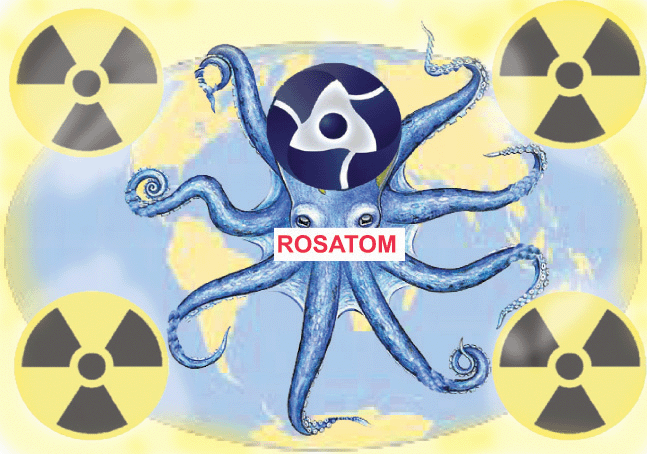
As Russia no longer wants to subsidize the construction of nuclear power plants in its own country, new domestic construction projects are uncertain. Instead, the state corporation Rosatom wants to focus on building reactors abroad in future. According to WNISR, 10 Russian reactors are currently under construction abroad, two each in Bangladesh, India, Turkey and Slovakia, and one each in Iran and Belarus.

Russia does not have a final storage facility for its highly radioactive nuclear waste. Critics have complained about the lack of transparency in the handling of nuclear waste.

Nuclear power too expensive in India

India currently has 21 nuclear reactors. In 2019, the share of nuclear power in the grid was 3%. Three reactors went online over the last 10 years, and six power plants are under construction. The average age of reactors is 23 years.

However, the expansion of nuclear power in India has been plagued by delays and mounting costs.

In 2012, the Planning Commission of India projected that the total capacity of all reactors would increase from just under 5 gigawatts (GW) to as much as 30 GW by 2027.

Today, reactors with a capacity of less than 7 GW are connected to the grid. The reactors under construction have a total capacity of 4 GW. Since the construction time of reactors in India is more than 10 years, a maximum of 11 GW will be on the grid in 2027, almost three times less than originally planned.

India does not have a final storage facility for highly radioactive nuclear waste.

China: More renewables instead of nuclear power

China is the world leader in the construction of new nuclear power plants. In the last 10 years, 37 reactors have come online. According to WNISR, 49 reactors were generating electricity at the beginning of 2021 and 17 more reactors are under construction. The share of nuclear power in the country’s electricity mix was 5% in 2019.

But China also built significantly fewer reactors than originally planned in the country’s five-year plan. At the same time, the expansion of renewable energies is eclipsing nuclear.

According to the National Energy Administration, 72 GW of wind power, 48 GW of photovoltaics and 13 GW of hydropower were connected to the grid in 2020. Nuclear power plants contributed only 2 GW of new capacity in the same year.

China does not have a repository for highly radioactive waste, but it is exploring one in the Gobi Desert. Its nuclear waste is currently stored at various reactor sites.

France: Nuclear industry with huge losses

France has relied on nuclear power like no other country in the world in recent decades. In 2019, almost 71% of electricity demand was covered by nuclear power. Currently, 56 power plants are still in operation and one is under construction. The power plants have an average age of 36 years, and the last reactor went online in 1999.

The world’s largest nuclear energy supplier and state-owned group EDF, which operates the French reactors, is indebted to the tune of €42 billion ($50.3 billion) and will have to invest an estimated €100 billion by 2030 to keep the old reactors in operation.

It is still unclear whether new reactors for nuclear power will be built in France. The decision has been postponed and is to be taken by the new French government after the next election in 2022.

There is no final repository for highly radioactive waste in France.

Poland: No investor for nuclear power

Poland has been planning to go nuclear since 1980 and started building two reactors, but stopped construction after the Chernobyl reactor disaster of 1986.

After that, there were repeated and ultimately unsuccessful attempts to restart construction. In 2014, the government adopted a plan to build six new reactors, with the first unit coming online in 2024. However, little has happened since then because it remains unclear how this costly program is to be financed.

This article has been adapted from German by Neil King.

February 6, 2021 Posted by Christina Macpherson | 2 WORLD, business and costs, politics, wastes | 1 Comment

Canadian local community group opposes nuclear waste dump on farming land

South Bruce nuclear dump opponents address Minto council . Group: site near Teeswater would mean transporting waste through neighbouring communities,  https://www.wellingtonadvertiser.com/south-bruce-nuclear-dump-opponents-address-minto-council/  , Wellington Advertiser,  Patrick Raftis, February 4, 2021  MINTO – A group fighting a proposal to locate an underground dumpsite for radioactive nuclear waste in neighbouring South Bruce brought its concerns to council here on Feb. 2.

“Over 50 years ago the nuclear industry told the government to let them start producing nuclear power and they would have a solution for the waste within five years,” said Michelle Stein of Protect Our Waterways – No Nuclear Waste (POWNNW), during a council video-conference meeting.

“But they didn’t. Now they have a problem.”

Stein explained POWNNW was formed last February after an announcement that 1,300 acres of prime farmland had been purchased and optioned by the Nuclear Waste Management Organization (NWMO).

NWMO is proposing to locate a deep geologic repository (DGR) in South Bruce to contain high-level radioactive nuclear waste from all of Canada’s nuclear reactors.

Stein said the radioactive waste from Canada’s reactors is “safe where it is right now.

“But politically, it’s no longer acceptable and the government and the public are demanding a solution before they grant the nuclear industry permission to expand.”

Stein continued, “There’s a lot of money on the line. So the industry has set up [NWMO], which is funded and directed by the nuclear industry and the best idea they’ve come up with is to take this highly radioactive nuclear waste that is dangerous for over 100,000 years and bury it under prime farmland in the municipality of South Bruce.”

The proposed site near Teeswater was selected, said Stein, because “that’s where they found owners willing to sell them land” and “South Bruce was one of the municipalities who offered to learn more in exchange for money – lots of money.

“A lot of the money is spent on promoting the project, but there’s also donations to local organizations and community projects,” she noted.

Stein told council l the proposed site “has the Teeswater river running through it, wetlands at the edge of the Greenock Swamp, springtime floodplain and the town of Teeswater is close enough to see, with its elementary schools and the Teeswater Gay Lea plant.”

Stein called the proposed South Bruce repository “an experiment,” noting there are currently no operating DGRs for high level nuclear waste on the planet.

She noted an almost complete, but not yet licensed, DGR in Finland is presently the closest to coming on line.

According to the Canadian Nuclear Safety Commission, said Stein, the Waste Isolation Plant Pilot (WIPP) in New Mexico is the only operational DGR in the world.

It accepts only low/intermediate nuclear waste, not high level, and is located in a desert, 35 kilometres from the nearest town and surrounded by a controlled safety zone encompassing more than 10,000 acres.

“The only thing we can really learn from this project is that accident happens and you can’t predict human error,” said Stein.

She added that in 2014 the WIPP “became radio actively contaminated by explosion of an underground drum of nuclear waste due to human error.”

Stein said the 2014 incident was “a mistake that took three years and $500 million to clean up.”

She pointed out establishing a DGR in South Bruce would massively increase the amount of nuclear waste being transported through a wide region.

“Currently they are around five loads of high level waste being moved per year, but an operating DGR would increase that to one or two shipments per day. These loads would be transported through surrounding communities,” she stated.

“And what does this mean for agriculture? Will consumers want to purchase products produced next to a nuclear dump? Will people want to buy freezer beef or chicken raised on or beside a nuclear dump?”

With the NWMO publicly stating it is looking for a “willing host,” Stein said POPNNW wants to see a clear benchmark that defines the term.

The group is lobbying for a standard that would require a two-thirds vote in favour of the proposed DGR, using a community referendum with a clear yes or no question, supervised by an independent third party.

Councillor Ron Elliott asked Stein what her group believes would be a better solution to burying the waste.

“You’re recommending we can’t get rid of the nuclear waste underground. What do you recommend we do with it? Because it’s there, we’ve got nuclear waste to get rid of,” said Elliott.

Stein replied, “At this time we’re recommending they go with rolling stewardship, which is keeping it above ground in a monitored state until they come up with a real solution.”

“So wouldn’t that be more dangerous?” asked Elliott

“Building a DGR doesn’t remove it from above ground. It still needs to be above ground (in containment pools) for 30 years before it can even be moved,” said Stein.

“What is a safe recommendation?” Elliott persisted.

“At the end of the day the nuclear industry has had over 50 years to come up with an idea and they haven’t,” Stein responded.

“To be honest, most of us have only been thinking about it for a year. But to accept the wrong solution is in fact no solution at all.”

Bill Noll, another member of the POPNNW delegation, said Ontario Power Generation has stated nuclear waste has been stored safely above ground for 60 years “and it can be stored longer.”

Noll said the group would like to see Canada wait for the results from the planned Finnish DGR in 2024 before going ahead with one here.

“Let them experiment for a couple of decades while we keep it above ground safely and then maybe we can consider whether or not the DGR is safe,” said Noll.

Deputy mayor Dave Turton asked Stein if local officials in South Bruce responded to the group’s concerns.

“Are they listening to you?” he asked.

Noll replied, “We are up against the wall to some degree. Our council is very much interested to see some economic development in the area, and we certainly understand and appreciate that, and so they’re very much in tune with the agenda being put forward by the NWMO.”

Mayor George Bridge thanked the group for sharing information with council.

February 6, 2021 Posted by Christina Macpherson | Canada, opposition to nuclear, wastes | Leave a comment

In desperate economic plight, two Japanese towns willing to host nuclear waste dump

It’s sad that small Japanese towns are being forced to these lengths to protect their economic stability.

Two Japanese Towns Want to Host an Underground Nuclear Waste Dump 5 Feb 21,  https://earther.gizmodo.com/two-japanese-towns-want-to-host-an-underground-nuclear-1846200890    Dharna Noor

No matter how you feel about nuclear energy, nuclear waste is generally something you want to stay as far away from as possible—unless you’re two villages on the Hokkaido, Japan’s second-largest island. The two small fishing towns, Suttsu and Kamoenai, are competing to become the site for a high-level radioactive waste storage site as a means to stay afloat economically. But not everyone is so thrilled about the prospect.

According to national data, Japan has generated more than 19,000 tons of highly toxic atomic waste since it began using nuclear power in 1966. To keep it away from people, back in 2000, the country passed the Designated Radioactive Waste Final Disposal Act to open a call for an underground waste repository for some of it.

At the time, unsurprisingly, no municipalities to sign up to host the toxic stuff. The trepidation only grew when in 2011, an earthquake and tsunami triggered an explosion at Japan’s Fukushima Daiichi Nuclear Power Plant, releasing an unprecedented amount of radioactive contamination into the ocean. It was the most severe nuclear accident since Chernobyl.

But now, times are desperate in Japan’s small villages. Fishing, once a booming industry, is in decline. Many young people are moving into cities where economic prospects are better. As a result, populations are shrinking. Suttsu currently has a population of 2,885, down from nearly 5,000 in 1980, and Kamoenai is home to just more than 800. As Bloomberg noted, both towns were also hit hard by the economic downturn of the covid-19 pandemic last year.

Agreeing to host the nuclear storage facility would be a major boost for either town. By agreeing to preliminary research into hosting the nuclear storage facility, municipalities can rake in up to $19 million in government subsidies over two years. If that first stage goes well, another $66 million becomes available in exchange for a four-year field survey and preliminary drilling. If that goes smoothly, the town would go through a 14-year evaluation period, unlocking even more funding. In total, the potential prize for agreeing to host the facility could be up to $37 billion in investments. So in October, both towns’ officials came forward as potential candidates.

But of course, the prospect of living near an atomic waste dump has sparked opposition from concerned residents of both towns. Nuclear waste can contain toxic elements like uranium and plutonium. Anti-nuclear advocates in Suttsu even pushed for a referendum on the village’s application, but the municipal assembly voted it down. Japanese government officials said their review process is airtight and would protect locals, but in an interview with the magazine Aera, Yugo Ono, a geology professor at Hokkaido University, said the earthquake risk is high and could lead to the stored waste leaking. 

It’s sad that small Japanese towns are being forced to these lengths to protect their economic stability. But at some point, Japan will need to put its nuclear waste somewhere. Let’s just hope when it does, it does so safely.

February 6, 2021 Posted by Christina Macpherson | Japan, politics, wastes | Leave a comment


1 This Month.

5 January -Webinar-What is Trump’s Golden Dome?

REGISTER AT Massachusetts Peace Action Education

New book – https://www.amazon.com/dp/1923372157?utm_source=substack&utm_medium=email

Now until to February 10, 2026 Radioactive waste storage in France: the debate is finally open! How to participate?

  • Categories

    • 1
      • Arclight's Vision
    • 1 NUCLEAR ISSUES
      • business and costs
        • employment
        • marketing
      • climate change
      • culture and arts
      • ENERGY
        • renewable
          • decentralised
          • energy storage
      • environment
        • oceans
        • water
      • health
        • children
        • psychology – mental health
        • radiation
        • social effects
        • women
      • history
      • indigenous issues
      • Legal
        • deaths by radiation
        • legal
      • marketing of nuclear
      • media
        • investigative journalism
        • Wikileaks
      • opposition to nuclear
      • PERSONAL STORIES
      • politics
        • psychology and culture
          • Trump – personality
        • public opinion
        • USA election 2024
        • USA elections 2016
      • politics international
      • Religion and ethics
      • safety
        • incidents
      • secrets,lies and civil liberties
        • civil liberties
      • spinbuster
        • Education
      • technology
        • reprocessing
        • Small Modular Nuclear Reactors
        • space travel
      • Uranium
      • wastes
        • – plutonium
        • decommission reactor
      • weapons and war
        • Atrocities
        • depleted uranium
      • Women
    • 2 WORLD
      • ANTARCTICA
      • ARCTIC
      • ASIA
        • Burma
        • China
        • India
        • Indonesia
        • Japan
          • – Fukushima 2011
          • Fukushima 2012
          • Fukushima 2013
          • Fukushima 2014
          • Fukushima 2015
          • Fukushima 2016
          • Fukushima continuing
        • Malaysia
        • Mongolia
        • North Korea
        • Pakistan
        • South Korea
        • Taiwan
        • Turkey
        • Vietnam
      • EUROPE
        • Belarus
        • Bulgaria
        • Denmark
        • Finland
        • France
        • Germany
        • Greece
        • Ireland
        • Italy
        • Kazakhstan
        • Kyrgyzstan
        • Russia
        • Spain
        • Sweden
        • Switzerland
        • UK
        • Ukraine
      • MIDDLE EAST
        • Afghanistan
        • Egypt
        • Gaza
        • Iran
        • Iraq
        • Israel
        • Jordan
        • Libya
        • Saudi Arabia
        • Syria
        • Turkey
        • United Arab Emirates
      • NORTH AMERICA
        • Canada
        • USA
          • election USA 2020
      • OCEANIA
        • New Zealand
        • Philippines
      • SOUTH AMERICA
        • Brazil
    • ACTION
    • AFRICA
      • Kenya
      • Malawi
      • Mali
      • Namibia
      • Niger
      • Nigeria
      • Somalia
      • South Africa
    • Atrocities
    • AUSTRALIA
    • Christina's notes
    • Christina's themes
    • culture and arts
    • Events
    • Fuk 2022
    • Fuk 2023
    • Fukushima 2017
    • Fukushima 2018
    • fukushima 2019
    • Fukushima 2020
    • Fukushima 2021
    • general
    • global warming
    • Humour (God we need it)
    • Nuclear
    • RARE EARTHS
      • thorium
    • Reference
      • Reference archives
    • resources – print
    • Resources -audiovicual
    • Weekly Newsletter
    • World
    • World Nuclear
    • YouTube
  • Pages

    • 1 This Month.
    • ACTION !
    • Disclaimer
    • Links
    • PAGES on NUCLEAR ISSUES
      • audio-visual news
      • Anti Nuclear, Clean Energy Movement
        • Anti Nuclear movement – a success story
          • – 2013 – the struggle for a nuclear-free, liveable world
          • – 2013: the battle to expose nuclear lies about ionising radiation
            • Speakers at Fukushima Symposium March 2013
            • Symposium 2013 Ian Fairlie
      • Civil Liberties
        • – Civil liberties – China and USA
      • Climate change
      • Climate Change
      • Economics
        • – Employment
        • – Marketing nuclear power
        • – Marketing Nuclear Power Internationally
        • nuclear ‘renaissance’?
        • Nuclear energy – the sick man of the corporate world
      • Energy
        • – Solar energy
      • Environment
        • – Nuclear Power and the Tragedy of the Commons
        • – Water
      • Health
        • Birth Defects in the Chernobyl Radiation Affected Region.
      • History
        • Nuclear History – the forgotten disasters
      • Indigenous issues
      • Ionising radiation
        • – Ionising radiation – medical
        • Fukushima FACT SHEET
      • Media
        • Nuclear Power and Media 2012
      • Nuclear Power and the Consumer Society – theme for December 2012
      • Peace and nuclear disarmament
        • Peace on a Nuclear Free Earth
      • Politics
        • – Politics USA
      • Public opinion
      • Religion and ethics
        • -Ethics of nuclear power
      • Resources – print
      • Safety
      • Secrets and lies
        • – NUCLEAR LIES – theme for January 2012
        • – Nuclear Secrets and Lies
      • Spinbuster
        • 2013 nuclear spin – all about FEAR -theme for June
        • Spinbuster 1
      • Technology
        • TECHNOLOGY Challenges
      • Wastes
        • NUCLEAR WASTES – theme for October 2012
        • – Plutonium
      • Weapons and war
      • Women
  • Archives

    • December 2025 (286)
    • November 2025 (359)
    • October 2025 (377)
    • September 2025 (258)
    • August 2025 (319)
    • July 2025 (230)
    • June 2025 (348)
    • May 2025 (261)
    • April 2025 (305)
    • March 2025 (319)
    • February 2025 (234)
    • January 2025 (250)
  • Categories

    • 1
      • Arclight's Vision
    • 1 NUCLEAR ISSUES
      • business and costs
        • employment
        • marketing
      • climate change
      • culture and arts
      • ENERGY
        • renewable
          • decentralised
          • energy storage
      • environment
        • oceans
        • water
      • health
        • children
        • psychology – mental health
        • radiation
        • social effects
        • women
      • history
      • indigenous issues
      • Legal
        • deaths by radiation
        • legal
      • marketing of nuclear
      • media
        • investigative journalism
        • Wikileaks
      • opposition to nuclear
      • PERSONAL STORIES
      • politics
        • psychology and culture
          • Trump – personality
        • public opinion
        • USA election 2024
        • USA elections 2016
      • politics international
      • Religion and ethics
      • safety
        • incidents
      • secrets,lies and civil liberties
        • civil liberties
      • spinbuster
        • Education
      • technology
        • reprocessing
        • Small Modular Nuclear Reactors
        • space travel
      • Uranium
      • wastes
        • – plutonium
        • decommission reactor
      • weapons and war
        • Atrocities
        • depleted uranium
      • Women
    • 2 WORLD
      • ANTARCTICA
      • ARCTIC
      • ASIA
        • Burma
        • China
        • India
        • Indonesia
        • Japan
          • – Fukushima 2011
          • Fukushima 2012
          • Fukushima 2013
          • Fukushima 2014
          • Fukushima 2015
          • Fukushima 2016
          • Fukushima continuing
        • Malaysia
        • Mongolia
        • North Korea
        • Pakistan
        • South Korea
        • Taiwan
        • Turkey
        • Vietnam
      • EUROPE
        • Belarus
        • Bulgaria
        • Denmark
        • Finland
        • France
        • Germany
        • Greece
        • Ireland
        • Italy
        • Kazakhstan
        • Kyrgyzstan
        • Russia
        • Spain
        • Sweden
        • Switzerland
        • UK
        • Ukraine
      • MIDDLE EAST
        • Afghanistan
        • Egypt
        • Gaza
        • Iran
        • Iraq
        • Israel
        • Jordan
        • Libya
        • Saudi Arabia
        • Syria
        • Turkey
        • United Arab Emirates
      • NORTH AMERICA
        • Canada
        • USA
          • election USA 2020
      • OCEANIA
        • New Zealand
        • Philippines
      • SOUTH AMERICA
        • Brazil
    • ACTION
    • AFRICA
      • Kenya
      • Malawi
      • Mali
      • Namibia
      • Niger
      • Nigeria
      • Somalia
      • South Africa
    • Atrocities
    • AUSTRALIA
    • Christina's notes
    • Christina's themes
    • culture and arts
    • Events
    • Fuk 2022
    • Fuk 2023
    • Fukushima 2017
    • Fukushima 2018
    • fukushima 2019
    • Fukushima 2020
    • Fukushima 2021
    • general
    • global warming
    • Humour (God we need it)
    • Nuclear
    • RARE EARTHS
      • thorium
    • Reference
      • Reference archives
    • resources – print
    • Resources -audiovicual
    • Weekly Newsletter
    • World
    • World Nuclear
    • YouTube
  • RSS

    Entries RSS
    Comments RSS

Site info

nuclear-news
Create a free website or blog at WordPress.com.
Privacy & Cookies: This site uses cookies. By continuing to use this website, you agree to their use.
To find out more, including how to control cookies, see here: Cookie Policy
  • Subscribe Subscribed
    • nuclear-news
    • Join 2,081 other subscribers
    • Already have a WordPress.com account? Log in now.
    • nuclear-news
    • Subscribe Subscribed
    • Sign up
    • Log in
    • Report this content
    • View site in Reader
    • Manage subscriptions
    • Collapse this bar
 

Loading Comments...