Japan’s huge radioactive waste problem
 Japan Times 3rd Feb 2021, Two fishing villages in Hokkaido are vying to host the final storage
facility for half a century of Japanese nuclear waste, splitting
communities between those seeking investment to stop the towns from dying,
and those haunted by the 2011 Fukushima disaster, who are determined to
stop the project.
In the middle is a government that bet heavily on nuclear
energy to power its industrial ascent and now faces a massive and growing
pile of radioactive waste with nowhere to dispose of it. Since it first
began generating atomic energy in 1966, Japan has produced more than 19,000
tons of high-level nuclear waste that is sitting in temporary storage
around the country.
After searching fruitlessly for two decades for a
permanent site, the approaches from Suttsu, population 2,885, and Kamoenai,
population 810, may be signs of progress. The towns have focused a debate
that has bedeviled an industry some regard as a vital emissions-free energy
source and others revile as a dangerous liability. The accidents at
Chernobyl in 1986 and Fukushima in 2011 reinforced public skepticism about
both the safety of reactors and our ability to safely store their residue
for centuries. While new generations of fail-safe reactor designs may
eventually help assuage the first concern, the problem of the waste
remains.
https://www.japantimes.co.jp/news/2021/02/03/national/hokkaido-nuclear-villages/
America’s ”fleet” of dangerously embrittled nuclear reactors
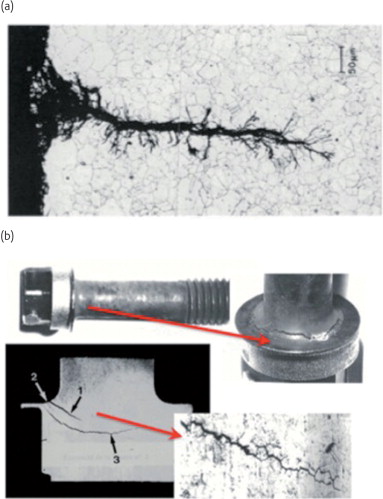
|
Embrittlement in Nuclear Power Plants, https://www.counterpunch.org/2021/02/01/embrittlement-in-nuclear-power-plants/ BY KARL GROSSMAN – HARVEY WASSERMAN
– 1 Feb 2021
Of all the daunting tasks Joe Biden faces, especially vital is the inspection of dangerously embrittled atomic reactors still operating in the United States. A meltdown at any one of them would threaten the health and safety of millions of people while causing major impact to an already struggling economy. The COVID-19 pandemic would complicate and add to the disaster. A nuclear power plant catastrophe would severely threaten accomplishments Biden is hoping to achieve in his presidency. The problem of embrittlement is on the top of the list of nuclear power concerns. The “average age”—length of operation—of nuclear power plants in the U.S., the federal government’s Energy information Agency, reported in 2019 was 38 years. That’s why the operating licenses originally issued for the plants were limited to 40 years. Here’s how Arnold “Arnie” Gundersen, a nuclear engineer with more than 44 years of experience in the nuclear industry, who became a whistleblower and is now chief engineer at Fairewinds Associates, explains embrittlement: “When exposed to radiation, metal becomes embrittled and eventually can crack like glass. The longer the radiation exposure, the worse the embrittlement becomes.” A nuclear reactor is just like a pressure cooker and is a pot designed to hold the radioactive contents of the atomic chain reaction in the nuclear core,” continues Gundersen, whose experience includes being a licensed Critical Facility Reactor Operator. “And metals in reactors are exposed to radiation every day a plant operates” “If the reactor is embrittled and cracks,” says Gundersen, “it’s ‘game over’ as all the radiation can spew out into the atmosphere.Diablo Canyon [a twin-reactor facility in California] is the worst, the most embrittled nuclear power facility in the U.S., but there are plenty of others that also could crack. Starting with Diablo, every reactor in the U.S. should be checked to determine they are too embrittled to continue to safely operate.” Metals inside a nuclear power plant are bombarded with radiation, notes Gundersen. The steel used in reactor pressure vessels—which contain the super-hot nuclear cores—is not immune. Every U.S. reactor has an Emergency Core Cooling System and a Core Spray System to flood the super-hot core in the event of a loss-of-coolant accident. Embrittled metal would shatter when hit with that cold water. The ensuing explosion could then blow apart the containment structure—as happened at the Chernobyl and Fukushima nuclear power plants—morphing into a radioactive plume moving into the atmosphere and be carried by the winds, dropping deadly fall-out wherever it goes. This apocalyptic outcome was barely missed in Pennsylvania where, starting at 4 a.m. on March 28, 1979, fuel inside the Three Mile Island Unit Two nuclear power plant began to melt. Its Emergency Core Cooling System was activated. But only the year before—in 1978—did the plant receive a license to operate and begin operating. Had TMI, like so many of U.S. nuclear power plants now, been decades old and its metal pressure vessel embrittled and had shattered—a far greater disaster would have occurred. The entire northeastern U.S. could have been blanketed with deadly radioactivity The “fleet” of old, decrepit nuclear power plants in the U.S.—with embrittled metal components—must be inspected. And with embrittlement they must be shut down. Biden must jump into the situation—for the sake of American lives, for the sake of the nation’s future. Nuclear power in the U.S. is under the jurisdiction of the Nuclear Regulatory Commission, or NRC. That acronym NRC should really stand for Nuclear Rubberstamp Commission. Whatever the nuclear industry wants, the NRC says yes to. As the result of the series of globally infamous catastrophic nuclear power plant accidents—at Three Mile Island, Chernobyl and Fukushima—and the availability of safe, green, cost-effective, clean renewable energy, led by solar and wind, coupled with increasing energy efficiency, the nuclear industry is in its death throes. Only two nuclear power plants are being built now in the U.S., Vogtle 3 and 4 in Georgia. At nearly $30 billion for the pair, they’re hugely over budget—and their construction costs are still rising. In fact, virtually all operating atomic reactors are producing electricity at much higher base costs than solar and wind. The NRC is currently seeking to try to bail out the nuclear industry—to keep it going—by allowing nuclear power plants to operate for 100 years. In recent years it agreed to let nuclear power plants to run for 60 years and then it upped that to 80 years. On January 21 the Nuclear Rubberstamp Commission held a “public meeting” on its plan to now extend operating licenses for U.S. nuclear power plants and allow them to run for 100 years. Speaker after speaker protested this scheme. “It’s time to stop this whole nuke con job,” testified Erica Gray nuclear issues chair of the Virginia Sierra Club, at the meeting. There is “no solution” to dealing with nuclear waste, she said. It is “unethical to continue to make the most toxic waste known to mankind.” And renewable energy” with solar and wind “can power the world.” “Our position… is a resounding no,” declared Paul Gunter, director of the Reactor Oversight Project of the national organization Beyond Nuclear, for letting nuclear power plants run for 100 years. Speakers cited the greatly increased likelihood of accidents if nuclear plants were allowed to run for a century. Biden must step in and order the inspection for embrittlement of U.S. nuclear power plants. The “fleet” of old, decrepit nuclear power plants in the U.S.—with embrittled metal components—must be inspected. And with embrittlement and other likely age-induced problems, they must be shut down. Biden must act to prevent what would constitute nuclear suicide in the United States. On January 27, Biden announced a climate change agenda transitioning the U.S. towards renewable energy. But taking action against fossil fuel is not enough. Nuclear power plants are also engines of global warming. The “nuclear fuel chain” which includes uranium mining, milling and fuel enrichment is carbon intensive. Nuclear plants themselves emit Carbon-14, a radioactive form of carbon. Biden must take the lead. NOW! Harvey Wasserman wrote the books Solartopia! Our Green-Powered Earth and The Peoples Spiral of US History. He helped coin the phrase “No Nukes.” He co-convenes the Grassroots Emergency Election Protection Coalition at www.electionprotection2024.org Karl Grossman is the author of Cover Up: What You Are Not Supposed to Know About Nuclear Power and Power Crazy. He the host of the nationally-aired TV program Enviro Close-Up with Karl Grossman (www.envirovideo.com) |
|
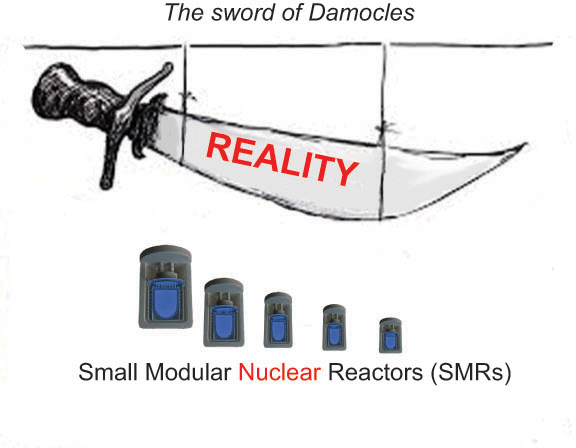
Unsafe plan for abandoning nuclear reactors onsite, and developing Small Nuclear Reactors
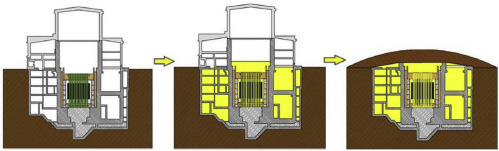
“IAEA guidance that entombment is not considered an acceptable strategy for planned decommissioning of existing [nuclear power plants] and future nuclear facilities.”
|
Groups oppose plans to abandon defunct nuclear reactors and radioactive waste, https://rabble.ca/columnists/2021/02/groups-oppose-plans-abandon-defunct-nuclear-reactors-and-radioactive-wasteThe Canadian Nuclear Safety Commission (CNSC) has just given a green light to the preferred industry solution for disposal of nuclear reactors — entomb and abandon them in place, also known as “in-situ decommissioning.” This paves the way for the introduction of a new generation of “small modular” nuclear reactors or SMRs. Over 100 Indigenous and civil society groups have signed a public statement opposing SMR funding, noting that the federal government currently has no detailed policy or strategy for what to do with radioactive waste. Many of these groups are also participating in a federal radioactive waste policy review launched in November 2020. The Assembly of First Nations passed resolution 62/2018 demanding that the nuclear industry abandon plans for SMRs and that the federal government cease funding them. It calls for free, prior and informed consent “to ensure that no storage or disposal of hazardous materials shall take place in First Nations lands and territories.”
An SMR emits no radiation before start-up (other than from uranium fuel) and could easily be transported at that stage. But during reactor operation, metal and concrete components absorb neutrons from the splitting of uranium atoms — and in the process, transform into radioactive waste. Removing an SMR after shut-down would be difficult and costly, and comes with the need to shield workers and the public from its radioactivity. Abandoning nuclear reactors on site has been in the works for some time. CNSC helped draft a 2014 nuclear industry standard with in-situ decommissioning as an option and then included it in a July 2019 draft regulatory document. However, when the International Atomic Energy Agency (IAEA) released a peer-reviewed report on Canada’s nuclear safety framework last February, it said in-situ decommissioning is “not consistent” with IAEA safety standards. The IAEA suggested that CNSC “consider revising its current and planned requirements in the area of decommissioning to align with the IAEA guidance that entombment is not considered an acceptable strategy for planned decommissioning of existing [nuclear power plants] and future nuclear facilities.” It also noted that CNSC is reviewing license applications for in-situ decommissioning of shut-down federal reactors in Ontario and Manitoba, and encouraged Canada “to request an international peer review of the proposed strategy” for legacy reactors. But CNSC continued to pursue this strategy. Clever language in a June 2020 document appeared to rule out on-site reactor disposal, but left the door open where removal is not “practicable”:
At public meeting last June, CNSC Commissioner Sandor Demeter asked: “why are future facilities in this sentence when in fact we should be designing them so that in-situ decommissioning is not the option?” Former CNSC staff member Karine Glenn replied that “leaving some small parts of a structure behind…especially if you are in a very, very remote area, may be something that could be considered.” Glenn is now with the industry-run Nuclear Waste Management Organization, tasked with leading the development of a radioactive waste management strategy for Canada. Commissioners decided to approve the regulatory document, but with added text to clarify where in-situ decommissioning would be acceptable. They asked for additional text on “legacy sites” and “research reactors,” stating that “[t]he Commission need not see this added text if it aligns with the oral submissions staff made in the public meeting.” But no new clarifying text was added to the final version of the document published on January 29, 2021. It enables abandonment of SMRs — by retaining the reference to future nuclear facilities — and of “research and demonstration facilities, locations or sites dating back to the birth of nuclear technologies in Canada for which decommissioning was not planned as part of the design.” The CNSC seems willing to ignore international safety standards — and a decision of its own commission — to accommodate nuclear industry proponents of SMRs and allow radioactive waste to be abandoned in place. Meanwhile, the federal government has assigned the nuclear industry itself — via the Nuclear Waste Management Organization — the task of developing a radioactive waste strategy for Canada. Barring public outcry, that strategy will be abandonment. Ole Hendrickson is a retired forest ecologist and a founding member of the Ottawa River Institute, a non-profit charitable organization based in the Ottawa Valley. |
|
Nuclear Rubberstamping Commission rushes to approve Holtec’s New Mexico nuclear waste plan

Republican Texas Gov. Greg Abbott has categorically denounced the Holtec project and all other proposals to store nuclear waste in the area.
there are “no plans of ever removing” the waste. “We see no reason,” they said, “to rush a decision that affects generations of New Mexicans during a pandemic on behalf of an international, for-profit corporation.”
New Mexico’s nuclear rush, A massive nuclear waste site near Carlsbad is seemingly on a fast track. Can the company behind it be trusted? Searchlight New Mexico, By Sammy Feldblum and Tovah Strong|February 3, 2021
For most New Mexico businesses, the arrival of COVID-19 wreaked havoc, caused shutdowns or threatened doom. But for one enterprise — potentially one of the world’s largest nuclear waste sites — the pandemic offered an unusual opportunity.
A long-planned nuclear waste storage facility in the southeastern New Mexico desert was rushed through the approval process during the pandemic, according to New Mexico’s congressional delegation, environmentalists and other opponents.
Typically, project foes would have been able to voice their disapproval at Nuclear Regulatory Commission hearings around the state. The coronavirus brought an end to such public gatherings, however, so New Mexico lawmakers asked the NRC to pause the hearings.
Instead, the agency switched to online meetings — and shut out dissenters in the process.
“There is a large population of individuals living in New Mexico without internet or phone access” — and the virtual hearings required both, said environmental activist Leona Morgan of the Nuclear Issues Study Group. A Diné woman who protests what she calls nuclear colonialism, Morgan said that many people couldn’t join the meetings because they didn’t have robust broadband connections, a common problem in tribal areas and remote parts of New Mexico. Continue reading
Although Biden is pro-nuclear, there’s a chance that the new Nuclear Regulatory Commission might get out of bed with the nuclear lobby.
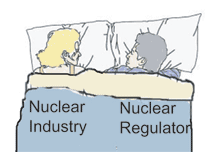 NRC has been too deferential to a nuclear industry eager to reduce the cost of operating nuclear plants while keeping aging plants online.
Nuclear has another friend in Biden, but changes at the NRC could mean more scrutiny ahead, Utility Dive . 1 Feb 21, Matthew Bandyk
Nuclear power is in a period of transformation, and so is the U.S. Nuclear Regulatory Commission. On Jan. 23, President Joe Biden appointed NRC Commissioner Christopher Hanson, a Democrat, as the new chairman of the agency. Hanson replaces Kristine Svinicki, a Republican who was designated by President Donald Trump to lead the commission days after his 2017 inauguration, and left Jan. 20, ending a 3-2 Republican majority on the commission……..
And now, while the industry faces an administration that sees nuclear as an important source of carbon-free power [ carbon-free – this is a lie] , the NRC under Biden is not likely to have the same regulatory approach as the commission did under Trump. ……
Environmental groups say NRC has been too deferential to a nuclear industry eager to reduce the cost of operating nuclear plants while keeping aging plants online. Jeffrey Baran, the sole remaining Obama appointee on the commission, has echoed these criticisms across a number of issues, such as the new safety rules for reactors based on lessons learned from the 2011 Fukushima incident and the process for evaluating advanced reactors. ……..
Biden enters the White House with one of the most explicitly pro-nuclear agendas of any president. His climate plan calls out nuclear as a zero-carbon technology [ but it’s NOT zero-carbon] that has a role to play in addressing climate change, and says his administration will look at ways to overcome the cost, safety and waste disposal challenges for nuclear power.
Based on his campaign’s policies, Biden’s presidency “bodes well” for nuclear power, Doug True, the chief nuclear officer at the Nuclear Energy Institute (NEI), the main advocacy organization for the industry, said in an interview…….
Subsequent license renewal
A top priority of the nuclear industry continues to be extending the lifetime of existing nuclear plants, …….
Over the past several years the NRC started accepting applications from nuclear plants to remain open for 80 years. The commission is also considering whether it should begin developing a framework for licensing plants to run for up to 100 years, holding the first public meeting on that topic on Jan. 21.
No U.S. nuclear plant had ever been licensed to operate beyond 60 years until Florida Power & Light’s Turkey Point reactors received a second license renewal from the NRC at the end of 2019, allowing operation for 80 years. Exelon’s Peach Bottom plant in Pennsylvania got permission to operate up to 80 years a few months later. These approvals came despite objections from environmental groups that the NRC was failing to do its duty by not requiring these plants to undergo more extensive reviews of the potential environmental and safety risks from 80 years of operation.
The NRC rejected a challenge to the Turkey Point relicensing process filed by the Natural Resources Defense Council and Friends of the Earth. Baran dissented, saying the commission should evaluate the groups’ position that Turkey Point cannot rely on a review of the environmental impacts of relicensing the reactors that was from 2013 and not specific to the site, and that the plant must instead perform a new review.
NRDC and Friends of the Earth have appealed the NRC’s decision on Turkey Point, and that challenge is currently pending before the U.S. Court of Appeals for the D.C. Circuit.
The nuclear watchdog group Beyond Nuclear brought a similar challenge against the Peach Bottom relicensing, and Baran once again dissented when the NRC released its order in November 2020 rejecting the group’s claim, but this time, he was joined by Hanson, who had been appointed to the commission after the Turkey Point decision.
The dissent of Baran and Hanson “conveys that a Democratically-led commission is at least more open to taking the hard looks at these license extensions that [the National Environmental Policy Act] demands,” said Paul Gunter, reactor oversight project director at Beyond Nuclear. A “hard look” would mean performing new environmental assessments of issues related to the aging of a nuclear plant, such as whether components of the plant have been embrittled by exposure to radiation over the course of decades, according to Gunter.
Dominion’s North Anna and Surry reactors in Virginia are next in line to potentially receive 80-year licenses. In addition, last November, NextEra Energy applied for license extensions up to 80 years for both of its reactors at the Point Beach plant in Wisconsin, and Duke Energy has told the NRC it intends to apply for similar extensions for the three reactors at its Oconee plant in South Carolina later this year.
Beyond Nuclear is still reviewing whether or not it will file more challenges to the environmental reviews of plants going for 80 year licenses, according to Gunter. An NRDC spokesman said that given the group’s active litigation on the mater, it cannot comment on how the change in the NRC leadership could affect future relicensing challenges.
The future of nuclear technology
Another priority for the NRC that will continue under the Biden administration is the consideration of new types of reactors that are intended to represent a leap forward for nuclear technology …….
The commission is wrestling with the question of how much of the safety requirements that apply to existing power reactors, such as the need to maintain evacuation zones, strict security procedures and more, should apply to advanced reactors. It also recently announced it is seeking public comments on how the process for licensing new reactors can be made overall more efficient……….
The NRC is expected to make many future decisions about the extent to which advanced reactors should be subject to existing regulations. One issue that has not been decided yet but could be voted on by the new commission, according to Merrifield, concerns the security measures that advanced reactors must follow, such as how much security staff a reactor must maintain.
The commission is under pressure to transform its treatment of advanced reactors — under the 2019 Nuclear Energy Innovation and Modernization Act, by this summer, the NRC must report to Congress on how it has established a “technology-inclusive regulatory framework” that eases the path to approval for advanced reactors.
Safety regulations
Another area where opposing views inside and outside the NRC have clashed is over nuclear plant safety and whether or not the commission is mitigating the risk of severe accidents at the existing nuclear fleet to a reasonable level.
“A general trend toward deregulation and streamlined regulation…accelerated under Svinicki, for sure,” according to Tim Judson, executive director of the Nuclear Information and Resource Service, a group focused on creating “a nuclear-free, carbon-free world.” He said “the industry is desperately trying to reduce regulation to reduce operating costs.”
Nuclear plants have a financial incentive to reduce the amount of inspections because “they are billed for every hour that inspectors are on site,” said Lyman, of UCS.
Baran has also expressed concern that the NRC is easing off safety regulations. One of his most strident dissents came in 2019 when he said that a decision approved by a majority of the commission “guts” the U.S. safety response to Fukushima because the majority did not require plants to prepare for Fukushima-level disasters based on the most recent evaluations of the earthquake and extreme weather threats posed to individual plants………. https://www.utilitydive.com/news/nuclear-has-another-friend-in-biden-but-changes-at-the-nrc-could-mean-more/593609/
Bees may be more susceptible to ionising radiation than previously estimated

Insects Might Be More Sensitive to Radiation than Thought
A study of bumble bees exposed to levels of radiation equivalent to those existing in Chernobyl hotspots shows that the insects’ reproduction takes a hit. The Scientist, February 2021 Notebook Alejandra Manjarrez, Feb 1, 2021
A few years ago, on one of her first visits to Chernobyl, Katherine Raines went to the Red Forest, a radioactive cemetery of pine trees scorched by the nuclear accident in 1986. She was curious to see if there were bees living in the area. Research on the effect of chronic exposure to ionizing radiation on insects is limited, and some of the findings are controversial, but most experts support the idea that bees and other invertebrates are relatively resilient to radioactive stress.
Raines, a radioecologist at the University of Stirling in Scotland, didn’t spend long in that forest. In one spot there, her personal radiation dosimeter measured an environmental level of ionizing radiation of 200 microsieverts (µSv) per hour; more than a few hours of that exposure could have increased her cancer risk. But even during that brief visit, she did see bees. Whether they were living there or just visiting, Raines says, is hard to tell.
Back in the UK, Raines and colleagues recreated the same levels of radiation in a specialized facility. Boxes each containing a bumble bee colony made up of a queen, workers, and brood were placed at different distances from a radiation source, creating a gradient where bees in each box received a fairly steady dose of between 20 and 3,000 micrograys (µGy) per hour. (The two kinds of units, sieverts and grays, are essentially equivalent measures of the amount of exposure to radiation; sieverts factor in the type of radiation and account for the sensitivity of the exposed tissue. Bees at the site Raines visited in the Red Forest would experience around 200 µGy per hour.) The bees stayed in their artificial homes for four weeks before being moved outdoors into the university gardens for around one month, until the colonies were no longer viable—that is, once the queen had died and only a few workers remained.
The limited lab studies previously carried out by other groups had suggested that bees and other insects should be safe below 400 µGy per hour. So, Raines says, she was shocked when she found that even those colonies exposed to lower rates showed signs of a negative effect of radiation, especially on reproduction. Bumble bee colonies experiencing just 100 µGy per hour, for example, had reduced their production of queens by almost half, dramatically impairing the chances of successfully founding new colonies. According to the study, the overall effect was stronger than the one-fourth reduction observed in colonies exposed to a popular pesticide.
This work “sheds new light on the importance of chronic low-dose radiation exposure in a nonmodel species [with] profound relevance for the natural world,” says Timothy Mousseau, an ecological geneticist at the University of South Carolina who was not involved in this research. But he adds that it is hard to determine how some of these results, based on experimental manipulations in an artificial setting, can translate “to what’s actually going on in Chernobyl” for these important pollinators.
Mousseau and his colleague Anders Pape Møller (now at CNRS in France) have been doing field studies since 2000 to assess the abundance of wildlife populations living in the Chernobyl Exclusion Zone (CEZ), a 2,600 square-kilometer area surrounding the nuclear power plant. Their results have shown a negative correlation between radiation levels—which vary a great deal within the zone—and wildlife abundance. Insects were no exception: the team observed fewer bumble bees in the most contaminated areas, a relationship that held even within a range of extremely low radiation levels (from 0.01 to 1 µGy per hour)
Those studies have been criticized, partly over the accuracy of their estimations of radiation levels. Mousseau and Møller have collaborated with some of their critics to reanalyze some of their data, and maintain that there has been wildlife reduction in the CEZ due to radiation. ………
Researchers who spoke to The Scientist about the study agree that further work is needed to conclusively demonstrate the effects of radiation on bumble bees. ……. Raines is now gathering more data. The next stage of her research, she says, will be to look at the interaction between parasite load, which reduces longevity, and radiation exposure—both in lab-kept bees and in bees she sampled on one of her visits to deserted agricultural land around Chernobyl. “It would be ideal to directly relate lab and field [data].” https://www.the-scientist.com/notebook/insects-might-be-more-sensitive-to-radiation-than-thought-68366
Rapacious nuclear company Holtec: its dodgy record on safety, finance and lack of transparency

-” ………………There really is no fixed date on a repository,” said Rod McCullum of the Nuclear Energy Institute, an industry trade group. In the absence of a permanent storage place, the conversation has turned to interim storage sites that could save companies money until a final destination is established.Enter Holtec. The company was formed in the 1980s to design spent-fuel storage technology for nuclear plants. By the early 2000s, Holtec had secured contracts to provide specialized dry storage casks for a never-built interim facility on the Skull Valley Goshute reservation in Utah and the Tennessee Valley Authority’s Sequoyah Nuclear and Browns Ferry Nuclear plants. By 2018, Holtec operated branches in seven countries, including Ukraine and Spain.
In 2019, Holtec began acquiring decommissioned nuclear power plants. (Such plants can bring large profits, including whatever decommissioning funds are left over after they’ve been cleaned up.) Holtec purchased New Jersey’s Oyster Creek Generating Station; Massachusetts’ Pilgrim Nuclear Power Station; New York’s Indian Point Energy Center; and Michigan’s Palisades Nuclear Generating Station, as well as spent fuel from the former Big Rock Point Nuclear Power Plant.
But the company’s record was not without concern. Holtec has received an estimated nine violation notices since 2001 for failing to follow NRC quality assurance procedures, including rules meant to ensure that the company’s storage casks — the kind it would be using in New Mexico — consistently met safety standards.
The most recent violation occurred in 2018 when Holtec modified its casks without notifying the NRC, as mandated. The change was only discovered when workers preparing to load a cask at San Onofre Generating Station in California noticed a four-inch pin, meant to hold the fuel basket, loose at the bottom of the cask — an obvious manufacturing flaw. When asked for comment on the incidents, a Holtec spokesman told Searchlight that the company is an industry leader in quality assurance.
Holtec has run into other problems as well. An investigation conducted in 2010 by the Tennessee Valley Authority into suspected overbilling revealed that the company had bribed a TVA employee in order to secure a contract. In 2007, the employee pleaded guilty to concealing more than $54,000 received from Holtec. In the wake of the investigation, the TVA ordered the company to pay a $2 million fine, open its operations to outside monitors and face a largely symbolic 60-day ban from doing federal business — the first debarment in TVA history.
In 2014, Holtec failed to mention that debarment on tax credit application forms. The misrepresentation initially went unnoticed, allowing the company to receive $260 million in tax credits from the New Jersey Economic Development Authority (NJEDA), a story first reported by ProPublica and WNYC.
In 2019, the NJEDA announced it would investigate Holtec’s use of tax credits, prompting the company to sue the agency for withholding money. (The NJEDA declined to answer questions about the investigation’s status, saying it did not comment on matters related to pending litigation.)
Holtec’s use of offshore banking has also come under scrutiny. According to leaked records called the Paradise Papers, Holtec has operated at least one shell corporation in Bermuda between 2005 and 2007. The records, which were obtained by the German daily newspaper Süddeutsche Zeitung and shared with the International Consortium of Investigative Journalists, listed Krishna P. Singh II as an officer: He is the son of Holtec CEO Krishna P. Singh. Several of the CEO’s other family members were also listed as officers, as was Niraj Chaudhary, director of the executive committee for Holtec Asia. An additional offshore company in Bermuda that operated during the same time period, Southampton Technologies Ltd., included nearly identical officers and was listed at the same address.
Holtec did not respond to questions from Searchlight about why the accounts were used and whether the company still keeps bank accounts in tax havens. The leaked records don’t reveal this information, either. But tax havens like Bermuda can allow companies to avoid paying taxes.
“There’s nothing inherently nefarious about [the accounts],” said Jack Blum, a national authority on international tax evasion and money laundering whose anti-corruption work contributed to the establishment of the U.S. Foreign Corrupt Practices Act. However, Blum told Searchlight, Holtec “is a closely held company that has a history of being controlled by its founders, and wherever it goes, it wants to keep its finances as secret as it can and its taxes as low as it can.”
In general, Blum said: “Companies that are dealing in nuclear materials are in a world where there’s very little transparency.”
Holtec did not respond to questions from Searchlight about why the accounts were used and whether the company still keeps bank accounts in tax havens. ……. https://searchlightnm.org/new-mexicos-nuclear-rush/
USA and Russia extend The New Strategic Arms Reduction Treaty (New START Treaty) to 2026
|
US and Russia extend nuclear arms control treaty to 2026 Aljazeera,
Both Washington and Moscow cast the extension as a victory, saying it would provide stability and transparency. 3 Feb 2021 The United States and Russia have finalised an agreement to extend until 2026 a treaty limiting their stockpiles of nuclear weapons.
The New Strategic Arms Reduction Treaty (New START Treaty), which was due to expire on Friday, imposes limits on Russian and US intercontinental missiles and bombers, but does not cover new types of weapons. Both Washington and Moscow cast the extension as a victory, saying it would provide stability and transparency on nuclear issues while acknowledging some of their disagreements. …………. Tom Collina of Ploughshares Fund, which advocates for the elimination of nuclear weapons, said Russia’s priority in any new accord would be dealing with the threat it sees to its long-range strategic nuclear arsenal from US missile defences. Washington, for its part, likely will seek to limit Moscow’s vast short-range nuclear arsenal, Collina told the Reuters news agency. https://www.aljazeera.com/news/2021/2/3/us-extends-strategic-nuclear-arms-treaty-with-russia |
|
Increasing business and jobs in closing down Europe’s nuclear reactors, as renewable energy grows
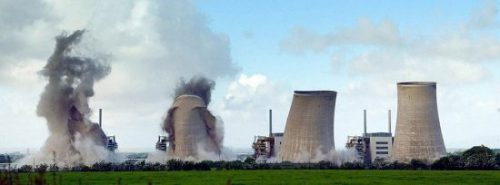
Europe Nuclear Decommissioning Service Market Forecast to 2027: COVID-19 Impact and Analysis by Reactor Type; Strategy; Application; Capacity and Country – ResearchAndMarkets.com Yahoo Finance, 3 Feb 21, The “Europe Nuclear Decommissioning Service Market Forecast to 2027- COVID-19 Impact and Analysis by Reactor Type; Strategy; Application; Capacity and Country” report has been added to ResearchAndMarkets.com’s offering.The nuclear decommissioning service market in Europe was valued US$ 2.68 billion in 2019 and is projected to reach US$ 4.29 billion by 2027; it is expected to grow at a CAGR of 6.2% from 2020 to 2027.
The growing health concerns due to radioactive emissions from aging infrastructures have compelled the European countries to decommission nuclear power plants that are nearing the end of their operational lives. France and Germany are among the leading countries in the nuclear decommissioning services market in this region.
In Germany, the nuclear energy generation sector contributes 12% to the total electricity generation. The country has no plans to construct newer nuclear power plants in the coming years. Germany decommissioned 11 nuclear power plants in the past decade, including Philippsburg nuclear facility that retired in 2019.
The German government has laid down its plans to decommission the remaining 6 nuclear power plants by 2022; these plants are Gundremmingen nuclear plant (2021), Grohnde nuclear power plant (2021), Brokdorf nuclear power plant (2021), Neckarwestheim nuclear power plant (2022), Isar nuclear plant (2022), and Emsland nuclear power plant (2022). The decommissioning strategies laid down by the government have been creating business growth opportunities for decommissioning service providers.
With the growth in the demand for electricity generated via renewable sources, rise in thermal power plants, and aging of long-established nuclear power plants, the governments are undertaking significant steps to decommission several power plants that are nearing the end of operational life. This is boosting the demand for services offered by the nuclear decommission services market players. The average lifespan of a commercial power reactor is 35-40 years.
A large number of commercial reactors operating today are soon likely to reach the end of operational life, and the governments of respective countries have approved the plans for their decommissioning. The cost of dismantling and decommissioning a commercial nuclear power plant is high and requires huge workforce.
The Italian nuclear power generation and transmission sector contributes to only 8% of the country’s overall electricity generation and transmission. The country had 4 reactors in the past, but it has been decommissioning the reactors following the Chernobyl disaster in 1986. Italy relies heavily on import of electric power and is the world’s second-largest net importer of electricity. Sogin S.p.A., a government-owned nuclear decommissioning service provider, has been engaged in dismantling and decommissioning several nuclear power plants in the country. ……….https://finance.yahoo.com/news/europe-nuclear-decommissioning-market-forecast-124000767.html
New Chernobyls on Europe’s doorstep?
|
New Chernobyls on Europe’s doorstep? https://eutoday.net/news/politics/2021/new-chernobyls-on-europes-doorstep Gary Cartwright, EU Today publishing editor. 3 Feb 21, On January 29th EUToday hosted a conference at the Press Club, Brussels, concentrating on the new and proposed nuclear power plants in Belarus, Turkey, and Uzbekistan. Moderator Natalia Richardson drew parallels between the risks surrounding nuclear energy today, and the Chernobyl disaster of 1986, of which she, as a student in Ukraine at the time, had experience. Keynote speaker Jutta Paulus, a German Green MEP who sits on the European Parliament’s Committee on the Environment, Public Health and Food Safety, told the conference that at present nuclear energy supplies around 10% of global demand for electricity. However, to maintain this level, taking into account rising demand and the decommissioning of existing reactors, new-builds will need to come online at the rate of 50 per year. She highlighted in this context the fact that most of the existing 400 plus reactor plants in the world today are more than 30 years old, and now coming to the end of their lives. In Belgium, from where the conference was hosted, the nuclear energy programme began relatively early, in 1952, with the country’s first commercial nuclear power plant feeding into the grid in 1974. Belgium, which has seven reactors in two plants, at Brussels and Antwerp, has committed to phasing out nuclear energy by 2025. In this, Belgium is following the lead of other EU member states Austria, Germany, Italy, and Sweden. Lithuania, following a 2012 referendum in which 64.7% rejected a proposal for a new-build reactor, also appeared to be heading towards a nuclear free future. This ambition has been compromised however by the controversial and accident-prone Astavets plant in Belarus, close to the border with Lithuania, and just 50km from the capital city, Vilnius. Public opinion.Ms. Paulus referred in her presentation to the levels of opposition to nuclear power in Germany, and to the diversity of protestors who are a world away from the outdated stereo-type of “the left, the long-haired hippy”. In Belarus, in 2008, anti-nuclear activists handed a petition to President Lukashenko, calling him to the site. Media coverage of this led quickly to their persecution by the government, with the organisers being searched, fined, and detained. When construction began on Turkey’s first nuclear plant at Akkuyu, on the shores of the Mediterranean, in 2015, protestors had to be dispersed by water cannon. Jan Beranek, the director of Greenpeace Mediterranean, told news agency AFP at the time that the seismic assessment in the area had been “totally inadequate” and accused the authorities of ignoring issues related to radioactive spent fuel which risked being transported through Istanbul on the Bosphorus Strait. “There is no need for the country to set on a path of unpredictable nuclear hazards and this outdated, yet very expensive technology,” he also said. In Uzbekistan questions were raised concerning public consultation: a government poll suggested that 70% of Uzbekis are in favour of nuclear, however an independent poll conducted via social media showed only 39% in favour. Interestingly, Jo’rabek Mirzamahmudov, director of the Uzatom state agency, told reporters that most of the people questioned “had not been aware of the plans to build the plant, but when they had the basic principles explained to them 70% spoke in favour.” Whilst this in itself appears highly dubious, so does the fact the Uzbek Environmental Party has officially come out in support of the programme, making them surely the only Green Party in the world to support nuclear energy. The Uzbeki government’s response to a May 2020 dam burst has, however, led to questions about Tashkent’s ability to cope with a major environmental disaster. Major concerns have also been raised concerning the political implications of the project, which comes alongside the Kremlin’s current efforts to draw Uzbekistan into its Eurasian Economic Union (EAEU). “First, there is a clear understanding that although from a formal point of view the EAEU is an economic organisation, the Kremlin’s motivation to draw Uzbekistan into this structure is clearly of a political nature. This decision, if it is final, has a double bottom: on the surface there are economic considerations, but at the bottom it is a political project. This is a step to the side of drawing Uzbekistan into the orbit of the geopolitical influence of Moscow,” wrote Alisher Ilkhamov, a senior researcher at the University of London and a leading voice in the campaign against the proposed reactors in Uzbekistan in a report for Ukraines Center for the Study of the Army, Conversion and Disarmament. Uzbekistan is expected to become a full member of the EAEU in 2022 or 2023. ROSATOM.The three plants discussed, in Belarus, Turkey, and Uzbekistan are all being built by ROSATOM, Russia’s state nuclear power company, and all will use the VVER-1200 reactors. At Astravets on July 10th 2016 a major accident occurred when a 334-ton reactor vessel “fell from a height of 2 to 4 metres,” a significantly serious accident, and one which Rosatom tried initially to cover up. In December 2011 another reactor pressure vessel sent to the Astravets site by Rosatom collided with a concrete column at a train station close to the Belarusian border. There are reports of further alarming incidents, including an explosion at the plant in November of last year. In Turkey ROSATOM has on more than one occasion been obliged to fill in cracks in the foundations of the Akkuyu Nükleer Güç Santrali plant that were discovered before construction was even completed. This plant is due to go online in 2023. Such incidents are not restricted to the projects discussed during the conference: ROSATOM’s record is very poor. Mr. Cartwright told journalists after the conference “Unless they wake up, I guess Uzbekistan has all this to look forward to.” ROSATOM, he said, is an integral part of Russia’s “weaponisation” of energy supply, and is used to further the country’s foreign policy objectives. His view echoed that of French Green MEP Michèle Rivasi, who whilst unable to participate in the event due to other commitments, did suggest in a statement that creating dependency in the energy sector is very much a part of the Kremlin’s strategy. While nuclear power is in decline in most countries of the world, Russia’s state-owned ROSATOM is exerting strong political pressure on Central and Eastern European countries such as Hungary, Bulgaria, the Czech Republic and Slovakia, Finland and Lithuania. In Belarus, two reactors in Ostrovets are being developed on credit by the Russian atomic agency Rosatom. They are supposed to reduce Belarusians’ dependence on gas sold by Russia, except that they create a new dependence, since all nuclear fuel comes from Russia. Michèle Rivasi MEP.Belarus’ President Alexander Lukashenko, Europe’s “last dictator”, has, as conference participant, writer Stephen Komarnyckyj pointed out, “always flirted with the re-unification of Belarus and Russia.” However, whilst a treaty signed with Boris Yeltsin in 1999 guaranteed that he could continue to run Belarus as his own fiefdom, Putin sees Belarus and Ukraine as “Russian land.” In tying his energy sector closer to Russia – Belarus has modest natural resources, and relies on imports from Russia to meet most of its energy needs – Lukashenko who is struggling to manage a current period of civil unrest, may be hoping to maintain the status quo, knowing that Putin fears another “colour revolution” in Europe. Belarus is also an important part of Russia’s gas transit corridor to Western Europe, although that fact will give Lukashenko negligible leverage. During the conference Mr. Komarnyckyj explained how Russia has used, particularly in 2007, energy supply to exert influence over Lukashenko. The conference concluded with a call for Uzbekistan to halt its nuclear programme while there is still time. Again and again the competence and integrity of ROSATOM is called into question. Belarus and Turkey are committed, but Uzbekistan can still halt its nuclear programme. The country should also consider that post-Soviet countries – especially in Central Asia – are keen to move away from dependency on Russia whether this be in energy, security, or political terms. Uzbekistan should seriously review this ill-conceived project. |
|
Radiation illnesses and COVID-19 in the Navajo Nation
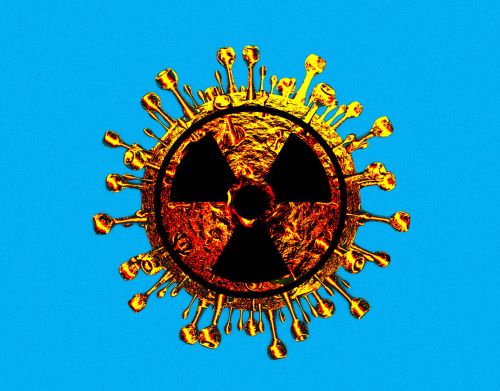 Radiation illnesses and COVID-19 in the Navajo Nation, Bulletin of the Atomic Scientists, By Jayita Sarkar, Caitlin Meyer, February 3, 2021 The COVID-19 pandemic is wiping out Indigenous elders and with them the cultural identity of Indigenous communities in the United States. But on lands that sprawl across a vast area of the American West, the Navajo (or Diné) are dealing not just with the pandemic, but also with another, related public health crisis. The US Centers for Disease Control and Prevention says COVID-19 is killing Native Americans at nearly three times the rate of whites, and on the Navajo Nation itself, about 30,000 people have tested positive for the coronavirus and roughly 1,000 have died. But among the Diné, the coronavirus is also spreading through a population that decades of unsafe uranium mining and contaminated groundwater has left sick and vulnerable.
In Indigenous lands where nuclear weapons testing took place during the Cold War and the legacy of uranium mining persists, Indigenous people are suffering from a double whammy of long-term illnesses from radiation exposure and the COVID-19 pandemic. Yet, we have not witnessed in the mainstream media and policy outlets a frank discussion of how the two public health crises have created an intractable situation for Indigenous communities. The Diné are drinking poisoned water, putting them at risk for more severe coronavirus infections.
From 1944 until 1986, 30 million tons of uranium ore was extracted on Navajo lands. At present, there are more than 520 abandoned uranium mines, which for the Diné represents both their nuclear past as well as their radioactive present in the form of elevated levels of radiation in nearby homes and water sources. Due to over four decades of uranium mining that supplied the US government and industry for nuclear weapons and energy, radiation illnesses characterize everyday Diné life.
The water crisis Continue reading
Kepco seeks prefectural government approval to restart aging nuclear reactors
|
Mayor gives Japan’s first approval for restart of reactors over 40 years old, Japan Times, BY ERIC JOHNSTON, STAFF WRITER, Feb 1, 2021
OSAKA – The mayor of the town of Takahama in Fukui Prefecture granted permission Monday for the restart of the Nos. 1 and 2 reactors at Kansai Electric Power Co.’s Takahama Nuclear Power Plant, becoming the first local leader in the nation to approve use of nuclear reactors more than 40 years old. The Takahama No. 1 reactor is 46 years old and the No. 2 reactor is 45. Kepco will now seek restart approval from the prefectural government. But with questions still unanswered about where spent fuel generated by the reactors will be stored, it is unclear whether the utility’s plans to have both reactors online this spring can be realized. Monday’s formal approval came after Takahama Mayor Yutaka Nose called on the central government, in an online meeting Friday with industry minister Hiroshi Kajiyama, to provide assistance to the town and received assurance that it would. Kajiyama said the government wanted to provide the maximum amount of support possible, and was aligned with what Takahama was seeking in terms of a local revitalization policy. In exchange for granting restart permission, Nose asked the central government to raise the amount of funding it provides the town for hosting the Takahama plant, which has four reactors in total, as well as for various local projects. While not legally required, local approval for reactor restarts by utilities is established policy, and local government heads often negotiate on financial assistance measures before giving their decision. The Takahama Municipal Assembly approved the restart of the reactors in November. Kepco wants to restart the No. 1 reactor in March and the No. 2 reactor in May at the earliest. With Nose giving the green light, the utility will next seek approval from the Fukui Prefectural Assembly and Fukui Gov. Tatsuji Sugimoto — but that could prove more problematic. Sugimoto has said that in order for him to give his approval, Kepco will need to indicate where, outside Fukui Prefecture, it plans to build a midterm storage facility for spent nuclear fuel. But with no other localities willing to host such a facility, Kepco has yet to do that. In December, the Federation of Electric Power Companies, which consists of 10 major utilities including Kepco, proposed that a storage facility in the city of Mutsu, Aomori Prefecture, scheduled to go into operation during fiscal 2021 be used jointly for midterm spent fuel storage. However, Mutsu Mayor Soichiro Miyashita said he would never allow Kepco’s spent fuel to be stored there. The interim facility, Recyclable-Fuel Storage Co., was established by Tokyo Electric Power Co. and Japan Atomic Power Co. to store spent fuel from their reactors only. The fuel is scheduled to remain there for up to 50 years before it must be transferred to a final disposal facility. In addition to the Takahama reactors, Kepco hopes to restart its Mihama No. 3 reactor in the town of Mihama, Fukui Prefecture, which is 44 years old. But the Fukui governor also wants to know where spent fuel from that reactor will be contained — again, outside the prefecture. Kepco apologized to Sugimoto in December for not being able to offer a report on where such spent fuel would be sent https://www.japantimes.co.jp/news/2021/02/01/national/takahama-nuclear-reactor-restart-approval/ |
|
Why Spain plans to ban uranium mining.
Shock waves: what will a Spanish ban mean for uranium mining in Europe?, Mining Technology, Yoana Cholteeva12 January 2021 ” ………. Reasons behind the proposed ban
The proposed ban has been welcomed by environmental groups and local organisations concerned about the potential damage to ecosystems in the country and overall safety, as argued by the Spanish organisation Stop Uranio (Stop Uranium). The group, which was established in 2013, has since then been trying to prevent the approval and construction of Berkley Energy’s uranium mining project in the Campo Charro area of Salamanca.
For the past seven years, Stop Uranium has organised a number of campaigns and protest rallies over the country, with activists from both Spain and Portugal raising concerns over Salamanca’s agriculture lands, pastures, rural tourism, and the population’s health being at stake.
Stop Uranium member and spokesperson Jose Manuel Barrueco has written in The Free – blog of the post capitalist transition, that “the majority of the inhabitants of the area oppose the planned mines due to the negative effects that this activity will entail for the region: explosions with release of radioactive dust into the atmosphere, the continuous transfer of trucks and heavy machinery, loss of forest, diversion of water courses, etc.”.
It terms of scientific evidence to support the some of the claims, according to a 2013 peer reviewed article, ‘Uranium mining and health’, published in the Canadian Family Physician journal, the chemical element has the potential to cause a spectrum of adverse health effects to people, ranging from renal failure and diminished bone growth to DNA damage.
The effects of low-level radioactivity include cancer, shortening of life, and subtle changes in fertility or viability of offspring, as determined from bothanimal studies and data on Hiroshima and Chernobyl survivors.
….. MP Juan Lopez de Uralde has in turn voiced his support of a holistic approach, telling the Spanish online newspaper Publico that banning uranium extraction is directly linked to the energy policies of both Spain and the EU. He continued that “since no uranium mine is active in the Old Continent”, “by committing to the closure of nuclear power stations we should complete the circle entirely by banning uranium mining”………. https://www.mining-technology.com/features/shock-waves-what-will-a-spanish-ban-mean-for-uranium-mining-in-europe/
Australian uranium mining company threatens Spanish government with legal action
Miner threatens Spain over uranium ban, Cosmo Sanderson, 01 February 2021
Unusually damaging Mw 4.9 earthquake near several French nuclear reactors
industrial region that hosts several operating nuclear power plants.
about 1 km. Here we use far-field seismological observations to
demonstrate that the rupture properties are consistent with those commonly
observed for large deeper earthquakes.
sensors in the fault vicinity, we perform numerical predictions of the
ground acceleration on a virtual array of near-fault stations. These
predictions are in agreement with independent quantitative estimations of
ground acceleration from in-situ observations of displaced objects. Both
numerical and in-situ analyses converge toward estimates of an exceptional
level of ground acceleration in the fault vicinity, that locally exceeded
gravity, and explain the unexpectedly significant damage.
1 This Month
Chernobyl: The Lost Tapes – A good documentary on Chernobyl on SBS available On Demand for the next 3 weeks– https://www.sbs.com.au/ondemand/tv-program/chernobyl-the-lost-tapes/2352741955560

of the week–London Campaign for Nuclear Disarmament

Tell the Ukrainian Government to Drop Prosecution of Peace Activist Yurii Sheliazhenko
To see nuclear-related stories in greater depth and intensity – go to https://nuclearinformation.wordpress.com
-
Archives
- April 2026 (139)
- March 2026 (251)
- February 2026 (268)
- January 2026 (308)
- December 2025 (358)
- November 2025 (359)
- October 2025 (376)
- September 2025 (257)
- August 2025 (319)
- July 2025 (230)
- June 2025 (348)
- May 2025 (261)
-
Categories
- 1
- 1 NUCLEAR ISSUES
- business and costs
- climate change
- culture and arts
- ENERGY
- environment
- health
- history
- indigenous issues
- Legal
- marketing of nuclear
- media
- opposition to nuclear
- PERSONAL STORIES
- politics
- politics international
- Religion and ethics
- safety
- secrets,lies and civil liberties
- spinbuster
- technology
- Uranium
- wastes
- weapons and war
- Women
- 2 WORLD
- ACTION
- AFRICA
- Atrocities
- AUSTRALIA
- Christina's notes
- Christina's themes
- culture and arts
- Events
- Fuk 2022
- Fuk 2023
- Fukushima 2017
- Fukushima 2018
- fukushima 2019
- Fukushima 2020
- Fukushima 2021
- general
- global warming
- Humour (God we need it)
- Nuclear
- RARE EARTHS
- Reference
- resources – print
- Resources -audiovicual
- Weekly Newsletter
- World
- World Nuclear
- YouTube
-
RSS
Entries RSS
Comments RSS
 nuclear-news