Indonesia’s nuclear ambitions could prove disastrous for the Southeast Asian region
More dangerously, Indonesia’s nuclear stakeholders have traditionally run into trouble selling the idea of nuclear energy to their constituents given widespread fear over Indonesia being prone to earthquakes and volcanic activity given its unique position within the Pacific’s ‘Ring of Fire’.
|
Will Indonesia become a nuclear power? https://www.trtworld.com/magazine/will-indonesia-become-a-nuclear-power-43025 6 Jan 21, In spite of its nuclear ambitions, Indonesia does not yet have the capacity to manage its nuclear waste disposal, which could prove disastrous for the Southeast Asian region.
Indonesia may be taking steps to revive its nuclear ambitions under President Joko Widodo’s government. In February 2020, Luhut Binsar Pandjaitan, Indonesian minister of maritime affairs and former chief of staff to Widodo, publicly proclaimed that powerful nations like the United States do not see Indonesia as a serious international player due to its lack of nuclear weapons. His statement quickly captured local news headlines. The retired four-star army general turned political heavyweight is a major proponent behind recent interest in acquiring nuclear reactor technology to capitalize on Indonesia’s wealth of mineral resources. If Indonesia takes the nuclear track, it would be a major departure from its traditional foreign policy footing. Historically, Indonesia organised the Bandung Conference in 1955 which gave rise to a global Non-Aligned Movement (NAM) of African and Asian states who collectively opted out of aligning with either the United States or Russia during the dawn of the cold war. Nuclear pivot Continue reading |
British tax-payers’ £ 132 billion cost for 120 years of nuclear decommissioning
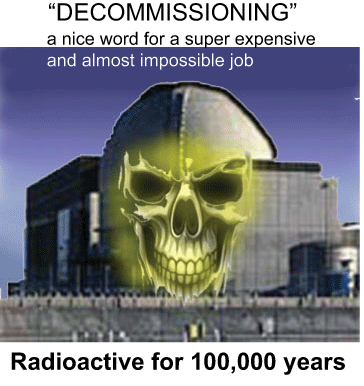 Brinkwire 4th Jan 2021, It has been warned that a “perpetual” lack of information about the condition of the nuclear facilities in Britain means that decommissioning for 120 years would not be complete and cost billions of pounds.
The decommissioning of UK civil nuclear power plants, including the Torness power plant in East Lothian and the Hunterston B power plant in Ayrshire, would cost the taxpayer about £ 132 billion, according to a new estimate, and will not be finished for 120 years.
The Public Accounts Committee blames the U.K. in its sober analysis. Government for a “sorry saga” of massively ineffective contracts, “weak” government monitoring and a “persistent” lack of awareness of the condition of nuclear installations. The Nuclear Decommissioning Authority (NDA) has left decades of inadequate information on the status and location of dangerous and
radioactive materials with a history of a lack of awareness about the condition of the sites it is responsible for safeguarding, the study warned. The NDA recognizes that it still does not have a complete understanding of the condition of the 17 sites in its custody, including the 10 former Magnox power plants, the report from the committee said.
According to the latest NDA figures, the decommissioning of UK civilian nuclear power plants would cost an incredible £ 132 billion for current and future generations of British taxpayers, and the work will not be finished for 120 years, with a huge effect on the lives of people living
near the plants, the study said.
Australian government hypocrisy about its small nuclear reactor deal with China
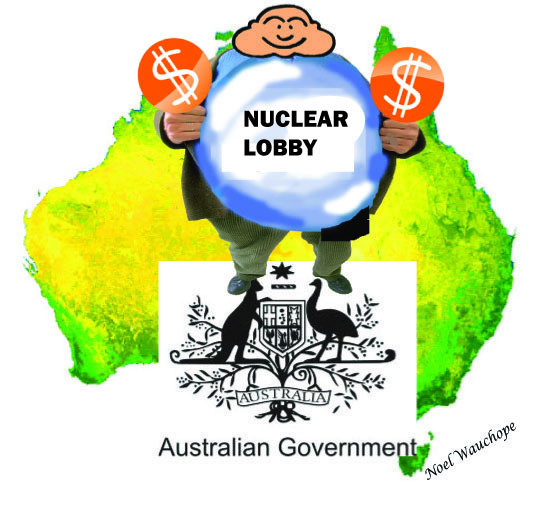
Double standards on research cooperation with China, Independent Australia 4 January 2021, The Government is hypocritical in its approval of Australia’s nuclear research body to work with China on the development of nuclear reactors, writes Noel Wauchope.
PRIME MINISTER Scott Morrison’s Liberal Coalition Government seems to remain in silent approval of the Australian Nuclear Science and Technology Organisation’s (ANSTO) partnership with a Chinese company to develop Generation IV nuclear technologies such as small nuclear reactors.
But it’s a different story when it comes to the Morrison Government’s concern to put a stop to the Victorian Labor Government’s cooperation with China in developing agricultural, communications and medical research.
We hear very little about the Australian Government’s research connections with China, managed under the Australia-China Science and Research Fund (ACSRF), which has the aim of ‘supporting strategic science, technology and innovation collaboration of mutual benefit to Australia and China’.
One remarkable collaboration between Australia and China is in the strategic partnership between ANSTO and the Shanghai Institute of Applied Physics (SINAP) to develop the Thorium Molten Salt Nuclear Reactor (TMSR) and other Generation IV nuclear reactor designs.
In March 2019, Dr Adi Paterson, then CEO of ANSTO, welcomed renewal of this agreement and was reported as stating that it was “consistent with ANSTO and Australia’s interest in and support of Generation IV reactor systems”. This statement was made at a time when Australia’s federal and state laws clearly prohibited the development of nuclear reactors.
The Age quoted anonymous senior Federal Government sources who reveal that the Australian Government may use its powers to tear up a research agreement between the Victorian Government and China’s Jiangsu province. This agreement was signed in 2012 and renewed in 2019……….
The USA partly funds the Australian Strategic Policy Institute, which strongly advises against cooperative research with China. And, of course, Victorian Liberal Opposition leader Michael O’Brien was quick to join in the chorus, condemning the Labor Government for having the deal with China.
All this makes it all the more inexplicable as to why the Australian Government should have an agreement with China to develop nuclear reactors. Under federal law, Australia prohibits establishing nuclear installations. ……..
There has been virtually no media coverage of Dr Adi Paterson’s deal with China, which goes back to 2015. I have previously written about this and the secrecy under which it was conducted.
Indeed, ANSTO’s operations and its funding have been conducted in secrecy, under the comfortable shroud of national security.
Right now, there is a move to corporatise the nuclear medicine facility at Lucas Heights as a separate entity to ANSTO. At the same time, the Government is in an unseemly rush to set up a nuclear waste dump near Kimba in South Australia. In the midst of all this came the sudden unexplained resignation of the CEO, Dr Adi Paterson.
The silence on all this is disturbing. It must be especially so for the small rural community of Kimba and for the Indigenous Title Holders as they wait in limbo for the vexed question of the nuclear waste dump to be solved. For the rest of South Australia, that is a concern, too. Victorians may well wonder why their medical research cooperation with China is seen as so dangerous. Meanwhile, is it okay for Australia’s nuclear research body, ANSTO, to work with China on the development of small nuclear reactors? https://independentaustralia.net/politics/politics-display/double-standards-on-research-cooperation-with-china,14664
Astounding failure by Ohio Republican leadership to repeal nuclear bailout law
Claims in a federal complaint released in July indicate that the law was at the heart of an alleged corruption scheme involving roughly $60 million. Former Ohio House Speaker Larry Householder, R-Glenford, and others were arrested last summer.
Failure to repeal the law in 2020 was “an astounding failure by Republican leadership,” said Rep. David Leland, D-Columbus, as the legislature adjourned last month……..
Allegations in the federal criminal case indicate that FirstEnergy and FirstEnergy Solutions — now known as Energy Harbor — provided most of the funding for an alleged scheme to elect favorable lawmakers and then to pass and defend HB 6. …….
Rulings from the Ohio Supreme Court and the Franklin County Court of Common Pleas have temporarily postponed collection of the nuclear plant subsidies anyway. Meanwhile, FirstEnergy benefits from the 2019 law’s revenue guarantee provision. Consumers pay subsidies for the old coal plants. And provisions that gutted Ohio’s renewable energy and energy efficiency standards are in full force…….
FirstEnergy Solutions paid money to Generation Now. The dark money group is a defendant in the criminal case.
And while Seitz maintained that “no alleged corruption infected all of HB 6,” others such as Rep. Mike Skindell, D-Lakewood, have stressed that “all of it — not just part of it” is tainted by the alleged corruption.
“To suggest we can parse out which pieces of the bill were not the product of corruption is wishful thinking,” Leppla said. “There is an ongoing FBI investigation, with more shoes likely to drop, so we won’t know the full extent of the corruption for some time.”
Although a FirstEnergy Solutions officer provided brief testimony on HB 6 in 2019, the company has not provided financial materials in any hearings to back up its alleged need for funding. Asked why he wouldn’t make Energy Harbor provide such sworn testimony now, Seitz said the proposed regulatory audit would be “much better than any testimony at this point.”
“Pushing it off to a closed-door audit that won’t be made fully public is a convenient way for legislators to avoid public scrutiny and outrage at forking over Ohioans’ hard-earned money to bail out a company that doesn’t need it,” Leppla said.
“I can’t think why the legislature would not want this information,” Brown said. Indeed, an option approach would tell Energy Harbor that it could draw on a slush fund if it is too incompetent or too inefficient to compete. In his view, the whole approach is “beyond crony capitalism.”………
“What we do know,” Leppla said, “is that HB 6 was a widely disliked bill that will raise Ohioans’ bills, pollute our air, and send us backward in the fight against climate change — and yet, it passed anyway.” https://www.wvxu.org/post/rep-bill-seitz-forefront-key-points-nuclear-bailout-law-hb-6#stream/0
Ohio lawmakers still don’t know what to do about corruptly instituted nuclear bailout law
The courts have taken some of the heat off by temporarily blocking the start of consumer surcharges this month to fuel the $150 million that would be used to subsidize the plants’ operations, but the law now considered to be the fruits of corruption remains on the books.
“We have a new General Assembly, so we have 20 new members,” House Speaker Bob Cupp (R., Lima) said Monday. “We will continue to work to find a solution that the House, the Senate, and the governor can all agree on…It is still a high priority on our agenda to find a solution.”
New Senate President Matt Huffman (R., Lima) said he and the speaker have been talking about how to proceed.
Restoring Iran nuclear deal is good for Israel
In order to stop Iran and to restore Israeli relations with the US and with the American Jewish community, the Israeli government must cooperate with the Biden government in its efforts to return to diplomacy with Iran from its first day in office, on January 20, not a moment too soon.
Grand Gulf nuclear plant in Mississippi raises concerns about nuclear power
That means Entergy Corp., which is the plant’s main owner, and the Midcontinent Independent System Operator, which operates the regional grid, often have to rely on other generation to fill the gap — possibly costing more and boosting greenhouse gas emissions if fossil fuel sources are tapped.
“The same rule applies to Grand Gulf as applies to coal, to gas, to any resource that we know we’re paying more for than we’re getting from,” said Logan Atkinson Burke, executive director of the New Orleans-based Alliance for Affordable Energy. “And the question is, who’s profiting from that, and who is being burdened by it?”
Experience at Grand Gulf suggests regulators and plant operators may need to consider new approaches and closer oversight of aging reactors, which face an uncertain future if they become too expensive to repair and maintain, observers say. This could have national implications as the electricity industry tries to transition away from fossil fuels and aims to rely more heavily on carbon emissions-free nuclear power.
The industry says nuclear plants are performing well broadly and companies are making investments to keep them operating. But Grand Gulf shows that a reactor that often goes offline can be expensive and undermine climate goals. An examination of New Orleans, for example, provided a snapshot in the past, estimating that a multiday unplanned outage at Grand Gulf in late 2018 resulted in higher costs of more than $1 million for New Orleans ratepayers, according to data from the city.
Aging and troubled nuclear reactors in competitive markets also occupy shaky ground because cheaper options like renewables have been able to undercut them economically, and there isn’t always a customer base to prop them up. Grand Gulf operates in a regulated territory, so it has protection, said Paul Patterson, a utility analyst with Glenrock Associates LLC. But he added that keeping plants alive isn’t a given.
“If the stars aren’t aligned politically to support these plants, it’s not going to happen,” he said………
Grand Gulf finished last among U.S. reactors at 68.8% capacity…….
At the same time, the Nuclear Regulatory Commission recently questioned the site’s operators about mislabeling of waste tied to the plant. And the Federal Energy Regulatory Commission has been reviewing complaints around Grand Gulf’s financial structure that could lead to a refund for customers……..
Nuclear reactors are designed to act as baseload power plants, which means they aren’t usually turned on and off frequently. It also takes time to take a nuclear plant offline, unless there’s an emergency that automatically trips the reactor for safety reasons.
But downtime at Grand Gulf has plagued the plant for years, as E&E News reported in 2018 (Energywire, Dec. 4, 2018). ……. its performance tanked in 2020, as it was at zero on about 39% of the days. This stemmed largely from the refueling and upgrades Entergy undertook — and issues that followed.
Safety concerns could lead to more time that Grand Gulf is not operating, according to observers. Edwin Lyman of the Union of Concerned Scientists ticked off a list of statistics for Grand Gulf that he said concern him. The reactor is in Column 2 of the NRC’s so-called Action Matrix, meaning its performance has declined. It has a number of “green” or low-level safety issues that may trigger additional inspections and reviews, and it has a “white” finding, which is more severe.
“That’s showing a troubling trend in management and safety control,” said Lyman, nuclear power safety director at UCS…..
Lyman questioned whether there is stringent oversight by federal regulators of basic procedures such as replacing and maintaining equipment, following guidelines and continuing education. Management needs to follow through on overseeing maintenance activities, he said.
“All of these seem to be challenging the safety of the plant,” he said.
The NRC looks for so-called cross-cutting issues, which are something that affects most or all safety cornerstones. This is as broad as having a “safety conscious work environment” and can be as specific as human behavior and identifying and solving problems. But the agency has been under pressure to weaken its oversight, which means such patterns may be missed, Lyman said…….
Colby Cook, a spokesperson for the Louisiana Public Service Commission, said a directive last year authorized LPSC staff to initiate a complaint at FERC regarding Grand Gulf’s operations. He said the complaint hasn’t been filed yet. But it could involve other jurisdictions that have an interest in how the plant performs.
And regulators in various states are watching federal agencies for potential decisions related to Grand Gulf………
Lyman of USC acknowledged bipartisan support in Congress for nuclear power. He said it’s up to the Energy Department to promote nuclear as a climate solution, but said the reactors need to be running safely if that’s the case. This is where the NRC comes in.
“The people who you need to depend on to make sure the plants are running safely are not doing their jobs now,” Lyman said…….
Lyman called for a more detailed grading system at the NRC so the public has a better sense of safety problems. That could lead to public pressure on the staff and management at certain plants, which also are dealing with the COVID-19 pandemic.
“I’m concerned generation with the operating reactor fleet especially when they are under economic pressure, especially now with COVID,” Lyman said……
Burke of the Alliance for Affordable Energy in Louisiana said she has no reason to be confident that Grand Gulf will have a great future performance. When the plant is offline, she said, Entergy and MISO likely depend on gas-fueled generation in the region. Burke also worried that new natural gas-fired units could be proposed to replace Grand Gulf at some point….
Burke said utilities and regulators need to plan with credible data.
“If we’re honest about what this plant is costing us all, then this plant shuts down and we finally get to plan for the future,” she said. https://www.eenews.net/stories/1063721867
High court drops TEPCO’s appeal against order for compensation to affected Fukushima worker
| High court drops TEPCO’s appeal against order for compensation to affected Fukushima worker |
http://www.japan-press.co.jp/modules/news/index.php?id=13357, December 17, 2020
In the court battle, the man, who worked for the TEPCO subsidiary Kandenko at the time of the Fukushima nuclear disaster, stated that he experienced anxiety over health problems due to radiation exposure during emergency work he was assigned to do at the crippled nuclear power plant. According to the worker, he was assigned to emergency work that included connecting cables to a power panel in the basement of the No. 3 reactor’s turbine building. He suffered external exposure to radiation of up to 10.81 mSv and internal exposure of 5.8 mSv. The worker demanded a total of 1.1 million yen in damage from his company and TEPCO on the grounds that they failed to fulfill their responsibility to ensure workers’ safety.
At the appeal hearing, TEPCO demanded that the district court decision be reviewed because the amount of radiation which the worker received was less than that needed to be compensated.
The high court ruling pointed out that it is generally accepted that exposure to some levels of radiation may increase the risk of health problems such as getting cancer. Stating that the plaintiff’s health anxiety is understandable, the court turned down the utility’s demand.
At a press conference after the ruling, lawyer Hirota Tsuguo on behalf of the plaintiff’s legal team said, “It is significant that the court ordered TEPCO, which has dominant power in the nuclear power-related industry, to compensate the worker. The company should abide by the court judgement.”
Past related article:
> Radiation-exposed worker sues TEPCO [May 8, 2014]
Multinational effort could help solve U.S.-Russia nuclear issue
|
EDITORIAL: Multinational effort could help solve U.S.-Russia nuclear issue, Asahi Shimbun January 6, 2021 The United States and Russia should take the inauguration of President Joe Biden on Jan. 20 as a cue to explore a new bilateral relationship that will improve their handling of nuclear disarmament and other issues.New START (Strategic Arms Reduction Treaty), their only remaining nuclear disarmament treaty, is due to expire in February. Negotiations for its extension have remained stalled since last year. Unfortunately, relations between President-elect Biden and Russian President Vladimir Putin are already somewhat strained……… the two nations together possess more than 90 percent of the global arsenal of nuclear warheads, wielding tremendous influence over various parts of the world. Should all dialogue or collaboration cease between these two nuclear superpowers, they will be incapable of fulfilling their responsibility of protecting global peace and security. For this reason, the demise of New START must be avoided at all costs. As soon as the Biden administration is sworn in, Washington and Moscow must do everything in their power to forge an agreement on extending the treaty. Also urgent is the need to revive the Iran nuclear deal, abandoned arbitrarily by the Donald Trump administration. Other pressing issues on which U.S.-Russia collaboration is indispensable include the North Korean nuclear problem and China’s surging military presence. We probably cannot expect any immediate improvement in the Biden-Putin personal relationship. But it may be worth the effort to explore issue-by-issue solutions within multinational frameworks. Precedents that can be consulted include the participation of Germany and the five permanent members of the United Nations Security Council in the Iran nuclear deal, and the six-party talks on North Korean problems. We believe now is the time for not only the United States and Russia, but also many countries, including Japan, to reaffirm the value of multinational cooperation. Every country must face, and act on, the fact that the “my country first” mentality provides no solution to issues such as nuclear proliferation, infections and the environment. http://www.asahi.com/ajw/articles/14084371 |
|
Small Nuclear Reactor market “buoyant” ? – methinks the nuclear lobby doth protest too much.
|
Greentech Media , 5 Jan 20, “………..Despite the encouraging noises emerging from government agencies, it is still far from clear how SMRs will overcome many of the challenges that are causing mainstream nuclear to suffer in markets such as the U.S. and the U.K. “No new nuclear power plant is viable in the U.S. now,” said Edward Kee, CEO and principal consultant at the Nuclear Economics Consulting Group, in an email. “Existing merchant nuclear power plants are closing early because they cannot cover cash-generating costs with sales into the electricity markets. [It’s] hard to see how a new nuclear power plant of any design could recover investment in this market.” As it stands today, the only country in the world that can claim to have a viable SMR industry is Russia. The country’s first SMR, deployed as a floating power station aboard the Akademik Lomonosov barge, was commissioned in 2020. In November the World Nuclear Association reported that Russian state corporation Rosatom is planning to build another SMR in Yakutia, in the far eastern part of the country. Spurning the advanced designs favored by Western developers such as NuScale and Rolls-Royce, Rosatom is building its SMRs with reactors that it has been using in nuclear icebreakers for years, the association said. |
|
Should £25 billion Hinkley C plant go ahead, with so many safety issues not solved?
David Lowry’s Blog 4th Jan 2021On Christmas Eve last year I received a detailed response to a Freedom of Information request I had made to the UK Office for Nuclear Regulation
[ONR] (I am a member of the chief nuclear inspector’s independent advisory
panel) on the 415 unresolved nuclear safety issues outstanding for the
nuclear licence for the Hinkley Point C nuclear power plant the north
Somerset coast, 18 miles from the Welsh capital city, Cardiff, across the
Bristol channel. It contains an alarming number of extremely important
unresolved matters.
Should this £25 billion plant really have been given
the regulatory green light with so many safety issues unfinished? It is
nonetheless reassuring that the ONR has been so thorough in flagging up key
matters that need safety resolution.
http://drdavidlowry.blogspot.com/2021/01/hinkley-point-c-new-nuclear-plant-still.html
Canada vocal about nuclear disarmament, but silent about the Treaty for Prohibition of Nuclear Weapons
 Canada reaffirms support to advance nuclear disarmament Mirage News, 5 Jan 21, On behalf of the Honourable François-Philippe Champagne, Minister of Foreign Affairs, Rob Oliphant, Parliamentary Secretary to the Minister of Foreign Affairs, today reaffirmed Canada’s unwavering support for advancing nuclear non-proliferation and disarmament during the third meeting of foreign ministers of the Stockholm Initiative for Nuclear Disarmament. Canada reaffirms support to advance nuclear disarmament Mirage News, 5 Jan 21, On behalf of the Honourable François-Philippe Champagne, Minister of Foreign Affairs, Rob Oliphant, Parliamentary Secretary to the Minister of Foreign Affairs, today reaffirmed Canada’s unwavering support for advancing nuclear non-proliferation and disarmament during the third meeting of foreign ministers of the Stockholm Initiative for Nuclear Disarmament.
Co-hosted by Jordan, Germany and Sweden, the meeting brought together international partners advocating for action-oriented steps on nuclear disarmament. Participants called on all nuclear weapon states to show leadership in advancing nuclear disarmament and to take meaningful steps to implement all commitments under the Treaty on the Non-Proliferation of Nuclear Weapons (NPT). ………https://www.miragenews.com/canada-reaffirms-support-to-advance-nuclear-disarmament/
|
|
|
Massive nuclear waste storage construction at Dounreay
Press & Journal 4th Jan 2021, Work on Dounreay’s newest radioactive waste store has reached new heights
following a marathon efforts by staff. The construction project was one of
the first to re-start work in June, following the easing of lockdown
restrictions. The 60-strong team has had to learn Covid-19 compliant ways
of working, sometimes in close proximity with each other, to keep
themselves and their colleagues safe on site.
Since then they have poured
1,500 tonnes of concrete and the building walls have now risen to above the
first floor level. Last week the team embarked on the biggest concrete pour
of the project so far, working for nine hours to lay the floor slab in the
crane maintenance bay (CMB) on the first floor of the building, with 27
lorries delivering 425 tonnes of concrete. An overnight shift completed the
job in the early hours of the morning.
The new intermediate level waste
store will hold drums of waste in safe long term storage at Dounreay in
accordance with Scottish Government policy. The £22 million contract,
awarded to Graham Construction Ltd, started in 2018 and is expected to take
around three years to complete. Dounreay project manager Dave Busby said
that casting the CMB floor slab was a significant construction milestone as
it will allow the team to install the 170 tonne CMB shield door early next
year.
France’s declining nuclear production
Les Echos 4th Jan 2021, Nuclear: EDF production at its lowest for nearly thirty years. The year
2020 was marked by extremely low nuclear production, very slightly above
335 TWh. The impact of the Covid-19 crisis on the maintenance of power
plants and the extent of the work already in progress explain this
situation, which should continue in 2021 and 2022.
Brexit – anatomy of an awful deal — daryanenergyblog

Reblogged post from my other site: So Boris got his brexit deal…by basically dithering and then conceding everything to the EU, because (surprise, surprise) usually in any trade deal the loser tends to be the smaller partner, particularly if they are in some sort of hurry to get a deal. Its worth noting that the […]
Brexit – anatomy of an awful deal — daryanenergyblog
1 This Month
23 April – WEBINAR – Why new nuclear reactors are the wrong tools for decarbonization Thursday, April 23 • 1 AM – 2 AM AEST


Pine Ridge Uranium is the real threat, not Tehran- Tell Burgum: Stop the Extraction.
Chernobyl: The Lost Tapes – A good documentary on Chernobyl on SBS available On Demand for the next 3 weeks– https://www.sbs.com.au/ondemand/tv-program/chernobyl-the-lost-tapes/2352741955560
To see nuclear-related stories in greater depth and intensity – go to https://nuclearinformation.wordpress.com
-
Archives
- April 2026 (275)
- March 2026 (251)
- February 2026 (268)
- January 2026 (308)
- December 2025 (358)
- November 2025 (359)
- October 2025 (376)
- September 2025 (257)
- August 2025 (319)
- July 2025 (230)
- June 2025 (348)
- May 2025 (261)
-
Categories
- 1
- 1 NUCLEAR ISSUES
- business and costs
- climate change
- culture and arts
- ENERGY
- environment
- health
- history
- indigenous issues
- Legal
- marketing of nuclear
- media
- opposition to nuclear
- PERSONAL STORIES
- politics
- politics international
- Religion and ethics
- safety
- secrets,lies and civil liberties
- spinbuster
- technology
- Uranium
- wastes
- weapons and war
- Women
- 2 WORLD
- ACTION
- AFRICA
- Atrocities
- AUSTRALIA
- Christina's notes
- Christina's themes
- culture and arts
- Events
- Fuk 2022
- Fuk 2023
- Fukushima 2017
- Fukushima 2018
- fukushima 2019
- Fukushima 2020
- Fukushima 2021
- general
- global warming
- Humour (God we need it)
- Nuclear
- RARE EARTHS
- Reference
- resources – print
- Resources -audiovicual
- Weekly Newsletter
- World
- World Nuclear
- YouTube
-
RSS
Entries RSS
Comments RSS
 nuclear-news