Strong opposition to USA’s Nuclear Rubberstamp Commission extending nuclear reactors’ lives to 100 years
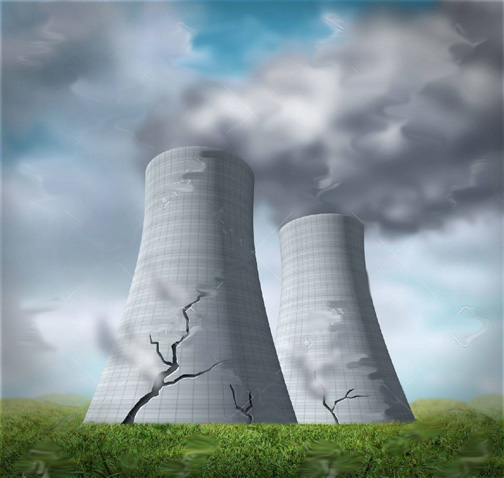

Well, I can’t help think that all these officials are looking out for themselves here. They hope that the disasters and cleanups won’t be their problem, – but the problem of future taxpayers.
|
RESOUNDING NO – TO LETTING NUCLEAR PLANTS RUN FOR 100 YEARS, The Sentinel By Karl Grossman, Jan 22, 2021
The U.S. Nuclear Regulatory Commission held a “public meeting” this week on what it titled “Development of Guidance Documents To Support License Renewal For 100 Years Of Plant Operation.” Comments from the “public” were strongly opposed to the NRC’s desire for it to let nuclear power plants run for a century. “I request you pause and consider before you go ahead on this reckless path,” testified Michel Lee, chairman of the New York-based Council on Intelligent Energy & Conservation Policy. “Our position and that of our constituents is a resounding no,” declared Paul Gunter, director of the Reactor Oversight Project at the national organization Beyond Nuclear. “It’s time to stop this whole nuke con job,” said Erica Gray, nuclear issues chair of the Virginia Sierra Club. There is “no solution” to dealing with nuclear waste, she said. It is “unethical to continue to make the most toxic waste known to mankind.” And, “renewable energy” with solar and wind “can power the world.” Jan Boudart, a board member of the Chicago-based Nuclear Energy Information Service, spoke, too, of the lack of consideration of nuclear waste. Cited was the higher likelihood of accidents with plants permitted to run for 100 years. Whether the NRC—often called the Nuclear Rubberstamp Commission—listens is highly unlikely considering its record of rubberstamping whatever has been sought by other nuclear promoters in government and the nuclear industry. Nuclear power plants when they began being built were not seen as running for more than 40 years because of radioactivity embrittling metal parts and otherwise causing safety problems. So operating licenses were limited to 40 years. But with the major decline of nuclear power—the U.S. is down to 94 plants from a high of 129 and only two are now under construction—the nuclear promoters in the U.S. government and nuclear industry are pushing to let nuclear power plants run for 100 years to somehow keep nuclear power going…….. In further discussing the “Life Beyond Eighty” scheme for nuclear power plants, Rosseel showed a U.S. Energy Information Administration slide projecting the amount of energy nuclear power would contribute to the U.S. energy supply in decline from 19% in 2019 to 12% in 2050 while renewable energy sources would jump from the current 19% to 38%. For the DOE, which inherited the role of promoting nuclear power from the U.S. Atomic Energy Commission, abolished by Congress in 1974 for being in conflict of interest for having a dual role of both promoting and regulating nuclear power, this decline is of great concern. At the start of the “public meeting” on January 21—held online as a teleconference—Allen L. Hiser, Jr., senior technical advisor for the Division of New and Renewed Licenses of the NRC, said the Atomic Energy Act of 1954 gave authority to the U.S. government to license nuclear power plants for 40 years. “But nothing in the AEA [Atomic Energy Act] prohibits a number of license renewals,” said Hiser. Using this lack of prohibition in the Atomic Energy Act, the NRC is now pushing ahead on the scheme to let nuclear power plants run for 100 years.
The NRC—which was supposed to only get the regulatory function from the eliminated U.S. Atomic Energy Commission—has also, with DOE, been a promoter of nuclear power. Earlier, it began extending the operating licenses of nuclear power plants to run for 60 years—and most of the plants in the U.S. now are being allowed to run for 60 years. And in recent years it has given the go-ahead for nuclear plants to run for 80 years, and several have been licensed for that length. In granting the license extensions to 60 and 80 years, the NRC has also been allowing the plants to be “uprated” to generate more electricity—to run hotter and harder—further asking for disaster. Gunter testified about an NRC cover-up involving the extending of nuclear power plant licenses. Using PowerPoint to reinforce his points, Gunter displayed a 2017 report commissioned by the NRC made by the DOE’s Pacific Northwest National Laboratory. The “very critical report,” said Gunter, looked at conducting research on the impacts of extending nuclear power plant operating licenses. It is titled “Criteria and Planning Guidance for Ex-Plant Harvesting to Support Subsequent License Renewal.” http://www.beyondnuclear.org/storage/aging/slr/autopsy_PNNL-27120_harvesting_Dec2017.pdf The report listed many significant issues considering the “harsh” degradation of nuclear power plant components over the years, he said. It pointed to “a host of critical technical gaps.” fter he “raised questions about” issues in the report at a meeting on operating license extensions held in 2018 at the NRC’s headquarters in Rockville, Maryland, the report was “taken down from government websites,” said Gunter. However, Beyond Nuclear saved a copy of the report. He spoke of an email that Beyond Nuclear obtained, after two years of trying under the U.S. Freedom of Information Act, from an NRC employee saying: “Big picture, I think the entire report needs to be scrubbed.” A “sanitized” version of the report, said Gunter, was “republished” in 2019. Gunter spoke of “public safety” being threatened. Gunter, also at the “public meeting” this week, said among the issues not being considered in the NRC’s drive to extend the licenses of nuclear power plants to 100 years is the management of the radioactive waste generated by the plants and “the advent of reliable, competitive and abundant renewable energy.” The oldest nuclear power plant in the U.S. was Oyster Creek in Toms River, New Jersey which opened in 1969 and was shut down 49 years later in 2018. What President Joe Biden does about nuclear power—he has said he is for “advanced” nuclear power—and the pro-nuclear NRC remains to be seen. The president appoints the five members of the NRC, and its current chairperson, a nuclear engineer and Trump appointee, is resigning. Biden could move to have done to the NRC what was done to its predecessor agency, the AEC, to have it abolished. And to push to end nuclear power in the U.S. Most U.S. nuclear power plants, according to a PowerPoint slide shown by the NRC’s Hiser, have already operated more than 40 years—the numbers of years they were seen as running safely when they began operating. https://www.thesentinel.com/communities/montgomery/news/science/resounding-no-to-letting-nuclear-plants-run-for-100-years/article_4cef89fc-5cc1-11eb-bfab-8b68f4bca770.html |
|
|
No comments yet.
1 This Month

of the week – Shut Down Drone Warfare!


Tell the Ukrainian Government to Drop Prosecution of Peace Activist Yurii Sheliazhenko

Petition to revoke the licensing of the Near Surface Nuclear Disposal Facility (NSDF) at Chalk River. https://www.ourcommons.ca/petitions/en/Petition/Details?Petition=e-7247
To see nuclear-related stories in greater depth and intensity – go to https://nuclearinformation.wordpress.com
-
Archives
- April 2026 (91)
- March 2026 (251)
- February 2026 (268)
- January 2026 (308)
- December 2025 (358)
- November 2025 (359)
- October 2025 (376)
- September 2025 (257)
- August 2025 (319)
- July 2025 (230)
- June 2025 (348)
- May 2025 (261)
-
Categories
- 1
- 1 NUCLEAR ISSUES
- business and costs
- climate change
- culture and arts
- ENERGY
- environment
- health
- history
- indigenous issues
- Legal
- marketing of nuclear
- media
- opposition to nuclear
- PERSONAL STORIES
- politics
- politics international
- Religion and ethics
- safety
- secrets,lies and civil liberties
- spinbuster
- technology
- Uranium
- wastes
- weapons and war
- Women
- 2 WORLD
- ACTION
- AFRICA
- Atrocities
- AUSTRALIA
- Christina's notes
- Christina's themes
- culture and arts
- Events
- Fuk 2022
- Fuk 2023
- Fukushima 2017
- Fukushima 2018
- fukushima 2019
- Fukushima 2020
- Fukushima 2021
- general
- global warming
- Humour (God we need it)
- Nuclear
- RARE EARTHS
- Reference
- resources – print
- Resources -audiovicual
- Weekly Newsletter
- World
- World Nuclear
- YouTube
-
RSS
Entries RSS
Comments RSS
 nuclear-news
Leave a comment