Law and Disorder: The case of Julian Assange
 In the case of Julian Assange, what is on trial is nothing less than our right to know what is done by governments in our name, and our capacity to hold power to account.

Law and Disorder: The case of Julian Assange, DiEM25, By Pam Stavropoulos | 10/12/2020,
What kind of law allows pursuit of charges under the 1917 United States Espionage Act — for which there is no public interest defence — against a journalist who is a foreign national?
The closing argument of the defence in the extradition hearing of WikiLeaks founder and publisher Julian Assange has been filed. For this and other reasons it is apposite to consider the authority invested in the law before which, in democratic societies, we are ostensibly all equal.
In fact, notwithstanding the familiar claims of objectivity (and as `everybody knows’ in Leonard Cohen’s famous lyric) the reality is somewhat different. Jokes about the law attest to this:
‘One law for the rich…’
‘Everyone has the right to their day in court — if they can pay for it’
‘What’s the difference between a good lawyer and a great one? A good lawyer knows the law. A great lawyer knows the judge’
The term ‘legal fiction’ calls into question the relationship between law, objectivity, and truth. On the one hand, law is the essential pillar of a functioning society. On the other, it is replete with anomalies both in conception and execution. To what extent can these perspectives be reconciled? High stakes are attached to this question.
Questioning claims of objectivity in the context of law.
Britain: Controversial funding arrangements for unnecessary Sizewell C nuclear project ?
 Sizewell C: government reignites £20bn nuclear power station row, Talks with EDF could lead to energy customers being charged for construction costs, Guardian, Jillian Ambrose Energy Energy correspondent, Tue 15 Dec 2020 The government has reignited a row over Britain’s nuclear energy ambitions by agreeing to restart talks with EDF over plans to build a reactor at Sizewell C in Suffolk.The talks could lead to the government taking a direct financial stake in the project before the end of the current parliamentary term in 2024, and using a new financial model that would make the public liable for cost overruns. Sizewell C: government reignites £20bn nuclear power station row, Talks with EDF could lead to energy customers being charged for construction costs, Guardian, Jillian Ambrose Energy Energy correspondent, Tue 15 Dec 2020 The government has reignited a row over Britain’s nuclear energy ambitions by agreeing to restart talks with EDF over plans to build a reactor at Sizewell C in Suffolk.The talks could lead to the government taking a direct financial stake in the project before the end of the current parliamentary term in 2024, and using a new financial model that would make the public liable for cost overruns.
The formal negotiations over the £20bn nuclear plant will hinge on whether the French state-owned EDF can prove it has learned lessons from its Hinkley Point nuclear project in Somerset, and that a successor plant would offer the public value for money. If it succeeds it may be offered a multi-billion-pound deal that allows it to charge energy customers for the cost of construction while it builds the reactor, effectively putting bill payers on the hook for delays or cost overruns. Ed Miliband, Labour’s shadow business secretary, accused the government of “kicking big decisions into touch” and failing to offer a “definitive statement today one way or the other on financing, costs or an overall plan. The decision to restart talks is also expected to reopen a debate over whether nuclear energy can offer good value for money, and whether the UK needs new nuclear reactors to help meet a steep rise in demand for low-carbon electricity to power a boom in electric vehicles, induction hobs and heat pumps. …….. The decision to restart formal negotiations follows a hiatus in talks that have been dogged by concerns over cost, and the involvement of China General Nuclear Power (CGN), which owns 20% of the project. But environmental campaigners, including Greenpeace, have warned that nuclear reactors are “unnecessary” and expensive compared with renewable energy combined with battery storage technology. The community group Stop Sizewell added that the reactor posed a risk to the natural habitats along the Suffolk coast and the nearby Minsmere nature reserve. ……. The government said it would only consider playing a greater role in the Sizewell project if there was “clear value for money for consumers and taxpayers”. It is also planning to back a new generation of small modular nuclear reactors, or “mini nukes”, which can be built at a lower cost…… https://www.theguardian.com/business/2020/dec/14/sizewell-c-government-talks-nuclear-power-station-edf-suffolk |
|
European Leadership Network appeals to nuclear weapons States to reduce nuclear risks
Group statement | 14 December 2020
European Leadership Network ELN Group Statement: Appeal for P5 states to reduce nuclear weapons risks.
Over the past decade, geopolitical relations among the major powers have deteriorated and the threshold of nuclear use has lowered due to the near-total erosion of arms control, the modernisation of nuclear arsenals in all P5 states as well as a move, by some P5 states, to include “limited nuclear use” in their national security strategies. These developments, and the fiftieth anniversary of the Nuclear Non-Proliferation Treaty’s entry-into-force, are stark reminders of the risks stemming from nuclear weapons.
Against this strained security environment, the ELN has issued a group statement, signed by 140 security experts from 30 countries, calling upon the five recognised nuclear-weapon states by the Nuclear Non-Proliferation Treaty (NPT) – China, France, Russia, the United Kingdom, the United States (the P5) – to launch a sustained, open-ended and regular panel on strategic risk reduction.
Full statement reproduced below……….. (Many signatories from many States ) https://www.europeanleadershipnetwork.org/group-statement/eln-group-statement-appeal-for-p5-states-to-reduce-nuclear-weapons-risks/
Investigation of mass alterations of data on nuclear safety by Japanese company
 Japanese nuclear power firm inspected following mass data alterations https://mainichi.jp/english/articles/20201214/p2a/00m/0na/012000c December 14, 2020 (Mainichi Japan) TOKYO — Japan’s Nuclear Regulation Authority (NRA) launched an on-site inspection at the Japan Atomic Power Co.’s head office in Tokyo on Dec. 14 after it was learned earlier this year that the firm rewrote data related to safety reviews necessary to restart its Tsuruga Power Station Unit 2 in central Japan. Japanese nuclear power firm inspected following mass data alterations https://mainichi.jp/english/articles/20201214/p2a/00m/0na/012000c December 14, 2020 (Mainichi Japan) TOKYO — Japan’s Nuclear Regulation Authority (NRA) launched an on-site inspection at the Japan Atomic Power Co.’s head office in Tokyo on Dec. 14 after it was learned earlier this year that the firm rewrote data related to safety reviews necessary to restart its Tsuruga Power Station Unit 2 in central Japan.
The nuclear watchdog will check related documents and interview Japan Atomic Power employees, based on the nuclear regulation law, through Dec. 15. It is rare for the NRA to make an on-site inspection of a company over issues related to safety reviews. At around 9:30 a.m. on Dec. 14, workers of the Secretariat of the Nuclear Regulation Authority entered the building in the capital’s Taito Ward housing the Japan Atomic Power head office. The NRA apparently plans to also conduct an inspection on the trouble-ridden power station’s No. 2 unit located in Tsuruga, Fukui Prefecture, depending on how the probe at the head office develops. NRA Chairman Toyoshi Fuketa has said, “We hope to clarify the Japan Atomic Power’s vision through the inspection.” Regarding Tsuruga Power Station Unit 2, it has been pointed out that there lies an active fault directly beneath the reactor building, which Japan Atomic Power has argued against, claiming that it’s not an active fault line. If it is determined that an active fault runs beneath the building, the firm will not be able to restart the power station. The NRA had temporarily halted its safety review of the Tsuruga plant’s No. 2 unit after finding 80 data alterations and deletions in documents related to the power plant’s geological condition. (Japanese original by Hisashi Tsukamoto, Science and Environment News Department) |
|
USA House Armed Servcies Chairman very sceptical of New Plutonium “Pit” Plans for Nuclear Warheads
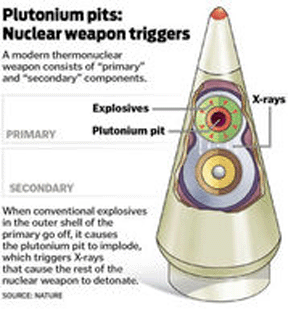 New Plutonium “Pit” Plans for Nuclear Warheads Questioned by House Armed Servcies Chairman, Doubts NNSA Competency, EIN Presswire, NEWS PROVIDED BY Savannah River Site Watch, December 14, 2020, 1Chairman of the powerful House Armed Services Committee, Rep. Adam Smith, casts doubt on plans for expanding plutonium pit production for nuclear weapons at SRS
COLUMBIA, SC, US, December 14, 2020 /EINPresswire.com/ — Chairman of House Armed Services Committee Reveals Great Skepticism in NNSA’s Ability to Covert Terminated Plutonium Fuel (MOX) Facility at DOE’s Savannah River Site into Plutonium Bomb Plant (PBP), Refers to $6 Billion Project as Potential “Rat Hole”
Representative Adam Smith Asserts that Failed Plutonium Fuel (MOX) Project at SRS is “Pretty Close to White Collar Crime”. The powerful chairman of the House Armed Services Committee, Representation Adam Smith, has raised great doubt about the U.S. Department of Energy’s ability to pull off the project at the Savannah River Site (SRS) in South Carolina to produce plutonium “pits,” or cores, for nuclear warheads.
In an on-line presentation on December 11 with the Center for Strategic and International Studies, Rep. Smith (D-WA) expressed deep concern in the ability of the DOE’s National Nuclear Security Administration (NNSA) to pull off the project to convert the partially finished plutonium fuel (MOX) plant, halted in 2017, into the proposed Plutonium Bomb Plant (PBP) at SRS. The event featured Rep. Smith talking about nuclear weapons matters coming before Congress in 2021. The transcript of the event was released late in the afternoon of December 11.
The skepticism of Rep. Smith about pit production at SRS was based in part on his continued concern about NNSA’s role in the failed MOX project at SRS: “Because the thing that really sticks in my craw on this basic competency issue is the Savannah River Site and the MOX facility. OK, that is pretty close to white collar crime, all right?” The public interest group Savannah River Site Watch believes Congress should follow through and conduct investigations into the MOX debacle.
Smith’s comments on pit production at SRS were harsh and, noting the mismanaged construction of the MOX building, said “So I am highly skeptical that they’re going to be able to turn that building into an effective pit production facility – highly skeptical.” He reiterated skepticism in NNSA’s ability and said “I am highly skeptical of the level of competence within the NNSA.”
Concerning the potential monetary waste on the pit project at SRS, Rep. Smith recognized parochial financial interests near SRS pushing for the pit project at the site and said “But if they’re going to have that say, they’d better not use that say to take $6 billion and dump it down a rat hole in South Carolina. That’s what I would argue.”…..
Los Alamos, which has not been able to produce its mandated 20 pits per year, is slated to make 30 or more pits per year by 2026 and SRS, which has zero pit experience and little recent experience handling plutonium, is being presented with the daunting challenge to produce 50 or more pits per year by 2030……. https://www.einnews.com/pr_news/532745444/new-plutonium-pit-plans-for-nuclear-warheads-questioned-by-house-armed-servcies-chariman-doubts-nnsa-competency
Iran’s Rouhani: No conditions or negotiations on nuclear deal
Iran’s Rouhani: No conditions or negotiations on nuclear deal
The US tried to include Iran’s missile programme and regional issues in the original nuclear deal but it is non-negotiable, president says. Aljazeera, By Maziar Motamedi, 14 Dec 2020, Tehran, Iran – President Hassan Rouhani said Iran will not accept any preconditions in returning to the nuclear deal it signed with world powers and will not negotiate its missiles programme or regional activities.
The United States and European powers have said in recent weeks they remain committed to revitalising the nuclear deal – formally known as the Joint Comprehensive Plan of Action (JCPOA) – which outgoing US President Donald Trump unilaterally abandoned in 2018……….. https://www.aljazeera.com/news/2020/12/14/irans-rouhani-no-conditions-or-negotiations-on-nuclear-deal
China has 350 nuclear warheads, compared to USA and Russia’s many thousands of them
The report, written by Hans Kristensen, the director at the Nuclear Information Project at the Federation of American Scientists, and Matt Korda, a research associate at FAS, arrived at the number by counting both operational warheads and newer weapons “still in development.”…….
the report noted that the size of the Chinese nuclear stockpile is still significantly below that of the United States and Russia, which have thousands of nuclear weapons in their respective stockpiles. The authors wrote that claims by the Trump administration’s special envoy for arms control, Marshall Billingslea, that China is striving for a form of “nuclear parity” with the U.S. and Russia “appears to have little basis in reality.”
It also added that China has traditionally maintained a low alert level for its nuclear forces, with most warheads at a central storage facility and smaller numbers kept in regional equivalents…….
China refers to its nuclear posture as at a “moderate state of alert,” with the report suggesting that in peacetime this “might involve designated units to be deployed in high combat-ready condition with nuclear warheads in nearby storage sites under control of the Central Military Commission that could be released to the unit quickly if necessary.” https://www.defensenews.com/global/asia-pacific/2020/12/14/report-estimates-chinese-nuclear-stockpile-at-350-warheads/
David and Goliath fight to repeal crooked nuclear plant bailouts in Ohio
|
Why Ohio Lawmakers Are Rethinking Recent Nuclear Power Plant Bailouts, NPR , December 14, 2020
Heard on Morning Edition
ANDY CHOW RACHEL MARTIN, HOST: Lawmakers in Ohio are looking at repealing a nuclear power plant bailout that was passed last year. Federal investigators are linking the passage of the bill to the biggest corruption case in the state’s history. Here’s Ohio Public Radio’s Andy Chow. ANDY CHOW, BYLINE: Ohio’s sweeping energy law that bailed out two of the state’s nuclear power plants is now tied to a $61 million bribery scheme. It’s an alleged web of conspiracy entangling the speaker of the House, a huge energy company and the state’s top utilities regulator. Let’s go back to 2017. The U.S. Department of Justice says that’s when Republican State Representative Larry Householder hashed out a plan with a utility company, not directly named but believed to be FirstEnergy. That plan was a quid pro quo. Householder would get money to help him become speaker, and FirstEnergy would get a bailout of its nuclear power plants. From 2017 to 2018, Householder was backed by millions of dollars in so-called dark money used to elect his allies in House races around the state.
Fast-forward to January 2019. Those allies elect Householder as speaker, and he then rolls out a plan for a billion-dollar nuclear power plant bailout, the money coming from ratepayers. Rachael Belz, a ratepayer advocate with Ohio Consumers Power Alliance, says something smelled fishy.RACHAEL BELZ: It seemed an awful lot like a real setup. It was never more apparent than HB6 and even heading into it that we were David and they were Goliath……….. https://www.npr.org/2020/12/14/946189606/why-ohio-lawmakers-are-reconsidering-nuclear-power-plant-bailouts. |
|
UK’s Sizewell nuclear project could be a costly fiasco like Hinkley Point C
|
Britain must tread with caution on new nuclear
The country’s first power plant in over 20 years is costly and late,THE EDITORIAL BOARD, Ft.com, 14 Dec 20, The government cannot afford a repeat of what happened with Hinkley Point. Thanks to spiralling construction costs and a controversial support system that guaranteed EDF and its junior partner, China’s CGN, a steep price for the electricity, it has become one of the most expensive nuclear reactor projects in the world. Under the 2013 deal, the coalition government agreed a price of £92.50 per megawatt hour for the electricity — at the time, close to double the wholesale price. The price is also indexed to inflation. Since then, the cost of renewables has plummeted, making Hinkley Point look even more expensive. ….. https://www.ft.com/content/b528ba1c-3e29-4472-89ef-6627b60b6b0c
|
|
UK Sizewell nuclear project could be a costly fiasco like Hikley Point C
|
Britain must tread with caution on new nuclear
The country’s first power plant in over 20 years is costly and late,THE EDITORIAL BOARD, Ft.com, 14 Dec 20 The government cannot afford a repeat of what happened with Hinkley Point. Thanks to spiralling construction costs and a controversial support system that guaranteed EDF and its junior partner, China’s CGN, a steep price for the electricity, it has become one of the most expensive nuclear reactor projects in the world. Under the 2013 deal, the coalition government agreed a price of £92.50 per megawatt hour for the electricity — at the time, close to double the wholesale price. The price is also indexed to inflation. Since then, the cost of renewables has plummeted, making Hinkley Point look even more expensive. ….. https://www.ft.com/content/b528ba1c-3e29-4472-89ef-6627b60b6b0c
|
|
No “green light” for £20bn Sizewell nuclear project, but the UK govt “in talks” with EDF
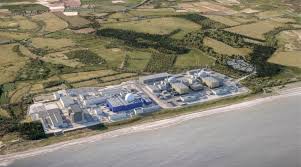 Sizewell C: Government in talks to fund £20bn nuclear plant, BBC , By Roger Harrabin & Simon Read, 14 Dec 20, The government has begun talks with EDF about the construction of a new £20bn nuclear power plant in Suffolk…….. it has proved controversial with campaigners saying it is “ridiculously expensive” and that taxpayers will have to foot the bill for extra costs.
The government said any deal would be subject to approval on areas such as value for money and affordability.,,,,,,
The government said talks with EDF about Sizewell C would depend on the progress of the Hinkley Point C. However, that project is set to cost up to £2.9bn more than originally thought and will be up to 15 months late.
China General Nuclear Power has a 20% stake in Sizewell C but is thought to be planning to pull out after security concerns were raised about a Chinese state-owned company designing and running its own design nuclear reactor on UK soil…….
If it does pull out, it would increase the need for new investors. One option could be for the government to take a stake in the plant……
“We are starting negotiations with EDF, it is not a green light on the construction,” Business and Energy Secretary Alok Sharma told the BBC’s Today programme. https://www.bbc.com/news/uk-55299511
The week in nuclear news
 The pandemic and the development of the vaccine have dominated the news this week. Also, the impending USA electoral college vote is holding media attention, along with the potentially violent movement to overthrow Joe Biden’s election win.
The U.N. Climate Change Action Summit drew attention both to the scale ofthe action needed, and to the efforts being made by different nations .
On the broad news, nuclear issues are in the background. For me, life has been busy, too. So this week’s notes are mercifully short.
Dr Helen Caldicott on the nuclear lessons of the past – time to take note of them.
Greenhouse gas emissions transforming the Arctic into ‘an entirely different climate’. https://www.youtube.com/watch?v=DOV9QB4c4BA
Google headline news on “Nuclear” – articles are strongly pro nuclear, and for “Small Modular Reactors”, even more so.
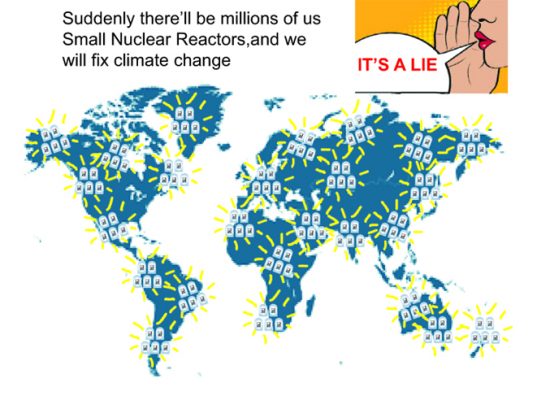
Small Nuclear Reactors (SMRs) if they work, will arrive too late to make a difference to global heating.
Uranium Film Festival 2020 – a huge success under difficult circumstances.
Microwave Radiation ‘Most Plausible’ Cause Of Diplomats’ Ailments.
USA.
- Biden’s opportunity to make much needed changes on nuclear weapons policy. House Armed Service Committee calls for new National Defense Strategy, including “no first use” nuclear policy. Denouncing the immorality of nuclear weapons also means to jail for some.
- Nuclear powered electric vehicles? not existing, and not likely.
- Opponents of the Ohio bailout of nuclear industry want more than just a freeze on this law.
- Trying to test for cracks in nuclear waste containers that have to last for over a million years.
UK.
- Significant problems for UK’s Trident nuclear deterrent , if U.S. Congress refuses to fund a next-generation warhead. The new way to hide the money splurged on nuclear weapons – via Small Nuclear Reactors.
- Nuclear developers keenly await UK government support for new reactors large and small. Sizewell C nuclear power station, thrown into doubt as China ponders pulling out of £20bn project. Beware the nuclear road to nowhere.
- British government’s “perpetual” lack of knowledge about £130bn clean-up of 17 old nuclear sites..
CANADA. Canada’s Coalition for Responsible Energy Development is sceptical about Small Nuclear Reactors. Federal funding for new nuclear reactors is a serious mistake that blocks swift ation on climate. With Small Nuclear Reactors (SMRs) Canada is back in the nuclear weapons business. Growing political opposition in Canada to Small Nuclear Reactors.
EUROPE. European Commission excludes nuclear power from the EU’s proposed green finance taxonomy,
FRANCE. France and European Union have not yet agreed on nuclear reform– Four organisations join in legal action aimed at stopping the Flamanville nuclear power project. Botches and crisis in France’s nuclear energy system.
JAPAN. Japanese govt trying to entice people by money grants, to come and live in Fukushima . For the first time ever, a Japanese court rules against a government approval on nuclear safety. Nuclear power industry stunned by Osaka District Court ruling canceling central government approval for reactor restarts. For safety the 40 year limit on nuclear reactor’s life should be kept. Japan’s power companies consider opening up Aomari nuclear waste site to other utilities.
IRAN. Iran hastens nuclear legislation in response to the assassination of its nuclear scientist. Iran’s President Rouhani ready to restore the nuclear deal. Iran clearly wants to maintain the Joint Comprehensive Plan of Action (JCPOA). Iran Awards Military Medal To Nuclear Scientist Assassinated Last Month,
RUSSIA. Russian Ambassador to U.S. Sees Hope for Nuclear Arms Treaty Extension. Thieves steal equipment from Russia’s nuclear war ‘doomsday’ plane..
UKRAINE –Shutdown of 3 uranium mines in midst of dispute could lead to ecological disaster in Ukraine.
MARSHALL ISLANDS. The continuing tragedy and nuclear abomination of U.S. tests on the Marshall Islands.
AUSTRALIA. Far from “broad community consent”– nuclear waste dump plan for Kimba South Australia..
Google headline news on “Nuclear” – articles are strongly pro nuclear, and for “Small Modular Reactors”, even more so
 Today Google headline articles on “nuclear”total 96. As usual, most were pro nuclear articles, many reading like straight out handouts frm the industry. However, unusually this week, the pro nuclear stories tended to cover both large and small nuclar reactors, suggesting the promotion of both types. This is a trend that contrasts with the earlier propaganda of small reactors as the preferable option.
If you tap in “Small Modular Reactors” into Google News Search, today you get 98 headlines. It is interesting that the nuclear lobby prefers to promote these new nuclear fantasy gimmicks by leaving out that word “nuclear”. They know they’re up against the public’s perception of nuclear as something dirty, dangerous and connected to weapons of mass destruction. The public is right, and it will be a marathon public relations battle to overcome that truth.
Anyway, of these 98 articles, 86 were clearly promotional. It must be easier for journalists to just regurgitate slick nuclear industry propaganda,- rather than to do your own research on costs, safety, wastes, carbon emissions in the total set-up and fuel chain, and of course, to research the facts on climate effect.
The remaining 12 articles were either critical of, or dubious about, the viability of small nuclear reactors.
Going back to the “nuclear ” headline news, 68 of the 96 articles concerned “peaceful” nuclear power. And of those 68 articles, 47 were clearly pro nuclear. These pro nuclear articles included 28 that read like industry promotions, with confident sounding predictions about energy security, climate action, reducing costs and so on.
Popular pro nuclear topics were of course climate action, financial benefits, nuclear fusion, hydrogen and space travel. Also mentioned – the role of women, nuclear medicine and human rights benefits (!!) There was little mention of managing nuclear wastes, with just one article wxpressing confidence about this.
There were 8 clearly anti nuclear articles – focussing on costs, politics and radioactive wastes.
There were 13 articles that were “neutral”, with factual information, mainly on politics, and avoiding opinions. These included several on the subject of the assassination of a Iranian nuclear expert.
Articles on nuclear weapons.
Of the 28 stories on nuclear weapons, 14 were opposed, aiming towards arms control, or nuclear disarmament . 9 were factual information, without opinions. 5 were factual discussions, yet pro nuclear in expressing the “need” for nuclear weapons, and some with national pride in them.
The continuing tragedy and nuclear abomination of U.S. tests on the Marshall Islands
The lingering legacy of US nuclear testing in the Marshall Islands, https://www.nzherald.co.nz/world/the-lingering-legacy-of-us-nuclear-testing-in-the-marshall-islands/NTHZG3PJNS6NXV4SZLPTHCANNY/13 Dec, 2020, By RNZ.
The US detonated its largest nuclear bombs around the Marshall Islands in the 1940s and 50s – but the Marshallese are still campaigning for adequate compensation.
The Marshall Islands are two chains of 29 coral atolls in the middle of the Pacific Ocean between Papua New Guinea and Hawaii.
Following the tests, whole islands ceased to exist, hundreds of native Marshallese had to be relocated off their home islands and many were affected by fallout from the testing.
In 1977, US authorities put the most contaminated debris and soil into a huge concrete dome called the Runit Dome, which sits on Enewetak Atoll and houses 88,000 square metres of contaminated soil and debris.It has recently received media attention as it appears to be leaking, due to cracking and the threat from rising sea levels, while some Marshallese have fears it may eventually collapse.
However, American officials have said it’s not their problem and responsbility falls on the Marshallese, as it is their land.
The US has cited a 1986 compact of free association, which released the US goverment from further liability, which will go up for renegotiation in 2023.
Meanwhile, the Marshallese continue to campaign for adequate compensation from the US.
While he said that suggestions that the Rumit Dome – nicknamed “The Tomb” by locals – was about to collapse were alarmist, there were still major concerns surrouding it.
“The issue is it’s got plutonium, which has a half-life of 24,000 years, and how long does concrete last?”
Describing the structure as a “symbol of the nuclear legacy here”, Johnson said that US government scientists had reported there was already so much contamination in the area that it would be difficult to find what leakage from the dome had added.
The United States has continued to refuse to accept responsibility for the Runit Dome’s condition, despite its history of nuclear testing in the country.
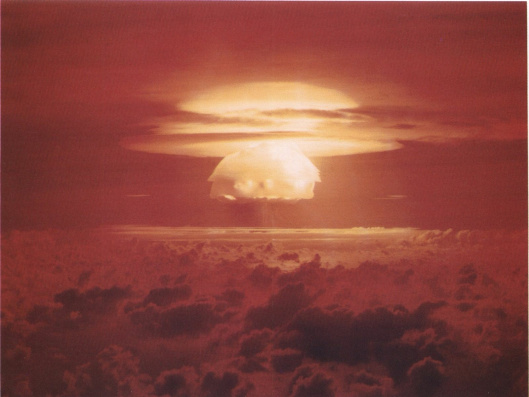
“The nuclear weapons test legacy is the overriding issue in the Marshall Islands with the United States and it remains a festering problem, because US compensation and medical care and so forth was only partial for what was needed,” Johnson said.
The first compact to free association between the Marshall Islands and the US contained a compensation agreement, including the establishment of a nuclear claims tribunal to adjudicate all claims. While it determined there was a large amount of compensation due to Marshallese on various atolls, this has never been paid out, apart from funding of $150 million in 1986.
Since then, the US has accepted no more liability on nuclear compensation, as the compact resulted in the Marshall Islands being an independent country, able to join the United Nations.
However, Johnson said the United States Congress had taken a different position on this.
There have also been big differences in the treatment of Marshallese nuclear victims and those in the United States
“The US used Bikini and Enewetak to test its biggest hydrogen bombs,” Johnson said. “While it maintained a nuclear test site in Nevada, it only tested relatively small nuclear devices there, because it simply could not test hydrogen bombs in the continental United States – Americans wouldn’t have stood for it.”
Not long after the 1986 free association compact ended American responsibility for nuclear compensation in the Marshall Islands, the US Congress enacted a radiation compensation act for Americans – which Johnson said really emphasised the unfairness of the situation.
“Long story short, they appropriated $100 million and then they ran out, the US congress appropriated more, again ran out, appropriated more and fast-forward to 2020 and they’re over $2 billion in compensation awarded to American nuclear victims.
Johnson also had concerns about the lack of a baseline epidemiological study by the US, following the tests. Studies on the affects of radiation centred around thyroid issues, but many islanders have reported cancer, miscarriages and stillbirths in the years following.
His wife Darlene Keju died of breast cancer, which also affected her mother and father – she grew up on one of the islands in the downwind zone of the tests.
The US had never looked at rates of cancer, or studied the differences between low fallout and high fallout areas, he said.
Johnson hoped the nuclear legacy between the countries could be worked out amicably, but he wasn’t too optimistic.
Despite this tension, Johnson said the Marshallese did not harbour anti-American sentiment and the compensation issues were a “black mark on an otherwise good relationship” between the two countries.
He said around 30 to 40 percent of all Marshallese were living in the US.
“The Marshall Islands, since WWII, has a very long standing high regard and strong relationship with the US that came out of the end of the Japanese period of militarism and the execution of many islanders and privation, into a period where the US fostered democratic institutions, created opportunities for education, providing scholarships, opening the door to people going to the US and the unpacked treaty really put this together, in terms of the relationship that’s of benefit to both sides.”
However, ongoing tensions between the US and China may help the Marshall Islands in their push for further compensation.
“Possibly the changing geopolitical situation out here might offer an opening to get some interest to try to amicably do something to resolve the whole thing,” Johnson said.
But the nuclear legacy is not the only issue affecting the island – climate change is looming large and reports by US scientists have said that the Marshall Islands could be uninhabitable by the 2030s, due to rising sea levels.
Indigenous opposition to uranium milling and the import of radioactive material

 problems and believe the environment is being damaged. https://www.sltrib.com/news/2020/12/10/indigenous-activists/
When locations were chosen more than half a century ago for the dozens of uranium mills that dot the Four Corners landscape, one common factor was almost always considered: proximity to productive uranium mines.
The region’s best uranium deposits typically only contain a small percentage of the valuable radioactive mineral, and being able to process the material at a nearby mill was critical to saving on transportation costs.
For the last conventional uranium mill still operating in the United States, however, the business model has changed. San Juan County’s White Mesa Mill, which is owned by the Denver-based company Energy Fuels Resources, hasn’t processed ore from local mines in recent years. Instead, it has survived primarily by accepting uranium-bearing material from around the country and, more recently, as far away as Japan. State regulators are also considering an application from the company to import material from Estonia.
Members of the Ute Mountain Ute community of White Mesa, which is located three miles from the mill site, spoke out against the mill’s continued operation on Tuesday at an annual town hall event that was held virtually this year due to the coronavirus pandemic.
The event, which was sponsored by a coalition of 12 grassroots community groups and environmental organizations, featured presenters from across Indian Country who spoke about the legacy of uranium production and nuclear waste storage on Native Americans as well as the White Mesa Mill.
The mill has accepted radioactive material from the Cherokee Nation in Oklahoma, and Energy Fuels has expressed interest in processing tailings from the more than 500 abandoned uranium mines that have yet to be cleaned up on the Navajo Nation.
Scott Clow, environmental programs director for the Ute Mountain Ute Tribe, said that such proposals address a real need to remediate contaminated sites on tribal lands, but that they also “pit tribes against tribes.”
“We all want those places to be cleaned up, but we don’t want it to go to White Mesa,” Clow said.
Thelma Whiskers and Michael Badback of the White Mesa Concerned Community group said emissions from the mill can be smelled in White Mesa on a regular basis, adding they believe the facility has had negative health impacts on local residents.
“Let’s just keep … fighting to not have [the mill] close to the reservation,” Whiskers said. “I care for the community members and the children and the grandchildren.”
In an effort to better understand both the potential environmental and health impacts of the mill, Clow said the tribe has projects underway with both the Centers for Disease Control (CDC) and the Environmental Protection Agency (EPA).
Two new monitoring wells were drilled this fall between the mill and the community with EPA funding in order to better track potential water quality changes, Clow said, and a branch of the CDC is helping the tribe plan epidemiological work in the White Mesa community that could provide more information about health concerns among residents.
Other speakers at the event addressed the legacy of uranium production elsewhere in Indian Country.
“A lot of the land in our community has been disrupted and we can no longer use it [for livestock],” she said. “We can’t grow crops because the EPA has stated that if we grow crops we’ll be further exposed to uranium contamination. We can’t drink the water.”
Keyanna added the uranium contamination has had not only physical health consequences but has caused spiritual and mental health impacts as well, all of which have been exacerbated by the pandemic.
“It feels like a prison,” Keyanna said. “We’re not only prisoners during this pandemic, but we’ve kind of always been prisoners [since] this uranium industry started in our community.”
Leona Morgan, co-founder of the Indigenous-led group Haul No!, which opposes Energy Fuels’ plans to mine for uranium near Grand Canyon National Park and haul ore across the Navajo Nation, encouraged meeting participants to oppose a separate proposal currently being considered by the Nuclear Regulatory Commission that could result in radioactive material being hauled from the Church Rock area to the White Mesa Mill for processing.
“It’s not just an individual human rights issue,” he said, addressing the residents of White Mesa. “It’s a collective rights issue for your people to live in a safe and healthy environment: your homeland.”
Zak Podmore is a Report for America corps member and writes about conflict and change in San Juan County for The Salt Lake Tribune.
1 This Month
Chernobyl: The Lost Tapes – A good documentary on Chernobyl on SBS available On Demand for the next 3 weeks– https://www.sbs.com.au/ondemand/tv-program/chernobyl-the-lost-tapes/2352741955560

of the week–London Campaign for Nuclear Disarmament

Tell the Ukrainian Government to Drop Prosecution of Peace Activist Yurii Sheliazhenko
To see nuclear-related stories in greater depth and intensity – go to https://nuclearinformation.wordpress.com
-
Archives
- April 2026 (139)
- March 2026 (251)
- February 2026 (268)
- January 2026 (308)
- December 2025 (358)
- November 2025 (359)
- October 2025 (376)
- September 2025 (257)
- August 2025 (319)
- July 2025 (230)
- June 2025 (348)
- May 2025 (261)
-
Categories
- 1
- 1 NUCLEAR ISSUES
- business and costs
- climate change
- culture and arts
- ENERGY
- environment
- health
- history
- indigenous issues
- Legal
- marketing of nuclear
- media
- opposition to nuclear
- PERSONAL STORIES
- politics
- politics international
- Religion and ethics
- safety
- secrets,lies and civil liberties
- spinbuster
- technology
- Uranium
- wastes
- weapons and war
- Women
- 2 WORLD
- ACTION
- AFRICA
- Atrocities
- AUSTRALIA
- Christina's notes
- Christina's themes
- culture and arts
- Events
- Fuk 2022
- Fuk 2023
- Fukushima 2017
- Fukushima 2018
- fukushima 2019
- Fukushima 2020
- Fukushima 2021
- general
- global warming
- Humour (God we need it)
- Nuclear
- RARE EARTHS
- Reference
- resources – print
- Resources -audiovicual
- Weekly Newsletter
- World
- World Nuclear
- YouTube
-
RSS
Entries RSS
Comments RSS
 nuclear-news