Risks of cyberattacks on nuclear reactors
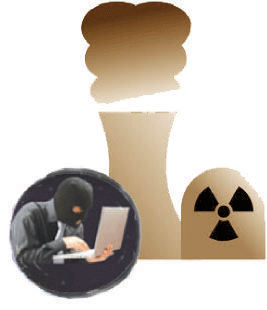 Homeland Preparedness News 7th Aug 2020, The Nuclear Threat Initiative’s NTI Index shows that only 47 percent of countries have a response plan in place for a cyberattack on a nuclear
facility. Further, NTI reveals that most of those nations do not have
adequate regulations for cybersecurity. The NTI Index found that only 34
percent receive a high score for cybersecurity.
More of Britain’s ageing nuclear power stations are likely to close early
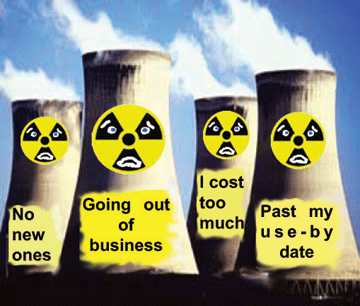 Times 6th Sept 2020, More nuclear power stations could close early as EDF wrestles with problems with patching up its ageing plants. The French power giant owns Britain’s fleet of eight nuclear power stations together with British Gas parent Centrica.
…………. just one new nuclear power station is being built, Hinkley Point C, in Somerset.
B in Somerset and Dungeness B in Kent.
happen sooner. It is currently not generating while its graphite core is inspected. EDF is due to make a decision on its future in November.
publication of a much-delayed energy white paper.
https://www.thetimes.co.uk/edition/business/nuclear-closures-pose-power-puzzle-d6bnnnrcs
Climate protestors stop Rupert Murdoch’s press in Britain
 Rupert Murdoch’s British papers delayed as climate protesters stop the presses, SMH 6 Sept, 20, London: Distribution of several British newspapers was disrupted on Saturday after climate change activists blockaded printworks used by Rupert Murdoch’s News UK, publisher of The Times and The Sun, drawing condemnation from Prime Minister Boris Johnson.Extinction Rebellion said nearly 80 people had blocked roads leading to two printworks, at Broxbourne in Hertfordshire, north east of London, and at Knowsley, near Liverpool. Hertfordshire police said they made 42 arrests and Merseyside police made 30.
The Murdoch-owned Newsprinters works also print the Daily Mail, the Daily Telegraph and the Financial Times. Campaigners said they had taken the action to highlight what they regard as the newspapers’ failure to accurately report on climate change. ……….
The blockade was part of more than a week of protests by Extinction Rebellion, which says an emergency response and mass move away from polluting industries and behaviours is needed to avert a looming climate cataclysm.
On Saturday it also protested in central London, including holding a “die-in” in front of Buckingham Palace, where demonstrators lay under white sheets to represent corpses. …….. https://www.smh.com.au/environment/climate-change/rupert-mudoch-s-british-newspapers-delayed-as-extinction-rebellion-protesters-stop-the-presses-20200905-p55sqr.html
Campaigners call on all Suffolk residents to submit comments on Sizewell C
 ITV 5th Sept 2020, Campaigners call on all Suffolk residents to submit comments on Sizewell C
before deadline at end of month. A campaign group has encouraged all
residents to comment on plans to build a new nuclear power station at
Sizewell on the Suffolk coast before a deadline is reached at the end of
September.
Stop Sizewell C held a meeting at Theberton church on Saturday,
5 September, to hear the views of local residents. EDF claim the new power
station will create 2,400 jobs in the county if plans are approved by the
government. The proposals are now with the Planning Inspectorate, but
comments can be submitted until the 30 September by those registered as an
‘interested party’.
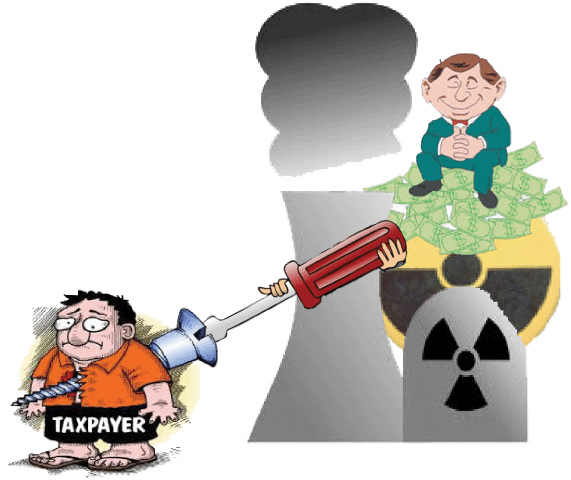
Exelon’s threat to Illinois – aiming to get more tax-payer funding
|
Dive Brief:
|
|
Renewed concerns about safety as dig starts for new shaft at New Mexico’s nuclear Waste Isolatio Pilot Plant
 Groups Raise Concerns About New Shaft at US NuclearDump, By Associated Press, Wire Service Content Sept. 4, 2020
Crews at the U.S. government’s underground nuclear waste repository in New Mexico are starting a new phase of a contentious project to dig a utility shaft. https://www.usnews.com/news/best-states/new-mexico/articles/2020-09-04/groups-raise-concerns-about-new-shaft-at-us-nuclear-dump
ALBUQUERQUE, N.M. (AP) — Crews working at the U.S. government’s underground nuclear waste repository in New Mexico are starting a new phase of a contentious project to dig a utility shaft that officials say will increase ventilation at the site where workers entomb the radioactive remnants of decades of bomb-making.
Officials at the Waste Isolation Pilot Plant said this week that the $75 million project is a top priority and that work will be done round the clock five days a week, with an additional shift on Saturdays. The shaft will eventually span more than four-tenths of a mile and connect to an underground system of passageways.
After reaching a depth of about 60 feet (18 meters), workers now will be drilling small holes and using explosive charges to clear more rock.
Adequate ventilation at the repository has been a big issue since 2014, when a radiation release forced a temporary closure and contamination limited air flow underground where workers dispose of nuclear waste. That prompted the need for a new ventilation system so full-scale operations could someday resume.
The repository is at the center of a multibillion-dollar effort to clean up waste from decades of U.S. nuclear research and bomb-making. Over more than 20 years, tons of waste have been stashed deep in the salt caverns at the southern New Mexico site.
Watchdog groups are raising red flags, saying the work is being done before state environmental officials finish a process allowing the public weigh in and before they have issued a final permit. The New Mexico Environment Department in April granted federal officials temporary approval to start the work as part of a larger request to dig the shaft and passageways.
The Southwest Research and Information Center is among those opposing the project. The group filed legal challenges, saying environmental officials ignored existing regulations, past agency practices and case law when giving temporary approval for contractors to begin working.
The Environment Department has defended its decision, saying the temporary approval was limited to digging the shaft, not using it.
Don Hancock with the Southwest Research and Information Center said state officials essentially foreordained the permit request by allowing work to begin. He also said the state has not provided any technical basis for its decisions and that it reduced the amount of time the public had to comment on the project by delaying the release of a draft permit.
The group has suggested that the shaft, given its size and location, could be used to expand the repository. It says that creates potential for the government to send high-level and commercial waste to the site, along with new radioactive waste that will be generated by manufacturing plutonium cores for the nation’s nuclear arsenal.
Despite congressional limits on the amount and type of waste that can be shipped to the repository, Hancock and other critics said the state’s actions have favored the federal government while limiting the public’s ability to give their input.
The repository’s hazardous waste permit also is up for renewal this year, and more legal wrangling is expected.
Iran claims it’s identified saboteurs behind blast at nuclear site
this year and knows their motives for attacking the facility, an Iranian official said on Sunday.Atomic Energy Organization of Iran spokesman Behrouz Kamalvandi said during a television interview that the July incident at the Natanz facility was “an act of sabotage” and the investigation is still ongoing.
“As far as we know, they have identified the culprits and know their incentives and methods and actually, they have full knowledge over the issue,” Kamalvandi said, according to an English-language report on his remarks by the semi-official Fars News Agency. ……
Under the nuclear accord officially known as the Joint Comprehensive Plan of Action, Iran committed to limiting its nuclear program in exchange for sanctions relief.
But the JCPOA has been on life-support since the US withdrew from it and reimposed unilateral sanctions in 2018.
Iran has since taken small but escalatory steps away from compliance with the agreement, as it presses for the sanctions relief it was promised. Some of those steps are believed to have been at the Natanz nuclear site.
The US is currently engaged in a likely doomed bid to renew international sanctions against Iran at the UN, despite Trump’s withdrawal from the accord.https://www.timesofisrael.com/iran-claims-its-identified-saboteurs-behind-blast-at-nuclear-site/
Hiroshima Fallout — Beyond Nuclear International

Hersey’s seminal essay exposed an immoral coverup
Hiroshima Fallout — Beyond Nuclear International
Antarctica – global heating and nuclear issues – polar theme for September 20

Antarctica is not in the news as much as the Arctic is, But global heating is affecting Antarctica too, and Antarctica has its nuclear issues.
Antarctica has made headlines several times this year due to extremely warmer than usual temperatures. It has been steadily heating up for decades. Antarctic ice shelves have lost nearly 4 trillion metric tons of ice since the mid-1990s, scientists say. Ocean water is melting them from the bottom up, causing them to lose mass faster than they can refreeze. As ice shelves melt, they become thinner, weaker and more likely to break. When this happens, they can unleash streams of ice from the glaciers behind them, raising global sea levels. Antarctica is also losing ice from melting ice sheets, and chunks of ice falling from glaciers.
Less studied than the Arctic region, Antarctic is now being investigated by Australian researchers, using robots to gather data from difficult to reach underwater areas. Satellite monitoring confirms the shelves’ melting trend.
Nuclear issues. From 6,000 nautical miles away, uranium mining in Australia is polluting the Antarctic. After 1945 atomic bomb testing sent radioactive pollution to the South Pole, as well as to everywhere else on the planet.
USA operated a small nuclear power plant at Antarctica’s McMurdo Sound. It was known as “nukey poo” because of its frequent radioactive leaks. It had 438 malfunctions – nearly 56 a year – in its operational lifetime, including leaking water surrounding the reactor and hairline cracks in the reactor lining. The emissions of low level waste water where in direct contravention of the Antarctic Treaty, which bans military operations as well as radioactive waste in Antarctica. After the reactor was closed down, the US shipped 7700 cubic metres of radioactive contaminated rock and dirt to California. Many USA naval workers there developed cancers.
Today, small nuclear reactors similar to this one, are being touted for remote areas in Australia and other countries. The history of this one in Antarctica, and 7 others elsewhere, was one of malfunctions, and closing down within a few years. This does not augur well for the small nuclear reactors being promoted today.
Northern Canada and Arctic indigenous areas targeted for Small Modular Nuclear Reactors

First Nations Targeted for Untested Small Modular Nuclear Reactors: Libbe Halevy interviews Candyce Paul , Nuclear Hot Seat Saskatchewanhttp://nuclearhotseat.com/2020/09/03/480-saskatchewan-first-nations-targeted-for-untested-small-modular-nuclear-reactors-candyce-paul/?fbclid=IwAR3CtbqMu3BPrHUOCAoUueMqfSD0un5NNp2WkVmv7X7Zb1pkaMBtulSYsF8 by Libbe HaLevy | Sep 3, 2020
Notes – (not a completely accurate transcript), by NoelWauchope
Candyce Paul: Uranium mining in Saskatchewan. Uranium was mined in the 50s for the cold war, essentially for nuclear weapons. Primarily on the land of indigenous people.
Little information was supplied to the people, but they did understand that it was for weapons, and they knew traditionally, the indigenous people knew – that the black rock should stay in the ground……….there were legends that once it comes out of the ground it would bring death and destruction.
The miners were not predominantly indigenous. There are over 40 legacy mines. Very poorly cleaned up – piles of uranium tailings left for 60 years – blowing around, contaminating lake, entering streams. Once these tailings are ingested – many years later comes poor health, soaring cancer rates, children with cognitive and physical disabilities. More mines were opened in late 70s, early eighties. Since then, miners have been flyng in flying out, for 2 week sessions. This has been having its impact on social structure. Jobs in the mines are the only jobs, the only economy being offered in Northern Saskatchewan. Only one mine is operating now. This is Cigar Lake, it just re-opened. The fly-in miners were initially settlers, later the mines were hiring indigenous people – 49% were indigenous, – the indigenous people got the dirty and more dangerous work. Young indigenous worked in the mills, non indigenous in the offices. Because it is the only economy around, – they paid for it later with illnesses. There were many complaints, but people were blacklisted if they complained.
Mining slowed down since Fukushima. Gradually all mines shut down, except Cigar Lake. In 2011 Northern Saskatchewan was targeted for nuclear waste . Most people did not want the wastes, millions of times more radioactive than the uranium.
In the community where I live, Northern Saskatchewan , we raised 20, 000 signatures in a petition against it, and delivered it to the legislature 80% of residents opposed it. The nuclear waste authority pulled out in 2014. We based our opinions on facts, had talked to scientists, physicists from all over the world.
Question from Libby Halevy about current state of affairs – What do you think about the creation of an inter-provincial corporate partnership to support the launch of a research centre to support the development of small nuclear reactors?
Candyce Paul: Canada, and the nuclear industry have been looking for a way to keep the nuclear industry alive. The only way they can come up with this is to promote Small Modular Nuclear Reactors (SMNRs) for use in Northern Canada. Most Canadians live in the Southern parts, the lower third of Canada. In the North the people are mainly indigenous. There are big resources there. Diesel fuel is in use. The Canadian Mining Association is pushing Small Modular Nuclear Reactors – promoting this to northern communities, (who get most electricity from diesel), as far North as beyond the Arctic circle. The University of Saskatchewan has been used to promote this idea, getting research done on it. The Canadian Nuclear Laboratories is a conglomerate of companies, mostly pretty shady, for example, SNC Lavalin, which is up on charges and exposed as interfering at the highest levels of government to prevent charges against it. SNC Lavalin is not allowed to borrow money, or bid on construction projects funded by the World Bank, because of bribery charges in the past. It has bribery charges in Canada, too. The Government of Canada has dozens of contracts with SNC Lavalin.
A decade ago the government, who owned Atomic Energy Canada, broke it up, sold it to this conglomerate for $12 million.- a pittance The top laboratory is in Northern Ottawa, was making medical isotopes, and was closed down, still classified, and there’s a ton of wastes there. Then there’s Pinewa labs in Manatoba, which had some sort of accident that is still classified At that time a moratorium was placed on storing wastes in Manatoba. They were researching deep underground storage of nuclear wastes. Since Atomic Energy Of Canada Limited (AECL) was sold they are now going to bury onsite the waste that is there. At Chalk River Laboratories they are going to build a mound around the wastes. within 100 metres of the Ottawa River, upstream of Ottawa.
Canadian Nuclear Laboratories is to develop Small Modular Nuclear Reactors, promoting at Chalk River, and at Pinewa and at Point Lepreau Nuclear Generating Station New Brunswick. In 2019 the Provinces of Ontario, Saskatchewan and New Brunswick signed a memorandum of understanding to try and develop SMNRs – Ontario and New Brunswick have nuclear power stations. Saskatchewan has the uranium mines. In 2008-9 the Saskatchewan government had been promoting the full nuclear chain, reprocessing etc. Saskatchewan people didn’t want it. After that we had the nuclear waste issue, which squashed that plan.
They opened the Centre for Nuclear Innovation at University of Saskatchewan to promote nuclear development of all kinds. Just prior to that they announced a new office , a Nuclear Secretariat to promote SMNRs in Saskatchewan. I’m Pretty sure that there’s public money going into this,.That is the concern Northern communities could not afford a nuclear power station, small or large. Northern communities could not use that amount of energy. In Northern Saskatchewan 80% of electricity used is used by the mining industry- in Saskatchewan it’s primarily the uranium industry. So who does it benefit? It benefits themselves.
A place on Baffin Island, when they were being pitched these SMNRs, put out a review, thoroughly researched- pointing out the safety problems – the inability of emergency help to reach there.in time, in the event of a nuclear accident. Proponents of nuclear power talk about a smaller exclusion zone, a few km radius. – But this is all wilderness -in huge ecosystems These Northern areas are primarily water. If an accident happens, pollution would be flowing in water, the exclusion zone would not apply. The radiotoxicity in the case of accident would be massive.
They are promoting themselves as green – but they are putting out pollutants in processing, milling, and if they started reprocessiing the radiotoxicity pollution would be massive. There are leaks in the mills, that have gone through the floor of the milling stations. The molybdenum extraction plant has a leak getting into groundwater, and that hasn’t been addressed. So how do we trust them?
Libby Halevy: With the push for these cute little modular, sounds like Lego reactors, being so heavily promoted – what are you and your communities doing?
Candyce Paul: We are pushing to educate the community about these SMNRs. Working along with an education co-op, about SMNRs and the fact that no nuclear will get in here unsubsidised. The community, the energy providers can’t afford it. It needs public money . There’s an election coming up. The two main parties are pretty much on the same wavelength promoting it.
They’re promoting it as the answer to greenhouse gases. It will take about 30 years before there’s a SMNR- during which time they’re doing nothing about greenhouse gases. They want it to get at the tar sands in Saskatchewan, to help develop the tar sands. – Alberta now pushing nuclear to provide the power for tar sands extraction.
We don’t have much population The population is down South. The decisions are made down South. The voting power is down South. It’s the only work that people up here can get The education system here is influenced by the uranium companies, from kindergarten to the curriculum upwards. The mining companies don’t want our people knowledgeable. We need help from professionals, technicians, but we have a difficult time in getting this help. If they help us they may not get work again. That’s a huge factor.
We’re working on some videos, short messages. We need people to help us with reviews, reviews of environmental impact statements, during the very short public comment period. It has to be done on science. They want only scientific facts. It doesn’t necessarily have to be logical, but it has to be science.The nuclear lobby thinks they’re indisputable, that their technology knowledge puts them above you.
We’re supposed to have ”consultation” as indigenous communities – ”free prior informed consent ”. They come in and tell us what they’re going to do. It’s already pre approved.
They do a fishing expedition to find what the community wants and needs, (what bribes) can we provide to get you on side. They have kept our communities intentionally needy, under-resourced. Shortage of health and education services, not a lot of jobs. People want jobs – they offer jobs. They put through their environmental impact statements, but the community does not get properly informed, – the statement does not get a properly informed consent . They play people against each other – those who need jobs today versus those who care about the land and the future generations.
We’ve been in a bust economy for 2 years, because of the low uranium price, but there are still aspirational uranium companies coming in, applying for licences to mine.They put though their EIS during Covid-19 without the community consultations being completed. We then get 30 days to put together something. – it’s a farcical process. No time to review it in depth.We hope to get some help.
To help people with the technology background for reviewing EISs contact me at Committee for Future Generations. on Facebook – or contact Inter-Church Uranium Committee Educational Co-operative (ICUCEC) in Saskatoon, who are working on this SMNR Before this election- we are working on pamphlets in language clear and concise that people not highly technical can understand. No pamphlets are available in hospitals here on radiation and health People here need to know that these jobs being promoted to their children have radiation hazards -not good for health nor for future generations.
They really do not want to stop climate change. They’re using this long long way to so-called green small modular nuclear reactors People need to understand the process of lying that is going on about climate change. SMNR not needed. There’s a process happening here to develop northern Saskatchewan resources that will include a Northern corridor 3000 km long several km wide to get at all the resources in Northern Canada, also for for haul routes for all hazardous materials including nuclear wastes.
They are looking forward to Northwest Passage being opened, so that they use it can sell more of the resources that they are going to mine from our areas . The climate will have a huge impact on whether or not they can even run a nuclear reactor, with the increasing temperatures here.
The threatening presence of highly radioactive material in Russia’s sunken nuclear submarines
 Do Russia’s Sunken Nuclear Submarines Pose Environmental Danger? There’s radioactive fuel hanging at the bottom of the sea. https://www.popularmechanics.com/military/navy-ships/a33902569/russia-sunken-nuclear-submarines/ BY KYLE MIZOKAMI, SEP 4, 2020
- Two ex-Soviet nuclear submarines, K-27 and K-159, lie at the bottom of the Barents Sea.
- The wrecked ships still have their radioactive fuel sources aboard, which experts worry could leak into the environment.
- The Russian government has vowed to clean up the wrecks, but the work is not a priority.
Governments and environmental groups are worried a rupture of nuclear fuel supplies could cause a nuclear catastrophe, impacting local fishing areas. The Russian government is working to solve the problem, which some experts are calling a potential “Chernobyl in slow motion on the seabed.
A legacy of the Cold War threatens Russia’s people and environment, potentially irradiating a large portion of the Barents Sea and closing it to commercial fishing. Two Soviet nuclear-powered submarines are sitting on the bottom of the ocean and could unleash their radioactive fuels into the surrounding waters.
The Soviet Union built four hundred nuclear-powered submarines during the Cold War. The vast majority were either scrapped, or still serve with the Russian Navy today. A few subs, however, are trapped in precarious circumstances, lying on the seabed floor with their uranium fuel supplies still intact. The BBC reports on efforts to render two such ships, K-27 and K-159, safe.
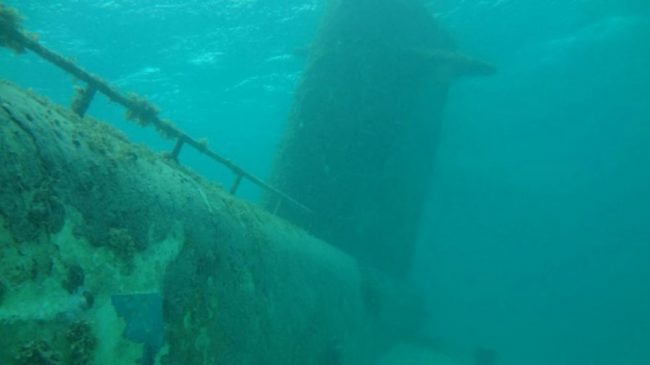 The first ship, K-27, was a Soviet Navy submarine prototype equipped with a new liquid metal reactor. In 1968, the six-year-old sub suffered a reactor accident so serious, nine Soviet sailors received fatal doses of radiation. The submarine was scuttled off the Russian island of Novaya Zemlya in 1982 with its reactor still on board.
The second ship, K-159 (shown above before sinking, on original), was a November-class submarine that served a fairly typical career with the Soviet Northern Fleet before retirement in 1989. In 2003, however, the K-159 sank while in the process of being dismantled, killing nine sailors. The ship still resides where it was lost, again with its reactor on board.
Environmentalists in Norway and Russia are concerned that eventually the reactors on both submarines will break down, releasing huge amounts of radiation.
The effects of these leaks could range from increasing local background radiation to declaring local fish and animals off limits, particularly Barents Sea fishing stocks of cod and haddock, costing local fishermen an estimated $1.5 billion a year.
While Russia’s state nuclear agency, Rosatom, has been tasked with cleaning up the ships, the effort is underfunded, resulting in a race against time (and saltwater corrosion).
The dangerous and deadly toll of uranium mining, on Indian communities

Child with cerebral palsy, in uraniummining region Dungridih village. Jaduguda, photo by Subhrajit Sen.
[Photos] Suffering in the town powering India’s nuclear dreams. Mongabay, BY SUBHRAJIT SEN ON 4 SEPTEMBER 2020
- Uranium is a vital mineral for India’s ambitious nuclear power programme. Out of the seven states with uranium reserves, Jharkhand and Andhra Pradesh have currently operating mines.
- In Jharkhand’s Jaduguda region, which has India’s oldest uranium mines, local communities narrate stories of suffering due to degrading health and the environment. The government, however, denies any ill-impact of uranium mining on people.
- The Indian government is aiming to increase uranium exploration and mining.
- This photo essay features images taken between 2016-2019 of residents of villages around uranium mines in Jharkhand. Some of these photos contain sensitive content.
Anamika Oraom, 16, of village Dungridih, around a kilometre away from Narwa Pahar uranium mine in Jharkhand, wants to study. But she cannot, owing to severe headaches that come up periodically, triggered by a malignant tumour on her face. Sanjay Gope, 18, cannot walk and is confined to his wheelchair. Haradhan Gope, 20, can study, walk, talk, but owing to a physical deformity, his head is much smaller in proportion to his body.
There are many more, young and old, in the village Bango, adjacent to Jaduguda uranium mine in Jharkhand, whose lives and death highlight the ill-effects of uranium mining, say the villagers.
Uranium is a naturally occurring radioactive mineral and is vital to India’s nuclear power programme. At present (till August 31, 2020), India’s installed nuclear power capacity is 6780 megawatts (MW). The country aims to produce 40,000 MW of nuclear power by 2030.
The Uranium Corporation of India Limited (UCIL) is involved in the mining and processing uranium ore in the country. According to the UCIL, mining operations at Jaduguda began in 1967, and it is India’s first uranium mine.
In the 25-kilometre radius of Jaduguda, there are other uranium deposits at Bhatin, Narwa Pahar, Turamdih, Banduhurang, Mohuldih, and Bagjata. While UCIL claims that Jaduguda mine has created a large skill base for uranium mining and the mining industry, local communities point out that their lives and land have changed irreversibly.
The villagers complain that the hills surrounding Jaduguda, dug up to create ‘tailing ponds,’ have proven to be a severe health hazard. A tailing pond is an area where leftover material is stored after the excavated ore is treated to extract uranium. Communities argue that these ponds have led to groundwater and river contamination.
Namita Soren of village Dungridih said, “This radioactive element has become a part of our daily life.”
“Children are born with physical disabilities or people with cancer. But our sorrow doesn’t end there,” said Soren who had three miscarriages before giving birth to a child born with physical deformities.
Ghanshyam Birulee, the co-founder of the Jharkhandi Organisation Against Radiation (JOAR), said that villagers earlier marked certain forest areas as ‘cursed’ – a woman passing through the area was believed be affected by an evil gaze and suffer a miscarriage or people would feel dizzy. These areas coincided with the forest spaces around tailing ponds. In cultural translation, the regions surrounding tailing ponds became infested with ‘evil spirits.’ But as the people became more aware, they connected their misery to the mining operations.
A 2003 study by Tata Institute of Social Sciences emphasised that 18 percent of women in the region suffered miscarriages/stillbirth between 1998 and 2003, 30 percent reported some sort of problem in conception, and most women complained of fatigue and weakness.
When asked the reason for opposing the UCIL’s mining project, Birulee said, “Before mining started, people never used to have diseases like these – children were not handicapped, women were not suffering from miscarriages, people didn’t have tuberculosis or cancer. People had ordinary illnesses, cold and cough, that got cured by traditional medicines. But today, even the doctors are not able to diagnose diseases. It all emerged after uranium mining started.”
India has uranium reserves in Rajasthan, Jharkhand, Chhattisgarh, Meghalaya, Telangana, Andhra Pradesh, and Karnataka. It is currently operating mines in Jharkhand and Andhra Pradesh. The country has a detailed plan to become self-sufficient in uranium production by achieving a nearly ten-fold rise by 2031-32, including expansion from existing mines and opening new mines. However, to augment supply until then, it has signed a long-term contract with Uzbekistan (in 2019) to supply 1,100 metric tons of natural uranium ore concentrates during 2022 -2026. Similar agreements have been signed with overseas suppliers from various other countries like Canada, Kazakhstan, and France to supply uranium ore.
No help from the government or politicians
Birulee feels that the political class is aware of the problem but that has not translated into safeguarding villagers’ lives. “Whoever is elected from here – legislator or parliamentarian – has never raised our issue about radiation either in the state legislature or parliament. If they raise our issue, I am sure the government will take some action to resolve people’s issues,” said Birulee.
In March 2020, Bharatiya Janata Party leader Rajiv Pratap Rudy asked Prime Minister Narendra Modi in Lok Sabha about public health hazards due to India’s uranium mines.
Rudy asked whether the central government has reports of hazardous activities like radioactive slurry being stored in the open, causing health hazards to people residing in adjacent areas of uranium mines in the country, and, if so, the action taken on it.
While replying to the question, Minister of State for Personnel, Public Grievances and Pensions and Prime Minister’s Office, Jitendra Singh, refuted any such impact. ………..
Birulee reflects on the opposing conditions that he has witnessed. For him, it is impossible to leave behind his land, livelihood, and traditions. But for people close to the mines and tailing ponds, “the only solution is that from this region – from this radiation zone – people should be rehabilitated to a safer place. Else they’ll be surrounded by the same problems.”
Local livelihood options impacted
The people note that displacement and then deforestation for uranium mining robbed them of their land and livelihood, and later cursed them with health impacts.
Though the company and those in power deny any ill-impact on local ecology and livelihood, locals alleged that small-scale production of bidis is also hampered due to the low quality of tendu leaves. They suspect that the trees have been exposed to contaminated groundwater.
Villagers said that with expansion of mining large tracts of sal, sarjom, and teak trees are being wiped out. The trees are essential for the communities’ sacred rituals and traditional activities.
Ashish Birulee, photojournalist and member of JOAR, said that the route for transporting uranium ore is the same used by the public. He says the resulting pollution from the dust has a long-term impact on health and ecology.
Ashish adds that the mining company cannot ignore the most significant factor – the experience of people living in this area. “The experience of people is nothing less than any study or research. It can’t be denied. UCIL is not ready to admit that there are problems. It is because if it admits it would have to compensate people. Peoples’ experience shows that before 1967 there were no such issues, but it started after mining took off. If you look at the population of Jaduguda, there are a lot of people with disabilities. But if you go about 15 kilometres away, there are no such problems.”
“As far as a solution is concerned, once you start mining at any place, there is no solution. The company will mine here till the uranium ore exists. It has a lease for 45-50 years and after mining is over here, it will move to a new mine and extract resources. But the mining waste will be left here,” said Ashish. …… https://india.mongabay.com/2020/09/photos-suffering-in-the-town-powering-indias-nuclear-dreams/
Global heating – low water rate affecting France’s Saint-Alban nuclear plant
  Low water flow may halve output at France’s Saint-Alban nuclear plant https://www.reuters.com/article/france-nuclear/low-water-flow-may-halve-output-at-frances-saint-alban-nuclear-plant-idUSL8N2G04V7 PARIS, Sept 3 (Reuters) – A low flow rate on the Rhone River will likely restrict output from Saturday to Monday at EDF’s Saint-Alban nuclear plant in southeastern France, French grid operator RTE said on Thursday.The two Saint-Alban reactors produce 1.3 gigawatts (GW) of power each and RTE said the reduction in output could be equivalent to the production of one unit. Low water flow may halve output at France’s Saint-Alban nuclear plant https://www.reuters.com/article/france-nuclear/low-water-flow-may-halve-output-at-frances-saint-alban-nuclear-plant-idUSL8N2G04V7 PARIS, Sept 3 (Reuters) – A low flow rate on the Rhone River will likely restrict output from Saturday to Monday at EDF’s Saint-Alban nuclear plant in southeastern France, French grid operator RTE said on Thursday.The two Saint-Alban reactors produce 1.3 gigawatts (GW) of power each and RTE said the reduction in output could be equivalent to the production of one unit.
The Saint-Alban 2 reactor is currently scheduled to go offline for routine maintenance on Sept. 19. EDF’s use of water is regulated by law to protect plant and animal life. The company is obliged to reduce output during hot weather when water temperatures rise, or when river levels and the flow rate are low. August was the third hottest in France on records going back to 1900, with the summer months between June and August entering the top 10 hottest summers on record, Meteo France data showed. Low flow rates were already an issue at the Saint-Alban plant last month, as RTE warned on Aug. 20 that the equivalent of one reactor could be taken offline for that reason. French nuclear availability is currently at 52.4% of total capacity, with 29.7 GW offline. (Reporting by Forrest Crellin; Editing by Susan Fenton) |
|
Radiation from Chernobyl spreads far away, as global heating exacerbates widfires
 Climate change is spreading radiation from Chernobyl over 2,000 miles away, Boing Boing, 3 Sep 20, One of the more difficult parts of trying to convince people about the seriousness of climate change is explaining how so many disparate elements and factors can collude and compound* and make everything worse. And it’s even harder to predict how long those complications will take to manifest, whenever they do what they do…….
. As The Atlantic reports:
Monitors in Norway, 2,000 miles away, detected increased levels of cesium in the atmosphere. Kyiv was smothered in smoke [from forest fires]. Press reports estimated that the level of radiation near the fires was 16 times higher than normal, but we may never know how much was actually released: Yoschenko, Zibtsev, and others impatient to take on-the-ground measurements were confined to their homes by the coronavirus pandemic. August is typically the worst month of the Chernobyl fire season, and this year, public anxiety is mounting. The devastation left by the world’s worst nuclear disaster is colliding with the disaster of climate change, and the consequences reach far and deep.
The unexpected result is an immense, long-term ecological laboratory. Within the exclusion zone, scientists are analyzing everything, including the health of the wolves and moose that have wandered back and the effects of radiation on barn swallows, voles, and the microorganisms that decompose forest litter. Now, as wildfires worsen, scientists are trying to determine how these hard-hit ecosystems will respond to yet another unparalleled disruption. ……
when something nuclear does go wrong — which is still likely, because nothing’s perfect — more nuclear power production will result in more radiation damage. And, if this situation with Chernobyl’s forest fires is any indication, then the ultimate fallout of that combined with our existing climate change problems could be even more insurmountably devastating……. https://boingboing.net/2020/09/04/climate-change-is-spreading-ra.html
Members of Utah Associated Municipal Power Systems (UAMPS) should get out of NuScam small nuclear project -NOW!
 Nuclear Power Warning https://www.kuer.org/2020-09-03/am-news-brief-vp-debate-moderator-nuclear-power-warning-report-finds-blm-misled-congress-on-agency-move
A researcher at the University of British Columbia is raising concerns about a nuclear power plant project funded primarily by cities in Utah. In a report published Wednesday, physicist M.V. Ramana detailed cost increases and delays that have plagued the project since it began in 2008.
1 This Month

of the week – Shut Down Drone Warfare!


Tell the Ukrainian Government to Drop Prosecution of Peace Activist Yurii Sheliazhenko

Petition to revoke the licensing of the Near Surface Nuclear Disposal Facility (NSDF) at Chalk River. https://www.ourcommons.ca/petitions/en/Petition/Details?Petition=e-7247
To see nuclear-related stories in greater depth and intensity – go to https://nuclearinformation.wordpress.com
-
Archives
- April 2026 (103)
- March 2026 (251)
- February 2026 (268)
- January 2026 (308)
- December 2025 (358)
- November 2025 (359)
- October 2025 (376)
- September 2025 (257)
- August 2025 (319)
- July 2025 (230)
- June 2025 (348)
- May 2025 (261)
-
Categories
- 1
- 1 NUCLEAR ISSUES
- business and costs
- climate change
- culture and arts
- ENERGY
- environment
- health
- history
- indigenous issues
- Legal
- marketing of nuclear
- media
- opposition to nuclear
- PERSONAL STORIES
- politics
- politics international
- Religion and ethics
- safety
- secrets,lies and civil liberties
- spinbuster
- technology
- Uranium
- wastes
- weapons and war
- Women
- 2 WORLD
- ACTION
- AFRICA
- Atrocities
- AUSTRALIA
- Christina's notes
- Christina's themes
- culture and arts
- Events
- Fuk 2022
- Fuk 2023
- Fukushima 2017
- Fukushima 2018
- fukushima 2019
- Fukushima 2020
- Fukushima 2021
- general
- global warming
- Humour (God we need it)
- Nuclear
- RARE EARTHS
- Reference
- resources – print
- Resources -audiovicual
- Weekly Newsletter
- World
- World Nuclear
- YouTube
-
RSS
Entries RSS
Comments RSS
 nuclear-news