Citizens express opposition to dangerous increased plutonium pit production
 Citizens’ Hearing Held at New Mexico Capitol about Increased Plutonium Pit Production at LANL, http://nuclearactive.org/
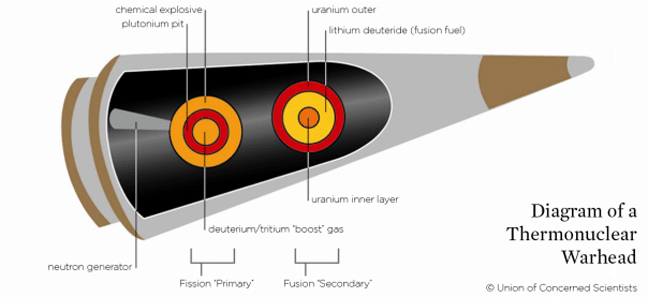
The Pentagon has stated it needs annual production of 80 plutonium pits, the triggers for nuclear weapons. T The DOE has approved its Supplement Analyses for four possible ways to execute thisapproved its Supplement Analyses for four possible ways to execute this.
At LANL, DOE proposes upgrades to both LANL’s Plutonium Facility and the Radiological Laboratory Utility and Office Building which is part of the Chemistry and Metallurgy Research Replacement (CMRR) Project.
Despite a mission that has been re-directed and an expansion involving about $15 billion in upgrades for two major buildings and related infrastructure, DOE has decided not to undertake a new Site-Wide Environmental Impact Statement (SWEIS) for LANL. https://www.energy.gov/nepa/downloads/doeeis-0380-sa-06-final-supplement-analysis and https://www.energy.gov/nepa/downloads/doeeis-0380-amended-record-decision Neither our congressional delegation nor our Governor has voiced disapproval of bypassing the SWEIS.
On Wednesday afternoon, October 7th, a citizens’ hearing was held outside the New Mexico State Capitol Building. Testimony was taken about DOE’s dramatic expansion plans for LANL that involve an installation of the size and importance and with the attendant dangers of the closed nuclear weapons plant at Rocky Flats, Colorado. The event, which provided a place for dozens of citizens to express their opposition to DOE’s plans in Northern New Mexico, was sponsored by the Los Alamos Study Group. http://www.lasg.org/
The DOE proposals are too broad and too expensive to go forward without an SWEIS with public review and comment opportunities.
Every day, new information is released about the increased hazards at LANL. This week the Defense Nuclear Facilities Safety Board issued a new report about the inconsistent and inappropriate consideration of potential energetic chemical reactions, or explosions, involving transuranic waste stored at LANL. The Board conducted an analysis of transuranic, or plutonium-contaminated, wastes stored at the Plutonium Facility, the old Chemistry and Metallurgy Research Facility, the Transuranic Waste Facility, and Area G and the potential for explosions. It found that LANL has not fully analyzed for possible explosions involving transuranic waste stored at these facilities that would result in high exposures to workers and the public. https://www.dnfsb.gov/documents/reports/technical-reports/potential-energetic-chemical-reaction-events-involving
The Board asked DOE to respond within 120 days.
David Attenborough’s call – ‘Curb excess capitalism’ to save nature
Attenborough: ‘Curb excess capitalism’ to save nature, BBC, 8 October 2020
Sir David Attenborough says the excesses of western countries should “be curbed” to restore the natural world and we’ll all be happier for it.
The veteran broadcaster said that the standard of living in wealthy nations is going to have to take a pause.
Nature would flourish once again he believes when “those that have a great deal, perhaps, have a little less”.
Sir David was speaking to Liz Bonnin for BBC Radio 5 Live’s new podcast ‘What Planet Are We On?’.
Speaking personally and frankly, Sir David explained, “We are going to have to live more economically than we do. And we can do that and, I believe we will do it more happily, not less happily. And that the excesses the capitalist system has brought us, have got to be curbed somehow.”
“That doesn’t mean to say that capitalism is dead and I’m not an economist and I don’t know. But I believe the nations of the world, ordinary people worldwide, are beginning to realise that greed does not actually lead to joy.”
Sir David said when we help the natural world, it becomes a better place for everyone and in the past, when we lived closer to nature, the planet was a “working eco-system in which everybody had a share”.
The 10-part podcast is being released on the second anniversary of the publication of a key scientific report on global warming.
The Intergovernmental Panel on Climate Change study looked at how the world would cope if temperatures rose by 1.5C by the end of this century.
The IPCC special report, released in October 2018 didn’t “save the planet” but it may yet prove to be the most critical moment in the story of climate change.
The study made two things very clear. The first was that there was a massive difference in keeping the rise in global temperatures this century to 1.5C as opposed to 2C.
Politicians had for years focussed on the higher number – the special report made clear that was a risky strategy, which could see the end of coral reefs and expose millions of people to the threat of floods.
The second key message from the IPCC was that the world could stay under 1.5C if carbon emissions were essentially slashed in half by 2030.
The urgency of the challenge laid out in the report inspired millions of young people to take action. This pressure is filtering up to politicians…….. https://www.bbc.com/news/science-environment-54268038
Nuclear and renewables – mutually exclusive: renewables better for climate action
 Comparative impact of nuclear and renewables on CO2 emissions, By Philippe Gauthier, Resilience.org October 9, 2020 Countries which are heavily invested in nuclear energy remain higher CO2 emitters, on average, than countries which have invested at the same level in renewable energy. This is the main finding of a study recently published in the journal Nature Energy. The results also tend to confirm the hypothesis that it is difficult to commit both to nuclear and renewables due to a systemic incompatibility between these two approaches.
The work aimed to assess three hypotheses. The first is that the greater a country’s nuclear power generation capabilities, the lower its greenhouse gas emissions are. The second is that the greater a country’s renewable energy generation capabilities, the lower its emissions are. The third is that nuclear and renewables coexist uneasily within a national energy system and that the dominance of either delays or prevents the adoption of the other………….
Explanatory factors
What explains these rather unfavorable results for nuclear power? Data collected by the researchers shows that, on average, the delivery time is 90 months for nuclear projects, compared to 40 months for solar and wind projects. Only hydropower has longer lead times. Nuclear and hydropower projects are more prone to delays and cost overruns than smaller-scale renewable projects, which yield low carbon energy more quickly.
Renewables are also associated with a positive learning curve whereby each completed project decreases the costs and increases the performance of subsequent projects. In comparison, nuclear power exhibits a negative learning curve. The study specifically cites the case of France, where each new generation of reactors has involved increased costs or lower performance. The tightening of safety measures after each major accident (Three Mile Island, Chernobyl, Fukushima) has greatly contributed to these increased costs in every country.
The study concludes that renewables have a demonstrable record of reducing greenhouse gas emissions. Nuclear power has a more mixed record, due to the different nature of the energy systems in which it operates. Finally, the results tend to confirm the hypothesis of mutual exclusion already widely noted in the scientific literature. According to the researchers, countries that think they can obtain emission reductions by investing in nuclear energy may actually be forgoing even greater reductions that could be achieved by renewables.
Source:
Benjamin K. Sovacool et al. Differences in carbon emissions reduction between countries pursuing renewable electricity versus nuclear power, in Nature Energy, October 5, 2020 https://www.nature.com/articles/s41560-020-00696-3.epdf?
Fishing industry chief opposes releasing Fukushima No. 1 water into sea
Fishing industry chief opposes releasing Fukushima No. 1 water into sea, https://www.japantimes.co.jp/news/2020/10/09/national/zengyoren-fukushima-water-sea/ 9 Oct 20, The head of the National Federation of Fisheries Cooperative Associations, or Zengyoren, has voiced strong opposition against releasing treated water containing radioactive tritium from the disaster-stricken Fukushima No. 1 nuclear plant into the sea.
“We are absolutely against ocean release” as a way to dispose of tainted water at Tokyo Electric Power Company Holdings Inc.’s nuclear plant in Fukushima Prefecture, Hiroshi Kishi, head of Zengyoren, said Thursday at a government hearing in Tokyo.
Kishi said that fishermen who are operating along the coast of Fukushima have been suffering from problems caused by the radioactive fallout from the 2011 meltdowns at the plant, such as fishing restrictions, as well as malicious rumors about the safety of farm and marine products there.
If the government chooses to release radioactive water into the sea, a leading option to get rid of accumulating low-level radioactive water at the plant, it will trash all efforts fishermen have so far made to sweep away such rumors and consequently “will have a devastating impact on the future of Japan’s fishing industry,” Kishi stressed.
Toshihito Ono, head of the prefecture’s fishery product processors association, who joined the hearing via a video call, warned that Fukushima’s processed marine products, including products that use ingredients from other prefectures, will become targets of harmful rumors.
In a report released in February, a government panel pointed out that a realistic option would be releasing the tainted water into the ocean after dilution or into the air through evaporation.
Many people fear that both methods will add to the reputational damage suffered by Fukushima products. But treated water storage at the power plant is expected to reach full capacity as early as autumn 2022.
After the hearing, state industry minister Kiyoshi Ejima told reporters, “We find it unadvisable to put off a decision on how to dispose of the water because not much room is left at the plant for tanks containing the water.”
This was probably the last hearing on the water issue, people familiar with the matter said.
Utah congressman takes action to stop future nuclear weapons testing in U.S.
|
Utah congressman takes action to stop future nuclear weapons testing in U.S. The Daily Universe, By Kaela Cleary, October 9, 2020 With all of the chaos surrounding the U.S. presidential election, word of the Trump administration and Senate Republicans creating legislation to prepare to resume nuclear weapons testing at the Nevada Test Site hasn’t received much public attention.
|
|
China’s plan for dramatic switch to climate action and renewable energy
|
|
|

Ageing community in Hokkaido town – mayor agrees to survey for nuclear waste dump
|
Graying Hokkaido town applies for nuclear waste dump survey, Japan Times, 9 Oct 20, A small Hokkaido town struggling with depopulation signed up Friday for preliminary research into its land to gauge its suitability for hosting a disposal site deep underground for high-level radioactive nuclear waste, the first municipality to do so in Japan since 2007.Suttsu Mayor Haruo Kataoka submitted the documents for the survey at the quasi-governmental Nuclear Waste Management Organization (NUMO) in Tokyo. Municipalities that undergo the preliminary research, the first of a three-stage process requiring some 20 years in total to select a permanent disposal site, can receive up to ¥2 billion in state subsidies over two years. Prior to Suttsu, the only municipality to apply for a preliminary survey was Toyo in Kochi Prefecture, which submitted documents in 2007. However, the town later withdrew before the research was ever conducted following strong protests by local residents. ……… Meanwhile, government officials are expected later Friday to request Kamoenai village in Hokkaido, which is about 40 kilometers north of Suttsu, to accept research into its land a day after its assembly adopted a petition to host the survey. Suttsu and Kamoenai, with populations of about 2,900 and 820, respectively, have been struggling financially due to a decline in the fishing industry and the aging of their residents. It remains uncertain whether the process of becoming a final disposal site will go smoothly, as Hokkaido Gov. Naomichi Suzuki and members of the fishing industry in the area are opposed to the idea of hosting such a facility……. During its research, NUMO will examine the area to see if it is suited to the disposal of highly radioactive waste, paying attention to volcanoes and fault lines. High-level radioactive waste, produced as a result of extracting uranium and plutonium from spent fuel, must be stored in concrete structures at least 300 meters underground so as not to impact human lives or the environment. Locations near volcanoes and active faults are deemed unfavorable…….https://www.japantimes.co.jp/news/2020/10/09/national/hokkaido-nuclear-waste-dump-survey/ |
|
Australia faces costly cleanup of Ranger uranium mine, still struggling with pollution legacy of other uraniu mines
|
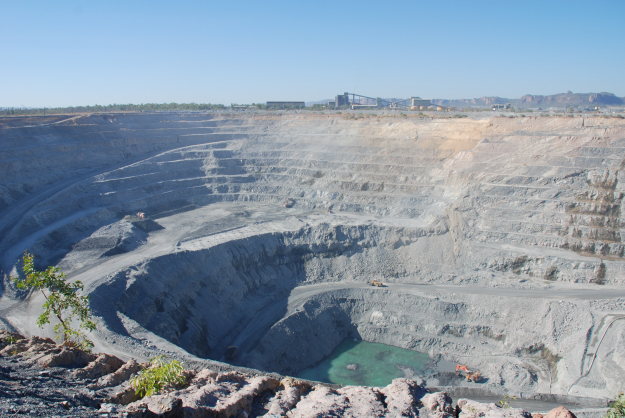
Over the years many people questioned the decision to allow uranium to be mined inside one of Australia’s most famous and largest national parks – Kakadu. But in 1980 that’s exactly what happened, an open-cut mine surrounded by a park famed for its natural beauty made even more famous by the hugely popular Paul Hogan movie, Crocodile Dundee. Now the uranium is gone, dug out and sent off to nuclear power stations around the world and Australia’s longest continually operated uranium mine is almost done.
Nuclear power is making way for renewable energy. Uranium has been mined at Ranger for more than three decades, producing in excess of 130,000 tonnes of uranium oxide. The mine is being closed, Jabiru – the town built to service to the mine workers, is in the process of being handed over to Traditional Owners and the mining company is being closely watched as it delivers on its promise to clean up the site. Cleaning up uranium mines is not something the Northern Territory does well – there is still a huge environmental mess at Rum Jungle closer to Darwin. That uranium mine is a legacy of the Cold War. Australia’s first large scale uranium mine was dug at Rum Jungle on behalf of our “Allies” in the UK and USA to fuel their nuclear weapon programs in the 1950s. Now water fills that vast open cut, a lake as locals call it, and another attempt is going to have to be made to cap the radioactive tailings left behind, the first attempt, supposed to last a century, failed after 20 years. Energy Resources Australia, a subsidiary of Rio Tinto, says it has spent more than $642 million in the past eight years on rehabilitation of the mountains of tailings complicated by a lake created from a vast flooded pit………. This story It’s costing a fortune but the NT’s uranium mine is being cleaned up, gradually first appeared on Katherine Times. https://www.canberratimes.com.au/story/6955634/its-costing-a-fortune-but-the-nts-uranium-mine-is-being-cleaned-up-gradually/?cs=14231 |
|
Conservative UK government is considering a carbon tax, in its commitment to reduce greenhouse gas emissions
 Times 9th Oct 2020, Rishi Sunak is examining proposals for a UK-wide carbon tax that could
raise billions of pounds while encouraging the drive towards net-zero emissions. The chancellor is seeking to replace existing EU carbon-reduction schemes with the new tax when the transition period finishes at the end of the year.
“The danger with relying solely on a carbon tax is that no one believes politicians will not scrap it when things get tough, so no one invests. A cap and trade scheme that guarantees an outcome, alongside regulation and innovation support, is much more likely to lead to cuts in emissions.”https://www.thetimes.co.uk/edition/news/sunak-plans-carbon-emissions-tax-to-help-rebuild-economy-jbl3gs993
European Commission, and France’s Hercules project, plan to break up the nuclear company EDF
Reporterre 8th Oct 2020, The European Commission, according to a document obtained by Reporterre,
intends to impose on the French State the disintegration of the EDF group
in the name of respect for competition rules. The “reform” of Brussels goes
even further than the government project Hercules, which wants to dismember
EDF .
https://reporterre.net/Exclusif-Le-projet-fou-de-Bruxelles-pour-demanteler-ED
Will the UK government sacrifice the beautiful Suffolk coast in its misguided, uneconomic, Sizewell nuclear power push?
 East Anglian Daily Times 8th Oct 2020, As councils lose patience with EDF, will Suffolk businesses follow suit?
Today East Suffolk lies at a crossroads – the future of the east of the county now seems certain to rest in the hands of London-based civil servants and ministers – and to be honest I don’t know which way they will jump when push comes to shove. The deadline has now passed for councils, businesses, and residents to have their say on whether a two new nuclear reactors should be built on the Suffolk coast at Eastbridge, north of the existing stations at Sizewell.
landscape. But I do worry that there are some in government who do not understand the value of this area to the country as a whole who will be prepared to look on Sizewell C as a shiny investment to try to kick-start the UK economy after the pandemic and in a world no longer governed by EU rules, will pour in government subsidies to make up for the loss of Chinese money.
https://www.eadt.co.uk/ea-life/last-chance-to-stop-sizewell-c-1-6871419?s=09
BBC 8th Oct 2020, Campaigners against a new nuclear power station say they are “resolute”
after their bid to protect woodland was thrown out by the High Court. EDF
Energy, which wants to build two new reactors next to Sizewell B in
Suffolk, was given approval in 2019 to fell Coronation Wood on the site.
Together Against Sizewell C (Tasc) sought a judicial review, claiming that
decision was unlawful.
Kim Jong Un Set to Show Off Nuclear Advances in Message to Trump
|
Kim Jong Un Set to Show Off Nuclear Advances in Message to Trump, By Jon Herskovitz and Jeong-Ho Lee
10 October 2020, North Korean leader Kim Jong Un is expected to hold his biggest military parade in at least two years and show off a nuclear arsenal that poses one of the most daunting security challenges for the winner of the U.S. presidential election.
The event — part of festivities Saturday to mark the 75th anniversary the Workers’ Party of Korea — could showcase the “new strategic weapon” Kim pledged to unveil at the start of the year. ….. https://www.bloomberg.com/news/articles/2020-10-09/kim-jong-un-set-to-show-off-nuclear-advances-in-message-to-trump |
|
USA trying to beat China, in marketing nuclear reactors to Romania
 Romania, U.S. to sign cooperation agreements over nuclear reactors, By Reuters Staff, 9 Oct 20, BUCHAREST (Reuters) – Romania’s economy ministry will sign cooperation and financing agreements with the United States
USA-Russia talks continue on bid to salvage nuclear arms control agreement
U.S. and Russian negotiators have agreed in principle to freeze their nuclear warhead stockpiles in a bid to salvage their last remaining arms control pact before it expires next year
The person said it’s not yet clear if the agreement for a freeze will succeed or translate into an extension of the New START treaty expires in February.
An announcement ahead of the election could raise eyebrows, coming as U.S. intelligence officials say Russia favors Trump and has been working to denigrate Biden…….
Russia has had a more skeptical view of the talks, with Russian Foreign Minister Sergey Lavrov on Monday accusing Washington of “unilateralism.” He said the New START treaty would likely cease to exist because the conditions the U.S. has put forward for extending it “don’t take into account our interests or the experience of many decades when arms control has existed to mutual satisfaction.”
Russian diplomats have repeatedly emphasized that Moscow considers the limits on launch platforms — missiles, bombers and submarines — much more important than the restrictions on the number of warheads. Russia likely would be unwilling to accept a separate freeze on the number of warheads unless it is part of a full-fledged deal. https://abcnews.go.com/Politics/wireStory/us-russia-close-deal-nuclear-warhead-freeze-73522231
Russia’s nuclear giant Rosatom moving into renewable energy, energy storage, grid development
The state-owned company will manufacture module type lithium-ion traction batteries for electric vehicles, as well as energy storage systems for emergency power supplies, renewable energy resources, and the smoothing of load demand. PV Magazine , OCTOBER 9, 2020 EMILIANO BELLINI Rosatom State Nuclear Energy Corp. (Rosatom) is entering the energy storage business through its TVEL Fuel Company (TVEL) unit, which has set up a dedicated subsidiary, Renera.The new company will produce module type lithium-ion traction batteries for electric vehicles, as well as energy storage systems for emergency power supplies, renewable energy resources, and the smoothing of load demand, TVEL stated……
Rosatom is already operating in the renewable energy sector via its NovaWind unit, which mostly focuses on the wind power business.
“We have an R&D center which is capable to develop energy storage solutions as for grids and substations, as well as for renewable energy sources, including both wind and solar,” the spokesperson said.,,,,,,,,https://www.pv-magazine.com/2020/10/09/russian-nuclear-giant-rosatom-enters-storage-business/
1 This Month

of the week – Shut Down Drone Warfare!


Tell the Ukrainian Government to Drop Prosecution of Peace Activist Yurii Sheliazhenko

Petition to revoke the licensing of the Near Surface Nuclear Disposal Facility (NSDF) at Chalk River. https://www.ourcommons.ca/petitions/en/Petition/Details?Petition=e-7247
To see nuclear-related stories in greater depth and intensity – go to https://nuclearinformation.wordpress.com
-
Archives
- April 2026 (57)
- March 2026 (251)
- February 2026 (268)
- January 2026 (308)
- December 2025 (358)
- November 2025 (359)
- October 2025 (376)
- September 2025 (257)
- August 2025 (319)
- July 2025 (230)
- June 2025 (348)
- May 2025 (261)
-
Categories
- 1
- 1 NUCLEAR ISSUES
- business and costs
- climate change
- culture and arts
- ENERGY
- environment
- health
- history
- indigenous issues
- Legal
- marketing of nuclear
- media
- opposition to nuclear
- PERSONAL STORIES
- politics
- politics international
- Religion and ethics
- safety
- secrets,lies and civil liberties
- spinbuster
- technology
- Uranium
- wastes
- weapons and war
- Women
- 2 WORLD
- ACTION
- AFRICA
- Atrocities
- AUSTRALIA
- Christina's notes
- Christina's themes
- culture and arts
- Events
- Fuk 2022
- Fuk 2023
- Fukushima 2017
- Fukushima 2018
- fukushima 2019
- Fukushima 2020
- Fukushima 2021
- general
- global warming
- Humour (God we need it)
- Nuclear
- RARE EARTHS
- Reference
- resources – print
- Resources -audiovicual
- Weekly Newsletter
- World
- World Nuclear
- YouTube
-
RSS
Entries RSS
Comments RSS
 nuclear-news