Another city bites the dust in regard to Utah’s NuScam small nuclear reactors plan

Seven Utah cities have now bailed out of an Idaho nuclear power project, Salt Lake Tribune, By Taylor Stevens-30 Oct 20,
Three more Utah cities voted this week not to move forward with a first-of-its kind nuclear power project that proponents have pitched as the future of clean energy but that opponents have lined up against over concerns about financial risk.
Beaver, Bountiful and Heber are the latest municipalities to exit the small modular nuclear reactor pursuit, following in the footsteps of Murray, Kaysville, Lehi and Logan, which also backed out in recent weeks. ………
The Heber Light and Power Board, which voted 5-1 to get out of the project, and the Bountiful City Council, which unanimously made the decision to back out, both did so this week largely over concerns about the subscription rate of the nuclear energy pursuit.
“There’s enough things wrong with this project that it made it really scary,” said Bart Miller, Heber Light and Power’s chief financial officer. “We’re just a bunch of little utilities in the state of Utah trying to do a $6 billion nuclear power plant.”………
Bountiful City Councilman Richard Higginson said the leaders there had similar concerns, and felt too many of the development and construction costs were falling to a small number of municipalities…….
Costs have been one of the main concerns for several of the cities that have backed out over the last few weeks, as the project’s projected price tag has ballooned significantly, from $4.5 billion a few years ago to around $6 billion now. Opponents have also raised concerns about time and cost overruns, safety considerations and an uncertain regulatory environment.
The Utah Taxpayers Association has been among the critics of the project, arguing that municipal power companies should not act as a “seed investor” for the new technology, a responsibility it’s argued should lie with the private sector.
Environmental groups, such as the Healthy Environment Alliance of Utah, have also raised concerns about the radioactive waste that would be generated by the project.
Cities participating in the Carbon Free Power Project through the Utah Associated Municipal Power Systems — a consortium of municipally owned power systems in Utah and several other Western states that has partnered with NuScale Power to study and create the nuclear technology — have until Saturday to decide whether to stay in the project or back out. https://www.sltrib.com/news/politics/2020/10/29/seven-utah-cities-have/
Urgency to protect nature, or up to 850,000 animal viruses could be caught by humans

UN report says up to 850,000 animal viruses could be caught by humans, unless we protect nature, The Conversation Katie Woolaston, Lawyer, Queensland University of Technology, Judith Lorraine Fisher, Adjunct Professor University of Western Australia, Institute of Agriculture
October 30, 2020 Human damage to biodiversity is leading us into a pandemic era. The virus that causes COVID-19, for example, is linked to similar viruses in bats, which may have been passed to humans via pangolins or another species.Environmental destruction such as land clearing, deforestation, climate change, intense agriculture and the wildlife trade is putting humans into closer contact with wildlife. Animals carry microbes that can be transferred to people during these encounters.
A major report released today says up to 850,000 undiscovered viruses which could be transferred to humans are thought to exist in mammal and avian hosts.
The report, by The United Nations’ Intergovernmental Science-Policy Platform on Biodiversity and Ecosystem Services (IPBES), says to avoid future pandemics, humans must urgently transform our relationship with the environment.
Humans costs are mounting
The report is the result of a week-long virtual workshop in July this year, attended by leading experts. It says a review of scientific evidence shows:
The report says, on average, five new diseases are transferred from animals to humans every year – all with pandemic potential. In the past century, these have included:
- the Ebola virus (from fruit bats),
- AIDS (from chimpazees)
- Lyme disease (from ticks)
- the Hendra virus (which first erupted at a Brisbane racing stable in 1994).
Finally, Australia is one of few countries without a national centre for disease control and pandemics.
But there are good reasons for hope. It’s within Australia’s means to build an organisation focused on a OneHealth approach. Australia is one of the most biologically diverse countries on the planet and Australians are willing to protect it. Further, many investors believe proper environmental policy will aid Australia’s economic recovery.
Finally, we have countless passionate experts and traditional owners willing to do the hard work around policy design and implementation.
As this new report demonstrates, we know the origins of pandemics, and this gives us the power to prevent them…… https://theconversation.com/un-report-says-up-to-850-000-animal-viruses-could-be-caught-by-humans-unless-we-protect-nature-148911
Strong feeling in UK public that the Covid recovery must be a green recovery, too
 Centre for Science & Policy 12th Oct 2020, According to Professor Rebecca Willis, the findings from the UK Climate Assembly suggest that the general public feels strongly that covid recovery must be aligned with net zero goals, both in terms of a green economic stimulus and in terms of not giving government money to big polluters. She also noted that the pandemic has create an opportunity space, in which people are more open to lifestyle changes – including those that might be more environmentally friendly.
http://www.csap.cam.ac.uk/news/article-understanding-challenges-green-recovery/
A Joe Biden administration would re-examine the U.S. nuclear strategy and arsenal.
  Biden White House Seen Revamping Strategy for Nuclear Weapons Biden White House Seen Revamping Strategy for Nuclear Weapons
Rep. Adam Smith (D-Wash.), who’s questioned and criticized the need to boost the nuclear arsenal, said Thursday he’s “quite confident,” a new administration would reassess plans. Boosting and overhauling nuclear weapons has been an issue that has split—sometimes acrimoniously—Democrats and Republicans on the Armed Services panel. Current plans call for modernizing the capacity to deliver nuclear weapons via land-based missile systems, nuclear submarines, and strategic bombers—the “nuclear triad.” The Congressional Budget Office estimates such an effort could cost as much as $1.2 trillion through 2046 for development, purchasing and long-term support. If a triad is necessary for that deterrence, I can see that argument; I am skeptical about it,” Smith said at an event hosted by the Center for a New American Security. The intercontinental ballistic missile (ICBM) fleet “right now, is driven as much about politics as it is by policy and necessity,” Smith added. Few DetailsWhile not offering details, Democratic presidential nominee Biden has indicated that he would place smaller emphasis on the role that nuclear weapons would play in a defense strategy. Biden’s campaign website says he believes the “sole purpose” of the U.S. nuclear arsenal is for deterrence or, if necessary, for retaliation against an atomic attack…….. https://about.bgov.com/news/biden-white-house-seen-revamping-strategy-for-nuclear-weapons/ |
|
Russia’s nuclear doctrine – both Russia an USA benefit from nuclear weapons control agreements
A Closer Look At Russia’s Nuclear Doctrine, https://www.globalzero.org/updates/a-closer-look-at-russias-nuclear-doctrine/ June 4, 2020 Emma Claire Foley On June 1, Russia released a document detailing its nuclear doctrine. Though the 7-page document is much shorter than U.S. Nuclear Posture Reviews, it plays a similar role as a publicly available statement of the situations under which a country would use its nuclear weapons.
In some ways, this release is unprecedented. Though Russia has released information about its nuclear posture before, this is the longest and most comprehensive public statement of that posture to date. A similar document, signed in 2010, was classified.
Until now, much of what is publicly known about Russia’s nuclear doctrine was drawn from its 2014 Military Doctrine. The new document draws heavily from the sections of the 2014 document that dealt with nuclear weapons, but sheds new light on some issues, particularly having to do with Russia’s weapons developed after its withdrawal from New START.
The document confirms Russia’s adherence to a launch-on-warning posture, as discussed by President Putin in 2018. That means Russia would launch a nuclear strike once it received information that another country had launched missiles at Russia, leaving open the possibility that a technical failure or mistaken intelligence could lead to an unintended first strike.
It also leaves open a broad range of situations in which Russia could respond to an attack with nuclear weapons, including “critical state or military facilities of the Russian Federation, the failure of which will lead to the disruption of the retaliatory action of nuclear forces,” an attack with a nuclear weapon or other weapon of mass destruction, or a conventional attack that threatens “the existence of the state.” Though this largely corresponds with what experts had gathered from previous statements, it leaves open to interpretation the definition of “critical state or military facilities.”
The document’s release must be viewed in context. It articulates a launch-on-warning posture as part of a larger defensive role for nuclear weapons, yet history has shown that nuclear “false alarms” that might compel Russia to launch an inadvertent first-strike are not only possible—they’re relatively common. A global No-First-Use agreement, accompanied by changes to nuclear force structure so that nuclear weapons are not kept ready to launch at a moment’s notice, would eliminate this very real risk.
In recent months, Russia has repeatedly, explicitly conveyed its willingness to extend the New Strategic Arms Reduction Treaty (New START), which expires in 2021 and would leave the world without key limits on the two largest nuclear arsenals. These overtures seem to have fallen on deaf ears in the Trump administration, which has expressed its intention to replace the treaty with a trilateral agreement with China despite China’s persistent rejections of the idea. In light of U.S. withdrawals from the Intermediate-Range Nuclear Forces (INF) Treaty and the Open Skies Treaty, the prospects for a New START renewal look dim.
Despite the lack of U.S. participation in international arms control efforts, however, it’s clear that the rest of the world sees the value in maintaining these hard-won agreements. Other signatories have worked hard to maintain the Iran Deal’s frameworks, even after the U.S. withdrew and in the face of its ongoing attempts to start a conflict with Iran. The Trump administration’s knee-jerk rejection to any international agreement reveals a fundamental inability to understand that an international agreement could be in the interest of all of its signatories.
Russia’s step to increase transparency while remaining clear about its faith in its nuclear deterrent, on the other hand, may be another acknowledgment that both countries stand to win from a return to arms control. The only way to make sure that nuclear weapons are never used is to eliminate them. But extending New START maintains progress made by earlier generations and leaves the door open for more ambitious negotiations in the future. It’s a key next step toward making sure nuclear weapons are never used again.
A Joe Biden victory could push Scott Morrison – and the world – on climate change
 A Joe Biden victory could push Scott Morrison – and the world – on climate change, Guardian Katharine Murphy 30 Oct 20, International action on emissions reduction will get a huge shot in the arm if the US election goes to the Democratic leader.
I’m a deeply superstitious person, so I can barely bring myself to utter the words “if Joe Biden wins the American presidency next week”, but for the purposes of where we are going this weekend, I need to utter those words, because that’s our starting point for unpacking a few things.
If Biden wins, obviously that’s the end of Trumpism, which would be a boon on so many fronts. So, so many fronts. The compendium of boon would span many volumes, and we haven’t got all weekend, so let’s just hone in on one critical issue that impacts Australia, and that’s climate change.
If we take the former vice-president at his word (and if you want a recent interview that dives right in, have a look here), a Biden victory would be a massive shot in the arm for international action on emissions reduction.
If we take the former vice-president at his word (and if you want a recent interview that dives right in, have a look here), a Biden victory would be a massive shot in the arm for international action on emissions reduction……………
Without wanting to ruin anyone’s weekend, we have to track back to America to find our final cause for pessimism – and that it, of course, the re-election of Donald Trump next Wednesday Australian time.
If Trump returns to the White House, the prognosis is simple. The planet loses. https://www.theguardian.com/australia-news/2020/oct/31/a-joe-biden-victory-could-push-scott-morrison-and-the-world-on-climate-change
UK government’s economic recovery plan funds fossil fuels £3.8bn, but renewables only £121m
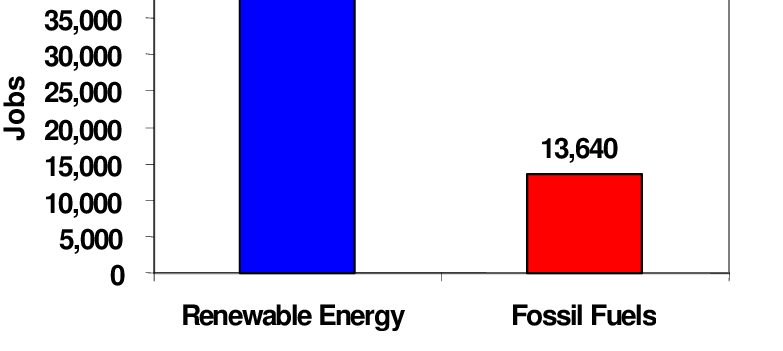
Edie 29th Oct 2020, The UK Government has earmarked £3.8bn of stimulus funding for legacy fossil fuel and nuclear generation, compared to just £121m for renewables, a damning new report has claimed. Published by global technology company Wärtsilä’s energy arm, the analysis concludes that the UK Government’s short-term plans for helping the energy sector recover from the financial impacts of Covid-19 are not aligned with the 2050 net-zero target or the interim carbon budgets.
storage capacity would be scaled up dramatically.
Renewables, not nuclear, are the solution, for a cleaner world.
|
Nuclear power, lauded as a solution for a cleaner world, hits a snag, Market Watch, By Jurica Dujmovic Oct. 30, 2020 There’s a growing push for nuclear-power generation as a choice for countries trying to wean themselves off fossil fuels and reduce their carbon footprint. But new research suggests there are potential downsides.For many scientists — and Bill Gates — nuclear energy is part of the answer to the world’s climate-change problem.
The market for nuclear power could triple by 2050 across the world, according to a recent study by Third Way, a U.S.-based think tank. There are more than 60 advanced reactor designs in development in the U.S., the Atlantic Council, a U.S. think tank, said in a paper. However, a recent study published in Nature Energy provides a different view. Scientists who conducted the study collected data from 123 countries over a 25-year period, examining how the introduction of either nuclear-power or renewable-energy sources affects each country’s levels of carbon emissions. The results show that a larger-scale national investment in nuclear-power plants not only fails to yield a significant reduction in carbon emissions, it actually causes higher emissions in poorer countries that implemented this strategy. For renewables, the opposite is true — in certain large country samples, the relationship between renewable energy and reduction in CO2-emissions is up to seven times stronger than the corresponding relationship for nuclear power. It is interesting how consistent the results are across different time frames and country sets. The study also found that trying to use both nuclear and renewable energy actually reduces the effectiveness of both, and that the “do everything” approach isn’t the most effective way to reduce a country’s carbon footprint. The reason for this is that both energy sources require significant enhancements of electric-grid structures, as well as regulatory adaptations that later make it difficult for a country to switch to a different model. A heavily centralized nuclear option that requires significant initial investment is vastly different from small-scale distribution patterns and investment requirements that characterize renewables. Implementation of one over the other locks the country in a certain pattern that pushes out the alternative or makes it comparatively harder for it to take root. As a comment on the research, Benjamin K. Sovacool, professor of energy policy in the Science Policy Research Unit at the University of Sussex Business School, said: “The evidence clearly points to nuclear being the least effective of the two broad carbon emissions abatement strategies, and coupled with its tendency not to co-exist well with its renewable alternative, this raises serious doubts about the wisdom of prioritizing investment in nuclear over renewable energy. Countries planning large-scale investments in new nuclear power are risking suppression of greater climate benefits from alternative renewable energy investments.” ……. https://www.marketwatch.com/story/nuclear-power-may-not-be-a-good-option-for-a-cleaner-world-11604056821 |
|
Two politicians to plead guilty in Ohio nuclear corruption case

The five are accused of shepherding $60 million in energy company money for personal and political use. Manufacturing, Oct 29th, 2020 Andrew Welsh-Huggins COLUMBUS, Ohio (AP) — Two Ohio political operatives plan to plead guilty to charges that they conspired as part of what another defendant called an “unholy alliance” aimed at bailing out two aging Ohio nuclear power plants, court documents show.
Former Republican House Speaker Larry Householder and four others are charged with racketeering for their roles in the alleged scheme, under a law federal prosecutors typically use to charge gang members.
The five are accused of shepherding $60 million in energy company money for personal and political use in exchange for passing a legislative bailout of two aging nuclear plants and then derailing an attempt to place a rejection of the bailout on the ballot.
A federal court docket showed that “plea agreements” were filed Thursday for defendants Jeffrey Longstreth, a longtime Householder political adviser, and Juan Cespedes, a lobbyist described by investigators as a “key middleman.”
In a recorded conversation in September 2019, Borges described the relationship between Householder and the energy company as “this unholy alliance,” according to the July 21 complaint that lays out the details of the alleged scheme.
Lawmakers from both parties have pledged to repeal the bailout and to pass legislation requiring disclosure of money contributed to and spent by dark money groups. However, hearings to repeal the bailout ended this fall without resolution.
As recently as Wednesday, Republican Gov. Mike DeWine called on lawmakers to repeal the bailout during the Legislature’s lame duck session following next month’s election.
On Tuesday, two Ohio cities sued to block the bailout law from taking effect in January. https://www.manufacturing.net/energy/news/21200589/ohio-political-operatives-to-plead-guilty-in-nuclear-plant-bribery-case
Small nuclear reactors pose a financial danger to municipalities – Utah Taxpayers Association
“……….The Utah Taxpayers Association doesn’t have a stance on nuclear energy, but it opposes the possible financial risks to municipalities involved in the project, said Vice President Rusty Cannon.
“We don’t think these municipal power companies should be acting as seed investors essentially,” he said.
Cannon said his organization, which has led opposition to the initiative in Utah, is concerned that the costs of a ballooning nuclear test run will be tossed onto the Utah cities investing in the project, or more broadly, onto taxpayers.
“We understand that these municipal power companies need to plan for baseload power in the long term,” he said. “We just feel like if this project is going to succeed, it should be funded by private money.”
The criticisms from the association’s webpage call on citizens to urge their elected officials to withdraw from the project, and Cannon said quite a few have. The association evokes a string of failed or heavily delayed nuclear power projects across the country…….
“………..As the project seeks more subscribers, Webb said UAMPS is hyperaware that failure of the project could have widespread repercussions.
“This does represent the next generation of nuclear,” Webb said. “Many, many people are watching it very carefully because if this project isn’t successful then it does set back new nuclear.” From NevadaCurrent, 30 Oct 20, Two Nevada towns among those betting on ‘new nuclear’
A bit of good news – Chameleon last seen a century ago rediscovered in Madagascar
|
Chameleon last seen a century ago rediscovered in Madagascar https://www.theguardian.com/environment/2020/oct/30/voeltzkow-chameleon-rediscovered-madagascar
Scientists find several living specimens of Voeltzkow’s chameleon during expedition Scientists have found an elusive chameleon species that was last spotted in Madagascar 100 years ago.Researchers from Madagascar and Germany said on Friday they had discovered several living specimens of Voeltzkow’s chameleon during an expedition to the north-west of the African island nation. In a report published in the journal Salamandra, the team, led by scientists from the Bavarian State Collection of Zoology (ZSM), said genetic analysis determined that the species was closely related to Labord’s chameleon. Researchers believe that both reptiles only live during the rainy season – hatching from eggs, growing rapidly, sparring with rivals, mating and then dying during a few short months. “These animals are basically the mayflies among vertebrae,” said Frank Glaw, the curator of reptiles and amphibians at the ZSM. Researchers said the female of the species, which had never previously been documented, displayed particularly colourful patterns during pregnancy, when encountering males and when stressed. The scientist say the Voeltzkow’s chameleons’ habitat is under threat from deforestation. |
|
Putin’s Russia keen to exploit the Arctic for fossil fuels: more nuclear-powered icebreakers on the way
|
Putin decrees development of Arctic with more nuclear icebreakers – This will help Russia cash flow from fossil fuels. Russian President Vladimir Putin has signed an executive order, On the Strategy for Developing the Russian Arctic Zone and Ensuring National Security until 2035, which foresees the construction of at least five new nuclear-powered icebreakers of the Project 22220 series, and three of the Project 10510 series. The vessels are needed to ensure year-round navigation along the Northern Sea Route. Project 10510, also known through the Russian type size series designations LK-110Ya and LK-120Ya or the project name Leader, will supersede Project 22220 icebreakers as the largest and most powerful in the world…….. https://www.oilandgas360.com/putin-decrees-development-of-arctic-with-more-nuclear-icebreakers-this-will-help-russia-cash-flow-from-fossil-fuels/ |
|
|
China-India competition is not likely to lead to a nuclear weapons exchange
|
After the Border Clash, Will China-India Competition Go Nuclear?,
WHAT DO CHINA AND INDIA THINK ABOUT EACH OTHER’S NUCLEAR WEAPONS? Carnegie Endowment for International Peace TOBY DALTON, TONG ZHAO, RUKMANI GUPTA, OCTOBER 29, 2020
|
|
1 This Month

of the week – Shut Down Drone Warfare!


Tell the Ukrainian Government to Drop Prosecution of Peace Activist Yurii Sheliazhenko

Petition to revoke the licensing of the Near Surface Nuclear Disposal Facility (NSDF) at Chalk River. https://www.ourcommons.ca/petitions/en/Petition/Details?Petition=e-7247
To see nuclear-related stories in greater depth and intensity – go to https://nuclearinformation.wordpress.com
-
Archives
- April 2026 (34)
- March 2026 (251)
- February 2026 (268)
- January 2026 (308)
- December 2025 (358)
- November 2025 (359)
- October 2025 (376)
- September 2025 (257)
- August 2025 (319)
- July 2025 (230)
- June 2025 (348)
- May 2025 (261)
-
Categories
- 1
- 1 NUCLEAR ISSUES
- business and costs
- climate change
- culture and arts
- ENERGY
- environment
- health
- history
- indigenous issues
- Legal
- marketing of nuclear
- media
- opposition to nuclear
- PERSONAL STORIES
- politics
- politics international
- Religion and ethics
- safety
- secrets,lies and civil liberties
- spinbuster
- technology
- Uranium
- wastes
- weapons and war
- Women
- 2 WORLD
- ACTION
- AFRICA
- Atrocities
- AUSTRALIA
- Christina's notes
- Christina's themes
- culture and arts
- Events
- Fuk 2022
- Fuk 2023
- Fukushima 2017
- Fukushima 2018
- fukushima 2019
- Fukushima 2020
- Fukushima 2021
- general
- global warming
- Humour (God we need it)
- Nuclear
- RARE EARTHS
- Reference
- resources – print
- Resources -audiovicual
- Weekly Newsletter
- World
- World Nuclear
- YouTube
-
RSS
Entries RSS
Comments RSS
 nuclear-news