Vast swarm of locusts ruining the livelihood of 1000s in East Africa
Locust swarm 37 miles long and 25 miles wide threatens crops across swathes of east Africa, ITV News, 17 Jan 2020, A swarm of locusts measured at 37 miles long and 25 miles wide has been tracked in Kenya – and the insects are now threatening to decimate crops across swatches of east Africa.
The most serious outbreak of desert locusts in 25 years is posing an unprecedented threat to food security in some of the world’s most vulnerable countries, authorities say.
Unusual climate conditions are partly to blame.
Kenya’s Intergovernmental Authority on Development said: “A typical desert locust swarm can contain up to 150 million locusts per square kilometre.
“Swarms migrate with the wind and can cover 100 to 150 kilometres in a day. An average swarm can destroy as much food crops in a day as is sufficient to feed 2,500 people.”
Roughly the length of a finger, the insects fly together by the millions and are devouring crops and forcing people in some areas to bodily wade through them.
The outbreak of desert locusts, considered the most dangerous locust species, also has affected parts of Somalia, Ethiopia, Sudan, Djibouti and Eritrea and IGAD warns that parts of South Sudan and Uganda could be next.
The “extremely dangerous” outbreak is making the region’s bad food security situation worse, the United Nations’ Food and Agriculture Organisation has warned.
Hundreds of thousands of acres of crops have been destroyed……. https://www.itv.com/news/2020-01-17/locust-swarm-37-miles-long-and-25-miles-wide-threatens-crops-across-swathes-of-east-africa/?fbclid=IwAR1cn3AzYPruUHLGk_0dgXtQvDvh9bjrehBk7AeCTXeru2AjLKdlmmrYz_g
New report: China soon to join countries where renewables are cheaper than coal
Oil Price 19th Jan 2020, In September of last year Oilprice reported an incredible milestone for renewable energy when solar and wind power became cheaper than coal in most of the world. Now, a new report released this week by Wood Mackenzie Power and Renewables has heralded another milestone: China will soon be added to that list of countries in which coal is no longer more economical than renewable energy.
The “Power of the Purse” Belongs to the US Congress According to the Constitution – Not with the President

“Congress—and in particular, the House of Representatives—is invested with the “power of the purse,” the ability to tax and spend public money for the national government. Massachusetts’ Elbridge Gerry said at the Federal Constitutional Convention that the House “was more immediately the representatives of the people, and it was a maxim that the people ought to hold the purse-strings.””
For this reason, it has been argued that the Speaker of the US House is the most powerful person in the government, because that person wields so much control over the “power of the purse”. This not only is rooted in the US Constitution, but is rooted in British tradition.
“Power of the Purse
Historical Highlight
July 24, 1789
“All Bills for raising Revenue shall originate in the House of Representatives; but the Senate may propose or concur with amendments as on other Bills.”
— U.S. Constitution, Article…
View original post 974 more words
Trump’s Unprecedented Attack on Iran and the Rule of Law — limitless life

Trump’s Unprecedented Attack on Iran and the Rule of Law FacebookTwitterPinterestRedditShare The assassination of Iranian major general Qassem Soleimani on Jan. 3 in Baghdad is what happens when the steady erosion of congressional war-making powers intersects with the tenancy of a madman in the Oval Office. I know. Soleimani was, to invoke the parlance of another grossly […]
via Trump’s Unprecedented Attack on Iran and the Rule of Law — limitless life
January 20 Energy News — geoharvey

Science and Technology: ¶ “Fires Set Stage For Irreversible Forest Losses In Australia” • Before the wildfires, ecologists divided up Australia’s native vegetation into two categories: fire-adapted landscapes that burn periodically, and those that don’t burn. Now, that distinction lost meaning. Even rainforests and peat swamps caught fire, likely changing them forever. [The Denver Post] […]
President Trump made 16,241 false or misleading claims in his first three years — limitless life
President Trump made 16,241 false or misleading claims in his first three years Add to list President Trump has made more than 16,200 false or misleading claims | Fact Checker The Fact Checker is keeping a running list of the false or misleading claims Trump says most regularly. Here’s what you need to know. (Meg […]
via President Trump made 16,241 false or misleading claims in his first three years — limitless life
The age of the individual must end – our world depends on it
Marie Curie’s illness and death caused by ionising radiation
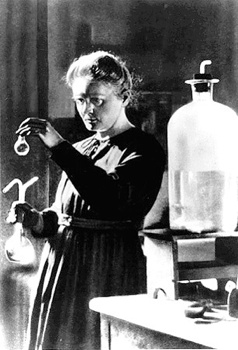 John Wayne squares off against Jim Hansen, Medium, Albert Bates, 11 Jan 2020 “…….. In 1896, Henri Becquerel discovered that uranium emitted rays that resembled X-rays. Marie Curie suspected that the radiation was not the outcome of some interaction but came from the atom itself. Her work with uranium disproved the conventional wisdom going back to ancient Greece that atoms were indivisible and set up the later discovery of subatomic particles. Curie discovered that thorium, radium, polonium and radioactive bismuth occurred naturally with uranium. Radium was known to glow in the dark, which made it useful for painting the hour and minute hands on watches and clocks. It was later discovered that radium “radiated” more than just neutrons, but also protons and electrons, becoming another unstable element, radon, and that element radiated its subatomic particles to become others, polonium and bismuth, until those eventually became a stable element, lead. Indeed, the radium Curie discovered was the progeny of another unstable element, thorium, which was the progeny of yet another unstable element, uranium.
Madame Curie was a physicist, not a medical doctor, so she did not recognize the health effects of handling uranium, thorium, radium and the other radionuclides. Indeed, she suspected the effects would be beneficial. One of the papers she and her husband published in the late 19th century announced that, when exposed to radium, diseased, tumor-forming cells were destroyed faster than healthy cells (the basis for today’s radio-chemotherapy). She carried test tubes containing radioactive isotopes in her pockets and stored them in her desk drawer. Although her many decades of exposure to radiation caused chronic illnesses (including near-blindness due to cataracts) and ultimately her death, she never acknowledged the inherent health risks. She likely did not recognize the symptoms when she began to feel weak and lose her hair. She died in 1934 from aplastic anemia without ever knowing that she fought the same mortal enemy as those who had painted the hands on watches and clocks, or those who had mined and processed the uranium on which she worked. After her death, and to this day, her papers and effects are too radioactive to be handled and her laboratory is unsafe to enter.also……..https://medium.com/@albertbates/john-wayne-squares-off-against-jim-hansen-42a258b2260d
Nuclear industry in terminal decline – over to solar and wind
 Nuclear Futures, Oil Price 18th Jan 2020
unequivocally entering the era of wind and solar power. https://oilprice.com/Alternative-Energy/Nuclear-Power/Is-This-The-Death-Knell-For-Nuclear.html
UK’s nuclear region, Cumbria, has unusually high rates of certain cancers
 NW Evening Mail 16th Jan 2020, A WORRYING new report has found that Cumbria has the highest incidence rates of certain kinds of cancer in the North West. According to data collated by charity North West Cancer Research, the county ranks 11 per cent higher on key cancers than the national average. As part of the study, analysts assessed the impact of 25 key cancers across the North West and 37 cancers across Wales.
Radioactive micro-particles still a hazard to the Olympics in Japan
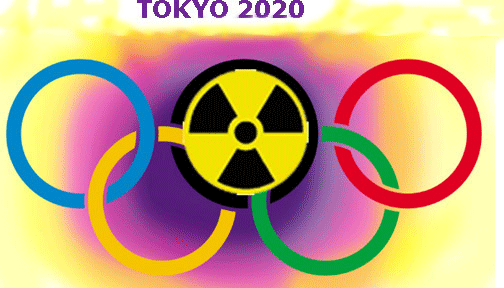 Nukewatch 10th Jan 2020. Hundreds of thousands of people—athletes, officials, media, and spectators—will flood into Japan for the 2020 Olympics.
Soon after the start of the meltdowns in 2011, experts began warning of exposure to radioactive micro-particles or “hot particles”—a type of particle that poses a danger unaccounted for by regulatory agencies. In order to understand the special danger posed by these particles at the Olympics and beyond, we mustfirst understand the current state of radiation exposure standards.
U.S. cities near nuclear weapons stations realise they are targets
 Cities in the crosshairs are pushing back against nuclear weapons
“We forget that all power is local. And by forgetting to act locally, we are giving away all the power.” Salon.com JON LETMAN, JANUARY 19, 2020 This article originally appeared on Truthout. Two years after a mistakenly sent text alert warning of an inbound ballistic missile threat caused widespread panic and confusion across Hawaii, cities remain potential targets and nuclear jitters continue to grow around the world.
Panicked responses to the erroneous text alert — which read “BALLISTIC MISSILE THREAT INBOUND TO HAWAII. SEEK IMMEDIATE SHELTER. THIS IS NOT A DRILL” and was accidentally issued on January 13, 2018, to Hawaii residents via the Emergency Alert System and Commercial Mobile Alert System — revealed how believably close nuclear fears hover to our everyday life
And now two years later, at the beginning of 2020, those fears have grown even stronger following a year in which talks aimed at denuclearizing the Korean peninsula faltered, fears of a nuclear clash between India and Pakistan spiked, and Russia announced it had deployed its first hypersonic nuclear-capable missiles.
Meanwhile, the U.S. abandoned the Intermediate Nuclear Forces treaty and continued to undermine the Joint Comprehensive Plan of Action (Iran nuclear deal) after it unilaterally withdrew in 2018. Now, many fear the U.S. will likely withdraw from the Open Skies and New START treaties.
As the U.S. modernizes its nuclear arsenal at a cost that could exceed $1.5 trillion and the other eight nuclear armed states upgrade their own nuclear weapons, ordinary citizens and the leaders of cities, towns, and municipalities around the world are resisting nuclear weapons through efforts like the Back from the Brink campaign and the International Campaign to Abolish Nuclear Weapons’ #ICANSave Cities appeal.
Across the U.S., cities like Seattle, Albuquerque, Colorado Springs and others are located near key military installations, which some see as a good reason to oppose nuclear policies. Today, more than 40 U.S. cities including, Philadelphia, Salt Lake City, Los Angeles and Honolulu have adopted a Back from the Brink resolution, which puts forward five policy goals aimed at reducing the threat of nuclear war: no first use of nuclear weapons, end sole authority to launch a nuclear attack, take U.S. nuclear weapons off hair-trigger alert, cancel modernization/replacement of the U.S. nuclear arsenal, and ultimately seek the elimination of nuclear weapons.
Back from the Brink aims to prompt cities, counties, and local governments to pressure Congress and the Trump administration to adopt the above five points.
Dozens of smaller cities from Portsmouth, New Hampshire, to Arcata, California, have adopted the resolution, as have local and state governments across the U.S. More than a dozen more cities (Little Rock, Chicago, Madison) and states (New York, Vermont, Washington) have proposed resolutions.
In a joint article, three council members representing Washington, D.C., Baltimore, and Montgomery County, Maryland, wrote, “As leaders of the Greater Washington area, home to the seat of our federal government and headquarters of its military — we are particularly at risk. We are living in the crosshairs of America’s enemies, both hostile governments and terrorists.” That risk, and the financial costs associated with nuclear weapons, led all three communities to adopt Back from the Brink resolutions…………
Based in Geneva, Switzerland, the International Campaign to Abolish Nuclear Weapons (ICAN) launched its #ICANSAVE cities appeal in 2018, calling on cities large and small around the world to formally support the 2017 U.N. Treaty on the Prohibition of Nuclear Weapons. The ban treaty, currently ratified by 34 nations, will enter into legal force once 50 nations have done so.
ICAN Executive Director Beatrice Fihn says that while, for many people, nuclear weapons can feel abstract and theoretical, it’s important to remain focused on their fundamental purpose.
“What these weapons really are made for is to wipe out whole cities. These are not precision guidance that will take out a specific military facility,” Fihn told Truthout. “We are so obsessed by staring at these world leaders, we forget that all power is local. And by forgetting to act locally, we are giving away all the power.”……….. https://www.salon.com/2020/01/19/cities-in-the-crosshairs-are-pushing-back-against-nuclear-weapons_partner/
Low dose radiation causes cell mutations – new research

Low doses of radiation used in medical imaging lead to mutations in cell cultures, https://www.sciencedaily.com/releases/2020/01/200116141731.htm–
Discovery that radiation creates breaks that allow in foreign DNA must be confirmed in animal studies January 16, 2020 Source: PLOS
- Summary:
- Common medical imaging procedures use low doses of radiation that are believed to be safe. A new study, however, finds that in human cell cultures, these doses create breaks that allow extra bits of DNA to integrate into the chromosome.
-
Common medical imaging procedures use low doses of radiation that are believed to be safe. A new study, however, finds that in human cell cultures, these doses create breaks that allow extra bits of DNA to integrate into the chromosome. Roland Kanaar and Alex Zelensky of Erasmus University Medical Center and Oncode Institute and colleagues report these new findings in a study published 16th January in PLOS Genetics.
Scientists have long known that exposing cells to high doses of ionizing radiation generates mutations by creating double-strand breaks that let in external segments of DNA. These extraneous fragments of DNA can occur in the nucleus, left over from natural processes, such as genomic DNA repair and viral infections. In the new study, researchers investigated whether low doses of ionizing radiation have damaging side effects by irradiating human and mouse cells grown in the lab. When they counted the cells that had taken up foreign DNA, they found that low doses of radiation, in the upper range of common diagnostic procedures, create mutations through inserted DNA even more efficiently than the much larger doses studied previously.
- While the new results in cell cultures are potentially concerning, the study’s authors stress that translating radiation’s effects on lab-grown cell cultures to effects in the body is premature. Future experiments using animal models will be necessary to determine the full effects of low-dose radiation, and whether its use in medical imaging has an impact on patient health. If the same phenomenon does occur inside the body, then doctors may need to take into account levels of extraneous DNA, such those resulting from a long-term viral infection, when assessing a patient’s risk from a procedure that requires radiation.
“Most molecular radiobiological research is focused on high doses of ionizing radiation relevant to cancer treatment, while effects of physiologically relevant doses of radiation on the cell are notoriously difficult to study at the molecular level,” said author Roland Kanaar. “Our discovery that mutagenic insertion of foreign DNA into cell’s genome is remarkably responsive to doses encountered during diagnostic, rather than therapeutic, procedures provides a new simple and sensitive tool to study their consequences and revealed surprising molecular genetic details of how cells cope with natural amounts of DNA damage.”
Japan’s Olympics – recovery for Fukushima? rescue for the nuclear industry?

Can Japan’s ‘Recovery Olympics’ heal Fukushima’s nuclear scars?fFukushima’s power plant. Three nuclear reactors melted down, spewing radioactive particles into the air. Jan. 14, 2020, By Keir Simmons, Yuka Tachibana and Henry Austin, FUTABA, Japan — Nine years after “Fukushima” became synonymous with nuclear disaster, the area will help kick off the 2020 Summer Olympics in Tokyo by hosting the opening ceremony’s torch relay near its devastated power plant.
But this symbol of rebirth — part of a planned renaissance for a region ravaged by the strongest earthquake in Japan’s history and deadly tsunami that engulfed entire communities — raises questions of whether nearly a decade is enough time to recover and make the area safe.
Officials in Japan told NBC News they were hopeful that the games, which open on July 24 and have been dubbed the country’s “Recovery Olympics,” would convince skeptics that the answer is yes.
“It’s an opportunity for Japan to change people’s perception, people’s view of Fukushima,” said Naoto Hisajima, the director general of disarmament, nonproliferation and science for Japan’s Foreign Ministry. “The Olympic torch will pass through Fukushima, and there’re going to be Olympic events in Fukushima.”
……… Three nuclear reactors melted down, spewing radioactive particles into the air.
Authorities acted quickly, scrubbing buildings and removing about 4 inches of soil and vegetation from the surrounding area. That lowered radioactivity to levels that are safe for people to be in contact with, according to Dr. Claire Corkhill of the U.K.’s University of Sheffield.
Corkhill’s team is helping plant operators come up with a plan to dispose of the highly radioactive melted cores — the parts of the power plant’s nuclear reactors that contained fuel components, like uranium and plutonium, that generated the heat to produce the power.
They are so toxic that only remotely controlled robots can get to them, but the robots are unable to remove them because “the intense radiation tends to fry their circuits,” she said.
Corkhill said that it will take decades to completely shut down the plant and that the operators still don’t know how to reach the cores.
Space to store the 1 million tons of water — equal to 400 Olympic-size swimming pools — that must be pumped through the reactor to keep the fuel cool is also running out, she warned.
While the water has been treated to remove most of the most dangerous radioactive components, traces of tritium remain.
Japanese authorities have suggested releasing the water slowly into the sea over a number of years, which Corkhill said was standard practice for power stations around the world.
It’s “the most feasible option at the moment,” she said.
Many residents are doubtful, however — particularly fishermen and women who test every catch for radiation…..
Sean Bonner and Azby Brown are part of environmental organization Safecast, which gives Geiger counters to Fukushima residents, as well as other people across Japan, to take radiation readings. It then collates the data and publishes them live on their website, which is an open source for radiation information.
Brown described trust as a “nonrenewable resource.”
“Once you’ve lost it, you don’t get it back,” Bonner said. “So we see our system as a side effect of people desperate to find something they can trust, because they’re not trusting information from the news. They’re not trusting information from authorities or institutions.”
While the cleanup continues, some areas remain off limits. Two miles from the plant, the town of Futaba remains uninhabited. Radiation levels are so high that former residents have to seek special permission to enter the town.
Katushide Okada, 75, said he had run a rose garden in the town since he was 23.
“We left with only what we were wearing,” he said. “We haven’t been able to go home since.”
Okada, who now lives in Tsukuba, about 130 miles to the south, in Ibaragi Prefecture, added, “This is a manmade disaster.”
Radiation hotspots have been found in J-Village, the starting point of the Olympic torch relay, according to Greenpeace.
After conducting its own tests, Greenpeace said radioactive contamination still remained in the parking lot and the nearby forests at the Olympic sports complex in Fukushima Prefecture. …….. Keir Simmons and Yuka Tachibana reported from Futaba, Japan, and Henry Austin from London. https://www.nbcnews.com/news/world/can-japan-s-recovery-olympics-heal-fukushima-s-nuclear-scars-n1114361
1 This Month
26 April – Chernobyl: Inside the Meltdown airs on National Geographic on Sunday 26th April from 4pm

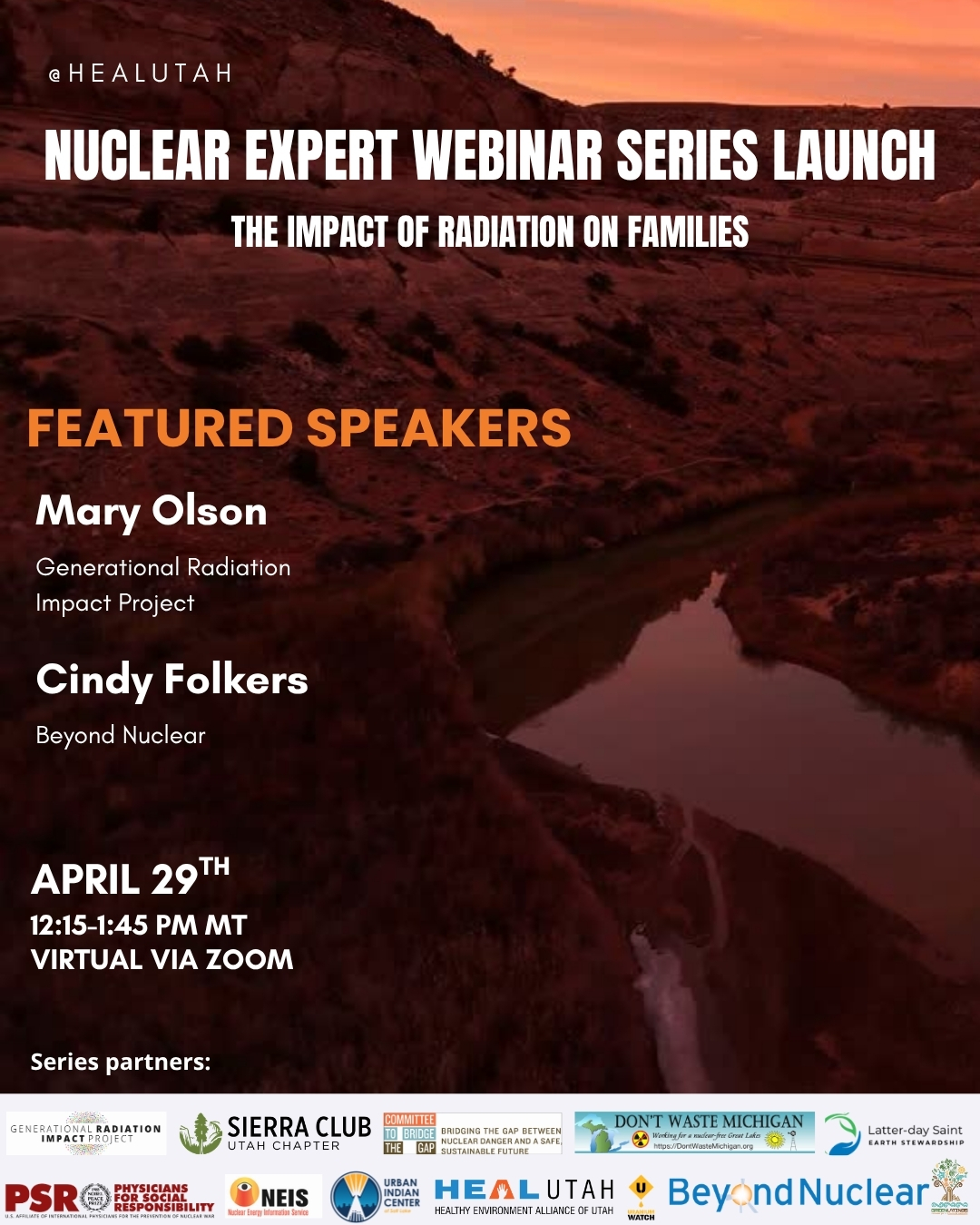
29 April – Nuclear Expert Webinar #1 – Radiation Impacts on Families with Mary Olson and Cindy Folkers
- 12:15 PM MT – 1:45 PM MT
- Location: Virtual – REGISTER TODAY

4 May -West Suburban Peace Coalition to discuss Iran war at May Educational Forum
Monday, May 4, 7:00 – 8:00 PM Central Standard Time
Title: : How Trump’s Narrative Tries to Shape the Reality of the War on Iran.
Contact Walt Zlotow, zlotow@hotmail.com 630 442 3045 for further information
14 May – online event From Bombs to Data Centres: the Face of Nuclear Colonialism

Pine Ridge Uranium is the real threat, not Tehran- Tell Burgum: Stop the Extraction.
Chernobyl: The Lost Tapes – A good documentary on Chernobyl on SBS available On Demand for the next 3 weeks– https://www.sbs.com.au/ondemand/tv-program/chernobyl-the-lost-tapes/2352741955560
To see nuclear-related stories in greater depth and intensity – go to https://nuclearinformation.wordpress.com
-
Archives
- April 2026 (317)
- March 2026 (251)
- February 2026 (268)
- January 2026 (308)
- December 2025 (358)
- November 2025 (359)
- October 2025 (376)
- September 2025 (257)
- August 2025 (319)
- July 2025 (230)
- June 2025 (348)
- May 2025 (261)
-
Categories
- 1
- 1 NUCLEAR ISSUES
- business and costs
- climate change
- culture and arts
- ENERGY
- environment
- health
- history
- indigenous issues
- Legal
- marketing of nuclear
- media
- opposition to nuclear
- PERSONAL STORIES
- politics
- politics international
- Religion and ethics
- safety
- secrets,lies and civil liberties
- spinbuster
- technology
- Uranium
- wastes
- weapons and war
- Women
- 2 WORLD
- ACTION
- AFRICA
- Atrocities
- AUSTRALIA
- Christina's notes
- Christina's themes
- culture and arts
- Events
- Fuk 2022
- Fuk 2023
- Fukushima 2017
- Fukushima 2018
- fukushima 2019
- Fukushima 2020
- Fukushima 2021
- general
- global warming
- Humour (God we need it)
- Nuclear
- RARE EARTHS
- Reference
- resources – print
- Resources -audiovicual
- Weekly Newsletter
- World
- World Nuclear
- YouTube
-
RSS
Entries RSS
Comments RSS
 nuclear-news