Navy sailor dies in accident onboard under-construction nuclear submarine.
Navy sailor dies in accident onboard under-construction nuclear submarine. Navy has ordered a Board of Inquiry into the incident, By Pradip R Sagar April 04, 2020 A navy sailor has died in an accident on board one of Indian Navy’s under-construction nuclear submarines. Considering the secrecy of the project, the Navy has not divulged the name of the submarine.
The Incident happened at Navy’s Vizag-based eastern naval command ship building centre jetty on April 1. …. https://www.theweek.in/news/india/2020/04/04/navy-sailor-dies-in-accident-onboard-under-construction-nuclear-.html
The wrong crisis stopped the Olympics — Beyond Nuclear International

The Games are postponed but what took them so long?
via The wrong crisis stopped the Olympics — Beyond Nuclear International
Put people and health before nukes — Beyond Nuclear International

Pentagon leak reveals UK plans for new nuclear warheads
via Put people and health before nukes — Beyond Nuclear International
Sam and the Plant Next Door – growing up by the nuclear power plant
Sam, 11, is always being told not to worry about the nuclear power plant rising next door, but for him there is lots to think about. Hinkley Point C will be Britain’s largest nuclear plant, and it’s only two miles away. Most of his classmates expect to work at the plant but Sam is determined to escape that fate.
His dream is to protect the surrounding marine life he identifies with. Like the fish, he feels unappreciated by the adults. Sam thinks the only way to reach his dream is to leave his friends behind and to go to a private school. But when he’s offered a place, his parents can’t afford the fees. As a last resort, they turn to the power company for funding, which forces Sam to decide what kind of person he wants to be. Drifting between Sam’s daily life and his dreams, a film about holding on and letting go, along the tricky passage from childhood innocence to grown-up life https://www.youtube.com/watch?v=VMhYngrEgZU&feature=youtu.be
Sailors on nuclear aircraft carrier cheer their captain who put their health above his career
 any information about their nuclear-powered ships to get out. And even when such news does get out, the word “NUCLEAR” is dropped from the media coverage.
The Navy Fired the Captain of the Theodore Roosevelt. See How the Crew Responded. The rousing show of support provided another gripping scene to emerge from the coronavirus pandemic: the rank and file cheering a boss they viewed as putting their safety ahead of his career. By Helene Cooper, Thomas Gibbons-Neff and Eric Schmitt
- April 3, 2020 WASHINGTON — It was a send-off for the ages, with hundreds of sailors aboard the aircraft carrier Theodore Roosevelt cheering Capt. Brett E. Crozier, the commander who sacrificed his naval career by writing a letter to his superiors demanding more help as the novel coronavirus spread through the ship.
- The rousing show of support provided the latest gripping scene to emerge from the coronavirus pandemic: the rank and file shouting their admiration for a boss they viewed as putting their safety ahead of his career.
…….. in removing Captain Crozier from command, senior Navy officials said they were protecting the historic practice that complaints and requests have to go up a formal chain of command. They argued that by sending his concerns to 20 or 30 people in a message that eventually leaked to news organizations, Captain Crozier showed he was no longer fit to lead the fast-moving effort to treat the crew and clean the ship.
To get a perspective – the climate crisis is a greater catastrophe than Coronavirus

While we fixate on coronavirus, Earth is hurtling towards a catastrophe worse than the dinosaur extinction, The Conversation, Andrew Glikson
Earth and paleo-climate scientist, 3 Apr 20, At several points in the history of our planet, increasing amounts of carbon dioxide in the atmosphere have caused extreme global warming, prompting the majority of species on Earth to die out.
In the past, these events were triggered by a huge volcanic eruption or asteroid impact. Now, Earth is heading for another mass extinction – and human activity is to blame.
I am an Earth and Paleo-climate scientist and have researched the relationships between asteroid impacts, volcanism, climate changes and mass extinctions of species.
My research suggests the current growth rate of carbon dioxide emissions is faster than those which triggered two previous mass extinctions, including the event that wiped out the dinosaurs.
The world’s gaze may be focused on COVID-19 right now. But the risks to nature from human-made global warming – and the imperative to act – remain clear………
My research suggests the current growth rate of carbon dioxide emissions is faster than those which triggered two previous mass extinctions, including the event that wiped out the dinosaurs.
The world’s gaze may be focused on COVID-19 right now. But the risks to nature from human-made global warming – and the imperative to act – remain clear……
The next mass extinction has begun
Current atmospheric concentrations of carbon dioxide are not yet at the levels seen 55 million and 65 million years ago. But the massive influx of carbon dioxide means the climate is changing faster than many plant and animal species can adapt.
A major United Nations report released last year warned around one million animal and plant species were threatened with extinction. Climate change was listed as one of five key drivers.
The report said the distributions of 47% of land-based flightless mammals, and almost 25% of threatened birds, may already have been negatively affected by climate change.
Many researchers fear the climate system is approaching a tipping point – a threshold beyond which rapid and irreversible changes will occur. This will create a cascade of devastating effects.
There are already signs tipping points have been reached. For example, rising Arctic temperatures have led to major ice melt, and weakened the Arctic jet stream – a powerful band of westerly winds.

This allows north-moving warm air to cross the polar boundary, and cold fronts emanating from the poles to intrude south into Siberia, Europe and Canada.
A shift in climate zones is also causing the tropics to expand and migrate toward the poles, at a rate of about 56 to 111 kilometres per decade. The tracks of tropical and extra-tropical cyclones are likewise shifting toward the poles. Australia is highly vulnerable to this shift…….
Earth’s next mass extinction is avoidable – if carbon dioxide emissions are dramatically curbed and we develop and deploy technologies to remove carbon dioxide from the atmosphere. But on the current trajectory, human activity threatens to make large parts of the Earth uninhabitable – a planetary tragedy of our own making. https://theconversation.com/while-we-fixate-on-coronavirus-earth-is-hurtling-towards-a-catastrophe-worse-than-the-dinosaur-extinction-130869
Russia’s response to coronavirus risk for nuclear stations – isolate the nuclear workforce

 Russia’s nuclear workers isolated onsite as coronavirus spreads, Bellona, April 3, 2020 by Charles Digges, charles@bellona.no
Workers at Russia’s nuclear power plants will be isolated from the general public and required to live in onsite clinics at their respective stations as nuclear authorities tighten their response to the coronavirus after a number of industry infections.
The order came Tuesday from Rosenergoatom, Russia’s nuclear utility, and specified that both primary and back up crews of nuclear technicians, who “facilitate process continuity” would now be required check in to dispensaries at their plants, where they would be provided with daily living essentials and isolated from outside contact.
Rosenergoatom, which is a subsidiary of state nuclear corporation Rosatom, is responding to a Tuesday video address by Andrei Likhachev, the corporation’s CEO, which outlined the isolation measures.
Earlier this week, Likhachev confirmed that four Rosatom employees had tested positive for the coronavirus, the spread of which has all but ground the world economy to a halt as the number of those infected worldwide surpasses 1 million.
Russians have been told to stay home through next week on a government ordered holiday. There have been 4,149 cases of coronavirus reported by Moscow as of Friday, 34 of which have resulted in death. In his address, Likhachev asked all Rosatom employees who could feasibly work remotely had been asked to do so, though he said the corporation’s overseas reactor building projects would continue.
Rosenergoatom’s unprecedented steps to protect highly skilled nuclear specialists from falling ill from the virus mirror measures other countries are taking for their own workers to avoid power interruptions or outright plant shutdowns.
In the United States, the Nuclear Regulatory Commission is considering isolating its own workers from the effects of the coronavirus pandemic, while France – the world’s most nuclear-dependent nation – is weighing staff cuts of its own. Both France and the United Kingdom have shut down a number of their nuclear fuel reprocessing facilities in response to a spike in local infections
Rosenergoatom didn’t make clear precisely how many of Russia’s nuclear workers have been put in isolation, but its parent company Rosatom controls a sprawling network of reactors, laboratories, commercial structures and fuel fabrication facilities that employ some 250,000 people…….
Workers at the Beloyarsk nuclear power plant, 1,800 kilometers to Moscow’s east, have already been working in isolation for more than a week, after the wife of one of the plant’s technicians tested positive for the virus. https://bellona.org/news/nuclear-issues/2020-04-russias-nuclear-workers-isolated-onsite-as-coronavirus-spreads
Nuclear power plant shut down by host of tiny shrimp clogging filters

 Masses of tiny shrimp shut down nuclear power plant in southern China twice in one week, 1 Apr 2020,The Star, By Holly Chik The Power-Generating Units Of A Nuclear Plant In Southern China Were Shut Down Twice Last Week After Its Water Filters Were Blocked By Masses Of Small Shrimp, The Safety Regulator Said.
Big shoals of the tiny acetes – krill-like shrimp that are just a few centimetres long – flooded the seawater diversion channel and circulating water pumping stations of the Yangjiang Nuclear Power Station in Guangdong on March 24, the National Nuclear Safety Administration said in a statement.
They crippled the water pumping stations and caused one of the nuclear plant’s six power-generating units to go into automatic safe shutdown, while the other five units ran at 80 per cent of capacity. The unit that shut down was powered up again the next day after station staff cleared the acetes and cleaned the filters.
But soon after on March 25, the same thing happened, with large shoals of acetes again finding their way into the pumping stations and causing four power-generating units to shut down automatically. The station shut off the other two units for safety reasons. …….
The Hong Kong Nuclear Society also noted that similar incidents had happened before.
“Similar events have occurred at nuclear power plants using seawater as a coolant for their power-generating units [including non-nuclear ones] throughout the world, including China,” said Luk Bing-lam, chairman of the society.
Sailors on nuclear aircraft carrier Theodore Roosevelt applaud their fired captain
Videos have emerged on social media showing sailors on the aircraft carrier USS Theodore Roosevelt giving their fired captain a rousing sendoff as he left the ship.
Capt. Brett Crozier was relieved of duty for a “loss of confidence” following the leak of a letter in which he advocated for stronger measures to protect his crew from an outbreak of coronavirus aboard the ship.
The videos show hundreds of sailors gathered in the ship’s hangar clapping and cheering loudly for Crozier as he walked down a ramp towards the pier in Guam where the ship is docked. ……
In one of the videos capturing that moment, voices can be heard saying “We love you, too!” and “Thank you skipper!”
Later, the ship’s crew is heard rhythmically clapping and chanting, “CAPTAIN! CROZIER!”
Earlier on Thursday, Crozier was relieved of duty by acting Secretary of the Navy Thomas Modly who said he had lost confidence in his leadership abilities following the leak of a letter where Crozier advocated for stronger measures to protect his ship’s crew from further infection by the coronavirus.
Modly said Crozier had expressed valid concerns for the safety of his ship but had exercised “poor judgment” in distributing the letter to senior commanders to a broad group of people when he could have expressed his concerns to the admiral aboard the carrier.
In the letter Crozier advocated Navy leaders to speed up the removal of the nearly 5,000 sailors aboard the carrier to appropriate accommodations on Guam that met social distancing guidelines set by the Centers for Disease Control and Prevention.
The day after the letter appeared in the San Francisco Examiner the Navy announced that 2,700 of the ship’s crew were being brought ashore and that suitable housing would be found in hotel rooms on the island. …..https://abcnews.go.com/Politics/sailors-aircraft-carrier-give-fired-captain-rousing-sendoff/story?id=69957655
Work at Limerick nuclear plant threatened by rising Coronavirus death toll in Montgomery County
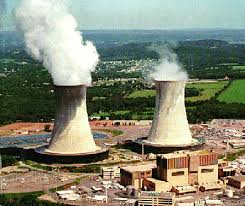
Montco coronavirus deaths at 12; officials  ‘concerned’ about work at Limerick nuclear plant, The Mercury, By Carl Hessler Jr. chessler@21st-centurymedia.com 4 Apr 20, EAGLEVILLE — The coronavirus death toll in Montgomery County rose to 12 on Thursday as officials reported the deaths of two more people, residents of Upper Providence and Springfield townships….. ‘concerned’ about work at Limerick nuclear plant, The Mercury, By Carl Hessler Jr. chessler@21st-centurymedia.com 4 Apr 20, EAGLEVILLE — The coronavirus death toll in Montgomery County rose to 12 on Thursday as officials reported the deaths of two more people, residents of Upper Providence and Springfield townships…..
Officials said there were 113 new positive cases of the virus reported on Thursday, bringing the county’s total number of cases to 707 since March 7. The new cases included residents from 35 municipalities, two of which reported their first cases – Bridgeport Borough and Red Hill Borough. To date, 55 of the county’s 62 municipalities have reported coronavirus cases. The new cases in the county included at least 48 men and 62 women whose ages ranged from 1 month to 94. Six of the individuals are hospitalized, officials said Arkoosh said county officials continue to be in contact with Exelon representatives regarding the county’s concerns that social distancing measures were “perhaps not being adhered to” during a maintenance refueling project involving more than 1,000 workers that began last month at the Limerick Generating Station operated by Exelon near Pottstown. The county’s Office of Public Health is currently reviewing information that it received from Exelon in response to questions the commissioners posed to company officials on Wednesday. The information is helpful and I remain deeply concerned that this maintenance refueling will ultimately contribute to the number of people that are exposed to the coronavirus in our region,” said Arkoosh, who was joined at the news briefing by fellow commissioners Kenneth E. Lawrence Jr. and Joseph C. Gale, and Dr. Alvin Wang, regional EMS medical director, and Dr. Brenda Weis, administrator of the Office of Public Health. Without being specific, Arkoosh said the information provided by Exelon generated more questions by the county and officials are awaiting answers to those questions….. On Wednesday, Exelon officials confirmed two cases of COVID-19 among the workforce at the Limerick plant, adding the full-time employees were sent home and were receiving care and that neither employee had been onsite since March 20. Company officials added that any employees who came in close contact with the affected persons or worked at that reporting location were notified, and that an additional deep cleaning occurred at all areas that potentially were exposed. Arkoosh said officials believe they were misled about the start date of the refueling project. “We were always told March 30. An (event of public interest alert) went out on March 27 saying that they were starting that evening. We’ve also been told by others that there were quite a large number of people here for a number of days before that,” Arkoosh said. County officials have requested the permanent address and the lodging information for all of the contractors hired to work on the refueling project. “We received information back from Exelon on about 950 of those individuals. They are staying all over the area…some people are driving from other states every day. It’s quite a lot,” Arkoosh said. Officials said the contractors, many of whom travel from one generating plant to another to work on refueling projects, are staying locally at AirBnBs, private homes, campsites, hotels and other rental units. “I believe that they have an obligation to not only the families of these workers but to whatever community they’ll be going to next to do a refuel, that these individuals should be sequestered for 14 days before they leave here so that at least when they leave they can be fairly assured that they have no disease,” Arkoosh explained. County officials said they are concerned that contractors where coming from other states into the county which was an area of community spread of COVID-19. Arkoosh said that situation could put the workforce at the Limerick plant at risk as well as local first responders…….. https://www.pottsmerc.com/news/montco-coronavirus-deaths-at-12-officials-concerned-about-work-at-limerick-nuclear-plant/article_dd37f986-7522-11ea-8daa-73c6d383e3e3.html |
|
Worker fatigue is a worry at U.S. nuclear stations, as NRC allows longer shifts
 US allowing longer shifts at nuclear plants in pandemic, Taiwan News, By ELLEN KNICKMEYER , Associated Press, Associated Press US allowing longer shifts at nuclear plants in pandemic, Taiwan News, By ELLEN KNICKMEYER , Associated Press, Associated Press
2020/04/03 WASHINGTON (AP) — U.S. nuclear plants will be allowed to keep workers on longer shifts to deal with staffing problems in the coronavirus pandemic, raising worries among watchdogs and some families living near reactors that employee exhaustion will increase the risks of accidents.
The Nuclear Regulatory Commission’s decision to temporarily allow longer worker shifts is one way the industry is scrambling to keep up mandatory staffing levels through what will be weeks or months more of the outbreak. The shift extensions would allow workers to be on the job for up to 86 hours a week. Currently, they’re generally allowed to work up to 72 hours in a seven-day period. As part of the waiver, workers could be assigned to 12-hour shifts for as many as 14 days in a row. Nuclear plant workers already are having their temperatures checked on arrival for each shift, and employers are studying options including having workers temporarily live at plants full-time…… “This is highly specialized work that needs a lot of attention and focus,” Treat, a nuclear safety activist, said by telephone. It’s a problem, she said, “if people are fatigued or sick….. The NRC closely regulates total staffing and staff hours as a condition of reactors’ continued operation. Fatigue has often been deemed a factor in accidents at nuclear plants, as in the former Soviet Union’s 1986 Chernobyl disaster, where key plant staffers had worked multiple shifts. In the United States in recent days, nuclear plants are reporting some of the first coronavirus cases among their workers. Over the weekend, the NRC said it would consider on a plant-by-plant basis 60-day exemptions that would let plants keep workers on the job for up to 86 hours in a seven-day period, including up to 12 hours a day for 14 days straight. No plant had received a work-hour waiver as of Thursday, regulators said……. But Edwin Lyman, a nuclear power expert with the Union of Concerned Scientists watchdog group, called proposals like Basso’s “alarming.” “I hope that the NRC will conduct due diligence on industry claims that the best way to reduce the potential for COVID-19 spread among its personnel is to force them to work fourteen 12-hour days in a row,” he said in an email. He called that solution likely “untenable.” If a plant fails to keep up minimum staffing requirements in the pandemic, regulators could order it to shut down, something that has happened rarely, if ever, to an operating plant, regulators said. Besides the kind of crew consolidation Basso described, individual nuclear plants also are looking at the possibility of bringing former plant operators back into service. Another option is sequestering crews on site — keeping workers fed and bunked down at the plants during the pandemic, NEI spokeswoman Mary Love said…… https://www.taiwannews.com.tw/en/news/3909533 |
|
Bosnia and Herzegovina oppose Croatia’s nuclear waste plan
 BiH warns Croatia against storing nuclear waste from Krško at borderhttps://balkangreenenergynews.com/bih-warns-croatia-against-storing-nuclear-waste-from-krsko-at-border/ Bosnia and Herzegovina Croatia April 3, 2020 An environmental impact study is underway after Croatia gave the green light to a special fund to use a former barracks near the border with Bosnia and Herzegovina for the disposal of nuclear waste from the Krško nuclear power plant. Both the government in Sarajevo and the Republic of Srpska entity protested against the decision. BiH warns Croatia against storing nuclear waste from Krško at borderhttps://balkangreenenergynews.com/bih-warns-croatia-against-storing-nuclear-waste-from-krsko-at-border/ Bosnia and Herzegovina Croatia April 3, 2020 An environmental impact study is underway after Croatia gave the green light to a special fund to use a former barracks near the border with Bosnia and Herzegovina for the disposal of nuclear waste from the Krško nuclear power plant. Both the government in Sarajevo and the Republic of Srpska entity protested against the decision.
Bosnia and Herzegovina’s Minister of Foreign Trade and Economic Relations Staša Košarac told Croatia’s Ambassador Ivan Sabolić that the neighboring country’s intention to build a storage site for radioactive and nuclear waste from Krško less than a kilometer from the border is unacceptable. The Čerkezovac location at Trgovska gora is a former army barracks near the town of Dvor. Croatia’s Fund for Financing the Decommissioning of the Krško Nuclear Power Plant and the Disposal of Krško NPP Radioactive Waste and Spent Nuclear Fuel just got the approval to use the facility. It revealed an environmental impact study would be conducted before it seeks permits. The Una river, separating the two states, is a protected area. Following earlier announcements about the project, BiH threatened to sue the other country and pursue arbitration and its officials have cited risk from seismic activity. Protests have been held as well.
Košarac claimed more than 250,000 people living near the river would be endangered if the plan is implemented and that it would be bad for the environment. BiH will continue to prove the damaging effect and mobilize its institutions, his ministry said. Čerkezovac is near the country’s northwestern tip. The fund based in Zagreb vowed to cooperate with the local community, the general public and stakeholders on the other side. It claimed that if the project goes through, it would manage the radioactive waste from Krško in a safe, systematic and standardized way. The nuclear power plant is in Slovenia, just 10 kilometers from the border with Croatia and just over 30 kilometers from the center of Zagreb. It was built jointly by the two republics, then part of Yugoslavia, in 1981. Slovenia plans to store waste in Krško’s vicinity, in Vrbina, but there is no consensus with Croatia.
Croatian authorities have filed the domestic national strategy with the European Atomic Energy Community (Euratom) for evaluation. The said study is planned to include geological work and the determination of the so-called zero radiation conditions. The fund said it would perform security analysis as well. Košarac informed Johann Sattler, Head of the Delegation of the European Union and the EU’s Special Representative in BiH, of the country’s stance. |
|
US Navy fires captain who sought help for coronavirus-stricken nuclear aircraft carrier
 US Navy fires captain who sought help for coronavirus-stricken ship, ABC News, 3 Apr 20 The US Navy has fired the captain of an aircraft carrier who faced a growing outbreak of the new coronavirus on his ship, saying he created a panic by sending his memo pleading for help to too many people. US Navy fires captain who sought help for coronavirus-stricken ship, ABC News, 3 Apr 20 The US Navy has fired the captain of an aircraft carrier who faced a growing outbreak of the new coronavirus on his ship, saying he created a panic by sending his memo pleading for help to too many people.
Key points:
In a four-page memo to Navy leaders, the captain of the nuclear-powered warship said the spread of the disease was ongoing and accelerating, and said that removing all but 10 per cent of the crew was a “necessary risk” in order to stop the spread of the virus. Navy Secretary Thomas Modly said the ship’s commander Brett Crozier “demonstrated extremely poor judgment” in the middle of a crisis……. That decision was immediately condemned by members of the House Armed Services Committee, who called it a “destabilising move” that would “likely put our service members at greater risk and jeopardise our fleet’s readiness”. ….. Captain Crozier graduated from the US Naval Academy in 1992 and later attended the Nuclear Power School, a prerequisite to command a nuclear-powered aircraft carrier. The USS Theodore Roosevelt, with a crew of nearly 5,000, is docked in Guam, and the Navy has said as many as 3,000 people will be taken off the ship and quarantined by Friday. More than 100 sailors on the ship have tested positive for the virus, but none have been hospitalised. ….. Democrats in support of Captain CrozierDemocrats on the House committee issued a joint statement in support of Captain Crozier. They said that while the captain went outside his chain of command, the pandemic presented a new set of challenges. “Captain Crozier was justifiably concerned about the health and safety of his crew, but he did not handle the immense pressure appropriately,” the statement said. Captain Crozier, in his memo, raised warnings the ship was facing a growing outbreak of the coronavirus and asked permission to isolate the bulk of his crew members on shore, an extraordinary move to take a carrier out of duty in an effort to save lives. He said that removing all but 10 per cent of the crew would be a “necessary risk” in order to stop the spread of the virus. “We are not at war. Sailors do not need to die. If we do not act now, we are failing to properly take care of our most trusted asset: our sailors,” Captain Crozier wrote. https://www.abc.net.au/news/2020-04-03/navy-fires-captain-who-sought-help-for-coronavirus-stricken-ship/12117534 |
|
|
Action on pandemic means that Hanford nuclear waste clean-up is stalled
 US nuclear waste cleanup takes back seat to coronavirus, New York Post, By Associated Press, April 3, 2020 ALBUQUERQUE, NM —The US government’s efforts to clean up Cold War-era waste from nuclear research and bomb making at federal sites around the country has lumbered along for decades, often at a pace that watchdogs and other critics say threatens public health and the environment.Now, fallout from the global coronavirus pandemic is resulting in more challenges as the nation’s only underground repository for nuclear waste finished ramping down operations Wednesday to keep workers safe.Over more than 20 years, tons of waste have been stashed deep in the salt caverns that make up the southern New Mexico site. Until recently, several shipments a week of special boxes and barrels packed with lab coats, rubber gloves, tools and debris contaminated with plutonium and other radioactive elements were being trucked to the remote facility from South Carolina, Idaho and other spots.
That’s all but grinding to a halt.
Shipments to the desert outpost will be limited for the foreseeable future while work at the country’s national laboratories and defense sites shift to only those operations considered “mission critical.”
Officials at the Waste Isolation Pilot Plant warned state regulators in a letter Tuesday that more time would be needed for inspections and audits and that work would be curtailed or shifts would be staggered to ensure workers keep their distance from one another.
“This action is being taken out of an abundance of caution for the safety of employees and the community,” said Donavan Mager, a spokesman for Nuclear Waste Partnership, the contractor that runs the repository.
Some critical duties still must be done — like placing bolts in the repository’s ceilings to ensure the shifting salt doesn’t collapse.
It’s the same at Los Alamos National Laboratory, the once-secret city in northern New Mexico that gained famed for being the birthplace of the atomic bomb. Most employees there are working remotely and the summer intern program is on pause.
Some work related to cleanup is ongoing, such as radiological surveys, inspections of hazardous waste storage facilities and maintenance of an early notification system designed to protect drinking water supplies.
In Washington state, tours of one of the most significant nuclear reactors in atomic history are on hold. Public meetings at the Hanford Nuclear Reservation have been canceled and those who want to review documents in person are out of luck as officials there downsized to mission critical operations nearly two weeks ago.
The number of employees on site has dwindled to the “absolute minimum” needed to run safety and security programs and keep IT systems humming for those working at home.
The circumstances are unlike anything ever faced by managers at Hanford, Los Alamos and elsewhere……
Democratic senators had voiced concerns just weeks ago that the Trump administration’s proposed budget for the US Energy Department calls for less money to clean up the Cold War-era waste while funneling significantly more to fund modernization of the nation’s nuclear arsenal.
The proposal provides nearly $27 billion, most of which would go toward nuclear security work that includes restarting production of the plutonium cores that are used as triggers inside nuclear weapons. Less than one-quarter of that would be used for cleanup of 16 sites in 11 states.
“The coronavirus pandemic demonstrates why we should get cleanup done once and for all,” said Jay Coghlan, executive director of Nuclear Watch New Mexico. “What we do as humans ebbs and flows with history, but the radioactive and toxic wastes that we leave behind last longer than our recorded history. We should be acting now.”
Watchdogs also pointed to permit renewals and other regulatory actions related to cleanup that could get pushed back.
The federal government has agreements with several states to reach certain cleanup milestones. Officials were reticent to say what deadlines might be missed, noting only that the Energy Department’s environmental managers are evaluating the potential effects on projects across the complex as the virus spreads.
US Sens. Tom Udall and Martin Heinrich said worker health should remain the priority but noted that as lawmakers consider more economic stimulus legislation, increased funding for environmental management could help support jobs and accelerate cleanup in the future. https://nypost.com/2020/04/03/cleanup-of-us-nuclear-waste-takes-back-seat-as-virus-spreads/
Expert opinion recommends furloughing Britain’s Trident nuclear weapons
|
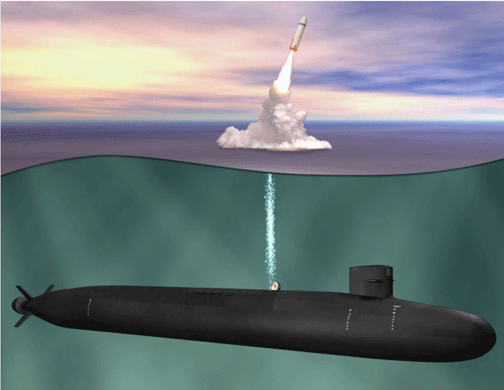
Nuclear weapons law expert suggests furloughing Trident https://www.irishlegal.com/article/nuclear-weapons-law-expert-suggests-furloughing-trident 3 April 2020 A legal expert on nuclear weapons has joined calls for the UK government to rethink keeping Trident submarines at sea during the coronavirus pandemic.Professor Nick Grief of Kent Law School is among a group of signatories to a letter questioning whether the cost of keeping the nuclear weapons system on “continuous at sea deterrent patrol” is justifiable during the COVID-19 outbreak.
Other signatories to the letter, circulated to parliamentarians across the UK, include three former Royal Navy commanders, SNP Westminster leader Ian Blackford, academics and peace campaigners. The signatories have said they hope the letter will encourage politicians and the wider public to begin to question the morality and the feasibility of nuclear weaponry. It states: “The increasing cost of coronavirus will require decades to recover. Meanwhile, the UK’s Trident nuclear weapon system remains on continuous at sea deterrent patrol costing some £2 billion a year and using scarce military assets to protect the on-patrol submarine.” The letter also raises concerns about “the morale of the submarine crew on patrol” during the pandemic, as well as “their own state of health and exposure to the virus”. It concludes: “In these circumstances, and lacking any foreseeable threat of a ‘bolt from the blue’ nuclear weapon attack on the UK, is it appropriate for the government to continue spending billions of pounds on continuous at sea deterrent, as well as building new nuclear warheads and the submarines to carry them?” |
|
1 This Month
23 April – WEBINAR – Why new nuclear reactors are the wrong tools for decarbonization Thursday, April 23 • 1 AM – 2 AM AEST



Pine Ridge Uranium is the real threat, not Tehran- Tell Burgum: Stop the Extraction.
Chernobyl: The Lost Tapes – A good documentary on Chernobyl on SBS available On Demand for the next 3 weeks– https://www.sbs.com.au/ondemand/tv-program/chernobyl-the-lost-tapes/2352741955560
To see nuclear-related stories in greater depth and intensity – go to https://nuclearinformation.wordpress.com
-
Archives
- April 2026 (275)
- March 2026 (251)
- February 2026 (268)
- January 2026 (308)
- December 2025 (358)
- November 2025 (359)
- October 2025 (376)
- September 2025 (257)
- August 2025 (319)
- July 2025 (230)
- June 2025 (348)
- May 2025 (261)
-
Categories
- 1
- 1 NUCLEAR ISSUES
- business and costs
- climate change
- culture and arts
- ENERGY
- environment
- health
- history
- indigenous issues
- Legal
- marketing of nuclear
- media
- opposition to nuclear
- PERSONAL STORIES
- politics
- politics international
- Religion and ethics
- safety
- secrets,lies and civil liberties
- spinbuster
- technology
- Uranium
- wastes
- weapons and war
- Women
- 2 WORLD
- ACTION
- AFRICA
- Atrocities
- AUSTRALIA
- Christina's notes
- Christina's themes
- culture and arts
- Events
- Fuk 2022
- Fuk 2023
- Fukushima 2017
- Fukushima 2018
- fukushima 2019
- Fukushima 2020
- Fukushima 2021
- general
- global warming
- Humour (God we need it)
- Nuclear
- RARE EARTHS
- Reference
- resources – print
- Resources -audiovicual
- Weekly Newsletter
- World
- World Nuclear
- YouTube
-
RSS
Entries RSS
Comments RSS
 nuclear-news