Incidents at Belarus nuclear station have alarmed neighbouring Lithuania
 Lithuania wary of incident at Belarus nuclear plant https://www.euractiv.com/section/politics/short_news/lithuania-weary-of-incident-at-belarus-nuclear-plant/ Benas Gerdžiūnas | 1 Dec 20, LRT.lt/en Lithuania has asked Belarus for clarification after its new nuclear plant located some 50 kilometres from the country’s capital suffered an incident just five days after launch.
Belarus President Alexander Lukashenko took part in the opening of the plant on 6 November, where he said the launch of the Astravyets NPP was as “ordinary” as building a metro.
“Belarus is becoming a nuclear power,” he declared.
Several voltage-measuring transformers outside of the nuclear reactor exploded during an incident on 7 November, according to sources at TUT.by, an independent media outlet in Belarus.
On Monday, the Belarusian Energy Ministry said that “a need to replace the measuring equipment arose” during testing, without providing further details.
Lithuania’s State Nuclear Power Safety Inspectorate (VATESI) said the plant is still undergoing testing. However, “we have also received no information about the [planned] next steps to launch the plant”, VATESI told BNS in a written comment.
Lithuania has been one of the most ardent critics of the nuclear plant built by the Russian state atomic corporation Rosatom and funded by a loan from the Kremlin.
Vilnius says the plant is unsafe and was built in breach of international safety standards. Minsk denies all allegations.
In September, Estonia, Greece, Italy, Latvia, Lithuania and Poland had sent a joint statement to the Director-General of the International Atomic Energy Agency (IAEA) and contracting parties to the Convention on Nuclear Safety (CNS), calling on Belarus to start addressing nuclear safety issues without delay.
At the same time, the Russian company Rosatom is in talks with Belarus about the construction of a second nuclear power plant and a research reactor in the country, Rosatom chief Alexander Likhachev announced on Tuesday in a video statement.
In August, Estonia, Latvia and Lithuania agreed not to purchase electricity from the plant.
The Baltic states are gearing up to switch from the Russian-controlled BRELL electricity grid that also includes Belarus, and synchronise with the continental European system by 2025.
(Benas Gerdžiūnas, LRT.lt/en | Alexandra Brzozowski, EURACTIV.com)
Armenian paper urges use of a nuclear ”dirty bomb” on Azerbaijan
 paper urges use of nuclear bomb on Azerbaijan, Writer urges Armenia to use nukes against Azerbaijani population, turn capital into ‘wasteland for next 5,000 years’ AA 2020 Vakkas Doğantekin |01.12.0 ANKARA
An Armenian newspaper in the US published an opinion piece that urges the use of universally banned weapons of mass destruction (WMDs) against Azerbaijan and its civilian population.
The piece by Stepan Altounian called on the Armenian government to use any nuclear weapon available to turn the Azerbaijani capital Baku into a “wasteland for the next 5,000 years.”
“I, as probably all Armenians, was devastated but not necessarily surprised over the news that Armenia lost to the Azeris,” Altounian wrote, referring to Armenia’s Nov. 10 surrender to Azerbaijan in the conflict over the Nagorno-Karabakh region, also known as Upper Karabakh.
Intense fighting that erupted on Sept. 27 ended weeks later when the Armenian occupiers retreated from territories internationally recognized as part of Azerbaijan.
In the controversial piece, endorsed and published by the Armenian media group Asbarez, Altounian asked “Where was the nuclear option?” at a time when governments and the UN are urging nuclear disarmament.
“Why not take the nuclear waste from Metzamor and manufacture dirty bombs?” he wrote. …….. https://www.aa.com.tr/en/azerbaijan-front-line/armenian-paper-urges-use-of-nuclear-bomb-on-azerbaijan/2062187
America’s underground radioactive dump – Waste Isolation Pilot Plant facing disruption
 Nation’s Only Underground Nuclear Waste Dump Could Face Disruptions, GAO Report Says, https://weather.com/news/news/2020-12-02-underground-nuclear-waste-dump-carlsbad-new-mexico By Jan Wesner Childs Nation’s Only Underground Nuclear Waste Dump Could Face Disruptions, GAO Report Says, https://weather.com/news/news/2020-12-02-underground-nuclear-waste-dump-carlsbad-new-mexico By Jan Wesner ChildsAt a Glance
The only underground nuclear waste dump in the United States is suffering from shortfalls in planning and staffing that could lead to disruptions at the facility, according to a new report from the Government Accountability Office.
The report published last month indicated that the Waste Isolation Pilot Plant near Carlsbad, New Mexico, could become full if the amount of waste shipped to the facility keeps expanding or if a new way of measuring waste is rejected in a pending court challenge, according to the Associated Press. The plant, known as the WIPP, was built in the 1980s for the disposal of defense-related nuclear waste, including clothing, tools, rags, debris, soil and other items contaminated with radioactive elements, according to a fact sheet from the facility. The WIPP’s disposal rooms were carved out of ancient salt beds 2,150 feet below ground. The U.S. Energy Department (DOE) estimates the facility could be full as soon as 2025, and work to expand storage capacity has been delayed. “DOE does not have assurance that WIPP’s planned additional physical space will be constructed before existing space is full, which would result in a potential interruption to disposal operations,” the GAO said in a summary of its report. The facility was shut down after two accidents in 2014 and has been operating at limited capacity since it reopened in 2017. Two ventilation projects need to be completed to return the WIPP to full operations, the GAO said, but those have been met by challenges in oversight and regulatory approval. Construction on a giant utility shaft, which is part of the project, is in danger of being suspended due to missed planning deadlines and the continued spread of COVID-19 at the facility, the Carlsbad Current-Argus reported. The WIPP had recorded 150 cases of COVID-19 as of Nov. 23, according to a news release. The GAO report cited staffing issues dating back to January, when about one-third of positions were vacant in the DOE’s Carlsbad Field Office, responsible for overseeing the project. The DOE has estimated that the WIPP would need to operate for at least 30 years to meet disposal needs, according to the AP. |
|
Nuclear reactors are NOT clean, and NOT zero-emission
 Nuclear reactors are most certainly not clean and not zero-emission, https://www.thestar.com/opinion/letters_to_the_editors/2020/12/02/nuclear-reactors-are-most-certinly-not-clean-and-not-zero-emission.html?li_source=LI&li_medium=star_web_ymbii Nuclear reactors are most certainly not clean and not zero-emission, https://www.thestar.com/opinion/letters_to_the_editors/2020/12/02/nuclear-reactors-are-most-certinly-not-clean-and-not-zero-emission.html?li_source=LI&li_medium=star_web_ymbii
Ole Hendrickson, OttawaWed., Dec. 2, 2020 Nuclear a source of clean energy, waste still a problem to be solved, Nov. 26
I was surprised by the statement in this article that “from a greenhouse-gas (GHG) and air-quality perspective, nuclear power is very clean. Once construction is complete, nuclear is a zero-emission technology.” Nuclear reactors are not clean and not zero emission. During operation, they routinely emit radioactive gases. Increasing health risks for nearby residents, CANDU heavy water reactors emit more tritium and carbon-14 than light water reactors. Nuclear reactors produce solid and liquid wastes in addition to gaseous radioactive wastes. Highly toxic fuel-waste products, such as plutonium, require isolation from the environment for hundreds of thousands of years. As well, greenhouse gases are generated during nuclear reactor construction, operation, dismantling and disposal, and during uranium mining and processing, fuel fabrication and waste management. |
America’s Waste Isolation Pilot Plant needs more space as increasing as nuclear trash amounts increase
 Daily Mail 1st Dec 2020, The federal government’s only underground nuclear waste dump could run out of room if the number of drums shipped to the New Mexico site keeps expanding or if a new method for measuring the waste is unraveled as part of a pending legal challenge, according to a nonpartisan congressional watchdog.
The Government Accountability Office in a recent report said better planning is needed at the Waste Isolation Pilot Plant to avoid
potential disruptions. The report specifically points to the need for adding more physical space at the repository before it becomes full, which the U.S. Energy Department estimates could happen as soon as 2025. The agency faces statutory limitations on how much waste can be disposed of at the site.
Australia and USA to develop hypersonic missiles
|
Australia to help develop hypersonic missiles, AFR
Andrew Tillett, Political correspondent , 30 Nov 20, The Australian and US militaries will develop a new hypersonic missile capable of flying the distance between Sydney and Melbourne in seven minutes, amid an arms race with China and Russia.
The two governments will sign an agreement on Tuesday to collaborate on research, build and test hypersonic cruise missiles that can fly at five times the speed of sound and are able to sink an aircraft carrier. Missiles the Royal Australian Air Force is helping to develop under the Southern Cross Integrated Flight Research Experiment Local defence companies, particularly in the small and medium enterprises field, will be tapped to contribute to the project, which is expected to take between five and 10 years to bring a precision-guided missile to fruition. Defence Minister Linda Reynolds said the experiment would culminate in flight tests to see how the weapon performed in operational conditions to guide on future acquisitions. As part of the Morrison government’s 2020 force structure plan, $9.3 billion was allocated for high-speed, long-range strike and missile defence including hypersonic development, in a bid to keep adversaries away from Australian shores. ….. https://www.afr.com/politics/federal/australia-to-help-develop-hypersonic-missiles-20201130-p56j75 |
|
Assassination of top scientist may push Iran closer to nuclear bomb
|
Assassination of top scientist may push Iran closer to nuclear bomb, The Strategist
1 Dec 2020| Connor Dilleen Media speculation has gone into overdrive since the assassination of Iran’s top nuclear scientist on Friday. Mohsen Fakhrizadeh was an important albeit little-known figure in the Iranian government and was the head of research and innovation in Iran’s defence ministry.
Fakhrizadeh was also an integral figure in Iran’s pre-2004 nuclear weapons work, and his role in Iran’s Amad program in the early 2000s had long made him a person of interest to those seeking to unravel Iran’s historical weapons program. Fakhrizadeh’s role in Iran’s defence establishment also raised questions about the nature of his ongoing research, including whether there were any elements that related to nuclear weapons……… Israel has, unsurprisingly, emerged as the most likely culprit behind Fakhrizadeh’s killing. As noted by Trita Parsi in Responsible Statecraft, Tel Aviv had the expertise, capacity and motive to conduct the attack, and it has carried out similar assassinations before. Israel has been identified as being likely behind the murder of four other Iranian scientists between 2010 and 2012, and the attempted murder of several others. It’s also likely that the US was complicit in the attack, at a minimum providing Tel Aviv with a green light to conduct the attack. ……… The assassination of Fakhrizadeh was clearly symbolic. It was the first known assassination of a figure associated with Iran’s nuclear program in over eight years. It also occurred at a time when political transition in the US has raised hopes of a renewal of the Joint Comprehensive Plan of Action (JCPOA) on Iran’s nuclear program, given President-elect Joe Biden has committed to resurrecting the deal. It is also likely to be more than coincidental that US Secretary of State Mike Pompeo reportedly met with Israeli Prime Minister Benjamin Netanyahu and Saudi Crown Prince Mohammed bin Salman in Saudi Arabia on 22 November, possibly to advance elements of an anti-Iranian coalition in the dying stages of the Trump presidency. In the absence of any publicly available evidence indicating that Iran has undertaken any substantive research related to nuclear weaponisation since 2003, it appears Fakhrizadeh was targeted because of his historical role, not because of any contemporary work that he was undertaking…… it appears likely that the perpetrators of Fakhrizadeh’s assassination intended to do more than just spoil any chance for a renewal of cooperation with Iran on its nuclear program and the reinstatement of US participation in the JCPOA. It’s likely that they are also seeking to provoke a response from Tehran that would legitimise further punitive action against Iran by Israel or the US. The implications of this could prove catastrophic……. Fortunately, despite the killing of Fakhrizadeh being arguably a de facto declaration of war, Tehran appears set to continue the policy of strategic patience that it adhered to after the assassination of Soleimani. It also followed this approach after the apparent attack on the Natanz nuclear facility and possibly other industrial sites in the middle of the year. ……. The assassination of Fakhrizadeh may not only fail to achieve its core objectives, but may also prove disastrously counterproductive by providing the catalyst to convince policymakers in Tehran that they need the strategic deterrent capability that only a nuclear weapon can provide. https://www.aspistrategist.org.au/assassination-of-top-scientist-may-push-iran-closer-to-nuclear-bomb/ |
|
UK’s projected high electricity costs for Hinkley nuclear project – a warning for Egypt
for electricity generated by the El Dabaa plant that Russia’s state-owned
Rosatom is building in Egypt.
predicted that prices per megawatt hour – how much it costs to produce one
megawatt of energy for one hour – from El Dabaa would be at least four
times more than from renewable power sources. Renewable energy prices have
fallen significantly since 2016, while nuclear power has become more
expensive.
from the Hinkley Point C nuclear power station that EDF is building for
decades after the plant is completed. While construction does not follow
the Build-Own-Operate model, EDF negotiated a 35-year power purchase price
linked to inflation with the British government in 2016 to extract as much
profit as possible. The British government’s Public Accounts Committee
conservatively estimated that this deal will cost consumers an additional
$40 billion (about R615 billion) over the 35 years of the contract compared
with alternative energy sources such as solar and wind.https://allafrica.com/stories/202012010852.html
The Pandemic of Pentagon Spending, Hartung and Smithberger : Tomgram — limitless life
0:53:05 H3’ed 11/30/20 Tomgram: Hartung and Smithberger, The Pandemic of Pentagon Spending By Tom Engelhardt (Page 1 of 3 pages) (View How Many People Read This) No comments Become a Fan (32 fans) This article originally appeared at TomDispatch.com. To receive TomDispatch in your inbox three times a week, click here. Consider the second paragraph of the lead story in the November 20th New […]
The Pandemic of Pentagon Spending, Hartung and Smithberger : Tomgram — limitless life
Canada’s indigenous communities must not be guinea pigs for useless Small Nuclear Reactors (SMRs)
 From the Hill — Small Modular Reactors, The Rossland Telegraph , by Dick Cannings MP on Monday Nov 30 2020, Earlier this year, Seamus O’Regan, the Minister of Natural Resources said in a speech that “We are placing nuclear energy front and centre… This is nuclear’s moment.” And in discussions around building a new economy after COVID, the government is doubling down on those sentiments. The latest debates are slightly different from those of the last fifty years as they involve a new technology: Small Modular Reactors, or SMRs. Spoiler alert–I don’t necessarily share the Minister’s unbridled enthusiasm for nuclear energy as the answer to all our prayers……..can nuclear power help us in our efforts to significantly reduce greenhouse gas emissions within the next few years? SMRs represent an experimental technology that, according to industry experts, will not be producing power anywhere in Canada for about a decade. Once the technology matures and SMRs can be produced in quantity, they could theoretically be cheaper than present, very expensive nuclear plants. But those claims are very difficult to assess.
SMRs are often touted as a solution to get remote indigenous communities off diesel power. While I am very much in favour of helping these communities find alternate power sources, SMRs do not fit the bill. These communities want power generation solutions that they can build and manage themselves. They want alternative power sources now, not in ten years. And they do not want to be the guinea pigs for brand-new nuclear technology that will likely provide few jobs for local residents and cost significantly more than mature technologies such as solar, wind, and bioenergy. A Special Chiefs Assembly of the Assembly of First Nations passed a unanimous resolution in December 2018 demanding “that the Government of Canada cease funding and support of the Small Modular Nuclear Reactors program.”
……… [smrs] shouldn’t be relied on by present day governments as the panacea to a clean energy future. Even the Canada Energy Regulator (formerly the National Energy Board) predicts that SMRs will collectively contribute only the equivalent of half of a conventional hydro dam by 2050.
To reach meaningful targets by 2030 and 2040, we need to double down on technologies we know will get us there…… And energy efficiency efforts alone could get us almost half-way to our targets. These are the routes to success.https://rosslandtelegraph.com/news/column-hill-small-modular-reactors#.X8Ven2gzbIU
Grid flexibility a better choice than nuclear – could save UK $millions

Christina Macpherson’s websites & blogs
When even a right wing news medium like Forbes start questioning the ”wisdom” of nuclear development , that industry must be getting worried.
Ditch Nuclear And Save $860 Million With Grid Flexibility, U.K. Told, Forbes, David Vetter Senior Contributor, 30 Nov 2,
The U.K. could save money, reduce the risk of blackouts and more quickly achieve its carbon-cutting goals by abandoning plans to build more nuclear power facilities and instead invest in a flexible electricity grid, new analysis has found.
According to the report from Finnish energy tech firm Wärtsilä, the U.K. would stand to save $860 million per year if, instead of new nuclear power, the government backed grid flexibility measures, such as battery storage and thermal generation. That equates to a saving of about $33 dollars per British household per year. Crucially, the analysis revealed that even if energy generation was to remain the same as it is today, Britain could increase renewables’ share of that generation to 62% simply by adding more flexibility (renewables currently account for around 47% of electricity used, according to the government).
The Wärtsilä report is timely because, in a ten-point plan released earlier this month, prime minister Boris Johnson promised an additional $684 million for the nuclear sector, and the building of new large and small nuclear power stations. Notably, grid flexibility was not mentioned in the plan.
The report also raises questions about the necessity of the 3.2 gigawatt Hinkley Point C nuclear power station, under development in Somerset, southwest England, which has been dogged by controversy and delays since its inception. In addition to coming with all the usual challenges associated with nuclear fission—not least the storage of radioactive waste—the project is at least $3.6 billion over budget and has been the target of numerous lawsuits and both local and international complaints.
Speaking to Forbes.com, Ville Rimali, growth and development director at Wärtsilä Energy, explained why his firm determined that grid flexibility is a preferable alternative to nuclear, as Britain looks for a pathway to achieve net zero carbon emissions by 2050.
“Flexibility unlocks more renewable energy by balancing the intermittency of wind and solar power to ensure the power supply always matches demand,” Rimali said. “For example, when more power is generated than needed, you can store the surplus in batteries to be used later. The alternative is paying renewables to switch off, which is expensive and inefficient.”
“It’s a bit like running a bath where the volume of water and the size of the plug keep changing,” he explained. “The smaller the bathtub, the more likely the water is to overflow or run out. Flexibility is like having a bigger bathtub—you can pour more water in, without the risk of running out or overflowing.” ………
investing in nuclear power could, according to Wärtsilä, entrench an inflexible grid while making renewables such as solar and wind less cost-effective.
“New nuclear sites will rely heavily on government subsidies, negatively impact market prices and ultimately weaken the business case for renewables and flexibility,” Rimali said……… https://www.forbes.com/sites/davidrvetter/2020/11/30/ditch-nuclear-and-save-860-million-with-grid-flexibility-uk-told/?sh=2733622b1975
Some Australians are scathing on government plan to buy American hypersonic missiles
 From the Age – Comments , 1 Dec 2020,
 Australia’s Defence Minister Linda Reynolds announces hypersonic missiles for Australia

Australia to begin testing hypersonic missiles within months, The Age, By Anthony Galloway, December 1, 2020 Australia will begin testing hypersonic missiles that can travel at least five times the speed of sound within months under a new agreement with the United States to develop prototypes of the next-generation weapons…….
The Australian government will now begin talking with Australian industry about rolling out a range of technologies to bring the hypersonic missiles from the testing phase to the production line for the Royal Australian Air Force.
Defence will not reveal the estimated cost of developing the new hypersonic missiles but it is expected to run into billions of dollars. A total of $9.3 billion was earmarked in this year’s Force Structure Plan for high-speed long-range missile defences.
Under the plan, the hypersonic missiles would be carried by the RAAF’s existing arsenal of aircraft including the Growlers, Super Hornets, Joint Strike Fighters and Poseidon surveillance planes. The missiles could also be attached to unmanned aircraft such as the new Loyal Wingman drones.
The Australian Defence Minister said the experiments with the US would include demonstrations to show how the weapon performs in operational conditions, which would then inform future purchases.
“Developing this game-changing capability with the United States from an early stage is providing opportunities for Australian industry,” she said…..
Michael Kratsios, the Acting Under Secretary for Research and Engineering for the US’s Department of Defence, said the agreement was “essential to the future of hypersonic research and development, ensuring the US and our allies lead the world in the advancement of this transformational war-fighting capability”. ….. https://www.theage.com.au/politics/federal/australia-to-begin-testing-hypersonic-missiles-within-months-20201130-p56j5a.html
Hypersonic Missiles- ‘we program weapons that don’t work to meet threats that don’t exist.’
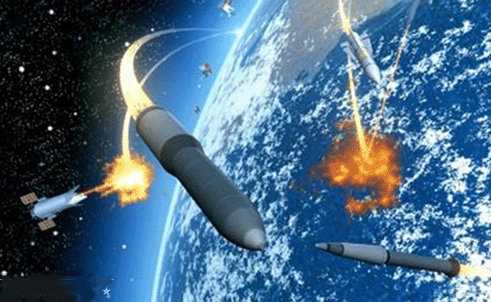
Like a Ball of Fire, London Review of Books, Andrew Cockburn on hypersonic weaponry, Vol. 42 No. 5 · 5 March 2020 “………. Putin’s bellicose claim – two weeks before the presidential election in which he was running for a fourth term – and the more recent official announcement that Avangard had now entered service, drew alarmed and unquestioning attention in the West. ‘Russia Deploys Hypersonic Weapon, Potentially Renewing Arms Race’ the New York Times blared. ‘The new Russian weapon system flies at superfast speeds and can evade traditional missile defence systems. The United States is trying to catch up.’
The ease with which the chimerical menace of hypersonic weapons has been launched into the budgetary stratosphere by the arms lobby suggests that their luck will hold for a long time yet. https://www.lrb.co.uk/the-paper/v42/n05/andrew-cockburn/like-a-ball-of-fire
Online event. U.S. launch of the WORLD NUCLEAR WASTE REPORT
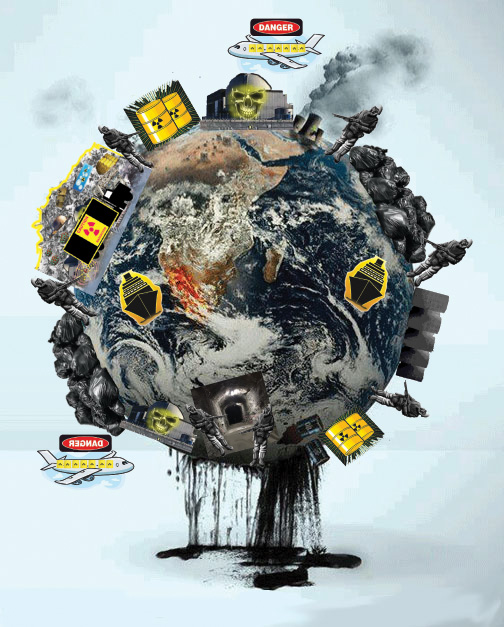
US launch of the WORLD NUCLEAR WASTE REPORT by the Heinrich Böll Stiftung https://www.facebook.com/events/329554248492108/
Online EventDec 4 at 5 AM UTC+11 – Dec 4 at 6:30 AM UTC+11 (Sydney is 16 hours ahead of New York City)
1 This Month
Chernobyl: The Lost Tapes – A good documentary on Chernobyl on SBS available On Demand for the next 3 weeks– https://www.sbs.com.au/ondemand/tv-program/chernobyl-the-lost-tapes/2352741955560

of the week–London Campaign for Nuclear Disarmament

Tell the Ukrainian Government to Drop Prosecution of Peace Activist Yurii Sheliazhenko
To see nuclear-related stories in greater depth and intensity – go to https://nuclearinformation.wordpress.com
-
Archives
- April 2026 (126)
- March 2026 (251)
- February 2026 (268)
- January 2026 (308)
- December 2025 (358)
- November 2025 (359)
- October 2025 (376)
- September 2025 (257)
- August 2025 (319)
- July 2025 (230)
- June 2025 (348)
- May 2025 (261)
-
Categories
- 1
- 1 NUCLEAR ISSUES
- business and costs
- climate change
- culture and arts
- ENERGY
- environment
- health
- history
- indigenous issues
- Legal
- marketing of nuclear
- media
- opposition to nuclear
- PERSONAL STORIES
- politics
- politics international
- Religion and ethics
- safety
- secrets,lies and civil liberties
- spinbuster
- technology
- Uranium
- wastes
- weapons and war
- Women
- 2 WORLD
- ACTION
- AFRICA
- Atrocities
- AUSTRALIA
- Christina's notes
- Christina's themes
- culture and arts
- Events
- Fuk 2022
- Fuk 2023
- Fukushima 2017
- Fukushima 2018
- fukushima 2019
- Fukushima 2020
- Fukushima 2021
- general
- global warming
- Humour (God we need it)
- Nuclear
- RARE EARTHS
- Reference
- resources – print
- Resources -audiovicual
- Weekly Newsletter
- World
- World Nuclear
- YouTube
-
RSS
Entries RSS
Comments RSS
 nuclear-news