The ‘chemical fingerprint’ of a 2017 nuclear explosion
 Scientists just found the ‘chemical fingerprint’ of an alleged nuclear explosion that went undeclared in Russia, Business Insider, Aria Bendix Jun 16, 2020
- A group of scientists known as the “Ring of Five” detected unusual levels of radiation in Europe in 2017.
- A new study offers “irrefutable proof” that the radiation came from nuclear waste reprocessing.
- The study lends further evidence to the claim that Russia failed to disclose an accident at the Mayak nuclear facility in September 2017.
- For the past three years, a group of scientists called the “Ring of Five” has been inching toward the conclusion that an undisclosed nuclear accident took place in Russia in 2017.
In July 2019, the group released evidence that an explosion may have occurred at the Mayak nuclear facility — once the center of the Soviet nuclear-weapons program. Mayak was also the site of the 1957 Kyshtym explosion, the world’s third-worst nuclear accident behind Fukushima and Chernobyl.
- In late 2019, the scientists suggested that, given the large amount of radiation admitted on the date, the accident took place on September 26, 2017. The radiation seemed to spread from Russia’s Southern Urals region (where the Mayak facility is located) toward central Europe, Scandinavia, and Italy.
A third study, released Monday, offers “irrefutable proof” that the explosion was linked to nuclear waste reprocessing — a method that separates plutonium and uranium from spent nuclear fuel. The Mayak facility is the largest nuclear reprocessing facility in the region. That makes it the most likely, if not the only possible, origin site — though Russia has never acknowledged a nuclear accident at the facility in 2017…….
- The Ring of Five has been monitoring Europe’s atmosphere for elevated levels of radiation since the mid-1980s. The group originally hailed from five countries: Sweden, Germany, Finland, Norway, and Denmark. But after the Chernobyl disaster in 1986, the team enlisted the help of other nations to expand their efforts. It now includes researchers from 22 countries.
- On October 2, 2017, Italian scientists sent an alert to the Ring of Five about elevated levels of ruthenium-106, a radioactive isotope, in Milan. The discovery marked the first time that ruthenium-106 had been found in the atmosphere since Chernobyl.
“We were stunned,” Steinhauser said. “We did not have any anticipation that there might be some radioactivity in the air. We were just measuring air filters as we do on a weekly basis, 52 times a year, and suddenly there was an unexpected result.”
- Steinhauser said the explosion was the “single greatest release from nuclear-fuel reprocessing that has ever happened.”
But Russia has not responded to any findings from the Ring of Five. In December 2017, Russian officials attributed the radiation to an artificial satellite that burned up in the atmosphere. The scientists’ latest study excludes that possibility.
- The study is the first direct evidence that the ruthenium-106 came from nuclear waste reprocessing. It identified a unique “chemical fingerprint” among samples of the isotope collected in 2017.
Within those samples, the scientists found signs of two chemicals commonly associated with nuclear waste reprocessing: (III) chloride and ruthenium(IV) oxide. This provided “direct evidence that fuel reprocessing was the origin of the 2017 environmental release,” the scientists wrote………. https://www.businessinsider.com/russia-nuclear-accident-mayak-facility-new-evidence-2020-6?r=AU&IR=T
Joint Project Nuclear Risk and Public Control
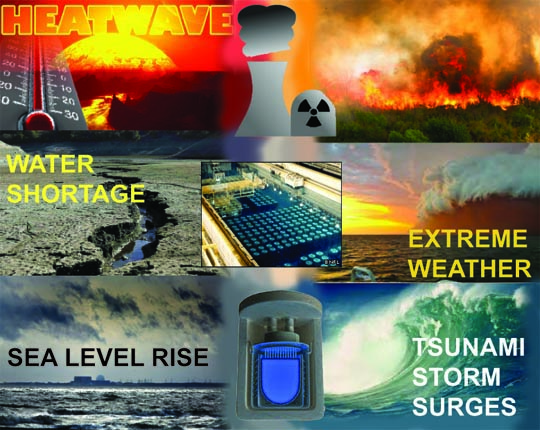 Nuclear Risk & Public Control (accessed) 17th June 2020, Currently nuclear energy promoters are trying to make use the climate crisis for their goals by claiming that nuclear energy is a solution. But can nuclear energy contribute to a decarbonized future?
Rather the contrary: climate change poses new challenges and risks to the operation of nuclear power plants, increasing nuclear risk and challenging supply security. In this Joint Project – Nuclear Risk & Public Control webinar we presented our new working paper “Impacts of Climate Change on Nuclear Safety and Supply Security”. A report of the webinar can be downloaded here.
South Africa- financially ruinous coal and nuclear power proposals – will muck up post-Covid-19 recovery
 New coal and nuclear power proposals undermine prospects of a post-Covid-19 economic recovery, Daily Maverick, By Anton Eberhard• 17 June 2020
The Department of Mineral Resources and Energy’s attachment to ‘clean coal’ and new nuclear as immediate options for a post-Covid-19 economic recovery would be comical if they were not financially ruinous. Their fixation on these non-competitive, non-commercial technologies is now wasting scarce public resources.
South Africa is beginning to see the consequences of an energy ministry trapped in the past, beholden to interest groups and oblivious to global innovations in energy technologies and markets. Submissions by the minister and his energy department to Parliament in the past month reveal an economically disastrous commitment to policy, procurement and investment options that have no hope of contributing to our post-Covid-19 economic recovery.
The Department of Mineral Resources and Energy (DMRE) in its strategic and economic plans is promoting the role of nuclear energy (mainly small modular reactors) and clean coal (with carbon capture and storage), but these technologies are neither price competitive nor, in the case of small nuclear, are they currently commercially available.
In a presentation to Parliament on 26 May 2020, Minister Gwede Mantashe proposed several medium-term (6-12 month) interventions in response to the economic impacts of the Covid-19 pandemic. …….
In the same presentation, the minister proposed a number of interventions (also 6-12 months) to enhance electricity supply security, including acceleration of a nuclear build programme, conversion of Eskom’s diesel-fired turbines to gas and the building of a new oil refinery. None of these, of course, can be accomplished within a year and it’s highly unlikely that even contracts for these projects will be placed any time soon, if ever. Implementation of South Africa’s IRP electricity plan, which identifies wind, solar and storage as the next least-cost options to ensure electricity supply security, was evidently not regarded as a priority although – almost as an afterthought – it was offered as a long-term option.
Over the past weekend, DMRE launched a Request for Information (RFI) to commence preparations for a nuclear build programme. Of course, an RFI is non-binding (unlike a Request for Proposals, RFP, in a competitive tender or auction) and participants are perversely incentivised to put forward unrealistically attractive offers and prices which they’ll probably seek to alter when contracts are negotiated. In short, an RFI is not particularly helpful unless you don’t know what you’re doing and want technology and service providers to shape your procurement.
The minister has now appointed a new board chairperson, the retired nuclear chief officer of Eskom, an ex-British navy nuclear submariner, someone who continues, on social media, to rubbish renewable energy alternatives.
The minister has also entertained plans for expanded investment at the Nuclear Energy Corporation of South Africa (NECSA), despite the institution recording unprecedented financial losses. ……..
It’s time for a reality check. No country or private company currently offers commercially proven exports of land-based, small modular nuclear reactors. South Africa tried to develop one – the pebble bed modular reactor (PBMR) – but after spending more than R20-billion (in today’s money), the programme was closed after a decade without even a pilot demonstration plant being built. …….. Clean coal is also a mirage. …….. https://www.dailymaverick.co.za/article/2020-06-17-new-coal-and-nuclear-power-proposals-undermine-prospects-of-a-post-covid-19-economic-recovery/#gsc.tab=0
Renewable energy for South Africa – cost-efficient and quick – forget coal and nuclear
 Global advances in renewable energy sector should halt SA’s rush to nuclear, Let’s avoid any major financial and technological disasters such as Medupi and Kusile happening again Business Live 17 JUNE 2020 , SA is once again on the cusp of another major electricity production decision. We had better get this one right. Mineral resources & energy minister Gwede Mantashe recently announced that the government is pressing ahead with a nuclear build programme for SA as early as 2024. This despite ample reported evidence that renewables, particularly solar, can be built both rapidly and cost effectively in incremental amounts up to the scale envisaged (2,500MW) to closely match any supply/demand curve.
It is therefore of some concern that those major companies in SA that have been interfacing with the renewables fraternity for their internal electricity production will respond to the one month deadline to raise reservations in a responsible manner with sound factual numbers. We certainly need to avoid any major financial and technological disasters such as Medupi and Kusile happening again.
The coming decade looks set to become a golden one for renewables globally and could well cement their position irreversibly as the way forward for a threefold purpose: global electricity needs, containing the global temperature rise, and avoiding the drastic climate change…….
The good news is that the driver for electricity production through renewables is no longer climate change but economics. A recent announcement of the lowest competitive tariff globally for a large-scale solar PV (photovoltaic) project in Abu Dhabi certainly illustrates this. It particularly signals the resetting of economies after the Covid-19 lockdown, especially in terms of any incremental increase in the supply/demand curve going forward.
Most significantly, the rapid construction capability of small- to large-scale renewable technologies avoids the long lead times of the large-scale fossil fuel and nuclear projects, with their difficult financial funding constraints. In addition, it shows that matching the supply/demand curve is relatively straightforward.
With favourable economics as the driver, this raises the issue of stranded assets. Increased reporting on the abandonment of coal plants has become relevant. The stranded asset value of fossil fuel electricity production, explained in a recent Cambridge Econometrics paper in Nature Climate Change, is said to be in the range $1-trillion to $4-trillion. Big numbers. …….
For SA, renewables would surely help overcome load-shedding and the planned closure of our ageing coal fleet. However, the political opposition to significant introduction of renewables capacity (by trade unions) could well be a limitation for this route………. https://www.businesslive.co.za/bd/opinion/2020-06-17-global-advances-in-renewable-energy-sector-should-halt-sas-rush-to-nuclear/
Kim Jong Un’s cyberwar preparations
 Kim Jong Un has quietly built a 7,000-man cyber army that gives North Korea an edge nuclear weapons don’t, Business Insider, ELLEN IOANES, JUN 17, 2020,
- North Korea has a cyber army of about 7,000, trained to find secrets, disrupt critical infrastructure, and steal money to circumvent sanctions.
- These cyberattacks are often difficult to pin on North Korea because they originate in countries like China and Russia, and a counterattack is almost impossible because of North Korea’s rudimentary internet.
- North Korea’s likely next targets are critical US infrastructure like power plants, dams, and electrical grids.
The WannaCry virus, on the one hand, was ransomware; you could argue that it’s aimed at getting money, but it caused a huge disruption of hospitals in the UK and, potentially, in something like 100-plus other countries where they had disseminated the ransomware. This was software that brought the operation of critical facilities to a standstill.
This is not hacking; this is cyber warfare.
Because North Korea depends so heavily on China, not just for cyber, but in the case of cyber, for access to servers, its pipelines, and so on, it would be critical for the United States to develop some degree of cooperation with China to limit North Korea’s offensive cyber threat.
U.S. – China talks may cover North Korea nuclear issue
 North Korea nuclear issue may be on the agenda at US-China SCMP, 17 June 20
Stephen Biegun, the US special representative for North Korea, will join the talks in Hawaii on Wednesday.
, suggesting the stalemate in nuclear disarmament negotiations with Pyongyang could be on the agenda.
and threatened military action against the South……….
The Hawaii meeting comes as relations between the world’s two largest economies are at their lowest point in decades and facing off on many fronts – from trade and technology to Hong Kong and the South China Sea. US officials, including President Donald Trump and Pompeo, have blamed Beijing for the coronavirus pandemic, while Beijing has accused Washington of trying to pass the buck to hide its own failings in dealing with Covid-19 in the US.
t also comes as tensions on the Korean peninsula are again escalating after Pyongyang demolished a four-storey liaison office set up near the border with South Korea in 2018 after the first summit between North Korean leader Kim Jong-un and South Korean President Moon Jae-in. A major setback for the detente in the region, observers said the move reflected Pyongyang’s growing frustration over its stalled nuclear talks with Washington.
Donald Trump’s extraordinary ignorance on which countries are nuclear powers
 Bolton Says Trump Impeachment Inquiry Missed Other Troubling Actions, NYT, By Peter Baker, June 17, 2020
-
- “…….Mr. Bolton’s volume is the first tell-all memoir by such a high-ranking official who participated in major foreign policy events and has a lifetime of conservative credentials. It is a withering portrait of a president ignorant of even basic facts about the world, susceptible to transparent flattery by authoritarian leaders manipulating him and prone to false statements, foul-mouthed eruptions and snap decisions that aides try to manage or reverse.
Mr. Trump did not seem to know, for example, that Britain is a nuclear power and asked if Finland is part of Russia, Mr. Bolton writes. He came closer to withdrawing the United States from NATO than previously known. Even top advisers who position themselves as unswervingly loyal mock him behind his back. During Mr. Trump’s 2018 meeting with North Korea’s leader, according to the book, Secretary of State Mike Pompeo slipped Mr. Bolton a note disparaging the president, saying, “He is so full of shit”
Intelligence briefings with the president were a waste of time “since much of the time was spent listening to Trump, rather than Trump listening to the briefers.” Mr. Trump likes pitting staff members against one another, at one point telling Mr. Bolton that former Secretary of State Rex W. Tillerson had once referred to Nikki R. Haley, then the ambassador to the United Nations, by a sexist obscenity — an assertion Mr. Bolton seemed to doubt but found telling that the president would make it.
Mr. Trump said so many things that were wrong or false that Mr. Bolton in the book regularly includes phrases like “(the opposite of the truth)” following some quote from the president. And Mr. Trump in this telling has no overarching philosophy of governance or foreign policy but rather a series of gut-driven instincts that sometimes mirrored Mr. Bolton’s but other times were, in his view, dangerous and reckless……..” https://www.nytimes.com/2020/06/17/us/politics/bolton-book-trump-impeached.html
Sizewell nuclear power station could become a dangerous nuclear island
 No2NuclearPower 16th June 2020, Letter to The Times (unpublished) Rachel Fulcher Suffolk Costal FOE:
The Sizewell C debate is salty indeed (Alistair Osborne, 10/06/20). Anyone taking a brisk walk along the Suffolk coast around Sizewell can see clearly how unstable and dynamic it is. Defensive anti-tank blocks from World War II spill down the collapsed cliffs, and here and there the remains of a
pill box, once aloft, can be seen lying on the shingle. ‘Dragons’ teeth’ have disappeared under the sea and then re-appeared before being finally removed – some by EDF ironically. Signs warn of cliff falls, yet, sadly, a man was killed not long ago walking his dog along the beach.
EDF Energy maintains that the two offshore sand banks will continue to protect the nuclear power stations at Sizewell from storm surges for the projected lifetime of Sizewell C, including the long-term storage of high-level nuclear waste. What madness is this? Local swimmers and sailors know only too well how these shift and change. Once you could swim out and stand on one – no longer possible as it has eroded and flattened.
Equally, as Nick Scarr correctly points out, and as our own in-depth researches demonstrate, the two banks have been moving apart, allowing the larger waves to reach the shore during storms.
The power of the sea should not be under-estimated. At nearby Thorpeness, thought to be stable due to the out-lying coralline crag, houses are now teetering on the edge, despite the revetment hastily put in place. Gabions are already rusting away and the huge sand bags have been tossed about by the waves. EDF Energy says in their consultation documents that their new defences would guard Sizewell C against projected climate change and sea level rise.
Even if that were the case, which cannot be proven, what would be the result of these? For a
start, they would cause ‘coastal squeeze’, preventing natural roll-back and resulting in flanking erosion and flooding. Not only would this put at increased risk villagers living either side of the station, but the RSPB’s flagship reserve of Minsmere immediately to the north and Sizewell
Marshes SSSI at the rear.
Indeed, this would leave a highly unsafe nuclear island. Water in the wrong place at a nuclear power station can have devastating consequences, as the catastrophe at Fukushima demonstrates only
too well. Let’s hope that the Planning Inspectorate puts the precautionary principle in place and turns down this hazardous development.
http://www.no2nuclearpower.org.uk/news/campaign-update/sizewell-debate-turns-salty/
Say NO to hauling dangerous nuclear waste across America
Say NO to hauling dangerous nuclear waste across America, NIRS,17 June 2020 The Nuclear Regulatory Commission (NRC) is accepting comments on two proposals to build Consolidated Interim Storage (CIS) facilities in New Mexico and Texas. Building these so-called ‘interim’ sites would require hauling dangerous, high-level nuclear waste all over the country twice: Once to the ‘interim’ sites, then once again to the permanent site—if that is ever built. If the permanent site is not built, the ‘interim’ sites could become de-facto permanent storage sites. Communities in New Mexico and Texas would become the latest sacrifice to the nuclear industry.
We can’t allow this dangerous, high-level nuclear waste to be hauled around the country to storage sites that won’t be permanent solutions to our nuclear waste problem. Tell the NRC and your member of Congress to say NO to the CIS facilities in New Mexico and Texas….. https://org2.salsalabs.com/o/5502/p/dia/action4/common/public/?action_KEY=27069
Let them eat weapons: Trump’s bizarre arms race — IPPNW peace and health blog
The Trump administration has followed through on its promise to pour American tax dollars into the arms race through a vast expansion of the US military budget. Against a backdrop of economic and social collapse, plus potential global destruction, the obvious thing to do is to pull out of this immensely costly and bizarre arms race and, instead, foster arms control and disarmament agreements with other nations.
via Let them eat weapons: Trump’s bizarre arms race — IPPNW peace and health blog
Why we must stop investing in nuclear weapons
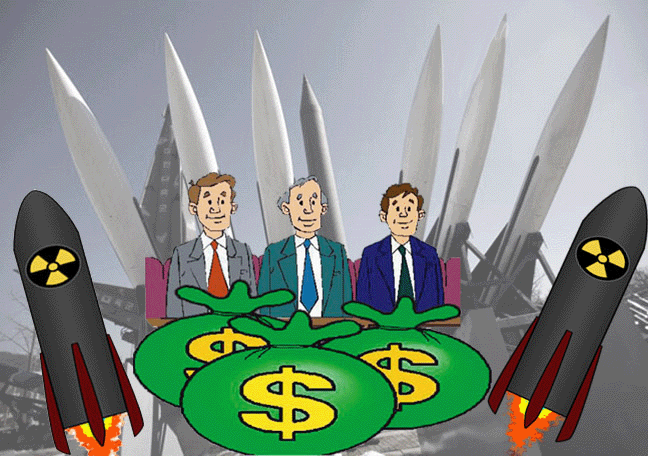
Why we must stop investing in nuclear weapons, By MIMI LANG, THE MORNING CALL |, JUN 15, 2020 One wonders which threats worry us the most. Certainly, the coronavirus tops the list. My own choice for second place is the threat of nuclear weapons and climate change.
The Bulletin of Atomic Scientists established the Doomsday Clock in 1970 to warn us about the dangers of nuclear weapons. The closer to midnight the clock, the closer we are to nuclear disaster. Many of the scientists who warned about nuclear dangers had worked on developing the atom bomb.
The clock has been as far away from midnight as 17 minutes. Right now it’s at 100 seconds, the closest it has ever been.
The reason for decreasing the number to 100 seconds is because the risk of climate disaster has been added to the nuclear disaster threat. As we approach the 75th anniversary of the bombings of Hiroshima and Nagasaki in August of this year, the U.S. nuclear program wastes vast amounts of money to maintain its role with Russia as the purveyor of the most weapons of mass destruction.
An article in The Morning Call on May 16 about updating our nuclear weapons states, “the Trump administration’s plan — inherited from the Obama administration — is to pour hundreds of billions of dollars into replacing every major every element of the nuclear weapons complex.”
So far, 122 countries have signed the document and 37 have ratified it. Once 50 countries have ratified the treaty, it will enter into force. Not surprisingly, the nine countries that possess nuclear weapons have refused to sign the treaty. U.S. allies that do not have nuclear weapons but depend on the U.S. for their defense also refuse to sign.
Members of the local Peace Center, LEPOCO, have worked for years to increase the public’s awareness of the threat nuclear weapons provide to our survival. Each year we have an event remembering Hiroshima and Nagasaki to honor those who have continued to work to abolish nuclear weapons.
Along with other peace groups, we have been active in supporting the efforts of the Ploughshares community, a group of brave activists who have spent years of their lives in jail for trespassing onto the facilities where Trident and other missiles await their opportunity to destroy our world.
A current group of seven Catholic Worker activists called the Kings Bay Ploughshares awaits their sentencing in a few weeks. On April 4, 2018, they entered the Kings Bay Naval Base, poured their blood and hammered on monuments dedicated to nuclear weapons and left signs saying that in the face of the threat that the U.S. nuclear arsenal poses to the world, what they had done was not illegal.
Their actions were intended as “symbolic disarmament” — an act of civil resistance.
While our friends spent over a year in jail awaiting their trial, the U.S. announced the deployment of the W76-2, a new, smaller nuclear warhead than the traditional Trident missile. The first to move out with the new weapon was the USS Tennessee, deploying from Kings Bay Submarine Base in Georgia at the end of 2019.
The warhead is designed to be smaller than the bomb dropped on Hiroshima. Those in favor of the smaller warhead argue that it is needed to counter developments in Russia. Opponents warn of confusion if a submarine has both large and small missiles, forcing an opponent to choose a larger one.
Any investment in furthering our nuclear weapons programs makes our dreams of a nuclear-free world more unlikely. Billions of dollars for nuclear weapons deprive us all of adequate health care, education, housing, living wages, relief from poverty.
Can you make a difference in our country’s nuclear decisions? Consider joining the International Campaign to Abolish Nuclear Weapons. ICAN is a coalition of nongovernmental groups promoting adherence to the United Nations Treaty for the Prohibition of Nuclear Weapons. The organization received the Noble Prize for Peace in 2017.
You can also join the Don’t Bank the Bomb Campaign (www.dontbankthebomb.com) to stop investments in nuclear weapons. Pressure your local officials to support the Treaty on the Prohibition of Nuclear Weapons.
Please join me in imagining the future of the world without nuclear weapons.
Mimi Lang, who lives in Bethlehem, is a member of Lehigh-Pocono Committee of Concern. AT TOP https://www.mcall.com/opinion/mc-opi-nuclear-weapons-lang-20200615-e7sexxxzdneblnvl54kjhs5euu-story.html
USA taxpayers’ money can now go to private companies overseas building nuclear reactors!
 Kinzinger Applauds Rule Change On International
  Private Nuclear Programs http://www.wcsjnews.com/news/local/kinzinger-applauds-rule-change-on-international-private-nuclear-programs/article_b54bef56-af18-11ea-8e41-17fada1bb113.html Jun 15, 2020
-
- Congressman Adam Kinzinger is applauding a decision by the U.S. International Development Finance Corporation that would allow America to support civilian nuclear power projects around the world. Kinzinger wrote a letter to the DFC in March expressing his concerns with internal guidelines that prevented the federal organization from cooperating with international civil nuclear projects. Now that the US can invest in foreign private nuclear programs, Kinzinger said this will strengthen our allies in Eastern Europe and deal a blow to the predatory business practices of Russia and China.
UK’s Nuclear Future in Doubt amid Diplomatic Fallout over Huawai.
 Telegraph 14th June 2020, UK’s Nuclear Future in Doubt amid Diplomatic Fallout over Huawai. Boris Johnson’s now faces a test of his diplomatic and political skills against the Chinese state. Eyeing China’s crackdown on Hong Kong protesters, seeking to define the UK’s place in the world post-Brexit, and shaken by the pandemic, the UK is hardening its stance on China – and the communist superpower is responding in kind.
Expectations that the UK will reduce Chinese company Huawei’s role in the UK’s 5G network have been met with veiled threats that Chinese companies might pull out of building UK nuclear power plants and other infrastructure – ratcheting up tensions with potentially profound political and economic consequences.
Chinese direct investment in the UK reached almost £50bn between 2000 and 2018, while in
2018 the UK sold £22.6bn worth of goods to China and bought £44.7bn of Chinese goods. It was less than five years ago that David Cameron and Chinese president Xi Jinping popped into the Plough in Cadsden, Bucks, to toast a “golden era” of friendship between the two nations over pints
of IPA and fish and chips.
The visit took place just two days after the Chinese nuclear power giant China General Nuclear and France’s EDF agreed to build the Hinkley Point C nuclear power plant in Somerset, as part of about £40bn in business deals signed between the UK and China. Hinkley
Point C is now taking shape next to the Bristol Channel, but plans for a second plant with EDF, Sizewell C, and CGN’s own plant, Bradwell B inEssex, as well as other infrastructure investment now appear to be at risk if the UK ousts Huawei.
Plenty argue that would be no bad thing. China’s involvement in the UK’s nuclear power plants has long been controversial due to security concerns, while some experts also argue that large nuclear power plants have had their day as a source of energy. “The energy landscape has changed,” argues Paul Dorfman, of the UCL Energy Institute,
given that offshore wind power and other renewable technologies are getting much cheaper and more effective……. https://www.pressreader.com/uk/the-sunday-telegraph-money-business/20200614/281698321989436
Covid-19 pandemic – ‘fire drill’ for effects of climate crisis


|
Covid-19 pandemic is ‘fire drill’ for effects of climate crisis, says UN official, Tue 16 Jun 2020 “The overall problem is that we are not sustainable in the ways we are living and producing on the planet today,” said Lise Kingo, the executive director of the UN Global Compact, under which businesses sign up to principles of environmental protection and social justice. “The only way forward is to create a world that leaves no one behind.”She said there were “very, very clear connections” between the Covid-19 and climate crises, and the Black Lives Matter protests around the world, which she said had helped to reveal deep-seated inequalities and “endemic and structural racism”.
“We have seen illustrated to everyone that social inequality issues are part of the sustainable development agenda,” Kingo said. ….. The UN secretary general, António Guterres, said building a fairer society would be essential to the world’s health, as well as to saving the planet from climate breakdown and ecological destruction. “Today, the fabric of society and the wellbeing of people hinge on our ability to build a fair globalisation,” he told the two-day UN Global Compact virtual conference of business leaders, which started on Monday……. https://www.theguardian.com/environment/2020/jun/15/covid-19-pandemic-is-fire-drill-for-effects-of-climate-crisis-says-un-official
|
|
South Carolina Electric and Gas lawyers and executives could face gaol for fraud
 SCE&G LAWYERS MAY BE CHARGED IN NUCLEAR FRAUD, https://www.lexingtonchronicle.com/news/sceg-lawyers-may-be-charged-nuclear-fraud More utility executives may face prison time, too
By Jerry Bellune
JerryBellune@yahoo.com
Former SC Electric & Gas executive Steve Byrne may have company.
His plea agreement on fraud charges reveals that other executives and lawyers for SCANA, the owner of SCE&G, are at risk of being charged,.
Federal officials believe a conspiracy of executives and their lawyers hid a $9 billion nuclear failure from state officials, investors and the public for years.
An official federal document filed in US District Court in Columbia revealed:
• Byrne and unidentified “others” orchestrated a cover-up of costly errors at the nuclear construction site.
• They “deceived regulators and customers to maintain financing for the project and to financially benefit SCANA” and themselves.
• “As construction problems mounted, costs rose and schedules slipped,” Byrne and others hid the truth.
For the rest of what the federal documents reveal, see Thursday’s Lexington County Chronicle.
1 This Month
23 April – WEBINAR – Why new nuclear reactors are the wrong tools for decarbonization Thursday, April 23 • 1 AM – 2 AM AEST
World Nuclear Power. Reactors 1951-2026, 75 Years of Nuclear Power.
Interactive Map– https://dv.worldnuclearreport.org/
Chernobyl: The Lost Tapes – A good documentary on Chernobyl on SBS available On Demand for the next 3 weeks– https://www.sbs.com.au/ondemand/tv-program/chernobyl-the-lost-tapes/2352741955560

of the week–London Campaign for Nuclear Disarmament

Tell the Ukrainian Government to Drop Prosecution of Peace Activist Yurii Sheliazhenko
To see nuclear-related stories in greater depth and intensity – go to https://nuclearinformation.wordpress.com
-
Archives
- April 2026 (231)
- March 2026 (251)
- February 2026 (268)
- January 2026 (308)
- December 2025 (358)
- November 2025 (359)
- October 2025 (376)
- September 2025 (257)
- August 2025 (319)
- July 2025 (230)
- June 2025 (348)
- May 2025 (261)
-
Categories
- 1
- 1 NUCLEAR ISSUES
- business and costs
- climate change
- culture and arts
- ENERGY
- environment
- health
- history
- indigenous issues
- Legal
- marketing of nuclear
- media
- opposition to nuclear
- PERSONAL STORIES
- politics
- politics international
- Religion and ethics
- safety
- secrets,lies and civil liberties
- spinbuster
- technology
- Uranium
- wastes
- weapons and war
- Women
- 2 WORLD
- ACTION
- AFRICA
- Atrocities
- AUSTRALIA
- Christina's notes
- Christina's themes
- culture and arts
- Events
- Fuk 2022
- Fuk 2023
- Fukushima 2017
- Fukushima 2018
- fukushima 2019
- Fukushima 2020
- Fukushima 2021
- general
- global warming
- Humour (God we need it)
- Nuclear
- RARE EARTHS
- Reference
- resources – print
- Resources -audiovicual
- Weekly Newsletter
- World
- World Nuclear
- YouTube
-
RSS
Entries RSS
Comments RSS
 nuclear-news