Facebook allows climate denial propaganda, and restricts climate scientists

On Wednesday, a coalition of environmental and political groups wrote a letter to Facebook’s oversight board asking the company to crack down on climate denial and to close the opinion loophole that allows climate misinformation to be posted on the platform (Climatewire, July 1).
Hayhoe has declined to comply with Facebook’s requirements for promoting her posts. She says the platform created inappropriate burdens for scientists who want to share objective information about climate change.
“These are the facts,” she said. “These videos have been peer-reviewed, and I still can’t boost them on Facebook.”
Climate Denial Spreads on Facebook as Scientists Face Restrictions, https://www.scientificamerican.com/article/climate-denial-spreads-on-facebook-as-scientists-face-restrictions/ 6 July 20 The company recently overruled its scientific fact-checking group, which had flagged information as misleading By Scott Waldman, E&E News on July 6, 2020 A climate scientist says Facebook is restricting her ability to share research and fact-check posts containing climate misinformation.
Those constraints are occuring as groups that reject climate science increasingly use the platform to promote misleading theories about global warming.
The groups are using Facebook to mischaracterize mainstream research by claiming that reduced consumption of fossil fuels won’t help address climate change. Some say the planet and people are benefitting from the rising volume of carbon dioxide that’s being released into the atmosphere.
Facebook is an effective way to expand their reach to larger audiences, say members of the groups, which have traditionally been tied to conservative media outlets. In recent weeks, tens of thousands of people have been exposed to misleading and false claims about rising temperatures, according to an E&E News analysis.
Now, Facebook appears to be weakening a firewall it has built to fact-check such climate denialism. The company recently overruled a fact-check from a group of climate scientists, in a move that concerns researchers about a potentially new precedent by the platform that permits inaccurate claims to be promoted if they’re labeled as opinions.
 At the same time, Facebook has placed restrictions on one of the country’s most visible climate scientists, Katharine Hayhoe, of Texas Tech University and a lead author of the Fourth National Climate Assessment. She has been blocked from promoting videos related to climate research, a move that has limited her efforts to refute false claims.
Facebook has previously identified Hayhoe’s educational climate videos as “political.” As a result, they are categorized by the platform as a social issue that requires Hayhoe to register them by in part providing personal information that she fears could expose her to personal attacks.
Hayhoe said Facebook is a valuable platform for reaching people outside of partisan boundaries. She said it’s where she is connected to friends and family, former college roommates, and other people who might be skeptical about climate change.
It’s a way to share science with them that doesn’t feel like a political attack, she said. Placing her work on the same level as groups that seek to confuse the public about climate science gives climate denial organizations equal footing that’s unwarranted, she said. Continue reading
Mega-rich Americans prepare fpr nuclear war, with luxury bunkers

Inside the luxury nuclear bunker protecting the mega-rich from the apocalypse
A volcanic-ash scrubber, a decontamination room, a waterslide — when it comes to surviving a nuclear apocalypse, the Survival Condo has everything you could need, at a price. CNet.com, Claire Reilly, July 6, 2020 ……. after visiting my first real nuclear bunker, my apocalypse plan has been upgraded. Now my list of needs includes “underground swimming pool” and “postapocalyptic rock-climbing wall.” I’ve become fussy about how I’ll spend time during the planet’s dying breaths. My bug-out bag has gotten bougie. I’ve seen the world’s most high-tech bunker, and I want in.
Welcome to the Survival Condo. This former Atlas Missile silo turned luxury condominium complex offers the world’s rich and powerful a chance to buy into the ultimate life insurance: an apocalypse bunker that promises the perfect combination of shelter and style.
……. The starting cost for a unit in this complex is $1 million, plus an extra $2,500 per month in dues to cover your living expenses: electricity, water, internet, all the tinned eggs you could dream of.
For the ultra-rich and paranoid, though, you can’t put a price on safety…
The end of the world as we know it
Nuclear winter isn’t like spending Christmas upstate. It’s a global nightmare realm, where Ice Age-like temperatures last for years, populations perish and life as we know it becomes the stuff of sci-fi nightmares.
At least that’s according to Brian Toon, professor of atmospheric and oceanic sciences at the University of Colorado and world-renowned expert on the global effects of nuclear war. ……
Toon says a nuclear explosion is like “bringing a piece of the sun down to the Earth,” and the aftermath of that kind of explosion causes huge fires — think citywide infernos. Those fires push huge amounts of smoke up into the stratosphere. And because it never rains in the stratosphere, sunlight can’t reach Earth. Welcome to nuclear winter.
“The temperatures become colder than the last Ice Age,” says Toon. “So we have sub-Ice Age temperatures over the whole planet for about 10 years.”
That’s exactly why the Survival Condo exists — to protect the mega-rich from the devastation of global nuclear war, and to make sure the world’s most powerful people can survive in comfort, rather than shivering in the wasteland, waiting to have their billionaire brains eaten by hungry hordes. ……..
I’m at the very top of a bunker that descends 15 floors and 200 feet underground. On this upper level, a wide dome set into the hill houses the main entry and communal recreation facilities. That’s where you’ll find the pet park, climbing wall and swimming pool (complete with a water slide).
Beneath the dome, the cylindrical silo houses a further 14 floors — the top three floors are where you’ll find the mechanical rooms, medical facilities and a food store (complete with a full hydroponics and aquaculture setup), followed beneath by seven levels of residential condos. At the bottom, the final four floors house the classroom and library, a cinema and bar, and a workout room (with a sauna). ……..
what if there’s radiation because of a dirty bomb? You would have to go in this room, which is a decontamination scrub room. The chemicals in here can take care of everything. We have iodine pills to treat you for radiation, we have Geiger counters that detect radiation, and we have special chemicals to scrub both biological and radioactive contaminants from you. But you would lose your clothes. You’d be naked and afraid.”
As we wind our way through the Survival Condo, it’s like I’m in an episode of Cribz, set in a dark, alternate reality. This is where we keep the camo gear! This is the gun range! Here’s how we scrub the volcanic ash out of the air in the event of a supervolcano! …….
As a bonus, if the world is really ending, these windows display a real-time view of the carnage outside, thanks to the Survival Condo’s external surveillance cameras. Everyone come to the kitchen! The surface-dwellers are hunting in packs now!….
I guess there’s a grim irony in the idea that even when the nukes drop and the very fabric of society has disintegrated beyond recognition, the rich and powerful will still have it better off than the rest of us.
We’ll still be a society of haves and have-nots. Except in this case, the haves will be watching Armageddon from the comfort of their air-conditioned, underground cinema. And the have-nots will be out in the wilderness, freezing through nuclear winter and picking over the bones of our loved ones, trying to survive the real thing. https://www.cnet.com/features/inside-the-survival-condo-nuclear-bunker-protecting-the-ultrarich-hacking-the-apocalypse/
Week to 7 July in Climate, Nuclear, Coronavirus news
Well, I do leave the biggest news – coronavirus – to others, although Jane Goodall eloquently reminds us that the pandemic is utterly connected with our onslaught on the natural world and may well be a foretaste of worse to come, if the human species does not respect nature. It’s time to get emotional about climate change.
But anyway, Covid 19 – climate change – global phenomena that don’t care about borders, are affecting above all, the world’s poorest and most vulnerable – what are we to do? Some media are rejoicing about hot weather in the Arctic, but the reality is that the persistent Arctic heatwave is wreaking havoc, with uncontrolled forest fires in Siberia, thawing permafrost destabilising buildings and industry, especially oil and gas, in Northern Russia and the Arctic North of America. Meanwhile, the South Pole is warming at triple the global average. Climate change will make world too hot for 60 per cent of fish species.
It’s hard to get concerted action on global heating, with powerful influencers like Facebook and the oil industry sabotaging efforts and information about climate change. Climate denialists are increasingly spreading misinformation on Facebook, while Facebook is actively discouraging fact-checking.
Meanwhile – don’t let’s forget, even a limited nuclear war, whether started by intent or by accident, would bring a rapid climate change, a nuclear winter, which the human species might not survive.
A bit of good news – Meet the Nuns Who Created Their Own Climate Solutions Fund.
Nuclear power is incompatible with a Green New Deal.
Misinformation about Energy Economics, from nuclear companies and their propagandists
US, Russia nuclear arms talks end with plans for second round. Murdoch press enthusiastic about nuclear propagandist Michael Shellenger. Michael Shellenberger mucked up the pro nuclear “climate action” propaganda.
ARCTIC. The Arctic’s climate disaster-Verkhoyansk goes from record cold to record heat.
IRAN. Iran Says Fire At Natanz Nuclear Facility Caused Significant Damage; ME Intel Official Said Israel Planted a Bomb. Following fire at nuclear site, Iran warns it will retaliate if it suffers cyber attacks. Board of IAEA issues mild rebuke to Iran. UN nuclear watchdog seeks to inspect old nuclear sites in Iran.
EUROPE. European Council stands firm on excluding nuclear power from energy transition money. European Union countries agreed to exclude nuclear, fossil gas from green transition fund. An Unexpected Radiation Spike Has Been Detected Over Europe. Ruthenium and Caesium radioactive isotopes over Europe due to mismanagement at a nuclear reactor – says IAEA. Europe’s effort to save Iran nuclear deal.
RUSSIA. What caused radioactive releases from Russia? Russia’s nuclear imperialism in Africa. Russia’s priority is to involve UK, France in future nuclear arms control talks — diplomat. Russia’s nuclear workers in long lockdown during the coronavirus pandemic. Russia’s environmental groups protest nuclear waste imports.
ROMANIA. European Commission demands that Romania adopt a national radioactive waste management programme.
ESTONIA. Long process ahead, if Estonia to get nuclear power – at least 15 years.
BOSNIA. Unacceptable to build a radioactive waste repository on the BiH border, Bosnia forming an expert team to plan Croatian nuclear waste disposal .
HUNGARY. Hungary to apply for nuclear plant expansion licence.
UK.
- Boris Johnson pledges to get ‘big nuclear things’ done in message to Copeland mayor.
- Can Hunterston nuclear power station restart? Are UK tax-payers to pay billions for new nuclear? Hunterston the most heavily cracked nuclear reactor: is it EDF’s guinea pig for how bad it can be?
- Hitachi- no plans to sell Wylfa nuclear site to China. New nuclear disaster plans sent to thousands of homes in Plymouth
- British soldiers the guinea pigs for testing effects of nuclear radiation.
- Update on Legal Case: Toxic, Toxic Culture at Sellafield.
- UK upholding the nuclear non-proliferation regime, supports Iran nuclear deal.
FRANCE. France’s EDF in a financial pickle over huge costs of UK’s Hinkley C nuclear project.
CANADA. Small modular nuclear reactors distract from real climate solutions. Safety documents by Canadian Nuclear Safety Commission (CNSC) are vague, inadequate and put Canadians at risk .
INDIA. Climate change blamed for surge in India’s deadly lightning strikes. Explaining the India-China conflict. No economic benefit in nuclear power for India.
SOUTH KOREA. Investigative journalism – Is South Korea’s scandal-plagued nuclear industry a model for others to follow? South Korea’s corrupt and dangerous nuclear industry.
USA. USA financing nuclear projects abroad – but what if Small Nuclear Reactors are a flop? Groups in 5 other States challenge Holtec’s plan to transport nuclear waste to New Mexico. Donald Trump intervenes in Wylfa, UK, nuclear project discussions. Swarm of insects cause nuclear reactor to lose power in Michigan. USA’s secret plan for “dominance”by exploding a nuclear bomb on the moon. Pentagon to get more control over nuclear weapons funding under Senate proposal, but Senate undoes proposed power shift in nuclear arms budgeting
GERMANY. Germany the first major economy to phase out coal and nuclear.
CHINA. Many experts question Trump’s claim on China’s nuclear weapons buildup.
NORTH KOREA. North Korea to ‘counter nuclear with nuclear’ against US.
JAPAN. The suspension of the Tokyo Olympic Games 2020 AUSTRALIA. Julian Assange’s fight for freedom. Julian Assange’s father in tireless fight to free his son, calls on Scott Morrison to help Australian citizen Julian. USA’s Deputy Sheriff goes for bloated military expenditure. Australia seen as successful in Covid-19 response, deplorable in climate response.
The push for small nuclear reactors – just a distraction, that helps fossil fuel industries keep going

Small modular nuclear reactors distract from real climate solutions, Regina Leader Post, Darrin Qualman, Glenn Wright, Jul 03, 2020 •Last fall, the premiers of Saskatchewan, Ontario and New Brunswick pledged their support for small modular reactors (SMRs). Last week, Saskatchewan’s government announced a Nuclear Secretariat to oversee development of those reactors. Many in Saskatchewan took these announcements at face value and began questioning the cost, feasibility and safety of these units. To do so, however, is to misunderstand what’s really happening. The reality is that three premiers lacking adequate emission-reduction plans pledged themselves to speculative technologies that will take a decade or two to get up and running, if ever. SMRs are another distraction to shift the focus away from provincial records of increasing emissions. The SMR announcement follows a pattern of past policy declarations that serve to distract the public and delay effective policies…..
Solutions are within reach. Jobs await. SMRs are a distraction. Let’s not be fooled again. Let’s demand rapid, effective emissions reduction now as part of a revitalized Saskatchewan economy.
Covid-19, climate change – what are we to do?
|
Both also interact – shutting down swathes of the economy and causing life as we know it to a virtual standstill. But it led to huge cuts in worldwide GHG daily emissions estimated at 17% below what they were in the same first week of April, last year. Global industrial GHG emissions are now expected to be about 8% lower in 2020, the largest annual drop since WWII. Still, the world will have more than 90% of the necessary decarbonisation left to do in the face of a pandemic, in order to be on track to meet the Paris Agreement’s ambitious goal: of a climate only 1.5 degree Celcius warmer than it was before the Industrial Revolution. Carbon pricing The challenges ahead create a unique chance to enact government policies that steer the economy away from carbon at a lower financial, social and political cost than might otherwise have been the case. Today’s low energy prices will make it easier to cut subsidies for fossil fuels; and more importantly, to introduce a tax on carbon. Revenues from the tax over the next decade can help repair battered government finances. Getting economies back on their feet through investment in friendly infrastructure will boost growth and create new jobs. Low interest rates today make it much cheaper. Carbon pricing can ensure that the shift happens in the most efficient way possible. The timing is particularly propitious because the costs of wind and solar power have tumbled. A relatively small push from a carbon price can give renewables a decisive advantage – one which can become permanent as wider deployment made them cheaper still. True, carbon prices are not popular with politicians. Even so, Europe is planning an expansion of its carbon-pricing scheme; and China is instituting a brand new one. Proceeds from a carbon tax can be over 1% of gross domestic product (GDP); and this money can either be paid as a dividend to the public or, help lower government debts (which will reach 122% of GDP in advanced nations, and will rise even further if green investments are debt-financed). Negative emissions To be sure, carbon pricing by itself is unlikely to create a network of electric-vehicle charging-points; more nuclear power plants and programmes to retrofit inefficient buildings; and to develop technologies aimed at reducing emissions that cannot simply be electrified away (such as those from large aircrafts and farms). They could be counterbalanced by “negative emissions” that take carbon dioxide (CO2) out of the atmosphere at a similar rate, i.e. through developing negative emission technologies; more gentle emissions cut in the near future to be made up by negative emissions later on; farming in ways that make the soil richer in organic carbon; restoring degraded forests and planting new ones; growing plantation crops, burning them to generate electricity and sequestering the carbon dioxide given off underground; and bioenergy with carbon capture and storage. In these areas, subsidies and direct government investment are needed. Some governments have already put efforts into greening their Covid-19 bailouts. In other countries, the risk is of climate damaging policies: US has been relaxing its environment rules; whereas China continues to build new coal plants. The International Energy Agency (IEA) estimated that emissions of CO2 in 2019 had remained the same (33.3 billion tonnes) as the previous years. Energy-related emissions (which include those produced by electricity generation, heating and transport) account for more than 70% of the world’s industrial CO2 pollution. The stall seems to have been caused by a fall in coal and oil use, combined with a rise in the use of renewable power. Some governments have already put efforts into greening their Covid-19 bailouts. In other countries, the risk is of climate damaging policies: US has been relaxing its environment rules; whereas China continues to build new coal plants. The International Energy Agency (IEA) estimated that emissions of CO2 in 2019 had remained the same (33.3 billion tonnes) as the previous years. Energy-related emissions (which include those produced by electricity generation, heating and transport) account for more than 70% of the world’s industrial CO2 pollution. The stall seems to have been caused by a fall in coal and oil use, combined with a rise in the use of renewable power. Historically, it acted as an absorbing sponge for CO2 by removing it from the atmosphere through photosynthesis. Researchers at Brazil’s National Institute for Space Research indicated that about one-fifth of south-east Amazon has lost its ability to soak up the gas, and is now a net source of emissions instead. Most disappointing. Carpe Covid I should say the Covid-19 pause is not inherently climate-friendly. Nations need to make it so, the aim being to show that by 2021, they will have made sufficient progress to meet the Paris target commitments. The pandemic demonstrated that the foundations of prosperity are precarious. Disasters come without warning, shaking all that seemed stable. Indeed, the harm from climate change will be slower than the pandemic, but more massive and longer lasting. There is a lesson to be learnt. What then are we to do? Warming depends on the cumulative emissions to date; a fraction of one year’s toll makes no appreciable difference. But returning the world to the emission levels of 2010 – for a 7% drop – raises the tantalising prospect of crossing a psychologically significant boundary. I think the peak in CO2 emissions from fossil fuels may be a lot closer than many assume. That such emissions have to peak, and soon, is a central tenet of climate policy. Precisely when they might do so, though, is policy dependent. We know the idea of stripping carbon dioxide out of the atmosphere is fraught with problems. One is the scale to make a difference. Imagine that in 2060 the world manages to renounce 90% of its fossil fuel use. To offset the remaining recalcitrant 10% will still mean soaking up about one billion tonnes of carbon a year. Industrial systems currently operate at barely a thousandth of that scale. Creating such a flow through photosynthesis will require, I think, a plantation the size of Mexico. The second problem: imaginary backstops are dangerous. They deter nations in undertaking the huge efforts required to make the needed negative emissions a reality. And a third: the known unknowns – high likelihood of drought and crop failures; changes to regional climate that upset whole economies; storms more destructive in both their winds and their rains; seawater submerging beaches and infiltrating aquifers – all add to more anxiety. And in the spaces in between, are the unknown unknowns – as surprising, and deadly, as a thunderstorm that kills and the great ice-sheets that are doomed slowly to collapse. Above all, only the pathway embodying the strongest climate action (much stronger than what is promised so far) can allow the world to keep the temperature rise since the 18th century well below two degree Celcius in the 21st. This had led a new generation of climate activists to demand greater commitments at the next UN Framework Convention on Climate Change. There remain serious problems: how to get people and nations who do not share their passion and commitment, to do more – much more. If governments really want to limit climate change, they must do more. They do not have to do everything; but need to send out clear signals. Around the world, they currently provide US$400bil a year in direct support for fossil fuel consumption; more than twice what they spend subsidising renewable production. A price on carbon, which hastens the day when new renewables are sustainably cheaper than old fossil fuel plants, is a crucial step. So is research spending aimed at those emissions which are hard to electrify away. Governments have played a vital role in the development of solar panels, wind turbines and fracking. There is a lot more to do. However much they do, though, and however well they do it, they will not stop what’s on-going. On today’s policies, I think the rise by the end of the century looks closer to three degree Celcius. Besides trying to limit climate change, I am afraid the world also needs to learn how to adapt to it. |
|


Arctic heat, uncontrolled fires, crumbling permafrost – very bad climate news
|
Arctic Oil Infrastructure Faces Climate Karma https://www.bloomberg.com/opinion/articles/2020-07-05/siberia-heatwave-climate-change-really-is-big-oil-industry-risk
Siberia’s heatwave reflects temperature changes that weren’t generally forecast to occur until the end of the century. That’s bad news for everyone.By Julian Lee July 5, 2020, Beaches, clear blue seas, scorching temperatures and long days. Forget the Caribbean, your next summer beach holiday could be on the shores of Russia’s Arctic Ocean.Temperatures at Nizhnyaya Pesha, some 840 miles (1,352 kilometers) northeast of Moscow and just 12 miles from Arctic Ocean coast, reached 86 degrees Fahrenheit (24 degrees Celsius) in early June — a disaster for anyone worried about the planet’s future. Further to the east and further inland, things got even hotter. Russia’s state weather authority confirmed that the temperature at the small town of Verkhoyansk — which sits about 70 miles north of the Arctic Circle and boasts the Pole of Cold District Museum of Local Lore as its only tourist attraction listed on Tripadvisor — hit 100.4 degrees Fahrenheit on June 20. Most alarming, though, is not the temperature itself, but the fact that this wasn’t an isolated incident. Rather, it is part of a heatwave that has persisted since the end of last year. On average, temperatures in western Siberia have been 10 degrees Fahrenheit above normal since December, according to the European Centre for Medium-Range Weather Forecasts. Uncontrolled fires are already sweeping across the forests of Russia, and have been for months. On Friday, the Russian Ministry of Natural Resources reported that efforts were being made to extinguish 272 forest fires covering an area 12 times the size of the District of Columbia, including 10 on specially protected natural territories extending over an area bigger than Manhattan. As I wrote here, rising Arctic temperatures strike at the heart of the Russian economy, which is largely built upon the extraction of oil and gas. Rising temperatures are melting the permafrost and impairing its ability to support structures built on it. The changes threaten the “structural stability and functional capacities” of oil industry infrastructure, according to the Ocean and Cryosphere in a Changing Climate report adopted in September by the Intergovernmental Panel on Climate Change (IPCC). In RetreatAreas of discontinuous permafrost could see a 50-75% drop in load bearing capacity by 2015-25 compared with 1965-75 We’re already seeing the impact. As my colleague Clara Ferreira Marques wrote here, a devastating Arctic fuel spill on May 29 appears to have been caused by melting permafrost. More than 20,000 tons of diesel fuel (or about 150,000 barrels) leaked from a storage tank owned by MMC Norilsk Nickel PJSC, polluting rivers and lakes that drain into the Arctic Ocean’s Kara Sea. The company blamed the “sudden subsidence of supports which served for more than 30 years without problems” for the damage that allowed the fuel to escape from the tank. Russia’s Prosecutor General’s office ordered thorough checks to be carried out on particularly dangerous installations built on territories exposed to permafrost melting. For the oil and gas sector, that’s likely to cover pipelines and processing plants, as well as storage tanks. It’s going to be a massive undertaking. Some “45% of the oil and natural gas production fields in the Russian Arctic are located in the highest hazard zone,” according to the IPCC report. Assets At RiskSome of Russia’s largest oil and gas fields are at risk from thawing permafrost While many of the country’s newest oil and gas fields are situated far to the north, in areas of continuous permafrost, many of the older ones, which form the bedrock of the industry, are in the discontinuous permafrost zone. That area is also crossed by the major pipelines that carry hydrocarbons to customers and export terminals. The heatwave experienced so far this year in Siberia reflects temperature changes that weren’t generally forecast to occur until the end of the century. The rapid changes that are happening to the climate of the world’s northern regions means that even the infrastructure built on areas of continuous permafrost may soon be at risk, too. And that mitigation measures deemed appropriate now may soon be viewed as inadequate. And what’s true in the Arctic north of Russia may also hold in the Arctic north of the Americas. Most of Alaska is underlain by permafrost — continuous across the North Slope (the borough that covers the northern third of the state and is home to its oil production), discontinuous over most of the rest of the state. The risks that bedevil oil and gas infrastructure are no less severe here. The U.S. Bureau of Land Management plans to open an Indiana-sized region of the National Petroleum Reserve-Alaska to new oil and gas development. Doing so is meant to be a boon to U.S. oil independence and Alaska’s state budget, capable of delivering 500,000 barrels of oil a day, according to BLM estimate It could also be a curse. The bureau warns in its environmental impact statement that the new development could be responsible for greenhouse gas emissions equivalent to about 1% of the U.S. total in 2018. Increased industrial activity in the area, on top of the already altered landscape thanks to global warming, creates a host of risks to wildlife from polar bears to eagles and could lead to deadly walrus stampedes. Environmental groups vow to fight the move, which is expected to be finalized by the end of July. Whether oil companies will rush to pour their dollars into frontier exploration in a region that will expose them to unflinching scrutiny and, very likely, unwanted social media campaigns, is questionable — particularly at a time when those investment dollars have become scarce and companies are increasingly focused on the quick returns from investing in the shale deposits of Texas, New Mexico and other, more climatically benign, states. If the northern latitudes continue warming as they are, the implications will be grave for all of us. — With assistance by Elaine He |
|
Iran Says Fire At Natanz Nuclear Facility Caused Significant Damage; ME Intel Official Said Israel Planted a Bomb — Mining Awareness +
From https://www.rferl.org/a/iran-now-says-fire-at-natanz-nuclear-facility-caused-significant-damage/30708378.html “Iran Says Fire At Natanz Nuclear Facility Caused Significant Damage July 05, 2020 19:59 GMT By RFE/RL A fire last week at the Natanz nuclear facility in Iran caused significant damage, an Iranian nuclear official said on July 5 in a new assessment of the incident, adding that it could slow down the […]
Rethinking security: Nuclear sharing in Europe in the time of the COVID-19 pandemic — IPPNW peace and health blog

The global COVID-19 pandemic is making it clear that governments must rethink security. Our future challenges lie in establishing a good healthcare system in every country of our planet, in fighting climate change and in achieving the sustainable development goals defined by the United Nations. The time is overdue to transform European public opinion against nuclear weapons into policy steps of nuclear disarmament of our governments.
Can Hunterston nuclear power station restart? Are UK tax-payers to pay billions for new nuclear?
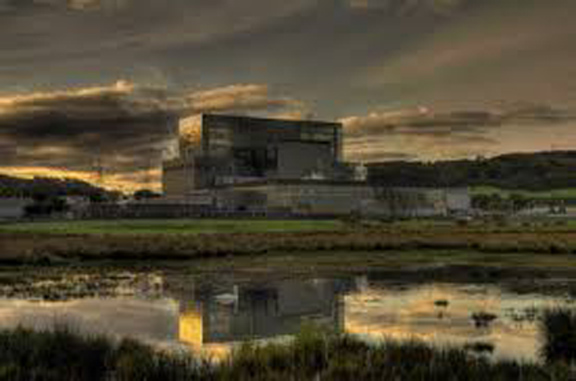
Times 5th July 2020, A high-stakes game of chance is being played at Hunterston B nuclear power
station on the west coast of Scotland. Engineers from the French giant EDF and safety experts from the Office for Nuclear Regulation are trying to work out if and when the plant’s two reactors can be restarted.
Forty-four years of hard use have not been kind to the plant’s graphite core — a vast chunk of carbon riddled with cracks that weighs the same as 110 double-decker buses. While the regulator and EDF insist that, with careful supervision, a cracked graphite core is nothing to worry about, it
is a symptom of its advancing years.
Hunterston, like the rest of EDF’s nuclear power stations around the UK, is on borrowed time. Seven nuclear stations capable of supplying about a sixth of the UK’s power needs will shut during the next decade. Unless ministers leap into action, the country that opened the first industrial-scale nuclear power station in 1956 at Calder Hall, Cumbria, will be left with just one replacement plant, Hinkley Point C on the Somerset coast, which is under construction.
The government faces difficult decisions: what next in its race to eliminate carbon emissions by 2050? A boom in renewable power has offered the beguiling prospect that wind and solar, combined with storage such as big batteries and hydrogen, could fill the void. A report from the National Infrastructure Commission has suggested that commercially unproven technologies, such as hydrogen generation, could negate the need for more nuclear power and be “substantially cheaper”.
With half an eye on this utopian future, successive governments have tried to persuade European
power giants such as Germany’s RWE and Eon, and Japan’s Toshiba and Hitachi, to pump cash into new reactors. However, one by one, those companies have dropped out, leaving just a handful of options remaining.
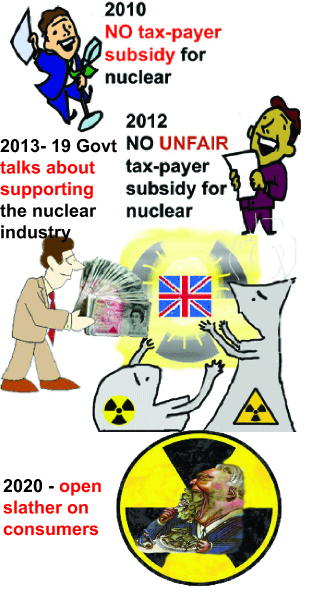
EDF and China General Nuclear (CGN) — both backed by their governments — are building the £22bn Hinkley plant. Without a state support package, EDF will struggle to build the planned Sizewell C in Suffolk. That would leave CGN as the only developer capable of going it alone without UK taxpayer support. ……
The prime minister’s adviser Dominic Cummings is thought to be a fan of small nuclear power stations, and Boris Johnson hinted about a role for nuclear last week………. Taxpayers are about
to find out whether billions of pounds will be pumped into nuclear power……
https://www.thetimes.co.uk/edition/business/atomic-quandary-for-ministers-after-years-of-dallying-over-nuclear-power-dzsc2s25l
Jane Goodall on conservation, climate change and COVID-19
Jane Goodall on conservation, climate change and COVID-19: “If we carry on with business as usual, we’re going to destroy ourselves” BY JEFF BERARDELLI JULY 2, 2020 CBS NEWS While COVID-19 and protests for racial justice command the world’s collective attention, ecological destruction, species extinction and climate change continue unabated. While the world’s been focused on other crises, an alarming study was released warning that species extinction is now progressing so fast that the consequences of “biological annihilation” may soon be “unimaginable.”Dr. Jane Goodall, the world-renowned conservationist, desperately wants the world to pay attention to what she sees as the greatest threat to humanity’s existence.
CBS News recently spoke to Goodall over a video conference call and asked her questions about the state of our planet. Her soft-spoken grace somehow helped cushion what was otherwise extremely sobering news: “I just know that if we carry on with business as usual, we’re going to destroy ourselves. It would be the end of us, as well as life on Earth as we know it,” warned Goodall.
What follows is a lightly edited transcript of our conversation.
Jeff Berardelli: Destruction of nature is causing some really big concerns around the world. One that comes to the forefront right now is emergent diseases like COVID-19. Can you describe how destruction of the environment contributes to this?
Dr. Jane Goodall: Well, the thing is, we brought this on ourselves because the scientists that have been studying these so-called zoonotic diseases that jump from an animal to a human have been predicting something like this for so long. As we chop down at stake tropical rainforest, with its rich biodiversity, we are eating away the habitats of millions of animals, and many of them are being pushed into greater contact with humans. We’re driving deeper and deeper, making roads throughout the habitat, which again brings people and animals in contact with each other. People are hunting the animals and selling the meat, or trafficking the infants, and all of this is creating environments which are perfect for a virus or a bacteria to cross that species barrier and sometimes, like COVID-19, it becomes very contagious and we’re suffering from it.
But we know if we don’t stop destroying the environment and disrespecting animals — we’re hunting them, killing them, eating them; killing and eating chimpanzees in Central Africa led to HIV/AIDS — there will be another one. It’s inevitable.
Do you fear that the next [pandemic] will be a lot worse than this one?
Well, we’ve been lucky with this one because, although it’s incredibly infectious, the percentage of people who die is relatively low. Mostly they recover and hopefully then build up some immunity. But supposing the next one is just as contagious and has a percentage of deaths like Ebola, for example, this would have an even more devastating effect on humanity than this one.
I think people have a hard time connecting these, what may look like chance events, with our interactions and relationship with nature. Can you describe to people why the way that we treat the natural world is so important?
Well, first of all, it’s not just leading to zoonotic diseases, and there are many of them. The destruction of the environment is also contributing to the climate crisis, which tends to be put in second place because of our panic about the pandemic. We will get through the pandemic like we got through World War II, World War I, and the horrors following the World Trade towers being destroyed. But climate change is a very real existential threat to humankind and we don’t have that long to slow it down.
Intensive farming, where we’re destroying the land slowly with the chemical poisons, and the monocultures — which can be wiped out by a disease because there is no variation of crops being grown — is leading to habitat destruction. It’s leading to the creation of more CO2 through fossil fuels, methane gas and other greenhouse gas [released] by digestion from the billions of domestic animals.
It’s pretty grim. We need to realize we’re part of the environment, that we need the natural world. We depend on it. We can’t go on destroying. We’ve got to somehow understand that we’re not separated from it, we are all intertwined. Harm nature, harm ourselves.
If we continue on with business as usual, what do you fear the outcome will be?
Well, if we continue with business as usual, we’re going to come to the point of no return. At a certain point the ecosystems of the world will just give up and collapse and that’s the end of us eventually too.
What about our children? We’re still bringing children into the world — what a grim future is theirs to look forward to. It’s pretty shocking but my hope is, during this pandemic, with people trapped inside, factories closed down temporarily, and people not driving, it has cleared up the atmosphere amazingly. The people in the big cities can look up at the night sky and sea stars are bright, not looking through a layer of pollution. So when people emerge [from the pandemic] they’re not going to want to go back to the old polluted days.
Now, in some countries there’s not much they can do about it. But if enough of them, a groundswell becomes bigger and bigger and bigger [and] people say: “No I don’t want to go down this road. We want to find a different, green economy. We don’t want to always put economic development ahead of protecting the environment. We care about the future. We care about the health of the planet. We need nature,” maybe in the end the big guys will have to listen……….https://www.cbsnews.com/news/jane-goodall-climate-change-coronavirus-environment-interview/?ftag=CNM-00-10aab7e&linkId=92720503
Hard to get action on global heating, with Facebook no help, and oil industry pressure
 What Facebook and the Oil Industry Have in Common, Bill McKibben, New Yorker, 2 July 20,
Why is it so hard to get Facebook to do anything about the hate and deception that fill its pages, even when it’s clear that they are helping to destroy democracy? And why, of all things, did the company recently decide to exempt a climate-denial post from its fact-checking process? The answer is clear: Facebook’s core business is to get as many people as possible to spend as many hours as possible on its site, so that it can sell those people’s attention to advertisers. (A Facebook spokesperson said the company’s policy stipulates that “clear opinion content is not subject to fact-checking on Facebook.”) This notion of core business explains a lot—including why it’s so hard to make rapid gains in the fight against climate change.
For decades, people have asked me why the oil companies don’t just become solar companies. They don’t for the same reason that Facebook doesn’t behave decently: an oil company’s core business is digging stuff up and burning it, just as Facebook’s is to keep people glued to their screens. Digging and burning is all that oil companies know how to do—and why the industry has spent the past thirty years building a disinformation machine to stall action on climate change. It’s why—with the evidence of climate destruction growing by the day—the best that any of them can offer are vague pronouncements about getting to “net zero by 2050”—which is another way of saying, “We’re not going to change much of anything anytime soon.” (The American giants, like ExxonMobil, won’t even do that.)
Total, the French oil company, has made the 2050 pledge, but it is projected to increase fossil-fuel production by twelve percent between 2018 and 2030. These are precisely the years when we must cut emissions in half, according to the Intergovernmental Panel on Climate Change, to have any chance of meeting the vital targets set by the Paris climate agreement, which aim to hold the planet’s temperature increase as close as possible to one and a half degrees Celsius. The next six months will be crucial as nations prepare coronavirus recovery plans. Because effective climate planning at this moment will require keeping most oil, coal, and gas reserves in the ground, the industry will resist fiercely.
So we need power brought to bear from companies whose core business is not directly challenged by climate activism. Consider the example of Facebook again: after organizing by people like Judd Legum and StopHateForProfit.org, companies including Unilever and Coca-Cola agreed to temporarily stop advertising on the social platform. Coke’s core business is selling you fizzy sugar water that can help make you diabetic—when that’s threatened, the company fights back. But when it feared being attacked for helping Facebook’s core business, it simply stopped advertising with the company, which wasn’t essential for Coke’s business.
That’s why it is critical to get third parties to pressure the oil industry. This past month, the growing fossil-fuel divestment campaign got a huge boost when the Vatican, whose core business is saving souls, called for divestment, and the Queen of England, whose core business is unclear but involves hats, divested millions from the industry.
Keith Ellison, the attorney general of Minnesota, announced that he was suing ExxonMobil, as well as the American Petroleum Institute and Koch Industries, for perpetrating a fraud by spreading climate denial for decades. (Ellison’s core business is justice, and his office is pursuing this climate action at the same time that it is prosecuting the killers of George Floyd.) All this, in turn, puts pressure on the financial industry to stop handing over cash to oil companies.
As I pointed out in a piece last summer, JPMorgan Chase may be the biggest fossil-fuel lender on earth, but that’s still only about seven per cent of its business—big, but not core.
Effective progress on climate will require government and the finance industry to enforce the edicts of chemistry and physics: massive action undertaken inside a decade, not gradual, gentle course correction. And that will require the rest of us to press those institutions. Because our core business is survival…….. https://www.newyorker.com/news/annals-of-a-warming-planet/what-facebook-and-the-oil-industry-have-in-common
Update on Legal Case: Toxic, Toxic Culture at Sellafield —

Support Alison McDermott on the 7th July…. Readers may remember Sellafield workers speaking out “about their experience of bullying and sexism at the Sellafield plant….after whistleblower Alison McDermott launched a crowdfunding page to pay for legal fees for her whistleblowing and victimisation case lodged to the Employment Tribunal against Sellafield Ltd. Alison told the local […]
via Update on Legal Case: Toxic, Toxic Culture at Sellafield —
What caused radioactive releases from Russia? — Beyond Nuclear International

Denials persist about nuclear cloud
via What caused radioactive releases from Russia? — Beyond Nuclear International
No economic benefit in nuclear power for India
 NMIMS-FPJ webinar: Nuclear energy not for countries looking at economic development, https://www.freepressjournal.in/fpj-initiatives/nmims-fpj-webinar-nuclear-energy-not-for-countries-looking-at-economic-developmentBy FPJ Web Desk 1 July 20, If India is looking at development by increasing power consumption, it is essential that it opts for cheaper forms of energy, stated nuclear expert M V Ramana, at a webinar ‘The future of nuclear energy’. He stressed that in such a case nuclear is not the right choice. Ramana is Director of the Liu Institute for Global Issues at the School of Public Policy and Global Affairs, University of British Columbia.
Speaking at the third session of a series ‘The future of energy’ organised by NMIMS-FPJ in association with Tata Power, Ramana said, “If you were looking at (economic) development by providing power to hundreds of villages that do not have power, then nuclear energy is a very bad choice. For development, you need cheap energy but you have (nuclear energy which is) an expensive form of energy.”
He revealed today it costs somewhere between USD 10-15 billion to build a nuclear power plant. However, the power produced by this plant is at the cost of USD 100 per MW hour. This is three times higher the cost of solar and wind energy, he added. “Solar and wind energy today are selling at USD 30-35 per megawatt hour (MWh).” After including storage costs and other costs, solar and wind energy continues to be cheaper and will cost over USD 50 per MWh.
He went on to add while nuclear plants are complicated, the fast breeder reactor is a lot more complex. Countries like the United States, Germany, the United Kingdom, others had fast breeder reactors programmes, which they gave up. “For historical and sociological reasons, India has said it is a very important part of our programme and pours in a lot of resources into that. Even if you are supporting nuclear energy, this is not the technology that you should be focussing on,” he advised. https://www.freepressjournal.in/fpj-initiatives/nmims-fpj-webinar-nuclear-energy-not-for-countries-looking-at-economic-development
1 This Month

petition to oppose the rapid increase of space-military industry threatening Jeju Island and the region.
[Petition by April 19th (KST)] Stop the joint military-Hanwha Systems-Jeju Provincial Government Sea Launch!

Chernobyl: The Lost Tapes – A good documentary on Chernobyl on SBS available On Demand for the next 3 weeks– https://www.sbs.com.au/ondemand/tv-program/chernobyl-the-lost-tapes/2352741955560

of the week–London Campaign for Nuclear Disarmament


Tell the Ukrainian Government to Drop Prosecution of Peace Activist Yurii Sheliazhenko
To see nuclear-related stories in greater depth and intensity – go to https://nuclearinformation.wordpress.com
-
Archives
- April 2026 (194)
- March 2026 (251)
- February 2026 (268)
- January 2026 (308)
- December 2025 (358)
- November 2025 (359)
- October 2025 (376)
- September 2025 (257)
- August 2025 (319)
- July 2025 (230)
- June 2025 (348)
- May 2025 (261)
-
Categories
- 1
- 1 NUCLEAR ISSUES
- business and costs
- climate change
- culture and arts
- ENERGY
- environment
- health
- history
- indigenous issues
- Legal
- marketing of nuclear
- media
- opposition to nuclear
- PERSONAL STORIES
- politics
- politics international
- Religion and ethics
- safety
- secrets,lies and civil liberties
- spinbuster
- technology
- Uranium
- wastes
- weapons and war
- Women
- 2 WORLD
- ACTION
- AFRICA
- Atrocities
- AUSTRALIA
- Christina's notes
- Christina's themes
- culture and arts
- Events
- Fuk 2022
- Fuk 2023
- Fukushima 2017
- Fukushima 2018
- fukushima 2019
- Fukushima 2020
- Fukushima 2021
- general
- global warming
- Humour (God we need it)
- Nuclear
- RARE EARTHS
- Reference
- resources – print
- Resources -audiovicual
- Weekly Newsletter
- World
- World Nuclear
- YouTube
-
RSS
Entries RSS
Comments RSS
 nuclear-news