Extending the operating licences on nuclear reactors to 60, 80, 100 years – a recipe for disaster
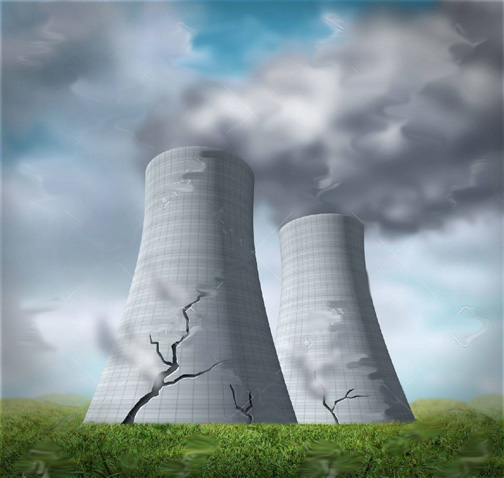 Inviting Nuclear Disaster Counterpunch BY KARL GROSSMAN 30n Dec 20, Nuclear power plants when they began being constructed were not seen as running for more than 40 years because of radioactivity embrittling metal parts and otherwise causing safety problems. But in recent decades, the U.S. Nuclear Regulatory Commission has extended the operating licenses of nuclear power plants from 40 years to 60 years and then 80 years, and is now considering 100 years.
“It is crazy,” declares Robert Alvarez, a former senior policy advisor at the U.S. Department of Energy and a U.S. Senate senior investigator and now senior scholar at the Institute for Policy Studies and is an author of the book Killing Our Own: The Disaster of America’s Experience with Atomic Radiation.
No reactor in history has lasted that long,” commented Alvarez. The oldest nuclear power plant in the U.S. was Oyster Creek, five miles south of Toms River, New Jersey, which opened in 1969 and was shut down 49 years later in 2018.
The move is “an act of desperation in response to the collapse of the nuclear program in this country and the rest of the world,” he declares.
The nuclear industry and nuclear power advocates in government are “desperately trying to hold on,” says Alvarez. With hardly any new nuclear power plants being constructed in the U.S. and the total number down to 94, they seek to have the operating licenses of existing nuclear power plants extended, he says, to keep the nuclear industry alive.
It’s a sign of “the end of the messy romance with nuclear power.”
The NRC will be holding a webinar on January 21 to consider the extending of nuclear plant operating licenses to 100 years. As its announcement is headed: “PUBLIC MEETING ON DEVELOPMENT OF GUIDANCE DOCUMENTS TO SUPPORT LICENSE RENEWAL FOR 100 YEARS OF PLANT OPERATION.”
Nuclear power plant construction has been in a deep depression for some time. Vogtle Units 3 and 4 in Georgia are “the first new nuclear units built in the United States in the last three decades,” notes on its website Georgia Power, one of the companies involved in that project. The cost projection in 2008 to build the two nuclear plants was $14.3 billion. “Now, updated estimates put the total project cost at roughly $28 billion,” states Taxpayers for Common Sense, and construction is more than five years behind schedule.
It’s not just the gargantuan price of nuclear power, and the preferability economically today of green, renewable energy led by solar and wind. Nuclear plant construction in the U.S. and much of the world has been in the doldrums because of the Three Mile Island, Chernobyl and Fukushima nuclear power plant catastrophes. People not only don’t want to waste their money–they don’t want to lose their lives to nuclear power.
“There is no empirical evidence” to support the notion that nuclear plants can have a century-long life span, says Alvarez. There “is no penciling away the problems of age” of nuclear power plants which operate under high-pressure, high-heat conditions and are subject to radiation fatigue. “The reality of wear-and-tear can’t be wished away.”
“Who would want to ride in a 100 year-old car?” he asks.
Paul Gunter, director of the Reactor Oversight Project of the organization Beyond Nuclear, says: “The new construction of nuclear power plants is proving to be more expensive and more dubious than ever before. So, the nuclear industry and the NRC are in the process of developing a plan to get these existing aging and inherently dangerous machines to run for 100 years.”
“This raises all kinds of problems that have never been addressed,” says Gunter.
And the NRC and the U.S. Department of Energy don’t want to address them…………….
an AP review of historical records, along with an interview of an engineer who helped develop nuclear power, shows that … Reactors were made to last only 40 years. Period.”
Further, the piece—”Aging Nukes: NRC and industry rewrite nuke history”—said “the AP found that the relicensing process often lacks fully independent safety reviews. Records show that paperwork of the U.S. Nuclear Regulatory Commission sometimes matches word-for-word the language used in a plant operator’s application.”
Getting operating license extensions “is a lucrative deal for operators,” said AP.
Priscilla Star, director of the Coalition Against Nukes, said of extending the operating licenses of nuclear power plants to 100 years: “There is no sane argument to perpetuate the lifespan of our already decrepit nuclear reactors other than the NRC seeking to perpetuate the endless profits to its licensees.”
“All kinds of technical foul-ups occur in the daily operations of a nuclear power plant,” she continued. ‘It’s a crapshoot running any of them safely on any given day because human error plays such a big part of operational safety. More frequent cyber hacking will also put hs at greater risk if this form of energy production is not abolished in favor of renewables. It’s time for a presidential administration to curb the noblesse oblige appetite of the NRC and once and for all consider it unsafe and unsound as a regulatory agency putting profit before public safety.”
What the NRC has also done extending nuclear power plant licenses to 60 and then 80 years is to allow the plants to be “uprated” to generate more electricity—to run hotter and harder increasing the chance of accidents. It is asking for nuclear disaster. ……..https://www.counterpunch.org/2020/12/30/inviting-nuclear-disaster/?fbclid=IwAR1YQ614qqcsQZ3mwVCo9UV2JlqCfVBgmS358L7DCCwcShjKDJFtzH-nZ0k
No comments yet.
1 This Month



Tell the Ukrainian Government to Drop Prosecution of Peace Activist Yurii Sheliazhenko

Petition to revoke the licensing of the Near Surface Nuclear Disposal Facility (NSDF) at Chalk River. https://www.ourcommons.ca/petitions/en/Petition/Details?Petition=e-7247


of the week – STOP SMALL MODULAR REACTORS IN CANADA
To see nuclear-related stories in greater depth and intensity – go to https://nuclearinformation.wordpress.com
-
Archives
- March 2026 (222)
- February 2026 (268)
- January 2026 (308)
- December 2025 (358)
- November 2025 (359)
- October 2025 (376)
- September 2025 (258)
- August 2025 (319)
- July 2025 (230)
- June 2025 (348)
- May 2025 (261)
- April 2025 (305)
-
Categories
- 1
- 1 NUCLEAR ISSUES
- business and costs
- climate change
- culture and arts
- ENERGY
- environment
- health
- history
- indigenous issues
- Legal
- marketing of nuclear
- media
- opposition to nuclear
- PERSONAL STORIES
- politics
- politics international
- Religion and ethics
- safety
- secrets,lies and civil liberties
- spinbuster
- technology
- Uranium
- wastes
- weapons and war
- Women
- 2 WORLD
- ACTION
- AFRICA
- Atrocities
- AUSTRALIA
- Christina's notes
- Christina's themes
- culture and arts
- Events
- Fuk 2022
- Fuk 2023
- Fukushima 2017
- Fukushima 2018
- fukushima 2019
- Fukushima 2020
- Fukushima 2021
- general
- global warming
- Humour (God we need it)
- Nuclear
- RARE EARTHS
- Reference
- resources – print
- Resources -audiovicual
- Weekly Newsletter
- World
- World Nuclear
- YouTube
-
RSS
Entries RSS
Comments RSS
 nuclear-news
Leave a comment