USA to turn the moon into a nuclear weapons site
 US to turn moon into ‘nuclear weapons site’ US to turn moon into ‘nuclear weapons site’
By Huang Lanlan Source: Global Times: 2020/12/18, The US ambition to build a nuclear power plant on the moon by 2027, which may contribute to future lunar military projects, shows it seeks space supremacy regardless of the damage and dangers it may cause to people, Chinese experts on military and international relations said.
Establishing a nuclear power plant on the moon by the end of 2027 was included in a number of specific goals in a memorandum signed by US President Donald Trump on Wednesday, which is known as Space Policy Directive 6 (SPD-6). The plant would “support a sustained lunar presence and exploration of Mars,” SPD-6 said. Military purposes are likely to be behind the establishment, Chinese military expert and commentator Song Zhongping said. By setting up a nuclear power plant, which includes exploiting nuclear materials and building equipment like nuclear reactors and uranium enrichment facilities, the US can theoretically turn the moon “into a production site of nuclear weapons,” Song told the Global Times Friday. The moon is rich in helium-3, a material that could be used as fuel to produce energy by nuclear fusion, Song said. In the name of building a nuclear power plant, the US may directly exploit this material on the moon and then construct nuclear fuel-processing plants there, he said. The plan once again shows American unilateralism in space, which runs counter to the will of the international community in terms of lunar issues, Li Haidong, a professor at the Institute of International Relations of the China Foreign Affairs University, said………. As Chang’e-5 successfully completed its lunar trip on Thursday, the signing of SPD-6 also shows the US’ intention of dragging China into a space race, trying to divert China’s attention to an endless consumption of national resources for the race from improving its economy and people’s livelihood, Li said. This is similar to what the US did to the Soviet Union in the 1980s under Ronald Reagan’s “Star Wars” program, he noted.
Its goal of building a lunar nuclear power plant, nonetheless, may hardly be achieved on time by 2027 as the US is stuck in domestic trouble and chaos, such as the ongoing COVID-19 pandemic, Li said. https://www.globaltimes.cn/content/1210357.shtml |
|
Uninhabitable — Beyond Nuclear International

Citizens’ radioactivity measurements reveal true extent of contamination in Japan
Uninhabitable — Beyond Nuclear International
Did a research reactor in Jordan leak? — Beyond Nuclear International

A simple Facebook reposting could cost one man his freedom
Did a research reactor in Jordan leak? — Beyond Nuclear International
Many Canadian organisations dispute the government’s plan for small nuclear reactors
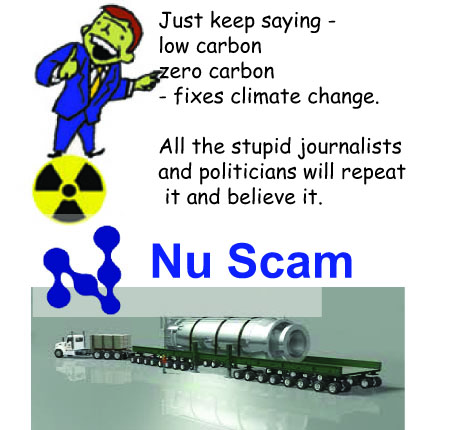 Feds throw support behind development of mini nuclear reactors; action plan released, Saskatoon / 650 CKOM Feds throw support behind development of mini nuclear reactors; action plan released, Saskatoon / 650 CKOMThe Canadian PressDec 18, 2020 “……. Among steps in the plan is developing prototypes and demonstration models.,,,,,
Dozens of groups, including opposition parties, some Indigenous organizations and environmentalists, want the government to fight climate change by investing more in renewable energy and energy efficiency rather than in the new reactors. They argue nuclear energy costs far too much money and is far from clean given the growing mound of radioactive waste it generates. O’Regan said the government is actively trying to figure out what do with the dangerous material….. The federal government estimates the global market for SMRs will be worth between $150 billion and $300 billion a year by 2040 but critics question the validity of the estimate. They also wonder who exactly might want one. …https://www.ckom.com/2020/12/18/feds-throw-support-behind-development-of-mini-nuclear-reactors/ |
|
2 million yen ($19,300) incentive for families to move to near crippled Fukushima No. 1 nuclear power plant
|
Under the program that will start in fiscal 2021, the Reconstruction Agency will provide an additional amount of up to 4 million yen to those who start new businesses in 12 cities, towns and villages where residents had been ordered to evacuate from after the triple meltdown at the plant. Eleven of those municipalities had come under the central government’s evacuation order, while in the remaining municipality, Hironomachi, residents were ordered to leave by the town government. Katsuei Hirasawa, the reconstruction minister, said on Dec. 17 that his agency is focused on repopulating those areas because only around 20 percent of residents have returned there even after the evacuation orders were lifted. One requirement is that the families must live in the locations for at least five years. The agency will provide 1.2 million yen to families that relocate to the 12 areas from other parts of Fukushima Prefecture and 2 million yen to those from other prefectures. The amount is 800,000 yen for single-person households that relocate from other areas of the prefecture and 1.2 million yen for those from outside the prefecture. …….. http://www.asahi.com/ajw/articles/14031389 |
|


For the USA, despite the “Green Nuclear Deal” propaganda, solar power islooking a whole lot better.
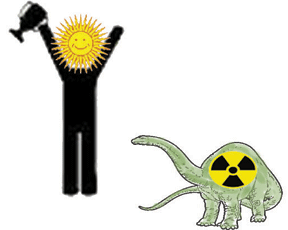 Nuclear vs Solar: The Race For Renewable Dominance , Oil Price By Alex Kimani – Nov 11, 2020
“……….. the main sticking point to the promotion of thorium as a cleaner nuclear fuel is that it remains unproven on a commercial scale. Thorium MSRs (Molten Salt Reactors) have been in development since the 1960s by the United States, China, Russia, and France, yet nothing much ever came of them. Further, only about 50 of the world’s 440 reactors can currently be configured to run on thorium.
…… Unfortunately, practical nuclear fusion remains a long-shot and could be decades away from becoming a commercial reality.
We simply don’t have the luxury of time.
Further, nuclear power in the U.S. faces an uncertain future. ……………
Solar rising
Whereas the nuclear sector comeback has its work cut out for it, solar power has clearly been on the ascendancy thanks in large part to falling costs.
Nuclear advocates have pointed to rising electricity costs in California as the reason why other states should think twice before adopting its model. Environmental Progress has reported that between 2011 and 2018, power costs in the Golden State increased by 27.9% compared to a 4% national average. This period coincided with a period when California has been aggressively ramping up its renewable generation capacity. Renewable sources currently account for ~30% of California’s electricity generation with an aim to double that by 2030 and hit 100% by 2045.
But that’s being a bit disingenuous because it fails to capture just how much solar costs have fallen over the timeframe.
According to the Solar Energy Industries Association (SEIA), solar installation costs have dropped by more than 70% over the past decade, opening up vast new markets and systems nationwide. The organization says prices as of Q2 2020 dropped to their lowest levels in history across all market segments, with utility-scale prices ranging from $16/MWh – $35/MWh, thus making it competitive with all other forms of generation. Meanwhile, costs for the average-sized residential system were cut in half from a pre-incentive price of $40,000 in 2010 to roughly $20,000 today.
And no, renewables are not to blame for California’s blackouts.
……………..Strongly Bullish
Despite these challenges, the solar sector remains strongly bullish.
Indeed, S&P Platts says that the shift to renewable energy is likely to continue full steam ahead regardless of fed policies noting that the energy transition has “clearly been moving forward on a regional basis,” despite lacking clear endorsement at the federal level under Trump.
It remains to be seen whether nuclear energy can command the same level of support. https://oilprice.com/Alternative-Energy/Nuclear-Power/Nuclear-vs-Solar-The-Race-For-Renewable-Dominance.html
EDF did a small survey of Suffolk community opinion -weighted to favour nuclear industry?
Suffolk towards the building of a new nuclear power station on the coast.
The survey was carried out by a company called ICM Unlimited on behalf of
EDF, which is looking to build the Sizewell C station. ICM interviewed a
representative sample of 500 adults in east Suffolk over the phone between
November 5 and November 19.
dismissed the research as “meaningless”, saying a sample of 500 people – in
an area with a population of 247,000 – was “hardly representative”. All
those that took part in the survey live in the area with data having been
weighted to the population profile of the East Suffolk Council adult
population.
https://www.eadt.co.uk/news/sizewell-c-survey-shows-favourable-results-6854678
Sizewell C nuclear plan – a disastrous and expensive mistake
heritage coast, but quite possibly the entire county, could be changed for
ever by the arrival of two new European pressurised reactors (EPRs).
‘Sizewell C, a proposed new nuclear power station in Suffolk, has the
potential to generate the reliable low carbon electricity the country needs
for decades to come’ is the claim made by EDF Energy, the French-owned
company behind the project. It also has the potential to be a disastrous
and expensive mistake. Many believe it already is.
https://www.spectator.co.uk/article/building-sizewell-c-would-be-a-nuclear-sized-disaster#
Nuclear waste plan spells doom for a Hokkaido fishing community
Hokkaido fishing villages face tough decision over nuclear disposal sites, Japan Times, HOKKAIDO SHIMBUN, Dec 18, 2020
A frosty wind was blowing in from the Sea of Japan at the Suttsu fishing port in Hokkaido in late November. There, catching anglerfish with a grim look on his face was 77-year-old fisherman Kyozo Kimura.
“The haul of fish has been decreasing to the point where we can’t even make ends meet. It has been tough,” said Kimura.
In 1977, Kimura, a native of the town of Matsumae, married into a family whose fishing business had been around for five generations since the Meiji Era (1868-1912). Longline fishing of trout prospered at the time, and he reminisced about the time when he got a new 29-ton ship, funded by his father-in-law, and was filled with hope that he could go out fishing anywhere with it.
But that dream did not last long.
An international regulation took effect later that year restricting fishermen to operating within 200 nautical miles of a nation’s shores.
Despite various efforts including changing to smaller ships aiming to catch Alaskan pink shrimp in coastal waters, hauls continued to drop. To make ends meet, Kimura ventured into scallop farming, learning the ropes from acquaintances.
Though the stable revenue from scallop farming has supported the family for years, the increase in sea temperatures in the past few years and other factors have led to the recurrent deaths of scallops, cutting hauls to a third of their heyday. The impact of coronavirus this year has also kept the price low amid declining demand.
Then, in August, local residents saw shocking headlines that Suttsu was considering applying for preliminary research into being a final disposal site for high-level radioactive waste produced from nuclear power plants.
Hearing the news, Kimura was upset, worrying that harmful rumors about radiation could potentially bring down the price of scallops. Local fishermen were split, and Kimura has heard about families arguing over the topic. Soon, people started avoiding it altogether.
In the 60 years or so since he graduated from high school, Kimura has worked as a fisherman, taking pride in his profession. But he is also aware of the importance of the town’s subsidies. For him to run a steady scallop farming business, any help, including municipal subsidies for fishing materials, makes a difference.
“I can’t go on by myself. If the lives of people won’t improve, we won’t have any more younger generations in the town,” said Kimura.
While showing some understanding of the need for a preliminary survey — for which Suttsu will receive government subsidies — he does not see the need for building a nuclear waste disposal site in the town.
On Nov. 17, the government launched preliminary surveys for the towns and villages of Suttsu and Kamoenai in Hokkaido, where herring fishing used to flourish.
According to the histories of the municipalities, wajin, or Japanese migrants to Hokkaido, made a hamlet and started fishing there in the Meiji Era. The industry became so lucrative at the time that there even remains a “herring palace” in Suttsu, which symbolizes the successful fishing business back then.
Although once a thriving industry, herring fishing began its steep decline around the late Meiji Era, and it was a shadow of its former self by the onset of the Showa Era (1926-1989).
After the end of World War II, fishermen began to seek ways to increase their catch, such as switching to pelagic fishing, but they were soon hit by the 200-nautical-mile fishing regulation. Though they have shifted to catching atka mackerel inshore and scallop farming as alternatives for survival, the hauls have been on the decline.
According to a fishery cooperative in Suttsu, there was about ¥2 billion worth of transactions in fiscal 1978, the oldest figures available on record. But transactions are now about ¥1 billion to ¥1.5 billion annually.
The Furuu fishery co-op also reports that there were 270 members in total in fiscal 2009 when three co-ops, Furuu, Kamoenai and Tomari, were merged together, but the number had shrunk to 126 in fiscal 2019.
Nobushige Miura, a 57 year-old fisherman in Kamoenai village, saw the industry dwindling first hand.
“In the offshore area, there aren’t many fish in the sea and prospects for fish farming are bleak. In the past decade, fishermen have been quitting one after the other saying they cannot hand down the business to their kids,” said Miura.
Miura is neither for nor against the village accepting the government’s preliminary survey. But he knows that the village’s future is bleak.
“If we don’t do anything, the village will disappear in the future,” he said.
Miura has been farming scallops for the past 30 years but recently he has seen the number of dead scallops on the rise, a trend also seen in Suttsu.
Miura’s family business started in the Edo Period (1603 to 1868), and is now in its fifth generation. Despite its long history, though, he realizes that the business will come to a halt in his generation due to the absence of successors. That is why Miura hopes all the more for the village to thrive, even for a short time.
Nihonkai Shokudo, a restaurant that sits along the national highway in Suttsu, serves local seafood throughout spring and summer. Owner Sumio Kawachi, 58, is a fourth-generation fisherman.
After graduating from Suttsu high school, he ran a construction business in Sapporo before becoming a fisherman when he was 37 years old due to an injury at his former workplace.
Amid the difficulties in the fishing business, he has been offering fishing classes to tourists in a bid to survive.
“Combining fishing with tourism is creating new business opportunities,” said Kawachi.
Kawachi’s mother was born into a family of fishermen in Rokkasho, Aomori Prefecture, where a nuclear reprocessing plant is located. His mother used to tell him about the divide among fishermen over the construction of the facility.
Having visited Rokkasho multiple times since his childhood, he has seen the fishing industry decline despite the help of government subsidies.
Reflecting on his experience, his hope is for everyone to think twice about the potential consequences of constructing a nuclear disposal site.
“I am fishing in a sea that I have succeeded from my ancestors. Will we be able to hand down the sea to future generations given the preliminary research for the nuclear disposal site?”
Iran builds at underground nuclear plant
|
Iran builds at underground nuclear plant, The West Australian Jon GambrellAAP. Fri, 18 December 2020 Iran has begun construction on a site at its underground nuclear facility at Fordo amid tensions with the US over its atomic program, satellite photos obtained by The Associated Press show.
Iran has not publicly acknowledged any new construction at Fordo, whose discovery by the West in 2009 came in an earlier
round of brinkmanship before world powers struck the 2015 nuclear deal with Tehran.
While the purpose of the building remains unclear, any work at Fordo likely will trigger new concern in the waning days of the Trump administration before the inauguration of President-elect Joe Biden.
Already, Iran is building at its Natanz nuclear facility after a mysterious explosion in July there that Tehran described as a sabotage attack.
“Any changes at this site will be carefully watched as a sign of where Iran’s nuclear program is headed,” said Jeffrey Lewis, an expert at the James Martin Center for Nonproliferation Studies at the Middlebury Institute of International Studies who
studies Iran.
Iran’s mission to the United Nations did not immediately respond to a request for comment. The International Atomic Energy Agency, whose inspectors are in Iran as part of the nuclear deal, also did not immediately respond to a request for comment.
|
|
|
In midst of pandemic crisis, more U.S. tax-payer money to go to nuclear power in space
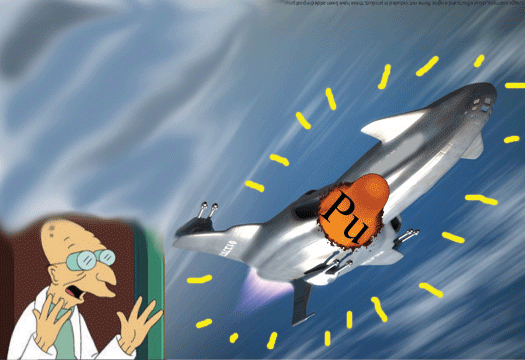 White House Issues Space Policy Directive on Space Nuclear Power and Propulsion. Via Satellite, By Rachel Jewett | December 17, 2020
SPD-6 establishes that the U.S. government will pursue a roadmap for federally-supported space nuclear power and propulsion activities.
44 year old Mihama nuclear station, with waste disposal problem may be allowed to restart

|
Town assembly gives nod to start 44-year-old nuclear reactor, http://www.asahi.com/ajw/articles/14031578 THE ASAHI SHIMBUN, December 18, 2020 MIHAMA, Fukui Prefecture–The town assembly here gave the green light Dec. 18 to resume operations at a nuclear power plant that has already passed its initial 40-year life span. The No. 3 reactor at the Mihama nuclear plant operated by Kansai Electric Power Co. first went online 44 years ago. The town assembly’s decision came a day after the Federation of Electric Power Companies (FEPC) of Japan submitted a proposal to the economy minister about a new initiative for joint use of an intermediate storage facility for spent nuclear fuel in Mutsu, Aomori Prefecture. Kansai Electric is keen to resume operations at the No. 3 reactor of the Mihama plant in January. The reactor has been offline for about a decade following the 2011 triple meltdown at the Fukushima No. 1 nuclear power plant. Key local officials will also have to sign off on the plan, and no further decisions are anticipated before the year-end. The Takahama town assembly in November also OK’d a resumption of operations at the Takahama plant’s No. 1 and No. 2 reactors. In response to questions from The Asahi Shimbun, Takahama Mayor Yutaka Nose said he would not make a decision before year-end. Mihama Mayor Hideki Toshima also said it would be difficult to reach a decision this month. Moreover, once the mayors give their approval, the Fukui prefectural assembly and Fukui Governor Tatsuji Sugimoto must also give their consent. Only then can operations resume. Sugimoto indicated earlier that he would only give his consent if Kansai Electric submitted a plan for an intermediate storage facility for spent nuclear fuel outside of the prefecture. The FEPC proposal submitted on Dec. 17 would allow Kansai Electric to use the Mutsu facility, but it is still not certain whether the local authorities in Aomori Prefecture will agree to that idea. Joint use of the Mutsu facility would help lower hurdles facing Sugimoto in reaching a decision on the Mihama reactor, according to a source in the Fukui prefectural government. Sugimoto is not expected to announce his decision until next year. In 2016, the Nuclear Regulation Authority gave the nod to operating the Mihama reactor beyond the legally set limit of 40 years after the facility passed rigorous safety screening procedures. The only other reactor older than 40 years to be given such approval besides the No. 1 and No. 2 reactors at the Takahama plant is the No. 2 Tokai plant operated by Japan Atomic Power Co. in Ibaraki Prefecture. The No. 3 reactor at the Mihama plant began operations in December 1976. Five plant workers were killed and six injured during a steam explosion at the reactor in 2004. (This article was written by Hideki Muroya and Tsunetaka Sato.) |
|
Ipswich Council raises fresh worries about Sizewell nuclear power plan
nuclear power station project on the Suffolk coast, citing train concerns
and impacts on housing as key worries.
consultation last month after tweaking plans for the £20billion scheme,
with Ipswich Borough Council’s planning committee on Wednesday agreeing its
response.
movements by rail on the East Suffolk Line should have regard to noise and
air quality disturbance; questions over the impact freight transport would
have on the Ipswich Garden Suburb development being built at the north of
the town; and fears that the extra freight by rail could reduce the number
of passenger trains on the East Suffolk Line – a key commuter route and
sustainable mode of transport. EDF agreed to transport more construction
materials by rail and sea in a bid to take hundreds of lorries off the road
during the construction, a move that would cut road haulage by 20%,
according to the developers.
https://www.eadt.co.uk/news/local-council/ipswich-borough-council-sizewell-c-consultation-response-6855812
DISABLED RUSSIAN NUCLEAR POWERED FREIGHTER TO PASS THROUGH UK AND EUROPEAN WATERS.
|
Disabled Russian nuclear-powered feighter eo pass trough UK and European waters, http://mariannewildart.wordpress.com December 19, 2020. Tim Deere-Jones Independent Marine Radioactivity Research & Consultancy at Tim Deere-JonesThe disabled Russian nuclear powered freighter SEVMORPUT (built in 1988) is expected to pass through UK waters between the 19th and 23rd of December, en route for Leningrad after aborting a proposed trip to re-supply the Russian base in the Antarctic. The SEVMORPUT is expected to transit the English Channel, pass through the Dover Strait and proceed up the North Sea and into the Baltic (this is the reverse track of her outward voyage). Her ETA for Leningrad is expected to be around the 28th Dec. This voyage will pass through , or near, the EEZ’s and Territorial Seas of 14 European Coastal States which are expected to express concern about the passage of this ageing and disabled nuclear powered ship. The SEVMORPUT’s voyage to the Antarctic was cut short off the coast of West Africa when campaigners observing her passage via satellite feeds reported that she must be experiencing difficulties because that she had spent several weeks going round and round in circles off the coast of Angola. Later reports implied that her captain and the Russian authorities had asked for Safe Haven in Angola, South Africa and Namibia, but had been refused entry. Almost no information about the cause of the problem has been released to the media by Russian authorities, but latest reporting implies that there have been issues either with the propeller or with the prop shaft. Since it’s launch in 1988, the SEVMORPUT has been relatively inactive, largely due to the refusal of many Coastal States, and even Russian ports, to accept a visit from a nuclear powered vessel, in the context of fears about reactor accidents and uncertain insurance regimes covering maritime nuclear reactors. In the late 1990s, SEVMORPUT was laid up in Murmansk due to delays in the refuelling of her reactor. The re-fuelling finally took place in 2001 and later the ship resumed low level service on the Arctic routes. In August 2007, it was reported that SEVMORPUT would be converted into the world’s first nuclear-powered drilling ship in the Arctic oil fields, due to lack of demand for cargo operators for lighters and the need of specialized drilling vessels in the Russian Arctic. However, that conversion never took place. In October 2009, the general director of Atomflot announced that SEVMORPUT could remain in service for 15 years. In late October 2012, it was reported that SEVMORPUT, which had been lying idle at the Atomflot base outside Murmansk since 2007, had been removed from the Russian Ship Register in July and would be sold for scrapped. However, in December 2013 it was reported that the decision to decommission the nuclear-powered ship had been cancelled and that the vessel would be brought back to service by February 2016. After a nine year lay-up SEVMORPUT returned to service in 2016, and has been chartered mainly by the Russian MoD for transporting cargo related to the development of military infrastructure in the Arctic. In addition, she has occasionally transported supplies for oil and gas projects. The re-deployment of the SEVMORPUT appears to be part of the ongoing “nuclearisation” of Russia’s Arctic shipping and follows recent statements that Russia is considering “alternative fuels” for its polar fleets, having already built and operated 10 nuclear powered icebreakers (2 more in design and build stage) and 1 floating marine nuclear reactor power station (9 more in design and build stage) to power offshore Arctic Ocean oil drilling. |
Important considerations about the 2020 Cyberattack and Nuclear Power Plants
|
6 Things to Know about the 2020 Cyberattack and Nuclear Power Plants, https://www.ucsusa.org/?_ga=2.33422906.56524403.1608530745-1569294116.1608530745, ED LYMAN, DIRECTOR OF NUCLEAR POWER SAFETY, CLIMATE & ENERGY | DECEMBER 18, 2020 News reports over the last day indicate that a massive and devastating cyberattack on US government agencies and private companies in the United States and abroad has occurred, and UCS will be watching as this news develops. While the scope of the cyberattack is still far from clear, here are some facts to consider regarding how the hack may have impacted US nuclear energy infrastructure.
|
|
1 This Month

of the week – Shut Down Drone Warfare!


Tell the Ukrainian Government to Drop Prosecution of Peace Activist Yurii Sheliazhenko

Petition to revoke the licensing of the Near Surface Nuclear Disposal Facility (NSDF) at Chalk River. https://www.ourcommons.ca/petitions/en/Petition/Details?Petition=e-7247
To see nuclear-related stories in greater depth and intensity – go to https://nuclearinformation.wordpress.com
-
Archives
- April 2026 (91)
- March 2026 (251)
- February 2026 (268)
- January 2026 (308)
- December 2025 (358)
- November 2025 (359)
- October 2025 (376)
- September 2025 (257)
- August 2025 (319)
- July 2025 (230)
- June 2025 (348)
- May 2025 (261)
-
Categories
- 1
- 1 NUCLEAR ISSUES
- business and costs
- climate change
- culture and arts
- ENERGY
- environment
- health
- history
- indigenous issues
- Legal
- marketing of nuclear
- media
- opposition to nuclear
- PERSONAL STORIES
- politics
- politics international
- Religion and ethics
- safety
- secrets,lies and civil liberties
- spinbuster
- technology
- Uranium
- wastes
- weapons and war
- Women
- 2 WORLD
- ACTION
- AFRICA
- Atrocities
- AUSTRALIA
- Christina's notes
- Christina's themes
- culture and arts
- Events
- Fuk 2022
- Fuk 2023
- Fukushima 2017
- Fukushima 2018
- fukushima 2019
- Fukushima 2020
- Fukushima 2021
- general
- global warming
- Humour (God we need it)
- Nuclear
- RARE EARTHS
- Reference
- resources – print
- Resources -audiovicual
- Weekly Newsletter
- World
- World Nuclear
- YouTube
-
RSS
Entries RSS
Comments RSS
 nuclear-news