The week in nuclear news
The global corona virus – deaths nearly 1.5 million. Global heating moves on – Arctic events affect the world. BUT- the nuclear threat is also still with us, always there, and must not be forgotten.
With the assassination of Iran’s top nuclear scientist, the world is yet again teetering on the brink.
Some bits of good news – Britain Helps World’s Most Remote Inhabited Islands to Establish Biggest Marine Sanctuary in the Atlantic.
Today’s Google headlines on nuclear issues – weapons and Iran dominate the stories.
The global energy revolution.
The Australian government”s intimidation of whistleblowers – the torture of Julian Assange.
Correcting 5 wrong opinions about the Treaty on the Prohibition of Nuclear Weapons. Living with the Nuclear Prohibition Treaty: nuclear weapons states would be unwise to attack it.
Nuclear power hinders fight against climate change.
Standard nuclear reactor designs are still too costly, and safety features are only a third of nuclear costs.
Solar energy is bullish in the market; the same can’t be said for nuclear.
The creeping carbon costs of digital communication.
Book review: The Case for Degrowth.
Extradition hearing of Julian Assange – defence witnesses destroy myths, demonstrate his integrity
JAPAN. Japanese local governments depend on “nuclear money”. No. 2 reactor at Tohoku Electric Power Co’s Onagawa nuclear power plant for restart, despite problems. Surveys to identify nuclear waste disposal site begin in Hokkaido.
Fukushima. Destructive potential of over a million tons of radioactive water into the Pacific. Fukushima nuclear reactor no.1 – debris prevented from falling into fuel storage pool. Nuclear disaster: Fukushima schools frozen in time. Survey finds that most Fukushima evacuees do not intend to return.
TAIWAN. Taiwanese protest plan to dump water from Japan nuclear plant into sea.
UK
- Depressing news for the nuclear lobby in UK, Western Europe – Boris Johnson’s government adding nuclear power to its long list of failures. UK government losing enthusiasm for new nuclear power stations, as grim financial realities set in. British MP’s continue to botch it in the ever more costly saga of Britain’s “old” nukes and “new” nukes. Inaccuracies in Boris Johnson’s document supporting nuclear power development. Britain’s enthusiasm for nuclear power stations is waning.
- Large and small nuclear reactors should not be included in UK’s ‘clean, green’ 10 point plan. British govt’s foolhardy plan to pay up for non existent Rolls Royce small nuclear reactors. UK government wastes tax-payer money on small and large nuclear reactors that will never be cheap or safe.
- Sizewell C nuclear plant ‘not value for money’, and would sabotage the govt’s pledge for nature. Destruction of habitat, Coronation Wood to be felled, for Sizewell C nuclear project, British govt produced no evidence that nuclear plants are essential, in secret deals for the convenience of the nuclear industry. 30-day public consultation about UK’s Sizewell nuclear reactor project. Bankrupt AREVA, resuscitated as ‘Framatome’, joins the the Sizewell C nuclear build Consortium. £525 million pledged to build UK small nuclear reactors, no funding package yet revealed for £20 billion Sizewell plant. UK government’s plans for Sizewell and Wylfa nuclear stations are wavering, with doubts about costs.
- Decommissioning and wastes. Hazardous plan for Peel Ports to take over the decommissioning of Britain’s dead nuclear submarines . Hinkley Point B nuclear reactor offline now, and will be shut down earlier than planned. Both Hinkley Point B and Hunterston B nuclear power stations will close early due to cracks in graphite cores. £132billion and counting – Britain’s nuclear decommissioning mess could take 120 years. UK tax-payers foot huge bill for incompetence of Nuclear Decommissioning Authority (NDA). UK’s beautiful Lake District – no “final solution” for the nuclear waste problem.The Irish sea – plagued by dumped munitions and radioactive trash.
- Cheap and effective, but solar energy is omitted from UK govt’s 10 point plan. Mayor of London announces solar and energy efficiency projects funded by ‘Green New Deal.
USA.
- Could a mad, unhinged US president, push the nuclear button? Trump still has the awesome power to launch America’s nuclear arsenal. It is likely that Trump gove the nod for assassination of Iran nuclear scientist. European security officials fear that Trump may trigger a war against Iran. Trump’s Impact on Nuclear Proliferation, Treating Foreign Policy as a Business. Trump administration pulls out of Open Skies treaty with Russia.
- Investigative journalism – Joe Biden’s ” transition team”includes men with strong links to the weapons industry– Beware the “madness of militarism” – Biden likely to appoint war-loving Michèle Flournoy as Defense Secretary. For Joe Biden – an early trial problem – the UN Treaty on the Prohibition of Nuclear Weapons.
- With Joe Biden in Charge, No More Flashy Kim Jong Un Summits. –The Biden- Harris administration can change nuclear weapons policy, make it safer, and much cheaper. President Joe Biden will have just 16 days from Inauguration Day to rescue the new START Treaty
- How a nuclear weapons officer came to support the Treaty Prohibiting Nuclear Weapons.
- A New U.S. Missile Defense Test May Have Increased the Risk of Nuclear War. Closer to nuclear war – as USA tests ICBM intercept. Resuming nuclear testing is unnecessary — and unsafe
- Prison, big fines, for Catholic anti nuclear activists. Anti-Nuclear Pacifists Get Federal Prison Terms for Nonviolent Protest. A mock B61-12 nuclear bomb dropped for the first time.
- USA revives plan for fast reactor, despite terrorism risks .
- USA looks to get $18billion now, maybe $40billion later, in flogging off nuclear reactors to Poland.
- Former CEO of failed V.C. Summer nuclear project pleads guilty to fraud charges. Ohio Attorney General Dave Yost has filed a second lawsuit to stop bailout of nuclear reactors. Ohio likely to require nuclear reactor audit before renewing bailout.
- 30 more years for Wisconson’s old nuclear power station? Is this a good idea?
- Dismantling Duke Energy’s Crystal River nuclear plant.
- Unanswered questions cloud the future of NuScam’s Small Modular Nuclear Reactor project. Concerns in Utah cities about costs and safety of NuScam’s small nuclear reactor scheme.
- The intractible problem of San Onofre’s, and indeed, America’s, nuclear waste.
- NRC approves financially dodgy sale of Indian Point Nuclear Station to Holtec.
- Lack of safety documents in Los Alamos National Laboratory’s handling of radioactive wastes. Waste Isolation Pilot Plant – building of ventilation shaft is halted, due to Covid-19 and planning problems. Danger to San Onofre nuclear waste, from ocean’s king tides. Why we shouldn’t be talking about nuclear waste “disposal”.
- Slowly moving lawsuit on the health impacts of a national nuclear laboratory.
INDIA. Cybersecurity breach at Kudankulam Nuclear Power Plant (KKNPP) undetected for over 6 months.
EUROPE. The effect on Europe of the UN Treaty on the Prohibition of Nuclear Weapons.
FRANCE. Orano, formerly Areva, targeted by judicial investigation for corruption. Corruption investigation into AREVA’s sale of Nigerian uranium. New comic book investigates the dilemma about France’s nuclear wastes.
Extended shutdown for work on Flamanville nuclear reactor build. Greenpeace launches legal appeal against French nuclear safety authority allowing extension of lifetime of nuclear reactors. Concern in France over lack of expert inspection of nuclear sites.
CANADA. Canada’s environmental groups join to oppose experimental Small Nuclear Reactors (SMRs). Small Modular Nuclear Reactors, the nuclear industry’s latest pipe dream. Canadian government’s misplacing funding into unviable small nuclear reactors for North West Territories. Safety dangers of small modular nuclear reactors (SMRs). In the face of public opposition, Ottawa delays small nuclear reactor plan. Ontario could get clean renewable energy from neighbouring provinces, with no need for nuclear power.
IRAN. Architect of its nuclear programme assassinated – Iran vows retaliation. Tehran’s UN ambassador says rival Saudi Arabia is looking for an excuse to build nuclear weapons and blaming Iran. Iran admits breach of nuclear deal discovered by UN inspectorate. Iran slams European criticism on expanding nuclear programme. What’s behind the assaisnation of Iran’s top nuclear scientist? UAE, Jordan Condemn Killing of Iranian Nuclear Scientist, Call for Self-restraint.
BANGLADESH. Bangladesh draws up a nuclear disaster response plan.
GERMANY. Uranprojekt –The Nazi Nuclear Program.
RUSSIA. Russia’s latest nuclear icebreaker had to abort maiden Arctic voyage. Russia claims to have successfully tested an “unstoppable” nuclear missile.
UKRAINE. First canister of used nuclear fuel loaded into Chernobyl storage facility. Comprehensive research now shows that irradiated areas near Chernobyl have fewest mammals.
SAUDI ARABIA. Saudi minister says nuclear armament against Iran ‘an option’.
NORTH KOREA. North Korea sparks new nuclear weapons fears.
ROMANIA. European Commission approves Romania’s purchase of nuclear reactors.
RWANDA. Growing opposition to nuclear power in Rwanda.
AUSTRALIA. Investigative journalism – Australian children targetted for propaganda by the weapons industry. – Australia’s Department of Defence captured by foreign weapons makers Thales, BAE.
Today’s Google headlines on nuclear issues – weapons and Iran dominate the stories.
 30 Nov 20, Todays news headlines – 92 articles on nuclear issues.
41 of these concerned nuclear weapons and issues around international diplomacy, and the upcoming Treaty on the Prohibition of Nuclear Weapons.
By far the most often mentioned topic was the assassination of Iran’s top nuclear weapons expert, Mohsen Fakhrizadeh ( pictured at left).
In general, articles about nuclear weapons tend to be factual accounts of national policies and weapons development. There are also articles with strong opposition to nuclear arms and testing.
Articles on so-called non military nuclear issues. Most (29) of these have been in support of, or promoting nuclear power. During the past week there has been a plethora of articles enthusing over small nuclear reactors (SMRs) . Today, of the 19 articles advocating new nuclear power, 9 were focussed on small nuclear reactors. Other pro nuclear themes were – reassurance that radiation is not such a worry, space research, fusion, hydrogen, and nuclear as climate solution.
Anti-nuclear articles (18) argued against new nuclear power, especially small reactrors, on grounds of costs, wastes, safety , climate uselessness, comparison with renewables.
4 “neutral” articles just set out information on decommissioning reactors, UK policy,health issues.
UAE, Jordan Condemn Killing of Iranian Nuclear Scientist, Call for Self-restraint
UAE, Jordan Condemn Killing of Iranian Nuclear Scientist, Call for Self-restraint, https://www.haaretz.com/middle-east-news/iran/.premium-uae-condemns-killing-of-iranian-nuclear-scientist-calls-for-self-restraint-1.9335920 The states cautioned against regional escalations after the killing of Iranian nuclear scientist Mohsen FakhrizadehThe United Arab Emirates condemned on Sunday the killing of top Iranian nuclear scientist Mohsen Fakhrizadeh and called on all parties to exercise self-restraint to avoid sliding the region into new levels of instability, the state news agency reported on Twitter.
Jordan, a staunch U.S. ally also condemned the assassination of Fakhrizadeh, state media reported, and called for collective efforts to avoid an escalation in tensions in the Middle East region.
Why we shouldn’t be talking about nuclear waste “disposal”
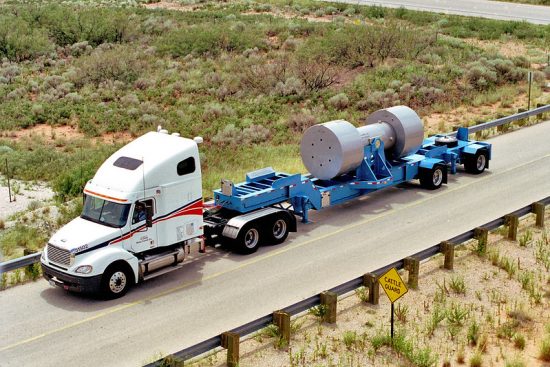
All casked up with nowhere to go https://beyondnuclearinternational.org/2020/11/29/all-casked-up-with-nowhere-to-go/ November 29, 2020 by beyondnuclearinternational
Why we shouldn’t be talking about nuclear waste “disposal” By Linda Pentz Gunter, 29 Nov 20
Let’s get one thing clear right off the bat. You don’t “dispose” of nuclear waste.
The ill-suited, now canceled, but never quite dead radioactive waste repository at Yucca Mountain was not a “disposal” site.
The radioactive mud being dredged from the sea bed at the Hinkley C nuclear site in the UK, is not going to get “disposed of” in Cardiff Grounds (a mile off the Welsh coast).
When Germany dumped radioactive waste in drums into the salt mines of Asse, it wasn’t “disposed” of.
Taking nuclear waste to Texas and New Mexico border towns and parking it there indefinitely is not “disposal”.
To talk about radioactive waste “disposal” is simply dishonest. It’s disingenuous at best and deliberately misleading at worst.
In Cardiff Bay, that radioactive waste will get “dispersed.” At Asse, the waste leaked out of the barrels and “dispersed” into water that has flooded the site.
At Yucca Mountain, were it to get a renewed green light, water will eventually carry off those radioactive particles, sending them into groundwater and drinking water downstream of the dump.
“Once you have made radioactive waste, then you are looking at long-term isolation, not disposal,” says Paul Gunter of Beyond Nuclear. “And its cost. And if you are looking to manage the liability of cost, then don’t make it.”
That’s the easiest kind of radioactive waste to “dispose” of. The kind you haven’t made. Because, as Gunter says, “there is no alchemy for radioactive detritus.” Once we’ve made it, it’s with us pretty much forever.
Federal agencies and nuclear corporations continue to wrestle over what to do with the already tens of thousands of tons of high-level radioactive waste (at least 90,000 at last count) generated by America’s commercial nuclear power plants — all casked up with nowhere to go (and a lot of it still in the fuel pools). Because, absent alchemy, that waste is always going to be somewhere, even if we can’t see it.
Once upon a time, the general public understood this. In 1986, when the US Department of Energy was looking for a geological burial site for commercial nuclear waste, it began giving serious consideration to the “granite state” of New Hampshire.
New Hampshire towns — some of which would have been seized and razed by eminent domain to make way for the repository — rose up in opposition. A stunning 100 of them signed a resolution that not only opposed the burial, storage, and transportation of high-level nuclear waste in New Hampshire, but also its production.
A law was eventually passed in New Hampshire that forbade siting a nuclear waste repository in the state, but not banning its generation. The construction of the Seabrook nuclear power plant on the New Hampshire coast progressed, and today the single unit of the two originally planned is duly generating radioactive waste for the state of New Hampshire, with still no place to go.
In fact, the law banning a repository in New Hampshire was quietly, almost covertly, overturned in the New Hampshire state legislature in 2011, a fact uncovered by State Rep. Renny Cushing while writing legislation in 2016. (Cushing is a founder of this country’s first anti-nuclear power group, the Clamshell Alliance, which vigorously opposed the construction of Seabrook.)
https://www.youtube.com/watch?v=BLeYKkA2V7EA German four-part animation piece, humorously demonstrated the impossibility of disposing of radioactive waste. This is the second segment.
In a characteristically stealthy way, the Nuclear Regulatory Commission has ensured there will be no repeat of that New Hampshire defiance. Today, under what was once called the Nuclear Waste Confidence Decision, but is now termed the “Continued Storage of High-Level Waste”, (presumably because no one dare claim any “confidence” about finding a waste solution), an intervention against a reactor license renewal can be disallowed if it is based on contentions challenging the absence of a long-term radioactive waste solution.
This means that our aging fleet of nuclear reactors are free to generate yet more radioactive waste, some of them for another 20 or even 40 years, even though there is still no sign of land when it comes to finding a safe, long-term management plan for what to do with it.
That’s remarkable hubris this far into the nuclear game. Even if one could (very reluctantly) forgive the initial optimistic procrastination — when Fermi achieved the first chain reaction in 1942, but everyone decided the waste problem would be solved later — there is no forgiving it now, 78 years on. That’s more than ample time to have realized that continuing to make more of a lethal substance that you can never dispose of is scientifically and morally reprehensible.
We cannot dispose of radioactive waste. But we can dispose of nuclear power. We should hesitate no longer and do just that.
Linda Pentz Gunter is the international specialist at Beyond Nuclear and writes for and edits Beyond Nuclear International.
The Australian government”s intimidation of whistleblowers – the torture of Julian Assange
Torture of Julian Assange by Australian governments sends powerful message to whistleblowers, Michael West Media by Lissa Johnson | Nov 26, 2020
Australia has used a range of torture techniques against Julian Assange, writes Dr Lissa Johnson. Governments have isolated and demonised him; flatly rejected evidence of ill-treatment; refused to respond to specific allegations; and divested themselves of any responsibility. Leaders can’t, or won’t, accept the difference between psychological torture and ‘a legal matter’.
Julian Assange has set a number of firsts for Australia, including:
- The first Walkley award winner whose journalism has attracted a possible 175 years in US prison.
- The first journalist to be prosecuted as a spy by the US government, under its 1917 Espionage Act.
- The first citizen of an ostensibly democratic state (Australia) whom a UN official has found to be the target of a campaign of collective persecution and mobbing by other so-called democratic states.
As the UN Rapporteur on Torture, Nils Melzer, observed:
In 20 years of work with victims of war, violence and political persecution I have never seen a group of democratic states ganging up to deliberately isolate, demonise and abuse a single individual for such a long time and with so little regard for human dignity and the rule of law.
As part of this mobbing and collective persecution, Assange is the first Australian journalist to be tortured for journalism in the UK.
On 9 May 2019, Professor Melzer visited Assange in Belmarsh prison, accompanied by two medical experts specialising in the assessment and documentation of torture. On 31 May, Melzer reported that they had found Assange to be suffering all symptoms typical of prolonged exposure to psychological torture.
On 1 November 2019, Melzer warned that, unless the UK government urgently changed course, it may soon end up costing his life.
What torture?
Julian Assange is being held in ‘Britain’s Guantanamo’, Belmarsh prison, a high-security facility designed for those charged with terrorism, murder and other violent offences. He has been held in solitary confinement for 22 to 23 hours a day.
He knows that US-aligned security contractors have written in emails that he will make a nice bride in prison, and needs his head dunked in a full toilet bowl at Gitmo. He knows he is headed for life in US supermax prisons, where prisoners are held in perpetual solitary and chains.
‘If this man gets extradited to the United States, he will be tortured until the day he dies’, Profesor Melzer has cautioned.
To heighten the torment, Assange has been prevented from preparing his defence against extradition in violation of his human rights as a defendant.
He has been granted negligible access to his lawyers and is prevented from researching his own defence. The only purpose is to render him helpless, intensifying his trauma.
A Message from the Australian Government
Assange’s experience sets an example to anyone thinking of airing the dirty secrets of those in power: the genuinely dirty secrets, such as wantonly slaughtering and torturing innocent people and covering it up.
Like all public torture, it sends a message to onlookers: this could happen to you.
And the message from the Australian government to any Australian journalists looking on? You’re on your own.
The US government is seeking to retrospectively apply its own Espionage Act to non-US citizens in foreign lands, while simultaneously withholding the free speech protections of its Constitution. The upshot would be that non-US citizens, and non-US journalists, would be vulnerable to prosecution wherever they may be, whenever the United States saw fit.
Should a host country oblige, that journalist’s only hope would be the protection of their own government. And the message from the Australian government? Not a chance.
A climate of consent
But can the government do anything to stop the torture of Assange in the UK? Or are its hands tied?
Australia ratified the Convention Against Torture in 1989. It therefore has a positive duty to take ‘effective legislative, administrative, judicial and other measures to prevent acts of torture’ of its citizens. According to the Federal Attorney-General’s website, however, that duty applies to ‘territories within Australia’s jurisdiction’.
So who is responsible for protecting Australian citizens from torture overseas?
Australian officials can raise concerns with their overseas counterparts when they are concerned about gross violations of citizens’ rights as happened in the cases of Melinda Taylor, James Ricketson, David Hicks and Peter Greste.
They could also make a submission to the Committee against Torture that a state is ‘not fulfilling its obligations under this Convention’.
n Assange’s case, however, the government has opted for ‘consent and acquiescence’ under Article 1 of the convention. Consent and acquiescence is listed alongside inflicting and instigating torture as part of the very definition of torture.
‘Standard’ fare
DFAT representatives say repeatedly that Assange’s treatment In the UK is perfectly normal. ‘Standard’. ‘No different’ from the treatment of other UK prisoners. Routine, in other words. Nothing to see here.
When reminded that Assange had been handcuffed 11 times, stripped naked twice and moved between five holding cells after the first day of his extradition hearing, a DFAT representative described this as ‘standard prison to court and court to prison procedure’.
What the official failed to explain is that treatment is only ‘standard’ and normal for prisoners charged with terrorism or other violent offences.
It is not remotely normal for journalists with no criminal history, and no history or risk of violence, to be detained under the most punitive conditions that UK law enforcement has to offer.
As an exercise in “consent and acquiescence” DFAT representatives performed their duties well.
Sanitising, normalising language minimises and trivialises abuse………….
‘Not our responsibility’ has been the Australian government’s refrain. Australian government officials ‘don’t provide running commentaries on legal matters before the courts in other parts of the world’, asserted the Foreign Minister.
Australia is ‘not a party to the legal proceedings in the United Kingdom’, stressed a DFAT official when asked why Australia had not intervened in Assange’s case during Senate Estimates. ‘We have no standing in the legal matter that is currently before the courts.’
Perhaps the Australian government doesn’t understand the seriousness of the abuses taking place in the UK. Perhaps ministers and their advisors are unaware of the difference between psychological torture and a ‘legal matter’. Psychological torture is, after all, not commonly well understood.
It is possible that the Australian government merely fails to grasp the gravity of ignoring Professor Melzer’s warnings. However, when the group Doctors for Assange wrote to the Australian government in December 2019, they detailed the medical and psychological basis of their concerns for Assange’s life and health…………..
New normal in Australia?
Assange is not the first person in Australia to be subjected to torture and other cruel, inhuman or degrading treatment. Australia’s abuse of asylum seekers and refugees has been found to violate the Convention Against Torture. Aboriginal Australians, among the most incarcerated groups on earth, have been dying in custody, buried under acquiescent consent, for decades, and historically for hundreds of years.
The Human Rights Measurement Index 2019 has given Australia a 5.5 out of 10 rating for ‘freedom from torture’, noting, ‘Torture is a serious problem in Australia … a large range of people [are] at particular risk of torture or ill-treatment, with Aboriginal people and Torres Strait Islanders at the top of the list’…….
Through sending a message to journalists worldwide by torturing Assange, the abusive licence deployed against other persecuted groups is being expanded to take in journalism. The targeting of journalists around the world matters because journalists cut across the acquiescence and consent, remove the deadbolt on the torture chamber door, turn down the music, and expose what is going on inside. Every persecuted and abused group or person needs them, to break the cycle of violence by breaking the silence.
We do torture here. It is our problem. In Julian Assange’s case, the biggest problem appears to be that torturing journalists is becoming the new normal in Australia.
This edited extract is reproduced from A Secret Australia: Revealed by the WikiLeaks Exposés, edited by Felicity Ruby and Peter Cronau, Monash University Publishing, December 2020. https://www.michaelwest.com.au/torture-of-julian-assange-by-australian-governments-sends-powerful-message-to-whistleblowers/
Japanese local governments depend on “nuclear money”

|
Japanese town’s approval of nuclear reactor restart reflects subsidy dependence , https://mainichi.jp/english/articles/20201129/p2a/00m/0na/001000c 29 Nov 20, TOKYO — Japanese local governments’ dependence on “nuclear plant money” distributed by the national government was starkly highlighted recently when one town granted their approval for a reactor restart at one power plant badly damaged in the March 2011 Great East Japan Earthquake and tsunami.
TOKYO — Japanese local governments’ dependence on “nuclear plant money” distributed by the national government was starkly highlighted recently when one town granted their approval for a reactor restart at one power plant badly damaged in the March 2011 Great East Japan Earthquake and tsunami.
However, the Japanese government has taken measures such as changing both the subsidies’ name and their governing mechanisms after the 2011 disaster, so that local governments can still get the money even when the power plant in their jurisdiction has been off-line for long periods. At least some 115 billion yen (around $1.11 billion) has been distributed as subsides and aid from the national government to local hosts of nuclear power plants this fiscal year alone. According to the town of Onagawa, it received about 530 million yen (approximately $5.1 million) in subsidies based on the Three Power Source Development Laws in fiscal 2010, the year before the Great East Japan Earthquake. That has increased following the disaster, with subsidies reaching over 1.4 billion yen (roughly $13.5 million) in fiscal 2017 and 2018. This included payments totaling 1.08 billion yen (roughly $10.4 million) connected to two reactors at the plant in service for more than 30 years.
Onagawa’s total fiscal 2019 spending stood at 34 billion yen (roughly $327.4 million). If the fixed property taxes paid for the nuclear power plant (about 2.7 billion yen, or roughly $26 million) are added to the subsidies stemming from the Three Power Source Development Laws, money derived from the nuclear plant accounts for over 10% of the town’s annual revenue. “We are being greatly helped in terms of finance,” a municipal government official commented. Of the monies based on the Three Power Source Development Laws, Onagawa reaped about 350 million yen (about $3.37 million) more than previously in one subsidy for enhancing the area around the plants — a category designed to gain cooperation from communities hosting the plants. In fiscal 2019, the subsidies were put toward the salaries of seven local social welfare council employees (about 28 million yen, or roughly $270,000), updating a hospital’s electronic medical record system (about 77 million yen, or some $742,000), and renovating a gymnasium, tennis court and baseball field (about 240 million yen, or roughly $2.31 million), among other purposes. Such subsidies can be used for various purposes under the name of enhancing public services. According to municipal project guidelines, although there were many cases where local tax revenue accounted for around 10-20% of expenses, renovation costs for the athletic facilities were covered entirely by the subsidies. Onagawa’s situation is hardly unique. Local governments hosting nuclear power plants generally rely heavily on the large subsidies. National government policies contribute greatly to the increasing subsidies handed out even as nuclear power stations remain shuttered. The Ministry of Economy, Trade and Industry reviewed regulations following the nuclear disaster such that the plants would be deemed as “in operation” to a certain extent even while their reactors were off-line. Takeo Kikkawa, professor at International University of Japan, suggested that the national government “may have been distributing generous subsidies even when the plants were suspended to make it easier for local governments to approve reactor restarts.” According to the Onagawa government, reforms that allowed local bodies to receive more funding based on the years a power station has been in service was also one of the factors behind the town’s increased subsidy take. Central government figures have raised concerns over this particular change to the subsidy system, including that the economy minsitry is doing it “for its own convenience.” Furthermore, public relations and research-related subsidies received by Onagawa to cover nuclear power plant tours, information circulars and other costs, among other purposes, recovered to the same level as before the 2011 disaster (around 10 million yen annually, or roughly $96,300) since fiscal 2015. A senior official at a major electric power company commented, “Thorough PR activities are indispensable for getting reactors restarted.” It was revealed in the town’s project assessment report that a large majority of the contracts to enhance public services and conduct PR-related activities were negotiated without any competition. Once the No. 2 unit at the Onagawa nuclear station is back on-line, the town is also set to receive subsidies from the nuclear fuel tax, collected from the power company based on the nuclear plant’s performance. The community also reaps further benefits when employees of power companies, including subcontractors, frequent local eateries and other businesses during regular inspections. Hideaki Tanaka, a tax law professor at Meiji University, commented, “This nuclear plant money is an extreme example of the government’s subsidy and aid regime.” And so the town of Onagawa’s approval of the restart at their local nuclear plant could be considered inevitable, so dependent on nuclear money have host municipalities become. (Japanese original by Yuki Takahashi, Business News Department)
|
|
1 This Month

of the week – Shut Down Drone Warfare!


Tell the Ukrainian Government to Drop Prosecution of Peace Activist Yurii Sheliazhenko

Petition to revoke the licensing of the Near Surface Nuclear Disposal Facility (NSDF) at Chalk River. https://www.ourcommons.ca/petitions/en/Petition/Details?Petition=e-7247
To see nuclear-related stories in greater depth and intensity – go to https://nuclearinformation.wordpress.com
-
Archives
- April 2026 (114)
- March 2026 (251)
- February 2026 (268)
- January 2026 (308)
- December 2025 (358)
- November 2025 (359)
- October 2025 (376)
- September 2025 (257)
- August 2025 (319)
- July 2025 (230)
- June 2025 (348)
- May 2025 (261)
-
Categories
- 1
- 1 NUCLEAR ISSUES
- business and costs
- climate change
- culture and arts
- ENERGY
- environment
- health
- history
- indigenous issues
- Legal
- marketing of nuclear
- media
- opposition to nuclear
- PERSONAL STORIES
- politics
- politics international
- Religion and ethics
- safety
- secrets,lies and civil liberties
- spinbuster
- technology
- Uranium
- wastes
- weapons and war
- Women
- 2 WORLD
- ACTION
- AFRICA
- Atrocities
- AUSTRALIA
- Christina's notes
- Christina's themes
- culture and arts
- Events
- Fuk 2022
- Fuk 2023
- Fukushima 2017
- Fukushima 2018
- fukushima 2019
- Fukushima 2020
- Fukushima 2021
- general
- global warming
- Humour (God we need it)
- Nuclear
- RARE EARTHS
- Reference
- resources – print
- Resources -audiovicual
- Weekly Newsletter
- World
- World Nuclear
- YouTube
-
RSS
Entries RSS
Comments RSS
 nuclear-news