For Joe Biden – an early trial problem – the UN Treaty on the Prohibition of Nuclear Weapons
 The New Nuclear Weapons Ban Treaty Will Be an Early Trial for Biden, World Politics Review
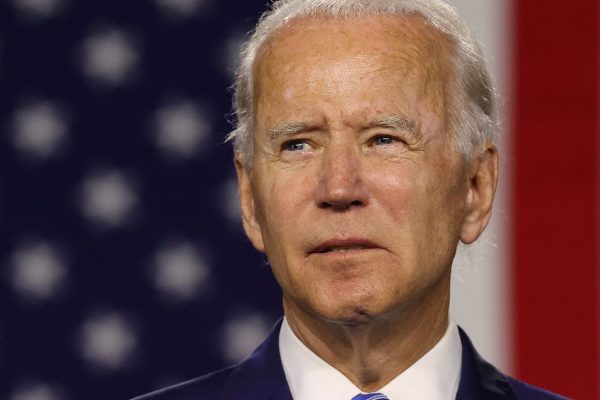 , Miles A. Pomper Wednesday, Nov. 18, 2020, With support from nearly half the world’s nations, a new United Nations treaty banning the possession and use of nuclear weapons will take effect early next year. The U.N. confirmed last month that the Treaty on the Prohibition of Nuclear Weapons, or TPNW, had been ratified by the required 50 countries. Secretary-General Antonio Guterres called it “a tribute to the survivors of nuclear explosions and tests, many of whom advocated for this treaty.”
Many non-nuclear-armed states, as well as pro-disarmament activists and organizations like the Nobel Peace Prize-winning International Campaign to Abolish Nuclear Weapons, have celebrated the agreement, which they see as a milestone in global efforts to prevent nuclear war. However, it has drawn strong opposition from nuclear-armed states, especially the five permanent members of the U.N. Security Council: Russia, China, France, the United Kingdom and the United States. The Trump administration has called on the treaty’s 84 signatories to back out of it. Its entry into force on Jan. 22, 2021, will pose a thorny diplomatic challenge for the incoming Biden administration………..
In the case of the Chemical and Biological Weapons Conventions, the major possessors of these arsenals, such as the United States and Russia, helped draft and build support for the pacts. However, the TPNW was drawn up by non-nuclear-armed states over the objections of nuclear powers. The initiative reflected the frustration of non-nuclear-weapons states with what they contended was the failure of their nuclear-armed counterparts to uphold their end of the “grand bargain” at the heart of the NPT. That bargain calls on the non-nuclear-weapon states to permanently renounce nuclear arms in exchange for access to peaceful nuclear technology and a commitment by nuclear powers to “pursue negotiations in good faith on effective measures” toward nuclear disarmament. ………
|
the treaty could pose a political problem in the future for NATO members and other countries that shelter under the U.S. nuclear umbrella, given the TPNW’s call not to support actions inconsistent with the treaty. That challenge is especially acute for the five NATO members that host an estimated 150 forward-deployed U.S nuclear weapons: Belgium, Germany, the Netherlands, Italy and Turkey. German, Dutch and Belgian disarmament advocates, in particular, enjoy strong mainstream political support among center-left parties in all three countries. And 56 former world leaders, including many from NATO countries, argued recently in an open letter that the new nuclear ban treaty can “help end decades of paralysis in disarmament.” NATO has beaten back such arguments before, most recently in the wake of Obama’s Prague speech. However, handling the TPNW and tensions within the alliance more generally will likely prove a challenge for President-elect Joe Biden, who will take office just two days before the treaty enters into force……. Another important event looms on the horizon: In August 2021, state parties to the NPT are scheduled to meet and review that treaty for the first time since the TPNW was concluded. Such conferences—which usually take place every five years, though the 2020 meeting was delayed until next year due to the COVID-19 pandemic—are always a headache for U.S. negotiators, as they provide an opportunity for the far more numerous non-nuclear-weapon states to bash Washington and other nuclear-armed states for their disarmament shortcomings, and thus of the NPT more generally. These arguments will only become more intense now that the TPNW is a legal alternative. Making progress on U.S. nonproliferation goals in this new environment, with a U.N. treaty that bans nuclear weapons, is sure to prove a tough diplomatic test of the new administration. Miles Pomper is a senior fellow at the James Martin Center for Nonproliferation Studies at the Middlebury Institute of International Studies. https://www.worldpoliticsreview.com/articles/29225/the-new-nuclear-weapons-ban-treaty-will-be-an-early-trial-for-biden |
|
UK government wastes tax-payer money on small and large nuclear reactors that will never be cheap or safe
 FoE Scotland 17th Nov 2020, Friends of the Earth Scotland gave a scathing reaction to
  the UK Government’s announcement of a 10-point plan on climate and energy, calling for much more priority on solutions which can reduce emissions and create jobs today.
crisis like carbon capture and storage, hydrogen and nuclear. “While there are some crumbs from the table in terms of the welcome new target of 2030 to phase out fossil-fuelled cars, overall there is too little new money and too much funding committed to long-term, dangerous distractions.
https://foe.scot/press-release/response-to-the-uk-10-point-climate-plan-for-net-zero/
Could a mad, unhinged US president, push the nuclear button?
 Could a mad, unhinged US president, push the nuclear button? From JFK and the Cuban crisis, to Nixon and Watergate, to now: the sum of all fears, is still carried in a suitcase, By DAVE MAKICHUK, NOVEMBER 19, 2020 “I had no idea we had so many weapons … what do we need them for?”
— A stunned President Bush, after his first briefing on US nuclear forces
It is the elephant in the room.
And it is a very big elephant, and, a very big room.
We are living in a very surreal time, that much we know. Officials would even say, challenging — I would even say, it’s a bit worse than that.
We have a US president who still believes he won the election, despite the fact he clearly lost.
Yet, there isn’t one iota of evidence to back up President Trump’s claims.
He is, without question, angry, in denial and — most importantly — vengeful to those who served him, whom he thinks
All in all, it paints a picture of a man, who only cares about himself …. not the will of the people, not the country, and
The exact opposite, in fact, of one President John F. Kennedy, who, after a meeting with the Joint Chiefs during the
No. 2 reactor at Tohoku Electric Power Co’s Onagawa nuclear power plant for restart, despite problems
 As nuclear worries linger, Tohoku plant heads for landmark restart, BY ERIC JOHN, 18, Nov, 20 OSAKA – On Nov. 11, Miyagi Gov. Yoshihiro Murai gave the green light to restarting the No. 2 reactor at Tohoku Electric Power Co’s Onagawa nuclear power plant. While the reactor is not expected to begin generating power until construction to improve the plant’s safety is completed, the governor’s approval paves the way for the first reactor damaged by the Great East Japan Earthquake to resume operation.
The restart, the first in northeastern Japan, comes amidst controversial restarts in the country’s west following the quake and at a time when the energy source’s future economic and political feasibility is being debated after the government announced a target of Japan being carbon neutral by 2050.
What is the Onagawa nuclear plant and what happened to it after the earthquake and tsunami?
The Onagawa nuclear power plant sits on a peninsula in Miyagi Prefecture about 130 kilometers from the epicenter of the March 11, 2011 quake and tsunami. It has three reactors, one of which is being decommissioned.
………..The government’s current long-term energy strategy calls for nuclear power to provide between 20% and 22% of the nation’s electric power supply by fiscal 2030. The Agency for Natural Resources has said to meet that goal, the restart of 30 reactors is necessary.
There are a number of issues that could make that goal difficult. These include the cost of meeting the new NRA safety standards that went into place after 3/11 and the time needed to upgrade facilities. For the operator, those costs raise questions of whether it is worth investing and whether nuclear power-generated electricity will remain competitive with renewable energy in the coming years.
Other issues could also drive up the costs of restarting more reactors, beginning with subsidies to local governments. With no financial incentive, village heads, city mayors and prefectural governors could delay or refuse permission to restart. Even if permission is granted, operators may face lawsuits from residents opposed to restarts, a process that could delay or even halt the process if a judge rules in their favor, which would mean further costs for the operator.
The government’s current long-term energy strategy calls for nuclear power to provide between 20% and 22% of the nation’s electric power supply by fiscal 2030. The Agency for Natural Resources has said to meet that goal, the restart of 30 reactors is necessary.
There are a number of issues that could make that goal difficult. These include the cost of meeting the new NRA safety standards that went into place after 3/11 and the time needed to upgrade facilities. For the operator, those costs raise questions of whether it is worth investing and whether nuclear power-generated electricity will remain competitive with renewable energy in the coming years.
Other issues could also drive up the costs of restarting more reactors, beginning with subsidies to local governments. With no financial incentive, village heads, city mayors and prefectural governors could delay or refuse permission to restart. Even if permission is granted, operators may face lawsuits from residents opposed to restarts, a process that could delay or even halt the process if a judge rules in their favor, which would mean further costs for the operator.
Anti-Nuclear Pacifists Get Federal Prison Terms for Nonviolent Protest
 ach weekend, while New York City’s East Village packs into sidewalk tables for brunch, activist Carmen Trotta leads a vigil for ending the U.S.-backed war in Yemen in Tompkins Square Park. He only has a few more Saturday mornings before he must report to federal prison, along with fellow activists from Plowshares, the anti-nuclear, Christian pacifist movement. Despite a lethal pandemic ravaging prison populations, Trotta, Martha Hennessy, Clare Grady, and Patrick O’Neill are due to report to prison within the next few months for activism against a suspected nuclear weapons depot.
More than two years ago, Trotta and Hennessy, two of seven activists known as the Kings Bay Plowshares Seven, peacefully broke into the naval base in Brunswick, Georgia — risking their own lives to protest the suspected nuclear arsenal housed within. Armed only with vials of their own blood, hammers, GoPro cameras, spray paint, protest banners, and whistleblower Daniel Ellsberg’s book, the activists symbolically attempted to disarm the nuclear weapons located on the Trident submarines at the base.
The nonviolent direct action took place on the 50th anniversary of the assassination of Martin Luther King Jr. Far out of the spotlight of major media coverage, all but one of the activists have quietly been sentenced in their faith-based battle with the U.S. government over the “immoral” possession of nuclear weapons. The activists were charged with three felonies — conspiracy, destruction of government property, depredation — and misdemeanor trespassing.
The sentencing — sending aging activists to federal prisons amid the coronavirus pandemic — fits squarely within the long history of the U.S. government throwing the book at people of conscience who dare to dissent. President Donald Trump’s acceleration of heavy-handed federal charges against protesters have drawn critical media attention.
Yet activists like those in the Plowshares community, whose protests garner less attention, are suffering at the hands of a bipartisan consensus on harsh crackdowns related to direct action against so-called defense policies. Under the rubric of national security, the persecutions of figures like Chelsea Manning, Daniel Everette Hale, or Reality Winner become polarized or fail to raise public ire, when they are noticed at all.
That was the case last week, when few took note of the latest Plowshares sentences. Trotta, 58; Hennessy, 65; along with Grady, 62, were sentenced by Judge Lisa Godbey Wood in individual virtual court sessions. Trotta got 14 months, Grady was given 12 months and one day, and Hennessy was sentenced to 10 months; all were ordered to pay restitution and were given years of supervised release. As cases of Covid-19 engulfed Georgia, the defendants reluctantly agreed to proceed with their sentencing without appearing in person. Only Mark Colville, 59, has yet to be sentenced. Colville refuses to travel to Georgia because of the coronavirus and will not give up his constitutional right to an in-person sentencing before the court. ………….. https://readersupportednews.org/news-section2/318-66/66270-anti-nuclear-pacifists-get-federal-prison-terms-for-nonviolent-protest
In the face of public opposition, Ottawa delays small nuclear reactor plan
Ottawa delays small nuclear reactor plan as critics decry push for new reactors, Yahoo Finance Colin Perkel, The Canadian Press, Thu., November 19, 2020, “……… Industry critics were quick to pounce on the government’s expected SMR announcement. They called on Ottawa to halt its plans to fund the experimental technology.
.. a major problem facing the industry is its growing mound of radioactive waste. This week, the government embarked on a round of consultations about what do with the dangerous material.
Dozens of groups, including the NDP, Bloc Quebecois, Green Party and some Indigenous organizations, oppose the plan for developing small modular reactors. They want the government to fight climate change by investing more in renewable energy and energy efficiency.
“We have options that are cheaper and safer and will be available quicker,” Richard Cannings, the NDP natural resources critic, said in a statement. …
Joe McBrearty, head of Canadian Nuclear Laboratories, told the conference the company had signed a host agreement this week with Ottawa-based Global First Power for a demonstration SMR at its Chalk River campus in eastern Ontario. A demonstration reactor will allow for the assessment of the technology’s overall viability, he said
Sizewell C nuclear plant ‘not value for money’, and would sabotage the govt’s pledge for nature
|
New Civil Engineer 18th Nov 2020, Plans for proposed Sizewell C nuclear power station on the Suffolk coast,
which is currently waiting for planning approval, would “sabotage” the |
|
Uranprojekt -The Nazi Nuclear Program
|
Uranprojekt -The Nazi Nuclear Program , Heritage Daily, 17 Nov 20,
Uranprojekt, also known informally as the Uranverein (meaning Uranium Club) was a secret German project, to research and develop atomic weapons and energy during the Second World War.Prior to the outbreak of hostilities, Germany was at the forefront of nuclear fission, with the discovery of the first nuclear fission of heavy elements by Otto Hahn (referred to as the father of nuclear chemistry), and his assistant Fritz Strassmann from the Kaiser Wilhelm Institute in 1938. This was shortly followed by Lise Meitner, an Austrian-Swedish physicist who theorised, and then proved in 1939 that the uranium nucleus had been split, giving the name “fission”. In light of the recent discoveries, Germany was encouraged by a paper submitted by experimental physicist Wilhelm Hanle, which proposed the use of uranium fission in a reactor. This led to a small team being tasked to study the potential military applications of nuclear energy. The Germans then established a new research project on the 1st September 1939 (the same day generally considered to be the start of WW2 with the invasion of Poland by Germany), under the auspices of the Wehrmacht’s Heereswaffenamt (HWA), the German Army Weapons Agency responsible for researching weaponry, ammunition, and equipment. The USA also became aware of the German program that same year, when Albert Einstein wrote to President Roosevelt, warning of the German threat in creating a “nuclear chain reaction in a large mass of uranium, by which vast amounts of power and large quantities of new radium-like elements would be generated.” It was quickly realised by the HWA that the project would be unable to make a decisive contribution to ending the war in the near term, so authority was placed under the Reichsforschungsrat (RFR, Reich Research Council), maintaining its kriegswichtig (war importance) designation. The project was then expanded into three main areas of research, the Uranmaschine to investigate creating a nuclear reactor, the production of uranium and heavy water, and the separation of uranium isotopes. Research struggled with the German invasion of the Soviet Union in 1941 (Operation Barbarossa), as the majority of Germany‘s scientific minds were turned to focus on developing other new technologies that could have a more immediate impact on the war effort (namely rocket technology and jet aircraft). The project also suffered from a drained talent pool. Many top German scientists and nuclear physicists (some of which were Jewish or with Jewish heritage) had fled the country, and there was a lack of understanding and investment from the regime in the pure scientific application of the research (in comparison, the Manhattan Project consumed some $2 billion (1945) in government funds, compared to a mere 8 million reichsmarks $2 million (1945) on the Uranprojekt). This resulted in the Germans never achieving a successful chain reaction, nor did they manage to develop a method of enriching uranium (having never seriously considered plutonium as a viable substitute). In 1942, a conference was initiated by Albert Speer as head of the “Reich Ministry for Armament and Ammunition” (RMBM: Reichsministerium für Bewaffnung und Munition) to discuss the continuation of research, and the prospects for developing nuclear weapons……. https://www.heritagedaily.com/2020/11/uranprojekt-the-nazi-nuclear-program/136152 |
|
Russia’s latest nuclear icebreaker had to abort maiden Arctic voyage
|
Russia’s latest nuclear icebreaker had to abort maiden Arctic voyage The powerful “Arktika” set off from Murmansk on Saturday for a three-week assignment to the Northern Sea Route. Mid-Barents Sea, though, the icebreaker turned around and sailed back to port. Barents Observer, By Thomas Nilsen. November 17, 2020
Following last month’s test voyage to the North Pole, and formal launch ceremony in Murmansk, the new giant icebreaker was now supposed to embark on her first real-working tour to the Northern Sea Route.“Arktika” left from Atomflot’s service base in the Kola Bay on Saturday, according to the state-owned operator Rosatomflot. “On November 14, the leading universal nuclear-powered icebreaker “Arktika“ left the port of Murmansk on its maiden voyage. The vessel headed towards the Kara Sea. Until mid-December, the nuclear-powered icebreaker “Arktika“ will operate in the Northern Sea Route,” a press release posted November 16 said. The Northern Sea Route Administration’s permission granted for ”Arktika” to enter the Kara Gate, where the Northern Sea Route starts, is valid from November 16. Online ship tracking service VesselFinder.com shows the path of the icebreaker sailing out the Kola Bay on a steady course towards the Kara Sea. Halfway in the Barents Sea, the ship suddenly makes a 180 degrees turnaround and sails back on a northwestern course before turning south on Tuesday directly towards Murmansk. Asked about the hastily return to port, Head of the Communication department with Atomflot, Evgeny Sviridov says to The Barents Observer that “Staff is conducting adjustment works onboard.” He would not elaborate but adds: “The icebreaker will leave the port of Murmansk in the nearest future.” In Murmansk, people have already started to post speculations on the regional Vkontakte page on what could have gone wrong. Unconfirmed reports hint at “mechanical problems” onboard, and nothing related to the two nuclear reactors. “Arktika” is the lead of five vessels of Project 22220, the world’s most powerful nuclear-powered icebreakers. Construction of two similar vessels, the “Ural“ and “Sibir” are currently well underway at the yard in St. Petersburg, while keel-laying of the fourth icebreaker, the “Yakutia” took place in May this year. The contract for the fifth, the “Chukotka” is signed. When sailing north from the shipyard on September 22, there was already a problem with the propulsion. During sea trials in the Baltic Sea in February this year, a short circuit caused serious damage to the winding in one of the three electro engines. The damaged propulsion motor is 50 % functional and can deliver 10 megawatts of propulsion power to the starboard wing propeller. It’s a tandem unit and only one half of it was damaged during the sea trials….. https://thebarentsobserver.com/en/arctic/2020/11/russias-latest-and-most-powerful-nuclear-icebreaker-had-abort-maiden-arctic-voyage |
Destruction of wildlife habitat, Coronation Wood to be felled, for Sizewell C nuclear project
(TASC), and the invaluable financial and moral support from many concerned
citizens, TASC are devastated to learn that the Courts have refused its
application to make a final appeal to overturn the decision to allow the
destruction of Coronation Wood.
case to court, said “Due to the crass decision-making of East Suffolk
Council, EDF have now been given the green light to carry out their
Sizewell B relocation plans which include taking their chain-saws to and
destroying the whole of Coronation Wood.
allow the felling of the wood. Sizewell C may never get permission and a
100 year old wood cannot be replaced. Due to its removal there will be a
major loss of visual screening of the nuclear industrial complex causing
increased noise and light pollution, totally ignoring the site’s status
as an Area of Outstanding Natural Beauty.
setts, bird and bat habitats blows EDF’s environmental credentials out of
the water. There are alternatives but EDF and the council chose not to
pursue them. EDF is not concerned in any way, shape or form for the well
being of the ecology of the area, nor that of locals who are deeply upset
by their plans”
https://tasizewellc.org.uk/latest-on-coronation-wood-judicial-revue/
 |
ReplyForward
|
1 This Month

of the week – Shut Down Drone Warfare!


Tell the Ukrainian Government to Drop Prosecution of Peace Activist Yurii Sheliazhenko

Petition to revoke the licensing of the Near Surface Nuclear Disposal Facility (NSDF) at Chalk River. https://www.ourcommons.ca/petitions/en/Petition/Details?Petition=e-7247
To see nuclear-related stories in greater depth and intensity – go to https://nuclearinformation.wordpress.com
-
Archives
- April 2026 (103)
- March 2026 (251)
- February 2026 (268)
- January 2026 (308)
- December 2025 (358)
- November 2025 (359)
- October 2025 (376)
- September 2025 (257)
- August 2025 (319)
- July 2025 (230)
- June 2025 (348)
- May 2025 (261)
-
Categories
- 1
- 1 NUCLEAR ISSUES
- business and costs
- climate change
- culture and arts
- ENERGY
- environment
- health
- history
- indigenous issues
- Legal
- marketing of nuclear
- media
- opposition to nuclear
- PERSONAL STORIES
- politics
- politics international
- Religion and ethics
- safety
- secrets,lies and civil liberties
- spinbuster
- technology
- Uranium
- wastes
- weapons and war
- Women
- 2 WORLD
- ACTION
- AFRICA
- Atrocities
- AUSTRALIA
- Christina's notes
- Christina's themes
- culture and arts
- Events
- Fuk 2022
- Fuk 2023
- Fukushima 2017
- Fukushima 2018
- fukushima 2019
- Fukushima 2020
- Fukushima 2021
- general
- global warming
- Humour (God we need it)
- Nuclear
- RARE EARTHS
- Reference
- resources – print
- Resources -audiovicual
- Weekly Newsletter
- World
- World Nuclear
- YouTube
-
RSS
Entries RSS
Comments RSS
 nuclear-news