The nuclear launch authorizer’s guide to staying calm at election times
|
The nuclear launch authorizer’s guide to staying calm on election night, Bulletin of the Atomic Scientists By Matt Field | November 3, 2020 Their thumbs are calloused from refreshing Nate Silver’s twitter feed too many times. Their nerves are frayed from too much time spent figuring out what’s going on in places like Lackawanna County. (I know you know where it is.) Americans are heading into this Election Day full of anxiety and stress. For many, the stakes of today’s contest between President Donald Trump and Joe Biden couldn’t be higher. Anxiety-inducing information will be arriving in social media feeds, on TV screens, and on news websites at a furious pace later today. But it’s important for people to take a moment to breathe, a second to ease their worried minds. Perhaps they might consider a few tips from the annals of nuclear weapons history, insights from times when people, through relatively calm rationality, were able to avert the worst in the highest of high stress situations.
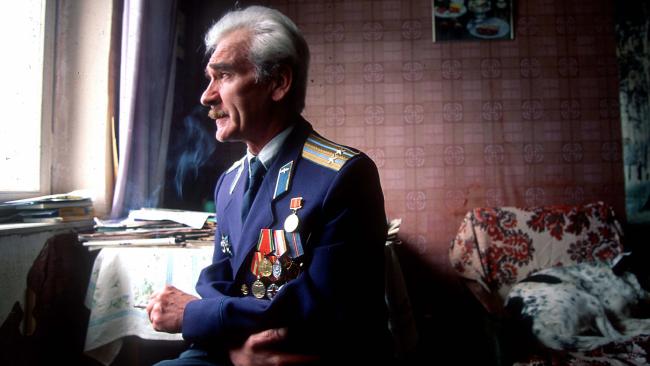
“The sirens sounded very loudly, and I just sat there for a few seconds staring at the screen with the word ‘launch’ displayed in bold red letters,” Petrov told the BBC in 2013. Petrov watched as his systems warned him of another four launches—for a total of five incoming Minuteman intercontinental ballistic missiles. Only minutes remained before they would reach their targets. “The computers changed their alerts from launch to missile strike.” But Petrov decided not to trust the computer. He reported a false alarm to his superiors, forestalling a possible Soviet retaliatory strike. “But I myself was not sure until the very last moment,” he said. Making an educated guess, Petrov decided that the alerts were wrong. In a real war, the United States would launch a massive attack on Soviet defenses, Petrov had been told. “When people start a war, they don’t start it with only five missiles,” he told The Washington Post. Petrov, who died in 2017, is often credited with preventing a nuclear war. The Cuban Missile Crisis and bad advice. For a little over a month in the fall of 1962, the world stood on edge as the United States and the Soviet Union engaged in a standoff over Soviet nuclear missiles in Cuba–just 90 miles from the United States. Coming a little more than a year after the ill-conceived Bay of Pigs invasion, in which US-trained Cubans made a miserably failed attempt to overthrow Cuban leader Fidel Castro, the Cuban Missile Crisis happened at a time of sky-high tensions between the Cold War enemies. When US spy plane photos showed Soviet missile installations in Cuba, President John F. Kennedy had to do something. He’d taken a tough line on Cuba and the Soviet Union as a presidential candidate, after all. Kennedy’s advisors, including his brother Robert Kennedy, had a lot of suggestions. The advisors developed proposals, including a strike on the Soviet missile facilities or a full-on invasion of the island involving tens of thousands of troops. Luckily for the world, Kennedy didn’t invade, which could have ignited a nuclear war. He didn’t go with his brother’s idea to stage a false-flag attack on a US base to justify an invasion, either. According to a review of his book in The New Yorker, historian Martin J. Sherwin believes Adlai Stevenson, the US representative to the United Nations and a two-time presidential candidate, successfully urged Kennedy to negotiate. The Soviets pulled their missiles off the island, and the United States agreed not to try and invade Cuba again and pulled its own missiles from Turkey………. Tip: The web will be flooded with election-related disinformation today. There could be false claims about voting irregularities such as ballots being thrown away, or of people voting twice. Trump himself has been making false claims about a rigged election or voter fraud for much of the election cycle. When you see something that causes you to break out in cold sweats, check another source. The presidential elections are a high stakes event. It’s understandable to be nervous. But remember that first reports can be and often are incorrect. Through it all, try to maintain the calm of a Stanislav Petrov and the wisdom of Adlai Stevenson. You may not save the world from Armageddon, but just maybe, you’ll preserve your own sanity. https://thebulletin.org/2020/11/the-nuclear-launch-authorizers-guide-to-staying-calm-on-election-night/ |
|
No comments yet.
1 This Month


10 March A LIVE WEBINAR THE REAL EFFECTS OF NUCLEAR POWER
What the Industry Isn’t Telling Us
1:00 PM Mountain, 2 pm Central, 3 pm Eastern. Live on the Keepers of the Water Facebook page


18 March Webinar @ 1 PM EST: An Assessment of SMR Projects: The Case of Canada
register for the zoom:
https://us02web.zoom.us/webinar/register/WN_o8BIIOUvQ2ONJR1nta65DQ#/registration


of the week – STOP SMALL MODULAR REACTORS IN CANADA
To see nuclear-related stories in greater depth and intensity – go to https://nuclearinformation.wordpress.com
-
Archives
- March 2026 (76)
- February 2026 (268)
- January 2026 (308)
- December 2025 (358)
- November 2025 (359)
- October 2025 (376)
- September 2025 (258)
- August 2025 (319)
- July 2025 (230)
- June 2025 (348)
- May 2025 (261)
- April 2025 (305)
-
Categories
- 1
- 1 NUCLEAR ISSUES
- business and costs
- climate change
- culture and arts
- ENERGY
- environment
- health
- history
- indigenous issues
- Legal
- marketing of nuclear
- media
- opposition to nuclear
- PERSONAL STORIES
- politics
- politics international
- Religion and ethics
- safety
- secrets,lies and civil liberties
- spinbuster
- technology
- Uranium
- wastes
- weapons and war
- Women
- 2 WORLD
- ACTION
- AFRICA
- Atrocities
- AUSTRALIA
- Christina's notes
- Christina's themes
- culture and arts
- Events
- Fuk 2022
- Fuk 2023
- Fukushima 2017
- Fukushima 2018
- fukushima 2019
- Fukushima 2020
- Fukushima 2021
- general
- global warming
- Humour (God we need it)
- Nuclear
- RARE EARTHS
- Reference
- resources – print
- Resources -audiovicual
- Weekly Newsletter
- World
- World Nuclear
- YouTube
-
RSS
Entries RSS
Comments RSS
 nuclear-news
Leave a comment