Politics in the age of pandemics, global heating, and nuclear danger – theme for November 20
For November, we’ve been focussed on international politics – because of these massive threats, and because of the importance to the world of the American election.
With the win of Joe Biden as President -elect, the nuclear lobby has been revitalised, and already their propaganda war is swinging into action. But this renewed nuclear threat is being either ignored or encouraged by the mainstream media. Everyone seems to be getting informed about the pandemic and the climate, but not about the equally grave nuclear threats. Which is why, from now on, this site will return to its original focus on matters nuclear.

Tensions as Armenia- Azerbaijan conflict pauses. War in Syria grinds on. USA and China already in some sort of cold war. National pride and one-up-manship are perpetually on display among the leaders of countries. Nationalist and populist leaders seem to be in charge, with competitiveness and dog-eat-dog as their prevailing philosophy.
All this – when the global threats of pandemic, climate change, and nuclear danger clearly require co-operation between nations, if we are to have any hope for a decent future – indeed – perhaps any future, for the human species, and for the rest of the other species, too.
It is time for political leaders to pay attention to the efforts of global bodies, the United Nations, the World Health Organisation, and the many international agencies that work for the public good. What a timely winner for the Nobel Peace Prize was the United Nations World Food Programme!
As I write, the world watches in amazement the tortuous path of Joe Biden to the American electionpresidency. . The disastrous results of four years of the Trump presidency for the United States will take some fixing. A rational team in the White House could begin the change that the world needs – co-operation between the powerful nations to address the threats that now preoccupy the world’s people.
Global heating is unravelling the Arctic, much faster than expected
 The Arctic is in a death spiral. How much longer will it exist?
The region is unravelling faster than anyone could once have predicted. But there may still be time to actThe great thaw: global heating upends life on Arctic permafrost – photo essay, Guardian,
Gloria Dickie, Tue 13 Oct 2020 At the end of July, 40% of the 4,000-year-old Milne Ice Shelf, located on the north-western edge of Ellesmere Island, calved into the sea. Canada’s last fully intact ice shelf was no more.On the other side of the island, the most northerly in Canada, the St Patrick’s Bay ice caps completely disappeared.
Two weeks later, scientists concluded that the Greenland Ice Sheet may have already passed the point of no return. Annual snowfall is no longer enough to replenish the snow and ice loss during summer melting of the territory’s 234 glaciers. Last year, the ice sheet lost a record amount of ice, equivalent to 1 million metric tons every minute.
The Arctic is unravelling. And it’s happening faster than anyone could have imagined just a few decades ago. Northern Siberia and the Canadian Arctic are now warming three times faster than the rest of the world. In the past decade, Arctic temperatures have increased by nearly 1C. If greenhouse gas emissions stay on the same trajectory, we can expect the north to have warmed by 4C year-round by the middle of the century.
There is no facet of Arctic life that remains untouched by the immensity of change here, except perhaps the eternal dance between light and darkness. The Arctic as we know it – a vast icy landscape where reindeer roam, polar bears feast, and waters teem with cod and seals – will soon be frozen only in memory.
A new Nature Climate Change study predicts that summer sea ice floating on the surface of the Arctic Ocean could disappear entirely by 2035. Until relatively recently, scientists didn’t think we would reach this point until 2050 at the earliest. Reinforcing this finding, last month Arctic sea ice reached its second-lowest extent in the 41-year satellite record………
At outposts in the Canadian Arctic, permafrost is thawing 70 years sooner than predicted. Roads are buckling. Houses are sinking. In Siberia, giant craters pockmark the tundra as temperatures soar, hitting 100F (38C) in the town of Verkhoyansk in July. This spring, one of the fuel tanks at a Russian power plant collapsed and leaked 21,000 metric tons of diesel into nearby waterways, which attributed the cause of the spill to subsiding permafrost.
This thawing permafrost releases two potent greenhouse gases, carbon dioxide and methane, into the atmosphere and exacerbates planetary warming.
The soaring heat leads to raging wildfires, now common in hotter and drier parts of the Arctic. In recent summers, infernos have torn across the tundra of Sweden, Alaska, and Russia, destroying native vegetation………..
The Northwest Passage through the Canadian Arctic Archipelago could soon yield another shortcut. And in Greenland, vanishing ice is unearthing a wealth of uranium, zinc, gold, iron and rare earth elements. In 2019, Donald Trump claimed he was considering buying Greenland from Denmark. Never before has the Arctic enjoyed such political relevance………….
Stopping climate change in the Arctic requires an enormous reduction in the emission of fossil fuels, and the world has made scant progress despite obvious urgency. Moreover, many greenhouse gases persist in our atmosphere for years. Even if we were to cease all emissions tomorrow, it would take decades for those gases to dissolve and for temperatures to stabilize (though some recent research suggests the span could be shorter). In the interim, more ice, permafrost, and animals would be lost.
“It’s got to be both a reduction in emissions and carbon capture at this point,” explains Stroeve. “We need to take out what we’ve already put in there.”………..
Tuvalu – the 47th nation to ratify the Treaty on the Prohibition of Nuclear Weapons


|
|
Tuvalu ratifies the Treaty on the Prohibition of Nuclear Weapons, https://www.rnz.co.nz/international/pacific-news/428354/tuvalu-ratifies-the-treaty-on-the-prohibition-of-nuclear-weapons
7:20 pm on 14 October 2020 Tuvalu has ratified the Treaty on the Prohibition of Nuclear Weapons, bringing it closer to being in force.
Tuvalu was the 47th nation to make the move, meaning only three more ratifications are needed to empower the treaty. The treaty establishes a comprehensive ban on the weapons of mass destruction and aims to help pave the way to their elimination. Earlier this month, Tuvalu and 11 other Pacific small island developing states delivered a joint statement to the UN on the occasion of the International Day for the Total Elimination of Nuclear Weapons. They noted their region has suffered from the effects of decades of nuclear testing by the United States, the United Kingdom and France.
The 12 nations appealed to all nations that have not yet done so to ratify the Treaty on the Prohibition of Nuclear Weapons, as well as the Comprehensive Nuclear-Test-Ban Treaty of 1996. “We Pacific small island developing states say no to nuclear weapons, and we reiterate our commitment to the elimination of nuclear weapons everywhere.” Tuvalu is the ninth Pacific island nation to join the nuclear weapon ban treaty so far, following Palau, New Zealand, the Cook Islands, Samoa, Vanuatu, Kiribati, Fiji and Niue. Nauru has signed but not yet ratified the treaty.
|
|
Donald Trump’s pre-election plan for nuclear deal with Russia has fizzled out badly
 Trump Thought He Had a Nuclear Deal With Putin. Not So Fast, Russia Said.
Trump administration officials want to broaden the New START accord and warn that the price of a new deal will rise after the election. Joe Biden supports a straight five-year extension of the deal. NYT, By David E. Sanger and Andrew E. Kramer 14 Oct 20, President Trump had a pre-election plan to show he had gotten something out of his mysteriously friendly relationship with President Vladimir V. Putin of Russia.
In the weeks before the election, the two men would announce that they had reached an agreement in principle to extend New START, the last remaining major arms control agreement between the two countries. It expires on Feb. 5, two weeks after the next presidential inauguration.
Mr. Trump has long refused to sign off on a clean five-year extension of the agreement, a step both leaders could take without Senate approval. He has described the Obama-era treaty as deeply flawed — the same thing he said about the North American Free Trade Agreement and the Iran nuclear accord — because it did not cover all of Russia’s nuclear arms, or any of China’s….
On Tuesday, Marshall Billingslea, Mr. Trump’s lead negotiator, announced that the two leaders had an “agreement in principle, at the highest levels of our two governments, to extend the treaty.” Mr. Billingslea described an added “gentleman’s agreement” to cap each country’s stockpile of weapons not currently deployed on missiles, submarines or bombers. Details needed to be worked out, he cautioned, including the tricky work of verifying compliance.
It sounded like a promising solution, for a few hours.
Then the Russian deputy foreign minister, Sergei A. Ryabkov, shot back that this was a figment of someone’s election-season imagination. “Washington is describing what is desired, not what is real,” he said in a statement.
With less than three weeks to Election Day, it seems no agreement is in the offing, and Trump administration officials are saying that, after the election, the price will go up. Former Vice President Joseph R. Biden Jr., the Democratic nominee who was involved in the negotiation of the original agreement in 2010, has indicated that, if elected, he will agree to a straightforward, immediate extension of the accord for five years, the maximum allowed under the current terms, and then work to expand its scope. ……..
Russia’s foreign minister, Sergey V. Lavrov, joined the Kremlin’s dismissal of prospects for an agreement before the election, saying the Trump administration’s one-sided announcement of a nuclear limitation deal was an “unclean” diplomatic maneuver…….https://www.nytimes.com/2020/10/14/us/politics/trump-russia-nuclear-deal.html
North Korea, with its new intercontinental-range ballistic missile makes it clear that it is a nuclear weapons nation
 A Nuclear North Korea’s Wake-up Call, A spectacular pre-dawn parade on Saturday served to remind the world of North Korea’s continuing missile progress. The Diplomat, By Ankit Panda, October 13, 2020 On Saturday, October 10, North Korea celebrated the 75th anniversary of the founding of the Workers’ Party of Korea (WPK), the country’s ruling party. The occasion was celebrated in a grand way, with an unprecedented pre-dawn military parade. Thousands of uniformed military personnel marched through Pyongyang’s renovated Kim Il Sung Square in perfect unison, trailed by scores of heavy military vehicles……..
The parade reached its climax with the reveal of an all-new intercontinental-range ballistic missile (ICBM) design. Prior to the parade, North Korea’s largest known nuclear-capable ballistic missile was the Hwasong-15, the ICBM that was tested for the first (and so far only) time in November 2017. After four Hwasong-15s rolled through Kim Il Sung Square, an even larger missile appeared in its wake. Four of these super-large ICBMs followed in the wake of the Hwasong-15s, in a single file formation. Not only were these missiles the largest ever to be seen in North Korea, they were the largest road-mobile missiles on integrated launchers seen anywhere in the world……….
For the United States, this missile is not good news. Not only does it underscore the failure of the Trump administration’s diplomatic attempts to constrain North Korea’s nuclear and missile programs; it also emphasizes the continuing growth of Pyongyang’s qualitative capabilities. A lot remains unknown about the precise capabilities of this new missile, but its sheer size certainly implies that it would be capable of carrying and delivering multiple nuclear reentry vehicles to likely the entire continental U.S. As North Korea’s weapons-grade fissile material stocks continue to grow, it likely will have enough fissile material on hand to justify allocating resources toward a multiple reentry vehicle capability. ………
By adding warheads to its ICBMs, North Korea will improve the probability that at least one of its thermonuclear reentry vehicles successfully penetrates U.S. missile defenses. To keep up with changes in North Korea’s growing force, the U.S. will have to spend hundreds of millions adding interceptors. North Korea, meanwhile, even under economic sanctions, appears fully capable of continuing to expand its ICBM capabilities………
Despite the nighttime setting, Kim’s reveal of his new ICBM made it clear as day that North Korea remained a capable and growing nuclear state………
What the parade does in the end is clarify the big picture about North Korea’s status as a nuclear weapons possessor: its nuclear forces grow larger and more refined with every passing week. Having largely crossed the qualitative thresholds it felt were needed for a rudimentary and minimally credible deterrent in 2017, Pyongyang is continuing to evolve its force.
Ankit Panda is editor-at-large at The Diplomat, the Stanton senior fellow in the Nuclear Policy Program at the Carnegie Endowment for International Peace, and author of ‘Kim Jong Un and the Bomb: Survival and Deterrence in North Korea’ (Hurst/Oxford University Press, 2020). Follow him on Twitter at @nktpnd. https://thediplomat.com/2020/10/a-nuclear-north-koreas-wake-up-call/
35 crew on secretive HMS Vigilant £3billion nuclear submarine tested positive for Covid
 Quarter of crew on £3billion nuclear submarine dubbed ‘HMS sex and cocaine’ test positive for coronavirus after defying orders and going drinking at bars and strip clubs near US naval base
- 35 crew on secretive HMS Vigilant tested positive for Covid, source revealed
- Among those who tested positive were a doctor and an executive officer
- Nuclear weapons codes are known by that executive officer and 1 other person
- Sailors defied orders while docked at the Kings Bay US Navy base in Georgia
Daily Mail By JEMMA CARR FOR MAILONLINE 14 October 2020 A £3billion nuclear submarine dubbed ‘HMS Sex and Cocaine’ has seen a coronavirus outbreak among its rule-breaking crew.
Highly-secretive HMS Vigilant saw more than 35 crew members test positive after several left the Kings Bay US Navy base in Georgia, a source has revealed.
Among those who tested positive – a quarter of the vessels team – was a doctor and an executive officer.
The codes to deploy the nuclear weapons stored on the submarine are known only by that executive officer and one other person, reports suggest.
Sailors defied orders to go to strip clubs, bars and restaurants in Georgia – which has seen 318,000 coronavirus cases and 7,282 deaths.
One trip saw them travel 200 miles away to a beach in Florida, an insider said…….. https://www.dailymail.co.uk/news/article-8837335/Quarter-crew-3billion-nuclear-submarine-dubbed-test-positive-coronavirus.html
Confusion as USA- Russia nuclear arms talks fail
Nuclear arms talks spiral into confusion as Russia rejects US ‘delusion’, Top US negotiator claimed there was ‘an agreement in principle’ between Trump and Putin, Guardian, Julian Borger in WashingtonWed 14 Oct 2020 US-Russian nuclear arms control talks have sunk into confusion after the top American negotiator claimed there was “an agreement in principle” between Donald Trump and Vladimir Putin, a claim Moscow quickly rejected as a “delusion”. ………
The US had previously insisted that China be included in any future arms control negotiations rather than extending the bilateral arrangements in New Start, but Billingslea has dropped that demand in recent weeks, accepting that trilateral talks could be arranged later.
Alexandra Bell, a former state department official and now senior policy director at the Center for Arms Control and Non-Proliferation, said the pre-election urgency followed “literally months of the Trump administration saying there’s plenty of time to do this – there’s no rush”.
Senior parliamentarians from across Europe wrote to their US counterparts on Tuesday urging them to support a New Start extension.
Ohio lawmakers likely to repeal the tainted nuclear bailout law, after November 3
 Gov. DeWine Expects Bill to Repeal Bailout of Nuclear Power Plants to Come During Lame Duck Session, WKSU, The Statehouse News Bureau | By Jo Ingles, October 13, 2020 It’s been nearly three months since former Ohio House Speaker Larry Householder and four others connected to him were arrested on federal charges of wrongdoing associated with an energy bill signed into law last year. Gov. DeWine has said he wants that law, HB 6, repealed. But that hasn’t happened yet.The law took effect last year, and there are court challenges over the charges that ratepayers will see on their bills starting in January. And though legislation to repeal the bailout has been stymied in the Ohio Legislature so far, DeWine says he thinks Ohio lawmakers will pass the bill after the Nov. 3 election. Gov. DeWine Expects Bill to Repeal Bailout of Nuclear Power Plants to Come During Lame Duck Session, WKSU, The Statehouse News Bureau | By Jo Ingles, October 13, 2020 It’s been nearly three months since former Ohio House Speaker Larry Householder and four others connected to him were arrested on federal charges of wrongdoing associated with an energy bill signed into law last year. Gov. DeWine has said he wants that law, HB 6, repealed. But that hasn’t happened yet.The law took effect last year, and there are court challenges over the charges that ratepayers will see on their bills starting in January. And though legislation to repeal the bailout has been stymied in the Ohio Legislature so far, DeWine says he thinks Ohio lawmakers will pass the bill after the Nov. 3 election.
“We’ve certainly talked about this, about the importance of it passing and that it needs to pass. I get the impression that the lame duck session will be an interesting session, and I hope very productive,” DeWine sais. ….https://www.wksu.org/government-politics/2020-10-13/gov-dewine-expects-bill-to-repeal-bailout-of-nuclear-power-plants-to-come-during-lame-duck-session |
|
800-meter-long seawall being constructed, as Japan plans to reopen damaged Onagawa nuclear complex
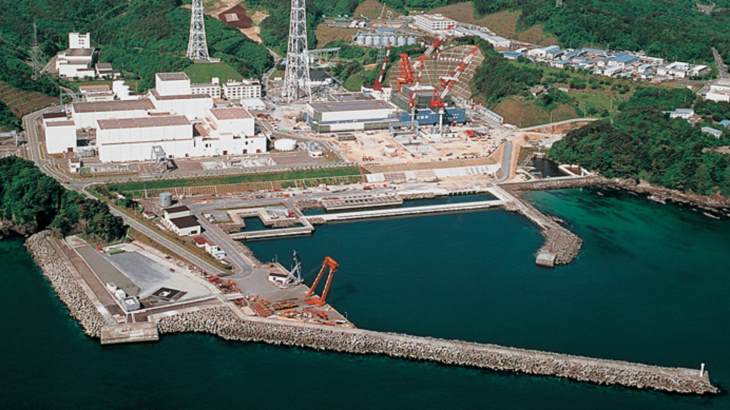
|
Japan’s damaged nuclear reactor set to reopen https://www.aa.com.tr/en/asia-pacific/japan-s-damaged-nuclear-reactor-set-to-reopen/2005798, Quake-hit Onagawa nuclear complex awaits final approval by Miyagi provincial officials, Riyaz ul Khaliq |14.10.2020 ANKARAJapan’s nuclear reactor hit by a 2011 earthquake in the northeastern Miyagi province will resume operations by the end of this year, according to officials, the local media reported on Wednesday.
Miyagi Governor Yoshihiro Murai will formally announce his consent to restart the nuclear reactors at Onagawa complex by the end of the year, the Kyodo News agency said. Early this year, the 825,000-kilowatt reactor, operated by Tohoku Electric Power Company, won the approval of the country’s Nuclear Regulation Authority. All the three reactors were shut down when the massive quake and a 13-meter tsunami hit northeastern Japan on March 11, 2011, flooding the underground floors of the No. 2 unit. Nearly 10,000 people lost their lives while over 4,000 others are still missing. Onagawa nuclear reactor is the second such disaster-ravaged complex, after the Fukushima nuclear disaster, to pass stricter nuclear safety standards. The world has witnessed the worst nuclear disaster in 1986 at Chernobyl in today’s Ukraine. Unlike the Fukushima Daiichi plant of Tokyo Electric Power Company, the Onagawa plant’s emergency cooling system did not fail and underwent no meltdown after hit by the earthquake and tsunami. To restart the Onagawa nuclear reactors, the consent of local government leaders is the last remaining step needed after it cleared a national safety screening in February. Tohoku aims to restart the No. 2 unit of Onagawa nuclear complex in 2022 at the earliest. Currently, a 800-meter-long seawall at the plant is under construction. The operator has already decided to scrap unit No. 1. Murai would be the first governor of a disaster-hit province to allow resumption of a damaged nuclear reactor’s operations. The 2011 earthquake and tsunami triggered one of the world’s worst nuclear crises in Japan’s Fukushima province which caused all of Japan’s 54 reactors to halt. However, since then, nine units at five plants of the country have restarted following regulatory and local approvals. “When the plenary session [of the local assembly] shows its stance, I will make a decision upon hearing the opinions of mayors of cities, towns, and villages within the prefecture,” Murai said. |
USA starts off $3.2 billion subsidy program with $80 million each for “next generation” nuclear reactors

|
US DOE awards TerraPower, X-energy $80 million each for advanced nuclear reactors, S and P Global , Joniel Cha William Freebairn , EditorDerek Sands 14 Oct 20, Washington — The US Department of Energy has awarded two companies proposing next-generation nuclear reactors $80 million each in an initial award as part of a $3.2 billion program to build two advanced reactors that can be operational within seven years, Energy Secretary Dan Brouillette said Oct. 13.
One award went to a group including TerraPower, a company co-founded by billionaire Bill Gates, working with a General Electric and Hitachi joint venture, while the other is X-energy, a start-up that is advancing a reactor design originally developed in Germany. The awards are part of DOE’s Advanced Nuclear Reactor Demonstration Program, and future funding is dependent on appropriations, Brouillette said. Regarding advanced reactors, which generally use a different coolant than all operating commercial reactors in the US, “We want to make them more affordable to build, and we want to make them more affordable to operate,” Brouillette said. Brouillette said “it is likely” the advanced reactors will be built in Washington state, where he said a site is available. The key criteria to select applicants included that the reactor design represent a truly advanced technology dissimilar from existing reactors, Brouillette said. A second key factor was DOE’s assessment that the management team of the winning groups be able to supply the required 50-50 match in resources and deliver the projects within seven years, he said. TerraPower partnered with GE Hitachi, engineering and construction company Bechtel, and utilities Energy Northwest, Duke Energy and Pacificorp for its Natrium sodium fast reactor. The system will be supported by a new fuel fabrication facility to supply fuel for the unit, DOE said in a statement Oct. 13. That Natrium reactor and storage system is a 345-MW net reactor system coupled with a molten-salt-based energy storage system that will provide greater operating flexibility for owners, the companies have said. The Natrium system is designed to cost under $1 billion excluding financing costs. …… Congress appropriated $230 million to start a new demonstration program for advanced reactors in the fiscal 2020 budget. DOE said in May it would award $80 million each to two projects that could be operational in the next five to seven years. Additional funding was to be made available to up to five additional projects with anticipated deployment later than the near-term time frame. The other funding awards will be made in December, DOE said in the statement. https://www.spglobal.com/platts/en/market-insights/latest-news/electric-power/101320-us-doe-awards-terrapower-x-energy-80-million-each-for-advanced-nuclear-reactors X-energy is developing an 80-MW high temperature gas-cooled reactor, the Xe-100, which has begun a vendor design review with the Canadian Nuclear Safety Commission. It is working with Canadian engineering company Hatch on potential Canadian projects to deploy the Xe-100. The X-energy proposal includes four Xe-100 reactors and completion of a commercial-scale fuel fabrication facility. |
|
UK: consultation with 2300 people about radioactive waste dump – only 13 people supported it.
 Northern Echo 13th Oct 2020, THOUSANDS of people have written to the Environment Agency over concerns that plans to dump radioactive waste in Teesside will pose a risk to
communities. An application has been made by Augean North Ltd for a low
level radioactive waste permit at their existing Port Clarence site,
between Stockton and Billingham.
The Environment Agency, which held a
consultation which ended in January, published its report yesterday. About
2,300 people took part in the four-month exercise, with only 13 supporting
the application.
The Environment Agency is now considering these in
determining whether to grant the permit, taking into account information
submitted by Augean North. The operator has been asked to provide further
information, with a decision expected to be made by the end of January
2021.
Members of the public, as well members of Stockton on Tees Borough
Council and Redcar and Cleveland Borough Council commented on the
socioeconomic impact and the general impact on the area, as well as the
potential impact on regeneration plans. Last year, Tees Valley Mayor Ben
Houchen criticised the plans, which he said were against the interests of
those living in surrounding areas. The report can be viewed by visiting
consult.environment-agency.gov.uk/north-east/port-clarence-landfill-permit-application
Exelon to offload its nuclear power stations?
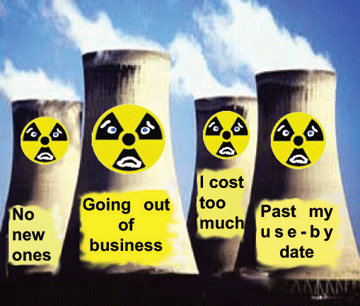 Exelon weighs shedding nuclear plants, other non-utility assets, Kiel Porter, Bloomberg News , 14 Oct 20, Exelon Corp. is considering a breakup that would involve separating its non-utility assets, according to people familiar with the matter.
The Chicago-based company is working with advisers to evaluate the split, said the people, who asked to not be identified because the matter isn’t public. No final decision has been made and Exelon could opt to keep its current structure, they said…….
Exelon’s non-utility operations include 21 nuclear reactors as well several solar, wind and natural-gas generating assets, according to its website. A potential split would leave Exelon focused on the regulated power market, with a portfolio that includes a half-dozen utilities in Pennsylvania, Maryland, Delaware and elsewhere.
Power companies are increasingly unloading unregulated assets to focus on their utilities, in part because investors prefer pure-play businesses. DTE Energy Inc. is considering unloading its non-utilities businesses, people familiar with the matter said last week. Dominion Energy Inc. agreed to sell its natural gas infrastructure earlier this year to Berkshire Hathaway Inc………
Christopher Crane said the company regularly evaluates whether to split up its utility and non-utility assets.
“One thing I can tell you is there’s an annual review on all the non-nuclear assets to see if they propose more value to others than we have projected for ourselves, and that annual review will continue,” he said. “And as we see assets that could perform better in somebody else’s portfolio and we could monetize those assets, we’ll do that.”Christopher Crane said the company regularly evaluates whether to split up its utility and non-utility assets. https://www.bnnbloomberg.ca/exelon-weighs-shedding-nuclear-plants-other-non-utility-assets-1.1507251
USA to market nuclear reactor to Bulgaria
 Bulgaria to hold talks with U.S. companies over new nuclear reactor, SOFIA, Oct 13 (Reuters) – Bulgaria’s government gave state-owned energy firm Bulgarian Energy Holding (BEH) a green light on Wednesday to start talks with U.S. companies on plans to build a new nuclear reactor at its Kozloduy power plant, the energy minister said…… Bulgaria to hold talks with U.S. companies over new nuclear reactor, SOFIA, Oct 13 (Reuters) – Bulgaria’s government gave state-owned energy firm Bulgarian Energy Holding (BEH) a green light on Wednesday to start talks with U.S. companies on plans to build a new nuclear reactor at its Kozloduy power plant, the energy minister said……
On Tuesday, Prime Minister Boyko Borissov said the new reactor should be based on U.S. technology and allow diversification in nuclear energy ….
Petkova did not name the companies that would be involved in talks, but said they were developers of nuclear technology, including those who work on small modular designs. She said she would have until the end of January to present the results from the research, which will explore potential technology that could be used for the new unit at the Kozloduy plant and options for its construction. Petkova did not name the companies that would be involved in talks, but said they were developers of nuclear technology, including those who work on small modular designs. She said she would have until the end of January to present the results from the research, which will explore potential technology that could be used for the new unit at the Kozloduy plant and options for its construction. https://www.reuters.com/article/bulgaria-nuclear-kozloduy/bulgaria-to-hold-talks-with-us-companies-over-new-nuclear-reactor-idUSL8N2H44VI |
|
Book review: GAMBLING WITH ARMAGEDDON

Coming Close to Nuclear Holocaust, NYT, By Talmage Boston, GAMBLING WITH ARMAGEDDON, Nuclear Roulette From Hiroshima to the Cuban Missile Crisis, 1945-1962, By Martin J. Sherwin On Aug. 6, 1945, after Hiroshima was destroyed, President Truman declared the atomic bomb “the greatest thing in history.” On Oct. 21, 1962, during the Cuban missile crisis, President Kennedy confided to a friend, “The world really is impossible to manage so long as we have nuclear weapons.” The two statements sum up the changes in thinking between those two dates.
Benefiting from more than a half century of hindsight, the Pulitzer-winning historian Martin J. Sherwin delivers a well-researched and reasoned analysis of nuclear weapons’ impact from 1945 to 1962 in “Gambling With Armageddon.” The book should become the definitive account of its subject.
Sherwin has three themes. First, history proves that the disadvantages of nuclear weapons outweigh their advantages. Yes, the A-bomb brought a quick end to World War II, but Dwight Eisenhower and Robert Oppenheimer both believed Japan’s defeat was imminent without the bomb. And while it tipped the balance of power until the Soviets developed their own nuclear weapon in 1949, this brief American advantage produced no geopolitical gains…….
The book’s final lesson is the unsettling one that regardless of how many wise decisions get made by prudent leaders,
Bribery Probe Into a Nuclear Plant Bailout Examines Facilities’ Owner
Bribery Probe Into a Nuclear Plant Bailout Examines Facilities’ Owner
Energy Harbor asked to turn over documents as federal prosecutors investigate nature of company’s payments to Ohio lawmaker…(subscribers only) https://www.wsj.com/articles/bribery-probe-into-a-nuclear-plant-bailout-examines-facilities-owner-11602688931
1 This Month
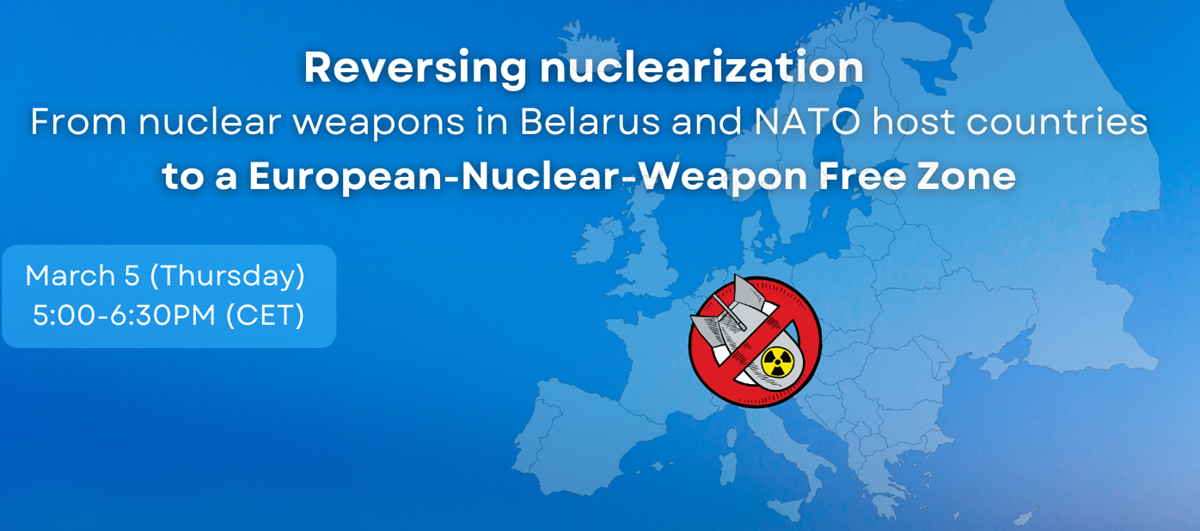
5 March -Online – Reversing nuclearization:
From nuclear weapons in Belarus and NATO host countries to a European-Nuclear-Weapon Free Zone
11am-12:30pm Eastern Time USA / 5pm-6:30pm CET

of the week – Advocating for a
nuclear free beach – https://www.samuellawrencefoundation.org/
The Samuel Lawrence Foundation advocates for a Nuclear Waste Free Beach at San Onofre, join us and take action!

10 March A LIVE WEBINAR THE REAL EFFECTS OF NUCLEAR POWER
What the Industry Isn’t Telling Us
1:00 PM Mountain, 2 pm Central, 3 pm Eastern. Live on the Keepers of the Water Facebook page

18 March Webinar @ 1 PM EST: An Assessment of SMR Projects: The Case of Canada
register for the zoom:
https://us02web.zoom.us/webinar/register/WN_o8BIIOUvQ2ONJR1nta65DQ#/registration

of the week – STOP SMALL MODULAR REACTORS IN CANADA
To see nuclear-related stories in greater depth and intensity – go to https://nuclearinformation.wordpress.com
-
Archives
- March 2026 (27)
- February 2026 (268)
- January 2026 (308)
- December 2025 (358)
- November 2025 (359)
- October 2025 (376)
- September 2025 (258)
- August 2025 (319)
- July 2025 (230)
- June 2025 (348)
- May 2025 (261)
- April 2025 (305)
-
Categories
- 1
- 1 NUCLEAR ISSUES
- business and costs
- climate change
- culture and arts
- ENERGY
- environment
- health
- history
- indigenous issues
- Legal
- marketing of nuclear
- media
- opposition to nuclear
- PERSONAL STORIES
- politics
- politics international
- Religion and ethics
- safety
- secrets,lies and civil liberties
- spinbuster
- technology
- Uranium
- wastes
- weapons and war
- Women
- 2 WORLD
- ACTION
- AFRICA
- Atrocities
- AUSTRALIA
- Christina's notes
- Christina's themes
- culture and arts
- Events
- Fuk 2022
- Fuk 2023
- Fukushima 2017
- Fukushima 2018
- fukushima 2019
- Fukushima 2020
- Fukushima 2021
- general
- global warming
- Humour (God we need it)
- Nuclear
- RARE EARTHS
- Reference
- resources – print
- Resources -audiovicual
- Weekly Newsletter
- World
- World Nuclear
- YouTube
-
RSS
Entries RSS
Comments RSS
 nuclear-news