Tsunami risk for nuclear reactors on coastlines of India and Pakistan
Nuclear plants in Arabian Sea face tsunami risk https://phys.org/news/2020-09-nuclear-arabian-sea-tsunami.html, by SciDev.Net, 21 Sep 20, A major tsunami in the northern Arabian Sea could severely impact the coastlines of India and Pakistan, which are studded with sensitive installations including several nuclear plants, says the author of a new study.
“A magnitude 9 earthquake is a possibility in the Makran subduction zone and consequent high tsunami waves,” says C.P. Rajendran, lead author of the study, which was published this September in Pure and Applied Geophysics.
“Our study is a step towards understanding the tsunami hazards of the northern Arabian Sea,” says Rajendran. “The entire northern Arabian Sea region, with its critical facilities, including nuclear power stations, needs to take this danger into consideration in hazard perceptions.”
Atomic power stations functioning along the Arabian Sea include Tarapur (1,400 megawatts) in India’s Maharashtra state, Kaiga (being expanded to 2,200 megawatts) in Karnataka state and Karachi in Pakistan (also being expanded to 2,200 megawatts). A mega nuclear power plant coming up at Jaitapur, Maharashtra will generate 9,900 megawatts, while another project at Mithi Virdi in Gujarat may be shelved because of public opposition.
Nuclear power plants are located along coasts because their enormous cooling needs can be taken care of easily and cheaply by making using abundant seawater.
“Siting nuclear reactors in areas prone to natural disasters is not very wise,” says M.V. Ramana, Simons Chair in Disarmament, Global and Human Security and Director, Liu Institute for Global Issues, University of British Columbia, tells SciDev.Net. “In principle, one could add safety systems to lower the risk of accidents—a very high sea wall, for instance. Such safety systems, however, add to the cost of nuclear plants and make them even more uncompetitive when compared with other ways of generating electricity.”
“All nuclear plants can be subject to severe accidents due to purely internal causes, but natural disasters like earthquakes, tsunamis, hurricanes, and storm surges make accidents more likely because they cause stresses on the reactor that could lead to some failures while simultaneously disabling one or more safety systems,” says Ramana, who has worked extensively on nuclear energy.
Rajendran and his team embarked on the study after noticing that, compared to peninsular India’s eastern coast, tsunami hazards on the west coast were under-recognized. This despite the 8.1 magnitude earthquake that occurred in the Makran subduction zone in 1945.
The study relies on historical reports of a major disturbance that struck the coast of western India in 1524 that was recorded by a Portuguese fleet off Dabhol and the Gulf of Cambay, and corroborated by geological evidence and radiocarbon dating of seashells transported inland which are preserved in a dune complex at Kelshi village near Dabhol.
Modeling carried out by the team produced results suggesting that the high impact in Kelshi could have been generated by a magnitude 9 earthquake sourced in the Makran subduction zone during the 1508 —1681 period, says Rajendran. Subduction zones occur where one tectonic plate slides over another, releasing seismic energy.
As per radiocarbon dating of the shells, the inundation may have occurred during 1432—1681 and overlaps the historical reports of major sea disturbances in 1524 that were recorded by a Portuguese fleet of 14 ships led by Vasco da Gama, the man who discovered the sea-route between India and Europe.
A future mega-tsunami originating in the Makran subduction zone could not only devastate the coasts of Iran, Pakistan and Oman but also the west coast of India, says Rajendran, adding that alternate offshore quake sources are yet to be identified in the Arabian Sea.
The larger Indian Ocean features another tectonically active tsunamigenic source—in the Andaman-Sumatra region where the devastating 2004 Asian tsunami occurred. “The next tsunami, after our experience in 2004, will likely be on the west coast,” says Rajendran.
The 2004 tsunami claimed more than 250,000 lives and devastated the beaches of Indonesia, Thailand and Sri Lanka, and claimed lives as far away as Yemen, Somalia and South Africa. Significantly, an atomic power plant at Kalpakkam, on the coast of India’s south-eastern, Tamil Nadu state, was flooded.
Earlier studies, such as the one published in 2013 in Geophysical Research Letters, have indicated that tsunamis, similar in magnitude to the one caused by the 2004 Sumatra earthquake, could occur at the Makran subduction zone where the Arabian plate is subducting beneath the Eurasian plate by about 1.5 inches per year.
According to the 2013 study, the Makran is a wide-potential seismogenic zone that may be capable of generating a very significant (greater than 8.5 in magnitude) tsunamigenic earthquake that poses risks to the coastlines of Pakistan, Iran, Oman, and India.
Vinod Menon, a founder member of India’s National Disaster Management Authority tells SciDev.Net that the new study “raises pertinent questions on the seismic and tsunamigenic risks from a potential rupture of the Makran subduction zone.”
“The tsunami risk and vulnerability of the west coast has not received adequate attention in spite of a history of occurrence in the past as curated by the authors as well as previous studies,” says Menon, who adds that it is worth noting that there are far more sensitive installations around the northern Arabian Sea than in the Andaman-Sumatra region.
Ramana says that such studies serve as a warning against the risks and costs of setting up nuclear power plants in seismically vulnerable areas. “A decade after the 2011 disaster in Fukushima, the prefecture retains radioactive hotspots and the cost of clean-up has been variously estimated to range between US$20 billion and US$600 billion.”
Russia rejects USA’ s terms for extending the New START arms control treaty
|
Russia rejects US terms for nuclear pact, Bunbury Mail, Gabrielle Tetrault-Farber , 21 Sept 20, Russia sees minimal chances of extending the New START treaty with the United States – their last major nuclear arms pact – as it does not accept conditions set out by Washington, Deputy Foreign Minister Sergei Ryabkov says. He spoke on Monday after Marshall Billingslea, the US Special Presidential Envoy for Arms Control, told a Russian newspaper that Moscow must accept a joint agreement with Washington on extending the treaty before the US presidential election in November. “I suspect that after President Trump wins re-election, if Russia has not taken up our offer, that the price of admission, as we would say in the US, goes up,” Billingslea told Kommersant newspaper in an interview.
Ryabkov said that position constituted an ultimatum and lowered the chances of reaching any kind of agreement to extend the deal, which expires in February next year. “We cannot talk in this manner,” TASS news agency quoted Ryabkov as saying. Another news agency, RIA, quoted him as saying the chances of a treaty extension were “minimal”…….. https://www.bunburymail.com.au/story/6935377/russia-rejects-us-terms-for-nuclear-pact/?cs=5461
|
|
The pandemic is a massive thrat – so is climate change


|
The federal government shouldn’t feel it has to choose between addressing one crisis or the other, Aaron Wherry · CBC News · Sep 17, 2020 The profound and urgent threat of climate change still hangs over Prime Minister Justin Trudeau’s government — quite literally this week, after smoke from the wildfires in California and Oregon spread across the continent, casting a dull haze across the skies.Questions are being asked now about how quickly or enthusiastically the Liberals should turn their focus back to that challenge. There is, after all, the small matter of an ongoing health emergency to tackle. But the unfolding climate emergency will not get any easier to deal with over time — and the Liberals might regret missing any available opportunities to make meaningful progress toward the mid-century goal of net-zero emissions. Although it’s not clear if the government’s actual plans for the next year have changed (or if it’s merely the official messaging about those plans that has been adjusted), it has shifted its publicly stated focus conspicuously to the immediate crisis posed by COVID-19. [Controlling the spread of COVID-19] is our government’s 100 per cent priority,” Finance Minister Chrystia Freeland said Tuesday. “It is what we are overwhelmingly focused on.” “I think we recognize and have always recognized that dealing with the pandemic is job one,” Trudeau said Wednesday. Pandemic pessimismAfter the Liberals’ heady talk in late summer about a pivotal opportunity for ambitious change, that sounds like a course correction. If so, it’s a concession to simple reality. While a moment could be emerging when political circumstance and necessity align to create a rare opportunity for real change, it would be hard for any government to do much of anything if COVID-19 is allowed to run roughshod. COVID-19 is also (understandably) the central preoccupation of most Canadians: according to a survey by Abacus Data, 45 per cent of Canadians still believe the pandemic will get worse before it gets better. Parents nervously sending their children back to school might not be terribly interested right now in hearing about the better world that might emerge in the wake of COVID-19 — and they might be very inclined to punish any government that seems to take its eye off the immediate threat. As much as combating climate change and building a clean economy can still seem like optional pursuits — things that would be nice to have rather than necessary — Liberals might worry about seeming to have let “green” interests hijack the moment. Outside government, talk of a green recovery began soon after the pandemic’s arrival. But it would be a mistake to dismiss the idea as a passing fad; while Abacus polled fear about the pandemic, it also found that concern about climate change remains high, particularly among Liberal, NDP, Bloc Québécois and Green voters. While Gerald Butts, a former senior adviser to Trudeau, counselled progressive policy wonks on Monday to mind the real pandemic-related anxieties of voters, he also was part of a panel of experts that laid out a plan Wednesday calling for $55 billion in green spending over the next five years, largely focused on retrofitting buildings, expanding the use of zero-emission vehicles and accelerating the development of clean energy. But the task force also pointed out that such investments would be in line with plans being pursued by Germany, France and the United Kingdom. If Joe Biden is elected president of the United States in November, his plans could include as much as $2.7 trillion in green spending. It’s not an either-or choiceNot all of the problems COVID-19 has exposed or created can be solved by green spending — and it can’t be said that this government has demonstrated a peerless ability to manage multiple major priorities at once. But a government interested in the long-term goal of a clean economy should still be able to find opportunities to do that while simultaneously addressing the short-term needs of a battered economy. The Liberals themselves did that in May when they offered funding to clean up abandoned oil wells and asked large companies applying for pandemic-related loans to provide climate-risk disclosure. It also shouldn’t be forgotten that the Liberals already had a list of green things to do before the pandemic arrived. The platform that Trudeau ran on in the fall of 2019 promised new support for retrofits and zero-emission vehicles, a tax cut for companies that develop clean technology, climate change accountability legislation and new flood-mapping (not to mention that plan to plant two billion new trees). A global pandemic has complicated everyone’s plans for 2020. But Parliament should return next week with the ability to resume something resembling normal proceedings. And not even a global pandemic can fully excuse a government from doing important work. Climate change as an economic issueAs if to reassure the proponents of a green recovery that something is in the works, Environment Minister Jonathan Wilkinson was one of the four ministers selected to stand behind Trudeau on Wednesday when this week’s cabinet retreat ended. But when Trudeau and Freeland did talk about a green agenda, it was in terms of jobs. “As we reflect on how to restart the economy, how to create good jobs for now and into the future, obviously the green sector and newer jobs and innovation and clean tech are going to be an essential part of building back better and building a stronger future,” Trudeau said. An emphasis on jobs could ground the green aspect of the government’s agenda in the most immediate and practical concerns of both nervous families and fretful economists. It also would serve as a reminder that a green recovery isn’t about hugging trees — it’s about the future welfare and prosperity of Canadians. A report released by the Institute for Climate Choices today makes the case that reducing emissions and growing the economy should not be treated as mutually exclusive goals — and that Canada’s work of building a clean economy has only begun. If a government wants to build long-term growth, a transition to a low-carbon economy seems like a decent place to start. No one can dispute the fact that other issues are now demanding the government’s attention: child care, long-term care, inequality, precarious work, a wounded economy and the ongoing challenge of living with the threat of COVID-19. No government would be easily forgiven for ignoring such things. But until Canada is on a clear path to net-zero emissions, nearly every federal government can be asked whether it has fully seized every chance to combat the climate crisis — a crisis that was worth worrying about before COVID-19 arrived and will still be worth worrying about long after the virus has faded. |
|

Small Nuclear Reactors look good – on paper!
 Lockdown alternatives look good on paper: So do nuclear reactors, Independent Australia, By John Quiggin | 22 September 2020, Amid mounting pressure for a “hands-off” approach to pandemic controls, Professor John Quiggin explains the real costs of the “let her rip” strategy.
BACK IN 1953, the founder of the U.S. naval nuclear program, Admiral Hyman Rickover, drew a striking contrast between “paper reactors” and “real reactors”:
An academic [paper] reactor or reactor plant almost always has the following basic characteristics: (1) It is simple. (2) It is small. (3) It is cheap. (4) It is light. (5) It can be built very quickly. (6) It is very flexible in purpose (“omnibus reactor”). (7) Very little development is required. It will use mostly “off-the-shelf” components. (8) The reactor is in the study phases. It is not being built now.
On the other hand, a practical [real] reactor plant can be distinguished by the following characteristics: (1) It is being built now. (2) It is behind schedule. (3) It is requiring an immense amount of development on apparently trivial items. Corrosion, in particular, is a problem. (4) It is very expensive. (5) It takes a long time to build because of the engineering development problems. (6) It is large. (7) It is heavy. (8) It is complicated.
The tools of the academic-reactor designer are a piece of paper and a pencil with an eraser. If a mistake is made, it can always be erased and changed. If the practical-reactor designer errs, he wears the mistake around his neck; it cannot be erased. Everyone can see it.
Rickover’s insight has been borne out many times, as a long series of new reactor designs, promising power “too cheap to meter”, have come in over time and over budget. The latest such paper reactor, the Small Modular Reactor being developed by NuScale Power recently received design approval from the U.S. Nuclear Regulatory Commission. Quietly tucked away in the announcement was the prediction that the first 12-module plant being developed for Utah Associated Municipal Power Systems would be operational by 2030. Until last week, the announced target was 2027. And when the project was first funded, commercial operation was projected for 2023.
The contrast drawn by Rickover applies equally well to the policies proposed by critics of the elimination and suppression policies adopted around the world in response to the COVID-19 pandemic………..
Unlike Rickover’s paper reactors, these theoretical policies are typically not spelt out in much detail. Rather, the adverse effects of real policies, such as the hardship associated with travel restrictions and the economic cost of lockdowns are pointed out, and it is claimed that it would have been far better to accept a few deaths, mostly of old people who were going to die soon anyway. ….
Broadly speaking, the earlier and more comprehensive the control policy, the better the outcomes in terms of both (market) economic activity and health outcomes. (With a proper understanding of economics, health outcomes are economic outcomes, whether or not they affect market activity). ……..
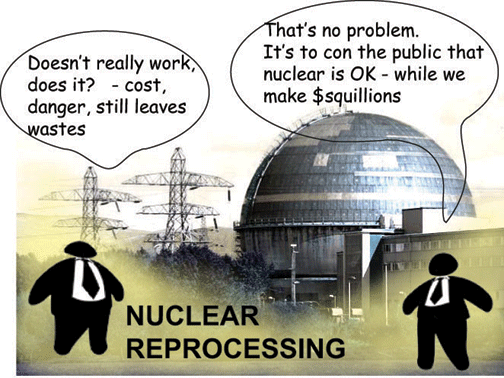
USA.Federal Bill to promote nuclear waste borehole system, and the dubious plan for reprocessing
|
Bill would create new federal research program for nuclear waste disposal
Deep boreholes, fuel reprocessing are on the to-do list of things to investigate, By TERI SFORZA | tsforza@scng.com | Orange County Register September 21, 2020 ”………… A federal bill that would pump a half-billion dollars into America’s long-stalled effort to find a permanent home for nuclear waste, would nudge reprocessing of spent fuel back on the table and prod officials toward big-picture solutions. The Spent Nuclear Fuel Solutions Research and Development Act, by Rep. Mike Levin, D-San Juan Capistrano, would create, among many other things, “an advanced fuel cycle research, development, demonstration, and commercial application program” at the U.S. Department of Energy. The program would be charged with investigating improvements to the fuel cycle, advanced reactor concepts “while minimizing environmental and public health and safety impacts,” and much-needed storage options, from dry casks to deep geological boreholes. Boreholes have long been considered the single best method to isolate nuclear waste for the long haul, but efforts have been plagued by opposition from communities unwilling to be home to the nation’s nuclear waste. ……..
Recycling wasteReprocessing, however, has had a fraught history in the United States. The technology to chemically separate and recover fissionable plutonium from used nuclear fuel was developed after World War II and was an integral part of the nuclear plan in America, according to a Congressional Research Service report. But reprocessing fuel produces material that can easily be used in nuclear bombs, while regular spent fuel does not. After India started showing off its nuclear muscle in the 1970s, America got spooked. President Gerald Ford suspended commercial reprocessing and recycling of plutonium in 1976, concerned that it could fall into the wrong hands. A year later, President Jimmy Carter issued an executive order that etched the policy into stone.
President Ronald Reagan reversed Carter’s order, but the work never really ramped back up. Congress soon passed the Nuclear Waste Policy Act — committing the federal government to accept and store spent commercial nuclear fuel in exchange for payments from the nuclear plant operators — so there wasn’t much more impetus for reprocessing. …….
reprocessing has strong critics. The Union of Concerned Scientists calls it dangerous, dirty, and expensive.
“While some supporters of a U.S. reprocessing program believe it would help solve the nuclear waste problem, reprocessing would not reduce the need for storage and disposal of radioactive waste. Worse, reprocessing would make it easier for terrorists to acquire nuclear weapons materials, and for nations to develop nuclear weapons programs,” the watchdog group says in its primer on the topic. The Blue Ribbon Commission on America’s Nuclear Future rejected calls for reprocessing in 2012, saying “all spent fuel reprocessing or recycle options generate waste streams that require a permanent disposal solution.” “Nuclear waste reprocessing does not benefit the environment — it only benefits the nuclear industry, and then not by much,” said Bart Ziegler, president of the Samuel Lawrence Foundation. “It’s a very financially costly process and lends to more waste effluent.”
David Victor, a UC San Diego professor and chair of a volunteer committee advising on San Onofre’s tear-down, said he sees the bill trying to create a big tent of supporters. Reprocessing wouldn’t make much sense in the U.S. unless there was a huge new demand for nuclear fuel, he said by email…… https://www.ocregister.com/2020/09/21/bill-would-create-new-federal-research-program-for-nuclear-waste-disposal/
|
|
Nuke Ban: Former Statesmen, et al Promoting — limitless life

Open Letter in Support of the 2017 Treaty on the Prohibition of Nuclear Weapons Under embargo until 21 September 2020, 00:00 UTC This open letter in support of the 2017 Treaty on the Prohibition of Nuclear Weapons has been signed by 56 former presidents, prime ministers, foreign ministers and defence ministers from 20 NATO member […]
Nuke Ban: Former Statesmen, et al Promoting — limitless life
The week in pandemic, climate, nuclear, even bank, news
Well, all news, by its very nature is likely to be bad. (Good behaviour is pretty ordinary, not news.) But there’s bad news, and there’s very bad news. And this has been a week for the very bads.
Start with the pandemic. The global death toll exceeds 957,000. cases nearly 31 million. India’s coronavirus cases pass 5 million as hospitals scramble for oxygen. A second wave grips Europe. UK cases could grow exponentially, if no action taken. Most of the US is headed in the wrong direction again with COVID-19 cases as deaths near 200,000.
Climate. Weather extremes are more frequently with us now, and as with the pandemic, the longer term future is unceetain: abrupt changes could bring interconnected tipping points.
Economics. The FinCEN files: Dirty little secrets of the world’s banks revealed in mass US government leak.
BUT – some good news. East Asian countries – China, Taiwan, Vietnam, South Korea, Singapore Malaysia -have learned, through their previous SARS epidemic, how to structure their health systems to plan for and manage pandemics, mount particularly effective responses to COVID-19, and reduce the death rate.
Why harsh COVID-19 lockdowns are good for the economy.
World’s Biggest Rooftop Greenhouse in Montreal is as Big as 3 Football Fields – Now Can Feed 2% of the City.
Julian Assange was offered a pardon, if he would name a source. Julian Assange exposed “a very serious pattern of actual war crimes”. Assange insisted on not revealing names of informants. Julian Assange case: Witnesses recall Collateral Murder attack: “Look at those dead bastards,” shooters said. https://www.youtube.com/watch?v=XNFEXvyZdyU https://www.youtube.com/watch?v=ZYaxBVzHJHs
David Attenborough now wants us to face up to the state of the planet. In tropical areas, increasing heat and humidity will make life almost unbearable. Importance of the ocean’s biological carbon pump. https://www.youtube.com/watch?v=n4aQkyJrlWs
What Frogs Can Teach Us about the State of the World.
53 million tons of plastic could end up in rivers, lakes and oceans every year by 2030. The persistence of plastic.
The coronavirus pandemic and the increased safety risks for nuclear reactors.
Nuclear exposure standards discriminate on the basis of sex .
Why NuScam and other ”small” nuclear proposals just don’t make any sense.
The hidden stumbling block to progress on nuclear weapons.
BHP betrays international safety efforts.
ARCTIC. Arctic sea ice becomes a sea of slush. Rapid climate change has made Greenland lose a record amount of ice. USA. Relicensing Turkey Point nuclear station – a striking example of a dangerous action in climate change times. Global heating is disrupting the ground in Siberia.
JAPAN. Suttsu, Hokkaido, residents oppose radioactive waste dump plan.
GERMANY. Nuclear energy CHEAP? Nuclear has drained Germany of more than €1trn to date
USA.
- Grief in Western America, as inequities, wildfires, and climate change collide. Decorum be damned. Top science editor spits the dummy with Trump. American TV news covers wildfires, but mostly is careful not to mention climate change.
- Biden would push for less US reliance on nukes for defense. US seeks to pressure Russia into nuclear weapons treaty concessions before election. In 2017, USA considered plans to attack North Korea using nuclear weapons. Arizona’s cancer toll from nuclear testing: the fight for recognition and compensation.
- Opinion poll shows unpopularity of nuclear power in the USA. USA taxpayers set up by government in the effort to save uneconomic nuclear power. Utah lawmakers seek details on planned nuclear plant in Idaho. The sorry history of the Vogtle nuclear boondoggle: it must be stopped.. U.S. Securities and Exchange Commission investigating FirstEnergy over its involvement in the Ohio nuclear corruption scandal.
UK.
- Hitachi definitely to exit UK nuclear power project. Hitachi pulls out – halting two big UK nuclear projects. Renewables would be a fraction of their costs. A powerful message on the seismic dangers in Hinkley Point C nuclear construction. It would be cheaper to pull out now. Plutonium in Hinkley nuclear mud dumping, but National Resources Wales’ call for full testing is ignored.
- As Hitachi exits the project, UK government to announce funding for Wylfa nuclear project next month. Suffolk County Council unable to back £20billion Sizewell new nuclear power station as the present plan stands. UK government to subsidise Sizewell nuclear power station?.
- Magnox nuclear clear-up cost soars to £9bn. Nuclear waste transport , and legal action. Nuclear convoy passes near Glasgow ‘laden with six warheads’.
- Extinction Rebellion exposes Zion Lights as yet another nuclear propaganda front.
CHINA. China ditches US nuclear technology in favour of home-grown alternative.
CANADA. Nuclear waste flyers heading to 50,000 households in Grey-Bruce. Indigenous woman’s long trek to protest nuclear waste dump, and encourage others.. Western Canadians do not want ”Small” Nuclear Reactors in Sakatchewan.
PHILIPPINES. Duterte asks nations to reject war, eliminate nuclear weapons.
IRAN. While other nations seek conciliation, agreement, the U.S. will declare that all international sanctions are back in force. Iran a most transparent country for IAEA inspections.
NORTH KOREA. U.S. general says that North Korea has a ‘‘small” number of nuclear weapons (over 70?)
SOUTH KOREA. South Korea says no use of nuclear weapons in joint operational plans with U.S.
EGYPT. Egypt supports Bamako Convention banning import of hazardous waste, especially radioactive, into Africa.
RUSSIA. Russia developing a nuclear-powered missile that can ”attack from unexpected directions”.
SAUDI ARABIA. IAEA and China helping Saudi Arabia with its nuclear ambitions.
AUSTRALIA CORONAVIRUS. The State of Victoria has achieved remarkable success in bringing down the infection rate to 11 in one day, death toll 2. This is the result of the strict lockdown regime imposed by Premier Daniel Andrews, despite vicious attacks on him by the opposition party. You know the good result is true, when even the Murdoch Press has to admit it, and its opinion poll backs the Premier.
Global heating – abrupt changes could bring interconnected tipping points
Cutting greenhouse gas emissions is not a surprising or original solution. But it is our best chance to stop the warning signs flashing red.
The tipping points at the heart of the climate crisis, https://www.theguardian.com/science/2020/sep/19/the-tipping-points-at-the-heart-of-the-climate-crisis Michael Marshall, Sun 20 Sep 2020
Many parts of the Earth’s climate system have been destabilised by warming, from ice sheets and ocean currents to the Amazon rainforest – and scientists believe that if one collapses others could follow.
The warning signs are flashing red. The California wildfires were surely made worse by the impacts of global heating. A study published in July warned that the Arctic is undergoing “an abrupt climate change event” that will probably lead to dramatic changes. As if to underline the point, on 14 September it was reported that a huge ice shelf in northeast Greenland had torn itself apart, worn away by warm waters lapping in from beneath.
That same day, a study of satellite data revealed growing cracks and crevasses in the ice shelves protecting two of Antarctica’s largest glaciers – indicating that those shelves could also break apart, leaving the glaciers exposed and liable to melt, contributing to sea-level rise. The ice losses are already following our worst-case scenarios.
These developments show that the harmful impacts of global heating are mounting, and should be a prompt to urgent action to cut greenhouse gas emissions. But the case for emissions cuts is actually even stronger. That is because scientists are increasingly concerned that the global climate might lurch from its current state into something wholly new – which humans have no experience dealing with. Many parts of the Earth system are unstable. Once one falls, it could trigger a cascade like falling domino
Tipping points
We have known for years that many parts of the climate have so-called tipping points. That means a gentle push, like a slow and steady warming, can cause them to change in a big way that is wholly disproportionate to the trigger. If we hit one of these tipping points, we may not have any practical way to stop the unfolding consequences.
The Greenland ice sheet is one example of a tipping point. It contains enough ice to raise global sea levels by seven metres, if it were all to melt. And it is prone to runaway melting.
This is because the top surface of the ice sheet is gradually getting lower as more of the ice melts, says Ricarda Winkelmann of the Potsdam Institute for Climate Impact Research in Germany. The result is familiar to anyone who has walked in mountains. “If we climb down the mountain, the temperature around us warms up,” she says. As the ice sheet gets lower, the temperatures at the surface get higher, leading to even more melting. “That’s one of these self-reinforcing or accelerating feedbacks.”
We don’t know exactly how much warming would cause Greenland to pass its tipping point and begin melting unstoppably. One study estimated that it would take just 1.6C of warming – and we have already warmed the planet 1.1C since the late 19th century.
The collapse would take centuries, which is some comfort, but such collapses are difficult to turn off. Perhaps we could swiftly cool the planet to below the 1.6C threshold, but that would not suffice, as Greenland would be melting uncontrollably. Instead, says Winkelmann, we would have to cool things down much more – it’s not clear by how much. Tipping points that behave like this are sometimes described as “irreversible”, which is confusing; in reality they can be reversed, but it takes a much bigger push than the one that set them off in the first place.
In 2008, researchers led by Timothy Lenton, now at the University of Exeter, catalogued the climate’s main “tipping elements”. As well as the Greenland ice sheet, the Antarctic ice sheet is also prone to unstoppable collapse – as is the Amazon rainforest, which could die back and be replaced with grasslands.
A particularly important tipping element is the vast ocean current known as the Atlantic meridional overturning circulation (AMOC), which carries warm equatorial water north to the Arctic, and cool Arctic water south to the equator. The AMOC has collapsed in the past and many scientists fear it is close to collapsing again – an event that was depicted (in ridiculously exaggerated and accelerated form) in the 2004 film The Day After Tomorrow. If the AMOC collapses, it will transform weather patterns around the globe – leading to cooler climates in Europe, or at least less warming, and changing where and when monsoon rains fall in the tropics. For the UK, this could mean the end of most arable farming, according to a paper Lenton and others published in January.
Tumbling dominoes
In 2009, a second study took the idea further. What if the tipping elements are interconnected? That would mean that setting off one might set off another – or even unleash a cascade of dramatic changes, spreading around the globe and reshaping the world we live in.
For instance, the melting of the Greenland ice sheet is releasing huge volumes of cold, fresh water into the north Atlantic. This weakens the AMOC – so it is distinctly possible that if Greenland passes its tipping point, the resulting melt will push the AMOC past its own threshold.
“It’s the same exact principles that we know happen at smaller scales,” says Katharine Suding of the University of Colorado, Boulder, who has studied similar shifts in ecosystems. The key point is that processes exist that can amplify a small initial change. This can be true on the scale of a single meadow or the whole planet.
However, the tipping point cascade is very difficult to simulate. In many cases the feedbacks go both ways – and sometimes one tipping point can make it less likely that another will be triggered, not more. For example, the AMOC brings warm water from equator up into the north Atlantic, contributing to the melting of Greenland. So if the AMOC were to collapse, that northward flow of warm water would cease – and Greenland’s ice would be less likely to start collapsing. Depending whether Greenland or the AMOC hit its tipping point first, the resulting cascade would be very different.
What’s more, dozens of such linkages are now known, and some of them span huge distances. “Melting the ice sheet on one pole raises sea level,” says Lenton, and the rise is greatest at the opposite pole. “Say you’re melting Greenland and you raise the sea level under the ice shelves of Antarctica,” he says. That would send ever more warm water lapping around Antarctica. “You’re going to weaken those ice shelves.”
“Even if the distance is quite far, a larger domino might still be able to cause the next one to tip over,” says Winkelmann.
In 2018, Juan Rocha of the Stockholm Resilience Centre in Sweden and his colleagues mapped out all the known links between tipping points. However, Rocha says the strengths of the interconnections are still largely unknown. This, combined with the sheer number of them, and the interactions between the climate and the biosphere, means predicting the Earth’s overall response to our greenhouse gas emissions is very tricky.
Into the hothouse
The most worrying possibility is that setting off one tipping point could unleash several of the others, pushing Earth’s climate into a new state that it has not experienced for millions of years.
Since before humans existed, Earth has had an “icehouse” climate, meaning there is permanent ice at both poles. But millions of years ago, the climate was in a “hothouse” state: there was no permanent polar ice, and the planet was many degrees warmer.
If it has happened before, could it happen again? In 2018, researchers including Lenton and Winkelmann explored the question in a much-discussed study. “The Earth System may be approaching a planetary threshold that could lock in a continuing rapid pathway toward much hotter conditions – Hothouse Earth,” they wrote. The danger threshold might be only decades away at current rates of warming.
Lenton says the jury is still out on whether this global threshold exists, let alone how close it is, but that it is not something that should be dismissed out of hand.
“For me, the strongest evidence base at the moment is for the idea that we could be committing to a ‘wethouse’, rather than a hothouse,” says Lenton. “We could see a cascade of ice sheet collapses.” This would lead to “a world that has no substantive ice in the northern hemisphere and a lot less over Antarctica, and the sea level is 10 to 20 metres higher”. Such a rise would be enough to swamp many coastal megacities, unless they were protected. The destruction of both the polar ice sheets would be mediated by the weakening or collapse of the AMOC, which would also weaken the Indian monsoon and disrupt the west African one.
Winkelmann’s team studied a similar scenario in a study published online in April, which has not yet been peer-reviewed. They simulated the interactions between the Greenland and west Antarctic ice sheets, the AMOC, the Amazon rainforest and another major weather system called the El Niño southern oscillation. They found that the two ice sheets were the most likely to trigger cascades, and the AMOC then transmitted their effects around the globe.
What to do?
Everyone who studies tipping point cascades agrees on two key points. The first is that it is crucial not to become disheartened by the magnitude of the risks; it is still possible to avoid knocking over the dominoes. Second, we should not wait for precise knowledge of exactly where the tipping points lie – which has proved difficult to determine, and might not come until it’s too late.
Rocha compares it to smoking. “Smoking causes cancer,” he says, “but it’s very difficult for a doctor to nail down how many cigarettes you need to smoke to get cancer.” Some people are more susceptible than others, based on a range of factors from genetics to the level of air pollution where they live. But this does not mean it is a good idea to play chicken with your lungs by continuing to smoke. “Don’t smoke long-term, because you might be committing to something you don’t want to,” says Rocha. The same logic applies to the climate dominoes. “If it happens, it’s going to be really costly and hard to recover, therefore we should not disturb those thresholds.”
“I think a precautionary principle probably is the best step forward for us, especially when we’re dealing with a system that we know has a lot of feedbacks and interconnections,” agrees Suding.
“These are huge risks we’re playing with, in their potential impacts,” says Lenton. “This is yet another compulsion to get ourselves weaned off fossil fuels as fast as possible and on to clean energy, and sort out some other sources of greenhouse gases like diets and land use,” says Lenton. He emphasises that the tipping points for the two great ice sheets may well lie between 1C and 2C of warming.
“We actually do need the Paris climate accord,” says Winkelmann. The 2016 agreement committed most countries to limit warming to 1.5 to 2C, although the US president, Donald Trump, has since chosen to pull the US out of it. Winkelmann argues that 1.5C is the right target, because it takes into account the existence of the tipping points and gives the best chance of avoiding them. “For some of these tipping elements,” she says, “we’re already in that danger zone.”
Cutting greenhouse gas emissions is not a surprising or original solution. But it is our best chance to stop the warning signs flashing red.
Womankind arise! — Beyond Nuclear International

Still no equal protection under radiation law
Womankind arise! — Beyond Nuclear International
Nuclear exposure standards discriminate on the basis of sex
By Linda Pentz Gunter, 20 Sept 20,
As we mourn the passing of Supreme Court justice, Ruth Bader Ginsburg, we look back at her landmark victories against discrimination “on the basis of sex” and wonder how nuclear regulations might have stood up to her legal scrutiny. As things currently stand, the nuclear power industry gets away with “allowable” radiation exposure levels that discriminate against women……….
And despite RBG’s immense contribution to our greater wellbeing, as women, we still face discrimination in so many walks of life. That could be about to get worse.
That discrimination remains most infuriatingly true when it comes to the nuclear power industry which is not, it turns out, an equal opportunity poisoner, as we have shown in our earlier articles about Native American and African American communities.
Women and children, and especially pregnant women, are more vulnerable — meaning they suffer more harm from a given dose of radiation than the harm a man suffers from that same dose.
One should quickly add here that scientists still agree that there is no completely safe dose of radiation. In fact, when a dose is described as safe, it doesn’t mean harmless. It means something called “As low as reasonably achievable”, which means as safe as we are prepared to protect for — or, really, as safe as the nuclear industry is willing to pay for.
So not really safe then, and when they say “safe”, the question women must ask is: safe for whom?
In the US, that means safe for someone called Standard Man or sometimes Reference Man. That is on whom the “allowable” radiation exposure standards are based.
Who is Standard Man? ….
Discrimination strikes again here, on the basis of race and age, because the amount of radiation exposure that is considered “safe” for an individual in the US is based on what would be safe for a healthy, robust, 20-30-something white male…….. more https://wordpress.com/read/feeds/72759838/posts/2922365220
David Attenborough now wants us to face up to the state of the planet
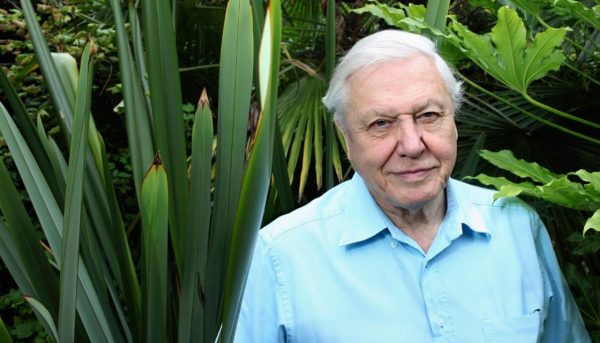 Don’t look away now: are viewers finally ready for the truth about nature?
For decades David Attenborough delighted millions with tales of life on Earth. But now the broadcaster wants us to face up to the state of the planet, PatrickGreenfield @pgreenfielduk
Fri 18 Sep 2020 Sir David Attenborough’s soothing, matter-of-fact narrations have brought the natural world to our living rooms for nearly seven decades and counting. From Australia’s Great Barrier Reef to the jungles of central Africa, the 94-year-old broadcaster has dazzled and delighted millions with tales of life on Earth – mostly pristine and untouched, according to the images on our screens. But this autumn Attenborough has returned with a different message: nature is collapsing around us.
“We are facing a crisis. One that has consequences for us all. It threatens our ability to feed ourselves, to control our climate. It even puts us at greater risk of pandemic diseases such as Covid-19,” he warned in Extinction: The Facts on BBC One primetime, receiving five-star reviews.
Clips and graphs showing the spiralling extinction rate were shared widely on social media. Some even pledged to change their diets and live their lives in a different way. “We have to listen to him. And act,” said broadcaster Matthew Stadlen.
53 million tons of plastic could end up in rivers, lakes and oceans every year by 2030
|
Annual plastic waste could reach 53m tons by 2030 https://www.dhakatribune.com/world/2020/09/20/annual-plastic-waste-could-reach-53m-tons-by-2030 In a new modelling study published in the journal Science, ecologists monitoring pollution in aquatic ecosystems have voiced their concern, saying more needs to be done to reduce emissions
As much as 53 million tons of plastic could end up in rivers, lakes and oceans every year by 2030, even if global commitments to reduce plastic pollution are met, experts have warned. In a new modelling study published in the journal Science, ecologists monitoring pollution in aquatic ecosystems have voiced their concern, saying more needs to be done to reduce emissions, reports Evening Express. Chelsea Rochman, an assistant professor in the department of ecology and evolutionary biology at the University of Toronto, and senior author on the study, said: “Unless growth in plastic production and use is halted, a fundamental transformation of the plastic economy to a framework based on recycling is essential, where end-of-life plastic products are valued rather than becoming waste.” According to the researchers, about 19 to 23 million tons, or 11%, of plastic waste generated globally in 2016 entered aquatic ecosystems. They say computer modelling shows between 24 and 34 million tons of emissions are currently entering waterbodies around the world every year. The researchers modelled future scenarios to include the strategies that are currently in place to reduce plastic pollution in waters, such as bans on certain plastic products, continuous clean-up of litter, and plastic waste management. They found these mitigation strategies are not enough to keep plastic pollution in check, adding that an “enormous” amount of effort would be required to keep emissions below eight million tonnes a year. This would include a 25%-40% reduction in plastic production across all economies, increasing the level of waste collection and management to at least 60% across all economies, and recovery of 40% of annual plastic emissions through clean-up efforts. Plastics are slow to degrade, and even when they do, bits of them, known as microplastics, make their way into the aquatic food chain, and eventually into humans. The “Great Pacific Garbage Patch” – an enormous raft of plastic waste floating in the sea is located between California and Hawaii and embodies the worsening crisis of global plastic pollution. The patch is said to cover 1.6 million square kilometres, an area about 8 times the size of Wales. |
|
Julian Assange case: Witnesses recall Collateral Murder attack: “Look at those dead bastards,” shooters said
|
Witnesses recall Collateral Murder attack: “Look at those dead bastards,” shooters said, WSWS, By Thomas Scripps and Laura Tiernan, 19 September 2020New Zealand investigative journalist Nicky Hager testified in Julian Assange’s extradition hearing yesterday morning. Hager has extensive experience in reporting imperialist violence and intrigue. In 2017, he released the book Hit and Run with co-author Jon Stephenson exposing the killing of civilians by New Zealand and United States forces in Afghanistan. He worked with WikiLeaks in the release of US diplomatic cables from November 2010 and made use of other releases in his writing. Hager explained that serious journalists routinely make use of classified materials when reporting on conflicts and potential state crimes. This, he said, was “generally impossible … without access to sources that the authorities concerned regard as sensitive and out of bounds. Consequently, information marked as classified is essential to allow journalism to perform its role in informing people about war, enabling democratic decision making and deterring wrongdoing.” The Iraq and Afghanistan war logs and US embassy cables obtained by WikiLeaks, Hager said, were documents “of the highest public interest—some of the most important material I have ever used in my life.” Referring to the “Collateral Murder” video, which District Judge Vanessa Baraitser intervened to stop him describing in full, he said, “After the shooting, the pilot and the co-pilot were heard saying ‘Look at those dead bastards,’ with the other replying ‘Nice’ … My belief is … the publication of that video and those words was the equivalent of the death of George Floyd and his words ‘I can’t breathe.’ They had a profound effect on public opinion in the world.” The Iraq and Afghanistan war logs and US embassy cables obtained by WikiLeaks, Hager said, were documents “of the highest public interest—some of the most important material I have ever used in my life.” Referring to the “Collateral Murder” video, which District Judge Vanessa Baraitser intervened to stop him describing in full, he said, “After the shooting, the pilot and the co-pilot were heard saying ‘Look at those dead bastards,’ with the other replying ‘Nice’ … My belief is … the publication of that video and those words was the equivalent of the death of George Floyd and his words ‘I can’t breathe.’ They had a profound effect on public opinion in the world.”……………. Yesterday’s cross-examination centred on the scope of the Espionage Act, with US prosecutors making clear that journalists and media outlets are now a legitimate target—especially those which are deemed “non-conventional.” …….. Throughout the hearing, US prosecutors have claimed the “Collateral Murder” video is not part of their case against Assange. But as Fitzgerald argued, after taking instruction from his client, the “Collateral Murder” video is connected “indivisibly” from the Iraq Rules of Engagement published by WikiLeaks and named in the US indictment. It was on the basis of these Rules of Engagement that Apache’s crew member “Crazy Horse 1-8” fired on civilians, leaving 18 dead and horrifically injuring two children. The hearing continues on Monday. https://www.wsws.org/en/articles/2020/09/19/assa-s19.html |
|
Global heating is disrupting the ground in Siberia
|
Bizarre Bumps come up in Siberia, The tundra climate of Siberia and Russia have been the victim of climate change and the bumps on the grounds bear its scars https://www.outlookindia.com/outlooktraveller/travelnews/story/70633/siberias-ground-bumps, Trinetra Paul, September 20 , 2020 Over the past few decades, climate change and global warming has had a string of adverse effects on the planet. And the signs of damage are increasing day by day. Siberia has been facing the wrath of this global phenomenon over the years. Now, the ground bears the scars of climate change. The Siberian permafrost (or frozen organic ground) is slowly thawing and this is resulting in huge, bizarre bumps on the ground. Many of the craters formed in between these bumps have been filled with melting water and have transformed into small lakes. The alarming rate at which the ground is thawing is a cause for major concern. The permafrost has frozen grass and shrubs and is a reservoir of greenhouse gases. When the layer thaws, these gases are directly emitted into the atmosphere. The Siberian city of Yakutsk has been standing on a permafrost, the depletion of which will not only be a hazard for the city but also for Siberian climate and weather. Siberia, and most parts of Russia, has witnessed a huge rise in temperatures, heat waves and an early summer with temperatures reaching almost 35 degrees. A large part of it is due to global warming, oil spills, factory leakages as well as increase in eco-tourism. Yes, even friendlier modes of tourism and travel too play a pivotal role in increasing the temperature. The COVID-19 pandemic too has had its share in this. With lack of proper maintenance, devastating Siberian wildfires in May proved to be deadly due to reduced workforce, and gave out large volumes of greenhouse gases. Though eco-tourism is beneficial in creating awareness about indiginous culture, and in creating employment among locals, it also leads to modernisation and artificial (often damaging) development of a place. Nature-based adventures, trails and extreme offbeat destinations are often held accountable for destruction of untramelled areas. Experts says that there must be conscious efforts in de-escalating these ventures. Such tourism must be curtailed, and introduced with buffers like controlling daily visitor numbers, maintaining a tab over timings, and consulting environmental organisations about the best measures to protect the vulnerable areas. Sometimes that may mean not allowing any tourists at all. |
|
Just like Australia, disinformation is thriving during the US fire crisis- Muroch media and Facebook


With its stranglehold on daily newspapers and online news, News Corp in Australia has created the most rightwing media culture in the English speaking world, and they aren’t really accountable to anyone.
Facebook is also the place where we see the two disinformation crises overlap.
Just like Australia, disinformation is thriving during the US fire crisis https://www.theguardian.com/commentisfree/2020/sep/19/just-like-australia-disinformation-is-thriving-during-the-us-fire-crisis
Jason Wilson 20 Sept 20 In both countries, fake news about arson proliferated while the role of climate change was obscured.
isinformation successfully obscured the real causes of Australia’s catastrophic bushfire season. Now the same thing is happening around me, as I report on a disastrous wildfire season in the American west.
In both countries, the response to a pandemic is also being complicated by disinformation, as conspiracy theorists refuse isolation, refuse masks, and ready themselves to refuse vaccines.
A lot of the fundamental problems are the same, but there are differences in detail.
In the western United States in recent days, backroads vigilantism has seen civilians set up armed road blocks, and journalists held at the point of loaded assault rifles.
Australia does not have the complication of American gun culture, which is itself one marker of the clash of ideologies and identities in a deeply divided nation, and also raises the stakes on every other social conflict.
That may be, but it’s easy to forget that one of the major stumbling blocks to stricter gun laws in the United States is a bill of rights.
We can argue whether the right to bear arms is a sensible thing to constitutionally enshrine, but Australia has no such constitutionally defined individual rights, beyond those that the high court has seen fit to torture from the document.
The absence of such rights also contains the real world effects of conspiracy theories – the people recently arrested for incitement in Victoria over the promotion of Covid conspiracy theories and anti-lockdown protests would likely enjoy first amendment protections in the US. Whether or not people ought to have the liberty to promote ideas which are, frankly, insane, and a threat to public order, is beyond the scope of this article.
In other ways, Australia is worse off. It is easy to make the mistake of thinking that Fox News, or other skewed or tabloid media, is representative of US media as a whole. Continue reading
Inadequate testing of Hinkley mud being dumped off Cardiff
testing of the sediment from the construction of Somerset’s Hinkley C
nuclear power station. EDF Energy has applied to dispose of the sediment in
the sea two miles from the South Wales coast.
without an agreed sample plan between them and NRW. But the Welsh
Government’s environmental watchdog has now backed those proposals.
and organisations opposing the dump had informed NRW that EDF’s sampling
plan does not meet international requirements set by OSPAR (Oslo-Paris
Convention for the Protection of the Marine Environment of the North-East
Atlantic), that there are too few samples in the cores collected by EDF and
the testing does not use procedures to detect the nuclear fuel
microparticles uranium and plutonium.
sampling is insufficient to meet the prerequisites of the Environment
(Wales) Act, 2016 and the Well-being of Future Generations Act, 2015. The
Environment (Wales) Act stipulates that wide consultation is always
required in light of uncertainties.
https://nation.cymru/news/national-resources-wales-under-fire-over-hinkley-point-mud-sampling-plan/
 |
ReplyForward
|
-
Archives
- February 2026 (228)
- January 2026 (308)
- December 2025 (358)
- November 2025 (359)
- October 2025 (376)
- September 2025 (258)
- August 2025 (319)
- July 2025 (230)
- June 2025 (348)
- May 2025 (261)
- April 2025 (305)
- March 2025 (319)
-
Categories
- 1
- 1 NUCLEAR ISSUES
- business and costs
- climate change
- culture and arts
- ENERGY
- environment
- health
- history
- indigenous issues
- Legal
- marketing of nuclear
- media
- opposition to nuclear
- PERSONAL STORIES
- politics
- politics international
- Religion and ethics
- safety
- secrets,lies and civil liberties
- spinbuster
- technology
- Uranium
- wastes
- weapons and war
- Women
- 2 WORLD
- ACTION
- AFRICA
- Atrocities
- AUSTRALIA
- Christina's notes
- Christina's themes
- culture and arts
- Events
- Fuk 2022
- Fuk 2023
- Fukushima 2017
- Fukushima 2018
- fukushima 2019
- Fukushima 2020
- Fukushima 2021
- general
- global warming
- Humour (God we need it)
- Nuclear
- RARE EARTHS
- Reference
- resources – print
- Resources -audiovicual
- Weekly Newsletter
- World
- World Nuclear
- YouTube
-
RSS
Entries RSS
Comments RSS
 nuclear-news