Germany launches new search for permanent nuclear waste disposal site
|
Germany has named 90 locations that could safely house containers of radioactive nuclear waste permanently. The controversy over what to do with waste from the country’s nuclear power plants has been long and divisive. Germany formally launched its new search for a permanent nuclear waste disposal site on Monday. BGE, the nation’s waste management organization, named 90 areas around the country as possible candidates for the permanent waste disposal. It said in a long-awaited report that a location needs to be found by 2031. The aim is to start storing containers of radioactive waste at the site by 2050. Germany is seeking a safe place to store 1,900 containers of waste. The containers make up only 5% of the country’s nuclear waste but 99% of its radioactivity, according to BGE chairman Stefan Studt. Regions in Bavaria and Baden-Württemberg in southern Germany, as well as Lower Saxony and states in eastern Germany, are among the potential waste disposal sites. The locations suggested “favorable geological conditions for the safe disposal of radioactive waste,” the BGE said. The sites will now be vetted to account for other factors, including population density. Gorleben ruled outNot on the list of possible storage sites is Gorleben, a small settlement in Lower Saxony of 650 residents, and the location of a salt mine which had been earmarked as a site for nuclear waste disposal almost forty years ago. The dispute that led to so much bitterness in Germany over the years began on 22 February 1977: the State Premier of Lower Saxony, the conservative Ernst Albrecht, father of the current European Commission President Ursula von der Leyen, made an announcement: Gorleben, near the border to what was then East Germany, was to be the site of Germany’s facility for permanent nuclear waste storage. Locals never accepted the decision, arguing that the salt in the ground cold weaken containment structures and cause radioactive leaks. Gorleben became the focus of Germany’s anti-nuclear movement. Protestors staged sit-ins at the building site and rallied round the farming community in the region. In subsequent years, every transport of nuclear waste to Gorleben was accompanied by major demonstrations. Despite these massive protests, construction work on a new mine began there, in which the salt dome’s geological characteristics were to be explored. This mine alone, which never produced a grain of salt or any other natural resource, has already cost the German tax-payer 1.6 billion euros ($1.9 bn.) So much money has been spent conducting research there that the announcement by Kanitz that the salt dome’s surface cover is not intact and that the chemical composition of the ground water is unsuitable, amounts to a political bombshell. This is exactly what opponents of nuclear power have been saying for years. The debate is almost certain to keep reverberating. But Monday’s announcement in Berlin by Stefan Kanitz, managing director of the state “Federal Society for Permanent Nuclear Waste Storage” still marks a milestone: “Gorleben is not the best possible location,” he said. Following decades of debate which, above all, fueled the rise of the anti-nuclear Green Party, the German government decided after the reactor disaster at Fukushima in Japan in 2011 to permanently phase out nuclear power. Of the roughly 20 nuclear power plants once built, many have already been disconnected from the grid. Currently, six are still in use. They are all scheduled to be decommissioned by the end of 2022. Germany is likely to run into resistance from local politicians at whichever waste disposal site it chooses. Bavaria’s state government has already insisted that it is unsuited for permanent waste disposal. The plan now is to discuss things step by step with the local communities in the 90 regions shortlisted. That is one reason why the process is scheduled to take so long. Construction is to begin on a new permanent storage facility for nuclear waste in 2031. ……… https://www.dw.com/en/germany-launches-new-search-for-permanent-nuclear-waste-disposal-site/a-55077967 |
|

No comments yet.
1 This Month
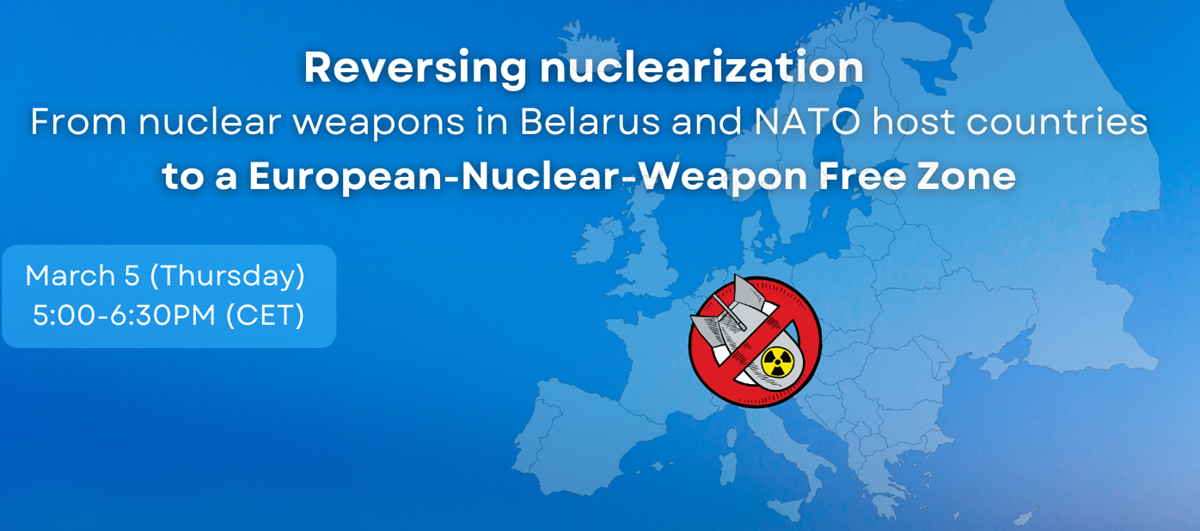
5 March -Online – Reversing nuclearization:
From nuclear weapons in Belarus and NATO host countries to a European-Nuclear-Weapon Free Zone
11am-12:30pm Eastern Time USA / 5pm-6:30pm CET

of the week – Advocating for a
nuclear free beach – https://www.samuellawrencefoundation.org/
The Samuel Lawrence Foundation advocates for a Nuclear Waste Free Beach at San Onofre, join us and take action!

10 March A LIVE WEBINAR THE REAL EFFECTS OF NUCLEAR POWER
What the Industry Isn’t Telling Us
1:00 PM Mountain, 2 pm Central, 3 pm Eastern. Live on the Keepers of the Water Facebook page

18 March Webinar @ 1 PM EST: An Assessment of SMR Projects: The Case of Canada
register for the zoom:
https://us02web.zoom.us/webinar/register/WN_o8BIIOUvQ2ONJR1nta65DQ#/registration

of the week – STOP SMALL MODULAR REACTORS IN CANADA
To see nuclear-related stories in greater depth and intensity – go to https://nuclearinformation.wordpress.com
-
Archives
- March 2026 (51)
- February 2026 (268)
- January 2026 (308)
- December 2025 (358)
- November 2025 (359)
- October 2025 (376)
- September 2025 (258)
- August 2025 (319)
- July 2025 (230)
- June 2025 (348)
- May 2025 (261)
- April 2025 (305)
-
Categories
- 1
- 1 NUCLEAR ISSUES
- business and costs
- climate change
- culture and arts
- ENERGY
- environment
- health
- history
- indigenous issues
- Legal
- marketing of nuclear
- media
- opposition to nuclear
- PERSONAL STORIES
- politics
- politics international
- Religion and ethics
- safety
- secrets,lies and civil liberties
- spinbuster
- technology
- Uranium
- wastes
- weapons and war
- Women
- 2 WORLD
- ACTION
- AFRICA
- Atrocities
- AUSTRALIA
- Christina's notes
- Christina's themes
- culture and arts
- Events
- Fuk 2022
- Fuk 2023
- Fukushima 2017
- Fukushima 2018
- fukushima 2019
- Fukushima 2020
- Fukushima 2021
- general
- global warming
- Humour (God we need it)
- Nuclear
- RARE EARTHS
- Reference
- resources – print
- Resources -audiovicual
- Weekly Newsletter
- World
- World Nuclear
- YouTube
-
RSS
Entries RSS
Comments RSS
 nuclear-news
Leave a comment