Tilman Ruff: the Ban Treaty has fundamentally changed the game — IPPNW peace and health blog

On September 22, IPPNW co-president Tilman Ruff spoke with Jonathan Kolieb of RMIT University in Melbourne as part of the Australian interview series “Better Place.” The elimination of nuclear weapons, Dr. Ruff said, “depends crucially and fundamentally on those states that own them deciding to get rid of them. The current reality, regrettably, is that […]
Tilman Ruff: the Ban Treaty has fundamentally changed the game — IPPNW peace and health blog
Nuclear, climate, news to 28 September
Coronavirus, climate change and weather disasters: 2020 has been a hell of a year, so far. Some world leaders at this week’s annual United Nations meeting are taking the long view, warning: If COVID-19 doesn’t kill us, climate change will.
On the nuclear scene, well, really, nothing much is happening. Except for the propaganda. Covid-19 is making the nuclear industry’s problems even worse, so their marketing propaganda is intensifying. Last week it was all about small nuclear reactors. This week, it’s still that, but as an extra push, it’s all about thorium.
Julian Assange dragged from embassy “on the orders of the president”. Medical experts testify to court on Julian Assange’s precarious mental health. Australia’s media disgrace – the deliberate neglect of the Julian Assange extradition hearing. The media ignores Julian Assange and the Media ‘Trial of Century’.
Some bits of good news – Over 12 million children, caregivers and teachers reached by UNICEF and Millicom (TIGO) to strengthen child rights across Latin America during COVID 19. The Aahwahan Foundation in India works towards the eradication of poverty, while also focussing on maintaining a sustainable environment.
When looking at impact of coronavirus, we can’t forget the long-term health effects.
45 nations have now ratified the U.N. Treaty on the Prohibition of Nuclear Weapons.
Latest World Nuclear Industry Status Report shows high levelised cost of nuclear power. Small Nuclear Reactors look good – on paper!.
Radiation exposure on the moon is nearly three times that on the International Space Station.
Solar and battery ads blocked by Twitter and Facebook move against “political content” . Recharge’s ”must read” news of the week on the energy transition.
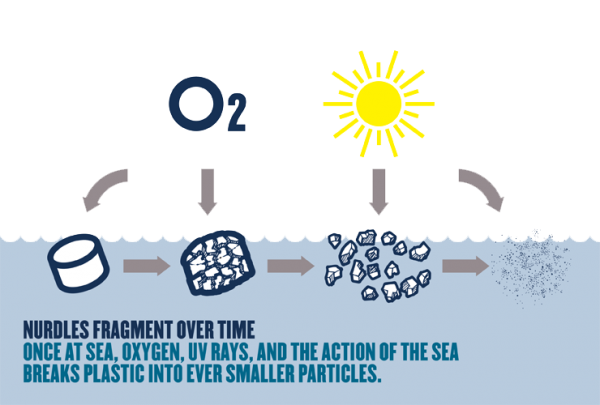
Nurdle alert – plastic pollution the next eco calamity for decades.
ARCTIC. The Arctic Has Entered A New Climate State. Russia’s nuclear-powered ice-breakers lead towards military domination of the Arctic. Arctic pollution is worse than expected – tree rings studies reveal this.
USA.
- After 4 decades of Plowshares Actions, It’s Nuclear Warfare that Should Be on Trial — Not Activists Americans deserve a nuclear-free future. Trump might abandon NEW START arms treaty, U.S. allies fear. USA Government Accountabilty Office calls for assessment of costs for planned new nuclear warheads. Nebraska becomes an even more definite nuclear target, with a new generation of intercontinental ballistic missiles (ICBMs).
- The U.S. media’s resposibility to question Trump and Biden on nuclear arms control and nonproliferation. Northampton shuns business with companies involved in creating nuclear weapons.
- Lawsuit: Ohio Attorney General sues to stop nuclear bailout money, and break up dark money groups. Amid debate over repealing House Bill 6, Energy Harbor still won’t say whether its nuclear plants are profitable.
- Economic distress for Exelon’s 4 nuclear plants in Illinois. Iowa’s last nuclear power station to close – 60 years at least to decommission it. Dirty and devilishly dangerous – the aging Diablo Canyon nuclear station.
- USA.Federal Bill to promote nuclear waste borehole system, and the dubious plan for reprocessing. New Mexico is strongly objecting to licensing of Holtec’s multibillion-dollar nuclear waste dump plan. Transport of nuclear wastes – a Pandora’s Box of problems for North Texans. Will Bears Ears Become the World’s Radioactive Waste Dump
- Compensation for some nuclear workers with mesothelioma .
- Amy Coney Barrett as judge on the USA Supreme Court is not likely to help the environment. Trump Appoints Pair of Climate Science Deniers to National Oceanic and Atmospheric Administration (NOAA) While Climate-Fueled Fires and Storms Rage.
- As fossil fuel jobs falter, renewables come to the rescue.
UK. Britain’s nuclear power dreams melting away – with soaring costs, and political problems. EDF wants cash-strapped UK government to subsidise costly Sizewell nuclear plan. Former UK Energy Minister Sir Ed Davey says new Sizewell nuclear station is too expensive. Suffolk businesses oppose the building of Sizewell nuclear power station.
FRANCE. French taxpayers don’t want to pay for Sizewell nuclear station, neither do British..
CHINA. It’s important to dispel three persistent myths about China’s nuclear weapons.
EUROPE. Bosnia and Herzegovina call for a safer location for Croatia’s nuclear waste dump plan
JAPAN. Japanese government dangles financial carrot to persuade reluctant communities to take nuclear wastess. Japan’s nuclear regulator approves restart of Kashiwazaki-Kariwa plant, but still hurdles to overcome.
Fukushima. The Fukushima Nuclear Disaster Recovery That Wasn’t. 9 1/2 years after meltdowns, no end in sight for Fukushima nuke plant decommissioning. 16-meter seawall planned for Fukushima Daiichi. Lifting Fukushima evacuation orders without decontamination should be limited. Don’t criticize government or TEPCO, guides in Fukushima told. Fukushima criticism for unauthorized use of radiation exposure data-Interim report on Date City.
SOUTH KOREA. S. Korea renews concerns over possible release of tainted Fukushima water.
NORTH KOREA. Satellite imagery shows North Korea’s Yongbyon Nuclear Center is drying off after breaching of oveerflow dam. Reduced water level poses a problem for North Korea’s nuclear reactor, if it’s restarted.
CANADA. David Suzuki on nuclear power as a climate change solution ”I want to puke.” The climate crisis is still a massive threat — even in the middle of a pandemic. Small modular nuclear reactors for Canada? – useless, expensive, untested, and a wasteful distraction. Canada to splurge $billions on non-existent small nuclear reactors, ineffective and no use against climate change.
IRAN. Iran will not renegotiate nuclear deal if Biden wins US presidency, Zarif says.
INDIA. Tsunami risk for nuclear reactors on coastlines of India and Pakistan.
RUSSIA. Russia rejects USA’ s terms for extending the New START arms control treaty. Power hungry Russia foisting nuclear power on Egypt – Africa – where it is not needed. Importing of increased amounts of uranium hexafluoride to Russia – illegal and dangerous.
INDONESIA. Indonesia: strong objections to nuclear and “new” fossil fuel technologies being called ”green” energy.
MARSHALL ISLANDS. Marshall Islands in danger of being overcome by rising sea levels.
UKRAINE. False report of a nuclear disaster in Ukraine.
SAUDI ARABIA. Saudi Arabia may be able to produce its own nuclear fuel – with its uranium reserves.
AUSTRALIA. Dr Helen Caldicott and Independent Australia bust the media spin on ‘small nuclear reactors’.
The Arctic Has Entered A New Climate State


The Arctic Has Entered A New Climate State, Radio Ecoshock 25 Sept 20 Ice is rapidly disappearing from both Poles. Two polar ice experts report latest science. From the U.S. National Center For Atmospheric Research in Colorado, Arctic scientist Laura Landrum: in 2020, the Arctic has reached a new climate state. Thomas Slater from Leeds University UK reports ice loss from glaciers has surpassed the worst case scenarios. Manhattan-size chunks falling away, other ice shelves shatter in unnatural heat and warmed-up seas.
Listen to or download this Radio Ecoshock show ………..
The new water added to the ocean runs away to every country with a sea coast. It runs up estuaries, eats away coastlines, and piles up in every hurricane, high tide and storm. Slater agrees with NASA that in some cases, there is no way to stop these mountains of ice from becoming sea water. This massive change has happened. The tipping point for a grand melting of the world’s second biggest pile of ice, Greenland, was 20 years ago. Like light from the stars, rising seas just take a while to reach us.
Hot in the cold news, this: the Arctic’s largest remaining ice shelf lost a very large chunk of ice, like the volume of mountains, broken away in North Eastern Greenland – floating off into the Atlantic are new melting ice islands twice the size of Manhattan. I won’t try to pronounce the complicated Nordic name. Scientists also call it “79N”. According to satellite images, a portion of the shelf about 110 square kilometers – that’s 42 square miles of thick glacier – just shattered. It fell apart this summer.
This follows absolute record hot summers in the Arctic in 2019 and 2020, on top of the whole region warming around 3 degrees C since 1980. The far north has already gone past 3 degrees C of warming, way beyond the supposed safe line of 1.5 or even 2 degrees C. demanded by the Intergovernmental Panel on Climate Change, and agreed by most governments under the Paris Accord of 2015. The Arctic is already soaring into dangerous warming, and the ice is responding at rates older scientists would never have believed possible. ………….
the change in sea ice cover is, Dr. Laura Landrum, scientist NCAR says, the single largest driver of big climate changes not just in the Arctic, but around the world. Of course our emissions are forcing that change in sea ice cover, by warming not just the atmosphere, but the seas as well.
Now in the Arctic, the traditional expectations for the seasons no longer work. Aboriginal people can no longer hunt at the same times, and animals are confused or spending energy adapting as they can. Plant life will shift. So will insects.
Plus: changes in the Arctic will alter teleconnections to cycles, weather and variability further south. The “new Arctic climate” does not stay in the Arctic. Already we have observations, from Jennifer Francis at Rutgers, that reduction of Arctic sea ice and dramatic changes to the behavior of the Jet Stream further south may be linked. Dr. Landrum agrees. Another scientist on Radio Ecoshock, Dr. Ivana Cvijanovic found evidence of a teleconnection between changes in the Arctic and rainfall in California. …….
There is no going back to the old Arctic. Summer sea ice will not return to levels seen in the 1950’s, when a crossing of the Northwest passage was a major newsworthy expedition requiring ice-breakers. Now individuals in yachts travel across the Canadian Arctic by themselves, while tankers and freighters move in the Arctic Ocean above Siberia, significantly shortening the route from China to Europe. From shipping to hope for more oil and gas, big business is betting the new Arctic climate is here to stay.
Will the growing season in the Tundra, formerly about 60 days, get longer? Could the Boreal forests begin to extend into the Arctic? In Siberia, Northwest Canada, and Alaska the treeline extends into the Arctic Circle, (about 66 degrees North). Also, if winters get shorter, that could mean an increase in Arctic wildfires. Even “more” rain does not necessarily mean more rain in the fire season. Rain may not stop wildfires, especially as Mike Flannigan told us that thin northern soils can dry out and be ready to burn just 3 sunny days after a rainfall. ……
THOMAS SLATER – GLACIER MELT HIGHER THAN WORST CASE SCENARIO, Dr. Thomas Slater, University of Leeds We are trying to look forward in time, to see what the force of rising seas will do. For me, one of the clearest examples comes with higher storm surges, like the dramatic flooding of lower Manhattan during Hurricane Sandy in October of 2012. Are we already at a point where Polar ice loss is bringing more intense disasters?
Discussing an article in Nature published August 13, Grace Palmer in scitechdaily quotes scientist Marco Tedesco saying the percentage contribution of Greenland to sea level rise could increase from 20 to 25 percent now, to 30 or 40 percent by the end of the century.
We begin our state-of-the-glaciers talk with the sad example of the Okjökull Glacier (simple known as Ok) in Iceland. It is the first world glacier declared “dead” due to climate change. On that site is a plaque reading:
A letter to the future
Ok is the first Icelandic glacier to lose its status as a glacier.
In the next 200 years all our glaciers are expected to follow the same path.
This monument is to acknowledge that we know
what is happening and what needs to be done.
Only you know if we did it.
……….. , our climate situation is even worse than the best scientists thought. NASA has a mas balance graphic showing Greenland Ice Loss 2002-2016. That graphic reveals a steady staircase down in the balance of Greenland ice.
THE BIG TWO ON SEA LEVEL RISEWhen it comes to sea level rise, two key points:
1. more sea level rise is now coming from glacial meltwater than thermal expansion of warming seas
2. about 60% of that added sea level is coming from Greenland – more than from Antarctica……. https://www.ecoshock.org/2020/09/the-arctic-has-entered-a-new-climate-state.html
Dr Helen Caldicott busts the media spin on ‘small nuclear reactors’
HELEN CALDICOTT: Small modular reactors — the next big thing?
 https://independentaustralia.net/environment/environment-display/helen-caldicott-small-modular-reactors–the-next-big-thing,14342#disqus_thread By Helen Caldicott | 27 September 2020 Politicians debating nuclear power as an energy source, know little of the facts that make small modular reactors a bad idea, writes Dr Caldicott. AUSTRALIAN politicians are contemplating developing nuclear power for this country. In their ignorance, they are mooting “small modular reactors” (SMRs) about which they clearly know little.
The so-called “nuclear renaissance” died following the Fukushima catastrophe when one-sixth of the world’s nuclear reactors closed. However, global nuclear corporations – Toshiba, NuScale, Babcock & Wilcox, GE Hitachi, General Atomics and the Tennessee Valley Authority – did not accept defeat.
Their new strategy has been to develop small modular nuclear reactors without the dangers inherent in large reactors — safety, cost, proliferation risks and radioactive waste. But these claims are fallacious for the reasons outlined below.
Basically, there are three types of SMRs which generate less than 300 megawatts of electricity compared with current day 1000 megawatt reactors.
Light water reactors designs
These will be smaller versions of present-day pressurized water reactors using water as the moderator and coolant, but with the same attendant problems as Fukushima and Three Mile Island. Built underground, they will be difficult to access in the event of an accident or malfunction.
Mass-produced (turnkey production) large numbers must be sold yearly to make a profit. This is an unlikely prospect because major markets – China and India – will not buy U.S. reactors when they can make their own.
If safety problems arise – as in General Motors cars – they all must be shut down which will interfere substantially with electricity supply.
SMRs will be expensive because the cost per unit capacity increases with a decrease in reactor size. Billions of dollars of government subsidies will be required because Wall Street is allergic to nuclear power. To alleviate costs, it is suggested that safety rules be relaxed, including reducing security requirements and a reduction in the 10-mile emergency planning zone to 1,000 feet.
Non-light water designs
These are high-temperature gas-cooled reactors (HTGR) or pebble bed reactors. Five billion tiny fuel kernels consisting of high-enriched uranium or plutonium will be encased in tennis-ball-sized graphite spheres which must be made without cracks or imperfections — or they could lead to an accident. A total of 450,000 such spheres will slowly and continuously be released from a fuel silo – passing through the reactor core – and then be re-circulated ten times. These reactors will be cooled by helium gas operating at very high temperatures (900 degrees Celsius).
A reactor complex consisting of four HTGR modules will be located underground, to be run by just two operators in a central control room. Claims are that HTGRs will be so safe that a containment building will be unnecessary and operators can even leave the site – “walk away safe” reactors.
However, should temperatures unexpectedly exceed 1,600 degrees Celsius, the carbon coating will release dangerous radioactive isotopes into the helium gas and at 2,000 degrees Celsius the carbon would ignite creating a fierce graphite Chernobyl-type fire.
If a crack develops in the piping or building, radioactive helium would escape and air would rush in, also igniting the graphite.
Although HTGRs produce small amounts of low-level waste they create larger volumes of high-level waste than conventional reactors.
Despite these obvious safety problems and despite the fact that South Africa has abandoned plans for HTGRs, the U.S. Department of Energy has unwisely chosen the HTGR as the “Next Generation Nuclear Plant”.
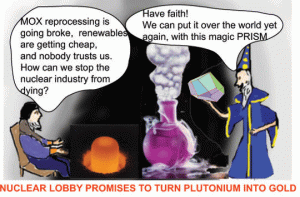 Liquid metal fast reactors (PRISM)
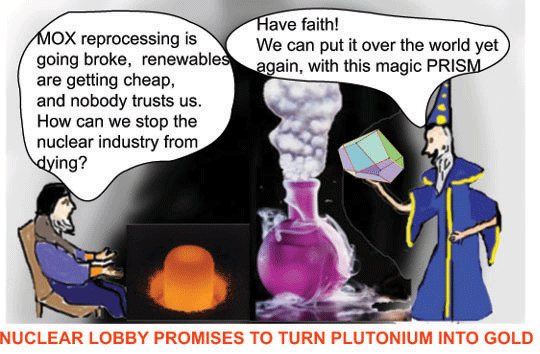
It is claimed by proponents that fast reactors will be safe, economically competitive, proliferation-resistant and sustainable.
They will be fueled by plutonium or highly enriched uranium and cooled by either liquid sodium or a lead-bismuth molten coolant. Liquid sodium burns or explodes when exposed to air or water and lead-bismuth is extremely corrosive producing very volatile radioactive elements when irradiated.
Should a crack occur in the reactor complex, liquid sodium would escape, burning or exploding. Without coolant, the plutonium fuel could reach critical mass, triggering a massive nuclear explosion scattering plutonium to the four winds. One-millionth of a gram of plutonium induces cancer and it lasts for 500,000 years. Extraordinarily, claims are made that fast reactors will be so safe they will require no emergency sirens and emergency planning zones can be decreased from ten miles to 1,300 feet.
There are two types of fast reactors: a simple plutonium fueled reactor and a “breeder” in which the plutonium reactor core is surrounded by a blanket of uranium 238 which captures neutrons and converts to plutonium.
The plutonium fuel, obtained from spent reactor fuel will be fissioned and converted to shorter-lived isotopes — caesium and strontium which last 600 years instead of 500,000. Called “transmutation”, the industry claims that this is an excellent way to get rid of plutonium waste. But this is fallacious because only ten per cent fissions, leaving 90 per cent of the plutonium for bomb-making etc.
Three small plutonium fast reactors will be grouped together to form a module and three of these modules will be buried underground. All nine reactors will then be connected to a fully automated central control room operated by only three operators. Potentially then, one operator could simultaneously face a catastrophic situation triggered by the loss of off-site power to one unit at full power, in another shut down for refuelling and in one in start-up mode. There are to be no emergency core cooling systems.
Fast reactors require a massive infrastructure including a reprocessing plant to dissolve radioactive waste fuel rods in nitric acid, chemically removing the plutonium and a fuel fabrication facility to create new fuel rods. A total of 10,160 kilos of plutonium is required to operate a fuel cycle at a fast reactor and just 2.5 kilos is fuel for a nuclear weapon.
Thus fast reactors and breeders will provide extraordinary long-term medical dangers and the perfect situation for nuclear weapons proliferation. Despite this, the industry is clearly trying to market them to many countries including, it seems, Australia.
You can follow Dr Caldicott on Twitter @DrHCaldicott. Click here for Dr Caldicott’s complete curriculum vitae.
After 4 decades of Plowshares Actions, It’s Nuclear Warfare that Should Be on Trial — Not Activists
 Most of the Kings Bay Plowshares still await sentencing. Mom was sentenced to time served by video conference in June — a surreal and dislocating experience that is now more and more common in our criminal justice system. Her co-defendants opted to postpone sentencing in hopes that it could be in person, but it is unclear if that will happen.
After 4 decades of Plowshares Actions, It’s Nuclear Warfare that Should Be on Trial — Not Activists, Forty years ago, the Plowshares Eight sparked a movement of nuclear disarmers that continues to take responsibility for weapons of mass destruction.
Before him were eight activists, including two priests and a nun. As Judge Salus tried to preside over the government’s prosecution of them for their trespass onto — and destruction of — private property, the eight were trying to put nuclear warfare, nuclear weapons, nuclear policy and U.S. exceptionalism on trial.
That was 40 years ago this week — ancient history by some measures. And no one reading this will be surprised to find that the eight were found guilty and the human family is still threatened by almost 15,000 nuclear warheads. So, four decades later, why isn’t nuclear warfare on trial?
They are the crime responsible for the deaths of hundreds of thousands of Japanese civilians 75 years ago. They have littered the landscape with radioactive waste. They have cost the United States more than $5 trillion from the public coffers. They are the apocalyptic nightmare on hair-trigger alert that haunt our children’s dreams.
On September 9, 1980, my father, Philip Berrigan, along with his brother Daniel, John Schuchardt, Dean Hammer, Elmer Maas, Molly Rush, Sister Anne Montgomery, and Father Carl Kabat, gained entry into the General Electric plant in King of Prussia, Pennsylvania. Once inside the complex, they poured blood over two nuclear weapons’ nose cones, and used household hammers to dent the metal. They came to be known as The Plowshares Eight. Continue reading
Nurdle alert – plastic pollution the next eco calamity for decades

|
Our plastic planet https://www.ehn.org/our-plastic-planet-2647824733.html?rebelltitem=1#rebelltitem1 While climate change remains environmental issue #1, the worries over plastic in our water, soil, food, and bodies continue to grow. Peter Dykstra 28 Sept 20, ”………
It’s hard to ignore the looming mountain of plastics problems. Plastic pollution has been hiding in plain sight as the next eco-calamity for decades. With climate change teed up as the major global environmental challenge, let’s take stock of another modern crisis. Nurdle alert! My first encounter with nurdles was on what should have been a pristine Costa Rican beach in 1986. The lentil-sized, grayish pellets spread the sands for miles, along with a stunning number of shoes. I never figured out the source of the shoe spill, but nurdles eventually became a headline-maker in the oceans world. Nurdles are the feedstock for much of the world’s production of plastics products. If plastic things were pancakes, nurdles would be the batter. They’re spilled from trucks, boxcars, and in the case of the Costa Rican beach, apparently a container ship. There are no firm statistics on how many spills there have been, or how many hundred of billions of virtually indestructible nurdles litter our beaches and seafloors. One example: in 2017, 600 volunteers scoured 279 U.K. beaches, reporting that two-thirds of them were “littered” with nurdles. We do know that nurdle pollution is the tip of the plastic pollution sh*tberg. Let’s talk recycling. For years, much of what we think of as recycled plastic was collected in communities and eventually shipped to Asia. In 2018, the People’s Republic of China formally announced that they’d officially had it. Imports of recyclable plastic had choked China’s landfills beyond reason. Early, rudimentary successes with recycled goods had run their course. But we reached Peak Flip-Flop, and China’s National Sword initiative slammed the door, barring plastic waste imports from the U.S. and about two dozen industrialized nations. Most of our plastic goes to the landfill. In 1960 the U.S. sent roughly 390 tons of plastic waste to landfills, according to the U.S. Environmental Protection Agency. In 2017, the most recent year there is data for, that number shot to 26,820 tons, which is about nine times more than was recycled. Yikes. Part of this is driven by the market to make plastics: the U.S. fracking boom caused an abundance of cheap natural gas and oil. By mid-2019, it was cheaper to make new plastic than it was to recycle the old stuff. Here are some other quick facts to put a damper on your day:
We know the problem has been building for years, and the paths to solutions are often blocked by the fossil fuel industry, which sees salvation in plastics production as its other marquee products fade. While we all rightly call for leaders to address, and in some cases just acknowledge, the climate crisis, let’s also remember to skip the straws and question those that keep |
|
Arctic pollution is worse than expected – tree rings studies reveal this
 Tree rings show scale of Arctic pollution is worse than previously thought, EUREKALERT, UNIVERSITY OF CAMBRIDGE, Research News 28 Sept 20, The largest-ever study of tree rings from Norilsk in the Russian Arctic has shown that the direct and indirect effects of industrial pollution in the region and beyond are far worse than previously thought.An international team of researchers, led by the University of Cambridge, has combined ring width and wood chemistry measurements from living and dead trees with soil characteristics and computer modelling to show that the damage done by decades of nickel and copper mining has not only devastated local environments, but also affected the global carbon cycle. Tree rings show scale of Arctic pollution is worse than previously thought, EUREKALERT, UNIVERSITY OF CAMBRIDGE, Research News 28 Sept 20, The largest-ever study of tree rings from Norilsk in the Russian Arctic has shown that the direct and indirect effects of industrial pollution in the region and beyond are far worse than previously thought.An international team of researchers, led by the University of Cambridge, has combined ring width and wood chemistry measurements from living and dead trees with soil characteristics and computer modelling to show that the damage done by decades of nickel and copper mining has not only devastated local environments, but also affected the global carbon cycle.
The extent of damage done to the boreal forest, the largest land biome on Earth, can be seen in the annual growth rings of trees near Norilsk where die off has spread up to 100 kilometres. The results are reported in the journal Ecology Letters. Norilsk, in northern Siberia, is the world’s northernmost city with more than 100,000 people, and one of the most polluted places on Earth. Since the 1930s, intensive mining of the area’s massive nickel, copper and palladium deposits, combined with few environmental regulations, has led to severe pollution levels. A massive oil spill in May 2020 has added to the extreme level of environmental damage in the area. Not only are the high level of airborne emissions from the Norilsk industrial complex responsible for the direct destruction of around 24,000 square kilometres of boreal forest since the 1960s, surviving trees across much of the high-northern latitudes are suffering as well. The high pollution levels cause declining tree growth, which in turn have an effect of the amount of carbon that can be sequestered in the boreal forest……. The researchers used a process-based forward model of boreal tree growth, with and without surface irradiance forcing as a proxy for pollutants, to show that Arctic dimming since the 1970s has substantially reduced tree growth. Arctic dimming is a phenomenon caused by increased particulates in the Earth’s atmosphere, whether from pollution, dust or volcanic eruptions. The phenomenon partially blocks out sunlight, slowing the process of evaporation and interfering with the hydrological cycle. Global warming should be expected to increase the rate of boreal tree growth, but the researchers found that as the pollution levels peaked, the rate of tree growth in northern Siberia slowed. They found that the pollution levels in the atmosphere diminished the trees’ ability to turn sunlight into energy through photosynthesis, and so they were not able to grow as quickly or as strong as they would in areas with lower pollution levels. “What surprised us is just how widespread the effects of industrial pollution are – the scale of the damage shows just how vulnerable and sensitive the boreal forest is,” said Büntgen. “Given the ecological importance of this biome, the pollution levels across the high-northern latitudes could have an enormous impact on the entire global carbon cycle.” https://www.eurekalert.org/pub_releases/2020-09/uoc-trs092420.php |
|
Nebraska becomes an even more definite nuclear target, with a new generation of intercontinental ballistic missiles (ICBMs)
 New generation of ICBMs means Nebraska will continue to be ‘nuclear sponge,’ warn nuke skeptics, Omaha World Herald, Steve Liewer-25 Sept 20,
 In the unhappy event that the world’s nuclear powers cut loose with their atomic weapons, Nebraska would become an especially hellish place.
That’s because the Cornhusker State is one of a handful in the West and Midwest whose role in Armageddon is to soak up an unfathomable first strike of Russian bombs.
Under the weird logic of mutually assured destruction, the 450 Minuteman III missile silos containing 400 nuclear-tipped intercontinental ballistic missiles in Montana, North Dakota, Wyoming, Colorado and western Nebraska are meant to be sitting ducks for any first strike by Russia, or any other potential adversary.
“The specific mission of the ICBMs is to be a nuclear sponge,” said Tom Z. Collina, director of policy for the Ploughshares Fund, a group dedicated to eliminating nuclear weapons. “They’re sitting in their silos. Their only purpose is to be a target.”
In addition, the New START arms control agreement, signed by the U.S. and Russia in 2010, expires in February. Negotiations to extend the agreement started late and have not gone far, leading to fears of a renewed nuclear arms race.
The modernization of the nuclear arsenal includes construction of the new Columbia-class ballistic missile submarines (replacing the Ohio-class boats), B-21 strategic bombers (replacing the B-1, B-2 and some B-52s), and the new “ground-based strategic deterrent (GBSD),” an ICBM to replace the Minuteman III.
Cost estimates exceed $300 billion. In Congress, the modernization has wide support in both political parties. Just this month, the Pentagon awarded defense contractor Northrop Grumman $13.3 billion to start work on the GBSD, a down payment on a $100 billion project.
The silos are underground and heavily reinforced — sturdy, but not invulnerable to a nuclear strike. They’re spaced far enough apart that it would take an enormous number of bombs to wipe them out.
“I’ve always wondered why the Midwest states don’t raise more of a ruckus,” Collina said. “You’re the states that have a target on your back.”
He and others have raised the possibility of scrapping the ICBM leg of the nuclear triad and doing away with the “nuclear sponge.”
Of course, the basic idea of nuclear deterrence is that the missiles’ presence means that they will never be used.
“ICBMs would only be used in world-ending situations,” said Matt Korda, a researcher with the Federation of American Scientists’ Nuclear Information Project. “If they don’t have any purpose in post-Cold War nuclear strategy, then what is the cost of keeping them?”…………………
Collina and others say the ICBMs have outlived their usefulness. The nuclear sponge, they say, is too dangerous and expensive to maintain. The air- and sea-based legs of the triad offer more than enough firepower to destroy any enemy that would dare to attack the U.S.
He and Korda fear an accidental nuclear war because of the speed with which a president must launch the missiles if sensors detect an incoming strike.
“The president would have only a couple of minutes to decide before they are destroyed,” Korda said. “The risk of miscalculation is very high.”
“The point of deterrence is if you attack us, we will devastate your country,” Collina said. “That invites the nightmare: that we might start a nuclear war by mistake.”
There were several close calls during the Cold War. But Yeaw said StratCom’s network of sensors — in the air, on land, at sea, even in outer space — is so vast and so much better now that an incoming attack would be unmistakable………….. https://omaha.com/news/state-and-regional/new-generation-of-icbms-means-nebraska-will-continue-to-be-nuclear-sponge-warn-nuke-skeptics/article_2f8f686b-05a5-5411-86f3-cad7de1a44e0.html
Wind and solar power, energy efficiency – THAT’s where the jobs are!

As fossil fuel jobs falter, renewables come to the rescue, BY JEFF BERARDELLI CBS News, SEPTEMBER 25, 2020 “…………. Professor Jay Johnson runs the Wind Energy Technician Program at Lake Region State College in eastern North Dakota, and recently he’s seen a big increase in demand. “Wind energy development has been on a tear the last few years as wind turbines have become unbelievably efficient,” he said.
According to Logan Goldie-Scot, the head of clean power research at Bloomberg New Energy Finance (BNEF), combined solar and wind power capacity has quadrupled since 2010. And in that time, installed wind capacity has increased by 260%, from 41 gigawatts to 106. BNEF expects another 60 gigawatts of wind power to be added in just the next five years.
“The amount of money being invested in wind is staggering, and people don’t realize it, but there is a 100% renewable revolution going on right underneath our feet,” says Johnson, “This all means the cost of wind-generated electricity to homeowners and businesses is the low-cost solution.”
Prices of renewable energy have indeed fallen dramatically. According to BNEF, the cost of generating power from solar photovoltaic (PV) modules has fallen by 90% since 2010, and the price of wind power has been cut in half. In fact, the prices of onshore wind and solar are now even with gas and cheaper than coal and nuclear.
Professor Jeffrey Sachs, a world-renowned economist and sustainable development expert at Columbia University, says clean energy now has several advantages over traditional fuels.
“Renewable energy now is at what is called grid parity. That means it is no more expensive to put up a solar field than it is to put up a coal plant,” explains Sachs. “The only difference is the coal plant will pollute the air, kill the people nearby and create incredible climate damage, while the solar will enable clean air and a safe and stable environment and actually put a lot more people to work.”
Recent figures show renewable energy employs about 850,000 people in the U.S. (not including some 2.3 million jobs in energy efficiency), as compared to a little more than 1 million in traditional oil, gas and coal. But most of the future job growth is projected to come from clean energy sources.
In fact, the fastest growing occupation in the U.S., according to the U.S. Bureau of Labor Statistics, is wind turbine service technician, with a median salary of about $53,000 per year. In total, the wind industry employs 120,000 U.S. workers. Solar installer is the third fastest growing occupation on the list, with a median salary of nearly $45,000.
The growth in renewable energy jobs can be explained by the fact that it is a newer, expanding industry and requires more workers per unit of energy than fossil fuels. Research shows that job creation is inherent in the transition required to combat climate change. “Such episodes of ‘creative destruction’ are often associated with innovation, job creation and growth,” as one study put it. A report by the UK Energy Research Centre concluded that for the same amount of energy produced, renewables required two to five times as many workers as compared to fossil fuels.
A poll released this week by Climate Nexus, conducted by Yale and George Mason University, finds that a large majority of registered voters in the U.S. believe combating climate change would be good for the economy. About 7 in 10 people surveyed expressed the view that government action on climate change would bolster renewable energy, create jobs and help the economy. Only about one-third thought government action on climate would impose burdensome regulations, weakening the economy and job creation.
CBS News asked Goldie-Scot how much the outcome of the 2020 presidential election would matter for the future of renewables. He says that while the industry would undoubtedly benefit more from a Democratic administration due to Joe Biden’s pledge to invest $2 trillion in clean energy and related infrastructure, “the fundamental advantages of renewables will persist despite politics. Renewables are the lowest [cost] form of generation in much of the country and renewables are popular in a number of Republican, and windy, states.”
As just one example, the typically red state of Texas is the clear leader in wind energy, generating three times as much as its nearest competitor. Sachs agrees that Republican-leaning states have the most to gain from the surge in renewables. “They could be the leaders in building the new green economy,” he said. “This is exactly a heartland issue for the United States.”
And back in the heartland, as Johnson sees more and more trainees walking through his door, he says the renewable revolution is well underway. “That’s where the jobs are, that’s where the wind energy is. It’s just free money flying across the sky.” https://www.cbsnews.com/news/renewable-energy-jobs-replacing-fossil-fuel-jobs-oil-wind/?fbclid=IwAR1aPeyOQTnh5UlpQKkRvonfkMOxT4cFwLn7uYMO-T1ckd-ldGCkOGlNNeU
Amy Coney Barrett as judge on the USA Supreme Court is not likely to help the environment
 SUPREME COURT. Could Barrett ‘shut the courthouse doors’ on enviros? Pamela King, E&E News reporter, September 26, 2020 President Trump today selected Amy Coney Barrett to fill the seat of the late Justice Ruth Bader Ginsburg on the nation’s highest bench.
If confirmed, Barrett, 48, will become the Supreme Court’s sixth Republican-appointed justice, replacing one of the court’s most liberal members and deepening a conservative majority on the bench that could affect the outcome of environmental litigation for decades.
“The courts in general and the Supreme Court in particular are not going to be much help on confronting the major environmental challenges we face,” Vermont Law School professor Pat Parenteau wrote in an email.
Barrett accepted the nomination at the White House this afternoon, highlighting Ginsburg’s achievements on the high court.
“She not only broke glass ceilings,” Barrett said of Ginsburg. “She smashed them.”
Barrett’s record on environmental and energy issues is largely undeveloped, but several environmental groups voiced concern about Barrett’s narrow view of public interest groups’ power to sue in opinions she wrote as a judge for the 7th U.S. Circuit Court of Appeals, where she has served since 2017.
In a ruling this summer, Barrett blocked an effort by a park preservation group and Chicago residents to stop construction of the Obama Presidential Center in the city’s Jackson Park.
The challengers’ lack of standing “pulls the rug out from under their arguments,” Barrett wrote.
She also signed on to a 2018 decision that asked the Army Corps of Engineers to revisit its decision that placed 13 acres of Illinois wetlands off-limits to a housing developer.
“Her slim judicial record shows that she’s hostile to the environment and will slam shut the courthouse doors to public interest advocates, to the delight of corporate polluters,” Brett Hartl, government affairs director at the Center for Biological Diversity, said in a statement yesterday.
Ginsburg, on the other hand, penned the Supreme Court’s opinion in the oft-cited 2000 case Friends of the Earth v. Laidlaw Environmental Services, which took a broad view of environmentalists’ standing to bring lawsuits (Greenwire, Sept. 19).
If Barrett is confirmed, the bench’s three remaining liberal justices — Stephen Breyer, Elena Kagan and Sonia Sotomayor — will need the support of their conservative colleagues to grant any petition, potentially making it much more difficult for environmental groups to challenge Trump administration rules at the high court. The court requires that four justices agree to take up a case and accepts fewer than 1% of cases.
Chief Justice John Roberts has become known for siding with the liberal justices in decisions with impact for environmental rulemaking, but his power as a swing voter would be diluted if a sixth conservative justice were added to the bench. Observers have pointed to Trump’s two other appointees — Justices Neil Gorsuch and Brett Kavanaugh — as the court’s new potential center.
“I would expect that it will be tougher for EPA to act as aggressively with an Amy Coney Barrett on the Supreme Court than it was with a Ruth Bader Ginsburg,” said Tom Lorenzen, head of the environment and natural resources practice at Crowell & Moring LLP…….https://www.eenews.net/stories/1063714781
When looking at impact of coronavirus, we can’t forget the long-term health effects
 the emergence of symptoms down the track is a reminder of why it’s important to take precautions
ABC Health & Wellbeing, By health reporter Olivia Willis-28 Sept 20, It can be tempting to think of COVID-19 patients as falling into one of two categories.
Category 1: young, otherwise healthy individuals who experience mild symptoms and recover at home.
Category 2: older people and people with pre-existing health conditions who become seriously ill and go to hospital.
While it’s true that there is a spectrum of risk when it comes to severity of disease, it’s become increasingly clear that not everyone fits neatly into one of these categories.
For many people, the labels of “mild” or “severe”, “sick” or “recovered” are blurred by their experience of ongoing, sometimes debilitating symptoms weeks or months after they first were infected.
Both anecdotal reports and a growing body of research suggest persistent fatigue, breathlessness, “brain fog” and muscle aches, among other symptoms, are plaguing people some time after their infection has cleared.
So what do we know about the lingering health effects of coronavirus, and how concerned should we be?
Health effects can linger for months
It is difficult to say what proportion of people with COVID-19 face medium- to long-term health impacts given how new the virus still is, said Kirsty Short, a virologist at the University of Queensland.
“It’s definitely happening, I just don’t think we have a grip on how common it is,” Dr Short said.
In July, researchers in Italy found almost 90 per cent of patients with acute infections were still experiencing symptoms two months later.
Research from the US and UK, following a much broader group of people affected by COVID-19, suggests symptoms persist in about 10 to 15 per cent of cases.
In the same way the virus can sometimes cause serious illness in young, otherwise healthy individuals, lingering symptoms appear to affect people of all ages, including those with no underlying health conditions.
Lasting effects are also not restricted to those who experience severe illness when they’re first infected.
People who are asymptomatic or have a mild case of COVID-19 can also face prolonged illness. Sometimes, these symptoms take weeks or months to appear.
The virus affects multiple organs
SARS-CoV-2 is primarily thought of as a respiratory virus, but the damage caused by COVID-19 is not always restricted to the lungs.
The virus binds to the body’s ACE2 receptors, which are found in large numbers in the respiratory tract, but also in the heart, blood vessels, kidneys, liver and gastrointestinal tract.
In some cases, it may be that the virus itself is causing damage to the body’s organs.
But researchers suspect it’s high levels of inflammation in the body — triggered by the immune system trying to get rid of the virus — that’s wreaking havoc, even after the infection has cleared.
“Most likely, they’ve had this overwhelming inflammatory response — which we know happens in COVID-19 patients — and then that’s had knock-on effects.”
COVID-19 can damage multiple organ systems, including:
- Lungs: Lungs can be damaged when the virus enters the cells of the airways. It can cause scarred, stiff tissue that makes it difficult for the lungs to do their job of oxygenating the blood — leaving people breathless.
- Heart: The virus can cause inflammation of the heart muscle or heart failure when the organ doesn’t pump blood as well as it should. The heart can also fail from lack of oxygen.
- Brain: If the virus enters the brain, it can cause a sudden and severe infection. Neurological symptoms may also be a result of inflammation in the brain or strokes caused by blood clots……………..
A timely reminder
There are multiple studies now underway to investigate whether COVID-19 leaves a lasting health impact, and if so, to what extent.
Dr Short said without long-term studies, it’s difficult to know how concerned we should be about COVID-19 in contrast to other existing viral infections.
“The question is: If you took a virus of similar severity and similar duration, would you also see long-term complications?” she said.
“It’s very possible that we’re just seeing this with SARS-COV-2 because of the sheer numbers of people being infected.”
Even still, the emergence of symptoms down the track is a reminder of why it’s important to take precautions………. https://www.abc.net.au/news/health/2020-09-26/coronavirus-covid-health-effects-can-linger/12705022
Americans deserve a nuclear-free future
Americans deserve a nuclear-free future, https://www.heraldnews.com/opinion/20200923/opinion-americans-deserve-nuclear-free-future Maryellen Kurkulos, 23 Sept 20, This Saturday, Sept. 26, marks the United Nations’ International Day for Total Elimination of Nuclear Weapons. This year’s commemoration is of particular importance given the precarious states of our economy, public health, environment and democracy.
Conditions in our country were dire even before the pandemic with 40% of Americans living from paycheck to paycheck. Homelessness, food and housing insecurity as well as deteriorating living standards for much of the middle class had become the norm. Now we are contending with a soaring COVID-19 death-toll, Depression-era unemployment, and millions teetering on the brink of eviction.
Yet there are serious problems that loom even larger. People are finally acknowledging the ominous reality of a rapidly warming planet. In recent weeks “apocalyptic” fires along the West coast and extreme flooding in the South, both directly linked to global warming, have decimated entire towns and displaced hundreds of thousands.
But Americans must also confront the threat presented by nuclear weapons that could be launched accidentally or on purpose. Unless mitigated, irreversible damage to human civilization and our ecosystem from global warming will take decades; a nuclear war could wipe out everything that sustains life on Earth in an instant.
Until recently, a global architecture of nuclear treaties provided a measure of security from that happening, although too many accidents and close calls still happened. But President Donald Trump has demolished these treaties and agreements, undoing decades of painstaking work. His provocations against China and Russia, both nuclear powers, have stoked a new arms race. He has already deployed one of the new, more easily used “low-yield” atomic warheads and is committed to a needless $2 trillion, 30-year nuclear weapons modernization program.
Consequently each year President Trump has been in office experts at the Bulletin of the Atomic Scientists have moved the hands of the iconic Doomsday clock closer to midnight. Last January, they set the second hand at 100 seconds – closer than ever before – indicating the alarmingly heightened risk of a nuclear launch.
Even without a Trump second-term, reconstructing these treaties and repairing our damaged international relationships will be a formidable feat. Yet, there is hope for progress if Americans confront and correct the warped priorities in our federal budget. For two decades, Congress has been allocating over half of those funds – our tax dollars – to the Pentagon at the expense of many programs that include healthcare, housing and education. In 2018, over $22 billion went to nuclear weapons programs alone. The amount paid by Fall River taxpayers was $2.26 million, enough money to provide COVID-19 testing for most of the city or to hire 22 additional public school teachers that we now need for the smaller classes required in this era of social distancing.
Forty years ago during the Cold War between the U.S. and the Soviet Union a global movement of millions successfully pressured the leaders of the two nuclear superpowers to meet and negotiate a nuclear freeze. Today, movements led by young people and people of color all across the U.S. are rising up demanding racial, economic and environmental justice. They might be in the streets, but they also are organizing in their communities, lobbying elected officials and working to elect candidates at all levels of government who will deliver the transformative change our collective future is dependent on. Americans absolutely deserve quality healthcare, stable, affordable housing, debt-free education, and good-paying jobs. Above all we deserve a safe, sustainable and nuclear-free future.
Reduced water level poses a problem for North Korea’s nuclear reactor, if it’s restarted
|
Reservoir dam near N. Korea’s nuclear complex breached: think tank https://en.yna.co.kr/view/AEN20200926002900320
September 26, 2020 SEOUL, Sept. 26 (Yonhap) — A reservoir dam near North Korea’s Yongbyon nuclear complex has been breached, a U.S. think tank has said, citing recent satellite imagery.
The reduced water level has left the two pump houses servicing the reactors “high and dry,” with the water level above the dam down significantly and the intake cisterns exposed, said 38 North, which specializes in North Korea. “The inability to maintain a stable reservoir level … poses a potential problem for continuous reactor operations” if the 5-megawatt nuclear reactor is restarted or the Experimental Light Water Reactor is brought online, 38 North said, citing satellite imagery of Yongbyon complex on Sept. 21. The complex is home to the 5-megawatt nuclear reactor that was the source of weapons-grade plutonium for North Korea. Pyongyang can harvest one nuclear bomb worth of plutonium by reprocessing spent fuel rods from the reactor. The U.S. website said there are no observable indications that the 5-megawatt nuclear reactor is operating or that the Experimental Light Water Reactor has been started. |
|
A Sellafield nuclear disaster would spread across Cumbria – new map shows
|
Sellafield nuclear disaster would spread across Cumbria – new map shows, The Mail, By Staff Reporter 27 Sept 20, THE majority of south Cumbria could be affected if there was a major nuclear incident at Sellafield, a new report has revealed…….
Part of the new strategy means Outline Planning Zone’s must be put in place. These are areas outside of the immediate vacinity which could be affected by a disaster. A report from Steve Healey, the chief fire officer for Cumbria, revealed the affected area covers a 50-kilometre circular zone from an epicentre at Sellafield. The area includes as far south as Walney, east as Bowness and north almost to the Scottish border. Cumbria County Council has accepted the report at a meeting of the cabinet, which was chaired by Cllr Stewart Young….. This new concept of an Outlying Planning Zone is new. The zone is determined by kilometres from the centre of the Sellafield site. It takes you way beyond the boundaries of Copeland, showing that other areas of Cumbria would also be affected by a serious incident. “It includes BAE and the docks at Barrow. So, the implications of an accident are so significant for the whole county. It is a responsibility that sits then with Cumbria County Council as well as Barrow, Copeland and Allerdale. This is an important piece of work.” The new regulations allow for a transitional period of 12 months and all changes required to have been made by this May. The authority was on track to meet the deadlines until resources were diverted to respond to Covid-19. A plan has been agreed with the Office for Nuclear Regulation allowing the council to prepare the plans before November 21 this year. The report said Sellafield’s OPZ was the largest in the United Kingdom and whilst only outline planning is required there is a substantial amount of work being undertaken to identify vulnerable premises and infrastructure in the zone. ……… https://www.nwemail.co.uk/news/18752191.sellafield-nuclear-disaster-spread-across-cumbria—new-map-shows/ |
|
Satellite imagery shows North Korea’s Yongbyon Nuclear Center is drying off after breaching of overflow dam
 North Korea’s Yongbyon Nuclear Center: Drying Off, 38 NORTH BY: PETER MAKOWSKY, FRANK PABIAN, JACK LIU AND JENNY TOWN, SEPTEMBER 25, 2020 EXCELLENT SATELLITE IMAGERY
Commercial satellite imagery of the Yongbyon Nuclear Scientific Research Center from September 21 reveals minimal damage to the buildings throughout the complex, but notable damage along the river. Moreover, the breaching of the overflow dam, which regulates the water level of the river adjacent to the reactor area, raises a more serious concern about the ability to maintain a steady reservoir of water for the reactors when they may be operating in the future.
Additionally, substantial grain drying activities are observed throughout the complex and nearby town. While this is a common occurrence during the harvest season, the scale of what is taking place is well beyond what has been observed in previous years.
Reactor Area
There are no observable indications that the 5 MWe reactor is operating or that the Experimental Light Water Reactor (ELWR) has been started. Some vehicles are present around the 5 MWe reactor area, but this has become fairly common over the past year.
The typhoons, which recently impacted North Korea’s west coast, have once again shown the vulnerability of the reactors to seasonal flooding. This is despite the numerous measures taken to protect the site, including dredging along the riverbank to build up the embankments.
The eastern end of the reservoir dam has been breached, resulting in a dramatically lower water level behind the dam, a sharp contrast with the previously reported flooding. The reduced water level has left the two pumphouses servicing the reactors “high and dry,” with the water level above the dam down significantly and the intake cisterns exposed.
The inability to maintain a stable reservoir level, regardless of weather conditions, poses a potential problem for continuous reactor operations if the 5 MWe reactor is restarted or the ELWR is brought online.
Uranium Enrichment Plant (UEP)
At the Uranium Enrichment Plant, what appeared to be work on the cooling units in July to repair, replace or remove old units seems to have been suspended as post-typhoon clean up and repairs and harvest-related activities are currently underway.
Construction and clean-up on the nearby causeway and bridge continues. It appears that sections of the two man-made islands and channels that were damaged from previous flooding are undergoing repairs……. https://www.38north.org/2020/09/yongbyon092520/
1 This Month


Tell the Ukrainian Government to Drop Prosecution of Peace Activist Yurii Sheliazhenko

Petition to revoke the licensing of the Near Surface Nuclear Disposal Facility (NSDF) at Chalk River. https://www.ourcommons.ca/petitions/en/Petition/Details?Petition=e-7247


of the week – STOP SMALL MODULAR REACTORS IN CANADA
To see nuclear-related stories in greater depth and intensity – go to https://nuclearinformation.wordpress.com
-
Archives
- March 2026 (204)
- February 2026 (268)
- January 2026 (308)
- December 2025 (358)
- November 2025 (359)
- October 2025 (376)
- September 2025 (258)
- August 2025 (319)
- July 2025 (230)
- June 2025 (348)
- May 2025 (261)
- April 2025 (305)
-
Categories
- 1
- 1 NUCLEAR ISSUES
- business and costs
- climate change
- culture and arts
- ENERGY
- environment
- health
- history
- indigenous issues
- Legal
- marketing of nuclear
- media
- opposition to nuclear
- PERSONAL STORIES
- politics
- politics international
- Religion and ethics
- safety
- secrets,lies and civil liberties
- spinbuster
- technology
- Uranium
- wastes
- weapons and war
- Women
- 2 WORLD
- ACTION
- AFRICA
- Atrocities
- AUSTRALIA
- Christina's notes
- Christina's themes
- culture and arts
- Events
- Fuk 2022
- Fuk 2023
- Fukushima 2017
- Fukushima 2018
- fukushima 2019
- Fukushima 2020
- Fukushima 2021
- general
- global warming
- Humour (God we need it)
- Nuclear
- RARE EARTHS
- Reference
- resources – print
- Resources -audiovicual
- Weekly Newsletter
- World
- World Nuclear
- YouTube
-
RSS
Entries RSS
Comments RSS
 nuclear-news