53 million tons of plastic could end up in rivers, lakes and oceans every year by 2030
|
Annual plastic waste could reach 53m tons by 2030 https://www.dhakatribune.com/world/2020/09/20/annual-plastic-waste-could-reach-53m-tons-by-2030 In a new modelling study published in the journal Science, ecologists monitoring pollution in aquatic ecosystems have voiced their concern, saying more needs to be done to reduce emissions
As much as 53 million tons of plastic could end up in rivers, lakes and oceans every year by 2030, even if global commitments to reduce plastic pollution are met, experts have warned. In a new modelling study published in the journal Science, ecologists monitoring pollution in aquatic ecosystems have voiced their concern, saying more needs to be done to reduce emissions, reports Evening Express. Chelsea Rochman, an assistant professor in the department of ecology and evolutionary biology at the University of Toronto, and senior author on the study, said: “Unless growth in plastic production and use is halted, a fundamental transformation of the plastic economy to a framework based on recycling is essential, where end-of-life plastic products are valued rather than becoming waste.” According to the researchers, about 19 to 23 million tons, or 11%, of plastic waste generated globally in 2016 entered aquatic ecosystems. They say computer modelling shows between 24 and 34 million tons of emissions are currently entering waterbodies around the world every year. The researchers modelled future scenarios to include the strategies that are currently in place to reduce plastic pollution in waters, such as bans on certain plastic products, continuous clean-up of litter, and plastic waste management. They found these mitigation strategies are not enough to keep plastic pollution in check, adding that an “enormous” amount of effort would be required to keep emissions below eight million tonnes a year. This would include a 25%-40% reduction in plastic production across all economies, increasing the level of waste collection and management to at least 60% across all economies, and recovery of 40% of annual plastic emissions through clean-up efforts. Plastics are slow to degrade, and even when they do, bits of them, known as microplastics, make their way into the aquatic food chain, and eventually into humans. The “Great Pacific Garbage Patch” – an enormous raft of plastic waste floating in the sea is located between California and Hawaii and embodies the worsening crisis of global plastic pollution. The patch is said to cover 1.6 million square kilometres, an area about 8 times the size of Wales. |
|
No comments yet.
1 This Month
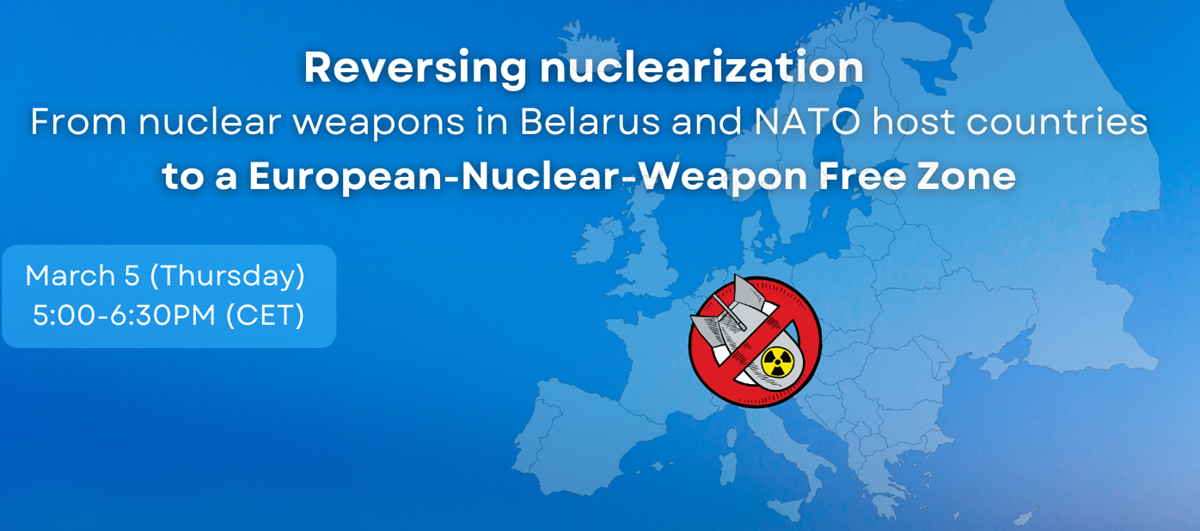
5 March -Online – Reversing nuclearization:
From nuclear weapons in Belarus and NATO host countries to a European-Nuclear-Weapon Free Zone
11am-12:30pm Eastern Time USA / 5pm-6:30pm CET

of the week – Advocating for a
nuclear free beach – https://www.samuellawrencefoundation.org/
The Samuel Lawrence Foundation advocates for a Nuclear Waste Free Beach at San Onofre, join us and take action!

10 March A LIVE WEBINAR THE REAL EFFECTS OF NUCLEAR POWER
What the Industry Isn’t Telling Us
1:00 PM Mountain, 2 pm Central, 3 pm Eastern. Live on the Keepers of the Water Facebook page

18 March Webinar @ 1 PM EST: An Assessment of SMR Projects: The Case of Canada
register for the zoom:
https://us02web.zoom.us/webinar/register/WN_o8BIIOUvQ2ONJR1nta65DQ#/registration

of the week – STOP SMALL MODULAR REACTORS IN CANADA
To see nuclear-related stories in greater depth and intensity – go to https://nuclearinformation.wordpress.com
-
Archives
- March 2026 (38)
- February 2026 (268)
- January 2026 (308)
- December 2025 (358)
- November 2025 (359)
- October 2025 (376)
- September 2025 (258)
- August 2025 (319)
- July 2025 (230)
- June 2025 (348)
- May 2025 (261)
- April 2025 (305)
-
Categories
- 1
- 1 NUCLEAR ISSUES
- business and costs
- climate change
- culture and arts
- ENERGY
- environment
- health
- history
- indigenous issues
- Legal
- marketing of nuclear
- media
- opposition to nuclear
- PERSONAL STORIES
- politics
- politics international
- Religion and ethics
- safety
- secrets,lies and civil liberties
- spinbuster
- technology
- Uranium
- wastes
- weapons and war
- Women
- 2 WORLD
- ACTION
- AFRICA
- Atrocities
- AUSTRALIA
- Christina's notes
- Christina's themes
- culture and arts
- Events
- Fuk 2022
- Fuk 2023
- Fukushima 2017
- Fukushima 2018
- fukushima 2019
- Fukushima 2020
- Fukushima 2021
- general
- global warming
- Humour (God we need it)
- Nuclear
- RARE EARTHS
- Reference
- resources – print
- Resources -audiovicual
- Weekly Newsletter
- World
- World Nuclear
- YouTube
-
RSS
Entries RSS
Comments RSS
 nuclear-news
Leave a comment