Importance of the ocean’s biological carbon pump
|
$500 billion question: what’s the value of studying the ocean’s biological carbon pump? EurekAlert WOODS HOLE OCEANOGRAPHIC INSTITUTION, Research News 12 Sept 20, The ocean plays an invaluable role in capturing carbon dioxide (CO2) from the atmosphere, taking in somewhere between five to 12 gigatons (billion tons) annually. Due to limited research, scientists aren’t sure exactly how much carbon is captured and stored–or sequestered–by the ocean each year or how increasing CO2 emissions will affect this process in the future. A new paper published in the journal Science of the Total Environment from the Woods Hole Oceanographic Institution (WHOI) puts an economic value on the benefit of research to improve knowledge of the biological carbon pump and reduce the uncertainty of ocean carbon sequestration estimates. Using a climate economy model that factors in the social costs of carbon and reflects future damages expected as a consequence of a changing climate, lead author Di Jin of WHOI’s Marine Policy Center places the value of studying ocean carbon sequestration at $500 billion. “The paper lays out the connections between the benefit of scientific research and decision making,” says Jin. “By investing in science, you can narrow the range of uncertainty and improve a social cost-benefit assessment.” Better understanding of the ocean’s carbon sequestration capacity will lead to more accurate climate models, providing policymakers with the information they need to establish emissions targets and make plans for a changing climate, Jin adds. With co-authors Porter Hoagland and Ken Buesseler, Jin builds a case for a 20-year scientific research program to measure and model the ocean’s biological carbon pump, the process by which atmospheric carbon dioxide is transported to the deep ocean through the marine food web. The biological carbon pump is fueled by tiny plant-like organisms floating on the ocean surface called phytoplankton, which consume carbon dioxide in the process of photosynthesis. When the phytoplankton die or are eaten by larger organisms, the carbon-rich fragments and fecal matter sink deeper into the ocean, where they are eaten by other creatures or buried in seafloor sediments, which helps decrease atmospheric carbon dioxide and thus reduces global climate change. Rising carbon dioxide levels in the atmosphere, a result of human activity such as burning fossil fuels, warms the planet by trapping heat from the sun and also dissolves into seawater, lowering the pH of the ocean, a phenomenon known as ocean acidification. A warmer, more acidic ocean could weaken the carbon pump, causing atmospheric temperatures to rise–or it could get stronger, with the opposite effect. ………. Key Takeaways * The ocean takes up an estimated five to 12 gigatons of carbon dioxide per year through a process known as the biological carbon pump. * More accurate estimates of the ocean’s capacity to remove carbon from the atmosphere will lead to more accurate climate models which could improve carbon emissions policies. * The global economic benefit of studying the ocean’s biological pump is $500 billion, if the science leads to policy decisions that mitigate the effects of climate change. https://www.eurekalert.org/pub_releases/2020-09/whoi-bq091020.php |
|
No comments yet.
1 This Month
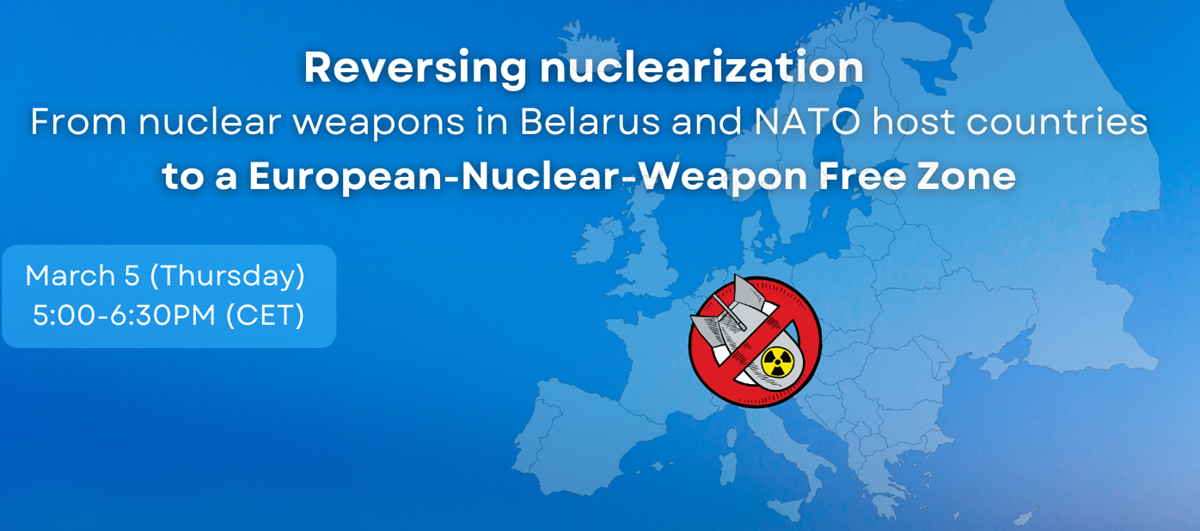
5 March -Online – Reversing nuclearization:
From nuclear weapons in Belarus and NATO host countries to a European-Nuclear-Weapon Free Zone
11am-12:30pm Eastern Time USA / 5pm-6:30pm CET

of the week – Advocating for a
nuclear free beach – https://www.samuellawrencefoundation.org/
The Samuel Lawrence Foundation advocates for a Nuclear Waste Free Beach at San Onofre, join us and take action!

10 March A LIVE WEBINAR THE REAL EFFECTS OF NUCLEAR POWER
What the Industry Isn’t Telling Us
1:00 PM Mountain, 2 pm Central, 3 pm Eastern. Live on the Keepers of the Water Facebook page

18 March Webinar @ 1 PM EST: An Assessment of SMR Projects: The Case of Canada
register for the zoom:
https://us02web.zoom.us/webinar/register/WN_o8BIIOUvQ2ONJR1nta65DQ#/registration

of the week – STOP SMALL MODULAR REACTORS IN CANADA
To see nuclear-related stories in greater depth and intensity – go to https://nuclearinformation.wordpress.com
-
Archives
- March 2026 (38)
- February 2026 (268)
- January 2026 (308)
- December 2025 (358)
- November 2025 (359)
- October 2025 (376)
- September 2025 (258)
- August 2025 (319)
- July 2025 (230)
- June 2025 (348)
- May 2025 (261)
- April 2025 (305)
-
Categories
- 1
- 1 NUCLEAR ISSUES
- business and costs
- climate change
- culture and arts
- ENERGY
- environment
- health
- history
- indigenous issues
- Legal
- marketing of nuclear
- media
- opposition to nuclear
- PERSONAL STORIES
- politics
- politics international
- Religion and ethics
- safety
- secrets,lies and civil liberties
- spinbuster
- technology
- Uranium
- wastes
- weapons and war
- Women
- 2 WORLD
- ACTION
- AFRICA
- Atrocities
- AUSTRALIA
- Christina's notes
- Christina's themes
- culture and arts
- Events
- Fuk 2022
- Fuk 2023
- Fukushima 2017
- Fukushima 2018
- fukushima 2019
- Fukushima 2020
- Fukushima 2021
- general
- global warming
- Humour (God we need it)
- Nuclear
- RARE EARTHS
- Reference
- resources – print
- Resources -audiovicual
- Weekly Newsletter
- World
- World Nuclear
- YouTube
-
RSS
Entries RSS
Comments RSS
 nuclear-news
Leave a comment