Climate change and the loss of sea otters
Loss of sea otters accelerating the effects of climate change, New research published in Science reveals that the influence of a key predator governs the pace of climate impacts on Alaskan reefs EurekAlert, BIGELOW LABORATORY FOR OCEAN SCIENCES , 13 Sept 20, The impacts of predator loss and climate change are combining to devastate living reefs that have defined Alaskan kelp forests for centuries, according to new research published in Science.
“We discovered that massive limestone reefs built by algae underpin the Aleutian Islands’ kelp forest ecosystem,” said Douglas Rasher, a senior research scientist at Bigelow Laboratory for Ocean Sciences and the lead author of the study. “However, these long-lived reefs are now disappearing before our eyes, and we’re looking at a collapse likely on the order of decades rather than centuries.”
The coral-like reefs, built by the red alga Clathromorphum nereostratum, are being ground down by sea urchins. Sea urchins exploded in number after their predator, the Aleutian sea otter, became functionally extinct in the 1990’s. Without the urchins’ natural predator to keep them in check, urchins have transformed the seascape – first by mowing down the dense kelp forests, and now by turning their attention to the coralline algae that form the reef.
Clathromorphum produces a limestone skeleton that protects the organism from grazers and, over hundreds of years, forms a complex reef that nurtures a rich diversity of sea life. With kelp gone from the menu, urchins are now boring through the alga’s tough protective layer to eat the alga – a process that has become much easier due to climate change.
“Ocean warming and acidification are making it difficult for calcifying organisms to produce their shells, or in this case, the alga’s protective skeleton,” said Rasher, who led the international team of researchers that included coauthors Jim Estes from UC Santa Cruz and Bob Steneck from University of Maine. “This critical species has now become highly vulnerable to urchin grazing – right as urchin abundance is peaking. It’s a devasting combination.”………..
The results of the experiment confirmed that climate change has recently allowed urchins to breach the alga’s defenses, pushing this system beyond a critical tipping point.
“It’s well documented that humans are changing Earth’s ecosystems by altering the climate and by removing large predators, but scientists rarely study those processes together,” Rasher said. “If we had only studied the effects of climate change on Clathromorphum in the laboratory, we would have arrived at very different conclusions about the vulnerability and future of this species. Our study shows that we must view climate change through an ecological lens, or we’re likely to face many surprises in the coming years.”……..https://www.eurekalert.org/pub_releases/2020-09/blfo-los090420.php
No comments yet.
1 This Month
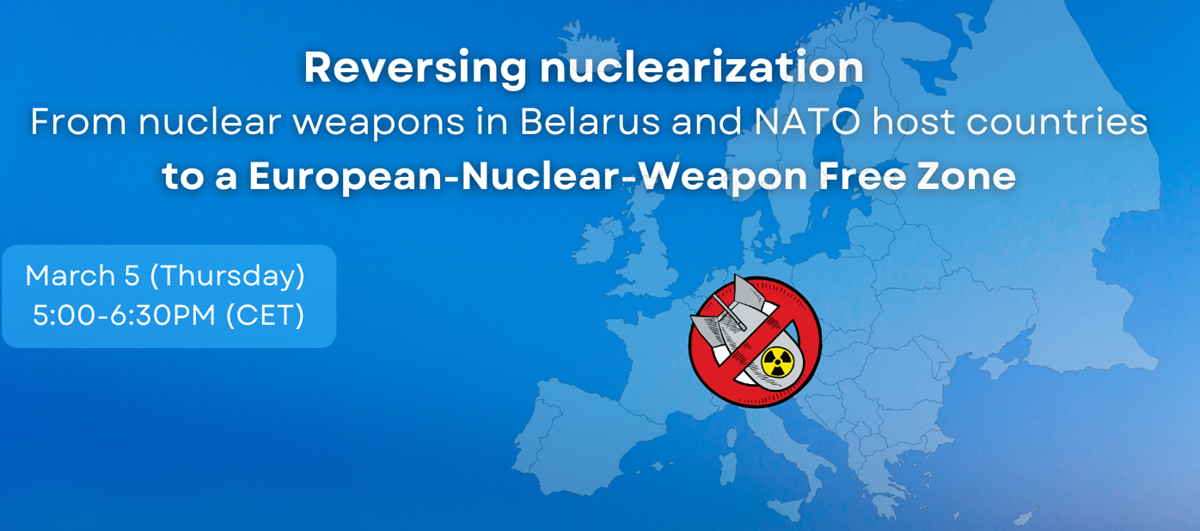
5 March -Online – Reversing nuclearization:
From nuclear weapons in Belarus and NATO host countries to a European-Nuclear-Weapon Free Zone
11am-12:30pm Eastern Time USA / 5pm-6:30pm CET

of the week – Advocating for a
nuclear free beach – https://www.samuellawrencefoundation.org/
The Samuel Lawrence Foundation advocates for a Nuclear Waste Free Beach at San Onofre, join us and take action!

10 March A LIVE WEBINAR THE REAL EFFECTS OF NUCLEAR POWER
What the Industry Isn’t Telling Us
1:00 PM Mountain, 2 pm Central, 3 pm Eastern. Live on the Keepers of the Water Facebook page

18 March Webinar @ 1 PM EST: An Assessment of SMR Projects: The Case of Canada
register for the zoom:
https://us02web.zoom.us/webinar/register/WN_o8BIIOUvQ2ONJR1nta65DQ#/registration

of the week – STOP SMALL MODULAR REACTORS IN CANADA
To see nuclear-related stories in greater depth and intensity – go to https://nuclearinformation.wordpress.com
-
Archives
- March 2026 (38)
- February 2026 (268)
- January 2026 (308)
- December 2025 (358)
- November 2025 (359)
- October 2025 (376)
- September 2025 (258)
- August 2025 (319)
- July 2025 (230)
- June 2025 (348)
- May 2025 (261)
- April 2025 (305)
-
Categories
- 1
- 1 NUCLEAR ISSUES
- business and costs
- climate change
- culture and arts
- ENERGY
- environment
- health
- history
- indigenous issues
- Legal
- marketing of nuclear
- media
- opposition to nuclear
- PERSONAL STORIES
- politics
- politics international
- Religion and ethics
- safety
- secrets,lies and civil liberties
- spinbuster
- technology
- Uranium
- wastes
- weapons and war
- Women
- 2 WORLD
- ACTION
- AFRICA
- Atrocities
- AUSTRALIA
- Christina's notes
- Christina's themes
- culture and arts
- Events
- Fuk 2022
- Fuk 2023
- Fukushima 2017
- Fukushima 2018
- fukushima 2019
- Fukushima 2020
- Fukushima 2021
- general
- global warming
- Humour (God we need it)
- Nuclear
- RARE EARTHS
- Reference
- resources – print
- Resources -audiovicual
- Weekly Newsletter
- World
- World Nuclear
- YouTube
-
RSS
Entries RSS
Comments RSS
 nuclear-news
Leave a comment