The threatening presence of highly radioactive material in Russia’s sunken nuclear submarines
 Do Russia’s Sunken Nuclear Submarines Pose Environmental Danger? There’s radioactive fuel hanging at the bottom of the sea. https://www.popularmechanics.com/military/navy-ships/a33902569/russia-sunken-nuclear-submarines/ BY KYLE MIZOKAMI, SEP 4, 2020
- Two ex-Soviet nuclear submarines, K-27 and K-159, lie at the bottom of the Barents Sea.
- The wrecked ships still have their radioactive fuel sources aboard, which experts worry could leak into the environment.
- The Russian government has vowed to clean up the wrecks, but the work is not a priority.
Governments and environmental groups are worried a rupture of nuclear fuel supplies could cause a nuclear catastrophe, impacting local fishing areas. The Russian government is working to solve the problem, which some experts are calling a potential “Chernobyl in slow motion on the seabed.
A legacy of the Cold War threatens Russia’s people and environment, potentially irradiating a large portion of the Barents Sea and closing it to commercial fishing. Two Soviet nuclear-powered submarines are sitting on the bottom of the ocean and could unleash their radioactive fuels into the surrounding waters.
The Soviet Union built four hundred nuclear-powered submarines during the Cold War. The vast majority were either scrapped, or still serve with the Russian Navy today. A few subs, however, are trapped in precarious circumstances, lying on the seabed floor with their uranium fuel supplies still intact. The BBC reports on efforts to render two such ships, K-27 and K-159, safe.
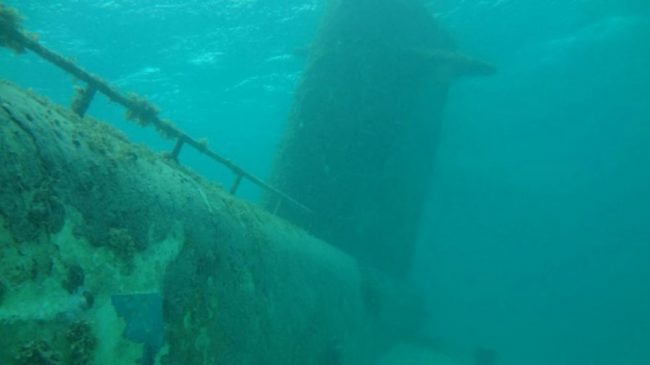 The first ship, K-27, was a Soviet Navy submarine prototype equipped with a new liquid metal reactor. In 1968, the six-year-old sub suffered a reactor accident so serious, nine Soviet sailors received fatal doses of radiation. The submarine was scuttled off the Russian island of Novaya Zemlya in 1982 with its reactor still on board.
The second ship, K-159 (shown above before sinking, on original), was a November-class submarine that served a fairly typical career with the Soviet Northern Fleet before retirement in 1989. In 2003, however, the K-159 sank while in the process of being dismantled, killing nine sailors. The ship still resides where it was lost, again with its reactor on board.
Environmentalists in Norway and Russia are concerned that eventually the reactors on both submarines will break down, releasing huge amounts of radiation.
The effects of these leaks could range from increasing local background radiation to declaring local fish and animals off limits, particularly Barents Sea fishing stocks of cod and haddock, costing local fishermen an estimated $1.5 billion a year.
While Russia’s state nuclear agency, Rosatom, has been tasked with cleaning up the ships, the effort is underfunded, resulting in a race against time (and saltwater corrosion).
No comments yet.
1 This Month

of the week – Shut Down Drone Warfare!


Tell the Ukrainian Government to Drop Prosecution of Peace Activist Yurii Sheliazhenko

Petition to revoke the licensing of the Near Surface Nuclear Disposal Facility (NSDF) at Chalk River. https://www.ourcommons.ca/petitions/en/Petition/Details?Petition=e-7247
To see nuclear-related stories in greater depth and intensity – go to https://nuclearinformation.wordpress.com
-
Archives
- April 2026 (91)
- March 2026 (251)
- February 2026 (268)
- January 2026 (308)
- December 2025 (358)
- November 2025 (359)
- October 2025 (376)
- September 2025 (257)
- August 2025 (319)
- July 2025 (230)
- June 2025 (348)
- May 2025 (261)
-
Categories
- 1
- 1 NUCLEAR ISSUES
- business and costs
- climate change
- culture and arts
- ENERGY
- environment
- health
- history
- indigenous issues
- Legal
- marketing of nuclear
- media
- opposition to nuclear
- PERSONAL STORIES
- politics
- politics international
- Religion and ethics
- safety
- secrets,lies and civil liberties
- spinbuster
- technology
- Uranium
- wastes
- weapons and war
- Women
- 2 WORLD
- ACTION
- AFRICA
- Atrocities
- AUSTRALIA
- Christina's notes
- Christina's themes
- culture and arts
- Events
- Fuk 2022
- Fuk 2023
- Fukushima 2017
- Fukushima 2018
- fukushima 2019
- Fukushima 2020
- Fukushima 2021
- general
- global warming
- Humour (God we need it)
- Nuclear
- RARE EARTHS
- Reference
- resources – print
- Resources -audiovicual
- Weekly Newsletter
- World
- World Nuclear
- YouTube
-
RSS
Entries RSS
Comments RSS
 nuclear-news
Leave a comment