28 trillion tonnes of ice have disappeared from the surface of the Earth since 1994.

the Earth since 1994. That is stunning conclusion of UK scientists who have
analysed satellite surveys of the planet’s poles, mountains and glaciers
to measure how much ice coverage lost because of global heating triggered
by rising greenhouse gas emissions.
Edinburgh universities and University College London – describe the level
of ice loss as “staggering” and warn that their analysis indicates that
sea level rises, triggered by melting glaciers and ice sheets, could reach
a metre by the end of the century.
centimetre of sea level rise means about a million people will be displaced
from their low-lying homelands,” said Professor Andy Shepherd, director
of Leeds University’s Centre for Polar Observation and Modelling.
Iran says sabotage caused explosion at Natanz nuclear site
|
Iran says sabotage caused explosion at Natanz nuclear site, Aljazeera, 23 Aug 20
Spokesman for Atomic Energy Organization says authorities will reveal ‘in due time the reason behind blast’ in July. Iran’s Atomic Energy Organization has said an explosion last month that damaged the country’s Natanz nuclear facility was the result of “sabotage”.”Security investigations confirm this was sabotage and what is certain is that an explosion took place in Natanz,” spokesman Behrouz Kamalvandi said on Sunday. “But how this explosion took place and with what materials … will be announced by security officials in due course,” he was quoted as saying by state news agency IRNA. The Natanz uranium enrichment site, much of which is underground, is one of several Iranian facilities monitored by inspectors of the International Atomic Energy Agency (IAEA), the UN nuclear watchdog. Iran’s top security body said after the blast on July 2 that the cause had been determined but would be announced later “for security reasons”. Officials said the incident had caused significant damage that could slow the development of advanced uranium enrichment centrifuges. Some Iranian officials have previously said the explosion may have been the result of cyber-sabotage, warning that Tehran would retaliate against any country carrying out such attacks…….. Tehran denies ever seeking nuclear weapons. Iran agreed to curb its nuclear programme in exchange for the removal of most international sanctions in a deal reached between Tehran and six world powers in 2015…… The deal only allows Iran to enrich uranium at Natanz facility, with just over 5,000 first-generation IR-1 centrifuges. On Monday, IAEA head Rafael Mariano Grossi will visit Iran for the first time since taking up the role in December last year. The IAEA said in a statement Grossi will address Iran’s cooperation with the agency, particularly access for its inspectors to certain sites……..https://www.aljazeera.com/news/2020/08/iranian-official-sabotage-caused-fire-natanz-nuclear-site-200823174331248.html |
|
Earthquake prompts inspections at Fermi 2 nuclear power plant; NRC virtual meeting planned
|
Earthquake prompts inspections at Fermi 2 nuclear power plant; NRC virtual meeting planned, Detroit News, Sarah Rahal 23 Aug 20,
The Detroit News The earthquake felt throughout Metro Detroit on Friday did not trigger seismic alarms at the Fermi 2 nuclear plant in Monroe County, but it did prompt safety inspections, according to DTE Energy.
The 3.2-magnitude earthquake was recorded Friday evening south-southeast of Detroit Beach near Monroe by the U.S. Geological Survey. Officials said the plant was unaffected by the tremor and is operating normally. The Nuclear Regulatory Commission will host a previously scheduled virtual meeting on the plant’s performance at 5:30 p.m. Thursday. Those who wish to participate must register online………. https://www.detroitnews.com/story/news/local/michigan/2020/08/22/dte-fermi-2-nuclear-power-plant-operating-normally-after-quake/3421602001/ |
|
|
Scotland’s Covid-19 recovery and Climate Policy
|
THE Scottish Government remains “absolutely committed” to meeting emissions
reduction targets despite the Covid-19 crisis, Environment Secretary Roseanna Cunningham has said. She described the virus as an “unprecedented global crisis” but also insisted the need to tackle climate change has not gone away. She spoke out on the issue on Earth Overshoot Day – which marks
the date when global demand for ecological resources and services exceeds what the planet can regenerate. Although Cunnignham insisted that “no aspect of this terrible pandemic is to be celebrated” she said coronavirus had underlined “the changes we could see in our environment in the long term if, at this critical juncture, we choose not to return to previous practice”. She added: “Resetting our pathway towards a sustainable net-zero
future, while creating good jobs for people across Scotland, will be the core objective of a just and green recovery from Covid-19.” Cunningham stressed: “We must learn lessons for the future, redesign our economy and create a different way of life to support a greener, more sustainable society which will secure the wellbeing of our planet for generations to come. |
|
Researchers find black and white solution to wind turbine bird deaths
A Norwegian research team has demonstrated a relatively simple and potentially very effective way to drastically reduce the number of bird deaths at wind farms, by painting one of the three blades of a wind turbine black.
In a study conducted over 10 years at a 68MW wind farm on the Norwegian archipelago of Smøla, the research team found an average of nearly 72% reduction in annual bird fatality rate at painted turbines, compared to non-painted control turbines.
The team from the Norwegian Institute for Nature Research said the contrast painting method significantly reduced the fatality rate for a range of birds at the Smøla wind farm, but appeared to be particularly effective for raptors……..more https://reneweconomy.com.au/researchers-find-black-and-white-solution-to-wind-turbine-bird-deaths-96526/
Cumulative exposure to ionising radiation from diagnostic imaging tests
|
Cumulative exposure to ionising radiation from diagnostic imaging tests: a 12-year follow-up population-based analysis in Spain. https://www.docwirenews.com/abstracts/cumulative-exposure-to-ionising-radiation-from-diagnostic-imaging-tests-a-12-year-follow-up-population-based-analysis-in-spain/ August 22, 2020 Cumulative exposure to ionising radiation from diagnostic imaging tests: a 12-year follow-up population-based analysis in Spain.BMJ Open. 2019 09 18;9(9):e030905
Authors: Lumbreras B, Salinas JM, Gonzalez-Alvarez I Abstract |
|
Installing solar PV can increase house prices by an average of £32,459 across the UK.
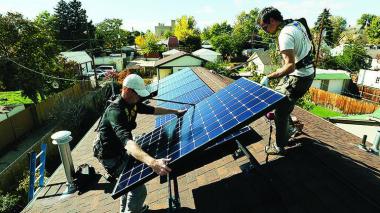 Solar Power Portal 21st Aug 2020, The value of residential solar has been touted after new research revealed
that the technology can boost the value of houses by over £30,000. The
research comes from EffectiveHome.co.uk, a website dedicated to providing
information and guidance for homeowners regarding solar. It found that
installing solar PV can increase house prices by an average of £32,459
across the UK. Houses in London see the biggest increase, with the value
jumping by £90,000. The country’s capital therefore has the largest
increase in value of the ten largest cities in the UK, followed by Bristol
(£45,142), Edinburgh (£40,095) and Leicester (£31,577).
https://www.solarpowerportal.co.uk/news/residential_solar_boosts_house_prices_by_average_of_30000
Huge electricity transformer will land on a Gwynedd beach, headed for nuclear power project
 Daily Post 22nd Aug 2020, A huge electricity transformer will land on a Gwynedd beach on its way to a
nuclear power station. The 128-tonne unit is being brought to North Wales
by barge and will be landed on the beach at Traeth y Graig Ddu (Black Rock
sands) at Morfa Bychan in Gwynedd. It will then be transferred onto a lorry
and taken by road to the National Grid site near the decommissioned nuclear
power station at Trawsfynydd. It had been planned to bring the barge into
Porthmadog harbour last April, but this was delayed by the coronavirus
pandemic. There had been concern the delivery would have badly disrupted
the harbour so, in a first for National Grid, the transformer is arriving
at the beach.
https://www.dailypost.co.uk/news/north-wales-news/huge-delivery-headed-nuclear-plant-18798277
Visions for peace — Beyond Nuclear International

Joanna Macy says “Choose life. It’s that simple!”
Visions for peace — Beyond Nuclear International
Global warming is bringing new “fire regime”all too quickly
Record Arctic blazes may herald new ‘fire regime’ decades sooner than anticipated, more https://www.washingtonpost.com/weather/2020/08/14/record-arctic-fires/?arc404=true Other signs of rapid Arctic warming are evident, including the partial loss of a symbolic Canadian ice shelf, WP, By Andrew Freedman and Lauren Tierney, August 14 2020
The Arctic summer of 2019 was supposed to be an outlier. Featuring massive blazes in Siberia, including what scientists strongly suspected were smoldering fires beneath the peat in the carbon-rich soils of the transition zone between the tundra and Arctic taiga, last year set records for emitting planet-warming greenhouse gases via wildfires. Many scientists thought it might be a one-off, considering that computer model projections tend to show that the emergence of such extreme fire years won’t happen until mid-century.
However, this year is proving those scientists wrong. And it raises the unsettling possibility that fire seasons that begin much earlier than average and end later — and affect delicate Arctic ecosystems — could soon be the new normal. Wildfires continue to burn unimpeded across Siberia, as they have since May, after getting an unusually early start to the fire season. A thick blanket of smoke has turned the sky a milky gray in Siberia’s cities, with some smoke making it across the Pacific into Alaska and Canada’s Hudson Bay.
In fact, according to Mark Parrington, senior scientist and wildfire expert at the European Union’s Copernicus Atmosphere Monitoring Service, Siberian wildfire smoke has been seen around the world as it hitches a ride on upper air winds. To track wildfires and estimate their emissions of planet-warming carbon dioxide, black carbon and more, Parrington uses satellite instruments to detect heat signals all over the world.
He and his colleagues then use the temperature of the signals to arrive at an estimate of the energy emitted by each fire, by making the assumption that a particular amount of biomass (plants, grasses and trees, for example) is needed to burn at that temperature. This measure of the rate of radiant heat output from a fire is known as “radiatiative power,” which can then be translated into estimated emissions.
Based on data stretching back to 2003, when the satellite sensors began recording reliable data, Parrington says Arctic fires released more carbon dioxide in June and July this year than during any complete fire season before that. This is an especially noteworthy milestone, since 2019 itself had been a record-breaker for Arctic wildfires. This year, some of the Arctic fires were burning so far north that they were spotted bordering sea ice cover.
Looking at carbon emissions from fires in the Arctic Circle, Parrington says 2020 is already the top year even when the Jan. 1 to Aug. 11 period is considered, vs. the full 365 days for each of the other years. Last year had set a record for such emissions, with 180 megatons of carbon dioxide emitted by Arctic fires, but 2020 has eclipsed it so far, with about 240 megaton through Aug. 11. Parrington said Arctic wildfire emissions rose significantly from June into July, particularly in the northern Russia Sakha Republic, a pattern also observed last year.
“It’s an indicator that something’s changed in the environment there,” he said of the fire activity of the past two summers.
Jessica McCarty, a wildfire expert at Miami University of Ohio with experience working in the Siberian Arctic, said Parrington’s emissions estimates are probably underestimates, since satellites don’t detect the heat signatures from Arctic peat fires. Such blazes smolder without open flames above the surface, consuming ancient organic matter and freeing up planet-warming gases such as methane and carbon dioxide that had been locked away. This, along with permafrost melt, acts to speed up global warming as part of a self-reinforcing cycle.
McCarty has searched through the scientific literature from Arctic nations as part of a report she is co-authoring for the Arctic Council. “This is the type of fire event that would be described by these worst-case modeling scenarios that were supposed to occur mid-century,” she said, adding that we may be 30 years early in seeing such fire impacts, which would require a reevaluation of how the Arctic is responding to global warming.
[Rapid Arctic meltdown in Siberia alarms scientists]
For next year, she’ll be examining when the fire season starts, where it begins, what types of landscapes burn and what the ignition sources are. Once you log a few extreme fire seasons, she says, the extreme becomes the norm, known to fire researchers as a “fire regime.”
“If seven out of 10 years are extreme years, that’s a fire regime,” McCarty said.
She said a review of scientific literature from Russia and other Arctic nations shows that Siberian fires typically subside in mid- to late August, when the first snows arrive in the Far North. But that assumption may need to be revisited, too. If any fires this year continue into September, she said, “I’ll be really shocked. I don’t know that I’ll have words that are ready to be published.”
The fires were touched off by an unusually hot year to date, which has helped dry out the soils and melt snow cover unusually early in the spring.
For example, temperatures have hit record levels even in the Arctic, north of 66 degrees north latitude. A reading of 100.4 degrees (38 Celsius) on June 20 was probably the hottest temperature on record in the Arctic. It was recorded in Verkhoyansk, about 3,000 miles east of Moscow, on June 20.
The people who live in Siberia and other Arctic regions are used to variable weather. In Verkhoyansk, for example, temperatures can drop to minus-50 degrees in the winter and climb into the 70s during the summer. Yet the persistent warmth so far this year has stood out to climate researchers.
[An oil spill in Russia’s Arctic exposes risks for Moscow’s Far North plans]
“What is incredibly unusual is the persistence of the warm signal” in Siberia, said Samantha Burgess, deputy director of the Copernicus Climate Change Service, in an interview. She said the warmth has had significant implications for the region, ranging from clearing out sea ice north of Siberia unusually early in the summer melt season to contributing to permafrost melt that led to a major oil spill in Norilsk, Russia.
Burgess said the temperature spike in Siberia this summer heralds events to come not only there but in other parts of the Arctic, as well, as the region warms at about three times the rate of the rest of the world. She said the Siberian warm streak is likely to occur again and likely to show up in other parts of the Arctic.
It’s really taken people by surprise how quickly these changes have taken place in the Arctic,” Burgess said.
The Arctic as a whole has had record warm temperatures from May through July, as measured in the lower atmosphere.
Much of Siberia experienced an exceptionally mild winter, followed by a warmer-than-average spring, and it has been among the most unusually warm regions of the world during the summer as well. During May, parts of Siberia had an average monthly temperature that was a staggering 18 degrees Fahrenheit (10 Celsius) above average for the month, according to the Copernicus Climate Change Service. The unusually mild weather has continued through August so far, as an area of high pressure, or heat dome, has been parked over the Siberian Arctic.
Fires and ice
The summer fire and melt season hasn’t just featured an unusual surge in fires and their harmful emissions. It is also bringing dramatic declines in sea ice and, in one prominent case, long-lasting ice attached to land.
Meier says warm ocean waters in other parts of the Arctic could continue melting ice throughout the month, despite the weakening energy from the sun as fall approaches. Sea ice typically reaches its minimum extent in early- to mid-September.
Similar dynamics are playing out in Greenland and Antarctica, where massive glaciers have been destabilized by the disintegration of their ice shelves, which act as doorstops that prevent inland ice from sliding into the sea, where it would dramatically raise sea levels.
Before the breakup of the Canadian shelf into large icebergs, it was about the size of D.C., the Associated Press has reported.
France’s nuclear energy continues to be hit by global heating, drought, water shortage
 Low flow rate may halve output at France’s Saint-Alban nuclear plant, https://in.reuters.com/article/france-nuclear/low-flow-rate-may-halve-output-at-frances-saint-alban-nuclear-plant-idINL8N2FM54B PARIS, Aug 20 (Reuters) – A low flow rate on the Rhone River will likely restrict output on Saturday and Sunday at EDF’s Saint-Alban nuclear plant in southeastern France, French grid operator RTE said on Thursday.The two Saint-Alban reactors produce 1.3 gigawatts (GW) of power each, and the output reduction could be equivalent to the production of one unit, RTE said.
EDF’s use of water is regulated by law to protect plant and animal life. It is obliged to reduce output during hot weather when water temperatures rise, or when river levels and the flow rate are low.
Last month was the driest July in at least 60 years and the first half of August was the second hottest on record, making it the fifteenth consecutive month with higher than average temperatures, Meteo France data showed.
RTE published a similar warning for the Chooz reactors in northern France on Tuesday, as low water levels on the Meuse river risk extending current maintenance periods.
French nuclear availability is currently at 63.6% of total capacity, with 22.7 GW offline. (Reporting by Forrest Crellin; Editing by Jan Harvey)
Unprecedented rise in carbon dioxide in the atmosphere
 Anthropogenic CO2 increase is unprecedented, Science Daily
 - Date:
- August 20, 2020
- Source:
- University of Bern
- Summary:
- Even in earlier warm periods there were pulse-like releases of CO2 to the atmosphere. Today’s anthropogenic CO2 rise, however, is more than six times larger and almost ten times faster than previous jumps in the CO2 concentration.
-
A new measurement technology developed at the University of Bern provides unique insights into the climate of the past. Previous CO2 concentrations in the atmosphere could be reconstructed more accurately than ever before, thanks to high-resolution measurements made on an Antarctic ice core. The study, which analyzed the Earth’s atmospheric composition between 330,000 and 450,000 years ago, was made possible by the commitment of experts, and their decades of experience, at the University of Bern. The results of the study have been published in Science.
Melting ice masses disturbed the ocean circulation…………
- CO2 increase was ten times slower than today ……..
-
 The largest jump in the past corresponds to the current CO2 emissions over only six years
The researchers compared the CO2 jumps of the past with the ongoing human-driven rise of CO2 concentration in the atmosphere. According to Stocker, the largest centennial CO2 jump in the past was around 15 ppm (parts per million is the unit for atmospheric CO2 concentration), which is approximately equivalent to the increase caused by humankind over the last of six years. “This may not seem significant at first glance,” says Stocker, “but in light of the quantities of CO2 that we are still allowed to emit in order to achieve the 1.5°C climate target agreed in Paris, such increases are definitely relevant.” The findings of this study put us under even greater pressure to protect the climate.
Story Source:
Materials provided by University of Bern. https://www.sciencedaily.com/releases/2020/08/200820151335.htm
Small Modular Nuclear Reactors costs jump by $billions. Logan city abandons NuScam project

|
Logan withdraws from nuclear power project seen as cutting-edge but risky, KSL.com
By Graham Dudley, KSL.com – Aug. 20, 2020 LOGAN — A hesitant Logan City Council agreed to follow staff recommendations Tuesday and voted to leave a nuclear power project that has been characterized by ballooning costs and funding uncertainties.The Carbon Free Power Project aims to begin producing nuclear power from state-of-the-art small modular reactors But the projected cost of the power plant jumped from about $3.6 billion in 2017 to more than $6.1 billion in 2020. Logan has already committed more than $400,000 to the project and would have paid over $650,000 more in the next three years to see it through its next phase, at which point the city would again have had the option to modify or withdraw from the agreement. The project involves the Utah Associated Municipal Power Systems, or UAMPS, a political subdivision of the state of Utah which supplies energy to communities in six Western states and of which Logan is a member. The reactors are being built by Oregon-based NuScale, and the Texas-based Fluor Corporation is involved in project construction Logan council members reviewed the city’s involvement in the Carbon Free Power Project during their Aug. 4 and Aug. 18 meetings, ultimately voting 4-1 to leave the agreement…….. https://www.ksl.com/article/50008552/logan-withdraws-from-nuclear-power-project-seen-as-cutting-edge-but-risky |
|
Senators Warn Trump Saudi-Chinese Uranium Plant Risks Spread of Nuclear Weapons
 Senators Warn Trump Saudi-Chinese Uranium Plant Risks Spread of Nuclear Weapons, WSJGroup of Democratic and Republican lawmakers request briefings on the matter, in letter to the president, By Warren P. Strobel, Aug. 19, 2020 , WASHINGTON—A bipartisan group of U.S. senators warned President Trump on Wednesday that Saudi Arabia’s undeclared nuclear and missile programs pose a serious threat to efforts to stop the spread of nuclear weapons in the region and requested briefings on the subject.
The letter follows a Wall Street Journal report earlier this month that the Saudis, with Chinese help, had constructed a facility for extracting uranium yellowcake from uranium ore, an advance in the oil-rich kingdom’s drive to master nuclear technology, according to Western officials.
“Saudi Arabia is positioning itself to develop the front-end of the [nuclear] fuel cycle. These technologies, if unchecked, would give Riyadh a latent capacity to produce fissile material for nuclear weapons,” Sen. Chris Van Hollen (D., Md.), along with two other Democratic and three Republican senators, wrote in a letter to the president.
The Saudi Energy Ministry earlier this month categorically denied having built a uranium ore facility in the area of northwest Saudi Arabia described by some of the Western officials. It said that extraction of minerals—including uranium—is a key part of the country’s economic diversification strategy.
Manufacturing uranium yellowcake, a milled form of uranium ore, is a relatively early step in the nuclear cycle. It takes multiple additional steps and technology to process and enrich uranium sufficiently for it to power a civil nuclear energy plant. At very high enrichment levels, uranium can fuel a nuclear weapon……. (subscribers only) https://www.wsj.com/articles/senators-warn-trump-saudi-chinese-uranium-plant-risks-spread-of-nuclear-weapons-11597860000
Permafrost will thaw faster, as global heating causes more rain in the North

|
Climate change is causing more rain in the North. That’s bad news for permafrost
New study shows wetter weather is thawing the frozen ground that covers a quarter of the northern hemisphere, threatening to release massive stores of carbon, The Narwhal, Julien Gignac, Local Journalism Initiative reporter . Aug 20, 2020
Longer, rainier summers are thawing permafrost at an accelerated rate in interior Alaska, according to a new study, begging the question: what does this mean for rainy summers in the Canadian North? “Thawing is happening even faster than we thought,” said Thomas Douglas, an environmental engineer with the U.S. Army Cold Regions Research and Engineering Laboratory and lead author of the study. “We’ve had these crazy wet summers. It’s gonna be bad for permafrost.” The study, published in Nature’s Climate and Atmospheric Science journal, found that between 0.6 and 0.8 centimetres of permafrost thawed for every centimetre of above-average rainfall in Alaska between 2013 and 2017……………… According to a 2015 report by Yukon University, annual precipitation in the territory has increased by six per cent over the past 50 years, with summers seeing the most rainfall compared to other seasons. “Rain water, especially in the summer, is pretty warm and it can move warm, thermal mass down through the soil a lot faster than just warm air temperatures can,” Douglas said. “If you lose three to four weeks of winter to summer, what used to be falling as snow is now falling as rain.”……… According to a 2015 report by Yukon University, annual precipitation in the territory has increased by six per cent over the past 50 years, with summers seeing the most rainfall compared to other seasons. “Rain water, especially in the summer, is pretty warm and it can move warm, thermal mass down through the soil a lot faster than just warm air temperatures can,” Douglas said. “If you lose three to four weeks of winter to summer, what used to be falling as snow is now falling as rain.”……….. it’s not only the North that is impacted by thawing permafrost. Arctic permafrost stores an estimated 1.4 million megatonnes of carbon in frozen organic matter. As it thaws, microorganisms that were dormant when frozen start to break down that matter, releasing carbon and methane into the atmosphere. “It has global ramifications,” Douglas said……………………. we could see all Arctic precipitation levels change in the coming years as sea ice continues to disappear, leaving more open water and more evaporation that eventually becomes precipitation. “As the Arctic Ocean becomes more ice-free in the summer, you would expect many of these areas to become eventually wetter,” Marsh said. https://thenarwhal.ca/climate-change-rain-arctic-permafrost-thaw/ |
|
|
-
Archives
- February 2026 (228)
- January 2026 (308)
- December 2025 (358)
- November 2025 (359)
- October 2025 (376)
- September 2025 (258)
- August 2025 (319)
- July 2025 (230)
- June 2025 (348)
- May 2025 (261)
- April 2025 (305)
- March 2025 (319)
-
Categories
- 1
- 1 NUCLEAR ISSUES
- business and costs
- climate change
- culture and arts
- ENERGY
- environment
- health
- history
- indigenous issues
- Legal
- marketing of nuclear
- media
- opposition to nuclear
- PERSONAL STORIES
- politics
- politics international
- Religion and ethics
- safety
- secrets,lies and civil liberties
- spinbuster
- technology
- Uranium
- wastes
- weapons and war
- Women
- 2 WORLD
- ACTION
- AFRICA
- Atrocities
- AUSTRALIA
- Christina's notes
- Christina's themes
- culture and arts
- Events
- Fuk 2022
- Fuk 2023
- Fukushima 2017
- Fukushima 2018
- fukushima 2019
- Fukushima 2020
- Fukushima 2021
- general
- global warming
- Humour (God we need it)
- Nuclear
- RARE EARTHS
- Reference
- resources – print
- Resources -audiovicual
- Weekly Newsletter
- World
- World Nuclear
- YouTube
-
RSS
Entries RSS
Comments RSS
 nuclear-news