As climate extreme weather impacts grow, American nuclear reactors are threatened
 Mounting Climate Impacts Threaten U.S. Nuclear Reactors, Scientific American, Higher temperatures, rising flood risks and increased water stress mean facilities need to take additional resiliency measures, By Avery Ellfeldt, E&E News on August 20, 2020
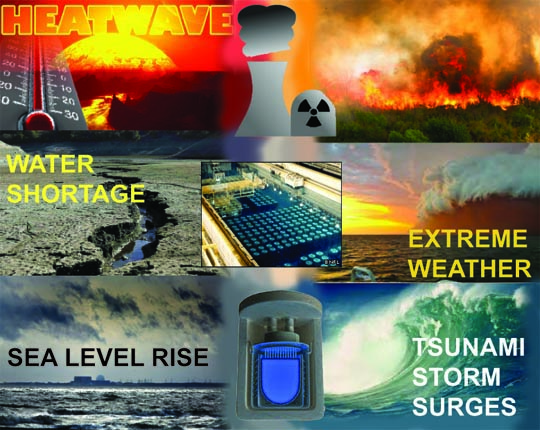
Soaring temperatures, intensified flood risks and heightened water stress will threaten 57 U.S. nuclear plants over the next 20 years, forcing operators to take additional resiliency measures, according to a new report.
“The consequences of climate change can affect every aspect of nuclear plant operations—from fuel handling and power and steam generation to maintenance, safety systems and waste processing,” said the analysis, which was published yesterday by Moody’s Investors Service.
Analysts used data from Four Twenty Seven, a Moody’s affiliate that provides climate risk intelligence, to examine threats to operating nuclear plants.
“It looks like almost all plants see some kind of climate risk worsening over the next 20 years,” said David Kamran, the report’s author.
The study also underscored that the nuclear sector’s vulnerability to regional climate risks in large part depends on plants’ proximity to water.
Because nuclear generation facilities rely on external water sources for cooling, the vast majority are situated near rivers, lakes and oceans. That exposes them to flooding and storm surges, which can damage critical equipment.
The Four Twenty Seven data show 37 gigawatts of U.S. nuclear capacity is overly exposed to flood risk.That includes plants along the East and Gulf coasts, which are likely to grapple with rising sea levels and intensifying hurricanes in the decades to come. Storm-related rainfall, the reports adds, could “inundate” nuclear facilities and “damage transmission lines or substations, hindering a plant’s ability to deliver power.”
Facilities in the Midwest and South Florida, meanwhile, are more likely to suffer from higher temperatures that have the potential to reduce plants’ ability to generate power. The generation process involves creating steam, which is then cooled and condensed into liquid for reuse.
“If the temperature of incoming water to cool and condense steam is too high, or if the temperature of the discharge water is too high, power plants can be forced to curtail production or shut down temporarily,” the report says.
Facilities in the Rocky Mountain region, near the Colorado River and in California, on the other hand, are projected to face water scarcity, spiking uncertainty about having long-term access to necessary water supplies……. https://www.scientificamerican.com/article/mounting-climate-impacts-threaten-u-s-nuclear-reactors/
No comments yet.
1 This Month

of the week – Shut Down Drone Warfare!


Tell the Ukrainian Government to Drop Prosecution of Peace Activist Yurii Sheliazhenko

Petition to revoke the licensing of the Near Surface Nuclear Disposal Facility (NSDF) at Chalk River. https://www.ourcommons.ca/petitions/en/Petition/Details?Petition=e-7247
To see nuclear-related stories in greater depth and intensity – go to https://nuclearinformation.wordpress.com
-
Archives
- April 2026 (79)
- March 2026 (251)
- February 2026 (268)
- January 2026 (308)
- December 2025 (358)
- November 2025 (359)
- October 2025 (376)
- September 2025 (257)
- August 2025 (319)
- July 2025 (230)
- June 2025 (348)
- May 2025 (261)
-
Categories
- 1
- 1 NUCLEAR ISSUES
- business and costs
- climate change
- culture and arts
- ENERGY
- environment
- health
- history
- indigenous issues
- Legal
- marketing of nuclear
- media
- opposition to nuclear
- PERSONAL STORIES
- politics
- politics international
- Religion and ethics
- safety
- secrets,lies and civil liberties
- spinbuster
- technology
- Uranium
- wastes
- weapons and war
- Women
- 2 WORLD
- ACTION
- AFRICA
- Atrocities
- AUSTRALIA
- Christina's notes
- Christina's themes
- culture and arts
- Events
- Fuk 2022
- Fuk 2023
- Fukushima 2017
- Fukushima 2018
- fukushima 2019
- Fukushima 2020
- Fukushima 2021
- general
- global warming
- Humour (God we need it)
- Nuclear
- RARE EARTHS
- Reference
- resources – print
- Resources -audiovicual
- Weekly Newsletter
- World
- World Nuclear
- YouTube
-
RSS
Entries RSS
Comments RSS
 nuclear-news
Leave a comment