Russia plans removal of its nuclear trash from Arctic waters
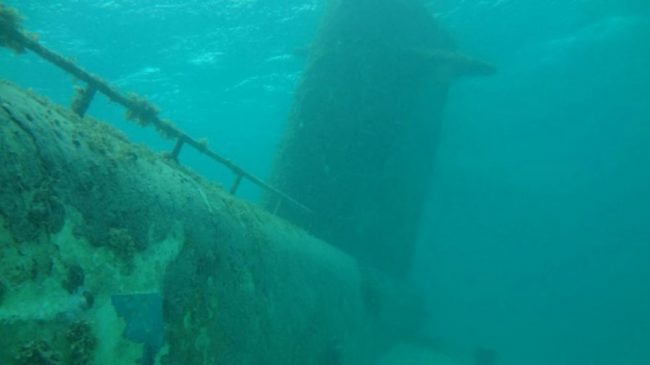
Russia to Remove Hazardous Nuclear Objects Dumped in Its Arctic Waters,
The country’s nuclear energy company will over the next eight years lift two submarines and four reactor compartments from the bottom of the Barents and Kara Seas. By The Barents Observer 5 Aug 20, Russia’s state nuclear agency plans to remove several nuclear objects from the depths of Russia’s Arctic waters in an effort to reduce environmental hazards, Rosatom said this week as it presented a clean-up plan for the region.
Russia’s state nuclear agency plans to remove several nuclear objects from the depths of Russia’s Arctic waters in an effort to reduce environmental hazards, Rosatom said this week as it presented a clean-up plan for the region.
From the late 1960s to the late 1980s, about 18,000 radioactive objects were dumped into Russia’s remote northern waters. Most of them present little environmental risk. But some are increasingly seen as a hazard to Arctic ecosystems.
“Rosatom over the next eight years intends to lift from the bottom of Russia’s Arctic waters six objects that are most dangerous in terms of radioactive pollution,” the company’s spokesperson told the state-run TASS news agency.
The company plans to lift the reactors from the K-11, K-19 and K-140 submarines as well as spent nuclear fuel from the reactor that served the Lenin icebreaker.
In addition, two entire submarines will be lifted: the K-27 from the Kara Sea and K-159 from the Barents Sea. While the former was deliberately dumped by Soviet authorities in 1982, the latter sank during a towing operation in 2003.
The K-27 is located in 33-meter depths east of the Novaya Zemlya archipelago. It has been described by experts as a potential radioactive “time bomb.” The K-159 is located in 200-meter depths off the coast of the Kola Peninsula.
These six objects represent more than 90% of radioactive sources dumped at sea, Rosatom said………
Lifting the six hazardous nuclear objects will not only be technically difficult, but also very expensive.
A recent report made for Rosatom and the European Commission estimated the costs of lifting these six objects at 278 million euros. That includes the cost of bringing them safely to a yard for decommissioning and long-term storage.
Lifting the K-159 alone is estimated to cost 57.5 million euros. Lifting the K-27 and transporting it to a shipyard for decommissioning and long-term storage in Saida Bay will carry a price tag of 47.7 million euros, the report said.
It’s unlikely that Russia’s increasingly cash-strapped treasury will have the 278 million euros needed for the cleanup.
Several countries have previously allocated billions to assist Russia’s post-Soviet efforts to cope with nuclear waste.
Norway has since the mid-90s granted about 1.5 billion kroner (140 million euros) to nuclear safety projects in the Russian part of the Barents region. https://www.themoscowtimes.com/2020/08/05/russia-to-remove-hazardous-nuclear-objects-dumped-in-its-arctic-waters-a71060
No comments yet.
1 This Month

of the week – Shut Down Drone Warfare!


Tell the Ukrainian Government to Drop Prosecution of Peace Activist Yurii Sheliazhenko

Petition to revoke the licensing of the Near Surface Nuclear Disposal Facility (NSDF) at Chalk River. https://www.ourcommons.ca/petitions/en/Petition/Details?Petition=e-7247
To see nuclear-related stories in greater depth and intensity – go to https://nuclearinformation.wordpress.com
-
Archives
- April 2026 (91)
- March 2026 (251)
- February 2026 (268)
- January 2026 (308)
- December 2025 (358)
- November 2025 (359)
- October 2025 (376)
- September 2025 (257)
- August 2025 (319)
- July 2025 (230)
- June 2025 (348)
- May 2025 (261)
-
Categories
- 1
- 1 NUCLEAR ISSUES
- business and costs
- climate change
- culture and arts
- ENERGY
- environment
- health
- history
- indigenous issues
- Legal
- marketing of nuclear
- media
- opposition to nuclear
- PERSONAL STORIES
- politics
- politics international
- Religion and ethics
- safety
- secrets,lies and civil liberties
- spinbuster
- technology
- Uranium
- wastes
- weapons and war
- Women
- 2 WORLD
- ACTION
- AFRICA
- Atrocities
- AUSTRALIA
- Christina's notes
- Christina's themes
- culture and arts
- Events
- Fuk 2022
- Fuk 2023
- Fukushima 2017
- Fukushima 2018
- fukushima 2019
- Fukushima 2020
- Fukushima 2021
- general
- global warming
- Humour (God we need it)
- Nuclear
- RARE EARTHS
- Reference
- resources – print
- Resources -audiovicual
- Weekly Newsletter
- World
- World Nuclear
- YouTube
-
RSS
Entries RSS
Comments RSS
 nuclear-news
Leave a comment