Another Hiroshima is Coming…Unless We Stop It Now
Today, an unprecedented campaign of propaganda is shooing us all off like rabbits. We are not meant to question the daily torrent of anti-Chinese rhetoric, which is rapidly overtaking the torrent of anti-Russia rhetoric. Anything Chinese is bad, anathema, a threat: Wuhan …. Huawei. How confusing it is when “our” most reviled leader says so.
The target is China. Today, more than 400 American military bases almost encircle China with missiles, bombers, warships and nuclear weapons. From Australia north through the Pacific to South-East Asia, Japan and Korea and across Eurasia to Afghanistan and India, the bases form, as one US strategist told me, “the perfect noose”.
In the Sydney Morning Herald, tireless China-basher Peter Hartcher described those who spread Chinese influence in Australia as “rats, flies, mosquitoes and sparrows”. Hartcher, who favourably quotes the American demagogue Steve Bannon, likes to interpret the “dreams” of the current Chinese elite, to which he is apparently privy. These are inspired by yearnings for the “Mandate of Heaven” of 2,000 years ago. Ad nausea.
To combat this “mandate”, the Australian government of Scott Morrison has committed one of the most secure countries on earth, whose major trading partner is China, to hundreds of billions of dollars’ worth of American missiles that can be fired at China.
At a quarter past eight on the morning of August 6, 1945, she and her silhouette were burned into the granite.
I stared at the shadow for an hour or more, then I walked down to the river where the survivors still lived in shanties.
I met a man called Yukio, whose chest was etched with the pattern of the shirt he was wearing when the atomic bomb was dropped.
He described a huge flash over the city, “a bluish light, something like an electrical short”, after which wind blew like a tornado and black rain fell. “I was thrown on the ground and noticed only the stalks of my flowers were left. Everything was still and quiet, and when I got up, there were people naked, not saying anything. Some of them had no skin or hair. I was certain I was dead.”
Nine years later, I returned to look for him and he was dead from leukaemia.
“No radioactivity in Hiroshima ruin” said The New York Times front page on 13 September, 1945, a classic of planted disinformation. “General Farrell,” reported William H. Lawrence, “denied categorically that [the atomic bomb] produced a dangerous, lingering radioactivity.”
Only one reporter, Wilfred Burchett, an Australian, had braved the perilous journey to Hiroshima in the immediate aftermath of the atomic bombing, in defiance of the Allied occupation authorities, which controlled the “press pack”.
“I write this as a warning to the world,” reported Burchett in the London Daily Express of September 5,1945. Sitting in the rubble with his Baby Hermes typewriter, he described hospital wards filled with people with no visible injuries who were dying from what he called “an atomic plague”.
For this, his press accreditation was withdrawn, he was pilloried and smeared. His witness to the truth was never forgiven.
The atomic bombing of Hiroshima and Nagasaki was an act of premeditated mass murder that unleashed a weapon of intrinsic criminality. It was justified by lies that form the bedrock of America’s war propaganda in the 21st century, casting a new enemy, and target – China.
During the 75 years since Hiroshima, the most enduring lie is that the atomic bomb was dropped to end the war in the Pacific and to save lives.
“Even without the atomic bombing attacks,” concluded the United States Strategic Bombing Survey of 1946, “air supremacy over Japan could have exerted sufficient pressure to bring about unconditional surrender and obviate the need for invasion. “Based on a detailed investigation of all the facts, and supported by the testimony of the surviving Japanese leaders involved, it is the Survey’s opinion that … Japan would have surrendered even if the atomic bombs had not been dropped, even if Russia had not entered the war [against Japan] and even if no invasion had been planned or contemplated.”
The National Archives in Washington contains documented Japanese peace overtures as early as 1943. None was pursued. A cable sent on May 5, 1945 by the German ambassador in Tokyo and intercepted by the US made clear the Japanese were desperate to sue for peace, including “capitulation even if the terms were hard”. Nothing was done.
The US Secretary of War, Henry Stimson, told President Truman he was “fearful” that the US Air Force would have Japan so “bombed out” that the new weapon would not be able “to show its strength”. Stimson later admitted that “no effort was made, and none was seriously considered, to achieve surrender merely in order not to have to use the [atomic] bomb”.
Stimson’s foreign policy colleagues — looking ahead to the post-war era they were then shaping “in our image”, as Cold War planner George Kennan famously put it — made clear they were eager “to browbeat the Russians with the [atomic] bomb held rather ostentatiously on our hip”. General Leslie Groves, director of the Manhattan Project that made the atomic bomb, testified: “There was never any illusion on my part that Russia was our enemy, and that the project was conducted on that basis.”
The day after Hiroshima was obliterated, President Harry Truman voiced his satisfaction with the “overwhelming success” of “the experiment”.
The “experiment” continued long after the war was over. Between 1946 and 1958, the United States exploded 67 nuclear bombs in the Marshall Islands in the Pacific: the equivalent of more than one Hiroshima every day for 12 years. Continue reading
NuScam’s (sort of) small nuclear reactors rejected by Utah Taxpayers Association

Critics of planned nuclear power project urge Utah cities to pull out before it’s too late, Utah Taxpayers Association warns it believes proposal is too costly, not transparent DeseretNews, By Amy Joi O’Donoghue@Amyjoi16 Aug 4, 2020 SALT LAKE CITY — The Utah Taxpayers Association and a former member of the U.S. Nuclear Regulatory Commission are urging cities that have signed on to a planned nuclear power plant in Idaho to get out while they can before costs become too great.
NuScale’s Small Modular Reactor is planned for construction at the Idaho National Laboratory near Idaho Falls and would provide 720 megawatts of power, or enough energy for 720,000 homes.
The Carbon Free Power Project is promoted as the next generation design for nuclear power, featuring 12 distinct modules, with the first scheduled to come online in 2029 with the 11 others following the next year.
The project is a collaborative effort involving the U.S. Department of Energy, NuScale and the Utah Associated Municipal Power Systems, a political subdivision of the state of Utah. ……
there are several off-ramps in those phases for cities to exit, one of which is coming up Sept. 14. That deadline prompted the taxpayers association to urge cities to get out now before they get trapped into paying millions for a technology it says is unproven.
“Small modular reactor power is just not cost competitive,” said Rusty Cannon, vice president of the taxpayer group, adding participating cities and districts should hold a public vote to withdraw from the project……..
Peter Bradford, a former member of the U.S. Nuclear Regulatory Commission, said enthusiasm over new developments in nuclear technology that turned out to be flawed have cost ratepayers and taxpayers in multiple states billions of dollars.
He said that of 31 projects pending before the commission in 2009, only two remain — with the rest canceled or indefinitely postponed.
“The stranded costs of nuclear plants paid off by customers in the 1990s exceeded $50 billion nationwide,” he said. “Each period of abject failure is followed by an array of new proposals.”…….
The project is backed heavily by the U.S. Department of Energy, which gave NuScale a competitive award of $226 million in 2013 to develop the technology. Two years later, the federal agency gave NuScale $16.7 million for licensing preparation……..
Cannon and Bradford also criticized the municipal power association for not being transparent enough because its briefing meetings are exempt from the Utah open meetings law and are closed……… https://www.deseret.com/utah/2020/8/4/21354171/critics-nuclear-power-project-urge-utah-cities-pull-out-nuscale-small-modular-reactor-idaho
Hiroshima survivor Koko Kondo met the man who dropped that atomic bomb
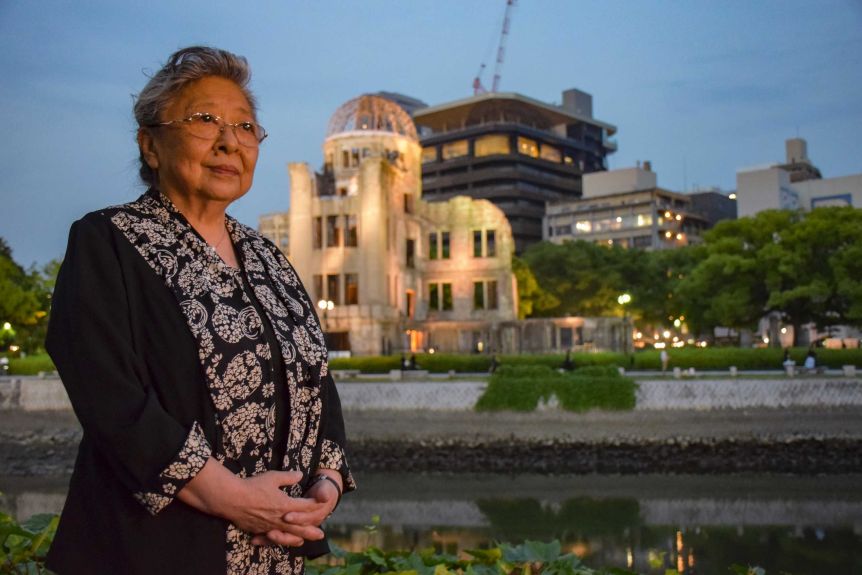
Hiroshima’s atomic bomb changed Koko Kondo’s life, but so did meeting the man who dropped it, ABC News,By Tracey Shelton, 6 August, 20, Eight-month-old Koko was in her mother’s arms the day the world’s first nuclear weapon was dropped on Hiroshima, bringing their family home crashing down on them on this day 75 years ago.
Key points:
Between 90,000 and 166,000 victims died within months of the Hiroshima bombing
Koko Kondo met pilot Robert Lewis on the set of This is Your Life
More than 150 denshosha volunteers are carrying on the memories of survivors
She was almost 40 years old before her mother finally sat her down and told her the full story of how she had inched through the rubble in darkness, with little Koko wrapped in her arms, towards a small pocket of dusty sunlight.
“She first pushed me out [through the opening], then next, she was able to get out … but the fire was all over the place according to my mother,” said Koko Kondo, who is now 75.
Ms Kondo’s father — Methodist minister Kiyoshi Tanimoto, who was visiting a parishioner across town — said in a US television interview “the whole city was on fire” as he ran through the streets to find his family.
He described people running in silence with skin hanging from their bodies “like a procession of ghosts”
In the sky above, pilot Robert Lewis was part of the United States Air Force crew who dropped the atomic bomb known as Little Boy that day, unleashing around 13 kilotons of force on the city below, where Ms Kondo’s family and about 290,000 other civilians lived, according to the Atomic Heritage Foundation.
Estimates on how many people died from the bomb either instantly or in the following months range between 90,000 and 166,000, but the Little Boy would go on to claim the lives of thousands more as the effects of radiation took their toll.
After looking back to see the once-flourishing city “disappear”, Captain Lewis wrote in his log book “My God, what have we done?”…….
While Ms Kondo said most people avoided speaking of the bombing in the decades that followed, her father made it his mission to help the injured, rebuild the city and ensure the world never forgot.
Her family had suffered from radiation sickness and Ms Kondo was subjected to years of tests and examinations to study the effects of radiation exposure.
One of Ms Kondo’s earliest memories — at around two or three years old — was of a group of teenage girls attending a sermon at her father’s church.
“Some girls could not close their eyes. Some girls — their lips were all melted with their chins so they could not close [their mouths],” she told the ABC.
While her manners did not permit her to ask questions, she would listen to her parents’ conversations and learned that the destruction and pain that surrounded her was caused by a single US B-29 bomber.
Ms Kondo said her childhood became consumed by hatred and thoughts of revenge.
“Someday when I grow up, I am definitely going to find the people who were on that B-29 bomber to do the revenge,” she said.
“That was my plan, that was my thinking. But life is interesting.”
When Koko was 10, her mother and siblings received a phone call from the then popular US television program This is Your Life.
They were immediately flown to the United States for an episode featuring the work of her father, who had taken a group of young survivors to the US for plastic surgery……
As Hiroshima mission pilot Robert Lewis was introduced, Koko glared at him with all the hatred a 10-year-old could muster.
“I was so shocked!” she recalled.
“What could I do? I wanted to run to the middle of the stage and give him a punch, a bite or a kick.”
But as he recalled his memories of that day, she saw tears begin to well in his eyes.
“I thought he was a monster, but monsters don’t have tears.”
Ms Kondo said she realised she had lived her short life full of hate for a man she knew nothing about……..
the life of this man was not easy, she said, and he “suffered greatly” not only with the weight of his involvement in the bombing, but he was also “harassed” for speaking about it publicly.at 75, she is among the youngest of a dwindling number of survivors who can tell the world first hand of the horrors these weapons unleashed……….
“My concern is today nuclear weapons are much, much stronger. We have to abolish them now,” urged Ms Kondo. ….
If these stories were lost, “probably our planet would be gone”, she said.
Doctoral candidate Tomoko Kubota is one of more than 150 denshosha — a designated keeper of the memories of a Hiroshima or Nagasaki survivor.
As a denshosha volunteer, she spent three years training and learning from survivor Sadae Kasaoka, so in the future she can “give testimony” on her behalf by sharing her “experiences, the reality of the atomic bombing, and desires for peace”.
That story includes how, at 12 years of age, Ms Kasaoka lost her mother and watched her father die — within days of the blast — in agony from horrific burns and wounds that became infested with maggots.
For other survivors, the memories were too painful to talk about, Ms Kasaoka said, while discrimination against those who did speak out had silenced many over the years…………. https://www.abc.net.au/news/2020-08-06/atomic-bomb-survivors-75-years-after-hiroshima-nuclear-attack/12501636
Russia plans removal of its nuclear trash from Arctic waters
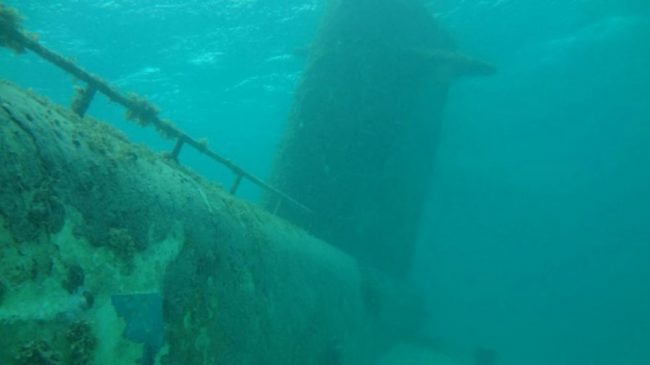
Russia to Remove Hazardous Nuclear Objects Dumped in Its Arctic Waters,
The country’s nuclear energy company will over the next eight years lift two submarines and four reactor compartments from the bottom of the Barents and Kara Seas. By The Barents Observer 5 Aug 20, Russia’s state nuclear agency plans to remove several nuclear objects from the depths of Russia’s Arctic waters in an effort to reduce environmental hazards, Rosatom said this week as it presented a clean-up plan for the region.
Russia’s state nuclear agency plans to remove several nuclear objects from the depths of Russia’s Arctic waters in an effort to reduce environmental hazards, Rosatom said this week as it presented a clean-up plan for the region.
From the late 1960s to the late 1980s, about 18,000 radioactive objects were dumped into Russia’s remote northern waters. Most of them present little environmental risk. But some are increasingly seen as a hazard to Arctic ecosystems.
“Rosatom over the next eight years intends to lift from the bottom of Russia’s Arctic waters six objects that are most dangerous in terms of radioactive pollution,” the company’s spokesperson told the state-run TASS news agency.
The company plans to lift the reactors from the K-11, K-19 and K-140 submarines as well as spent nuclear fuel from the reactor that served the Lenin icebreaker.
In addition, two entire submarines will be lifted: the K-27 from the Kara Sea and K-159 from the Barents Sea. While the former was deliberately dumped by Soviet authorities in 1982, the latter sank during a towing operation in 2003.
The K-27 is located in 33-meter depths east of the Novaya Zemlya archipelago. It has been described by experts as a potential radioactive “time bomb.” The K-159 is located in 200-meter depths off the coast of the Kola Peninsula.
These six objects represent more than 90% of radioactive sources dumped at sea, Rosatom said………
Lifting the six hazardous nuclear objects will not only be technically difficult, but also very expensive.
A recent report made for Rosatom and the European Commission estimated the costs of lifting these six objects at 278 million euros. That includes the cost of bringing them safely to a yard for decommissioning and long-term storage.
Lifting the K-159 alone is estimated to cost 57.5 million euros. Lifting the K-27 and transporting it to a shipyard for decommissioning and long-term storage in Saida Bay will carry a price tag of 47.7 million euros, the report said.
It’s unlikely that Russia’s increasingly cash-strapped treasury will have the 278 million euros needed for the cleanup.
Several countries have previously allocated billions to assist Russia’s post-Soviet efforts to cope with nuclear waste.
Norway has since the mid-90s granted about 1.5 billion kroner (140 million euros) to nuclear safety projects in the Russian part of the Barents region. https://www.themoscowtimes.com/2020/08/05/russia-to-remove-hazardous-nuclear-objects-dumped-in-its-arctic-waters-a71060
Beirut explosion was not an atomic bomb
The Beirut explosion created a huge mushroom cloud and visible blast wave, but nuclear-weapons experts say it wasn’t an atomic bomb. Here’s why. Business Insider , DAVE MOSHER, AUG 5, 2020,
- An explosion at a port rocked the Lebanese capital city of Beirut on Tuesday, killing at least dozens of people.
- As videos of the explosion spread across social-media sites, some observers likened the appearance of a mushroom cloud to that of an atomic bomb.
- The Lebanese prime minister has said the blast came from a stockpile of ammonium nitrate in a warehouse.
- Nuclear-weapons experts say the detonation was definitely not triggered by an atomic bomb.
- Atomic explosions are characterised by a blinding flash of light, a pulse of searing heat, and radioactive fallout, none of which were detected…………. https://www.businessinsider.com.au/beirut-explosion-not-nuclear-bomb-despite-mushroom-cloud-no-flash-2020-8?r=US&IR=T
It’s not the energy salvation for the world – nuclear fusion
 Nuclear Fusion Will Not Save Us, https://www.gizmodo.com.au/2020/08/nuclear-fusion-will-not-save-us/ Yessenia Funes, August 6, 2020 Last week, construction kicked off on the world’s largest experimental nuclear fusion reactor. It marked the start of a new era in the energy sector: The fossil fuel industry has historically dominated this arena, but renewable energy is quickly taking over. Now, nuclear scientists are hoping that the International Thermonuclear Experimental Reactor, or ITER, the experimental power plant under construction in southern France, can play a role alongside already-established technologies like solar and wind.
All the nuclear power plants that exist today rely on nuclear fission. ITER, however, will rely on nuclear fusion. The two are dramatically different, and scientists have struggled to recreate nuclear fusion — the process that makes stars shine — in a lab setting. ITER is the world’s first true attempt at this on a large scale.
“The difference between nuclear fission and nuclear fusion is the reason why we’ve developed a nuclear fission reactor in a matter of years, and still after more than six decades, we still don’t have a nuclear fusion reactor,” said Eugenio Schuster, a mechanical engineering and mechanics professor at Lehigh University who is working on ITER.
Around the world, 450 nuclear reactors were operating last year, all using nuclear fission, which involves splitting heavy atoms of elements such as uranium and plutonium. The process produces tons of highly radioactive waste, the ingredients to create nuclear weapons, potential instability that could lead to a destructive nuclear meltdown, and other concerning issues.
This process also requires uranium. In the U.S., the mining of this resource has contaminated the waters of the Navajo Nation and left countless individuals sick. President Donald Trump wants to see more uranium mining, and he doesn’t care where. The Grand Canyon? It can be mined. Bears Ears National Monument? That, too. Nuclear fission has proven destructive to both human health and the environment. There’s a reason many environmental advocates are highly opposed.
“We have a horrible legacy of uranium contamination in our communities,” said Carol Davis, the executive director of Diné C.A.R.E., an environmental organisation that supports the Navajo people. “Water was contaminated with uranium, and it’s never been cleaned, and people are using that and drinking that.”
Davis and other advocates worry nuclear power is just another false promise that creates radioactive waste while taking time and money away from developing renewable energy technologies. The United States alone has 90,000 metric tons of nuclear waste with nowhere to go. Nuclear fusion doesn’t create the same level of long-lived radioactive waste as the more popular process of nuclear fission, but it isn’t waste-free, either.
The process begins with the breaking down of lighter atoms into a state of matter called plasma. It requires more than 150 million degrees Celsius of heat to get going, though. When you’re comparing it to fission, of course, fusion is better. It can’t cause the nuclear meltdowns that we’ve seen at other sites. It doesn’t need any uranium; all it needs is lithium and water. If greenhouse gas emissions are the concern, fusion doesn’t have any evidence of contributing there. But the process does still produce some waste, and advocates are worried that their communities will be forced to deal with that waste for the greater good.
“This whole notion of endless power with little to no waste, it just sounds too good to be true. We really need to examine what are the true costs and who are the people who will be impacted,” said Leona Morgan, a Diné activist and coordinator of the Nuclear Issues Study Group, a New Mexico-based volunteer organisation against nuclear power. “It seems like we should really learn from what we have already experienced with the loss of human rights and loss of water resources from contamination.”
If scientists want communities to fully embrace nuclear energy, they need to figure out what the hell to do with this toxic trash. In the U.S., decision-makers have historically dumped this stuff near tribal or low-income rural communities. History is bound to repeat itself if leaders don’t take proper action to prevent these injustices.
“The reason we’re investing in fusion is because the promise is big,” Schuster said. “We’re going to have the benefits of renewables in terms of greenhouse gas emissions, but at the same time, we’re going to reduce the area we need to produce the same amount of energy while eliminating the risk of nuclear accidents and the generation of long-lived radioactive waste.”
That’s the thing, though. Intense attention on the climate crisis allows other ecological crises to happen alongside it. No one wants to see the world burn from rising temperatures, but disenfranchised communities don’t want to keep being sacrificed for the sake of human progress, either. Lithium extraction primarily happens in Argentina and Chile, where Indigenous advocates worry about the amount of water the mining requires, as well as the potential for contamination of their lands. Water is going to become even more valuable as we see droughts dry out lakes, rivers, and streams. Fusion simply doesn’t come without a cost.
“This whole notion of endless power with little to no waste, it just sounds too good to be true.”
Proponents of ITER note that the amount of lithium and water needed is minimal, especially compared to the extractive industries that exist today. The plant is expected to need only 550 pounds of fuel a year, half from the isotopes they need from water and half from the isotopes they need from lithium. Schuster notes that most of the water needed for this process would be returned to its source. That’s because researchers need only a specific molecule from the water. These materials won’t be the main issue with nuclear fusion, said Egemen Kolemen, an assistant professor of mechanical and aerospace engineering at Princeton University who is also working on the plant.
“The real issue is going to be the nuclear safety issues,” Kolemen said. “Even though it doesn’t have this runaway type of [reaction], there is still going to be some sort of nuclear reactions… that are going to have low levels, but still some, nuclear waste of sorts.”
The construction of ITER certainly does mark a new chapter in the world’s energy sector. It marks a moment of technological breakthrough and scientific accomplishment, but it won’t save us by itself. No new energy source can. At the heart of the climate crisis is human behaviour. If we’re to survive it — and, more importantly, solve it — we need to take a long, hard look in the mirror. Reducing emissions will require more than finding the perfect clean energy source; it will need a massive shift in human behaviour, lowering our emissions through energy efficiency and less consumption.
Then again, emissions aren’t everything. If we’re lowering our carbon footprint without protecting the health of vulnerable communities, what good is it after all? A nuclear future needs a justice and equity lens if it’s to actually be successful. Otherwise, it’ll be another damaging industry. The world already has enough of those. The construction of ITER certainly does mark a new chapter in the world’s energy sector. It marks a moment of technological breakthrough and scientific accomplishment, but it won’t save us by itself. No new energy source can. At the heart of the climate crisis is human behaviour. If we’re to survive it — and, more importantly, solve it — we need to take a long, hard look in the mirror. Reducing emissions will require more than finding the perfect clean energy source; it will need a massive shift in human behaviour, lowering our emissions through energy efficiency and less consumption.
Then again, emissions aren’t everything. If we’re lowering our carbon footprint without protecting the health of vulnerable communities, what good is it after all? A nuclear future needs a justice and equity lens if it’s to actually be successful. Otherwise, it’ll be another damaging industry. The world already has enough of those.
Vatican signed up to the U.N. Nuclear Weapons Ban Treaty, provides moral guidance
 75 years after Hiroshima and Nagasaki, the Vatican is providing moral guidance on nuclear weapons The Conversation, Drew Christiansen,Distinguished Professor of Ethics and Human Development, Georgetown University, Carole Sargent
At a solemn event at the Hiroshima Peace Park in November 2019, Francis declared the use of atomic energy for war to be “a crime not only against the dignity of human beings but against any possible future for our common home.” “How,” he asked, “can we speak of peace even as we build terrifying new weapons of war?”
His comments came nearly 40 years after John Paul II became the first pope to visit the site of the atomic bomb attacks, which pulverized the two cities on Aug. 6 and 9, 1945 and killed in excess of 200,000 in the process.
Deterrence to abolition
During his visit, Francis reiterated what he previously told assembled Nobel Peace Prize laureates, diplomats and civil society representatives at a Vatican symposium in 2017, that nuclear weapons, along with chemical weapons and landmines, were impermissible. “The threat of their use, as well as their very possession, is to be firmly condemned,” he said…………
In 2017, the Holy See became one of the first signers of the U.N. Treaty on the Prohibition of Nuclear Weapons. Article 1 prohibits signers to “develop, test, produce, manufacture, otherwise acquire, possess or stockpile nuclear weapons…” This was the backdrop for Pope Francis’ historic condemnation of deterrence and call for disarmament later that fall.
One hundred and twenty-two nations voted for the Treaty on the Prohibition of Nuclear Weapons. For its labors on behalf of the treaty, ICAN, the International Campaign Against Nuclear Weapons, an umbrella group of civil society opponents of nuclear weapons, won the 2017 Nobel Peace Prize.
Beyond the hierarchy
But the guidance provided by the Catholic Church is not simply through official statements and positions from the top.
Across the church, various groups have long campaigned for abolition of nuclear weapons. Catholic nuns have often been at the forefront of this work. In Japan, several activist hibakusha – survivors of Hiroshima and Nagasaki – are sisters of Notre Dame de Namur and the Society of the Helper of Holy Souls, among other congregations.
In the U.S., Sister Jennifer Kane was a nuclear engineer before realizing, in the words of her congregation in 2019, “that God was calling her to a more spiritual combat” as an antinuclear activist.
And Dominicans, Religious of the Sacred Heart, and Society of the Holy Child Jesus have participated in the grassroots anti-nuclear direct-action movement Plowshares, at times resulting in prison time for activist nuns……….
Courage of conscience
Church teaching demands that conscientious officials and nuclear workers resist orders they deem to be immoral.
The Second Vatican Council of the early 1960s taught that obeying orders is no excuse for participating in atrocities, and urged anyone, whether top military leader or rank-and-file citizen, to display “the courage of those who openly and fearlessly resist.”
Indeed, in 2018 two chiefs of the U.S. Strategic Air Command testified in a Senate hearing that they would not comply with illegal orders to deploy nuclear weapons, and that they would offer civilian authorities alternative courses of action to pursue. …….https://theconversation.com/75-years-after-hiroshima-and-nagasaki-the-vatican-is-providing-moral-guidance-on-nuclear-weapons-140615
USA could save millions of lives, by combating global heating
 US could avoid 4.5M early deaths by fighting climate change, study finds
https://thehill.com/policy/energy-environment/510726-us-could-avoid-45m-early-deaths-by-fighting-climate-change-study BY REBECCA BEITSCH – 08/05/20
The U.S. stands to avoid 4.5 million premature deaths if it works to keep global temperatures from rising by more than 2 degree Celsius, according to new research from Duke University.
The same study found working to limit climate change could prevent about 3.5 million hospitalizations and emergency room visits and approximately 300 million lost workdays in America.
“The avoided deaths are valued at more than $37 trillion. The avoided health care spending due to reduced hospitalizations and emergency room visits exceeds $37 billion, and the increased labor productivity is valued at more than $75 billion,” Drew Shindell, a professor at Duke University, told lawmakers Wednesday.
On average, this amounts to over $700 billion per year in benefits to the U.S. from improved health and labor alone, far more than the cost of the energy transition.”
Shindell, who conducted the study alongside researchers at NASA, unveiled the findings during a House Oversight Committee hearing on the economic and health consequences of climate change.
The study aimed to show the benefits to the U.S. if the nation sticks with the goal of the Paris Climate Accord, which President Trump has formally moved to leave. The U.S. cannot officially exit the agreement until Nov. 4 — the day after the presidential election.
Shindell encouraged committee members to transition away from fossil fuels, a move that would help ease climate change while also spurring health benefits from reduced air pollution.
The benefits could be seen in the relatively short term.
“Roughly 1.4 million lives could be saved from improved air quality during the next 20 years. As we’ve seen with the coronavirus lockdowns in many places, air pollution responds immediately to emissions reductions,” he said.
“Our work shows that action now means benefits now.”
Democrats have introduced a number of bills to combat climate change, but they’ve failed to get much traction.
The House passed a $1.5 trillion green infrastructure package in July, but the Republican-led Senate isn’t expected to take it up.
Just one day earlier, the House Select Committee on the Climate Crisis unveiled its road map for solving the climate crisis.
Committee Chair Carolyn Maloney (D-N.Y.) said lawmakers need to focus on tackling the problem despite the current coronavirus pandemic.
“Handling one crisis does not negate our responsibility to face another.”
The illusion that nuclear weapons are under control
T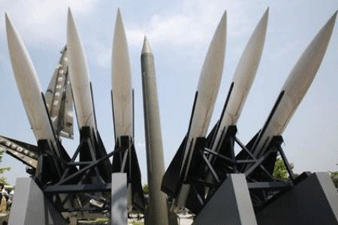 aking nuclear vulnerabilities seriously, The Hindu, M.V. Ramana, Benoît Pelopidas, 5 Aug 20,
All nuclear weapon states have admitted to the possibility that deterrence could fail
Seventy-five years ago, the Japanese city of Hiroshima was destroyed by one single atomic bomb. Three days later, a second bomb destroyed Nagasaki. Those two bombs killed over 2,00,000 people, some of them instantaneously, and others within five months. Another 2,00,000 people or more who survived the bombings of these two cities, most of them injured, have been called the hibakusha. Because of the long-lasting effects of radiation exposure as well as the mental trauma they underwent, the plight of these survivors has been difficult. As Akihiro Takahashi, a hibakusha, testified: “I’ve been living on dragging my body full of sickness and from time to time I question myself. I wonder if it is worth living in such hardship and pain.” But Takahashi and other hibakusha lived on and talked about their experiences in the hope that their plight would never befall anyone…else
Damage and vulnerability
Over 1,26,000 nuclear weapons have been built since the beginning of the atomic age. Over 2,000 of them have been used in nuclear tests, above and below the ground, to demonstrate their explosive power, causing grave and long-lasting damage to the environment and public health. But this damage is nothing compared to what might happen if some of the existing weapons are used against civilian populations……..
To appreciate why we are vulnerable, we should start by realising that there is no realistic way to protect ourselves against nuclear weapons, whether they are used deliberately, inadvertently, or accidentally. The invention of ballistic missiles at the end of the 1950s, with their great speed of delivery, has made it impossible to intercept nuclear weapons once they are launched. Neither fallout shelters nor ballistic missile defence systems have succeeded in negating this vulnerability. Nuclear weapon states are targets of other nuclear weapon states, of course, but non-nuclear weapon states are vulnerable as well.
The problems of deterrence
……. Deterrence enthusiasts claim that nuclear weapons do not just protect countries against use of nuclear weapons by others, but even prevent war and promote stability. These claims do not hold up to evidence. Nuclear threats have not always produced fear and, in turn, fear has not always induced caution. To the contrary, nuclear threats in some cases have produced anger, and anger can trigger a drive to escalate, as was the case with Fidel Castro during the Cuban Missile Crisis.
After years of having the top operational responsibility for all U.S. strategic nuclear forces, General Lee Butler, former Commander-in-Chief of the United States Strategic Command. observed: “The goal — the wish, really — might be to prevent nuclear war, but the operational plan had to be to wage war.” It is thus an illusion to think that nuclear war is impossible.
The illusion of control
A related illusion concerns the controllability of nuclear weapons. In the real world, it is not possible for planners to have complete control. However, the desire to believe in the perfect controllability and safety of nuclear weapons creates overconfidence, which is dangerous. Overconfidence, as many scholars studying safety will testify, is more likely to lead to accidents and possibly to the use of nuclear weapons.
In several historical instances, what prevented the use of nuclear weapons was not control practices but either their failure or factors outside institutional control. The most famous of these cases is the 1962 Cuban Missile Crisis. There are likely many more cases during which the world came close to nuclear war but because of the secrecy that surrounds nuclear weapons, we might never know.
If deterrence has not prevented nuclear war so far, what has? While a comprehensive answer to this question will necessarily involve diverse and contingent factors, one essential element in key episodes is just plain luck. This is, again, best illustrated by the case of the Cuban Missile Crisis, where nearly four decades of scholarship attest to the crucial role of luck. The consequences of bad luck, then or later, could make the COVID-19 pandemic seem benign by comparison.
While humanity has luckily survived 75 years without experiencing nuclear war, can one expect luck to last indefinitely?
Hosting nuclear weapons is a danger to Germany
Nuclear bomb in Germany would kill hundreds of thousands, Greenpeace warns, euronews, By Alice Tidey 05/08/2020 – A nuclear bomb detonating in Germany would instantly kill hundreds of thousands of people, Greenpeace has said, calling on the US to withdraw the small arsenal of atomic weapons it currently has in the country.
The environmental non-profit released a study it had commissioned simulating the impact of a nuclear weapon exploding in Germany on the eve of the 75th anniversary of the Hiroshima bombing.
“The Federal Government must ensure that US atomic bombs are withdrawn from Buchel with the US soldiers,” he added.
Washington announced last week that it would start withdrawing nearly 12,000 of the 36,000 US troops currently stationed in Germany over the coming weeks.
A threat to Germany’s security
Greenpeace’s NUKEMAP study calculated the impact of various strengths of nuclear bombs in several locations: Berlin, the seat of the country’s political power; Frankfurt, the country’s financial centre; and Buchel, a municipality in south-west Germany where several US atomic bombs are stored at an airbase.
The strength of an atomic bomb is measured in kilotons (kt) and megatons (mt) which means that a nuclear weapon with a detonation energy of one kiloton generates the same amount of energy as 1,000 tons (1 Kt) of TNT.
NUKEMAP found that a 20 kt bomb exploding in Berlin would instantly kill 145,000 people, with an additional 120,000 dying from the radioactive fallout and a further 50,000 passing away from cancer.
A 550 kt bomb — commonly found in Russia’s nuclear arsenal — dropped over Frankfurt would instantly kill half a million people, while 300,000 more would die from radioactive fallout and 160,000 would succumb to cancer at a later date.
Von Lieven argued that “the bombs in Buchel threaten the security of people in Germany and Eastern Europe.”
“Germany must no longer be a potential aggressor and a possible target for a nuclear attack,” he went on.
In another Greenpeace study conducted by pollster Kantar and released last month, 83 per cent of the 1,008 German respondents said they favoured the US withdrawing the bombs kept in Buchel.
Nine countries, 13,800 warheads
Between 90,000 and 160,000 people are believed to have died int he first few months following the Hiroshima bombing, according to the Centre for Nuclear Studies at Columbia University. Another 60,000 to 80,000 are thought to have died in Nagasaki.
Most figures are best estimates as the devastation unleashed by the explosions and uncertainty over the actual population before the bombings make it difficult to have an accurate estimate.
The world’s arsenal of nuclear weapons was estimated at 13,865 at the beginning of 2019 by the Stockholm International Peace Research Institute (SIPRI).
Only nice countries have atomic warheads. These are China, France, India, Israel, North Korea, Pakistan, Russia, the UK, the US. Washington and Moscow each have more than 6,000 nuclear warheads.
Between 90,000 and 160,000 people are believed to have died int he first few months following the Hiroshima bombing, according to the Centre for Nuclear Studies at Columbia University. Another 60,000 to 80,000 are thought to have died in Nagasaki.
Most figures are best estimates as the devastation unleashed by the explosions and uncertainty over the actual population before the bombings make it difficult to have an accurate estimate.
The world’s arsenal of nuclear weapons was estimated at 13,865 at the beginning of 2019 by the Stockholm International Peace Research Institute (SIPRI). https://www.euronews.com/2020/08/05/nuclear-bomb-in-germany-would-kill-hundreds-of-thousands-greenpeace-warns
Bribery scandal haunts Exelon – casts doubt on future of Exelon’s Illinois Nuclear Plants
 ComEd Bribery Scandal Clouds Picture for Exelon’s Illinois Nuclear Plants ComEd Bribery Scandal Clouds Picture for Exelon’s Illinois Nuclear Plants
Exelon wants state legislation to keep its Illinois nuclear plants open. Subsidiary ComEd’s involvement in a bribery scandal is not helping politically. GreenTech Media, JEFF ST. JOHN AUGUST 04, 2020 Exelon may be forced to close its Illinois nuclear plants if state legislation is not passed to bolster their eroding financial prospects. But subsidiary utility Commonwealth Edison’s involvement in a bribery scandal has complicated this and other key policy efforts in its home state.CEO Chris Crane outlined these challenges during the Chicago-based utility’s second-quarter earnings conference call on Tuesday. Last month, ComEd agreed to pay a $200 million fine as part of a deferred prosecution agreement with federal prosecutors to avoid criminal liability in an alleged bribery scheme involving Illinois House Speaker Michael Madigan. ……. Exelon owns the country’s largest nuclear generating fleet and other generation assets; it operates utilities in Illinois, Maryland, Delaware and Washington, D.C. …… Exelon’s nuclear plants hang in the balanceA December decision from the Federal Energy Regulatory Commission is forcing mid-Atlantic grid operator PJM to impose minimum prices on a wide array of state-supported grid resources. That rule is expected to include Exelon’s Clinton and Quad Cities nuclear power plants, which receive hundreds of millions of dollars per year in zero-emissions credits created by Illinois’ Future Energy Jobs Act. Exelon is seeking to extend the zero-emissions credits to its Braidwood, Byron and Dresden nuclear plants, which failed to clear PJM’s last capacity auction in 2018 and could face early retirement without additional financial support. While FERC has not approved PJM’s plan to comply with its order, and PJM has not yet set a date to resume its long-delayed capacity auction, “there’s a strong sense…that some of the nuclear units will not be picked up in that auction” when it occurs, Crane said. “Some are uneconomic right now, and some may become uneconomic.” …….. the bribery scandal has driven a wedge between the utility and state lawmakers, while the COVID-19 pandemic forced the legislature to curtail much of its work this spring and focus on responses to the public health crisis. The Clean Energy Jobs Act failed to move ahead during an emergency session in May, as did an alternative, less ambitious clean energy bill called Path to 100. llinois Governor JB Pritzker suspended the Energy Working Group involved in crafting the Clean Energy Jobs Act after the deferred prosecution agreement was announced, saying through a spokesperson that future legislation “will not be written by utility companies.” …….Absent a legislative solution to Exelon’s nuclear plants’ challenges in Illinois, Crane said, “If we can’t find…a path to profitability, we will have to shut them down.” But Exelon “will not allow the balance sheet to be further deteriorated by operating noneconomic assets,” he said. Exelon has successfully won zero-carbon credits in New York and New Jersey, but it has also laid plans to shut down its Three Mile Island nuclear plant in Pennsylvania if that state does not create similar supports. Formula rate extension and Chicago grid takeover both remain uncertain ComEd also faces an uphill battle in efforts to win an extension of a plan in place since 2011 that allows it to file its capital expansion plans under formula rate updates, rather than through a traditional rate-making process with the Illinois Commerce Commission. A bill that would have extended the formula rate structure past its 2022 expiration failed to pass the legislature this year
………. the utility’s $9.53 billion capital plan for 2020 through 2023, which will take effect under the formula rate structure, will add more than $5 billion to its capital rate base and lead to price hikes for customers in future years. ……. https://www.greentechmedia.com/articles/read/comed-bribery-scandal-affects-exelons-illinois-nuclear-plants-ratemaking-policy
|
|
|
Utah Taxpayers – NuScam nuclear power project costly and public kept in the dark
 New Information Disclosed in Meeting Closed to Public Points to Major Budget Commitments, Delay Risks in UAMPS Power Project https://utahtaxpayers.org/new-information-disclosed-in-meeting-closed-to-public-points-to-major-budget-commitments-delay-risks-in-uamps-nuclear-power-project/
by Tax Watchdog | Aug 4, 2020 “We Need Public Hearings and We Need Public Votes”: UTA Calls for Full Transparency and Accountability Ahead of September 14th Deadline; Parallels Seen to Ohio, Illinois and South Carolina Nuclear Controversies Where Public Was Kept in the Dark.
SALT LAKE CITY – August 4, 2020 – Utah Associated Municipal Power Systems (UAMPS) and NuScale Power held an “online town hall meeting” on July 21st, but there was just one problem: due to a quirk in Utah’s open meeting laws, the town was not invited. Not only did UAMPS/NuScale fail to be transparent in terms of the meeting about their controversial small modular nuclear reactor plans, but they also failed to disclose new and troubling information that emerged during the behind-closed-doors virtual session, according to the nonprofit Utah Taxpayers Association (UTA). UTA and Peter Bradford, a former U.S. Nuclear Regulatory Commission (NRC) member, warned that potentially higher costs, project delays, and other risks could be costly for UAMPS members and ratepayers.
A total of 34 municipalities in Utah, Idaho, New Mexico and California (see full list below) are participating in the UAMPS small modular nuclear project. Ratepayers will be locked into more than $100 million in commitments by a September 14th deadline and billions of dollars of risks later on if UAMPS members do not opt out of the project. The need for openness is particularly important while the nuclear industry is currently facing major credibility problems with scandals in Ohio, Illinois, and South Carolina.
On July 21st, UAMPS and NuScale held a so-called “online town hall meeting,” which was not made open to the media under a special Utah exemption for UAMPS for open meeting requirements. A video copy of the UAMPS/NuScale event was acquired after the fact. (The timecodes shown below refer to various points in the video.)
Rusty Cannon, Vice President, Utah Taxpayers Association, said: “The UAMPS project will lock in 27 municipalities in Utah and several in surrounding states for a share of billions of dollars in costs and unclear risk in the pursuit of a cluster of small modular reactors (SMRs) touted by Oregon-based NuScale Power, which repeatedly has delayed timelines and increased costs associated with its SMRs.”
Cannon added: “This risky project with massive cost escalations is being conducted largely out of the public eye. Most recently the public was barred from a late July online ‘town hall meeting,’ the content of which has since come to light and which raises serious concerns about what has not been disclosed to the general public. The Utah Taxpayers Association urges elected officials involved with UAMPS to disclose all relevant information to the public so decisions can be made in the open and city officials can be held accountable. We are urging city councils in Utah that are subscribed to the project to vote in a public meeting before the September deadline to withdraw from the project.”
Also speaking at today’s news event was Peter Bradford, a former member of the U.S. Nuclear Regulatory Commission who served as chair of both the New York Public Service Commission and the Maine Public Utilities Commission. He has been an expert witness in many cases involving nuclear power economics, and he has taught Nuclear Power and Public Policy at the Vermont Law School as well as Energy Policy and Environmental Protection at the Yale School of the Environment.
Peter Bradford said: “There is the very real possibility of large rate increases to the customers in these communities due to inadequate safeguards in this project. It is difficult to understand the case for taking on this risk given the certainty of cheaper clean energy alternatives as clearly shown by recent purchases of firm combinations of renewables, energy efficiency plus storage elsewhere in the West. The cost of lack of transparency plus unwise and secretive deals has resulted in the nuclear energy industry becomingembroiled in multiple debacles. UAMPS members and ratepayers should take heed and avoid making the same mistakes.”
Just what is UAMPS and NuScale failing to disclose to the public?
- RAPIDLY ESCALATING CONSTRUCTION COSTS. NuScale’s website currently explains to the public: “The estimated construction cost for the first NuScale 684 MWe (net) plant is about $3 billion.” However, during the July 2020 “town hall,” UAMPS contractor Bob Squires (MPR Associates) calls the project a “roughly $5 billion nuclear power plant development project with first of a kind technology.” (3:47:24) Even worse: NuScale’s 2020 Amended Budget & Plan of Finance projects a total cost of approximately $6.1 billion.
- MAJOR MISSED DEADLINES. In 2008, NuScale explained: “With timely application for a combined construction and operating license (COL), a NuScale plant could be producing electricity by 2015-16.” In 2019, UAMPS publicly announced that the NuScale nuclear power plant would begin construction in 2023, “with the first 60 MW module becoming operational in 2026 [and] [o]ther modules would come on-line soon thereafter.” However, during the non-public July “town hall,” Glenn Neises, nuclear director, Burns & McDonnell, announced for the first time that completion is now projected for June 2030, and the first module is not expected to become operational until June 2029. (3:22:25) And things could get even worse. Warning of possible new delays, Neises said: “I’d also like to stress that this is the current schedule and expect it to change as we see changes in funding, engineering moves forward, and as licensing advances.” (3:22:25)
-
- LOW-BALLED ENERGY PRICE. Doug Hunter, UAMPS CEO, said an undisclosed Economic Competitiveness Test (ECT) determined the UAMPS project power that could be generated would cost $55/MWh in 2018 dollars. (24:30) The UAMPS/NuScale estimate contrasts sharply with other independent utility projections (PacifiCorp’s estimate of $95/MWh and Idaho Power’s estimate of $125/MWh). Doug Hunter confirms this in answering a question as to why large investor-owned utilities are not pursuing this project: “Right now they’re still relying on existing capacity, most of them, to fill in energy with renewables because that happens to be the lowest IRP.” (2:28:20)
- DEPENDENCE ON UNPREDICTABLE FEDERAL SUBSIDIES. Mason Baker, UAMPS chief legal officer, admitted during the “town hall” that project organizers are now banking on a “massive increase” in the federal government’s contribution to UAMPS, a jump from $60 million to $1.4 billion. (48:30) UAMPS now acknowledges taxpayer subsidies are necessary to achieve the $55 per MW/h price point. (53:50) In effect, U.S. taxpayers are being asked to subsidize roughly 25 percent of the UAMPS SMR project to artificially hold down energy costs. However, taxpayer subsidies of this sort are both objectionable on their merits, entirely unpredictable as to passage, and subject to being withdrawn at any time.
- The Utah Taxpayers Association also noted that no town or city of more than 100,000 has opted into the UAMPS SMR project, which has not been successful in securing investments in it by investor-owned utilities. It is not apparent that any UAMPS member so far opting into the SMR project has been able to afford to do its own independent financial evaluation of the project, and, instead, may be over relying on assurances from the promoter, NuScale. Committing a municipal government to a long-term contract of this magnitude could result in massive sunk costs and higher rates and taxes on citizens.
- The following are the UAMPS members currently subscribed to the SMR project: Utah (Beaver City, Blanding, Bountiful, Brigham City, Enterprise, Ephraim City, Fairview City, Fillmore City, Heber City Light & Power, Holden Town, Hurricane City, Hyrum City, Kanosh Town, Kaysville City, Lehi, Logan City, Monroe City, Morgan City, Mt. Pleasant City, Murray City, Oak City, Paragonah Town, Parowan, Payson City, Santa Clara City, South Utah Valley Electric Service District, Spring City, Washington City, and Weber Basin Conservancy District); Idaho (Idaho Falls Power and Salmon River Electric Cooperative, Inc.); California (Lassen Municipal Utility District and Plumas-Sierra Rural Electric Cooperative); and New Mexico (Los Alamos County). The total size of the subscriptions is 160.4 megawatts, with 133.4 megawatts going to the state of Utah.
The Utah Taxpayers Association is a non-profit 501(c)(4) organization that works to limit state and local taxes, making Utah an attractive place to live and do business. www.utahtaxpayers.org
Important note: The Utah Taxpayers Association has no position on nuclear energy. The Association’s interest in this matter is limited to the extent to which public business of interest to ratepayers/taxpayers is conducted in an open and transparent manner in order to ensure maximum accountability to the public.
Grim financial news for weapons maker Magnox/Babcock
Times 5th Aug 2020, One of Britain’s main defence contractors has delivered more grim news
for investors after axing its dividend for last year. Babcock said that it
was cancelling the payout for the financial year that ended in March in an
attempt to preserve cash.
In June the company suspended the final dividend
until it had “greater certainty” on the impact of the pandemic.
Yesterday it laid bare the cost of the Covid-19 slump, revealing that
underlying revenues in the three months to the end of June had fallen by 11
per cent.
Underlying operating profit for the first quarter fell by 40 per
cent from last year’s level. Babcock attributed half of the lost profits
to a slide in productivity as the coronavirus outbreak forced it to change
working practices. The remainder was down to the loss of a contract with
Britain’s Nuclear Decommissioning Authority to clean up 12 Magnox reactor
sites and weakness in South Africa and at its land division. Shares in
Babcock fell by 29p, or 10 per cent, to 260p last night.
https://www.thetimes.co.uk/edition/business/dividend-sunk-by-babcocks-profit-woes-dz6qc872f
1 This Month

of the week – Shut Down Drone Warfare!


Tell the Ukrainian Government to Drop Prosecution of Peace Activist Yurii Sheliazhenko

Petition to revoke the licensing of the Near Surface Nuclear Disposal Facility (NSDF) at Chalk River. https://www.ourcommons.ca/petitions/en/Petition/Details?Petition=e-7247
To see nuclear-related stories in greater depth and intensity – go to https://nuclearinformation.wordpress.com
-
Archives
- April 2026 (91)
- March 2026 (251)
- February 2026 (268)
- January 2026 (308)
- December 2025 (358)
- November 2025 (359)
- October 2025 (376)
- September 2025 (257)
- August 2025 (319)
- July 2025 (230)
- June 2025 (348)
- May 2025 (261)
-
Categories
- 1
- 1 NUCLEAR ISSUES
- business and costs
- climate change
- culture and arts
- ENERGY
- environment
- health
- history
- indigenous issues
- Legal
- marketing of nuclear
- media
- opposition to nuclear
- PERSONAL STORIES
- politics
- politics international
- Religion and ethics
- safety
- secrets,lies and civil liberties
- spinbuster
- technology
- Uranium
- wastes
- weapons and war
- Women
- 2 WORLD
- ACTION
- AFRICA
- Atrocities
- AUSTRALIA
- Christina's notes
- Christina's themes
- culture and arts
- Events
- Fuk 2022
- Fuk 2023
- Fukushima 2017
- Fukushima 2018
- fukushima 2019
- Fukushima 2020
- Fukushima 2021
- general
- global warming
- Humour (God we need it)
- Nuclear
- RARE EARTHS
- Reference
- resources – print
- Resources -audiovicual
- Weekly Newsletter
- World
- World Nuclear
- YouTube
-
RSS
Entries RSS
Comments RSS
 nuclear-news