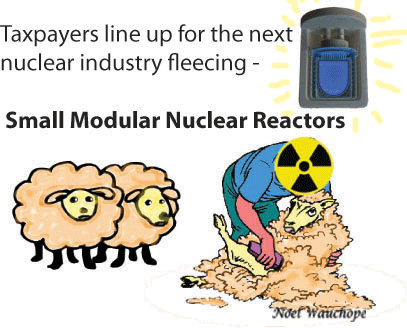
Looks as if 20 municipalities in Utah have been NuScammed for those not so small nuclear reactors
readers may wonder how UAMPS convinced some members to sign an “option” contract, which eventually converts to a “hell-or-high-water” contract, meaning that the buyer has no right, under any circumstances, to abandon the contract once construction, the Achilles heel of nuclear projects, is authorized.
|
|
Over 20 municipalities, primarily located in Utah, have signed a contract with Utah Associated Municipal Power Systems (UAMPS) to purchase entitlement shares for a first-of-a-kind nuclear power plant based on NuScale’s unproven small modular reactor (SMR) design. [and they’re not really small at all]
Ignoring the history of commercial nuclear plant construction, advocates have promoted the SMR project as a cost-effective energy resource without fully addressing the economic, contractual and litigation risks with stakeholders. Between 1953 and 2008, approximately 250 commercial nuclear reactors were ordered in the United States. During this period, ratepayers (and investors) bore the burden for well over $200 billion (in 2009 dollars) in costs for completed and abandoned nuclear plants. For example, one of the largest municipal bond defaults occurred in 1982 when the Washington Public Power Supply System defaulted on $2.25 billion in bonds for two nuclear power plant construction projects. In an effort to reduce their losses, bondholders sued a group of utilities (including several Idaho cities) that entered into contracts to pay for the plants.
Well, what about the UAMPS SMR project, including the $65 dollars per megawatt-hour (price cost of electricity) sales pitch? During a 2018 Los Alamos County Council meeting, held to consider approval of the UAMPS power sales contract, a council member asked a UAMPS lawyer, “There’s been mention of a target of $65 a megawatt-hour. How did we come up with that number?” Another council member, probing into the terms of the contract, expressed additional concern. The councilor stated, “I feel like we’re being sold a bill of goods with $65 a megawatt-hour.” With that said, readers may wonder how UAMPS convinced some members to sign an “option” contract, which eventually converts to a “hell-or-high-water” contract, meaning that the buyer has no right, under any circumstances, to abandon the contract once construction, the Achilles heel of nuclear projects, is authorized. Having a similar concern, especially given the history of nuclear plant construction, a sincere effort was made to address project risks with the UAMPS SMR project chair, including sharing concerns about transparency and proposing possible ways to minimize risks to ratepayers, including contract modifications such as price guarantees and redefining the construction period. Unfortunately, my questions and concerns fell on deaf ears. |
|


The Santa Susana site – America’s Secret Chernobyl

|
Inside America’s Secret Chernobyl — The Abandonded Cold War Compound Outside Suburban LA, more https://medium.com/@lukejacobs/inside-americas-secret-chernobyl-the-radioactive-dump-that-started-la-s-recent-wildfire-663b9bd0430e BY Luke Jacobs, Independent Journalist & Videographer, 27 July 20, “……….The Santa Susana Field Laboratory was a sprawling industrial research complex located on over 2,000 acres of rocky hillside in Simi Valley, California. Widely recognized as being one of America’s most vital facilities during the space race, scientists from NASA, Boeing, and Rocketdyne contributed significantly in developing the following projects for the US government.
And…
Worst in US history? Most Americans know about Three Mile Island, the 1979 meltdown which brought anti-nuclear politics into the mainstream and resulted in worldwide outrage. But how many have heard of the 1959 Rocketdyne Meltdown?
Residents had tremendous pride for the facility. To them, it represented a greater purpose that most Americans only connected with by way of television reports and radio broadcasts. Locals businesses fed Rocketdyne workers, washed their clothes, repaired their cars, and built their homes. They were helping their country with its most important goals: defeating the Soviets and sending men to the moon. The reactor that leaked in 1959 was located in an area of SSFL dubbed “Sector IV”, which was classified as experimental and given lax environmental restrictions. This allowed engineers to speedily build the reactor, but with a deadly tradeoff: it had no containment structures. The reactor and its highly radioactive components were housed without the large concrete domes that surround modern power reactors. When the meltdown occurred, a decision was made by higher-ups to downplay the incident. Engineers were told to run the reactor as normal over the next few days. As it became more and more obvious that radiation was spreading throughout the surrounds hills and communities, the plug was pulled. A few weeks later, Atomics International released a memo alerting residents of a “slight mishap” with their reactor, and that no dangerous radiation was released. Employees at SSFL were directed not to tell anyone about the incident, and it was not publicly disclosed for 20 years, until 1979. A series of academic and journalistic reports between 1989–2010 helped to reveal the true scale of the disaster. Testifying before Congress in 2008, Daniel Hirsch, President of an NGO dedicated to nuclear safety, referred to the meltdown as “one of the worst accidents in nuclear history.” Subsequent reports revealed other toxic decisions Boeing made at SSFL. Instead of safely shipping hazardous materials to a licensed facility, workers shot barrels of the toxic chemicals with rifles and dumped the waste into nearby streams. This has led to multiple ongoing studies on the groundwater quality of the area, including an expensive multi-billion dollar legal battle between Boeing and local governments over a cleanup agreement. ……. Aside from the high levels of radiation in the soil and crumbling infrastructure, the site has pretty intense security. From my online conversations with the few people who managed to sneak in, the process is grueling: requiring a 6-mile hike in and out which almost necessitates overnight camping at the site. |
|
Dismantling of San Onofre nuclear station, but high level radioactive trash remains onsite

San Onofre Decommissioning Update https://www.kpbs.org/news/2020/jul/27/san-onofre-decommissioning-update/ Monday, July 27, 2020, By Alison St John Work continues to dismantle the San Onofre nuclear power plant, which provided San Diego with 20% of its electricity until 2012 when it shut down prematurely, due to a radiation leak. The process of decommissioning the plant is more controversial than its 44 years in operation. The question is whether the high-level nuclear waste, which remains radioactive for tens of thousands of years, can be safely disposed of?
Rob Nikolewski, energy reporter for The San Diego Union-Tribune, has been following the progress of decommissioning and storing the radioactive waste.
Nikolewski said one very large chunk classified as low-level nuclear waste has already been transported to a storage site near Clive, Utah. The 770-ton reactor vessel was shipped by rail and a convoy of eight trucks across over 400 miles to its destination. Millions more pounds of low-level waste will be broken down into smaller pieces and transported to Clive, where the private company Energy Solutions has a licensed repository.

However the high-level waste — hundreds of spent fuel rods — remains on-site, since the federal government has failed to approve a long- term storage site for the nation’s high-level nuclear waste. Southern California Edison, which owns the plant, has nearly finished transferring canisters of highly radioactive spent fuel rods into over 70 concrete bunkers next to the beach.
Earlier this month the California Coastal Commission approved Edison’s permit for the decommissioning, including removing the cooling pools which originally held the stored spent fuel rods. The Commissioners reserved the right to review the permit in 15 years and if there is evidence of cracking or other problems such as sea-level rise that threaten the integrity of the canisters, the permit holder could be required to move them.
San Diego Congressman Mike Levin is concerned about the safety of the site, which is in his district and has millions of people living within 50 miles. Levin convened a task force that met for a year and recently came out with a report. One recommendation is that since the federal government has not approved a long-term storage site for high-level nuclear waste, the state of California should take more responsibility for how the nuclear waste is disposed of.
Nikolewski said he has not seen any evidence of state officials stepping forward to hold the companies accountable. He said federal law may need to be changed to allow for that.
The distinctive twin domes that are visible from the Interstate 5 will be removed sometime between 2025 and 2027, and decommissioning the plant, including removal of the low-level nuclear waste, should be complete within 6 to 8 years. The high-level waste will remain indefinitely, in bunkers near the beach.
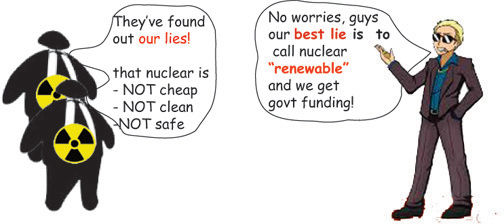
U.S. International Development Finance Corporation now calling nuclear projects “renewable”
|
DCF Opens Door to Fund Nuclear Power Projects Abroad, JDSupra, Sachin Desai, Amy Roma
On July 23, 2020, the U.S. International Development Finance Corporation (DCF) announced its intention to open the door to funding opportunities for nuclear projects abroad. In a summary of its decision following a voluntary 30-day comment period, DCF announced that it has enabled “its full suite of finance products to support all civil nuclear projects that meet the United States’ highest safety security, and nonproliferation standards and laws.” In doing so, it modified the definition of “renewable energy” in its Environmental and Social Policy and Procedures (ESPP) to allow for consideration of nuclear projects. The former ESPP specifically excluded nuclear power from the definition of renewable energy. Removing this prohibition aligns the definition with the United States Energy Information Administration’s definition, as discussed in our previous blog, “US Government Proposes to Lift Ban on Financing Nuclear Energy Projects Overseas.” DCF CEO Adam Boehler boasted that this decision will “accelerate growth in developing economies with limited energy resources,” after the proposal received over 800 comments with overwhelming support and bi-partisan participation. ……… Some comments did pose concerns that nuclear energy would not help those communities that lacked access to energy and argued the benefits of renewables over nuclear energy. However, DCF responded that it will continue to prioritize developing countries, pursuant to the BUILD Act. Advancing U.S. Foreign Policy: Commenters largely viewed the proposed change as a way to increase U.S. competitiveness in the nuclear industry. … Additionally, comments discussed that DCF funding will carry great weight not only as a monetary mechanism, but also as a demonstration of government support. Generating Returns for American Taxpayers: Comments that fell into this category were also largely supportive and posited that the proposed changes would lead to an increase in jobs as well as a return on investment to fund future nuclear research and development. While a few comments demonstrated concern that DCF might fund “unproven technologies”… https://www.jdsupra.com/legalnews/dcf-opens-door-to-fund-nuclear-power-61753/ |
|
Investigation into several Ohio nuclear bailout bills
 Federal investigators seek records for nuclear bills introduced before Larry Householder became Ohio House speaker, By Andrew J. Tobias, cleveland.com, 27 Jul 20, COLUMBUS, Ohio — Federal investigators are eyeing several nuclear bailout bills, including House Bill 6 but also three previous iterations introduced before Larry Householder became Ohio House speaker. Federal investigators seek records for nuclear bills introduced before Larry Householder became Ohio House speaker, By Andrew J. Tobias, cleveland.com, 27 Jul 20, COLUMBUS, Ohio — Federal investigators are eyeing several nuclear bailout bills, including House Bill 6 but also three previous iterations introduced before Larry Householder became Ohio House speaker.
A federal subpoena, obtained via a public-records request, seeks records related to four nuclear bailout bills. One is 2019′s HB6, which ultimately passed that year through what federal prosecutors have described as an elaborate corruption scheme funded by $60 million in FirstEnergy bribes. Three bills introduced in 2017 failed to progress significantly in the legislative process. Two of the 2017 bills, House Bills 178 and 381, were sponsored by state Rep. Anthony DeVitis, a Republican from suburban Akron, near FirstEnergy’s corporate headquarters. One, Senate Bill 128, was co-sponsored by Sen. John Eklund, a Geauga County Republican and then-Sen. Frank LaRose, a Hudson Republican who is now Ohio Secretary of State. None of the bills’ sponsors have been accused of wrongdoing……. All four bills sought to subsidize two Ohio nuclear plants owned by a former FirstEnergy subsidiary by tacking fees onto electricity customers’ bills. Previous versions of the bill failed to advance until Householder was elected speaker, with heavy financial backing by FirstEnergy, in January 2019. The final version of HB6 raised more than $1 billion, which company officials argued was needed to rescue the financially troubled plants. Federal investigators also are seeking “all documents and items, including communications” related to public records issued to the House referencing or related to Householder. The subpoena is dated July 20, the day before federal agents arrested Householder, his top political aide and three prominent lobbyists who all worked for a political enterprise federal investigators say was led by Householder. Federal agents say FirstEnergy provided $60 million for the enterprise, which first fielded legislative candidates who backed Householder for speaker, then passed HB6 and finally defended it against a repeal effort, in a “corrupt bargain” in return for Householder’s promise to secure the bailout….. www.cleveland.com/open/2020/07/federal-investigators-seek-records-for-nuclear-bills-introduced-before-larry-householder-became-ohio-house-speaker.html |
|
Former executive of South Carolina utility Scana Corp has pleaded guilty in nuclear conspiracy case
 US executive pleads guilty in nuclear project delay cover-up https://www.globalconstructionreview.com/news/us-executive-pleads-guilty-nuclear-project-delay-c/, 27 July 2020 | By GCR Staff
A former executive of South Carolina utility Scana Corp has pleaded guilty to his role in what investigators called a “breathtaking” conspiracy to hide unresolvable problems in a project to build a $10bn nuclear power plant.
Stephen Byrne, 60, an executive vice president of Scana, repeatedly assured investors, taxpayers and state officials that two new units at the VC Summer nuclear power station would be finished in time to qualify for a federal nuclear production tax credit, worth up to $1.4bn, that is set to expire on 31 December this year.
Prosecutors said Byrne knew the scheme was hopelessly behind and over budget, but that his and co-conspirators’ deceptions allowed Scana to obtain rate increases from Scana’s customers to continue financing it.
“This conspiracy to defraud Scana customers is breathtaking in scope and audacity,” said FBI Special Agent in Charge Jody Norris. “The FBI remains committed to ensure all those responsible for this crime, which only served to enrich a few by robbing families and communities within South Carolina, are held accountable.”
Byrne, who was in charge of Scana’s nuclear work, agreed a plea deal with prosecutors and has been cooperating with investigators. He faces up to five years in prison.
Peter McCoy, US attorney for the district of South Carolina, told reporters outside the courtroom after the plea: “Today is a good start to years upon years of investigation, so we’re mighty proud about what happened here today.”
The project to add two reactors to the station was abandoned by Scana subsidiary SCE&G three years ago after it became mired in cost overruns and then fell foul of the collapse of Westinghouse, a subsidiary of Japanese engineer Toshiba, which was carrying out the work.
The first concrete pour for unit two was made in March 2013, making it the first reactor to start construction in the US in 30 years. The first concrete for unit three was completed in November of the same year. However, the original $9.8bn cost of the scheme had increased to roughly $25bn by 2017.
As an example of Byrne’s deception, prosecutors gave evidence that in July 2016, Byrne submitted written testimony to the South Carolina Public Service Commission, the Office of Regulatory Staff and the public stating that the construction schedule was “logical and appropriate” when Byrne knew it was unreliable and unlikely to be achieved.
As part of the plea deal, the Virginia-based utility Dominion Energy, which acquired Scana in 2018, will provide $4bn to state rate-payers as damages for criminal activity that took place in 2015 and 2016.
The US Securities and Exchange Commission filed a second lawsuit against Byrne and former Scana chief executive Kevin Marsh in February, also connected with misleading statements about progress at VC Summer.
Byrne joined Scana in 1995 and has more than 30 years’ experience in the utility industry. He has been released pending sentencing.
Image: The second containment vessel ring being placed on unit two in February 2017 (Santee Cooper)
Further reading:
Renewables output outpacing coal and nuclear in USA
Renewables output outpacing coal and nuclear in US https://www.windpowermonthly.com/article/1690384/renewables-output-outpacing-coal-nuclear-us, 27 July 2020 by Craig Richard
Renewable energy sources outperformed coal and nuclear in the US during the first five months of the year, according to analysis of Energy Information Administration (EIA) data. The fastest growing energy sources during this period were wind and solar, according to analysis by renewables advocacy group the Sun Day Campaign.
Wind generated 11.1% more electricity (144.8GWh) than it did in the same period one year earlier , and accounted for 9.4% of the United States‘ total generation between January and May — up 1.4 percentage points from the first five months of 2019.
According to Windpower Intelligence, the research and data division of Windpower Monthly, the US’ wind power fleet reached nearly 109.3GW by the end of May 2020 — an increase of 11.7% year on year.
Meanwhile, solar generated 23.1% more electricity in the first five months of 2020 (50.6GWh) than it did in the same period one year earlier, and accounted for 3.3% of the US’ total electricity generation in this time — up half a percentage point from January-May 2019.
Combined, renewable energy sources — also including hydropower, biomass and geothermal — generated 331.2GWh in the first five months of the year. This is more than both coal (258.9GWh, down 33.9% year on year) and nuclear (327.6GWh, down 1%).
However, natural gas still produced the most electricity in the first five months of the year — 606.9GWh, up 7.9% year on year.
The Sun Day Campaign’s executive director Kenneth Bossong said: “With each passing month, it is becoming ever more probable that renewables will outpace both this year and then begin closing the gap with natural gas.”
U.S. Navy’s safety culture’s deficiencies
Faults Cited After A 2008 Nuclear Carrier Fire Exacerbated The Bonhomme Richard Conflagration, Forbes,
Craig Hooper, Senior Contributor, 27 Jul 20, In the aftermath of the disastrous fire aboard the USS Bonhomme Richard (LHD-6) the U.S. Navy is cracking down on lax waterfront safety practices. This is not enough. Unless the U.S. Navy wants to risk a repeat of the Bonhomme Richard fire at sea, the Navy’s safety standup must extend beyond the pier, encompassing fire safety across the entire Navy enterprise.
As the USS Bonhomme Richard fire—and as at least 4 other major pier-side fires have demonstrated since a shipyard arsonist torched the attack submarine USS Miami (SSN-755) in 2012—the pier is a dangerous place for any naval vessel. Earlier in the month, as the wrecked amphibious assault ship still smoldered, the Navy’s waterfront chronic safety culture shortcomings were re-emphasized and emphasized again after workers inexplicably sparked two minor fires aboard the amphibious assault ship USS Kearsarge (LHD-3) and America’s undelivered super carrier, the John F. Kennedy (CVN-79).
The Navy’s pier-side safety standup is as welcome as it is overdue. . But the Navy also needs to take a closer look at fire safety at sea and throughout the enterprise. In the past month, far too many have sought to minimize safety culture,……………
Conclusion:
The fact that the Navy is moving so quickly to address almost exactly the same deficiencies as those identified after the 2008 fire aboard the USS George Washington is concerning. At a minimum, it suggests that most of the firefighting deficiencies and lax pier-side safety culture that contributed to the demise of the USS Bonhomme Richard are well-known and widely disseminated across the Navy enterprise.
The fact that exactly the same firefighting and safety deficiencies still exist little more than decade after a fire sidelined an underway and strategically critical U.S. Navy platform is inexplicable. The lack of urgency in driving and sustaining a solution to the Navy’s lax fire safety culture is mind-boggling. This is a massive vulnerability. And with Navy’s fire safety proven to be a large—and systemic—national security risk, America must assume sophisticated rivals have noted the Navy’s lax safety culture and are currently targeting these vulnerabilities at individual, command and enterprise levels.
If a rival knows that the persistent encouragement of bad safety practices and the deliberate minimization of real safety risks can effectively sink a carrier for less than the cost of a single carrier-killing missile, there is no reason not to try it.
Kim Jong Un says that North Korea’s nuclear weapons guarantee its freedom from attack, and war
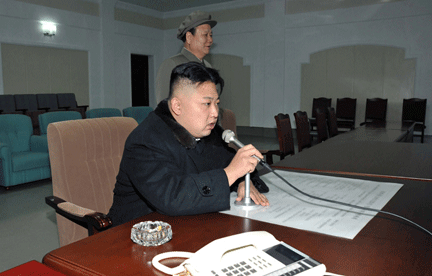 North Korea’s Kim Says No More War Thanks to Nuclear Weapons, VOA, By Reuters July 27, 2020 SEOUL, SOUTH KOREA – North Korean leader Kim Jong Un has said there will be no more war as the country’s nuclear weapons guarantee its safety and future despite unabated outside pressure and military threats, state media said Tuesday.
Kim made the remarks as he celebrated the 67th anniversary of the end of the 1950-53 Korean War, which fell on July 27, with a reception for veterans, the official KCNA news agency said.
The country developed nuclear weapons to win “absolute strength” to stave off another armed conflict, Kim said in a speech carried by KCNA, emphasizing the defensive nature of the programs. ………
The speech came amid stalled talks aimed at dismantling Pyongyang’s nuclear and missile programs in exchange for sanctions relief from Washington. ……https://www.voanews.com/east-asia-pacific/north-koreas-kim-says-no-more-war-thanks-nuclear-weapon
Lithuania urges EU to convince Belarus not to hurry with nuclear power plant start
1 This Month
Chernobyl: The Lost Tapes – A good documentary on Chernobyl on SBS available On Demand for the next 3 weeks– https://www.sbs.com.au/ondemand/tv-program/chernobyl-the-lost-tapes/2352741955560

of the week–London Campaign for Nuclear Disarmament

Tell the Ukrainian Government to Drop Prosecution of Peace Activist Yurii Sheliazhenko
To see nuclear-related stories in greater depth and intensity – go to https://nuclearinformation.wordpress.com
-
Archives
- April 2026 (126)
- March 2026 (251)
- February 2026 (268)
- January 2026 (308)
- December 2025 (358)
- November 2025 (359)
- October 2025 (376)
- September 2025 (257)
- August 2025 (319)
- July 2025 (230)
- June 2025 (348)
- May 2025 (261)
-
Categories
- 1
- 1 NUCLEAR ISSUES
- business and costs
- climate change
- culture and arts
- ENERGY
- environment
- health
- history
- indigenous issues
- Legal
- marketing of nuclear
- media
- opposition to nuclear
- PERSONAL STORIES
- politics
- politics international
- Religion and ethics
- safety
- secrets,lies and civil liberties
- spinbuster
- technology
- Uranium
- wastes
- weapons and war
- Women
- 2 WORLD
- ACTION
- AFRICA
- Atrocities
- AUSTRALIA
- Christina's notes
- Christina's themes
- culture and arts
- Events
- Fuk 2022
- Fuk 2023
- Fukushima 2017
- Fukushima 2018
- fukushima 2019
- Fukushima 2020
- Fukushima 2021
- general
- global warming
- Humour (God we need it)
- Nuclear
- RARE EARTHS
- Reference
- resources – print
- Resources -audiovicual
- Weekly Newsletter
- World
- World Nuclear
- YouTube
-
RSS
Entries RSS
Comments RSS
 nuclear-news