The effects of radiation on the “downwinders” – guinea pigs for nuclear bomb research

Now I Am Become Death’: The Legacy of the First Nuclear Bomb Test, NYT, By Maria Cramer July 15, 2020
“………The effects of radiation were not well understood by most scientists on the project at the time, according to historians, and the preparations that were made to keep civilians safe reflected that ignorance.
They placed crude monitors around the small towns within 40 miles of the testing site. A scientist who was seven months pregnant and her husband, who was also a scientist, were sent to a motel in one of the towns with a Geiger counter, a device used to detect radioactive emissions, to measure the radiation. If the needle hit a certain mark, she was instructed to alert officials so that they could evacuate the town, Professor Wellerstein said.
Officials did not warn any of the residents — many of them ranchers, Navajos, Mexican settlers and their descendants who raised cattle and drank water from cisterns — about the test. Should anyone ask about the blast, officials had proposed several cover stories, including telling the public that a remote ammunitions depot had exploded, Professor Wellerstein said.
“It produced more light and heat than the sun,” said Tina Cordova, a founder of the Tularosa Basin Downwinders Consortium, which has urged the government to conduct more research about the aftermath of the blast and to compensate the affected communities.
Ash fell for days afterward in the landscape and in every direction and in amazing quantities,” she said.
Warnings went unseen and ignored.
“Thus a nation which sets the precedent of using these newly liberated forces of nature for purposes of destruction may have to bear the responsibility of opening the door to an era of devastation on an unimaginable scale,” the petition cautioned.
The bombs in Nagasaki and Hiroshima are believed to have killed up to about 200,000 people, with many of those victims succumbing to radiation poisoning in the weeks that followed.
The government never conducted a full investigation into the effects of the radiation, even after the communities downwind of the blast saw an unusual spike in infant deaths in the months after the explosion, said Joseph J. Shonka, a scientist and one of the authors of a 2010 study about the effects of nuclear testing for the Centers for Disease Control and Prevention.
“The Trinity downwinders have not been treated in either a fair or a just manner,” he said.
Ms. Cordova, who grew up in Tularosa, N.M., said cancer had been pervasive in the towns near the Trinity test site, where everyone can name someone who died of the disease.
“We know that the government basically walked away and has taken no responsibility for the suffering and the dying,” said Ms. Cordova, who has survived thyroid cancer and has several relatives who died of various forms of cancer.
Members of Congress from New Mexico have introduced legislation that would expand the Radiation Exposure Compensation Act, which compensates uranium miners and people who lived downwind from nuclear testing sites, to include the residents who lived around Trinity.
In 2014, the National Cancer Institute began interviewing people who lived in the towns near the testing site to try and document the effects of the blast. The institute said it anticipated publishing the results “within the next few months.” https://www.nytimes.com/2020/07/15/us/trinity-test-anniversary.html
No comments yet.
1 This Month
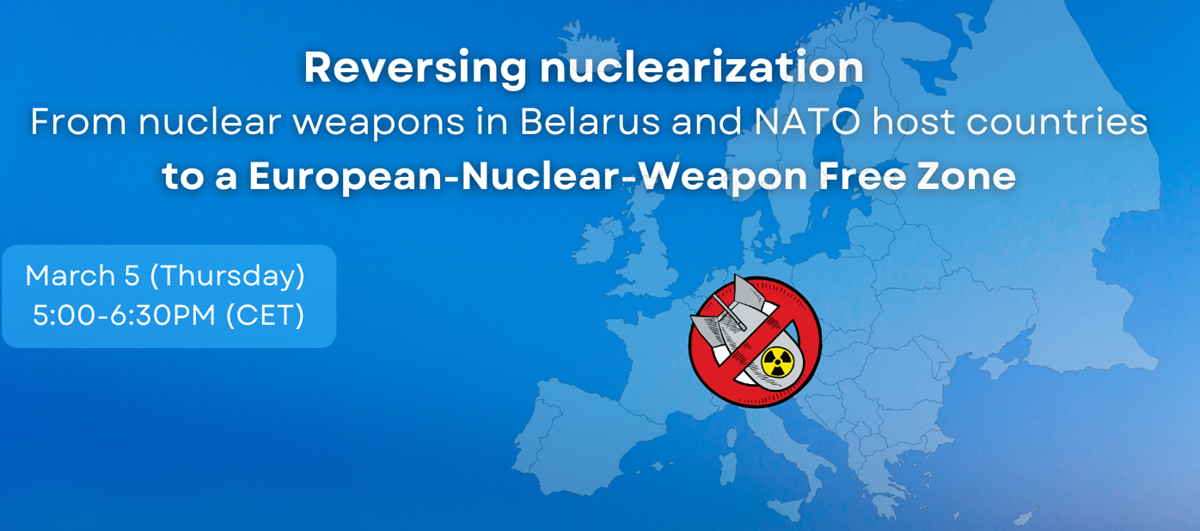
5 March -Online – Reversing nuclearization:
From nuclear weapons in Belarus and NATO host countries to a European-Nuclear-Weapon Free Zone
11am-12:30pm Eastern Time USA / 5pm-6:30pm CET

of the week – Advocating for a
nuclear free beach – https://www.samuellawrencefoundation.org/
The Samuel Lawrence Foundation advocates for a Nuclear Waste Free Beach at San Onofre, join us and take action!

10 March A LIVE WEBINAR THE REAL EFFECTS OF NUCLEAR POWER
What the Industry Isn’t Telling Us
1:00 PM Mountain, 2 pm Central, 3 pm Eastern. Live on the Keepers of the Water Facebook page

18 March Webinar @ 1 PM EST: An Assessment of SMR Projects: The Case of Canada
register for the zoom:
https://us02web.zoom.us/webinar/register/WN_o8BIIOUvQ2ONJR1nta65DQ#/registration

of the week – STOP SMALL MODULAR REACTORS IN CANADA
To see nuclear-related stories in greater depth and intensity – go to https://nuclearinformation.wordpress.com
-
Archives
- March 2026 (51)
- February 2026 (268)
- January 2026 (308)
- December 2025 (358)
- November 2025 (359)
- October 2025 (376)
- September 2025 (258)
- August 2025 (319)
- July 2025 (230)
- June 2025 (348)
- May 2025 (261)
- April 2025 (305)
-
Categories
- 1
- 1 NUCLEAR ISSUES
- business and costs
- climate change
- culture and arts
- ENERGY
- environment
- health
- history
- indigenous issues
- Legal
- marketing of nuclear
- media
- opposition to nuclear
- PERSONAL STORIES
- politics
- politics international
- Religion and ethics
- safety
- secrets,lies and civil liberties
- spinbuster
- technology
- Uranium
- wastes
- weapons and war
- Women
- 2 WORLD
- ACTION
- AFRICA
- Atrocities
- AUSTRALIA
- Christina's notes
- Christina's themes
- culture and arts
- Events
- Fuk 2022
- Fuk 2023
- Fukushima 2017
- Fukushima 2018
- fukushima 2019
- Fukushima 2020
- Fukushima 2021
- general
- global warming
- Humour (God we need it)
- Nuclear
- RARE EARTHS
- Reference
- resources – print
- Resources -audiovicual
- Weekly Newsletter
- World
- World Nuclear
- YouTube
-
RSS
Entries RSS
Comments RSS
 nuclear-news
Leave a comment