Siberia’s heat-wave – global heating is what made this possible
 Siberia heatwave was ‘almost impossible’ without climate change, scientists say, SBS News 16 Jul 20, An extreme heatwave in the Arctic is a problem for the entire planet, say scientists, because the region regulates weather around the globe and contains much of the world’s carbon-rich permafrost.A recent heatwave in Siberia that saw temperature records tumble as the region sweltered in 38-Celsius highs was “almost impossible” without the influence of man-made climate change, leading climate scientists say.
An international team of researchers found that the record-breaking warm period was more than 2 degrees hotter than it would have been if humans had not warmed the planet through decades of greenhouse gas emissions.
The five hottest years in history have occurred in the last five years and there’s a better-than-even chance that 2020 will be the hottest ever recorded.
Earth’s poles are warming faster than the rest of the planet, and temperatures in Siberia – home to much of the world’s carbon-rich permafrost – were more than 5 degrees hotter than average between January and June. ………
‘Important for everyone’
The team behind the calculations stressed that the Siberian heatwave was a problem for the entire globe. Some 1.15 million hectares of forest going up in flames released millions of tonnes of CO2 into the atmosphere.
At the same time, the wildfires and sustained heatwaves accelerated the region’s permafrost melt. This caused an oil tank built on frozen soil to collapse in May, leading to one of the region’s worst-ever oil spills…….
The 2015 Paris climate deal commits nations to capping temperature rises to “well-below” 2 degrees above pre-industrial levels and to strive for a 1.5 degrees limit if at all possible. With just 1 degree of warming so far, Earth is already buffeted by record-breaking droughts, wild fires and super storms made more potent by rising sea levels.
To keep in line with the 1.5-degree target, the United Nations says global emissions must fall by 7.6 per cent every year this decade.
Sonia Seneviratne, from ETH Zurich’s Department of Environmental Systems Science, said the research showed the heatwave was an example of “extreme events which would have almost no chance of happening” without man-made emissions. https://www.sbs.com.au/news/siberia-heatwave-was-almost-impossible-without-climate-change-scientists-say
No comments yet.
1 This Month
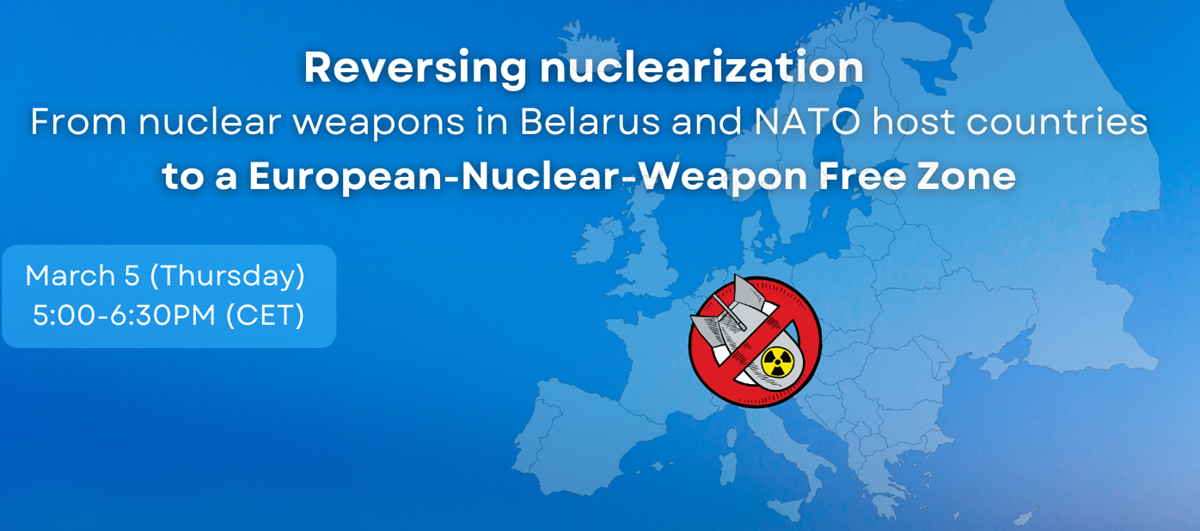
5 March -Online – Reversing nuclearization:
From nuclear weapons in Belarus and NATO host countries to a European-Nuclear-Weapon Free Zone
11am-12:30pm Eastern Time USA / 5pm-6:30pm CET

of the week – Advocating for a
nuclear free beach – https://www.samuellawrencefoundation.org/
The Samuel Lawrence Foundation advocates for a Nuclear Waste Free Beach at San Onofre, join us and take action!

10 March A LIVE WEBINAR THE REAL EFFECTS OF NUCLEAR POWER
What the Industry Isn’t Telling Us
1:00 PM Mountain, 2 pm Central, 3 pm Eastern. Live on the Keepers of the Water Facebook page

18 March Webinar @ 1 PM EST: An Assessment of SMR Projects: The Case of Canada
register for the zoom:
https://us02web.zoom.us/webinar/register/WN_o8BIIOUvQ2ONJR1nta65DQ#/registration

of the week – STOP SMALL MODULAR REACTORS IN CANADA
To see nuclear-related stories in greater depth and intensity – go to https://nuclearinformation.wordpress.com
-
Archives
- March 2026 (51)
- February 2026 (268)
- January 2026 (308)
- December 2025 (358)
- November 2025 (359)
- October 2025 (376)
- September 2025 (258)
- August 2025 (319)
- July 2025 (230)
- June 2025 (348)
- May 2025 (261)
- April 2025 (305)
-
Categories
- 1
- 1 NUCLEAR ISSUES
- business and costs
- climate change
- culture and arts
- ENERGY
- environment
- health
- history
- indigenous issues
- Legal
- marketing of nuclear
- media
- opposition to nuclear
- PERSONAL STORIES
- politics
- politics international
- Religion and ethics
- safety
- secrets,lies and civil liberties
- spinbuster
- technology
- Uranium
- wastes
- weapons and war
- Women
- 2 WORLD
- ACTION
- AFRICA
- Atrocities
- AUSTRALIA
- Christina's notes
- Christina's themes
- culture and arts
- Events
- Fuk 2022
- Fuk 2023
- Fukushima 2017
- Fukushima 2018
- fukushima 2019
- Fukushima 2020
- Fukushima 2021
- general
- global warming
- Humour (God we need it)
- Nuclear
- RARE EARTHS
- Reference
- resources – print
- Resources -audiovicual
- Weekly Newsletter
- World
- World Nuclear
- YouTube
-
RSS
Entries RSS
Comments RSS
 nuclear-news
Leave a comment