 NMIMS-FPJ webinar: Nuclear energy not for countries looking at economic development, https://www.freepressjournal.in/fpj-initiatives/nmims-fpj-webinar-nuclear-energy-not-for-countries-looking-at-economic-developmentBy FPJ Web Desk 1 July 20, If India is looking at development by increasing power consumption, it is essential that it opts for cheaper forms of energy, stated nuclear expert M V Ramana, at a webinar ‘The future of nuclear energy’. He stressed that in such a case nuclear is not the right choice. Ramana is Director of the Liu Institute for Global Issues at the School of Public Policy and Global Affairs, University of British Columbia.
Speaking at the third session of a series ‘The future of energy’ organised by NMIMS-FPJ in association with Tata Power, Ramana said, “If you were looking at (economic) development by providing power to hundreds of villages that do not have power, then nuclear energy is a very bad choice. For development, you need cheap energy but you have (nuclear energy which is) an expensive form of energy.”
He revealed today it costs somewhere between USD 10-15 billion to build a nuclear power plant. However, the power produced by this plant is at the cost of USD 100 per MW hour. This is three times higher the cost of solar and wind energy, he added. “Solar and wind energy today are selling at USD 30-35 per megawatt hour (MWh).” After including storage costs and other costs, solar and wind energy continues to be cheaper and will cost over USD 50 per MWh.
Basically, what nuclear energy does is boil water and use the steam to drive turbines. But it is a very expensive way to boil water. And the risks involved are considerable too. And since solar and wind energy has become cheaper than nuclear energy, they have also overtaken nuclear in terms of power generation.
“Compared to nuclear energy, solar and wind energy have contributed much more in the last few years.” Solar overtook nuclear energy last year in terms of the electricity contributed to the grid. Meanwhile, wind energy overtook nuclear energy in 2012. Ramana highlighted that even though nuclear energy has been there since the 1940s, the newer technologies in solar and wind grew faster than technology in nuclear.
The contribution of nuclear energy globally is 10 per cent compared to other forms of energy. However, it was 17.5 per cent in 1996 but has declined since then as other forms of energy grew faster than nuclear energy. Meanwhile, in India, the electricity generated by nuclear power has consistently stayed between 2-4 per cent for the last 20-25 years. “As per the last figures, nuclear power contributed about 3.2 per cent of India’s power needs.”
July 4, 2020
Posted by Christina Macpherson |
business and costs, India |
Leave a comment
|
 Nuclear site cyber attack possible: Iran, Canberra Times, 4 July 20, Nuclear site cyber attack possible: Iran, Canberra Times, 4 July 20, Iran will retaliate against any country that carries out cyber attacks on its nuclear sites, the head of civilian defence says, after a fire at its Natanz plant which some Iranian officials say may have been caused by cyber sabotage.
The underground Natanz Fuel Enrichment Plant (FEP) is one of several Iranian facilities monitored by inspectors of the International Atomic Energy Agency, the UN nuclear watchdog.
Iran’s top security body said on Friday that the cause of the “incident” at the nuclear site had been determined but “due to security considerations” it would be announced at a convenient time……
Three Iranian officials who spoke to Reuters on condition of anonymity said they believed the fire was the result of a cyber attack, but did not cite any evidence.
One of the officials said the attack had targeted the centrifuge assembly building, referring to the delicate cylindrical machines that enrich uranium, and said Iran’s enemies had carried out similar acts in the past.
Two of the officials said Israel could have been behind the Natanz incident but offered no evidence.
Asked on Thursday evening about recent incidents reported at strategic Iranian sites, Israeli Prime Minister Benjamin Netanyahu told reporters: “Clearly we can’t get into that.”
|
|
July 4, 2020
Posted by Christina Macpherson |
Iran, weapons and war |
Leave a comment
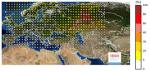 Low Levels of Radioisotopes Detected in Europe Likely Linked to a Nuclear Reactor – IAEA, 27/2020 The recent detection of slightly elevated levels of radioisotopes in northern Europe is likely related to a nuclear reactor that is either operating or undergoing maintenance, when very low radioactive releases can occur, the International Atomic Energy Agency (IAEA) said today. The geographical origin of the release has not yet been determined.
Basing its technical assessment on data reported by its Member States, the IAEA reiterated that the observed air concentrations of the particles were very low and posed no risk to human health and the environment.
Estonia, Finland and Sweden last week measured levels of Ruthenium and Caesium isotopes which were higher than usual. They also reported the detection of some other artificial radionuclides. The three countries said there had been no events on their territories that could explain the presence of the radionuclides, as did more than 40 other countries that voluntarily provided information to the IAEA.
Seeking to help identify their possible origin, the IAEA on Saturday contacted its counterparts in the European region and requested information on whether the particles were detected in their countries, and if any event there may have been associated with the atmospheric release.
By Thursday afternoon, 37 Member States in the European region (Albania, Austria, Belgium, Bosnia and Herzegovina, Bulgaria, Republic of Croatia, Cyprus, Czech Republic, Denmark, Estonia, Finland, France, Germany, Greece, Hungary, Iceland, Ireland, Italy, Latvia, Lithuania, Luxembourg, Netherlands, North Macedonia, Norway, Poland, Portugal, Romania, Russian Federation, Republic of Serbia, Slovak Republic, Slovenia, Spain, Sweden, Switzerland, Turkey, Ukraine and United Kingdom) had voluntarily reported to the IAEA that there were no events on their territories that explained the release. They also provided information about their own measurements and results……
Based on the IAEA’s technical analysis of the mix of artificial radionuclides that were reported to it, the release was likely related to a nuclear reactor, either in operation or in maintenance. The IAEA ruled out that the release was related to the improper handling of a radioactive source. It was also unlikely to be linked to a nuclear fuel processing plant, a spent fuel pool or to the use of radiation in industry or medicine.
Based on the data and information reported to the IAEA, no specific event or location for the dispersal of radionuclides into the atmosphere has yet been determined. To do this, the IAEA depends on receiving such information from a country where the release occurred. https://www.iaea.org/newscenter/pressreleases/low-levels-of-radioisotopes-detected-in-europe-likely-linked-to-a-nuclear-reactor-iaea
July 4, 2020
Posted by Christina Macpherson |
environment, EUROPE, radiation |
Leave a comment
Iran nuclear: ‘Incident’ at Natanz uranium enrichment facility, BBC, 2 July 2020
A fire has reportedly damaged a building at a nuclear facility in Iran.
Atomic Energy Organisation of Iran (AEOI) spokesman Behruz Kamalvandi said there was an incident in “one of the industrial sheds under construction” at the Natanz uranium enrichment plant.
There were no fatalities or concerns about contamination, he added.
The AEOI later published a photo showing a partly burned building, which US-based analysts identified as a new centrifuge assembly workshop. Centrifuges are needed to produce enriched uranium, which can be used to make reactor fuel but also nuclear weapons.
Meanwhile, in a statement sent to BBC Persian journalists before the AEOI’s announcement, an unknown group calling itself “Cheetahs of the Homeland” claimed it had attacked the building. The group said its members were part of “underground opposition with Iran’s security apparatus”.
The claim could not immediately be verified by the BBC.
The International Atomic Energy Agency (IAEA), which monitors Iran’s compliance with a 2015 nuclear deal struck with world powers, said it was aware of the reports from Natanz and currently anticipated no impact on its verification activities.
The incident comes six days after an explosion near the Parchin military complex.
The Iranian authorities said the blast was caused by “leaking gas tanks” at the site, but analysts said satellite photographs showed it happened at a nearby missile production facility…….. https://www.bbc.com/news/world-middle-east-53265023Skip Twitter post by @TheGoodISIS
July 4, 2020
Posted by Christina Macpherson |
incidents, Iran |
Leave a comment

Project Force: Could the world survive a nuclear winter?
The consequences of a nuclear war would extend far beyond the blast itself, killing millions of people across the globe. Aljazeera, by Alex Gatopoulos, 2 Jul 2020 Firestorms triggered by burning cities create a huge plume of smoke, soot and ash. The plume rises above the clouds, into the upper atmosphere of the planet, where it will stay, encircling the globe, shielding the Earth from the Sun’s light, cooling the planet.
This is the scenario we could expect following a nuclear clash between nations.
The term nuclear winter was coined in the 1980s as scientists began to realise that the horrors of a nuclear war would not be confined to explosive blasts and radiation.
As climate prediction models become more powerful and sophisticated, scientists have been able to examine more closely what would happen in a nuclear conflict between two antagonists. In the past, most scenarios focused on potentially apocalyptic conflicts between Russia and the United States.
But new models now predict that even a very limited nuclear war would have drastic knock-on effects for global agriculture and dire consequences for life on Earth.
As climate prediction models become more powerful and sophisticated, scientists have been able to examine more closely what would happen in a nuclear conflict between two antagonists. In the past, most scenarios focused on potentially apocalyptic conflicts between Russia and the United States.
But new models now predict that even a very limited nuclear war would have drastic knock-on effects for global agriculture and dire consequences for life on Earth.
First, a blinding flash of light and radiation in the form of heat from the initial explosion would produce temperatures as high as that of the Sun. Wood, plastics, fabrics and flammable liquids would all ignite.
This would almost immediately be followed by the blast wave, moving at several times the speed of sound. A wall of compressed superhot air, the wave would gather up rubble and anything moveable, levelling all buildings within the blast zone and killing everyone in its path for several kilometres.
Within 20 to 30 minutes, a shroud of highly radioactive ash would begin to fall, blanketing both the blast site and the surrounding area, tens of kilometres downwind, and very quickly killing anyone caught outdoors who had somehow managed to survive the initial explosion.
For people outside the blast zone, the situation would also be grim. All electronic equipment would cease to function as the electromagnetic pulse fried every electronic circuit. No phones, internet, computers or cars would work.
Hospitals would be quickly overwhelmed, with the vast majority of the population needing some kind of medical care. Food would disappear as logistical supply trains stopped working. What little there was would be contaminated by the radioactive fallout, along with any water.
In the case of a nuclear conflict between India and Pakistan, for example, it is estimated that between 50 million and 125 million people would die.
What comes afterwards?
Those would be the initial, local effects of a nuclear conflict on a population. But the ensuing nuclear winter would take it to a whole new level.
The vast plumes of dark soot entering the upper atmosphere would spread not just regionally but right around the planet within months. The resulting darkening of the sky would severely affect harvests, even in areas nowhere near the conflict zone.
In one recent simulation, global harvests plummeted between 20 percent and 40 percent for at least a decade. Temperatures dropped dramatically as the climate shifted, triggering widespread drought, a worldwide famine and the death of tens of millions more people.
If these scenarios seem far-fetched, consider that the 1815 volcanic eruption of Tambora in Indonesia ruined harvests as far away as the US with 1816 known as the “Year Without Summer” as temperatures dropped sharply around the planet and the resultant failed harvests triggered severe famine across Europe.
The Tambora eruption lowered the global temperature by 0.7 degrees Celsius. The estimated temperature drop from a “limited” nuclear exchange is reckoned to be anywhere between 2 and 5 degrees Celsius.
The Pakistan vs India scenario
The latest studies show that there does not need to be a large-scale nuclear war to have this effect: A possible nuclear conflict between India and Pakistan is the scenario most of these studies have used as their prime example………
If these scenarios seem far-fetched, consider that the 1815 volcanic eruption of Tambora in Indonesia ruined harvests as far away as the US with 1816 known as the “Year Without Summer” as temperatures dropped sharply around the planet and the resultant failed harvests triggered severe famine across Europe.
The Tambora eruption lowered the global temperature by 0.7 degrees Celsius. The estimated temperature drop from a “limited” nuclear exchange is reckoned to be anywhere between 2 and 5 degrees Celsius.
…….. the greatest damage to the environment would be from the vast amount of superheated ash and soot that would rise from these destroyed cities, swept up by a nuclear firestorm into the upper atmosphere.
Darkness and starvation
The impact of even such a “limited” nuclear conflict would be devastating for the Earth as a whole. With global dimming, harvests would fail across the planet…….
In 2016, the United Nations’ Food and Agriculture Organisation estimated that 815 million people were food-insecure. They would all be put at far greater risk as food supplies rapidly dwindled in the aftermath of such a conflict.
Another major, cascading effect of even a partial nuclear winter would be the depletion of the ozone layer, allowing crops to be further damaged by unfiltered hard ultraviolet solar radiation.
Ozone would be destroyed by the heating of the upper atmosphere as the darker soot-laden layer of air absorbed more solar energy. The effect would last for more than five years, with 20 percent of the ozone lost across the planet and, in some places, as much as 70 percent, leading to significant destruction of plant, marine and animal life on Earth, and resulting in skin cancers, DNA mutation and eye damage in humans and animals alike.
This, coupled with the violent competition for shrinking resources, likely civil unrest due to mass starvation, rapidly shifting weather patterns and financial collapse, would disrupt all human life with no part of the planet left unscathed…….. https://www.aljazeera.com/indepth/features/project-force-world-survive-nuclear-winter-200622132211696.html
July 4, 2020
Posted by Christina Macpherson |
2 WORLD, climate change, weapons and war |
Leave a comment
 Nuclear waste regulations put Canadians at risk https://www.trailtimes.ca/opinion/cannings-nuclear-waste-regulations-put-canadians-at-risk/ Richard Cannings is in his second term as MP for the South Okanagan-West Kootenay riding, Jul. 2, 2020 T
he Canadian Nuclear Safety Commission (CNSC) should not approve a suite of regulatory documents on radioactive waste at its meeting June 18, 2020 and instead live up to the Liberal government’s commitment to openness and transparency for regulatory development.
Some of these regulations developed by commission staff are at best vague guidelines that leave nuclear waste policy decisions in the hands of private industry, instead of actually prescribing actions that are in the public interest.
These regulatory changes would pave the way for several controversial nuclear waste disposal projects, including a giant mound at Chalk River, Ontario, two entombments of shut-down reactors, and a proposed deep geological repository for the burial of high-level nuclear fuel waste.
This proposal does not meet Canada’s commitment to meeting or surpassing international standards for the handling of nuclear waste.
For example, the entombment of nuclear reactors is designated as “in-situ decommissioning”, a practice that the International Atomic Energy Agency says should only be used as a last option for facilities damaged in accidents.
Of further concern is the lack of clarity in the proposed regulations.
In many cases the licensee is directed to develop safety requirements with no explicit directions as to what those safety requirements are.
The giant mound at Chalk River is meant to contain up to 1 million cubic metres of low- to intermediate-activity nuclear waste but these activity levels are not defined and the private owner of the facility would get to decide what materials are stored in that mound of nuclear waste.
The Minister of Natural Resources has committed to consulting Canadians on a policy framework and strategy for radioactive waste. Instead we have this backdoor process with limited public input and no parliamentary oversight.
The minister should be conducting a public process to develop a Canadian framework for radioactive waste management that meets or exceeds international best practices, a framework that does not allow the nuclear industry to police itself.
Richard Cannings is NDP Natural Resources Critic and MP for South Okanagan-West Kootenay
July 4, 2020
Posted by Christina Macpherson |
Canada, safety |
Leave a comment
 Radioactive waste: Commission calls on ROMANIA to enact correctly EU law in this field act, Media Romania News Agency , July 3, 2020
The Commission has decided to send reasoned opinions to Bulgaria, Denmark, Greece, Lithuania, Poland and Romania for failing to adopt a national programme for radioactive waste management compliant with the requirements of the Spent Fuel and Radioactive Waste Directive (Council Directive 2011/70/Euratom), and has also sent another reasoned opinion to Romania for failing to transpose correctly certain requirements of the same Directive. ….
The Directive establishes a Community framework for ensuring the responsible and safe management of spent fuel and radioactive waste to ensure a high level of safety and avoid imposing undue burdens on future generations. In particular, it requires Member States to draw up and implement national programmes for the management of all spent fuel and radioactive waste generated on their territory, from generation to disposal.
The aim is to protect workers and the general public from the dangers arising from ionising radiation. Member States were required to transpose the Directive by 23 August 2013 and to notify their national programmes for the first time to the Commission by 23 August 2015. The Member States concerned have three months to act. Otherwise, the Commission may decide to refer these cases to the Court of Justice of the EU. https://www.actmedia.eu/daily/radioactive-waste-commission-calls-on-romania-to-enact-correctly-eu-law-in-this-field/87391
July 4, 2020
Posted by Christina Macpherson |
politics, wastes |
Leave a comment
Environment ministry: If Estonia gets nuclear power plant, not before 2035, ERR News, 3 July 20, Estonia’s first nuclear power plant would not start operating before 2035, according to a memorandum from the Ministry of the Environment (Keskkonnaministeerium), which the government will discuss later this summer.
The memorandum “Possibilities for the Deployment of Nuclear Energy in Estonia” (“Tuumaenergia kasutuselevõtmise võimalused Eestis”) describes a process of at which would take at least 15 years which would follow the government agreeing to a nuclear power plant. Estonia is starting this process almost from scratch.
The first proposal of the memorandum signed by Minister of the Environment Rene Koka calls for the establishment of an inter-ministerial working group on nuclear energy in order to form publicly agreed positions on the possibility of introducing nuclear energy in Estonia.
…….. The memorandum states it is important to determine society’s support for nuclear energy as soon as possible and to avoid problems caused by poor communication. Holding a referendum on this issue should also be discussed….
The memorandum lists the main risks and describes possibilities to mitigate them. These include problems with the introduction of new technology, the possibility of an emergency, concerns about the production and supply of nuclear fuel, financial and nuclear liability, radioactive waste management, lack of know-how and specialists, public involvement and communication.
……Finally, there are political risks.
If a referendum is held on the construction of a nuclear power plant and if the public vote against it, the ability to initiative nuclear energy projects in Estonia will be ruled out for a very long time, and Estonia’s energy policy may change with the change of government,
But there is also a broader, international view that Estonia’s neighbors, such as Sweden and Lithuania, who have themselves decided to abandon nuclear energy, or Russia, who may not want a nuclear power plant built in Estonia for geopolitical reasons if US technology is introduced…….. https://news.err.ee/1109118/environment-ministry-if-estonia-gets-nuclear-power-plant-not-before-203
July 4, 2020
Posted by Christina Macpherson |
EUROPE, politics |
Leave a comment
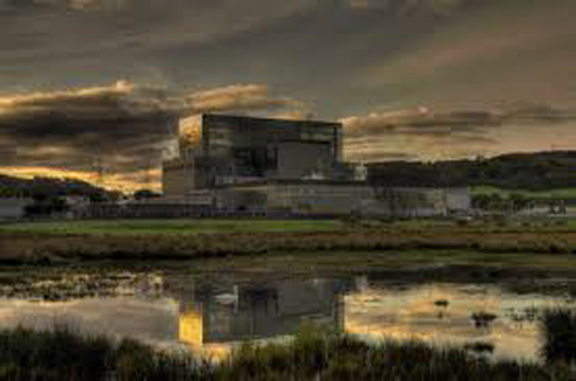 Largs & Millport News 1st July 2020
, A CALL has been made to shut down Hunterston B with immediate effect. West Kilbride councillor Todd Ferguson says that Hunterston should not be a
‘guinea pig’ for the UK nuclear industry testing long far power stations can last. Cracks have been appearing in all of the EDF advanced cooling reactors fleet around the United Kingdom – and the Office of Nuclear Regulation (ONR) are currently examining the safety case presented by EDF to switching the reactors back on but the matter has been delayed several times this year.
Councillor Ferguson said: “The cracks at Hunterston keep making news and EDF acknowledge that the cracks have been accelerating quicker than expected. “There comes a time when the reactors should remain offline for good. The North Ayrshire Conservative Group believe the time to look at this is now. …….
I believe that the time is right for the Office of Nuclear Regulation not to grant permissionto restart the reactors at Hunterston B. I’m concerned that Hunterston B is being used as some sort of guinea pig, with the purpose being to supply data on how far you can push EDF’s ageing AGR reactor fleet. The station has exceeded its life cycle and the time is right to start winding down operations safely. The safety of the workforce and local communities are paramount.
…….ONR have a
big decision to make in relation to the safety case which has been presented by EDF.” At the recent Hunterston Site Stakeholders Group meeting, EDF were asked when it became economically prohibitive to re-start the reactors and the response was that the data coming from the testing of
the reactors was important information for the rest of the fleet of reactors around the UK.Councillor Ferguson said: “Hunterston is by far the most heavily cracked. When does it get to the points where the risks outweigh everything else? “I don’t want it to get into a position of a race of what is going to fail first – the graphite or the boilers.”………
https://www.largsandmillportnews.com/news/18533657.dont-turn-hunterston-guinea-pig—call-shut-reactors-now/
July 4, 2020
Posted by Christina Macpherson |
safety, UK |
Leave a comment
Swarm of insects cause nuclear reactor to lose power in Michigan, Fox 23, July 2, 2020 NEWPORT, Mich. — The Enrico Fermi 2 Nuclear Power Plant in Newport lost offsite power Wednesday in what has been described as a “mayfly accumulation.”
In a report released by the Nuclear Regulatory Commission that the outage was “caused by mayfly accumulation” around the facility’s switchyard. Diesel generators started automatically as a backup power supply.
July 4, 2020
Posted by Christina Macpherson |
incidents, USA |
Leave a comment
Boris Johnson pledges to get ‘big nuclear things’ done in message to Copeland mayor
|
|
|
July 4, 2020
Posted by Christina Macpherson |
politics, UK |
Leave a comment
Germany is first major economy to phase out coal and nuclear, Economic Times, 3 July 20
The plan is part of Germany’s ‘energy transition’ – an effort to wean Europe’s biggest economy off planet-warming fossil fuels and generate all of the country’s considerable energy needs from renewable sources…….
Bills approved by both houses of parliament Friday envision shutting down the last coal-fired power plant by 2038 and spending some 40 billion euros ($45 billion) to help affected regions cope with the transition.
The plan is part of Germany’s ‘energy transition’ – an effort to wean Europe’s biggest economy off planet-warming fossil fuels and generate all of the country’s considerable energy needs from renewable sources…….
Bills approved by both houses of parliament Friday envision shutting down the last coal-fired power plant by 2038 and spending some 40 billion euros ($45 billion) to help affected regions cope with the transition.The plan is part of Germany’s ‘energy transition’ – an effort to wean Europe’s biggest economy off planet-warming fossil fuels and generate all of the country’s considerable energy needs from renewable sources.
“The days of coal are numbered in Germany,” Environment Minister Svenja Schulze said. “Germany is the first industrialized country that leaves behind both nuclear energy and coal.”……
Schulze, the environment minister, said there would be regular government reviews to examine whether the end date for coal can be brought forward. She noted that by the end of 2022, eight of the country’s most polluting coal-fired plants will have already been closed………
This week, utility companies in Spain shut down seven of the country’s 15 coal-fired power plants, saying they couldn’t be operated at profit without government subsidies.
But the head of Germany’s main miners’ union, Michael Vassiliadis, welcomed the decision, calling it a “historic milestone.” He urged the government to focus next on an expansion of renewable energy generation and the use of hydrogen as a clean alternativ ..
July 4, 2020
Posted by Christina Macpherson |
climate change, Germany |
Leave a comment

Science and Technology: ¶ “Warming Temperatures Threaten Hundreds Of Fish Species The World Relies On, Study Finds” • As the planet’s oceans and rivers warm, increased heat could pose a grave threat to the fish populations the world depends on by the end of this century. That’s the alarming conclusion of a study published in […]
via July 3 Energy News — geoharvey
July 4, 2020
Posted by Christina Macpherson |
Uncategorized |
Leave a comment







 nuclear-news