USA’s reckless nuclear spending as coronovirus hits the nation
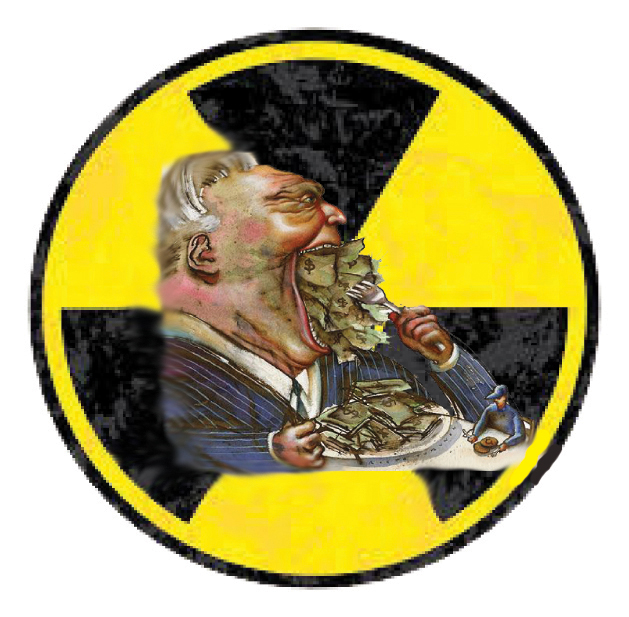 Debating US nuclear spending in the age of the coronavirus, Bulletin of the Atomic Scientists Debating US nuclear spending in the age of the coronavirus, Bulletin of the Atomic Scientists  By Kingston Reif, June 10, 2020 As the novel coronavirus pandemic continues to exact a terrible human and economic toll on the United States, Americans are adjusting how they view national security. There also appears to be agreement, even within the senior leadership of the Defense Department, that the military budget, which has seen significant growth during the Trump administration, is likely to be pared back in the coming years as federal deficits soar. By Kingston Reif, June 10, 2020 As the novel coronavirus pandemic continues to exact a terrible human and economic toll on the United States, Americans are adjusting how they view national security. There also appears to be agreement, even within the senior leadership of the Defense Department, that the military budget, which has seen significant growth during the Trump administration, is likely to be pared back in the coming years as federal deficits soar.
So it should be no surprise that the havoc wrought by the virus has also fanned the flames of an ongoing debate about the Trump administration’s aggressive and costly plans to sustain and upgrade the US nuclear arsenal……. The unsustainable nuclear budget. At the Arms Control Association, where I am the director for disarmament and threat reduction policy, we have long argued that the administration’s approach is unnecessary, unsustainable, and unsafe. The financial and opportunity costs have steadily grown and the biggest nuclear weapons modernization bills are just beginning to arrive. Government officials in charge of the nuclear weapons enterprise warn about the “pervasive and overwhelming risk” facing the current nuclear modernization program………. The danger posed by the plans is on full display in the administration’s fiscal year 2021 budget request. The Defense and Energy Departments are requesting $44.5 billion for next year to sustain and modernize US nuclear delivery systems and warheads and their supporting infrastructure, a larger-than-anticipated increase of about $7.3 billion, or 19 percent, from the fiscal year 2020 level. Meanwhile, the administration is recommending a lower overall national defense budget than Congress provided last year. The combination of a decreased topline budget but an increased nuclear budget means that other defense programs would have to be cut. Some programs on the chopping block include the Navy’s planned second Virginia class submarine, the Energy Department’s efforts to clean up nuclear waste leftover from US nuclear weapons production during the Cold War, and the Pentagon’s Cooperative Threat Reduction program, which supports global efforts to detect and secure dangerous pathogens such as the coronavirus. And this was all before the coronavirus began its deadly march across the country and before Congress spent several trillion dollars trying to save the US economy from complete collapse. Although Pentagon officials insist that nuclear weapons should be shielded from possible future defense budget cuts, the pressure on the federal budget imposed by the response to the virus is likely to exacerbate the affordability and execution challenges confronting the administration’s nuclear spending plans. If great power competition with China is the Pentagon’s top priority, is it prudent to sacrifice a Virginia class submarine every year for the next 10 to 15 years to attempt to keep an excessive and overburdened nuclear modernization effort on track? The answer should be no, especially in light of the quantitative and qualitative superiority of the US nuclear arsenal over China’s. In the view of many, the Trump administration’s proposal to expand spending on nuclear weapons is a sad and dangerous illustration of wildly misplaced federal spending priorities. As it proposed a 19 percent increase for nuclear weapons next year, the White House initially planned to slash the budgets for the Centers for Disease Control by 19 percent and the National Institutes of Health by 7 percent. The Pentagon’s proposal to cut the budget for the Cooperative Threat Reduction program in order to fund weapons modernization amid a global pandemic is shockingly reckless…… Inexplicably, the unprecedented economic crisis facing the nation hasn’t stopped some Trump administration officials from raising the prospect of even greater spending on nuclear weapons above and beyond what is already planned. Marshall Billingslea, President Trump’s special envoy for arms control, said recently that if Russia and China don’t agree to US demands for talks on new trilateral arms control to replace the 2010 New Strategic Arms Reduction Treaty (New START), Washington could win a new arms race if necessary. “We know how to win these races, and we know how to spend the adversary into oblivion,” he said. More US spending on nuclear weapons won’t force the current Russian and Chinese leadership to capitulate and would be fraught with peril. The administration’s desire to pursue a more ambitious arms control agreement is the right goal, but it can’t be achieved before New START is slated to expire next February. A new quantitative arms race that could follow the collapse of New START would further undermine stability between the United States and Russia, the health of the global nonproliferation regime, and the US military’s emphasis on competition with China. Our new post-pandemic reality should make it all the more obvious that the current modernization plans need to be reconsidered in a way that eliminates the most excessive and destabilizing elements, saves taxpayer dollars for other pressing national and health security needs, and is in sync with a revitalized and realistic strategy to cap and reduce global nuclear stockpiles…….. Lisa Gordon Hagerty, head of the National Nuclear Security Administration, was asked to explain the rationale for such a large unplanned increase at a Congressional hearing in March, but her attempt at an answer hardly cleared up the situation. Perhaps there is a clearer explanation for why the agency so badly misjudged its funding needs for 2021, but if so the agency has yet to provide it…. (lengthy rebuttal of Frank Miller’s claims about nuclear weapons spending) ……. https://thebulletin.org/2020/06/debating-us-nuclear-spending-in-the-age-of-the-coronavirus/# |
|
|
No comments yet.
1 This Month

of the week – Shut Down Drone Warfare!


Tell the Ukrainian Government to Drop Prosecution of Peace Activist Yurii Sheliazhenko

Petition to revoke the licensing of the Near Surface Nuclear Disposal Facility (NSDF) at Chalk River. https://www.ourcommons.ca/petitions/en/Petition/Details?Petition=e-7247
To see nuclear-related stories in greater depth and intensity – go to https://nuclearinformation.wordpress.com
-
Archives
- March 2026 (244)
- February 2026 (268)
- January 2026 (308)
- December 2025 (358)
- November 2025 (359)
- October 2025 (376)
- September 2025 (257)
- August 2025 (319)
- July 2025 (230)
- June 2025 (348)
- May 2025 (261)
- April 2025 (305)
-
Categories
- 1
- 1 NUCLEAR ISSUES
- business and costs
- climate change
- culture and arts
- ENERGY
- environment
- health
- history
- indigenous issues
- Legal
- marketing of nuclear
- media
- opposition to nuclear
- PERSONAL STORIES
- politics
- politics international
- Religion and ethics
- safety
- secrets,lies and civil liberties
- spinbuster
- technology
- Uranium
- wastes
- weapons and war
- Women
- 2 WORLD
- ACTION
- AFRICA
- Atrocities
- AUSTRALIA
- Christina's notes
- Christina's themes
- culture and arts
- Events
- Fuk 2022
- Fuk 2023
- Fukushima 2017
- Fukushima 2018
- fukushima 2019
- Fukushima 2020
- Fukushima 2021
- general
- global warming
- Humour (God we need it)
- Nuclear
- RARE EARTHS
- Reference
- resources – print
- Resources -audiovicual
- Weekly Newsletter
- World
- World Nuclear
- YouTube
-
RSS
Entries RSS
Comments RSS
 nuclear-news
Leave a comment