Grave climate risks to Sizewell C nuclear project – all too close to the sea
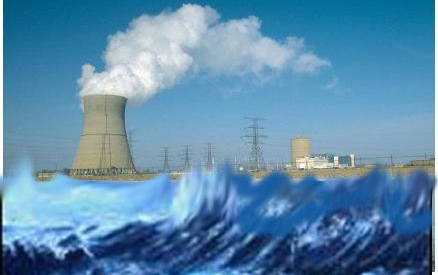  Times 10th June 2020, As if big nuclear power plants weren’t already toxic enough. To the usual Times 10th June 2020, As if big nuclear power plants weren’t already toxic enough. To the usuallist — exploding costs, endless delays, ruinously pricey electricity and a vast clean-up bill — Sizewell C brings another joy. And not just that it’s being partly built by CGN of China: odd reward for the crackdown on Hong Kong. No, it’s that Sizewell C is in a “dangerous location”. Or so says Nick Scarr from the Nuclear Consulting Group, a collection of academics and experts. The consulting engineer has examined the plans from France’s EDF and CGN to build the 3,200MW nuke on the Suffolk coast from the perspective of coastal erosion and climate change. And, assuming he’sright, his paper is alarming — unless you’re relaxed about the risk of the plant being encircled by sea.
Sizewell C will be bigger and closer to the sea than the site’s existing reactors. Mr Scarr takes issue with EDF claims that it’ll be effectively protected by the offshore Sizewell-Dunwich bank and a coralline crag, so creating a “natural wave break”. He points to studies showing waves are getting through in storms, while at the Sizewell C site the crag is more gravelly than desired.
With decommissioning of the plant not due until 2150, Mr Scarr believes EDF and CGN are paying far too little attention to forecasts from the Met Office and the Intergovernmental Panel on Climate Change. Not least the notion that once-a-century “extreme sea level events”, are “projected to occur much more frequently by 2050”. He says the once in 10,000 year flood risk that “EDF trumpets” is “just 0.71m above the historical 1953 flood level”. This is only Mr Scarr’s opinion, but he says his paper has been “approved” by Professor Andrew Plater of Liverpool
University: a leading coastal geomorphologist. So what’s EDF’s
response? Well, it reckons Mr Scarr’s analysis of the effects of the sandbank and crag is both confused and wrong. It also says it has evaluated
the likely effect of climate change. “The design of the power station, including its sea defence and the raised platform it will be built on, will protect Sizewell C from flooding,” EDF insists. It says it’ll take an “adaptive approach”, raising the sea defences “during the lifetime of Sizewell C if needed”. Mr Scarr says such an approach only works for
construction projects such as painting the Forth Bridge every year, not sea defences for a nuclear plant. Indeed, he reckons it’s “clear evidence” that the location cannot “offer the criteria necessary for long-term safety of the project”. https://www.thetimes.co.uk/edition/business/sizewell-c-debate-turns-a-bit-salty-gvvzhp7rf |
No comments yet.
1 This Month
10 March A LIVE WEBINAR THE REAL EFFECTS OF NUCLEAR POWER
What the Industry Isn’t Telling Us
1:00 PM Mountain, 2 pm Central, 3 pm Eastern. Live on the Keepers of the Water Facebook page



18 March Webinar @ 1 PM EST: An Assessment of SMR Projects: The Case of Canada
register for the zoom:
https://us02web.zoom.us/webinar/register/WN_o8BIIOUvQ2ONJR1nta65DQ#/registration


of the week – STOP SMALL MODULAR REACTORS IN CANADA
To see nuclear-related stories in greater depth and intensity – go to https://nuclearinformation.wordpress.com
-
Archives
- March 2026 (119)
- February 2026 (268)
- January 2026 (308)
- December 2025 (358)
- November 2025 (359)
- October 2025 (376)
- September 2025 (258)
- August 2025 (319)
- July 2025 (230)
- June 2025 (348)
- May 2025 (261)
- April 2025 (305)
-
Categories
- 1
- 1 NUCLEAR ISSUES
- business and costs
- climate change
- culture and arts
- ENERGY
- environment
- health
- history
- indigenous issues
- Legal
- marketing of nuclear
- media
- opposition to nuclear
- PERSONAL STORIES
- politics
- politics international
- Religion and ethics
- safety
- secrets,lies and civil liberties
- spinbuster
- technology
- Uranium
- wastes
- weapons and war
- Women
- 2 WORLD
- ACTION
- AFRICA
- Atrocities
- AUSTRALIA
- Christina's notes
- Christina's themes
- culture and arts
- Events
- Fuk 2022
- Fuk 2023
- Fukushima 2017
- Fukushima 2018
- fukushima 2019
- Fukushima 2020
- Fukushima 2021
- general
- global warming
- Humour (God we need it)
- Nuclear
- RARE EARTHS
- Reference
- resources – print
- Resources -audiovicual
- Weekly Newsletter
- World
- World Nuclear
- YouTube
-
RSS
Entries RSS
Comments RSS
 nuclear-news
Leave a comment