16 Japanese Financial institutions won’t invest in companies involved in nuclear weapons
 Many Japanese lenders refuse to invest in companies linked to nuclear arms https://www.japantimes.co.jp/news/2020/05/03/business/corporate-business/many-japanese-lenders-refuse-invest-companies-linked-nuclear-arms/#.Xq8zaqgzbIU
KYODO Sixteen Japanese financial institutions say they refrain from investing in and extending loans to companies involved in the manufacturing of nuclear weapons and delivery systems, according to a Kyodo News survey released Sunday.
The survey found the lenders set guidelines for such issues in an effort to avert international criticism against conducting business with nuclear-related companies amid growing public perceptions about the inhumane nature of nuclear weapons and other weapons of mass destruction.
The 16 lenders include three megabanks — MUFG Bank under Mitsubishi UFJ Financial Group Inc., Mizuho Bank under Mizuho Financial Group Inc., and Sumitomo Mitsui Banking Corp. under Sumitomo Mitsui Financial Group Inc. — as well as Japan Post Bank Co. and Resona Bank under Resona Holdings Inc.
Kyodo sent a written questionnaire to a total of 119 city banks, regional banks and online banks from late February to early March. Of those, 35 responded.
About 70 percent of the total did not answer because they said they have never discussed the issue.
A Resona Bank official said the Osaka-based lender drew up written rules in March 2018 that it will not invest in nuclear, anti-personnel mines and other such fields due to rising international criticism against conducting businesses with companies involved in the manufacturing and development of weapons of mass destruction.
Eleven other lenders possessing such guidelines are Saitama Resona Bank in Saitama Prefecture, Aozora Bank in Tokyo, SBI Sumishin Net Bank, Hokkaido Bank and North Pacific Bank in Hokkaido, Tohoku Bank in Iwate Prefecture, Ogaki Kyoritsu Bank in Gifu Prefecture, Kansai Mirai Bank in Osaka Prefecture, Minato Bank in Hyogo Prefecture, Higo Bank in Kumamoto Prefecture and Kagoshima Bank in Kagoshima Prefecture.
According to the survey, nine respondents including Hokkaido Bank, the Bank of Kochi in Kochi Prefecture and Oita Bank in Oita Prefecture said they backed the Treaty on the Prohibition of Nuclear Weapons.
Of 20 lenders expressing reservation about the 2017 U.N. nuclear ban treaty, five questioned the Japanese government’s reluctance to sign it.
Japan does not possess nuclear weapons but remains under the nuclear umbrella of the United States.
Twelve respondents including Tohoku Bank, Higo Bank and the Bank of Toyama in Toyama Prefecture said they think the adoption of the U.N. pact would generate risks in the future to investment in nuclear-related companies.
None of the 35 respondents said they have provided funds to companies developing intercontinental ballistic missiles, bombers capable of loading nuclear weapons and other nuclear weapons-linked infrastructure.
However, the three megabanks declined to disclose their investments in nuclear-related companies.
 While welcoming the 16 lenders for supporting such guidelines, the International Campaign to Abolish Nuclear Weapons, or ICAN, a nongovernmental organization and the 2017 Nobel Peace Prize laureate, said it suspects some still continue to invest in nuclear-related businesses.
“Companies that manufacture nuclear weapons conduct businesses in other areas,” said Akira Kawasaki, a member of the International Steering Group of ICAN. “We see it as a perception gap between us and some banks that claim they abstain from investing in nuclear weapons manufacturing businesses.”
ICAN wants those banks to disclose details about their guidelines, Kawasaki said.
Beyond Nuclear and other groups challenge Holtec’s nuclear waste plan for New Mexico
 Carlsbad Current Argus 2nd May 2020, A proposed nuclear waste repository near Carlsbad and Hobbs proceeded through the federal licensing process despite protests from environmental
groups who questioned the legality of the project. Holtec International applied to the Nuclear Regulatory Commission (NRC) for a license to build and operate a facility that would temporarily store spent nuclear fuel rods in a remote location of southeast New Mexico while a permanent repository is developed.
The consolidated interim storage facility was challenged by Beyond Nuclear and other organizations who questioned Holtec’s application for suggesting the U.S. Department of Energy could take ownership of the waste.
The Southwest Research and Information Center says that rules are ignored in nuclear waste construction in New Mexico
|
Appeal: New Mexico ignored rules in OK of nuke site work, https://www.myhighplains.com/news/new-mexico/appeal-new-mexico-ignored-rules-in-ok-of-nuke-site-work/ by: SUSAN MONTOYA BRYAN, Apr 28, 2020, ALBUQUERQUE, N.M. (AP) — A watchdog group wants the New Mexico Court of Appeals to put the brakes on a key construction project at the nation’s only underground nuclear waste repository.The Southwest Research and Information Center alleges state environmental officials ignored regulations and past practices in giving temporary approval for contractors to begin building a new ventilation shaft at the Waste Isolation Pilot Plant. The state stands by its decision. A radiation release in 2014 forced the repository’s temporary closure. Resulting contamination limited the air flow underground, prompting the need for a new system so full-scale operations can resume. |
|
Comment Period For Proposed Nuclear Waste Dump In New Mexico extended by 60 days

 60-Day Extension Of Public Comment Period For Proposed Nuclear Waste Dump In New Mexico, KRWG, By NEWS EDITOR AND PARTNERS • MAY 2, 2020 U.S. Senators Tom Udall and Martin Heinrich, and U.S. Representatives Xochitl Torres Small, Ben Ray Luján, and Deb Haaland are welcoming an announcement from the Nuclear Regulatory Commission (NRC) that their March 20 request has been met and a 60-day extension on the public comment period will be implemented for the Draft Environmental Impact Statement for Holtec’s proposed spent nuclear fuel storage facility in Southeast New Mexico. Here is statement from the office of Senator Martin Heinrich:
“Allowing for full public participation, as NEPA requires, is particularly important for projects involving nuclear waste,” the delegation said. “Any proposal to store commercial spent nuclear fuel raises a number of health, safety and environmental issues, including potential impacts on local agriculture and industry, issues related to the transportation of nuclear waste, and disproportionate impacts on Native American communities.”…….https://www.krwg.org/post/60-day-extension-public-comment-period-proposed-nuclear-waste-dump-new-mexico
The COVID-19 crisis is a warning for the future
|
As Tasmania prepares to enter the recovery phase of the COVID-19 pandemic, calls are growing for the crisis to be seen as a warning for the future. The pandemic has had widespread health and economic ramifications across Tasmania. Thirteen people have died, thousands have been quarantined and more than 20,000 people have lost their jobs. While we don’t know exactly what animal species the virus originated from, scientists widely consider bats the likely source. Dr Scott Carver is a senior lecturer at the University of Tasmania who specialises in the ecology and epidemiology of infectious diseases. He said human impacts on the environment can create new contacts with animals and increase risk of pathogens transferring between animals and humans.
“Pathogen spillover between species … happens quite often,” Mr Carver said. “It is just that most pathogens don’t cause really significant health outcomes. Some of them, however, do. “The chance of any one spillover event resulting in an epidemic is low, but if you increase the opportunity for that to happen, through increasing new contacts, then the probability increases.” He said implementing policies to limit the risk of potential future pandemics would benefit both public health and biodiversity. “With a growing human population size and growing human impacts on the environment it is not surprising that you get more of these events happening,” Dr Carver said. “It is incumbent upon us to really take a serious look at the way we treat the environment and think about policies that can limit these sorts of things.” UTAS’s Dr Olivia Hasler believes legislating a law of ecocide could be one way to approach establishing these policies. “Ecocide is an attempt to criminalise human activities that destroy and diminish the well-being and health of ecosystems and species within an ecosystem,” she said. She said the COVID-19 pandemic had highlighted how connected we were as a society, and she hoped that would not be forgotten in the recovery effort. “A law against ecocide would provide accountability to those that are in positions of power to make decisions about the use of our resources and shared land,” Dr Hasler said…… https://www.examiner.com.au/story/6743091/human-impacts-on-the-environment-could-be-increasing-the-risk-of-pandemics/?cs=95 |
|

Michael Moore’s sham attack on renewable energy has had rigorous debunking
Rolling Stone 1st May 2020, Bill McKibben: ‘A Bomb in the Center of the Climate Movement’: Michael Moore Damages Our Most Important Goal. Basically, Moore and his colleagues
have made a film attacking renewable energy as a sham and arguing that the environmental movement is just a tool of corporations trying to make money off green energy.
“One of the most dangerous things right now is the illusion that alternative technologies, like wind and solar, are somehow different from fossil fuels,” Ozzie Zehner, one of the film’s producers, tells the camera. When visiting a solar facility, he insists: “You use more fossil fuels to do this than you’re getting benefit from it. You would have been better off just burning the fossil fuels.”
That’s not true, not in the least — the time it takes for a solar panel to pay back the energy used to build it is well under four years. Since it lasts three decades, it means 90 percent of the power it produces is pollution-free, compared with zero percent of the power from burning fossil fuels.
It turns out that pretty much everything else about the movie was wrong — there have been at least 24 debunkings, many of them painfully rigorous; as one scientist wrote in a particularly scathing takedown, “Planet of the Humans is deeply useless. Watch anything else.”
Moore’s fellow filmmaker Josh Fox, in an epic unraveling of the film’s endless lies, got in one of the best shots: “Releasing this on the eve of Earth Day’s 50th anniversary is like Bernie Sanders endorsing Donald Trump while chugging hydroxychloroquine.”
Here’s long-time solar activist (and, oh yeah, the guy who wrote “Heart of Gold“) Neil Young:
“The amount of damage this film tries to create (succeeding in the VERY short term) will ultimately bring light to the real facts, which are turning up everywhere in response to Michael Moore’s new erroneous and headline grabbing TV publicity tour of misinformation. A very damaging film to the human struggle for a better way of living, Moore’s film completely destroys whatever reputation he has earned so far.”
Inside Climate News 30th April 2020, 6 Things Michael Moore’s ‘Planet of the Humans’ Gets Wrong. The documentary’s “facts” are deceptive and misleading, not to mention way out
of date. Filmmaker Michael Moore’s new documentary purports to expose hypocrisy at the heart of the renewable energy movement. But the video, released on YouTube last week, is a mess of deceptive and outdated anecdotes, and a succession of ridiculous arguments. It will almost
certainly do far more harm than good in the struggle to reduce carbon emissions.
Observer 3rd May 2020, Planet of the Humans is an environmental documentary that has enraged
renewable energy experts and environmentalists, with some calling for its high-profile executive producer, Michael Moore, to apologise. It was released for free less than two weeks ago, and at the time of writing had had close to 5m views on YouTube. Across its 102 minutes, the film’s
producer and narrator, Jeff Gibbs, weaves a disjointed narrative that renewable energy is just as bad  as fossil fuels, high-profile environmentalists are corrupted by capitalism and population growth is the great unspoken enemy. “It is truly demoralising how much damage this film has done at a moment when many are ready for deep change,” said the Canadian activist and journalist Naomi Klein.
Half of highly radioactive exhaust stack dismantled at Fukushima Nuclear Reactor 1
Asahi Shimbun 30th April 2020, Work to dismantle the upper half of an exhaust stack at the crippled Fukushima No. 1 nuclear power plant finished on April 29, the first time a
structure highly contaminated by radiation was dismantled at the plant. The
chimney, which is 120 meters tall and about 3 meters in diameter, was used
for the No. 1 and No. 2 reactors of the plant, operated by Tokyo Electric
Power Co. On the morning of April 29, workers spent an hour to lower sliced
parts of the stack to the ground from a height of about 60 meters. With its
upper half removed, the chimney now stands 59 meters high.
Petersberg Climate Dialogue to be held virtually this year
 Sustainable Recovery**
Livestream recording of “Financing Climate Ambition in the context of
COVID-19”. A sustained green, resilient recovery from COVID-19 requires
significant investments to scale and achieve economy-wide transformation,
particularly in developing and emerging markets. Delivering this
sustainable recovery and creating new opportunities for growth will involve
accelerating the transition towards a low-carbon, resilient future that is
already underway.
Dialogue has provided a forum for high-level political discussions,
focusing both on the international climate negotiations and on advancing
climate action on the ground.
will be held virtually for the first time, and will focus on climate
ambition in the context of a green, resilient recovery. See, in particular
Mark Carmey from 41.43 He asks “what can we do to drice climate finance
in support of the transition to a net zero economy?” A related question
is what will be the economics of a post-Covid world? The new economy will
require a massive reallocation of capital. It provides an opportunity to
require companies and sectors to have net zero transition plans. The aim of
his work on Cop-26 is to ensure that every financial decision takes climate
into account. 120 countries have committed to net zero. That means every
company, every sector, every pension fund in those countries should have a
net zero plan which it has disclosed. When countries are designing their
recovery strategies they would do well to use this new financial framework
that is centred around the transition to net zero because that will amplify
the effectiveness. Once the war against Covid in won our ambition should be
to build a planet fit for our grandchildren.
Climate Policy Initiative 29th April 2020
https://www.youtube.com/watch?v=8sLyUMokSvI
Top regulator who steered banks’ revival after last crash has a new crisis
mission: ‘My green energy plan to spark the economy back to life’. With the
oil price at record lows, Lord Turner concedes that fossil fuels ‘are
suddenly going to look cheap’ as travel resumes – potentially making a
switch to cleaner energy less attractive. But he is adamant that investment
in green fuel would create jobs and give Britain’s post-coronavirus economy
a much-needed boost. For instance, a jobs cull in North Sea oil could be
offset by transferring workers with marine engineering skills to building
bases for offshore windfarms, he says. ‘North-west Europe is blessed with
huge amounts of offshore wind potential, and both the UK and the rest of
Europe should be planning for massive offshore wind developments in the
North Sea that can give us green electricity at a low price,’ he says.
‘It’s a huge strategic opportunity.’ When pressed on whether the Government
should bail out struggling companies, rather than letting some firms fail,
it’s the first time his smooth theorising is rattled. ‘I’m not getting into
the specifics of individual companies,’ he says testily. ‘But any company
that receives a bailout should have green targets attached.’
Daily Mail 2nd May 2020
Solar heating
well as solar electricity. It is clear than solar photovoltaic power generation is booming around the world, with over 580 GW of PV solar installed by the end of 2019, and much more expected, but it’s worth noting that there is also a large amount of direct solar heating system capacity in use (470 GW thermal), and that too is also growing.
large inter-seasonal heat stores, allowing summer heat to be used for winter warming via local district heating networks.
augments heat supplied by other means, including from biomass combustion, but new approaches are being adopted which enhance the solar and bioenergy input using large heat pumps. Although (fossil) gas fired heating still often has the edge, solar heating with heat stores can be competitive with other heating sources if district heating networks already exists, as they do in Denmark. And of course the carbon emissions associated with using
fossil gas are then avoided.https://renewextraweekly.blogspot.com/2020/05/solar-heats-up.html
The nuclear pandemic — Beyond Nuclear International
Celebrating a sustainable Earth means eliminating nuclear power and weapons
Here’s who I’m cheering for — Beyond Nuclear International
Indigenous protectors of the Amazon deserve our applause too
via Here’s who I’m cheering for — Beyond Nuclear International
The pandemic poses a danger that is unique to the nuclear industry

The Hidden Nuclear Risk of the Pandemic The coronavirus crisis highlights the resilience problem of civilian nuclear power plants. https://thebulwark.com/the-hidden-nuclear-risk-of-the-pandemic/ by VICTOR GILINSKY AND HENRY SOKOLSKI APRIL 27, 2020
The coronavirus crisis has revealed a significant Achilles’ heel in civilian nuclear power: The plants can’t operate if their relatively few highly skilled operators get sick or become contagious and have to be quarantined, a situation that, according to news reports, some plants are getting close to. That puts a dent in nuclear-industry assertions that its plants provide a level of protection against natural events far beyond that of most other electricity suppliers.
In recent weeks, several vital institutions—police forces, food-processing plants, the U.S. Postal Service, not to mention health care providers—have reportedly been strained as personnel have become sick with COVID-19. As the pandemic spreads, it could create a problem for the smooth functioning of nuclear plants, as well. Just operating in safe shutdown state could be challenging. The details differ from plant to plant and are spelled out in technical specifications that are part of each plant’s federal license, but generally it takes a supervisor and several operators to man the control room and some number of maintenance staff. Altogether, counting all shifts, there may be a couple of dozen operators per plant. That doesn’t sound like much, but these are highly skilled personnel who are licensed to operate an individual plant. You can’t just pull in operators from elsewhere. If the licensed operators are unavailable because of disease or medical concerns, you are out of luck.
The Nuclear Energy Institute also argues that by contributing reliable power to military installations, nuclear energy “supports the nation’s ability to defend itself.” Yet here we have a type of emergency—involving a possible lack of operating staff—in which the nuclear plants could become a serious liability rather than an asset.
Nuclear plants are not without their advantages. But they also come with serious disadvantages, one of which—the safety imperative for constant, highly trained staffing no matter what—has become evident during the current pandemic. They are an inflexible source of energy that carries an enormous overhead in terms of safety and security, when what we need in our energy system for dealing with inevitable emergencies is not rigidity, but resilience.
UK ignored warnings about pandemic danger, cut health funding, spent up big on nuclear weapons
 Pride: why the UK spent billions on nuclear bombs but ignored Pride: why the UK spent billions on nuclear bombs but ignored  pandemic threat https://www.opendemocracy.net/en/opendemocracyuk/pride-why-uk-spent-billions-nuclear-bombs-ignored-pandemic-threat/ pandemic threat https://www.opendemocracy.net/en/opendemocracyuk/pride-why-uk-spent-billions-nuclear-bombs-ignored-pandemic-threat/
A viral outbreak was judged more likely than a nuclear attack – so why was Trident ring-fenced while NHS funding was cut? Richard Norton-Taylor 30 April 2020 We now know that the government was warned last year that a viral pandemic posed the greatest potential threat to the country. In a confidential briefing from the Cabinet Office, which was leaked last week, ministers were told that tens of thousands lives could be at risk if an outbreak occurred. Among the recommendations were stockpiling PPE (personal protective equipment) and establishing plans for a contact tracing system.
It was not the first time that warnings fell on deaf ears. In 2014, the Ministry of Defence advised that “alertness to changing trends” was vital to mitigating the likelihood of a pandemic. Senior civilian and military officials promptly shoved the report into a draw where it was left to gather dust.
To make matters worse, the austerity programme carried out over the last decade, has led to significant cuts to government projects and public services, including the NHS, that would ready us for a pandemic. There has, however, been one notable exception to the cuts – the country’s nuclear weapons arsenal. Tens of billions continue to be spent on weapons that are of no use against the types of attacks judged a possible threat to the UK in the government’s National Risk Register. The latest register, drawn up in 2017, refers only to the need to protect nuclear power stations and the possibility of chemical, biological and nuclear material attacks by terrorists. But it adds that terrorists’ use of conventional weapons is “far more likely”. Successive governments have described Britain’s nuclear arsenal as an “ultimate insurance” against an attack, or blackmail, by a foreign power. If that is the case, then why did the government not increase its healthcare spending as insurance against what it knew was a far greater threat – an infectious pandemic. Defenders of Britain’s nuclear weapons argue that they are needed for political reasons, to preserve Britain’s status as world power. But arguments about whether nuclear weapons would ever be considered a realistic or effective threat against a potential aggressor are dodged. Continue reading |
Report warns on the threat of sea level rise to Sizewell nuclear plan
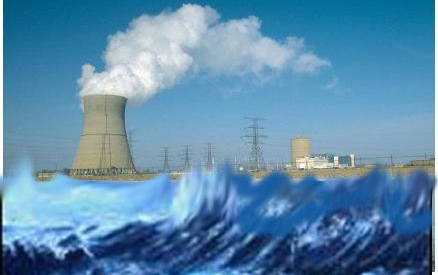 Sea level rise ‘could threaten nuclear power
  station’ planned for UK, report claims, Independent UK, EDF about to submit planning application for major development at Sizewell on Suffolk coast, Harry Cockburn, 1 May 20
Rising sea levels and coastal erosion could pose a threat to two nuclear reactors planned to be built on the low-lying Suffolk coast, according to local councils and analysis by an independent environmental group.
East Suffolk Council and Suffolk County Council have already lodged various concerns about French company EDF Energy’s plans for the new facilities at Sizewell C, and a new analysis by experts at the Nuclear Consulting Group suggests planned sea defences may be inadequate in future climate change scenarios.
EDF is reportedly about to submit its official planning application for the project, and has been working with Chinese state-owned nuclear company.
The Nuclear Consulting Group’s paper, written by structural engineer, Nick Scarr, suggests the Suffolk coast where the Sizewell development is planned, is inherently “unstable”, and that due to erosion by the sea the site could become an island before the station reaches the end of its active life, thereby risking a serious accident. Mr Scarr told the Climate News Network:
“Any sailor, or lifeboat crew, knows that east coast banks need respect — they have dynamic patterns, and even the latest charts cannot be accurate for long. “I was deeply concerned by EDF’s premise that there is micro-stability at the Sizewell site, which makes it suitable for new-build nuclear. It is true if you restrict analysis to recent historical
data, but it is false if you look at longer-term data and evidence-based climate science predictions…….. (subscribers only) https://www.independent.co.uk/independentpremium/nuclear-power-sea-rise-sizewell-c-edf-suffolk-a9492901.html
USA’s complicated and contradictory plan to punish Iran
|
US pushing to punish Iran by invoking nuclear deal Trump abandonedDiplomats fear drive is an attempt by Washington hawks to destroy nuclear deal and sabotage United Nations Independent UK, Borzou DaragahiInternational Correspondent @borzou 2 May 20
The United States is pushing ahead with a scheme to extend a United Nations arms embargo on Iran that is due to be lifted in October as part of the nuclear deal that Washington abandoned two years ago. To force the extension, Washington will attempt to lobby the Security Council to continue the arms embargo, which bars weapons sales to or from Iran. But it also is making what legal experts and diplomats describe as a convoluted argument that it is still part of the 2015 Joint Comprehensive Plan of Action it left, and hence able to use one of its provisions to “snapback” the embargo. The administration’s plan is to claim it is still part of the Security Council resolution that enshrined the nuclear deal in international law even though Mr Trump trashed the agreement, meant to curtail Tehran’s atomic technology programme, as the “worst deal” in history. The plan was first reported by The New York Times earlier this week……… diplomats and scholars fear that the Trump administration’s latest gambit is a move by hardline Washington fixtures aimed at delivering a lasting blow to any prospects for a future deal with Iran, as well as part and parcel of far-right efforts to damage international multilateral institutions. “The administration is trying to force everyone’s hand by creating yet another crisis that they hope this time would bring down the JCPOA for good,” said Ali Vaez, of the International Crisis Group, a conflict-resolution advocacy organisation. Iran, which has severely downgraded its adherence to provisions of the nuclear deal in response to crippling US sanctions, has vowed that any reimposition of international sanctions would prompt it to leave the nuclear Non-Proliferation Treaty, and potentially open the door for it to pursue nuclear weapons……. |
|
|
-
Archives
- February 2026 (233)
- January 2026 (308)
- December 2025 (358)
- November 2025 (359)
- October 2025 (376)
- September 2025 (258)
- August 2025 (319)
- July 2025 (230)
- June 2025 (348)
- May 2025 (261)
- April 2025 (305)
- March 2025 (319)
-
Categories
- 1
- 1 NUCLEAR ISSUES
- business and costs
- climate change
- culture and arts
- ENERGY
- environment
- health
- history
- indigenous issues
- Legal
- marketing of nuclear
- media
- opposition to nuclear
- PERSONAL STORIES
- politics
- politics international
- Religion and ethics
- safety
- secrets,lies and civil liberties
- spinbuster
- technology
- Uranium
- wastes
- weapons and war
- Women
- 2 WORLD
- ACTION
- AFRICA
- Atrocities
- AUSTRALIA
- Christina's notes
- Christina's themes
- culture and arts
- Events
- Fuk 2022
- Fuk 2023
- Fukushima 2017
- Fukushima 2018
- fukushima 2019
- Fukushima 2020
- Fukushima 2021
- general
- global warming
- Humour (God we need it)
- Nuclear
- RARE EARTHS
- Reference
- resources – print
- Resources -audiovicual
- Weekly Newsletter
- World
- World Nuclear
- YouTube
-
RSS
Entries RSS
Comments RSS
 nuclear-news