U.S. Unprepared for Nuclear Accident During Pandemic
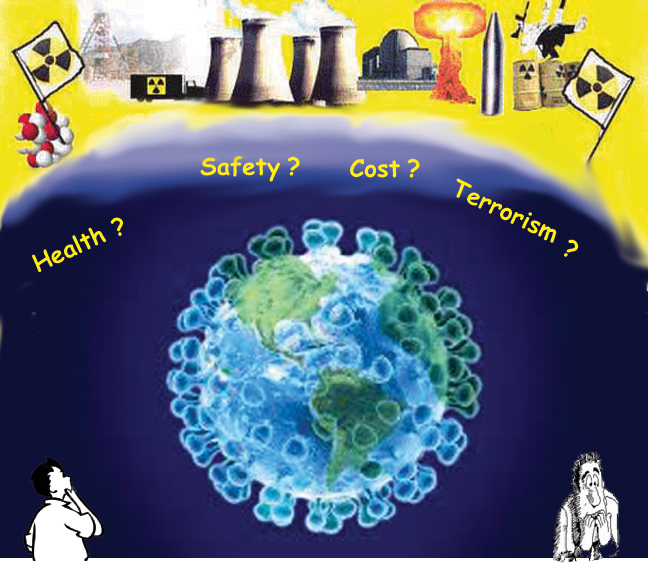
U.S. Unprepared for Nuclear Accident During Pandemic Common Dreams, 22 May 20
Michigan floods expose impossible challenges of mass evacuation during Covid-19
Emergency preparedness must include direct delivery of potassium iodide to all residents around nuclear plants
TAKOMA PARK, MD – Two dam failures and catastrophic flooding in central Michigan, which also prompted a low-level emergency notification (NRC event #54719) at a nearby nuclear research reactor in Midland, have exposed the almost impossible challenge of evacuating people to safety during simultaneous catastrophic events.
The sudden need to evacuate large numbers of people from severe flooding — also threatening to compromise a Dow chemical facility that uses a research reactor — during a time of national lockdown due to the Covid-19 pandemic, raises “serious questions and concerns about the emergency response readiness and the viability of evacuation that might simultaneously include a radiological accident,” said Paul Gunter, director of the Reactor Oversight Project at Beyond Nuclear, a national anti-nuclear advocacy organization.
Michigan authorities were forced to face a “no-win compromise” between protecting the public from exposure to Covid-19 while at the same time moving people out of harm’s way, after heavy rains caused failures at the Edenville and Sanford dams, leading to devastating floods. The Dow plant insists there have been no chemical or radiological releases, but the situation will be evaluated once floodwaters recede. Fortunately, no full-scale commercial nuclear power plant was in the path of the Michigan floods.
Operating nuclear power stations are required by federal and state laws to maintain radiological emergency preparedness to protect populations within a ten-mile radius from the release of radioactivity following a serious nuclear accident. These measures include mass evacuations.
However, many communities around the nation’s 95 commercial reactors are presently sheltering-in-place at home as a protective action during the Covid-19 pandemic.
“The Michigan flooding has forced the relocation of thousands of citizens from their stay-at-home shelters into the social distancing challenges of mass shelters,” Gunter said. “Evacuating tens of thousands from a radioactive cloud to mass shelters, as is presently planned during a nuclear emergency, raises difficult if not impossible choices under pandemic conditions.”
In fact, a Memorandum of Understanding (MOU), Sect.03.02, p.2, between the U.S. Nuclear Regulatory Commission (NRC) and the Federal Emergency Management Agency (FEMA) already obligates the federal government to re-exam radiological emergency plans around nuclear facilities specifically in response to a pandemic, and to identify any shortcomings, deficiencies and enhancements that might be needed under such conditions.
But to date, neither agency has publicly taken the initiative to do so. In fact, the NRC actions are focused on relaxing safety measures required by operating licenses, resulting in extended work hours for reactor operators and security guards, and deferred safety inspections and repairs for as much as another 18 months. This makes an accident more likely.
“Given what we see in Michigan, the NRC and FEMA should lose no time in reviewing the viability of their radiological emergency plans, and publicly take action to make any necessary enhancements or shut these nuclear facilities down,” Gunter said.
Beyond Nuclear has identified two such actions under the MOU as vital to public health:
- NRC and FEMA must conduct a “Disaster Initiated Report”, as mandated by the MOU, on the adequacy of offsite radiological emergency response plans during the pandemic, and;
- Federal and state response plans need to be bolstered by the immediate pre-distribution of potassium iodide (KI) tablets by direct delivery to every resident within the ten-mile radius of U.S. nuclear power stations, now, before any accident occurs. This is in accordance with disaster medicine expert recommendations including from the American Thyroid Association (ATA)……..“The prospect of a nuclear disaster prompting a mass evacuation during a viral pandemic reinforces the need for an energy policy focused on safe, clean and affordable renewable energy,” said Gunter. “It’s time to remove the added and unnecessary danger presented by the 95 nuclear reactors still operating in the US today, and transition to a rapid phaseout before a nuclear emergency during a pandemic becomes a nightmarish reality.” https://www.commondreams.org/newswire/2020/05/22/us-unprepared-nuclear-accident-during-pandemic
The flooding danger to nuclear radioactive sites -Michigan dams fail
|
Michigan dams fail near Midland; ‘catastrophic’ flooding underway — Dow Chemical research reactor potentially in harm’s way http://www.beyondnuclear.org/climate-change-whats-new/2020/5/21/michigan-dams-fail-near-midland-catastrophic-flooding-underw.html
Fortunately, the Midland commercial nuclear power plant was never fired up, so there is no radioactive contamination there, nor high-level radioactive waste in on-site storage. Dr. Mary Sinclair, a co-founder and co-leader of Don’t Waste Michigan*, helped lead the successful resistance to the Midland nuclear power plant, way back in the 1970s and 1980s.
The reason the Midland nuclear power plant was stopped, at 90% construction completion on one reactor and about 50% on the other, was that safety-significant buildings were sinking into the ground, not unlike the Leaning Tower of Pisa. Of course, it took many years of dedicated commitment and hard work by anti-nuclear activists, talented environmental attorneys, and even a courageous Nuclear Regulatory Commission (NRC) whistle-blower testifying before Congress, to prevail against greed-driven companies like Midland-based Dow Chemical, and Jackson, MI-based Consumers Energy.
A similar situation is unfolding at the Vogtle Units 3 and 4 nuclear power plant construction site in GA. BREDL has launched an intervention at the NRC against Vogtle Unit 3, due to it sinking into the ground as well. And Nuclear Watch South has also intervened at the NRC against Vogtle Unit 3’s fuel loading, due to major, widespread violations of ITAAC QA.
Speaking of Dow, there is, however, a 1967-era research reactor at its Midland facilities, that is potentially in harm’s way from the flooding, as we speak (See NRC Event Notification Report, May 20, 2020, Event Number 54719) . And there is, of course, off the charts bad dioxin and other toxic chemical contamination in or near these waterways, compliments of Dow. This includes a Superfund site, severe contamination downstream in the Tittabawassee River, as well as wastewater retention ponds at Dow Chemical itself. Groups like Citizens for Alternatives to Chemical Contamination (CACC)*, Lone Tree Council, and others, have for decades watch-dogged the toxic goings-on at and downstream from Dow.
Mary Sinclair’s son, Peter Sinclair, a climate protection leader, is quoted in the Washington Post article linked above. Here are some passages from the article, including Peter Sinclair’s quote:
Dow Chemical Co.’s Midland headquarters was evacuated, with only essential staff remaining on-site to monitor the situation. The facility is associated with a Superfund site due to excess dioxins, which are known to cause cancer, in the riverbed downstream of the plant. New video released by the Michigan State Police appeared to show some flooding on the Dow property, though the extent and severity is unclear.
“Dow has activated its local emergency operations center and is implementing its flood preparedness plan which includes the safe shutdown of operating units,” wrote the company on its Facebook page. Dow also filed an “Unusual Event Report” with the Nuclear Regulatory Commission because of the possibility that floodwaters could affect its 300 kilowatt nuclear research reactor, located at the plant, though the reactor was already shut down due to the coronavirus outbreak. That reactor was built in 1967. “This is a solidly middle to upper class town because of the Dow plant here,” Peter Sinclair, a Midland resident who is a videographer for Yale Climate Connections, said in an interview. He said a 2017 seasonal flood event, combined with this disaster, may cause property values to decline. This includes expensive lakefront property, since these lakes are now being drained by the flooding. …Sinclair, who is on the dry side of Midland and is sheltering family members who live closer to the flood-affected areas, says this event illustrates what climate scientists have been warning about for years. “[There is the] Larger issue of aging infrastructure plus incremental climate change, this is a point that all the scientists make that the change is gradual, gradual, gradual until the infrastructure fails.” While this catastrophic flooding is very bad enough in its own right, it also raises the specter of worsening flooding impacts on nuclear facilities, in the Great Lakes Basin and across the continent, including the worsening high risk of dam bursts upstream of nuclear facilities.
The July 16, 1979 uranium tailings dam burst in n.w. New Mexico, inundating the Rio Puerco with a flood of radioactive and toxic wastewater, is considered one of the single worst nuclear disasters in U.S. history (that most people have never even heard of). Navajo/Diné shepherds live downstream, such as in the Red Water Pond Road Community. The Rio Puerco is their sole source of drinking and irrigation water. The shallowest of “clean ups” was carried out, leaving most of the escaped contamination in the environment.
The mass evacuation of 10,000 Michiganders to escape the floodwaters, amidst global pandemic stay-at-home and social-distancing orders, also raises the specter of a radiological disaster requiring mass evacuation at a time like this. The NRC, FEMA, related state government agencies across the country, and the nuclear power industry itself, have not addressed this question and concern. How are people supposed to shelter at home, and maintain physical distance from others, when forced to flee for their health and lives, whether from floodwaters as in Midland, or from hazardous radioctivity if a nuclear diaster were to occur during this pandemic emergency. David Lochbaum, retired from UCS, raised just such questions recently in the Bulletin of the Atomic Scientists, when a tornado struck his hometown of Chattanooga, TN, amidst the pandemic; Chattanooga “hosts” multiple atomic reactors in the area.
Dr. Mary Sinclair herself presciently warned about the high risks of storing high-level radioactive waste on the shores of the Great Lakes and the banks of major rivers — the fresh drinking water sources for both Canada and the U.S. — as well as along the ocean coasts (also experiencing climate change-induced sea level rise). She did this in a mid- to late-1990s presentation she delivered on public access television in her area.
Please see this link to Anna Tilden and John Jackson’s 2013 update, of Irene Koch and Dave Martin’s 1990, Great Lakes Nuclear Hot Spots map, posted online.
*Kevin Kamps, Beyond Nuclear’s radioactive waste specialist, serves on Don’t Waste Michigan’s board of directors, and on Citizens for Alternatives to Chemical Contamination’s advisory board.
|
|
Climate: Cyclone Amphan disaster in India, Bangladesh
|
Cyclone Amphan leaves thousands homeless in eastern India as PM Narendra Modi offers help, SBS News, 23 May 20, Authorities have begun assessing damage and clearing roads in the wake of Cyclone Amphan, which has killed more than 90 people and left millions displaced in eastern India and Bangladesh.
Several thousand people have been left homeless after the most powerful cyclone in more than a decade hit India and Bangladesh this week, as Indian Prime Minister Narendra Modi visited the area on Friday and pledged aid. Cyclone Amphan killed at least 96 people, officials said, after it swept in from the Bay of Bengal on Wednesday. Eighty fatalities were in the eastern Indian state of West Bengal and 16 were in neighbouring Bangladesh, after winds of up to 185 km per hour caused flooding, blew away roofs, uprooted trees and ripped up power lines…… The total death toll is expected to rise as communications are restored and authorities reach villages cut off by blocked roads, particularly in India’s low-lying Sundarbans delta, home to four million people and thick mangrove forests that are a critical tiger habitat. In the Sundarbans’ Gosaba, an administrative area of the river delta that juts into the sea, the storm completely destroyed around 26,000 homes and damaged another 14,000, local disaster management official Pradip Kumar Dalui said. The cyclone also damaged some 19 kilometres of embankments around Gosaba, causing 13 breaches that led salty water to inundate swathes of land, Prime Minister Modi said. …. https://www.sbs.com.au/news/cyclone-amphan-leaves-thousands-homeless-in-eastern-india-as-pm-narendra-modi-offers-help |
|
More about dirty nuclear tricks in Ohio
 In disgusting turn, shareholders reap the profits from ratepayer payouts intended to keep Ohio’s nuclear plants afloat May 22, 2020 By Editorial Board, cleveland.com and The Plain Dealer
So much for the cries of doom and gloom over the future of the two Ohio nuclear plants FirstEnergy Corp. built and that an affiliated company operated.
To keep open the Perry nuclear power plant east of Cleveland and the Davis-Besse plant near Toledo, Ohio’s electricity customers are about to start paying an extra $150 million a year in subsidies. That comes courtesy of the Ohio General Assembly and Gov. Mike DeWine via House Bill 6, a bill they rushed into law last summer.
Akron-based FirstEnergy Solutions, which then owned the two plants, had argued (through an army of Statehouse lobbyists) that, without the nuclear subsidy, it would be forced to close the two plants.
In February, Solutions emerged from bankruptcy and became an independent (and solvent) firm, Energy Harbor Corp., also based in Akron.
It now appears the biggest beneficiaries of the deal will be Energy Harbor stock investors.
Energy Harbor’s board voted last week to boost stock buybacks by $300 million, from $500 million to $800 million, cleveland.com’s Andrew J. Tobias reports. When a company buys back its own stock, that cuts the number of available shares, which can boost their prices, benefiting shareholders.
And where did that extra $300 million come from? Could it be on the expectation of the impending subsidy from Ohioans on their electricity bills? It’s fair to ask whether Perry and Davis-Besse were ever in real jeopardy of closing, or was it all a shell game to shore up the company’s finances?
That’s House Bill 6: Socializing losses and privatizing profits, although the bill’s Statehouse backers said otherwise. HB 6, quarterbacked by House Speaker Larry Householder, was absolutely, positively all for a good cause, the speaker assured Ohioans — promoting clean air and, by the way, saving nuclear power plant workers’ jobs.
Nuclear plants don’t emit greenhouse gases, which stoke global warming. But HB 6 wasn’t fully a clean air act. Besides subsidizing Perry and Davis-Besse and providing $20 million annually to six solar power projects in Ohio, HB 6 also underwrote two coal-fired power plants (one in Indiana). Coal plants hardly promote clean air. And the bill zeroed out the state’s renewable energy mandates and reduced its energy-efficiency ones.
But, as Oscar Wilde said, consistency is the last refuge of the unimaginative. And when it comes to lining the pockets of electric utilities, our legislature isn’t merely imaginative; it’s shameless.
Energy Harbor now owns Perry and Davis-Besse and a share of the coal plants. And while Energy Harbor stock isn’t publicly traded, it’s available through brokers……..
Given the gravy HB 6 will sluice, no wonder pals of HB 6 threw everything they could dream up – including a ridiculous “Chinese conspiracy” – to sidetrack people trying to get HB 6 on the statewide ballot so Ohioans could vote the bill up or down. The friends of HB 6 succeeded, disgracefully, in blocking a statewide vote. The message they sent to Ohioans: Shut up – and pay up. Given the gravy HB 6 will sluice, no wonder pals of HB 6 threw everything they could dream up – including a ridiculous “Chinese conspiracy” – to sidetrack people trying to get HB 6 on the statewide ballot so Ohioans could vote the bill up or down. The friends of HB 6 succeeded, disgracefully, in blocking a statewide vote. The message they sent to Ohioans: Shut up – and pay up. https://www.cleveland.com/opinion/2020/05/in-disgusting-turn-shareholders-reap-the-profits-from-ratepayer-payouts-intended-to-keep-ohios-nuclear-plants-afloat.html
Saudi Arabia’s push for nuclear power – a nuclear weapons danger
 Arms control experts concerned by Saudi nuclear reactor push, Aljazeera
Satellite images show work progressing on Saudi reactor even though international IAEA inspectors are still frozen out. by Jonathan Tirone • Bloomberg. 22 May 2020 Saudi Arabia is pushing ahead to complete its first nuclear reactor, according to satellite images that have raised concern among arms-control experts because the kingdom has yet to implement international monitoring rules.
Satellite photos show the kingdom has built a roof over the facility before putting in place International Atomic Energy Agency regulations that allow inspectors early verification of the reactor’s design. Foregoing on-the-ground monitoring until after the research reactor is completed would be an unusual move normally discouraged under regulations to ensure civilian atomic programs aren’t used to make weapons.
Saudi Arabia has repeatedly pledged that its nuclear program is strictly for peaceful purposes, but Crown Prince Mohammed Bin Salman also said the kingdom would develop a bomb if its regional rival Iran did so. Those statements made in 2018 raised a red flag within the nuclear monitoring community which is uneasy that it has more ability to access nuclear sites in Iran than it does in Saudi Arabia.
Saudi Arabia’s ministry of energy didn’t respond to a request to comment.
While Saudi Arabia has been open about its ambitions to generate nuclear power, less is known about the kinds of monitoring the kingdom intends to put in place. President Donald Trump’s administration sent a letter to Saudi Arabia last year setting requirements to access U.S. atomic technology. The baseline for any agreement is tougher IAEA inspections.
…….. At issue is the weak and outdated set of IAEA safeguard rules, called the “Small Quantities Protocol,” or SQP, that Saudi Arabia continues to follow, according to Laura Rockwood, the IAEA’s former chief lawyer who drafted stricter inspection guidelines to which the vast majority of countries adhere.
Satellite images show that a thick lattice of roof beams is now covering the 10-meter (33 feet) high steel reactor vessel. Argentina’s state-owned INVAP SE sold the low-powered research reactor to Saudi Arabia.”The problem is that design-information verification has to be carried out while it’s being constructed,” said Rockwood, who now directs the Open Nuclear Network in Vienna
While Saudi Arabia adheres to the Nuclear Non-Proliferation Treaty, the bedrock agreement that regulates the spread of material needed to induce fission, it still has to implement monitoring rules in line with its nuclear program development.
“Saudi Arabia’s agreement right now is completely minimal, out of date, and unequal to the task of providing the kind of transparency that the IAEA and other member states need about Saudi Arabia’s nuclear program,” said Sharon Squassoni, a researcher and former diplomat on non-proliferation issues at George Washington University.
–With assistance from Verity Ratcliffe. https://www.aljazeera.com/ajimpact/arms-control-experts-concerned-saudi-nuclear-reactor-push-200521155658787.html
Bruce Power and the Ontario Government ordered come clean on the cost of nuclear power
 Bruce Power ordered to reveal prices https://www.cleanairalliance.org/bcost/ –
 Angela Bischoff, Director, 23 May 20 The Ontario Information and Privacy Commissioner has ruled that Bruce Power and the Ontario Government must come clean on the cost of power from rebuilt reactors noting that “the public has a right to know what the electricity cost will be from the multi-billion Bruce NGS [Nuclear Generating Station] project as they are paying for it and will be locked into paying for it for almost 50 years.”
In her response to an appeal by Bruce Power of an earlier decision, Adjudicator Diane Smith acknowledged that the Independent Electricity System Operator (IESO) has the power to suppress this information, but ruled that the public right to know trumped this authority.
In ruling that the pricing information should be released, the Adjudicator reasoned that “the annual price of the Bruce NGS electricity options… would allow the public to assess and potentially advocate for alternative energy sources, such as conservation, demand response, hydro power imports from Quebec, renewable generation, and energy storage. Environmental advocates need the annual price of the nuclear option as soon as possible to advocate for alternatives that may take up to 10 years to implement.”
Further, the Adjudicator found the IESO and Bruce Power rationale for suppressing information about the price of power from rebuilt Bruce reactors to be without substance. She noted that contrary to the IESO’s assertions, “I find that the amount of information already disclosed is not adequate to address the public interest considerations.” She also found Bruce Power’s assertion that disclosing the information would somehow raise electricity prices rather baffling, noting “neither the IESO nor Bruce Power provided particulars that support their concerns about this.”
It’s important to note that pricing information for all renewable energy projects in Ontario is fully public and there is no need for citizens or environmental organizations to undertake long and costly Freedom of Information appeals to see this information. Similarly, Ontario Power Generation must publicly disclose all its costing information through the Ontario Energy Board. Only Bruce Power has had the special privilege of keeping all its pricing information firmly under wraps – until now.
Thanks to the Privacy Commissioner we are optimistic we will soon see just what kind of deal Bruce Power is really offering the people of Ontario. The nuclear industry loves to talk about how it supplies “low cost power” though the numbers tell a very different tale.
This matter should never have required a multi-year effort by an environmental NGO. If the Ontario government was serious about reducing hydro costs, it would have long since ordered this information be made public to allow a real comparison of the cost of different energy options. We cannot have an informed debate about the best options for Ontario when one powerful entity and our electricity system manager cling to secrecy.
South Korea risk of power disruption, as nuclear spent fuel builds up, with storage shortage
 Wolseong reactors at risk of shutdown due to spent nuclear fuel storage shortage, Pulse News, By Oh Chan-jong and Choi Mira 2020.05.22 South Korean nuclear reactors responsible for nearly a quarter of the country’s power supply at cheap price could undergo disruption due to shortage of space to store spent nuclear fuel.
Failure to begin construction to add storage facilities within 100 days would lead to total shutdown of the Wolseong 2, 3 and 4 reactors that each can generate 700 megawatts of power, equivalent to the anticipated capacity of a solar farm that the government plans to build in Saemangeum with an investment of 10 trillion won ($8.09 billion). The Wolseong 1 reactor was already unplugged last year…….. https://pulsenews.co.kr/view.php?year=2020&no=525749
President Donald Trump and his administration have no plans to use Yucca Mountain as a nuclear waste repository
 Nuclear waste disposal at Yucca Mountain a no-go for Trump, Energy exec affirms,
- May 21, 2020
President Donald Trump and his administration have no plans to use Yucca Mountain as a nuclear waste repository, according to Mark Menezes, the current under secretary of energy and the president’s pick to be the next No. 2 at the U.S. Department of Energy.
“Let me be very clear about this,” Menezes said Wednesday during his U.S. Senate Energy and Natural Resources Committee nomination hearing. “The president has been very clear on this.”
The under secretary in his remarks applauded and supported Trump – who has vacillated on the matter in the past – “for taking action when so many others have failed to do so.”
The president’s fiscal year 2021 budget blueprint, trillions of dollars, included no money for Yucca Mountain and, instead, emphasized alternative, innovative approaches for the long-term, safe storage of nuclear waste and spent fuel. Previous Trump budget requests included $120 million and $116 million for the mothballed Nevada repository.
Yucca Mountain, relatively near Las Vegas, was identified decades ago as the nation’s potential nuclear storehouse. Congress in 2002 approved of the remote locale. But the project soured under President Barack Obama and has failed to gain significant traction since, much to the disappointment of some South Carolina lawmakers.
U.S. Rep. Jeff Duncan, R-S.C., has described Yucca Mountain as a national solution to a national problem; U.S. Sen. Lindsey Graham, R-S.C., has described it as a “world-class repository.”
Menezes’ Wednesday comments – at the behest of Sen. Catherine Cortez Masto, a Nevada Democrat and staunch opponent of Yucca Mountain – are a dramatic pivot away from comments he made in February before a House energy subcommittee.
What we’re trying to do is to put together a process that will give us a path to permanent storage at Yucca,” Menezes said at the time, describing the president as “frustrated” that “we have not been able to get the resources or the authorization that we need to be able to license Yucca.”
Trump that same month – days prior to the House hearing, in fact – wrote on Twitter: “Nevada, I hear you on Yucca Mountain and my Administration will RESPECT you!”
Cortez Masto on Wednesday said she wanted “to put this to bed” and give Menezes an opportunity to set things straight.
COVID-19 in worker at Sequoyah Nuclear Plant
 TVA confirms Sequoyah Nuclear Plant employee tests positive for
  COVID-19, by WTVC
has tested positive for the coronavirus.
TVA spokeswoman Malinda Hunter said in a statement that the case was reported Wednesday, May 20, and the employee’s last day on site had been May 10, as they were staying home to care for a family member who was sick. Hunter says the employee had not been in close contact with anyone on site for two weeks before that point.
Hunter says the employee told the plant’s leadership on May 13 that a family member was showing symptoms associated with COVID-19………
Hamilton County has seen a recent spike in COVID-19 cases, with 43 reported Wednesday, and another 40 reported today. There have been 111 new cases in the past three days. That makes up 23% of the county’s total positive cases. ……https://newschannel9.com/news/local/tva-confirms-sequoyah-nuclear-plant-employee-tests-positive-for-covid-19
Brazil’s nuclear reactor build delayed, completion now due in 2027, Covid-19 effect
|
COVID-19 to delay Brazil nuclear plant -Eletronuclear
Anthony Boadle, BRASILIA, May 22 (Reuters) – Lower demand for electricity and a currency slide during the coronavirus crisis will push completion of Brazil’s third nuclear reactor into 2027, the head of state-run nuclear power company Eletronuclear told Reuters.
Eletronuclear president Leonam Guimaraes said Brazil still plans to find a partner by 2023 to help finish and operate the long-delayed 1,400 megawatt Angra 3 nuclear reactor, with companies in China, Russia, France and South Korea among possible candidates. Construction, which began in 2010, is set to restart this year after a long delay caused by financial difficulties and corruption investigations. So far, 9 billion reais ($1.6 billion) have been spent on the project. Guimaraes said the “brutal” 15-20% drop in power consumption caused by the coronavirus pandemic means future demand is uncertain. …… https://af.reuters.com/article/commoditiesNews/idAFL1N2D319L |
|
Lithuania wants to stop Belarus new nuclear plant, so close to the border
The facility at Ostrovets – also called Astravyets – lies just 45 kilometres from the Lithuanian capital Vilnius and is set to go online in July.
It’s Belarus’ first nuclear plant and comes 34 years after the Chernobyl nuclear disaster in Ukraine caused havoc in the south of the country.
While France has dozens of nuclear reactors, many countries, including Germany, have pledged to phase theirs out. The amount of electricity generated by nuclear in the EU dropped from around 45% in 2006 to 28% in 2018.
For Belarus, it’s a source of pride. The 2.4-GW power plant — built with Russian money and supervision — will lessen that nation’s dependence on Moscow for energy.
Ostrovets Unit 1 reactor is expected to go online in July, while the near-identical Ostrovets 2 is set for a sign-off in the fall.
But, since the outset of the project in 2011, Lithuania has been vehemently against it. Vilnius claims it is a geopolitical scheme spearheaded by Russia to keep Lithuania quiet and keep Belarus on a tighter lead.
“The plant is being built in breach of safety standards, including the UN’s Espoo and Aarhus conventions,” Arvydas Sekmokas, Lithuania’s former energy minister, told Euronews.
“Minsk has disregarded International Atomic Energy Agency (IAEA) recommendations made after the Fukushima disaster that plants should not be built within 100 kilometres of major population centres.
“I still believe that we still can halt the project. Otherwise, not only Lithuania but all of Europe can pay a heavy price for it.
“The world knows very well the praise-worthy stories of Austria and Sweden, which shut down their nuclear plants after they were already built.”
Lithuania has held drills to prepare for a nuclear emergency. Vilnius, with a population of more than half a million people, would have to be evacuated in the worst-case scenario of an accident at Ostrovets………
Bosses at Hinkley Point C have slashed 80 roles after employees worked throughout the coronavirus lockdown
named, said the news came as a ‘bitter pill’ after he risked his own health
to still work at the construction site during the last few months. The
worker was made “redundant with immediate effect” on Friday afternoon (May
15). He said: “We have struggled every day during this pandemic and the way
EDF has managed the outbreak. This has made the risk we have being taking
coming to site every day one bitter sweet pill to swallow.”
https://www.bristolpost.co.uk/news/local-news/hinkley-point-c-cuts-80-4147171
Fukushima’s radioactive water problem — Beyond Nuclear International
Japan could dump water in the ocean this summer
via Fukushima’s radioactive water problem — Beyond Nuclear International
1 This Month
Chernobyl: The Lost Tapes – A good documentary on Chernobyl on SBS available On Demand for the next 3 weeks– https://www.sbs.com.au/ondemand/tv-program/chernobyl-the-lost-tapes/2352741955560

of the week–London Campaign for Nuclear Disarmament

Tell the Ukrainian Government to Drop Prosecution of Peace Activist Yurii Sheliazhenko
To see nuclear-related stories in greater depth and intensity – go to https://nuclearinformation.wordpress.com
-
Archives
- April 2026 (139)
- March 2026 (251)
- February 2026 (268)
- January 2026 (308)
- December 2025 (358)
- November 2025 (359)
- October 2025 (376)
- September 2025 (257)
- August 2025 (319)
- July 2025 (230)
- June 2025 (348)
- May 2025 (261)
-
Categories
- 1
- 1 NUCLEAR ISSUES
- business and costs
- climate change
- culture and arts
- ENERGY
- environment
- health
- history
- indigenous issues
- Legal
- marketing of nuclear
- media
- opposition to nuclear
- PERSONAL STORIES
- politics
- politics international
- Religion and ethics
- safety
- secrets,lies and civil liberties
- spinbuster
- technology
- Uranium
- wastes
- weapons and war
- Women
- 2 WORLD
- ACTION
- AFRICA
- Atrocities
- AUSTRALIA
- Christina's notes
- Christina's themes
- culture and arts
- Events
- Fuk 2022
- Fuk 2023
- Fukushima 2017
- Fukushima 2018
- fukushima 2019
- Fukushima 2020
- Fukushima 2021
- general
- global warming
- Humour (God we need it)
- Nuclear
- RARE EARTHS
- Reference
- resources – print
- Resources -audiovicual
- Weekly Newsletter
- World
- World Nuclear
- YouTube
-
RSS
Entries RSS
Comments RSS
 nuclear-news