Preventing a climate catastrophe in the middle of a coronavirus catastrophe
 Times 17th May 2020, Chris Stark is trying to save the world from his bedroom in the leafy West
End of Glasgow. As chief executive of the Committee on Climate Change, the
independent organisation charged by parliament with holding the British
government to account on greenhouse gas emissions, Stark is attempting to
prevent a future global catastrophe in the middle of a global catastrophe.
“The interesting thing is that, while that is true, even in a moment as
tough as this, it does almost nothing at all for climate change. The
problem is that you have a chronic cumulative problem. It’s like water in
a bath and, even this year, we are adding water to the bath. The CO2 in the
atmosphere is being added to. We are still making climate change worse this
year — we have just turned the tap down a bit.
This doesn’t crack the problem. What you need is long-term structural change that guides those
emissions down permanently. We will see those emissions rebound immediately
as economic activity restarts, but there are interesting questions about
what may or may not last after this period.” In the past few weeks the
committee has sent a letter to the Scottish government, at its request, on
how to rebuild the economy, post-Covid, in a manner that best tackles
climate change.
As Stark explained: “Coming out of this there is a moment
of unfreezing of several things which means you can change the trajectory
of climate-change policy and grow the economy. “The straightforward
question of what you do is that there are four or five priorities coming
out of it. One is to use the government’s ability to invest, to get the
economy going, but in areas that you know you will need in a net-zero
future — and that means renewable energy, electric vehicles, cycling and
walking provision, and digging up the ground to make sure the energy
networks are ready when we need them in the future.
“What will matter most is, when we are able to, going in and improving the fabric of our
housing stock so that we are more energy-efficient and ready for different
sources of heating in our homes. The last thing is tree planting. It is a
really sensible thing for the government to support because it has many
added benefits, and gives lots of new jobs in new areas.”
No comments yet.
1 This Month
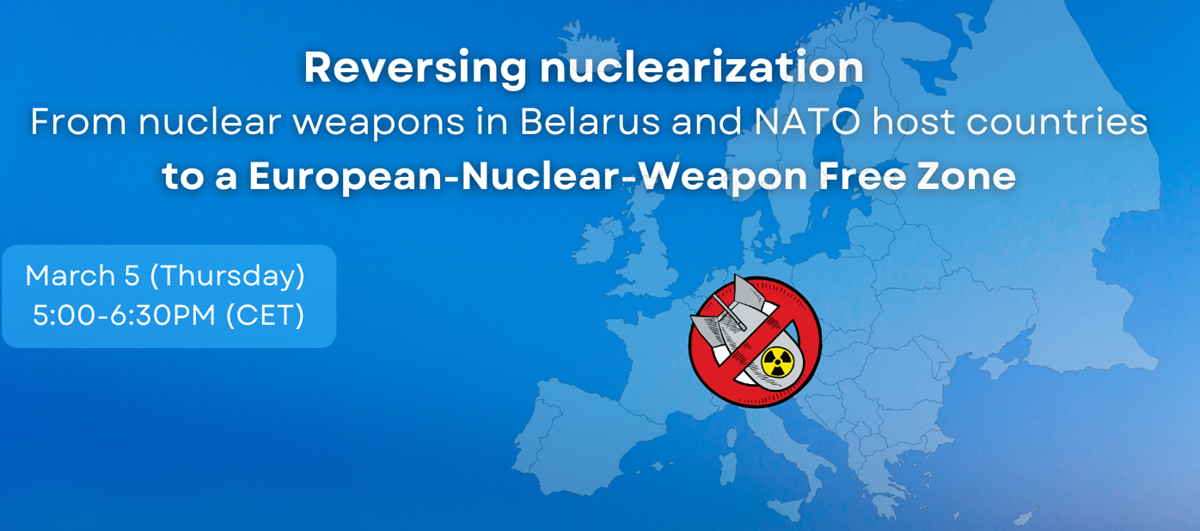
5 March -Online – Reversing nuclearization:
From nuclear weapons in Belarus and NATO host countries to a European-Nuclear-Weapon Free Zone
11am-12:30pm Eastern Time USA / 5pm-6:30pm CET

of the week – Advocating for a
nuclear free beach – https://www.samuellawrencefoundation.org/
The Samuel Lawrence Foundation advocates for a Nuclear Waste Free Beach at San Onofre, join us and take action!

10 March A LIVE WEBINAR THE REAL EFFECTS OF NUCLEAR POWER
What the Industry Isn’t Telling Us
1:00 PM Mountain, 2 pm Central, 3 pm Eastern. Live on the Keepers of the Water Facebook page

18 March Webinar @ 1 PM EST: An Assessment of SMR Projects: The Case of Canada
register for the zoom:
https://us02web.zoom.us/webinar/register/WN_o8BIIOUvQ2ONJR1nta65DQ#/registration

of the week – STOP SMALL MODULAR REACTORS IN CANADA
To see nuclear-related stories in greater depth and intensity – go to https://nuclearinformation.wordpress.com
-
Archives
- March 2026 (51)
- February 2026 (268)
- January 2026 (308)
- December 2025 (358)
- November 2025 (359)
- October 2025 (376)
- September 2025 (258)
- August 2025 (319)
- July 2025 (230)
- June 2025 (348)
- May 2025 (261)
- April 2025 (305)
-
Categories
- 1
- 1 NUCLEAR ISSUES
- business and costs
- climate change
- culture and arts
- ENERGY
- environment
- health
- history
- indigenous issues
- Legal
- marketing of nuclear
- media
- opposition to nuclear
- PERSONAL STORIES
- politics
- politics international
- Religion and ethics
- safety
- secrets,lies and civil liberties
- spinbuster
- technology
- Uranium
- wastes
- weapons and war
- Women
- 2 WORLD
- ACTION
- AFRICA
- Atrocities
- AUSTRALIA
- Christina's notes
- Christina's themes
- culture and arts
- Events
- Fuk 2022
- Fuk 2023
- Fukushima 2017
- Fukushima 2018
- fukushima 2019
- Fukushima 2020
- Fukushima 2021
- general
- global warming
- Humour (God we need it)
- Nuclear
- RARE EARTHS
- Reference
- resources – print
- Resources -audiovicual
- Weekly Newsletter
- World
- World Nuclear
- YouTube
-
RSS
Entries RSS
Comments RSS
 nuclear-news
Leave a comment