The search for the 4th hydrogen bomb dropped over Palomares, Spain
|
Who Do You Call When Nuclear Weapons Go Missing? Mathematicians. Here’s What You Need To Remember: With no witnesses, no debris and a search area in the least understood part of the world’s ocean, there’s little even mathematical wizards can do. But even then, few thought 50 years ago that the lost bomb of Palomares would ever turn up. National Interest, 10 May 20
When a routine Cold War operation went terribly wrong, two planes and seven men died, a village got contaminated and a hydrogen bomb disappeared.
The search and cleanup required 1,400 American and Spanish personnel, a dozen aircraft, 27 U.S. Navy ships and five submarines. It cost more than $120 million and a lot of diplomatic capital. And it made an obscure 18th-century mathematical theorem a practical solution to finding veritable needles in haystacks. Around 10 a.m. on Jan. 17, 1966, two B-52Gs of the 31st Bomb Squadron based out of North Carolina approached two KC-135 tankers over the Spanish coast southwest of Cartagena.
The bombers each carried four 1.5-megaton B-28 hydrogen bombs as part of Operation Chrome Dome, a U.S. deterrence mission that placed nuclear-armed bombers on the Soviet Union’s doorsteps. The resulting breakup destroyed the tanker in a fireball of blazing jet fuel. All four crew on board the tanker died. One hundred tons of flaming wreckage fell upon the arid hamlet of Palomares, near the Mediterranean Sea.
Three of the four H-bombs aboard the bomber fell there, too. Within 24 hours, a U.S. Air Force disaster team arrived from Torrejon Air Base near Madrid. Specialists from the Los Alamos and Sandia weapons labs — and Air Force logistics units — descended on the tiny rural town.
The search teams found the three H-bombs within a day. One landed on a soft slope, its casing relatively intact. The high explosives within the other two bombs detonated on impact, blowing 100-foot-wide craters in the dry soil and scattering plutonium, uranium and tritium across the landscape. The region’s long history of human habitation complicated the land search. Almeria, the province where Palomares sits, hosted a mining industry for more than 5,000 years. Countless mine shafts, diggings and depressions pepper its dry landscape made famous by the spaghetti westerns filmed there. ,,,,,,, https://nationalinterest.org/blog/buzz/who-do-you-call-when-nuclear-weapons-go-missing-152441
|
|
No comments yet.
1 This Month
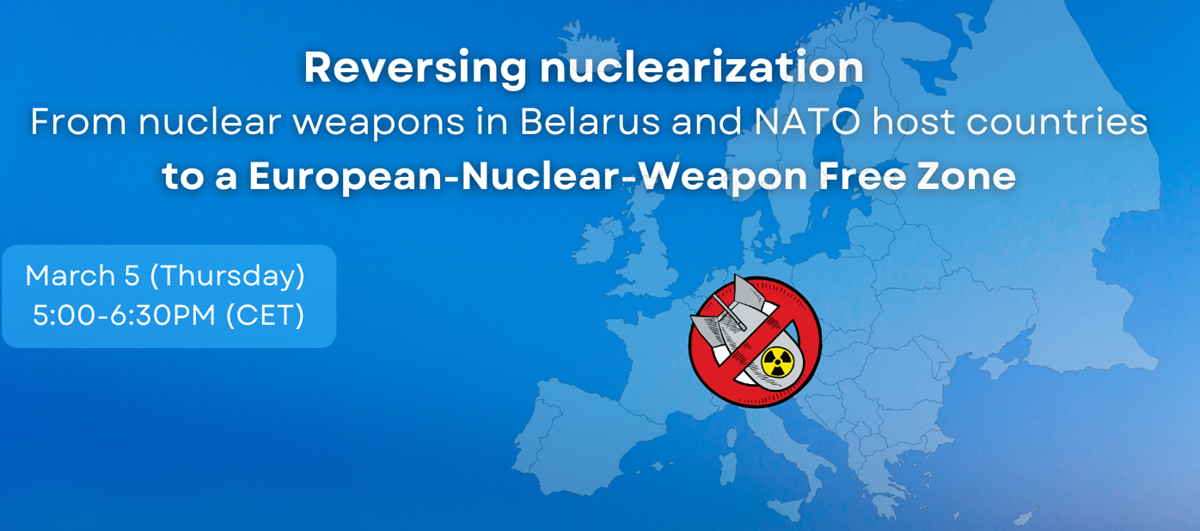
5 March -Online – Reversing nuclearization:
From nuclear weapons in Belarus and NATO host countries to a European-Nuclear-Weapon Free Zone
11am-12:30pm Eastern Time USA / 5pm-6:30pm CET

of the week – Advocating for a
nuclear free beach – https://www.samuellawrencefoundation.org/
The Samuel Lawrence Foundation advocates for a Nuclear Waste Free Beach at San Onofre, join us and take action!

10 March A LIVE WEBINAR THE REAL EFFECTS OF NUCLEAR POWER
What the Industry Isn’t Telling Us
1:00 PM Mountain, 2 pm Central, 3 pm Eastern. Live on the Keepers of the Water Facebook page

18 March Webinar @ 1 PM EST: An Assessment of SMR Projects: The Case of Canada
register for the zoom:
https://us02web.zoom.us/webinar/register/WN_o8BIIOUvQ2ONJR1nta65DQ#/registration

of the week – STOP SMALL MODULAR REACTORS IN CANADA
To see nuclear-related stories in greater depth and intensity – go to https://nuclearinformation.wordpress.com
-
Archives
- March 2026 (51)
- February 2026 (268)
- January 2026 (308)
- December 2025 (358)
- November 2025 (359)
- October 2025 (376)
- September 2025 (258)
- August 2025 (319)
- July 2025 (230)
- June 2025 (348)
- May 2025 (261)
- April 2025 (305)
-
Categories
- 1
- 1 NUCLEAR ISSUES
- business and costs
- climate change
- culture and arts
- ENERGY
- environment
- health
- history
- indigenous issues
- Legal
- marketing of nuclear
- media
- opposition to nuclear
- PERSONAL STORIES
- politics
- politics international
- Religion and ethics
- safety
- secrets,lies and civil liberties
- spinbuster
- technology
- Uranium
- wastes
- weapons and war
- Women
- 2 WORLD
- ACTION
- AFRICA
- Atrocities
- AUSTRALIA
- Christina's notes
- Christina's themes
- culture and arts
- Events
- Fuk 2022
- Fuk 2023
- Fukushima 2017
- Fukushima 2018
- fukushima 2019
- Fukushima 2020
- Fukushima 2021
- general
- global warming
- Humour (God we need it)
- Nuclear
- RARE EARTHS
- Reference
- resources – print
- Resources -audiovicual
- Weekly Newsletter
- World
- World Nuclear
- YouTube
-
RSS
Entries RSS
Comments RSS
 nuclear-news
Leave a comment