The pandemic is a direct threat to Russia’s secret nuclear cities – says Rosatom chief
 Rosatom fears for its nuclear cities amid coronavirus pandemic, The head of
  Russia’s state nuclear corporation has expressed concerns about the spread of the novel coronavirus to three of its so-called “nuclear cities,” including one that houses a top-secret research institute that helped develop the Soviet nuclear bomb. May 5, 2020 by Charles Digges charles@bellona.noThe head of Russia’s state nuclear corporation has expressed concerns about the spread of the novel coronavirus to three of its so-called “nuclear cities,” including one that houses a top-secret research institute that helped develop the Soviet nuclear bomb.
The cities hold a fabled place in Russia’s nuclear industry, which is managed by the state-controled Rosatom corporation. Most of them are closed to foreigners and even most Russians require special permission to enter them because of the top-secret facilities that many of them house.
In his most recent video appearance, Rosatom chief Alexei Likhachev said a special delivery of ventilators and personal protective equipment for medical workers has been sent to the city of Sarov and other closed towns where dozens of cases have been reported.
“This (pandemic) creates a direct threat to our nuclear towns,” Likhachev said in the video address on the Rosatom website – a communication method he has embraced since the beginning of the pandemic. “The situation in Sarov, Elektrostal, Desnogorsk is today particularly alarming.”
His remarks come as Russia reports a total of 155,370 cases of coronavirus infection and 1,451 deaths, making Russian the seventh most infected country, having surpassed China, Turkey and Iran last week.
The spread of the coronavirus has posed special challenges to the worldwide nuclear industry, where small groups of highly trained specialists are required to safely run reactors and manage nuclear fuel and radioactive waste services in close quarters.
In Russia, Rosatom has moved to sequester its nuclear technicians onsite at the plants and facilities where they work to minimize their exposure to carriers of the coronavirus.
Rosenergoatom, which is the utility subsidiary of Rosatom, hasn’t made clear precisely how many Russian nuclear workers have been put in isolation or ordered to shelter at their plants. But Rosatom controls a sprawling network of reactors, laboratories, commercial structures and fuel fabrication facilities that employ some 250,000 people.
Russia’s 11 commercial nuclear power plants operate a total of 38 nuclear reactors. Rosatom also has 36 power units at different stages of implementation in 12 countries around the world. It is currently constructing seven reactors overseas: two each in Bangladesh, Belarus and India, plus one unit in Turkey.
In a sense, Russian nuclear power and scientific facilities are uniquely designed to handle outbreaks of the virus. The 10 so-called “closed administrative territorial formations,” which were formed as part of the Soviet nuclear weapons program, are nearly entirely off limits for foreigners as well as most Russians.
The cities hosting Russia’s commercial nuclear plants, while less strictly separated from the rest of the country, are nonetheless surrounded by checkpoints and often require foreign visitors to get special permission to enter them.
As of last week, said Likhachev in his address, there were 47 infected personnel among the corporation’s ranks.
In the city of Sarov alone, there have been 23 cases of Covid-19, Likhachev said – 7 of them Rosatom employees.
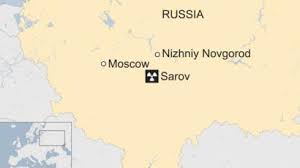
Known formerly as Arzamas-16, Sarov didn’t even appear on maps until the breakup of the Soviet Union in 1991. It remains home to the All-Russian Scientific Research Institute of Experimental Physics, which made headlines last year when five of its scientists died in a mysterious radiological explosion at a weapons testing site in the Russian Arctic.
The institute, which is now run by Rosatom, is an important part of Russia’s nuclear military complex. Likhachev indicated in his address that the workers who tested positive are affiliated with the institute.
In the city of Sarov alone, there have been 23 cases of Covid-19, Likhachev said – 7 of them Rosatom employees.
Known formerly as Arzamas-16, Sarov didn’t even appear on maps until the breakup of the Soviet Union in 1991. It remains home to the All-Russian Scientific Research Institute of Experimental Physics, which made headlines last year when five of its scientists died in a mysterious radiological explosion at a weapons testing site in the Russian Arctic.
The institute, which is now run by Rosatom, is an important part of Russia’s nuclear military complex. Likhachev indicated in his address that the workers who tested positive are affiliated with the institute.
No comments yet.
1 This Month


Tell the Ukrainian Government to Drop Prosecution of Peace Activist Yurii Sheliazhenko

Petition to revoke the licensing of the Near Surface Nuclear Disposal Facility (NSDF) at Chalk River. https://www.ourcommons.ca/petitions/en/Petition/Details?Petition=e-7247


of the week – STOP SMALL MODULAR REACTORS IN CANADA
To see nuclear-related stories in greater depth and intensity – go to https://nuclearinformation.wordpress.com
-
Archives
- March 2026 (204)
- February 2026 (268)
- January 2026 (308)
- December 2025 (358)
- November 2025 (359)
- October 2025 (376)
- September 2025 (258)
- August 2025 (319)
- July 2025 (230)
- June 2025 (348)
- May 2025 (261)
- April 2025 (305)
-
Categories
- 1
- 1 NUCLEAR ISSUES
- business and costs
- climate change
- culture and arts
- ENERGY
- environment
- health
- history
- indigenous issues
- Legal
- marketing of nuclear
- media
- opposition to nuclear
- PERSONAL STORIES
- politics
- politics international
- Religion and ethics
- safety
- secrets,lies and civil liberties
- spinbuster
- technology
- Uranium
- wastes
- weapons and war
- Women
- 2 WORLD
- ACTION
- AFRICA
- Atrocities
- AUSTRALIA
- Christina's notes
- Christina's themes
- culture and arts
- Events
- Fuk 2022
- Fuk 2023
- Fukushima 2017
- Fukushima 2018
- fukushima 2019
- Fukushima 2020
- Fukushima 2021
- general
- global warming
- Humour (God we need it)
- Nuclear
- RARE EARTHS
- Reference
- resources – print
- Resources -audiovicual
- Weekly Newsletter
- World
- World Nuclear
- YouTube
-
RSS
Entries RSS
Comments RSS
 nuclear-news
Leave a comment